

The short answer: a year end financial checklist is a short list of money tasks to finish in December: review spending, use benefits that expire, check accounts, gather tax paperwork, update emergency info and set up next year. Most families need two or three evenings.
- Use it or lose it: FSA money, insurance deductibles, rewards and gift cards
- Clean up: audit subscriptions, review insurance and check your credit reports
- Tax forms to gather: W-2, 1099s and 1098s
- Three-evening plan below
- Next step: Plan it with the Bill Tracker Printable ($3.49).
An end of year financial checklist is a short list of money tasks to finish in December, while the year's numbers are fresh: review what you spent, use benefits that expire, check accounts and subscriptions, gather tax paperwork with a tax documents checklist, update emergency information and set up next year's budget. Most families can get through this year end financial checklist in two or three evenings.
Here are 15 tasks grouped into five areas. This is general organization help, not tax or financial advice; check the details that apply to you with a professional. If you want ongoing help, our guide on how to choose a financial advisor explains which kind of advisor fits what you need.
Review the year
Add a year-end net worth check, too. Our guide shows how to calculate net worth step by step, with two worked examples.
- Total your spending by category. Download statements or use your budget file. Note the three biggest categories and anything that surprised you.
- Compare with your plan. Which categories ran over every month? Those need a bigger number next year, or a deliberate cut.
- Check progress on goals. Emergency fund, debt payoff, savings for a car or trip: write down where each one stands. If you need new ones, see how to set money goals for next year.
Use it or lose it
- Flexible spending account (FSA). Many FSAs have a deadline to spend or claim the balance. Check your plan's rules and any grace period, and book appointments or buy eligible items if money is left.
- Insurance deductibles. If you've already met this year's deductible, it can make sense to schedule care before it resets. Ask your provider.
- Rewards and gift cards. Look for expiring points, credit card rewards and forgotten gift card balances.
- Employer benefits. Open enrollment choices, retirement contribution changes and dependent care accounts often have year-end deadlines.
Check your FSA balance before the deadline. According to HealthCare.gov, you generally must use FSA money within the plan year, although an employer may offer either a grace period of up to 2½ months or a limited carryover.
Clean up accounts and bills
- Audit subscriptions. List every recurring charge and cancel what you didn't use in the last three months.
- Review insurance policies. Home, auto and life cover may need updating after a move, a new car, a new baby or a renovation. A current home inventory for insurance makes the home review quicker, and a car maintenance log keeps the auto records in one place.
- Check your credit reports. In the US, the free official site is AnnualCreditReport.com. Look for accounts you don't recognize.
A bill list with due dates and amounts makes tasks 8 and 9 quicker. The Bill Tracker Printable ($3.49) has a bill list, a 12-month paid tracker, a bill calendar and a subscriptions page.
While you're reviewing accounts, pull your credit reports. The CFPB explains that you can get a free copy from each of the three major credit bureaus once a week at AnnualCreditReport.com.
Prepare for tax season
- Start a tax folder. Paper or digital, one place for every form that arrives in January and February. If you had freelance or side-hustle income, total the year's sales and costs in a small business expense spreadsheet so they're ready to match against any 1099s.
- Know which forms to expect. Common ones include:
| Form | What it reports |
|---|---|
| W-2 | Wages from an employer |
| 1099-NEC / 1099-K | Freelance or platform income |
| 1099-INT / 1099-DIV | Bank interest and dividends |
| 1098 | Mortgage interest |
| 1098-T / 1098-E | Tuition and student loan interest |
| 1095-A | Marketplace health coverage |
- Side hustle owners: close the books. Total income and expenses by category, record mileage and gather receipts. Our tax deduction checklist for small businesses shows which record backs up each write-off. If you sell online or freelance, a simple tracker saves hours in spring.
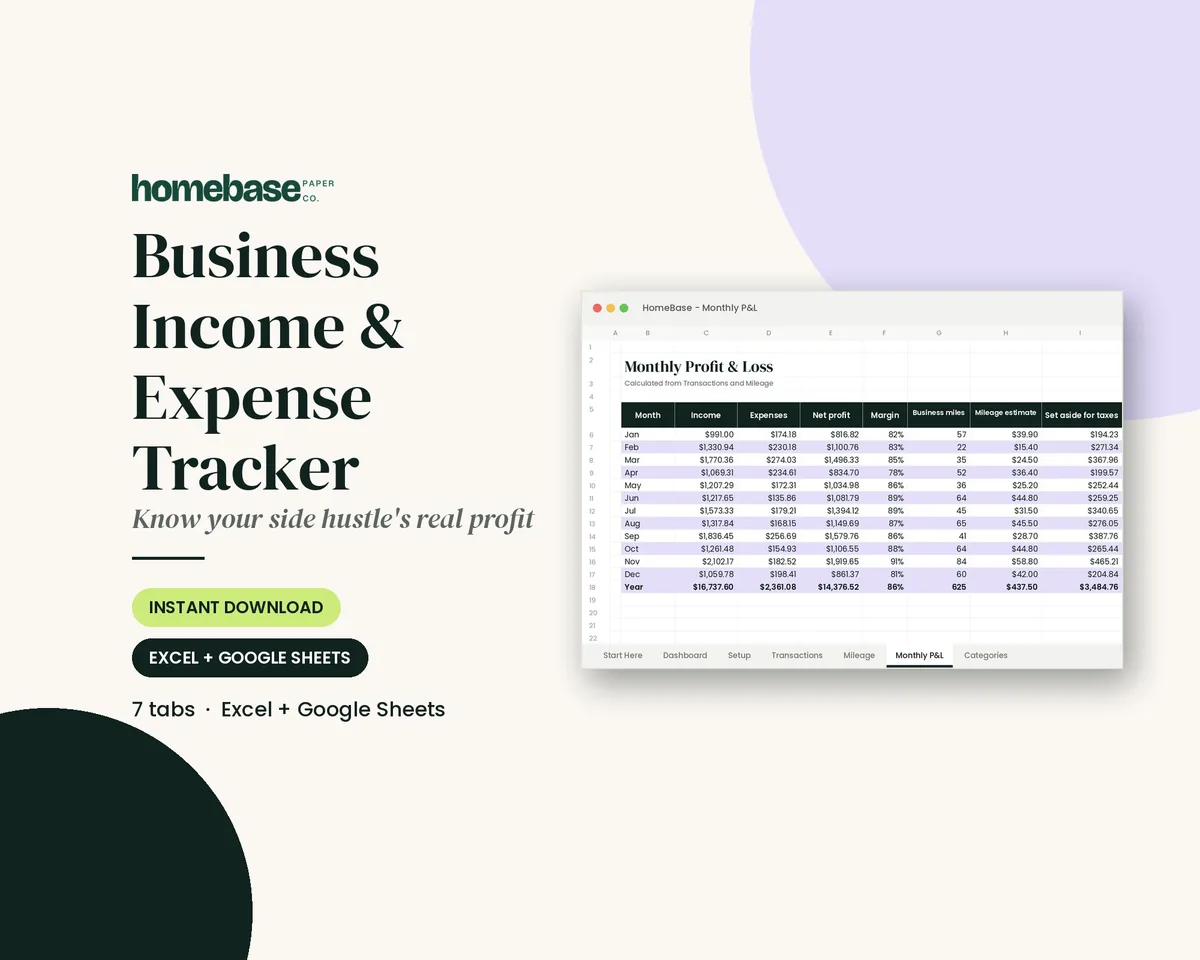
The Business Income & Expense Tracker ($7.99) has an income and expense log with category dropdowns, a monthly profit and loss, a mileage log with a deduction estimate, a monthly tax set-aside estimate and year totals by category. It works in Excel and Google Sheets.
If your income or family changed this year, the IRS Tax Withholding Estimator can help you check whether enough tax is being withheld from your paycheck.
Update your family's emergency information
- Check beneficiaries and key documents. Retirement accounts and life insurance pass to the named beneficiary, so make sure those names are current. Note where your will, insurance policies and account details are kept (see how to organize important documents at home). Our estate planning checklist lists every document to gather.
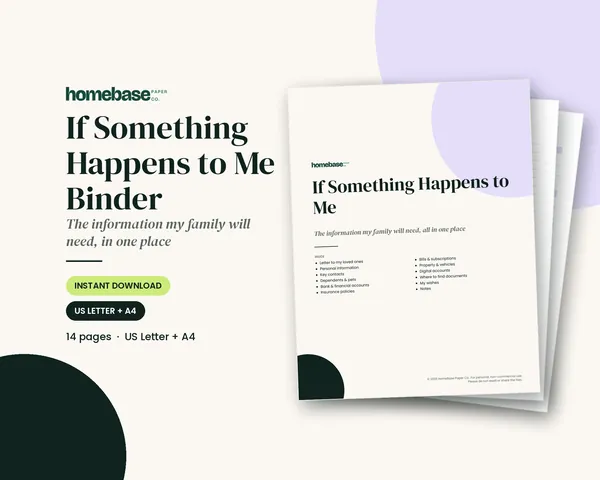
If you've never written this down, the If Something Happens to Me Binder ($11.99) walks through personal information, key contacts, bank and financial accounts, insurance policies, bills, property, digital accounts and where to find documents. Our guide to the binder explains how to fill it in.
Set up next year
To start the year with a reset, plan a no spend challenge for January.
- Write next year's budget. Use this year's real numbers as the starting point, turn yearly costs into monthly sinking funds, and book a weekly check-in.
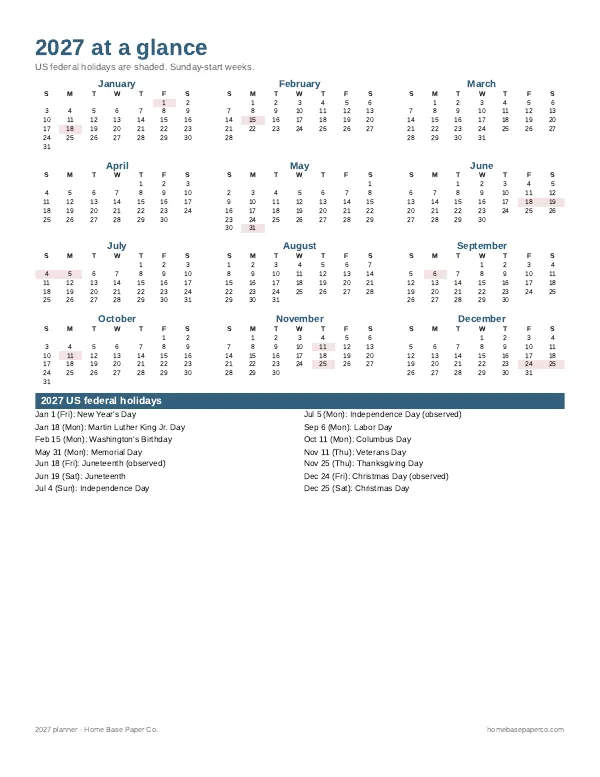
Print a free 2027 calendar and mark annual bills, renewals and savings deadlines before January starts.
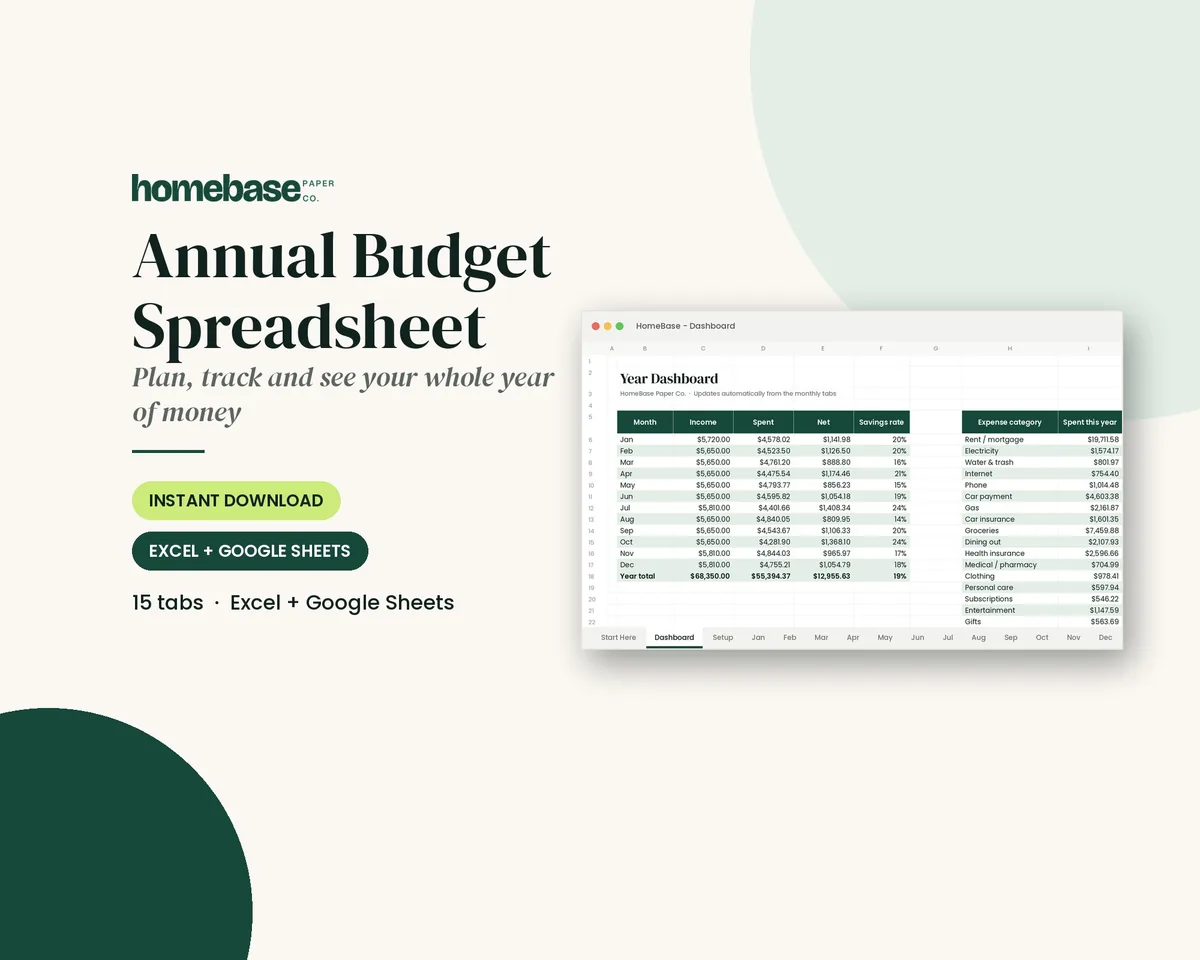
The Annual Budget Spreadsheet ($6.99) has 12 monthly tabs, planned vs. actual by category and a year dashboard, so next December's review takes minutes. Our guide to making a budget for the new year walks through the setup.
Organize the paperwork as you go
Year-end is a good time to sort the filing pile. Keep it simple:
- Keep: tax returns and supporting documents for several years, as your tax professional advises; insurance policies while they're active; warranties and receipts for valuable items while you own them.
- Shred: old statements you no longer need, anything with account numbers, and expired policies once replaced.
- Scan: key documents so a copy is safe if the paper is lost.
Write down where each type of document lives, in a binder or a single note. When the house is busy in January, you'll know exactly where to find last year's W-2 or the car insurance renewal.
Plan big costs for the year ahead
Look at next year's calendar and list the known big expenses: a wedding to attend (or to plan, with a wedding budget tracker), a car that needs tires, braces, a family trip, a new school year. Give each one a target amount and a date, and start a sinking fund for it in January. Planning these now is what stops them becoming debt later.
A three-evening plan
| Evening | Tasks |
|---|---|
| One | Review the year, compare with the plan, check goals (1 to 3) |
| Two | Benefits, rewards, subscriptions, insurance, credit (4 to 10) |
| Three | Tax folder, side hustle books, emergency info, next year's budget (11 to 15) |
Do it with a partner if you share finances. It's a good moment to agree on next year's goals together. If you're single, ask a friend to do theirs on the same evenings and compare notes; a shared deadline makes it much more likely the list actually gets finished before the holidays take over. Include a review of car insurance when checking recurring premiums and coverage at year-end.
Before December 31, review our tax deductions list so you know which receipts to save.
Make it easier
Tools for this

Spreadsheets
Annual Budget Spreadsheet
See exactly where your money goes every month - without complicated software.
Spreadsheets
Business Income & Expense Tracker
Log sales, expenses and business miles - see your monthly profit, category totals for tax time and how much to set aside.
Printables
If Something Happens to Me Binder
Accounts, insurance, bills, contacts, documents and your wishes - so your family isn't left guessing.
Frequently asked questions
What should be on an end of year financial checklist? Review the year's spending and goals, use expiring benefits like FSA balances and rewards, audit subscriptions and insurance, check credit reports, start a tax folder, close the books on any side income, update beneficiaries and emergency information, and set next year's budget.
What tax documents should I gather at the end of the year? Common ones are W-2s, 1099 forms for freelance, platform, interest or dividend income, 1098 forms for mortgage, tuition or student loan interest, and 1095-A for marketplace coverage. Keep them in one folder as they arrive and check with a tax professional about your situation.
When should I do a year-end money review? Early to mid December works well: statements for most of the year are available, benefit deadlines haven't passed, and you have time to set up next year's budget before January bills arrive.
How do I prepare my side hustle for taxes at year end? Total income and expenses by category, record business mileage, collect receipts, and note any estimated tax payments made. A simple income and expense tracker makes this quick, and a tax professional can advise on deductions.
More from HomeBase
You may also like

Printables
Budget Planner Printable
Twelve undated pages you can print every month: budget, bills, spending, savings and debt.

Spreadsheets
Bill Tracker Spreadsheet
Bills due in 3 days or less light up red, so nothing slips through.

Spreadsheets
Sinking Funds Tracker
It does the math: how much to set aside each month to hit every goal on time.

Spreadsheets
Paycheck Budget Spreadsheet
Enter your bills once. The sheet tells you which paycheck pays each one, all year.
 Club
Monthly club
Money Club
Anyone who wants a clear plan for the month's bills, holiday spending and savings.
Free printable
Get organized for the new year: get the free 2027 planner
A 16-page printable 2027 planner with a year-at-a-glance page and monthly calendars with US holidays marked. You'll also get our weekly HomeBase email with simple planning and home organization tips.
Sources
- HealthCare.gov healthcare.gov
- Get a free copy from each of the three major credit bureaus once a week consumerfinance.gov
- Tax Withholding Estimator irs.gov