

The short answer: to choose a financial advisor, decide what help you need first, check every candidate's registration and record for free on Investor.gov, ask exactly how they get paid and read their Form CRS and Form ADV before you sign.
- Interview at least two or three people and compare them on the same scorecard
- Know the words: fiduciary, fee-only, fee-based and commission-based
- Get the agreement in writing, and start small if you're unsure
- Pick the one who answers plainly, in writing, without pushing a product
- Next step: Plan it with the Annual Budget Spreadsheet ($6.99).
How to choose a financial advisor: decide what help you need first, then check every candidate's registration and record for free on Investor.gov, ask exactly how they get paid, and read their Form CRS and Form ADV before you sign. Interview at least two or three people, compare them on the same scorecard and pick the one who answers plainly, in writing, without pushing a product.
That's the short version. Below you'll find the main types of advisors in one table, a seven-step process, the questions worth asking in a first meeting, red flags to walk away from and a simple scorecard you can copy. One thing up front: "financial advisor" is a broad, loosely used title, so the label alone tells you very little. What the person is registered as, how they're paid and what they promise in writing tell you much more.
I'm the oldest of three and the planner in my family. Hiring help with money works the same way as any big household decision for me. Get your own numbers in order, ask the same questions to everyone and write the answers down. The Annual Budget Spreadsheet ($6.99) gives you a 12-month view of income, spending and savings to bring to that first meeting, so the advisor sees your real numbers instead of guesses.
Step zero: decide what kind of help you actually need
Before you search for anyone, write down the job you want done. The SEC's investor education office suggests thinking about whether you want a one-time plan, an occasional second opinion, a recommendation each time you make a change, or ongoing management where the professional makes the trades for you. Those are very different jobs, and they're usually paid for in different ways.
Here's a plain way to sort it out:
| What you want | Type of help to look for | How it's often paid |
|---|---|---|
| A one-time plan or a second opinion | Advice-only or hourly financial planner | Hourly rate or flat project fee |
| Help with a single decision (rollover, house, retirement date) | Hourly planner | Hourly rate |
| Someone to manage investments for you | Registered investment adviser | Percentage of assets managed |
| Ongoing planning plus investing, year after year | Planner or adviser on retainer | Flat annual fee or percentage of assets |
| Help buying a specific product, like insurance or an annuity | Broker or insurance agent | Commission built into the product |
| Low-cost automatic portfolio only | Robo-advisor | Small percentage of assets |
If your real problem is credit card debt or a budget that doesn't balance, an investment advisor may not be the right first call. A free plan from a nonprofit credit counselor, or a debt management plan, can come before anyone manages your investments. Our guide on how to get out of debt walks through that first.
How to choose a financial advisor in 7 steps
- Gather your numbers. List your income, monthly spending, debts, savings and every account you own. A one-page personal financial statement and a quick net worth calculation take about an hour and make every meeting more useful.
- Write your goals in one sentence each. "Retire at 62," "pay for two kids' community college," "know if we can afford to switch to one income." If you need help, start with how to set financial goals.
- Build a short list of three candidates. Ask friends, coworkers or your employer's benefits team for names, then search fee-only planner directories and your bank or brokerage's advice options. A referral is a starting point, not a background check.
- Check registration and history before any meeting. Look up each person and each firm on Investor.gov. The SEC warns that unregistered, unlicensed sellers are behind much of the investment misconduct it sees, so this five-minute search matters. If someone claims a designation, look up what it means and confirm it with the group that grants it.
- Read the paperwork. Download the firm's Form CRS (a short relationship summary) and the Form ADV Part 2 brochure. Those documents explain services, fees, conflicts of interest and any disciplinary history in plain language.
- Interview each candidate with the same questions. Use the question list below and take notes on one scorecard so you're comparing the same things.
- Get the agreement in writing and start small if you're unsure. Read the contract, confirm the fee in dollars, and know how to end the relationship. Some people start with a one-time plan before agreeing to ongoing management.
Fiduciary, fee-only, fee-based: the words that matter
These terms get tossed around in ads, so here's what each one means for you.
- Fiduciary. According to Investor.gov's page on investment advisers, registered investment advisers are required to act in your best interest and not put their own interests ahead of yours. The same page notes that the way advisers earn money still creates conflicts, so ask about them anyway.
- Fee-only. The advisor is paid only by you, through an hourly rate, a flat fee or a percentage of assets. No commissions from the products they recommend.
- Fee-based. This sounds almost identical, but it usually means the advisor charges you a fee and may also earn commissions on some products. Ask which products pay them extra.
- Commission-based. The advisor or broker is paid when you buy or sell certain products. That isn't automatically bad, but it's a conflict you should understand before you buy.
- Broker vs. adviser. Brokers are paid mainly per transaction and follow a best-interest rule for recommendations. Advisers usually charge an ongoing fee and give ongoing advice. Many professionals are both, so ask which role they're acting in for your account.
Credentials such as CFP, CFA or ChFC are granted by industry groups. Some take years of study and exams, others much less. The SEC's advice is simple: don't treat a designation as a badge of knowledge until you know what it requires.
Questions to ask a financial advisor in the first meeting
Most advisors offer a free first meeting. Use it. The SEC's bulletin on questions to ask when hiring an investment professional is the backbone of this list. I've grouped it so you can print it and write answers next to each line.
About them
- What experience do you have with people in my situation (income, age, family, goals)?
- Are you registered with the SEC, a state securities regulator or FINRA?
- Have you ever been disciplined by a regulator or had customer complaints? How were they resolved?
About money
- How do you get paid, and how does your firm get paid?
- If I invested $1,000 with you today, roughly how much would you earn from it over the next year?
- Does anyone else, like a fund company, pay you for recommending products?
- What will I pay in total each year, in dollars, including fund expenses?
About the relationship
- Are you acting as a fiduciary for everything you recommend to me, all the time?
- How often will we meet, and how often will you review my accounts?
- Who holds my money? (It should be a separate custodian, not the advisor personally.)
- What happens if I want to leave? Are there exit fees?
Good advisors are glad to get these questions. If someone gets vague or annoyed, that tells you something too.
What a financial advisor costs, in plain numbers
Fees are where small differences turn into big money. The SEC's bulletin on how fees and expenses affect your portfolio shows a hypothetical $100,000 portfolio growing 4% a year for 20 years. With a 0.25% annual fee it ends near $208,000. With a 1% fee it ends near $179,000. That gap is roughly $29,000, from fees alone.
| Fee type | What you pay for | Watch for |
|---|---|---|
| Percentage of assets (AUM) | Ongoing investment management, often some planning | Minimum fees, tiered rates, fees taken quietly from the account |
| Flat annual fee or retainer | Ongoing planning, sometimes investing | What's included vs. billed extra |
| Flat fee per plan | One written plan you carry out yourself | No follow-up unless you pay again |
| Hourly | Specific questions or a review | Hours adding up on complex cases |
| Commission | A product purchase | Pressure toward higher-commission products |
Ask every candidate to translate their fee into dollars for your situation. A percentage sounds small, and a dollar figure on a page is easier to compare. If you'd rather start with a plan you follow yourself, an hourly or one-time planner usually costs far less than ongoing management.
Red flags when picking a financial advisor
Walk away, or at least slow way down, if you see any of these:
- They won't tell you how they're paid, or the answer changes.
- They aren't registered, or the name on the business card doesn't match the record on Investor.gov.
- They promise high returns with little or no risk.
- They push you to decide in the first meeting or push one product hard.
- They want money made out to them personally instead of to a custodian.
- They discourage you from reading the paperwork or asking questions.
- They recommend moving every dollar, including your workplace 401(k), right away without explaining why.
A simple scorecard for comparing advisors
Rate each candidate from 1 to 5 on each line, then add them up. The point isn't the math. Writing it down keeps one charming meeting from outweighing the facts.
| What to score | Advisor A | Advisor B | Advisor C |
|---|---|---|---|
| Registration and clean record checked | |||
| Fiduciary for all advice, in writing | |||
| Total yearly cost in dollars | |||
| Services match what I need | |||
| Explained things in plain language | |||
| Experience with people like me | |||
| Comfortable asking them anything |
Get organized before the first meeting
An advisor can only work with what you bring. Pull together recent pay stubs, your last tax return, statements for every bank, retirement and brokerage account, debt balances with rates, insurance policies and your monthly budget. Our guide to how to organize your finances has a full checklist.

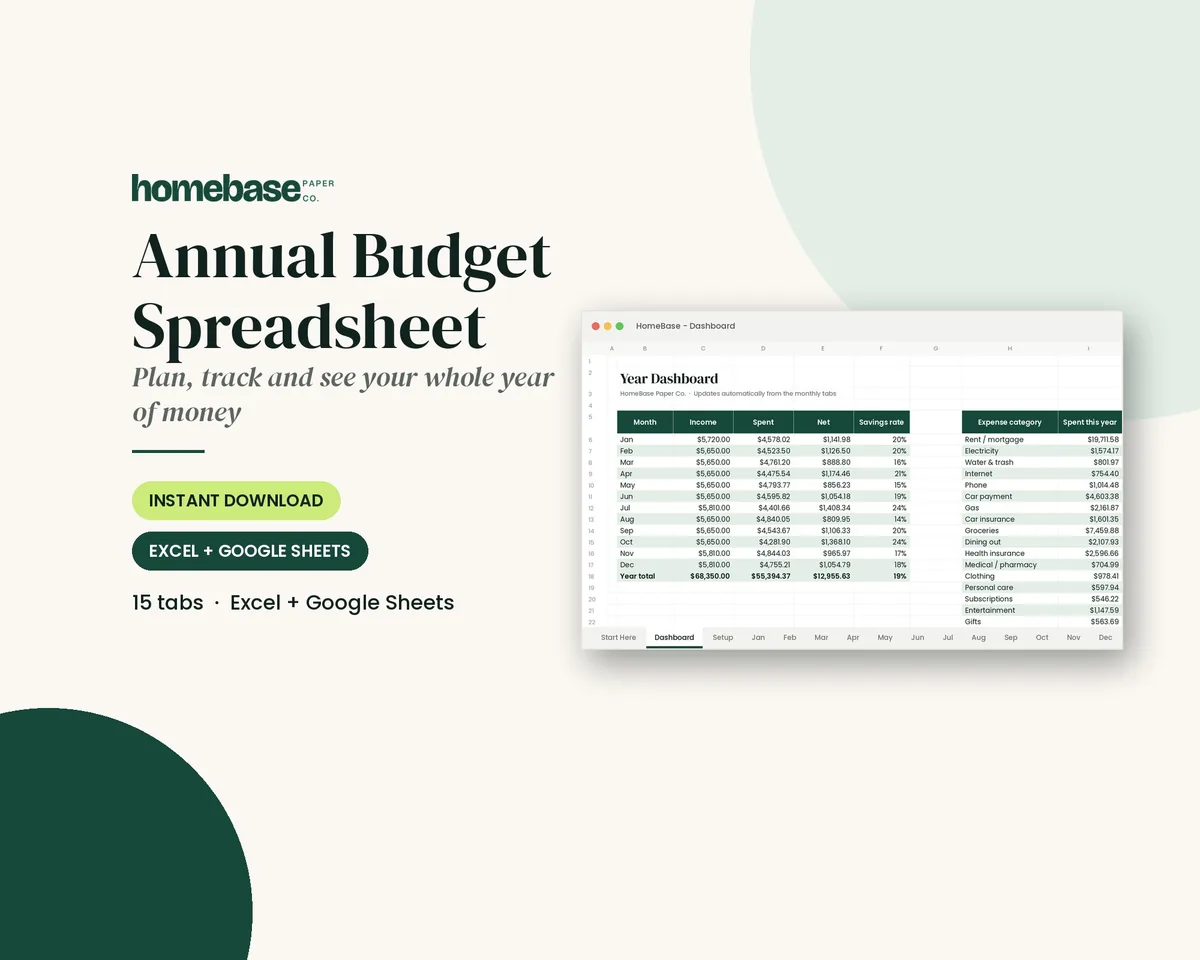
The Annual Budget Spreadsheet ($6.99) works in Excel and Google Sheets, and its year dashboard shows income, spending and savings rate month by month. That's the snapshot most planners ask for first. If you also want to work on debt and sinking funds, the Ultimate Budget Bundle ($19.99) includes all six of our spreadsheets plus both printable planners. Browse the full set in Spreadsheets.
Good planning also covers "what if." The If Something Happens to Me Binder ($11.99) keeps accounts, insurance, bills, contacts and documents in one place. Many advisors will ask whether you have exactly that kind of list, and your family will need it either way. Our guide to organizing important documents shows how to set it up.
When you might not need a financial advisor yet
A paid advisor isn't the first step for everyone. If you're still building a starter emergency fund, paying off high-interest debt or getting a budget to balance, a clear plan and a good spreadsheet may do more for you right now. A step-by-step financial order of operations can show where you are. Many people bring in a pro later, at a big decision: a rollover, an inheritance, buying a home, planning a retirement date or sorting out a parent's finances.
You can also get limited help cheaply. Many workplace retirement plans offer free planning sessions, and some banks and brokerages include basic advice with an account. Ask what's included before paying for something you already have.
Prefer to begin on your own? Read how to start investing for a simple step-by-step plan.
Before you hire anyone, try the basics of financial planning on your own so you know what questions to ask.
Before you compare names, read our financial planner vs. financial advisor guide to learn what each title means and which credentials to look for.
Make it easier
Tools for this
Spreadsheets
Annual Budget Spreadsheet
See exactly where your money goes every month - without complicated software.
 Save 57%
Bundles
Ultimate Budget Bundle
All 6 spreadsheets + both printable planners - for less than half the price of buying them separately.

Printables
If Something Happens to Me Binder
Accounts, insurance, bills, contacts, documents and your wishes - so your family isn't left guessing.
Frequently asked questions
How do I choose a financial advisor? To choose a financial advisor, decide what help you need, check each candidate on Investor.gov, ask how they're paid and read their Form CRS and Form ADV. Interview two or three people with the same questions, compare total yearly cost in dollars and pick the one who commits in writing to acting in your best interest.
How do I find a financial advisor near me? Start with referrals from people you trust, your employer's benefits team and fee-only planner directories, then verify every name on Investor.gov. Many advisors now meet by video, so a good fit doesn't have to be local. Bring the Annual Budget Spreadsheet ($6.99) to the first meeting so any advisor sees your real numbers right away.
What questions should I ask a financial advisor? Ask how they get paid, whether they act as a fiduciary for all advice, what you'll pay in total each year in dollars, and whether they've had complaints or discipline. Also ask what experience they have with people like you, who holds your money and how often you'll meet.
Do I need a financial advisor? You may not need a paid financial advisor if you're still building an emergency fund, paying off high-interest debt or balancing a budget. A clear plan and a tool like the Annual Budget Spreadsheet ($6.99) can handle that stage. Advisors earn their fee most at big decisions like rollovers, inheritances or retirement timing.
What is a fiduciary financial advisor? A fiduciary financial advisor is legally required to act in your best interest and not put their own interests ahead of yours. Registered investment advisers have this duty. Ask any advisor to confirm in writing that they act as a fiduciary for everything they recommend, at all times.
What's the difference between fee-only and fee-based advisors? A fee-only advisor is paid only by you, while a fee-based advisor charges a fee and may also earn commissions on some products. Fee-only usually means fewer conflicts of interest. Ask a fee-based advisor exactly which products pay them extra and how much.
How much does a financial advisor cost? A financial advisor usually costs a percentage of assets managed (often around 1% a year), a flat annual or per-plan fee, an hourly rate or commissions. Ask for the total in dollars for your situation. The SEC's example shows a 1% fee instead of 0.25% can cost about $29,000 on $100,000 over 20 years.
How do I check if a financial advisor is legitimate? Search the person and the firm by name on Investor.gov's free professional search tool to confirm registration and see any disciplinary history. Make sure the name and firm match the record exactly. Your state securities regulator can also help, and you should never pay an advisor personally instead of a custodian.
What's the difference between a financial planner and a financial advisor? A financial planner usually focuses on your whole plan (budget, debt, retirement, insurance and estate), while "financial advisor" is a broad title that often means investment help. Neither title alone proves training. Check registration and any credential, such as CFP, with the group that grants it.
What should I bring to my first meeting with a financial advisor? Bring recent pay stubs, your last tax return, statements for every account, debt balances and rates, insurance policies and your monthly budget. The Annual Budget Spreadsheet ($6.99) gives you a 12-month income and spending summary on one dashboard, which is the snapshot most planners ask for first.
What are red flags with a financial advisor? Big red flags are vague answers about pay, no registration on Investor.gov, promises of high returns with little risk and pressure to decide fast. Also be wary if they want money paid to them personally, discourage questions or push one product hard in the first meeting.
Can I get financial advice without ongoing fees? Yes, an hourly or advice-only planner can review your situation or write a one-time plan that you carry out yourself, with no ongoing fee. Some workplace retirement plans and brokerages also include basic planning. Ask what's included before you pay for something you already have.
How many financial advisors should I interview? Interview at least two or three financial advisors before choosing one. Use the same questions and the same scorecard for each, so you're comparing registration, fiduciary duty, total yearly cost in dollars and services side by side instead of going on a first impression.
What documents should my family have if something happens to me? Your family should have a list of accounts, insurance policies, bills, key contacts and where important documents are kept. The If Something Happens to Me Binder ($11.99) keeps all of that in one place, which also makes estate and insurance conversations with an advisor much faster.
More from HomeBase
You may also like

Printables
Budget Planner Printable
Twelve undated pages you can print every month: budget, bills, spending, savings and debt.

Spreadsheets
Bill Tracker Spreadsheet
Bills due in 3 days or less light up red, so nothing slips through.

Spreadsheets
Sinking Funds Tracker
It does the math: how much to set aside each month to hit every goal on time.

Spreadsheets
Paycheck Budget Spreadsheet
Enter your bills once. The sheet tells you which paycheck pays each one, all year.
 Club
Monthly club
Money Club
Anyone who wants a clear plan for the month's bills, holiday spending and savings.
Free printable
Give every dollar a job: get the free monthly budget template
A printable zero-based monthly budget: income, bills, everyday spending and savings on one page, with a planned vs. actual column. You'll also get our weekly HomeBase email with simple budgeting and bill-paying tips.

Sources
- Investor Bulletin: How to Select an Investment Professional (Investor.gov, SEC) investor.gov
- Investment Advisers (Investor.gov, SEC) investor.gov
- Questions to Ask when Hiring an Investment Professional (Investor.gov, SEC) investor.gov
- How Fees and Expenses Affect Your Investment Portfolio (Investor.gov, SEC) investor.gov