

The short answer: the financial order of operations answers a common question: what should you do with your next dollar? It lists money steps in order, so you finish the most important ones first.
- First: cover essentials and build a starter emergency fund
- Then: get the full employer 401(k) match and pay off high-interest debt
- Next: build a full emergency fund of three to six months
- After that: HSA and IRA, 15% for retirement, other goals
- Next step: Plan it with the Ultimate Budget Bundle ($19.99).
The financial order of operations is a simple answer to a common question: what should I do with my next dollar? It lists money steps in order, so you finish the most important ones first. A typical financial order of operations goes: cover your essentials, build a starter emergency fund, get any employer 401(k) match, pay off high-interest debt, build a full emergency fund, then save more for retirement and other goals. Below is each step with what it means, why it comes where it does, and the 2026 retirement limits from the IRS announcement of 2026 contribution limits. If you're unsure which debts count as urgent, see good debt vs. bad debt.
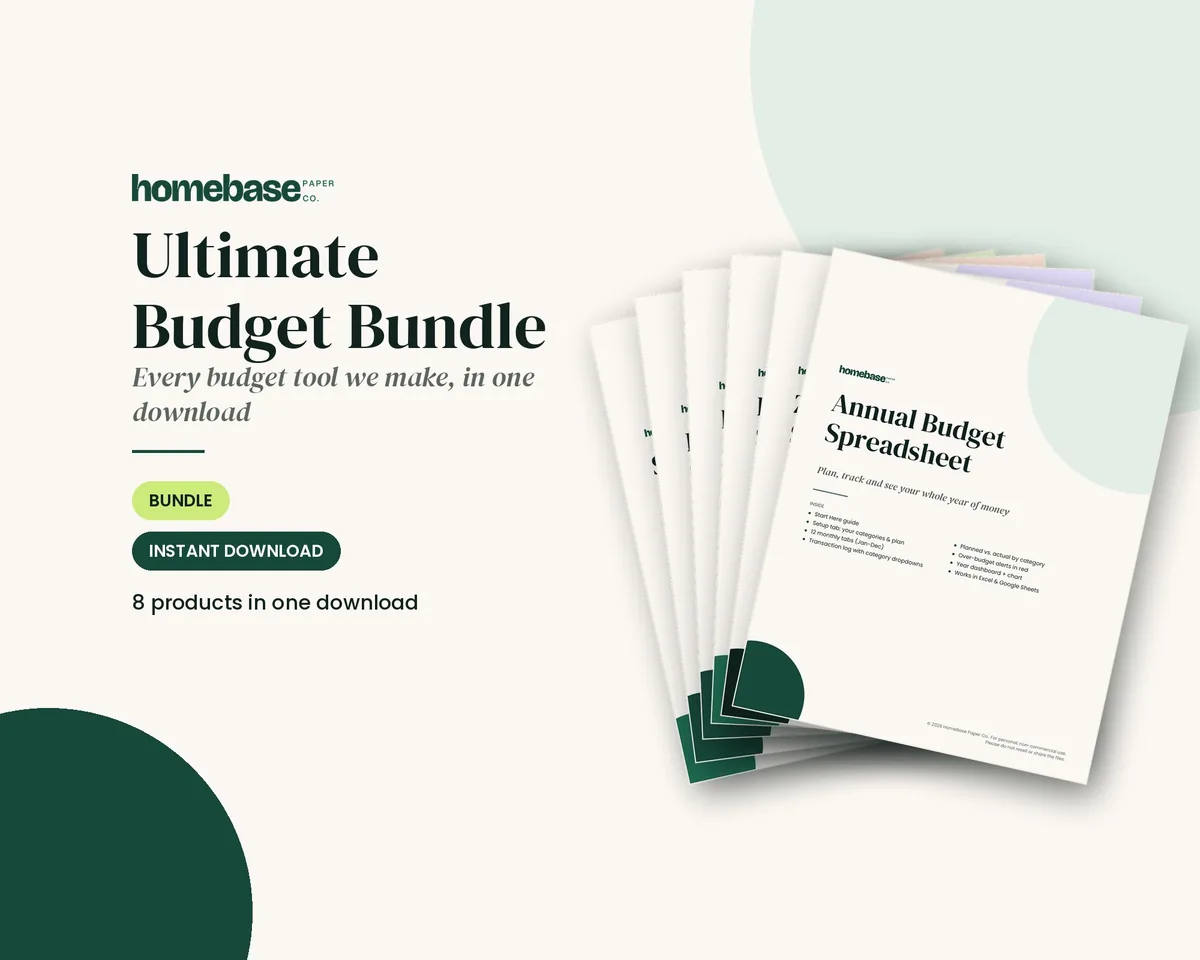
Every step depends on knowing where your money goes. Our Ultimate Budget Bundle ($19.99, $46.42 if bought separately) includes eight planners, among them the Annual Budget Spreadsheet, the Debt Payoff Planner and the Sinking Funds Tracker, which together cover the budgeting, debt and savings steps below.
The financial order of operations at a glance
| Step | What to do | Done when |
|---|---|---|
| 1 | Cover essentials and make a budget | Rent, food, utilities and minimum payments are covered |
| 2 | Build a starter emergency fund | $1,000 to one month of expenses saved |
| 3 | Get the full employer 401(k) match | Contributing enough to get every match dollar |
| 4 | Pay off high-interest debt | Credit cards and high-rate loans are gone |
| 5 | Build a full emergency fund | Three to six months of essential expenses |
| 6 | Save in an HSA and IRA if eligible | Contributing regularly |
| 7 | Save 15% of income for retirement | Including the match |
| 8 | Save for other goals | Home, car, kids' education |
| 9 | Pay off low-interest debt early | Optional, once the rest is on track |
This is a general framework, not personal financial advice. Adjust it for your situation.
Step 1: Cover essentials and make a budget
Before any saving or investing, make sure the basics are paid: housing, food, utilities, transportation, insurance and minimum debt payments. Then write a budget so you know how much is left each month for the next steps. If every dollar is already spoken for, this step is about finding room, by trimming costs or raising income. Our guide to the 50/30/20 budget is an easy starting split. If federal student loans are among those minimums, check whether student loan forgiveness applies to you before you plan extra payments.
Step 2: Build a starter emergency fund
A starter fund of $1,000, or about one month of essential expenses, keeps a car repair or medical bill from going on a credit card while you work on later steps. The CFPB's guide to building an emergency fund suggests setting a goal, making consistent contributions, saving one-time money like tax refunds, and automating transfers. It also suggests keeping the fund at a bank or credit union and rebuilding after you use it. Track it with an emergency fund tracker.
Step 3: Get the full employer 401(k) match
If your employer matches 401(k) contributions, contribute at least enough to get the full match. A common match is 50% of what you put in, up to 6% of pay. That is an immediate 50% return, which beats paying down almost any debt. Check your plan's vesting schedule, since some matches take years to fully belong to you.
Step 4: Pay off high-interest debt
Credit cards and other debt above roughly 8% to 10% interest cost more than you can reliably earn by investing. Put every extra dollar toward them. Two methods work well:
- Debt avalanche: pay the highest interest rate first. It saves the most money.
- Debt snowball: pay the smallest balance first. Quick wins keep you motivated.
Our guide to debt snowball vs avalanche compares the two. The Debt Payoff Planner Spreadsheet ($6.99) has a snowball and avalanche switch, tracks up to 10 debts, and shows your debt-free date and interest saved.
Step 5: Build a full emergency fund
With high-interest debt gone, grow the starter fund to three to six months of essential expenses. Lean toward six months or more if your income is irregular, you are the only earner, or you work in a field with frequent layoffs. Keep this money in an insured savings account that is easy to reach.
Step 6: Save in an HSA and IRA if eligible
If you have a high-deductible health plan, a health savings account (HSA) offers tax benefits on money going in, growing and coming out for qualified medical costs. An IRA gives you more investment choice than many workplace plans. Per the IRS IRA contribution limits page and the 2026 announcement, the 2026 IRA limit is $7,500, or $8,600 for people 50 and older. Income limits apply to Roth IRA contributions.
Step 7: Save 15% of income for retirement
A common target is to save about 15% of gross income for retirement, counting any employer match. For 2026, the IRS limits are:
| Account | 2026 limit | Extra for older savers |
|---|---|---|
| 401(k), 403(b), most 457 plans | $24,500 | $8,000 catch-up at 50+; $11,250 at ages 60 to 63 |
| IRA (traditional or Roth) | $7,500 | $8,600 total at 50+ |
Step 8: Save for other goals
Now fund goals like a home down payment, a car fund, kids' education or a big trip. Sinking funds work well here: one target and a monthly amount for each goal. The Sinking Funds Tracker ($4.99) handles up to 20 goals with progress bars and shows the monthly amount needed for each. If the extra income arrives at the holidays, use our guide to what to do with a Christmas bonus to compare possible priorities.
Step 9: Pay off low-interest debt early
Mortgages and low-rate loans come last. Paying them early is a personal choice. Some people value being debt-free; others prefer to invest the difference. Either is reasonable once the earlier steps are done.
When to change the order
The financial order of operations is a guide, and a few situations call for changes:
A similar step-by-step plan is the Dave Ramsey baby steps. Our guide lays out all seven steps and where they differ from this order.
- Your income is unstable. Freelancers, commission workers and seasonal workers often build a bigger cash cushion before attacking debt, because a slow month with no savings sends the card balance right back up.
- You have no employer match. Skip step 3 and move straight to high-interest debt, then use an IRA for retirement saving.
- A big cost is coming soon. If you need a car, a move or a medical procedure within a year, setting aside money for it may come before extra debt payments, so you do not borrow again.
- You are behind on bills. Getting current on rent, utilities and minimum payments comes before every other step. Call creditors early and ask about hardship options.
- Your debt has a promotional rate. A 0% balance transfer can move a card lower on the list, but plan to pay it off before the promotion ends.
Common mistakes with the financial order of operations
The most common mistake is skipping the starter emergency fund to pay debt faster. It feels efficient, but the first flat tire then goes back on the credit card and undoes months of progress. Another is stopping 401(k) contributions entirely during debt payoff and losing the match, which is free money that does not come back.
People also stall by trying to do every step at once. Splitting $300 a month among five goals means each one moves slowly and none feels finished. Focus most extra money on one step at a time, and keep the others at their minimum. Finally, many people forget irregular costs like car registration, holidays and annual insurance. Without sinking funds for those, they look like emergencies and drain the emergency fund. Planning for them in your budget keeps each step on track.
How to start this week
Write down your take-home pay, essential costs, savings balance, each debt with its interest rate, and your employer's match formula if you have one. Find the first step on the list you have not finished. Set up one automatic transfer or payment toward it this week, even a small one. Then put a date on your calendar three months from now to check your progress and see whether you have moved to the next step.
A worked example
Maria takes home $4,000 a month. Her essential costs are $2,800, she has $300 in savings, $6,000 on a credit card at 24%, and her employer matches 50% of contributions up to 6% of pay.
- She trims spending to free $500 a month.
- In two months she has a $1,000 starter fund.
- She raises her 401(k) to 6% to get the full match.
- She sends the rest of her extra money to the credit card and pays it off in about a year and a half.
- She then redirects that payment to build a $8,400 emergency fund, three months of essentials.
Her steps are clear, and each finished step frees money for the next. After the emergency fund, Maria raises her retirement saving toward 15% and opens a sinking fund for her next car. She never had to wonder where the next dollar should go, because the list already answered it.
Ready for the investing steps? Our guide on how to start investing covers accounts, funds and 2026 limits.
Make it easier
Tools for this
 Save 57%
Bundles
Ultimate Budget Bundle
All 6 spreadsheets + both printable planners - for less than half the price of buying them separately.

Spreadsheets
Debt Payoff Planner
Pick snowball or avalanche, add any extra payment, and get your debt-free month instantly.

Spreadsheets
Sinking Funds Tracker
It does the math: how much to set aside each month to hit every goal on time.
Frequently asked questions
What is the financial order of operations? The financial order of operations is a step-by-step list of where to put each extra dollar, in order: cover essentials, build a starter emergency fund, get any employer 401(k) match, pay off high-interest debt, build a full emergency fund, then save more for retirement and other goals. It helps you stop guessing what comes next.
Should I pay off debt or save first? Most frameworks do both in a set order. Save a small starter emergency fund first so a surprise bill does not go on a credit card, take any free employer match, then attack high-interest debt. Lower-interest debt, such as many mortgages, usually comes after retirement saving is on track.
How big should my starter emergency fund be? A common starter goal is $1,000 to one month of essential expenses. It covers the most common surprises, like a car repair or a medical copay, while you focus on high-interest debt. After the debt is gone, grow it to three to six months of essential expenses.
Why does the employer 401(k) match come before paying off debt? An employer match is often an instant 50% or 100% return on the money you contribute, which beats the interest on almost any debt. Not contributing enough to get the full match leaves part of your pay behind. Check your plan for the match formula and any vesting rules.
What counts as high-interest debt? Credit cards, payday loans and most personal loans are generally high-interest debt. Many people use a cutoff around 8% to 10%: debt above it gets paid off aggressively, while debt below it, such as many mortgages and some student loans, gets regular payments while you save and invest.
How much can I put in a 401(k) and IRA in 2026? For 2026, the IRS limit is $24,500 for 401(k) employee contributions, with an $8,000 catch-up for ages 50 and older and $11,250 for ages 60 to 63. The IRA limit is $7,500, or $8,600 at age 50 and older. Income limits can affect Roth IRA eligibility.
Where does an HSA fit in the financial order of operations? If you have a high-deductible health plan, a health savings account often comes after the employer match and high-interest debt, alongside IRA saving. HSA contributions can be tax-deductible, grow tax-free and come out tax-free for qualified medical costs. Check IRS rules for current limits and eligibility.
Should I max out my 401(k) before saving for other goals? You don't always need to max out your 401(k) before saving for other goals. Many people save 15% of gross income for retirement, including any match, then split the rest among goals like a home down payment, a car or kids' education. Maxing out the 401(k) fits later, once other near-term goals are funded.
Is the financial order of operations the same for everyone? No, the financial order of operations is not the same for everyone. It is a starting framework, not personal advice. Your steps may shift if you have very unstable income, a high-interest loan, no employer plan, or big near-term costs. Adjust the order to fit your life, and consider a fee-only financial planner for complex situations.
What is the difference between the financial order of operations and baby steps? Both are ordered money plans. Baby steps-style plans usually pay off all non-mortgage debt before investing beyond a starter fund. The financial order of operations usually takes the employer match first and treats low-interest debt differently. Either works better than having no plan at all.
How do I know which step I am on? Write down your essential monthly costs, your savings, every debt with its interest rate, and whether you get an employer match. Then go down the list and stop at the first step that is not finished. That step gets your extra money until it is done.
How long does it take to go through all the steps? Going through all the steps usually takes several years, though some people reach the full emergency fund within a year or two. How long it takes depends on your income and debt: others take several years just for that step. Progress matters more than speed. Review your step every few months and celebrate each one you finish; the Sinking Funds Tracker and Debt Payoff Planner show how close you are.
More from HomeBase
You may also like

Printables
Budget Planner Printable
Twelve undated pages you can print every month: budget, bills, spending, savings and debt.

Spreadsheets
Bill Tracker Spreadsheet
Bills due in 3 days or less light up red, so nothing slips through.

Spreadsheets
Paycheck Budget Spreadsheet
Enter your bills once. The sheet tells you which paycheck pays each one, all year.

Spreadsheets
Zero-Based Budget Spreadsheet
The 'Left to budget' counter turns green when every dollar has a job.
 Club
Monthly club
Money Club
Anyone who wants a clear plan for the month's bills, holiday spending and savings.
Free printable
Give every dollar a job: get the free monthly budget template
A printable zero-based monthly budget: income, bills, everyday spending and savings on one page, with a planned vs. actual column. You'll also get our weekly HomeBase email with simple budgeting and bill-paying tips.

Sources
- 401(k) limit increases to $24,500 for 2026 (IRS) irs.gov
- IRA contribution limits (IRS) irs.gov
- An essential guide to building an emergency fund (CFPB) consumerfinance.gov