The short answer: 1099 vs W2 is really about worker status. A W2 employee has taxes withheld and usually gets benefits; a 1099 contractor runs their own business, gets paid in full and handles their own taxes.
- The label isn't a choice: it depends on how much the business controls the work
- 1099 workers pay both halves of Social Security and Medicare as self-employment tax
- 1099 workers pay quarterly estimated taxes
- Compare a 1099 rate with a W2 salary before you say yes
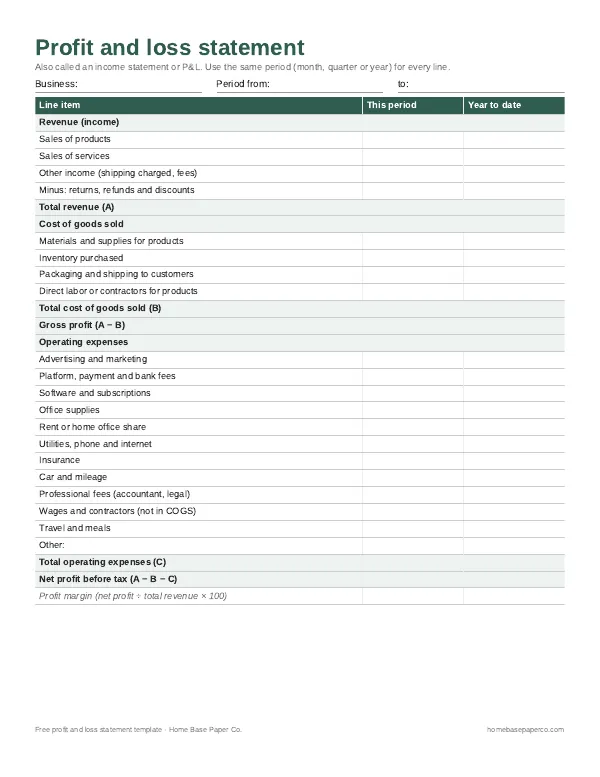
- Next step: Plan it with the Business Income & Expense Tracker ($7.99).
1099 vs W2 is really a question about worker status. A W2 employee works for a business that withholds their taxes and usually provides benefits. A 1099 independent contractor runs their own business, gets paid in full and handles their own taxes. The IRS explains in independent contractor or employee? that the label is not a choice. It depends on how much the business controls the work. Here is how the two compare on taxes, pay, benefits and paperwork. This is general information, not tax or legal advice. Rules change, so check the IRS pages linked here or a tax professional for your situation.
1099 vs W2 at a glance
| Question | W2 employee | 1099 contractor |
|---|---|---|
| Tax form received | Form W-2. | Form 1099-NEC. |
| Income tax withheld? | Yes, by the employer. | No; pays estimated tax. |
| Social Security and Medicare | Split with the employer. | Pays both halves as self-employment tax. |
| Benefits | Often health insurance, retirement match, paid leave. | Usually none; funds their own. |
| Control over work | Employer directs how and when. | Worker controls methods and schedule. |
| Business expense deductions | Generally no. | Yes, on Schedule C. |
| Unemployment insurance | Usually covered. | Usually not covered. |
| Overtime and minimum wage protection | Often yes. | Generally no. |
What a W2 means
Form W-2 is the wage and tax statement. The IRS page about Form W-2 says every employer engaged in a trade or business that pays an employee must file one for each employee. It shows wages and the income tax, Social Security and Medicare withheld. Employers send it by January 31 for the prior year.
As a W2 employee, your employer pays half of your Social Security and Medicare taxes, 7.65% of wages, and you pay the other 7.65% through withholding. You fill out Form W-4 to set your income tax withholding.
Thinking about contract work on the side? Our side hustle ideas list covers 50 options and the tax basics for each.
What a 1099 means
Form 1099-NEC reports nonemployee compensation. The IRS page about Form 1099-NEC explains it is used to report payments to people who are not employees, such as freelancers and independent contractors. Businesses file it for contractors they pay above the IRS reporting threshold, which has been $600 for years and is rising for payments made from 2026, so check the current instructions. You must report all your business income whether or not you get a form.
How taxes differ
The biggest money difference is payroll tax. The IRS page on self-employment tax says the rate is 15.3%: 12.4% for Social Security and 2.9% for Medicare. You owe it if your net self-employment earnings are $400 or more. The Social Security part stops at an annual wage cap, but the Medicare part applies to all net earnings.
| Tax item | W2 | 1099 |
|---|---|---|
| Social Security | 6.2% from you, 6.2% from employer. | 12.4% from you. |
| Medicare | 1.45% from you, 1.45% from employer. | 2.9% from you. |
| Deduct half of payroll tax? | Not applicable. | Yes, half of SE tax is deductible. |
| How income tax is paid | Withheld from each paycheck. | Quarterly estimated payments. |
| Business expenses | Generally not deductible. | Deductible on Schedule C. |
Contractors who do not pay enough during the year can owe an underpayment penalty, so quarterly payments matter.
Quarterly estimated taxes for 1099 workers
Because no one withholds tax from a contractor's pay, the IRS expects payments during the year. Estimated taxes are usually due four times a year, in mid-April, mid-June, mid-September and mid-January of the next year. Each payment covers income tax and self-employment tax on what you earned in that period. See paying quarterly estimated taxes for the 2026 due dates and three ways to figure the amount.
A simple habit works for many freelancers: move a fixed share of every client payment into a separate savings account the day it arrives. Many set aside 25% to 30%, adjusted for their tax bracket and state. If you also have a W2 job, you can instead raise your W-4 withholding there to cover your side income.
Other 1099 forms you may see
| Form | What it reports |
|---|---|
| 1099-NEC | Pay for services from a business client. |
| 1099-K | Payments through card processors and payment apps, above IRS thresholds. |
| 1099-MISC | Rents, prizes and certain other payments. |
| 1099-INT and 1099-DIV | Interest and dividends, not work income. |
The same payment should not be reported twice on two forms. If it is, keep records that show the total so you report your income once.
How the IRS decides: control
The IRS looks at the whole relationship and the right to direct and control the worker. It groups the facts into three categories:
- Behavioral control. Does the business control what the worker does and how, through instructions, training or set hours?
- Financial control. Does the worker invest in their own tools, have unreimbursed expenses, work for other clients and have a chance of profit or loss?
- Relationship of the parties. Are there written contracts, benefits, an expectation the work continues, and is the work a key part of the business?
No single factor decides it. If it is unclear, either the business or the worker can file Form SS-8 to ask the IRS for a ruling.
Comparing a 1099 rate with a W2 salary
A higher 1099 rate does not always mean more money. To compare, add up what a W2 job provides that you would pay for yourself:
| Cost to replace | What to estimate |
|---|---|
| Employer half of payroll tax | 7.65% of pay, up to the wage cap. |
| Health insurance | Your monthly premium times 12. |
| Retirement match | The percentage the employer would have added. |
| Paid time off and holidays | Weeks you would not bill. |
| Business costs | Software, equipment, insurance, accounting. |
| Unbilled time | Admin, marketing and finding clients. |
Worked example: a W2 job pays $60,000. Employer payroll tax adds about $4,590. Say health insurance is worth $6,000, a 4% match is $2,400, and three weeks of paid leave is about $3,460. That is roughly $76,450 of value. A contractor who bills 46 weeks a year at 40 hours would need about $41.50 an hour just to match it, before business costs and unbilled admin time. That is about 44% more than the $28.85 hourly equivalent of the salary.
Pros and cons for workers
| W2 employee | 1099 contractor | |
|---|---|---|
| Pros | Steady pay, benefits, withholding done for you, legal protections. | Flexibility, choice of clients, expense deductions, often higher rates. |
| Cons | Less control, fewer deductions. | Uneven income, self-funded benefits, quarterly taxes, more paperwork. |
For businesses hiring workers
Hiring a contractor can mean less paperwork and no payroll taxes or benefits. But treating someone as a contractor when the IRS would see them as an employee can bring back taxes, penalties and interest. A worker who believes they were misclassified can use Form 8919 to report their share of Social Security and Medicare. If you control someone's hours, methods and tools, and the work is core to your business, treat them as an employee or get professional advice. If you hire an employee instead, see how to write a job description, including FLSA status.
State rules can be stricter
Federal rules are only part of the picture. Some states use their own, stricter tests for unemployment insurance, wage laws and workers' compensation. A worker can be a contractor for one purpose and an employee for another. If you hire in more than one state, check each state's labor department guidance.
Records to keep
Contractors should keep invoices, bank deposits, 1099 forms received, receipts, a mileage log and estimated tax payment confirmations. Businesses should keep each contractor's Form W-9, contracts and payment records. The IRS generally recommends keeping tax records for at least three years.
For a plain-English overview of keeping these records, see what is bookkeeping.
Moving from W2 to 1099
If you are leaving a job to freelance, set up a separate bank account, track every payment and expense, set aside part of each payment for taxes and learn the quarterly estimated tax dates. Keep your mileage log and receipts from day one. Price your work using the comparison above, not your old hourly wage. Our guide on how to track business expenses walks through a simple system. If you're still choosing a side income, our guide to how to make money online compares legit options.
Questions to ask before you accept 1099 work
- Who sets my hours and methods?
- Do I supply my own tools and software?
- Can I take other clients at the same time?
- How and when will invoices be paid?
- Is there a written contract that describes the project, not a job?
If most answers point to the client controlling the work, the role may really be employment.
Track 1099 income and expenses
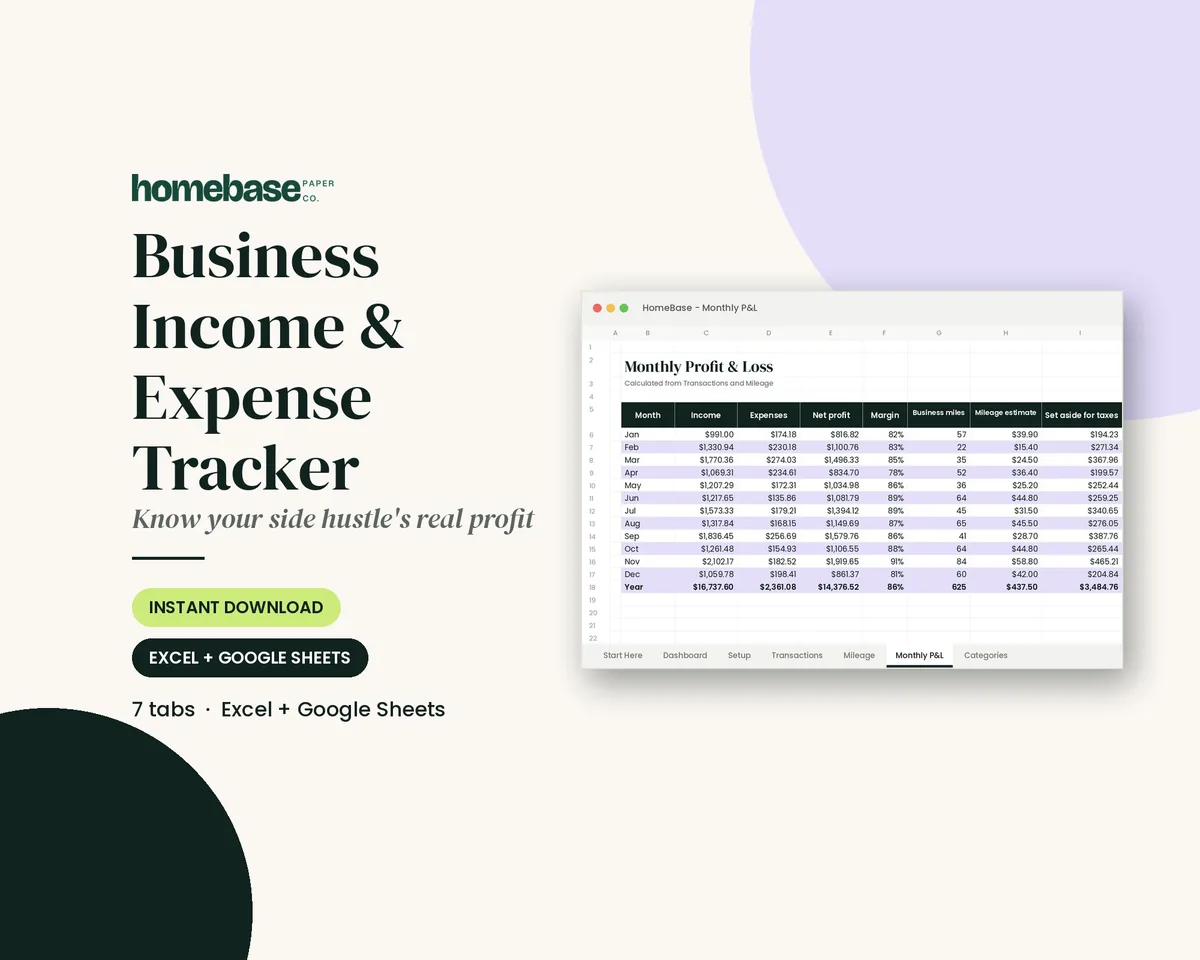
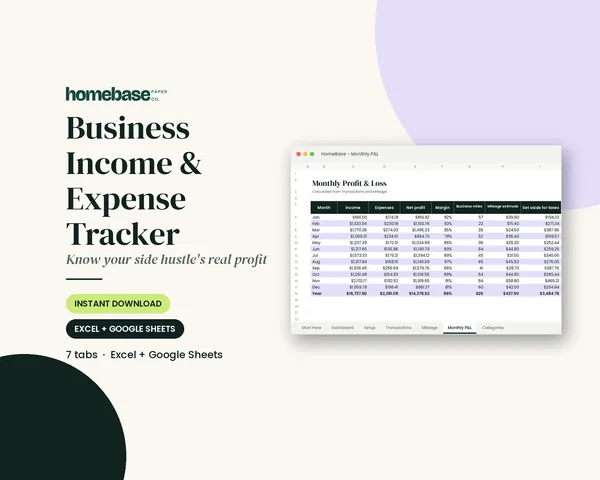
The Business Income & Expense Tracker ($7.99, Excel and Google Sheets) is built for this. It has an income and expense log with a category dropdown, a monthly profit and loss, a mileage log with a deduction estimate, a tax set-aside estimate each month, category totals and a dashboard. At tax time, your Schedule C numbers are already sorted.
As the business grows, learn how a general ledger organizes every transaction by account.
Related guides: small business tax deduction checklist, mileage log for taxes and tax documents checklist.
Make it easier
Tools for this
Spreadsheets
Business Income & Expense Tracker
Log sales, expenses and business miles - see your monthly profit, category totals for tax time and how much to set aside.
Frequently asked questions
What is the difference between 1099 and W2? The difference between 1099 and W2 is worker status: a W2 is issued to employees, whose employer withholds income tax and pays half of Social Security and Medicare, while a 1099-NEC is issued to independent contractors, who get paid in full and handle their own taxes, including self-employment tax. Employees usually get benefits; contractors usually do not.
Is 1099 or W2 better? Neither is better for everyone. W2 work offers tax withholding, an employer share of payroll taxes and often benefits like health insurance and paid leave. 1099 work offers more control over when and how you work and lets you deduct business expenses, but you pay all of your self-employment tax and fund your own benefits.
Do 1099 workers pay more taxes? Usually 1099 workers pay more in payroll taxes, because they pay both halves of Social Security and Medicare. The IRS sets the self-employment tax rate at 15.3%, made of 12.4% for Social Security and 2.9% for Medicare. Contractors can deduct half of it, plus their business expenses, which lowers the gap.
How much more should a 1099 contractor charge than a W2 salary? A common rule of thumb is that a 1099 contractor needs roughly 20% to 50% more than an equivalent W2 wage to come out even, to cover the employer half of payroll taxes, health insurance, retirement contributions, unpaid time off and business costs. The right number depends on which benefits you would lose.
How does the IRS decide if someone is a 1099 contractor or W2 employee? The IRS looks at the whole relationship and how much the business has the right to direct and control the work. It groups the evidence into behavioral control, financial control and the relationship of the parties. If it is unclear, the business or the worker can file Form SS-8 to ask the IRS to decide.
Can you be both 1099 and W2? Yes, you can be both 1099 and W2 in the same year, such as a W2 job plus freelance work on the side. You would get a W2 from your employer and a 1099-NEC from clients that pay you above the reporting threshold. You report both on your tax return, with the freelance income on Schedule C.
When do you get a W2 or a 1099? Employers must give W2s to employees by January 31 for the prior year. Businesses that pay contractors for services above the IRS reporting threshold generally file Form 1099-NEC and send a copy by January 31 too. Contractors must report all business income, even if they do not receive a 1099.
Do 1099 workers have taxes taken out? No, 1099 workers usually do not have taxes taken out of their pay. They are responsible for paying their own income tax and self-employment tax, often through quarterly estimated tax payments. Setting aside a share of each payment, often 25% to 30%, helps avoid a big bill in April.
What can 1099 workers deduct? 1099 workers can deduct ordinary and necessary business expenses, such as supplies, software, business mileage, a portion of a home office if it qualifies, professional fees and health insurance premiums in many cases. They can also deduct half of their self-employment tax. Keep receipts and a log for each expense.
What happens if a company misclassifies a W2 employee as 1099? If a company treats an employee as a 1099 contractor when they should be W2, it can owe back payroll taxes, penalties and interest, and the worker may be owed benefits and overtime. A worker who thinks they were misclassified can file Form SS-8 with the IRS, and may use Form 8919 to report their share of Social Security and Medicare.
How do 1099 workers keep track of income and expenses? Track every payment and expense as it happens in one place. The Business Income & Expense Tracker ($7.99, Excel and Google Sheets) has an income and expense log with category dropdowns, a monthly profit and loss, a mileage log with a deduction estimate and a monthly tax set-aside estimate.
More from HomeBase
You may also like

Printables
Budget Planner Printable
Twelve undated pages you can print every month: budget, bills, spending, savings and debt.
Spreadsheets
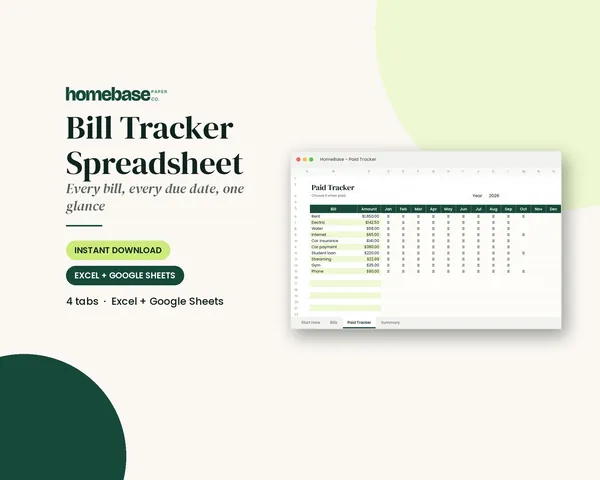
Bill Tracker Spreadsheet
Bills due in 3 days or less light up red, so nothing slips through.
Spreadsheets
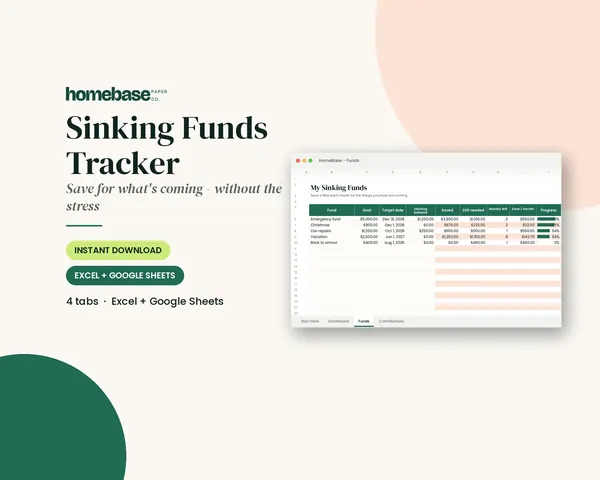
Sinking Funds Tracker
It does the math: how much to set aside each month to hit every goal on time.
Spreadsheets
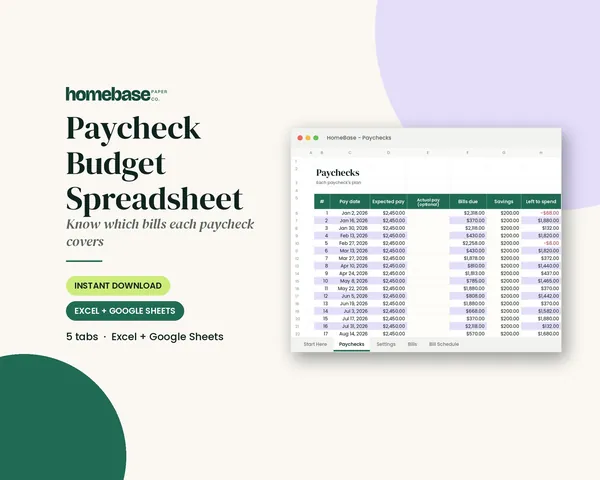
Paycheck Budget Spreadsheet
Enter your bills once. The sheet tells you which paycheck pays each one, all year.
 Club
Monthly club
Money Club
Anyone who wants a clear plan for the month's bills, holiday spending and savings.
Free printable
Know your real profit: get the free P&L template
A printable profit and loss statement that walks through revenue, costs and expenses line by line for any month, quarter or year. You'll also get our weekly HomeBase email with simple small business paperwork and money tips.