The short answer: to pay quarterly taxes, estimate this year's profit, figure the self-employment and income tax on it, subtract any withholding and send the IRS about one-fourth of the total by each due date.
- 2026 due dates: April 15, June 15 and September 15, 2026, and January 15, 2027
- Who pays: generally if you expect to owe $1,000 or more
- Pay online through your IRS Online Account or IRS Direct Pay, free from a bank account
- Don't forget state estimated taxes
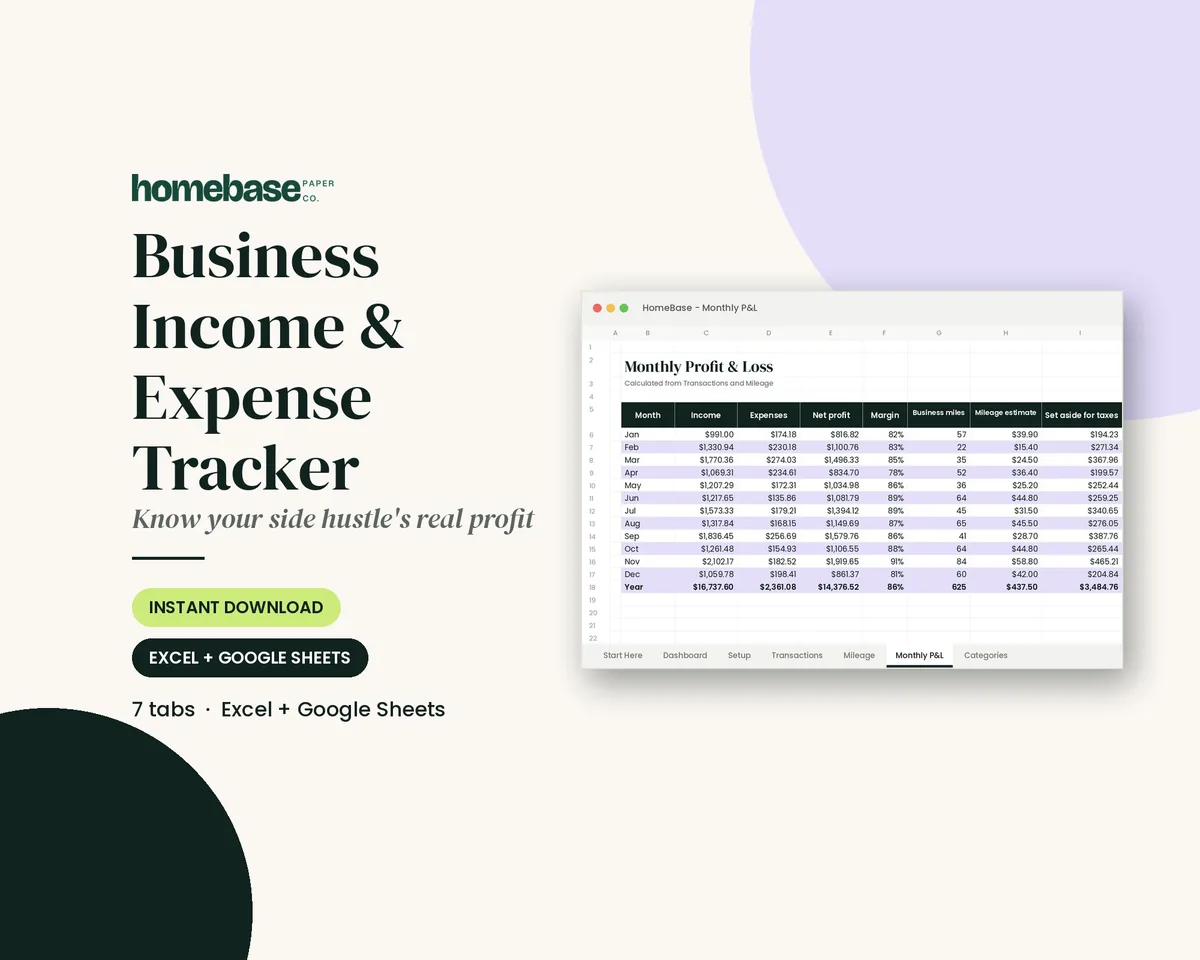
- Next step: Plan it with the Business Income & Expense Tracker ($7.99).
To pay quarterly taxes, estimate this year's profit, figure the self-employment tax and income tax on it, subtract any withholding, and send the IRS about one-fourth of the total by each due date. For 2026 income, the dates are April 15, June 15 and September 15, 2026, and January 15, 2027. The fastest way to pay is online through your IRS Online Account or IRS Direct Pay, which are free from a bank account.
Below: who has to pay, three ways to figure the amount, a worked example with real numbers, every payment method, and a routine so a due date never sneaks up on you.
A quick note before we start: this is general education, not tax advice. If your situation is complicated, a tax professional can check your numbers.
Who has to pay quarterly taxes?
Quarterly taxes, which the IRS calls estimated taxes, are how you pay tax on income nobody withholds from. If you freelance, sell crafts, drive for an app, tutor or run any side hustle, the IRS still expects that tax during the year, not all at once in April.
According to the IRS page on estimated taxes, individuals, including sole proprietors, partners and S corporation shareholders, generally have to make estimated payments if they expect to owe $1,000 or more when they file. That includes both income tax and self-employment tax.
You may not need to pay if:
- Your withholding covers it. If you also have a W-2 job, extra withholding can cover your side income (more on that below).
- You owed nothing last year. The IRS says you don't have to pay estimated tax if you had no tax liability for the prior year, were a U.S. citizen or resident alien for the whole year, and your prior tax year covered 12 months.
- You'll owe less than $1,000 after withholding and credits.
A separate threshold matters too. Per the IRS page on self-employment tax, you owe self-employment tax and file Schedule SE once your net earnings from self-employment reach $400. So even a small side hustle creates a tax bill. Whether it needs quarterly payments depends on that $1,000 test.
Not sure if you count as self-employed? Our guide to 1099 vs. W2 explains the difference.
Quarterly tax due dates for 2026
The "quarters" aren't equal. The IRS splits the year into four payment periods of three, two, three and four months.
| Payment | Income earned | Due date (2026 tax year) | Months covered |
|---|---|---|---|
| 1st | January 1 – March 31 | April 15, 2026 | 3 |
| 2nd | April 1 – May 31 | June 15, 2026 | 2 |
| 3rd | June 1 – August 31 | September 15, 2026 | 3 |
| 4th | September 1 – December 31 | January 15, 2027 | 4 |
The 2026 Form 1040-ES lists these dates. It also gives one exception: you don't have to make the January 15, 2027 payment if you file your 2026 return by February 1, 2027 and pay the entire balance with it. If a due date falls on a weekend or legal holiday, the payment is on time if you make it the next business day.
If you're reading this in the fall, your next payment is the January one. It covers four months of income, including any holiday rush, so plan for it before December bills land.
My years as an executive assistant taught me that the best way to keep a deadline is to put it on the calendar the day you learn about it. Add all four dates now, with a reminder one week before each.
How to calculate quarterly taxes: 3 methods
| Method | How it works | Best for |
|---|---|---|
| Prior-year safe harbor | Pay 100% of last year's total tax, split into four payments (110% if last year's AGI was over $150,000, or $75,000 if married filing separately). | Steady or growing income; anyone who wants a simple, fixed number |
| Current-year estimate | Estimate this year's tax and pay at least 90% of it in four payments. | Income that will be lower than last year |
| Annualized income | Figure each payment from what you actually earned so far, using the worksheet in Publication 505 and Form 2210. | Uneven or seasonal income |
The IRS says most people avoid the underpayment penalty if they owe less than $1,000 after withholding and credits, or if they paid at least 90% of this year's tax or 100% of last year's, whichever is smaller. The higher 110% figure comes from the Form 1040-ES instructions.
Method 1: The prior-year safe harbor
This is the simplest. Find the total tax on last year's return (on Form 1040, that's line 24). Divide it by four, then subtract the withholding you expect in each period.
Example: Your 2025 total tax was $4,000. This year your day job will withhold $2,500. You need to cover $4,000 total, so $1,500 has to come from estimated payments. That's $375 per quarter.
The safe harbor protects you from the penalty, not from the bill. If your side hustle grew, you'll still owe the difference in April, so keep saving.
Method 2: Estimate this year's tax
This is what the worksheet in Form 1040-ES walks you through. Here's the simplified version for a side hustle.
- Estimate your net profit for the year. That's business income minus business expenses. If you track your numbers, this takes five minutes. If you don't, start with our guide on how to track business expenses.
- Figure self-employment tax. Multiply your net profit by 92.35% (0.9235), then multiply that by 15.3%. The IRS sets the rate at 15.3%: 12.4% for Social Security and 2.9% for Medicare.
- Take half of the self-employment tax as a deduction. The IRS lets you deduct the employer-equivalent half when figuring your income tax.
- Figure income tax on what's left. Use your expected tax bracket on the extra income. Our tax brackets tables show the 2026 rates by filing status.
- Add the two taxes, subtract withholding and credits, and divide by four.
A worked example with real numbers
Say you have a W-2 job and a side hustle that will earn $20,000 in net profit this year. Your extra income lands in the 12% federal bracket.
| Step | Math | Result |
|---|---|---|
| Net earnings for SE tax | $20,000 × 0.9235 | $18,470 |
| Self-employment tax | $18,470 × 15.3% | $2,826 |
| Half of SE tax (deductible) | $2,826 ÷ 2 | $1,413 |
| Income subject to income tax | $20,000 − $1,413 | $18,587 |
| Income tax at 12% | $18,587 × 12% | $2,230 |
| Total tax on the side hustle | $2,826 + $2,230 | $5,056 |
| Quarterly payment | $5,056 ÷ 4 | $1,264 |
That's about 25% of the profit. This simplified example skips other deductions and credits, such as the qualified business income deduction, which can lower the bill, and it leaves out state tax. It's a planning number, not your final tax. If your day job already over-withholds, your payments could be smaller.
Method 3: Annualized income for uneven earnings
If most of your money comes in one season, equal payments can mean paying tax on income you haven't earned yet. The annualized method lets you pay less early and more later, matching when you earned it. You show it with Form 2210 when you file. It takes more math, so tax software or a preparer helps here.
How to pay quarterly taxes: every method
The IRS payments page lists all the ways to pay. Here's how they compare for estimated tax.
| Method | Cost | Good to know |
|---|---|---|
| IRS Online Account | Free from a bank account | You can see your payment history in the same place, which makes tax time easier. |
| IRS Direct Pay | Free from a bank account | No sign-in needed. Save your confirmation number. |
| EFTPS | Free | You must enroll first, so set it up well before a due date. Good for scheduling payments ahead. |
| Debit card, credit card or digital wallet | Processor fees apply | Convenient, but the fee adds cost. Credit card interest adds more if you carry a balance. |
| IRS2Go app | Same as the method you choose | Pay from your phone. |
| Check or money order with a 1040-ES voucher | Postage | Payable to "United States Treasury." The U.S. postmark date counts as the payment date. |
When you pay online, choose estimated tax (1040-ES) as the reason and the correct tax year. In January, that means choosing 2026 for the payment covering September through December, not 2027.
The IRS also says you can pay weekly, biweekly or monthly, as long as enough is paid by the end of each period. A monthly payment can feel more like a regular bill.
Have a W-2 job and a side hustle? You have another option
If you also earn a paycheck, the IRS says you can avoid estimated payments by asking your employer to withhold more. File a new Form W-4 and enter the extra amount you want taken out of each paycheck.
This works well for a few reasons:
- It's automatic. No due dates to remember.
- Timing is forgiving. Publication 505 explains that, for figuring the penalty, withholding is generally treated as paid in equal parts on each due date unless you choose to use the actual dates. So raising your withholding late in the year can help make up for earlier quarters.
- It's easy to adjust. Change your W-4 when your side income changes.
The trade-off is a smaller paycheck. With irregular side income, you might combine modest extra withholding with a payment in your best months. Our guide to budgeting with irregular income shows how to keep the household budget steady either way.
How much to set aside from every payment you receive
The easiest way to make quarterly taxes painless is to never touch the tax money in the first place. Every time a client pays you or a sale comes in, move a set percentage into a separate savings account labeled "taxes."
A common rule of thumb is 25% to 30% of profit, which matches the worked example above. Your real number depends on your bracket, your state and your deductions, so use your own estimate once you have one.
Here's the routine I'd suggest:
- Open a separate savings account just for taxes. Treat it like a sinking fund with a due date.
- Transfer your percentage the same day the money arrives.
- Pay each estimated payment from that account. Whatever's left after your April filing is a buffer for next year.
- Recheck your percentage every quarter. If profit grew, raise it. For more on this topic, see our taxes hub.
Separate business and household accounts make this easier. Mixing them is how a tax payment ends up spent on groceries.
Track your numbers so the math takes minutes
Every method above starts with your profit so far. If your numbers are scattered across bank apps and receipts, you'll guess. Guessing low leads to penalties; guessing high ties up money you need.
A simple log fixes that. Record each sale and business expense as it happens, with the date, amount and category, and keep business miles in a mileage log. Before each due date, total the period, update your estimate and pay.
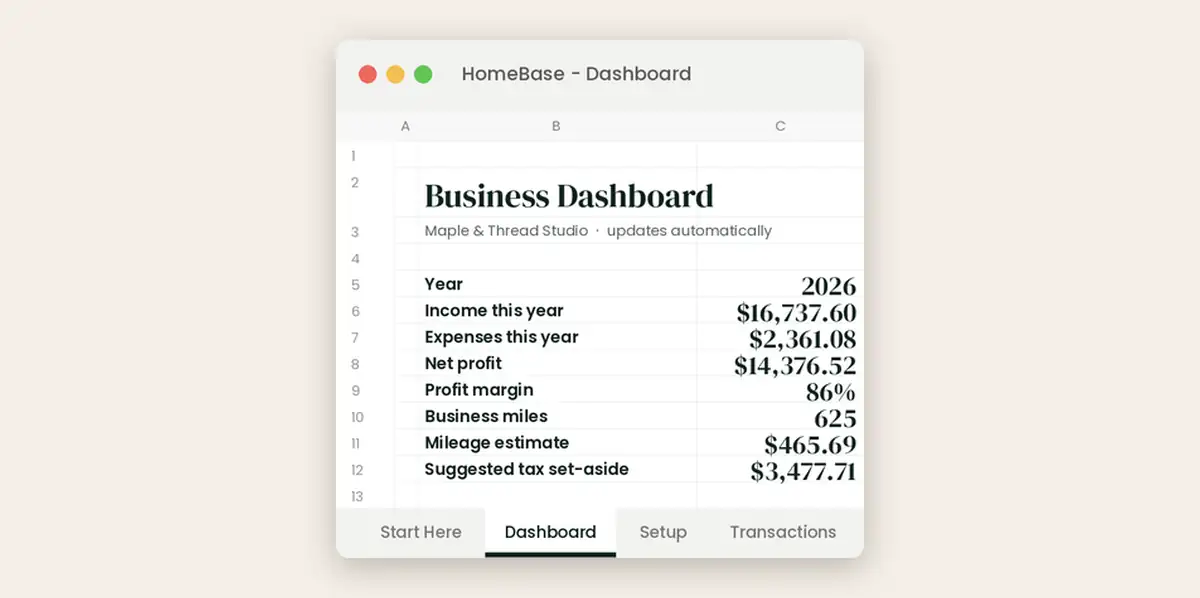
The Business Income & Expense Tracker ($7.99, Excel and Google Sheets) does this math for you. You log income, expenses and miles once, and it shows your monthly profit and loss, category totals for tax time and a monthly tax set-aside estimate. If you'd rather start with something basic, our free small business expense spreadsheet is a simple log with a category dropdown and a summary tab. You can browse all of our Spreadsheets for Excel and Google Sheets, too.
Also keep a short record of every estimated payment: the date, amount, tax year, method and confirmation number. You'll enter the total on your return, and your preparer will ask for it. Our tax documents checklist covers everything else to gather.
A year-round quarterly tax routine
| When | What to do | Time |
|---|---|---|
| Every payment you receive | Move your set-aside percentage to the tax account. | 1 minute |
| Weekly | Log income, expenses and miles. | 15 minutes |
| Monthly | Reconcile with your bank statement and check profit so far. | 30 minutes |
| One week before each due date | Total the period, update your estimate and pay online. Save the confirmation. | 20 minutes |
| January | Make the 4th payment (or plan to file by early February and pay in full). | 20 minutes |
| At filing time | Enter all four payments, then use this year's total tax to set next year's safe harbor. | Part of filing |
Our end-of-year financial checklist pairs well with that January step.
What if you missed a payment or paid too little?
Don't panic, and don't wait for April. Pay what you owe for that period as soon as you can.
The IRS says you may owe a penalty if you didn't pay enough by each due date, even if you end up getting a refund when you file. The penalty is figured on how much was short and for how long, so paying late is still better than not paying. When you file, Form 2210 shows whether you owe a penalty and lets you use the annualized method if your income was uneven.
The IRS may also waive the penalty if the underpayment came from a casualty, disaster or other unusual circumstance, or if you retired after age 62 or became disabled and had reasonable cause.
If you paid too much, nothing bad happens. You'll get it back as a refund or can apply it to next year's estimated tax.
Don't forget state estimated taxes
Many states with an income tax also expect estimated payments from self-employed people, with their own forms, thresholds and due dates. Check your state revenue department's website and add those dates to the same calendar.
Common quarterly tax mistakes
- Choosing the wrong tax year online, especially with the January payment.
- Forgetting self-employment tax. It's 15.3% before income tax, which is why side hustlers who only plan for income tax come up short.
- Spending the tax money. Move it the same day it arrives.
- Ignoring business expenses. Untracked expenses mean higher profit on paper and higher tax. Our small business tax deduction checklist helps you catch them.
Quarterly taxes, made routine
Paying quarterly taxes comes down to three habits: know your profit, set aside a share of every payment, and pay four times a year. Then a due date is just another bill on the calendar.
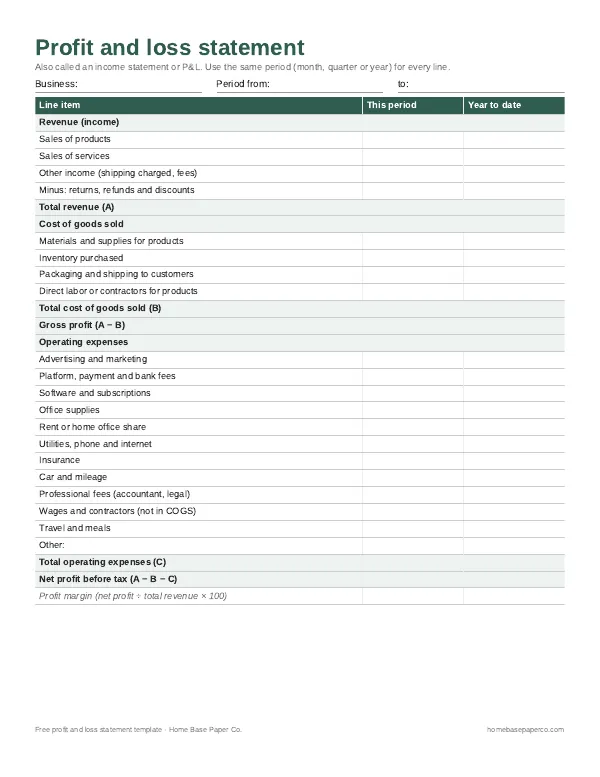
If you want the numbers done for you, the Business Income & Expense Tracker ($7.99) keeps your income, expenses, miles and monthly tax set-aside estimate in one spreadsheet, so each quarterly payment starts with a real number instead of a guess. Pair it with our profit and loss statement template when you want a clean summary for your preparer.
For personal deductions beyond your business, see our tax deductions list for 2026. If you take the standard deduction instead of itemizing, that page has the current amounts by filing status.
Make it easier
Tools for this
Spreadsheets
Business Income & Expense Tracker
Log sales, expenses and business miles - see your monthly profit, category totals for tax time and how much to set aside.
Frequently asked questions
How do I pay quarterly taxes? You pay quarterly taxes to the IRS online, by phone, by app or by mail with a Form 1040-ES voucher. The free options are your IRS Online Account, IRS Direct Pay and EFTPS, all from a bank account. Choose estimated tax (1040-ES) as the payment type and pick the correct tax year, then save the confirmation number.
When are quarterly taxes due for 2026? Quarterly taxes for 2026 income are due April 15, June 15 and September 15, 2026, and January 15, 2027. The periods are uneven: January–March, April–May, June–August and September–December. You can skip the January payment if you file your 2026 return by February 1, 2027 and pay the full balance with it.
How do I calculate quarterly estimated taxes? The Business Income & Expense Tracker ($7.99, Excel and Google Sheets) gives you your profit so far and a monthly tax set-aside estimate, which is the starting point for the math. Then multiply net profit by 92.35% and by 15.3% for self-employment tax, add income tax on the rest at your bracket, subtract withholding and divide by four. Form 1040-ES has the full IRS worksheet.
How much should I set aside for taxes from a side hustle? A common rule of thumb is to set aside 25% to 30% of your side hustle profit for taxes. The Business Income & Expense Tracker ($7.99) estimates a monthly tax set-aside from your real income and expenses, so you can replace the rule of thumb with your own number. Self-employment tax alone is 15.3% before income tax, and your state may add more.
Who has to pay quarterly estimated taxes? You generally have to pay quarterly estimated taxes if you expect to owe $1,000 or more when you file, after withholding and credits. That includes sole proprietors, freelancers, partners and S corporation shareholders. You can skip them if you had no tax liability last year, were a U.S. citizen or resident all year and your prior tax year covered 12 months.
Do I have to pay quarterly taxes if I have a W-2 job and a side hustle? Not always, because you can cover side hustle tax with extra withholding from your W-2 job. File a new Form W-4 with your employer and enter the additional amount to withhold from each paycheck. If withholding won't cover it and you'll owe $1,000 or more, make estimated payments for the difference.
What happens if I miss a quarterly tax payment? If you miss a quarterly tax payment, you may owe an underpayment penalty, even if you get a refund when you file. Pay what you owe for that period as soon as you can, because the penalty depends on how much was short and for how long. Form 2210 figures the penalty when you file your return.
What is the safe harbor rule for estimated taxes? The safe harbor rule says you generally avoid the underpayment penalty if you pay at least 90% of this year's tax or 100% of last year's tax, whichever is smaller. If last year's AGI was over $150,000 ($75,000 if married filing separately), the prior-year figure is 110%. It protects you from the penalty, not from the balance due in April.
Can I pay estimated taxes monthly instead of quarterly? Yes, you can pay estimated taxes monthly, weekly or on any schedule you like. The IRS says that's fine as long as enough is paid by the end of each payment period. Monthly payments can make the tax feel like a regular bill instead of a big quarterly lump sum.
Do I have to make the January estimated tax payment? You don't have to make the January 15, 2027 payment if you file your 2026 return by February 1, 2027 and pay the entire balance due with it. Otherwise, the January payment covers income earned September through December and is due January 15.
Can I pay quarterly taxes with a credit card? Yes, you can pay quarterly taxes with a debit card, credit card or digital wallet through the processors listed on IRS.gov/payments. Each processor charges a fee, and credit card interest adds more if you carry a balance. Paying from a bank account through Direct Pay or your IRS Online Account is free.
Do I need to pay state estimated taxes too? Many states with an income tax also require estimated payments from self-employed people. Each state sets its own forms, thresholds and due dates, so check your state revenue department's website. Add those dates to the same calendar as your federal payments.
How do I keep track of the estimated tax payments I made? The Business Income & Expense Tracker ($7.99) keeps your income, expenses and monthly tax set-aside in one spreadsheet, and you can add a short payment log beside it. For each payment, record the date, amount, tax year, method and confirmation number. You'll enter the total on your return, and your IRS Online Account shows your payment history too.
How do I pay quarterly taxes if my income is uneven? If your income is uneven, the annualized income installment method lets you base each payment on what you actually earned so far. That means smaller payments in slow periods and larger ones after busy seasons. You show the method on Form 2210 when you file; Publication 505 has the worksheet.
Do I have to pay quarterly taxes in my first year of self-employment? In your first year of self-employment, you may not have to pay estimated tax if you had no tax liability the year before, were a U.S. citizen or resident all year and your prior tax year covered 12 months. Otherwise, estimate this year's profit and pay quarterly. If your estimate turns out too high or low, refigure it for the next payment.
More from HomeBase
You may also like
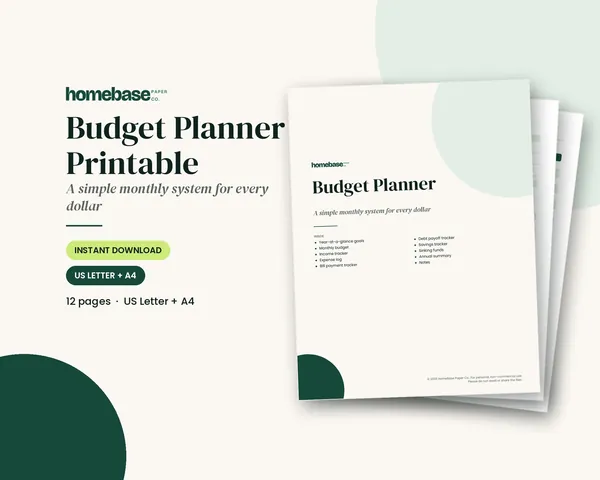
Printables
Budget Planner Printable
Twelve undated pages you can print every month: budget, bills, spending, savings and debt.
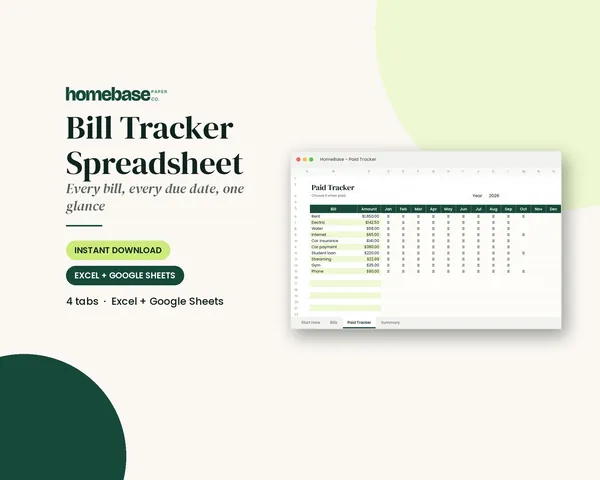
Spreadsheets
Bill Tracker Spreadsheet
Bills due in 3 days or less light up red, so nothing slips through.
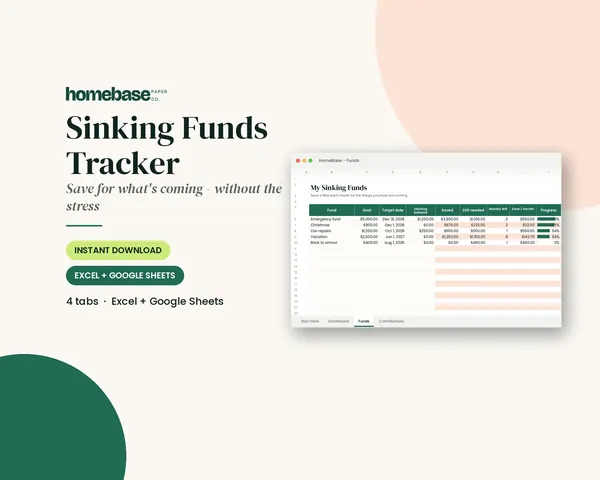
Spreadsheets
Sinking Funds Tracker
It does the math: how much to set aside each month to hit every goal on time.
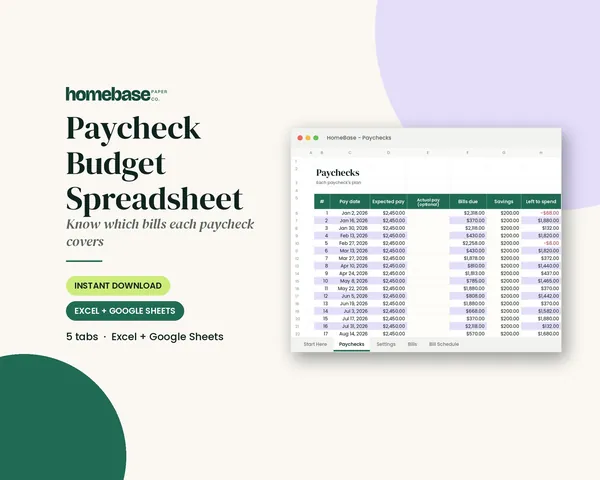
Spreadsheets
Paycheck Budget Spreadsheet
Enter your bills once. The sheet tells you which paycheck pays each one, all year.
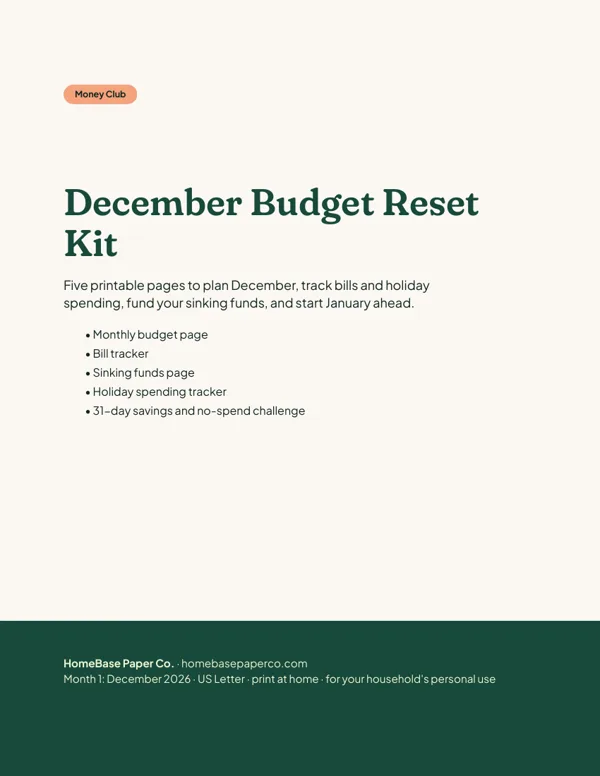 Club
Monthly club
Money Club
Anyone who wants a clear plan for the month's bills, holiday spending and savings.
Free printable
Know your real profit: get the free P&L template
A printable profit and loss statement that walks through revenue, costs and expenses line by line for any month, quarter or year. You'll also get our weekly HomeBase email with simple small business paperwork and money tips.