

The short answer: the penny challenge saves one cent on day one, two cents on day two, and a penny more each day, for $667.95 by the end of the year.
- Day 365: you save $3.65
- January total: $4.96
- Monthly totals, variations and a reverse version
- Tips to finish, like automating it
- Next step: Get the free penny challenge chart (we email it to you); want more? The 100 Envelope Savings Challenge is $3.99.
The penny challenge is one of the easiest ways to start saving: put away one cent on day one, two cents on day two, and keep adding a penny a day. On day 365 you save $3.65, and by the end of the year you've saved $667.95. It starts so small that anyone can do it, and it grows slowly enough that you barely feel it. Below you'll find how it works, what you'll save each month, versions that fit different budgets, and a free penny challenge chart you can print today.
How the penny challenge works
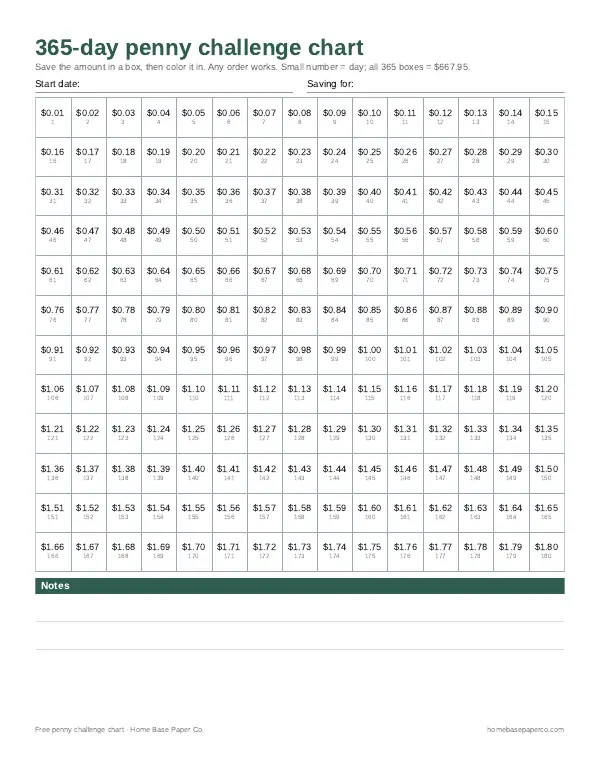
Each day, save the amount equal to the day's number in cents:
- Day 1: $0.01
- Day 50: $0.50
- Day 100: $1.00
- Day 200: $2.00
- Day 365: $3.65
Add them all up (1 + 2 + 3 + … + 365 cents) and you get 66,795 cents, or $667.95. In a leap year, adding day 366 brings the total to $671.61.
You don't need actual pennies. Most people move the day's amount to a savings account, or save a week at a time. If you prefer coins, a jar works too.
Monthly totals for the penny challenge
If you start on January 1 and save in order, here's what each month asks of you and where your running total lands:
| Month | Days | Saved that month | Running total |
|---|---|---|---|
| January | 1–31 | $4.96 | $4.96 |
| February | 32–59 | $12.74 | $17.70 |
| March | 60–90 | $23.25 | $40.95 |
| April | 91–120 | $31.65 | $72.60 |
| May | 121–151 | $42.16 | $114.76 |
| June | 152–181 | $49.95 | $164.71 |
| July | 182–212 | $61.07 | $225.78 |
| August | 213–243 | $70.68 | $296.46 |
| September | 244–273 | $77.55 | $374.01 |
| October | 274–304 | $89.59 | $463.60 |
| November | 305–334 | $95.85 | $559.45 |
| December | 335–365 | $108.50 | $667.95 |
Notice the pattern: by the end of June you've saved only about a quarter of the total. The second half of the year does most of the work, and December alone is over $100. That's when many people stall, especially with holiday spending.
Penny challenge variations
The reverse penny challenge
Start with $3.65 on day one and save one cent less each day. You still finish with $667.95, but the biggest amounts land in January and February, when motivation is high and holidays are behind you. December is a breeze, at just $4.96 for the whole month.
Pick-a-box
Print the chart and color in any box you can afford that day. On a good day, take a $3.50 box. On a tight day, take a $0.12 box. You finish when every box is filled.
Weekly penny challenge
Add up seven days at a time and make one transfer a week. Week one is $0.28; the last full week of the year is about $25. It's easier to keep up with than 365 separate transfers.
Two-penny or nickel challenge
Want to save more? Multiply every day by a number. Two cents more each day totals $1,335.90 in a year. A nickel a day more (5 cents, 10 cents, 15 cents…) totals $3,339.75.
The 100-day kids' version
Kids can do days 1 to 100, from one cent to $1.00, for a total of $50.50. It's short enough to see the finish line and a great way to teach saving with real coins.
The doubling myth
You may see a "double the penny every day" challenge. It's a fun math lesson but not a real plan. By day 30 you'd need to save more than $5 million in a single day. Stick with adding a penny.
What about the penny itself?
The penny challenge has a new twist: the U.S. has stopped making pennies. According to the Treasury's penny production FAQs, the cost of making one penny had risen to 3.69 cents, and the final circulating pennies were struck in Philadelphia in November 2025. Ending production is expected to save $56 million a year.
That doesn't affect the challenge. Pennies remain legal tender, and the Treasury says about 114 billion are still in circulation and encourages people to spend them. If you have a jar of old pennies, now's a good time to roll them and deposit them as your first few weeks of savings. And because you're saving cent amounts by transfer, the challenge works the same as ever.
Penny challenge vs. other savings challenges
How does the penny challenge stack up against the other popular challenges?
| Challenge | How it works | Total saved | Biggest single deposit |
|---|---|---|---|
| Penny challenge | 1 cent more each day for 365 days | $667.95 | $3.65 |
| 52-week challenge | $1 more each week for 52 weeks | $1,378 | $52 |
| Half envelope challenge | 100 envelopes from $0.50 to $50 | $2,525 | $50 |
| 100 envelope challenge | 100 envelopes from $1 to $100 | $5,050 | $100 |
The penny challenge saves the least, but it's also the gentlest. No single day costs more than $3.65, so it fits almost any budget. That makes it a good first challenge, a good one for kids, and a good one to run alongside a bigger goal. Our comparison of the 100 envelope challenge vs. 52-week challenge covers the larger ones in detail.
Starting the penny challenge mid-year
You don't have to start on January 1. Start on any day and count that as day one. Starting in spring or summer is a smart trick: the biggest amounts then fall in the following spring rather than in December, when holiday costs are already high. If you start on the first of a month, just shift the monthly log on page three of the free chart and write your own month names.
Penny challenge for couples and families
Doing the challenge together makes it easier to stick with. Couples can split it, with one partner taking odd days and the other even days, so each saves about $334. Families can give each child their own chart and jar and add a matching penny for each box they fill. Kids learn that small amounts really add up when they see the jar fill.
Tips to finish the penny challenge
- Give the money a job. $667.95 could start an emergency fund, cover holiday gifts or pay an annual bill. Write the goal at the top of your chart.
- Automate it. Set a weekly automatic transfer for the week's total, so you don't have to remember 365 times.
- Keep it separate. Use a savings account you don't see every day. Savings accounts at an FDIC-insured bank are covered up to at least $250,000 per bank, according to the FDIC's deposit insurance page.
- Use windfalls to catch up. If you fall behind, color in a block of boxes with a tax refund or birthday money.
- Do it with someone. A partner, friend or kid makes it more fun, and you'll keep each other going.
- Plan for December. If you start in January, the biggest days fall during the holidays. Consider the reverse version, or start mid-year so the big days land in spring.
Get the free penny challenge chart
Our free 3-page penny challenge chart has every amount from $0.01 to $3.65 in its own box with the day number, split across two pages. Page three is a monthly log with the target and running total for each month, a reverse challenge note and space to write where the money goes. Print it, stick it on the fridge and color a box every time you save.
Ready for a bigger challenge?
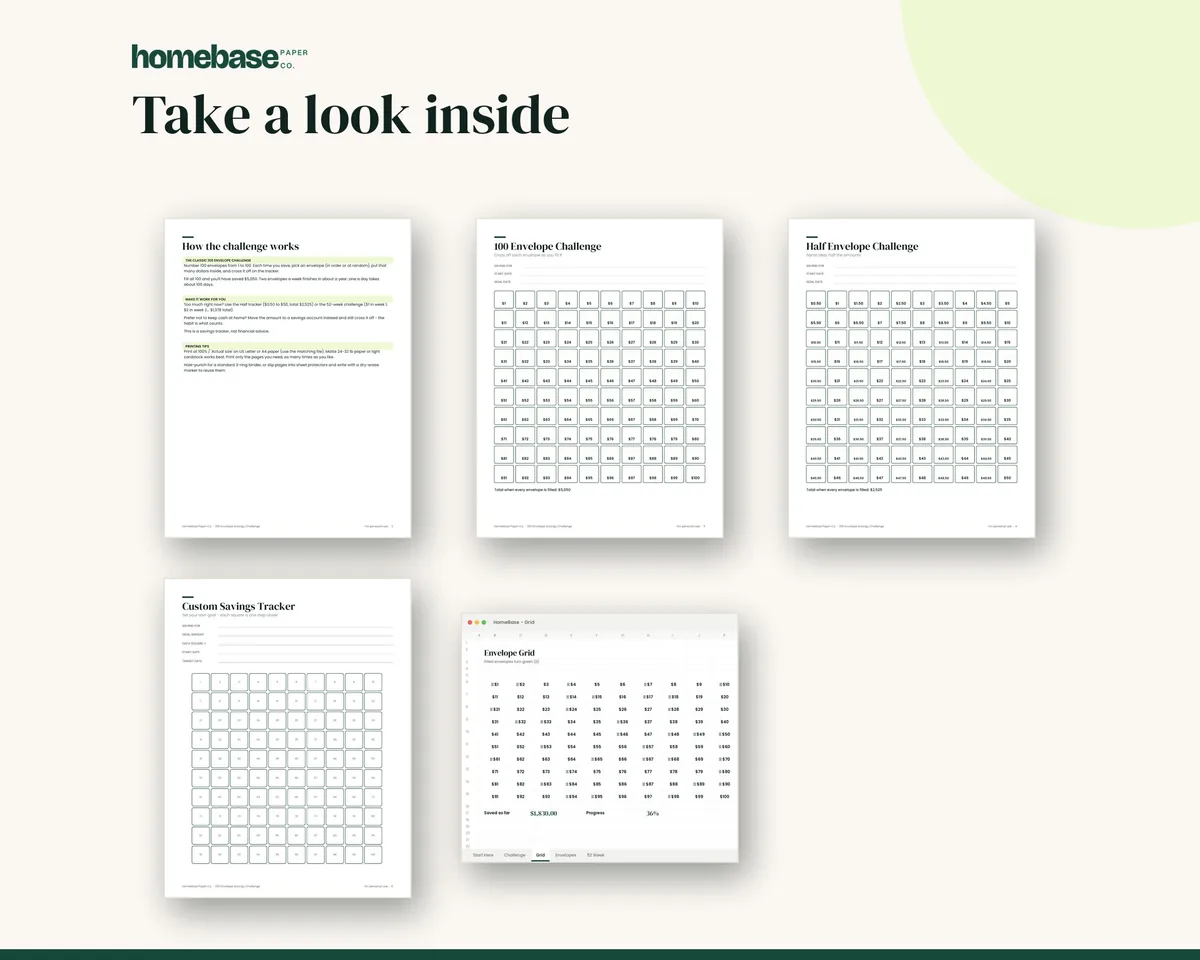
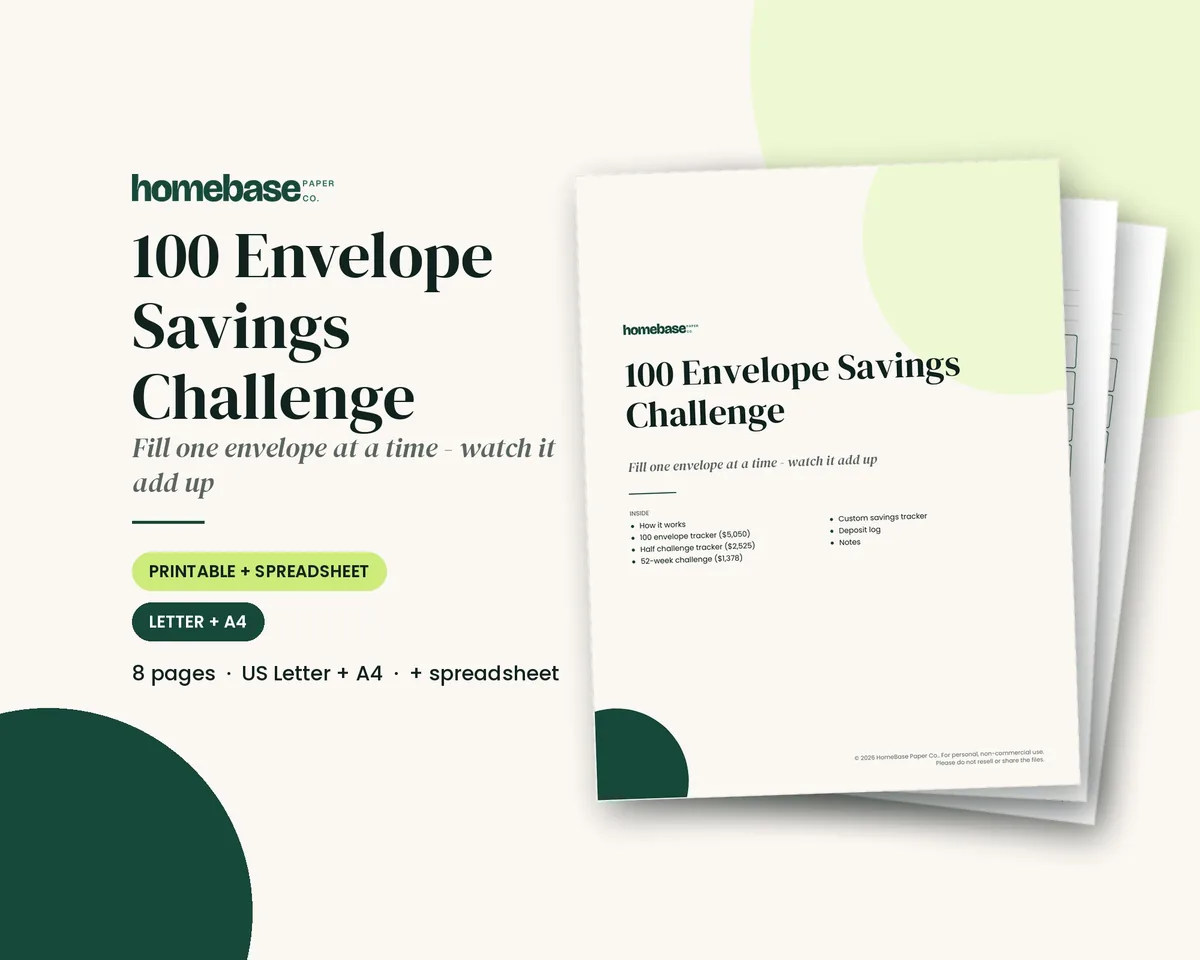
Once the penny challenge clicks, many people move on to larger challenges. Our 100 Envelope Savings Challenge ($3.99) is an 8-page PDF with 100 Envelope, Half Envelope, 52-Week and Custom Savings Tracker pages, a deposit log and a notes page, plus an xlsx version. The full 100 envelope challenge saves $5,050, and the half envelope version, from $0.50 to $50, saves $2,525. If you'd like to compare challenges first, our roundup of savings challenge ideas covers the most popular ones.
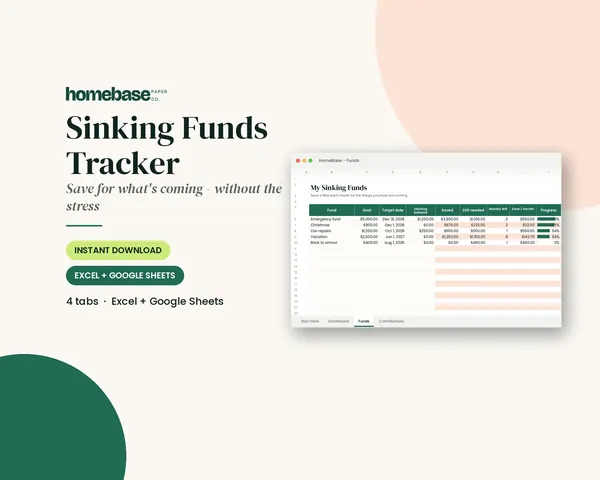
If your penny money is headed for a specific goal, the Sinking Funds Tracker ($4.99) tracks up to 20 goals with the monthly amount needed for each date, progress bars and a deposit and withdrawal log. The Ultimate Budget Bundle ($19.99) includes the Sinking Funds Tracker plus five more budgeting spreadsheets and two printables, $46.42 if bought separately.
Start today
Print the chart, write your goal at the top and save your first penny today. One cent is the easiest savings habit you'll ever start, and by next year it will be $667.95. Better still, after a year of daily saving, setting money aside won't feel like a chore anymore. It will just be part of your routine, ready to grow into a bigger challenge or a real emergency fund.
Make it easier
Tools for this
 Starter pick
Printables
100 Envelope Savings Challenge
Classic, half and 52-week challenges to print, plus a spreadsheet that tracks every envelope and tells you how much to save each week.
Spreadsheets
Sinking Funds Tracker
It does the math: how much to set aside each month to hit every goal on time.
 Save 57%
Bundles
Ultimate Budget Bundle
All 6 spreadsheets + both printable planners - for less than half the price of buying them separately.
Frequently asked questions
What is the penny challenge? The penny challenge is a year-long savings game where you save one cent on day one, two cents on day two, and keep adding a penny each day until you save $3.65 on day 365. By the end of the year, you have saved $667.95.
How much do you save with the penny challenge? You save $667.95 with the penny challenge if you finish all 365 days. That is the sum of every amount from $0.01 to $3.65. In a leap year, adding day 366 at $3.66 brings the total to $671.61.
What is the reverse penny challenge? The reverse penny challenge flips the order: you save $3.65 on day one and one cent less each day, ending with $0.01. You still save $667.95, but the hardest days come early, in January, when motivation is high and holiday spending is over.
How much do you save each month in the penny challenge? Saving in order, the penny challenge has you set aside $4.96 in January, $23.25 in March, $49.95 in June, $70.68 in August, $89.59 in October and $108.50 in December. The monthly amounts grow because each day adds a penny.
Do I need actual pennies for the penny challenge? No, you do not need actual pennies for the penny challenge. Most people transfer the day's amount, or a week's worth at once, to a savings account. The U.S. Mint has stopped making new pennies, but existing pennies remain legal tender.
Are pennies still legal tender? Yes, pennies are still legal tender. The Treasury says that although new circulating pennies are no longer being made, the roughly 114 billion pennies in circulation can still be used, and it encourages people to spend them.
Can I do the penny challenge weekly instead of daily? Yes, you can do the penny challenge weekly by adding up seven days at a time and making one transfer. Week one is $0.28, and the amounts climb from there. You can also color in boxes on the chart in any order, as long as you finish all 365.
What is the double penny challenge? The double penny challenge, where you double a penny every day, is a math lesson rather than a real plan. By day 30 you would need to save over $5 million in one day. A steadier variation is saving two cents more each day, which totals $1,335.90 in a year.
Is the penny challenge good for kids? Yes, the penny challenge is great for kids because the early amounts are small and they can see a jar fill up. Kids can save real coins and color the chart. Try a shorter 100-day version, which totals $50.50, so they see the finish line.
Where should I keep my penny challenge savings? Keep penny challenge savings in a separate savings account, ideally one that earns interest, so you are not tempted to spend it. If you are using real coins, keep a jar at home and deposit it at your bank every month.
What can I do with $667.95? With $667.95 from the penny challenge, you could start an emergency fund, cover holiday gifts, pay a car insurance premium or put a dent in a credit card balance. Decide on a goal before you start, so the money has a job.
What if I miss a day in the penny challenge? If you miss a day in the penny challenge, you can just catch up on the next day, or pick any unchecked box from the chart. The challenge is about finishing all 365 amounts, not about a perfect streak.
More from HomeBase
You may also like
Printables
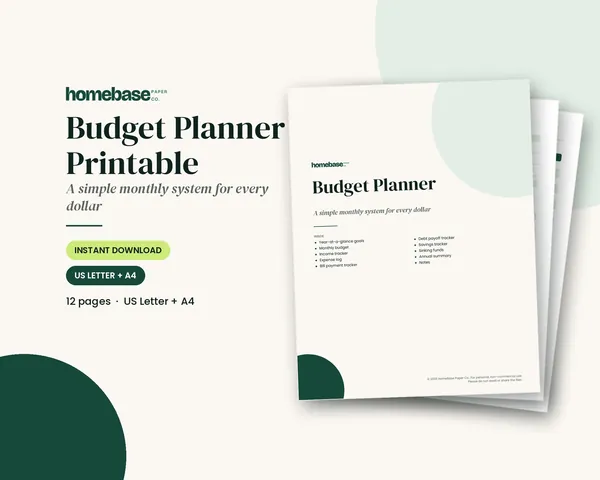
Budget Planner Printable
Twelve undated pages you can print every month: budget, bills, spending, savings and debt.
Spreadsheets
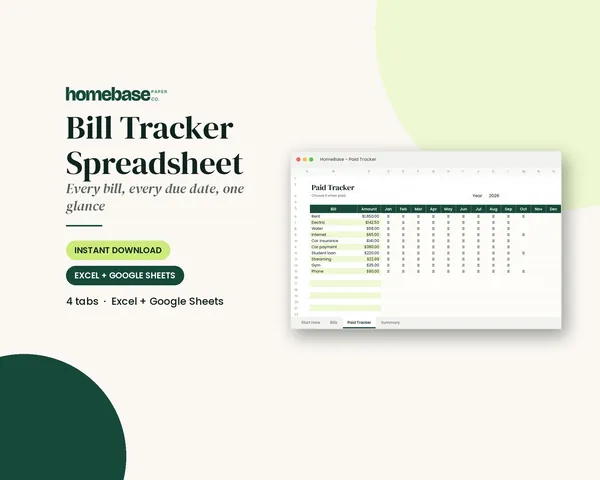
Bill Tracker Spreadsheet
Bills due in 3 days or less light up red, so nothing slips through.
Spreadsheets
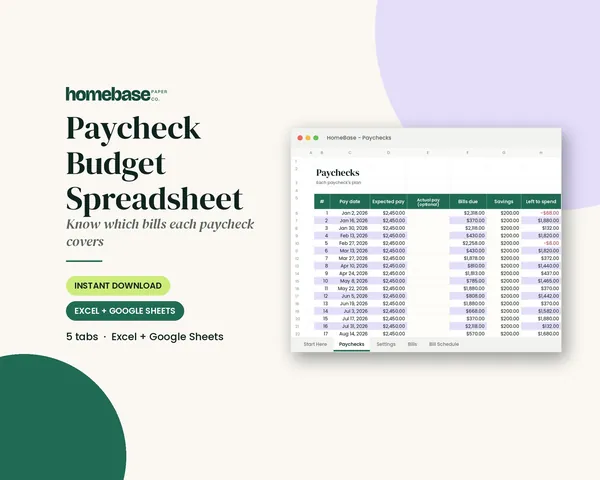
Paycheck Budget Spreadsheet
Enter your bills once. The sheet tells you which paycheck pays each one, all year.

Spreadsheets
Zero-Based Budget Spreadsheet
The 'Left to budget' counter turns green when every dollar has a job.
 Club
Monthly club
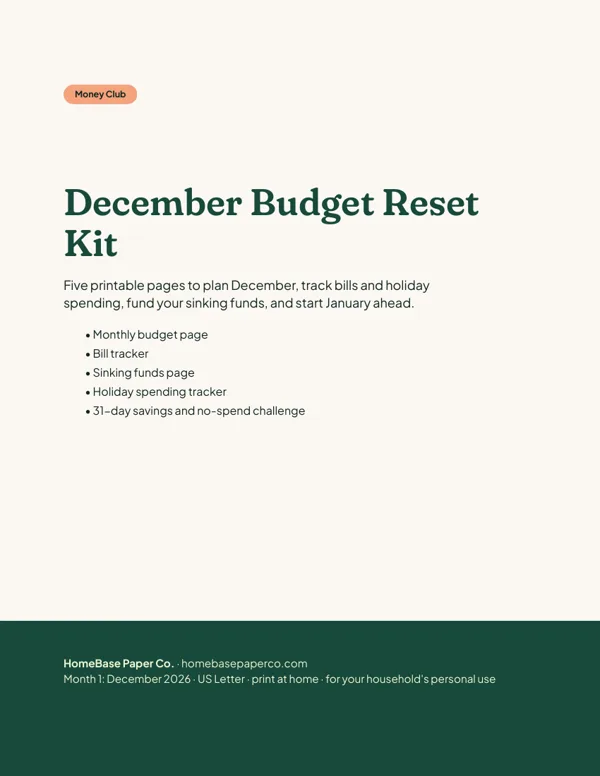
Money Club
Anyone who wants a clear plan for the month's bills, holiday spending and savings.
Free printable
Save $667.95 a penny at a time
A 365-box chart from $0.01 to $3.65 plus a monthly log. You'll also get our weekly HomeBase email with simple budgeting and bill-paying tips.
Sources
- U.S. Department of the Treasury: Penny production cessation FAQs home.treasury.gov
- FDIC: Deposit insurance fdic.gov