

The short answer: how to make money online, the legit way: trade a skill you already have for pay, sell something people want, or do small paid tasks in your spare time. Anything that promises easy money in exchange for a fee is the warning sign.
- Paths: freelance services, online tutoring, virtual assistant work, selling things you no longer use
- Start with no upfront fees and track every dollar that comes in
- Set some aside for taxes from the first payment
- Fake job signs: you have to pay first, or the pay sounds too good
- Next step: Plan it with the Business Income & Expense Tracker ($7.99).
How to make money online, the legit way, comes down to three things: trade a skill you already have for pay, sell something people want, or do small paid tasks in your spare time. Pick one path that fits the hours you really have. Start with no upfront fees, track every dollar that comes in, and set some aside for taxes from the first payment. Real online work pays for time, skill or products. Anything that promises easy money in exchange for a fee is the warning sign.
This guide walks through the honest ways to earn online and offline, how to choose one that fits a family schedule, how to spot a scam before it costs you, and what the IRS expects once the money starts. It also covers the part most "make money" lists skip: where the extra income goes once you have it.
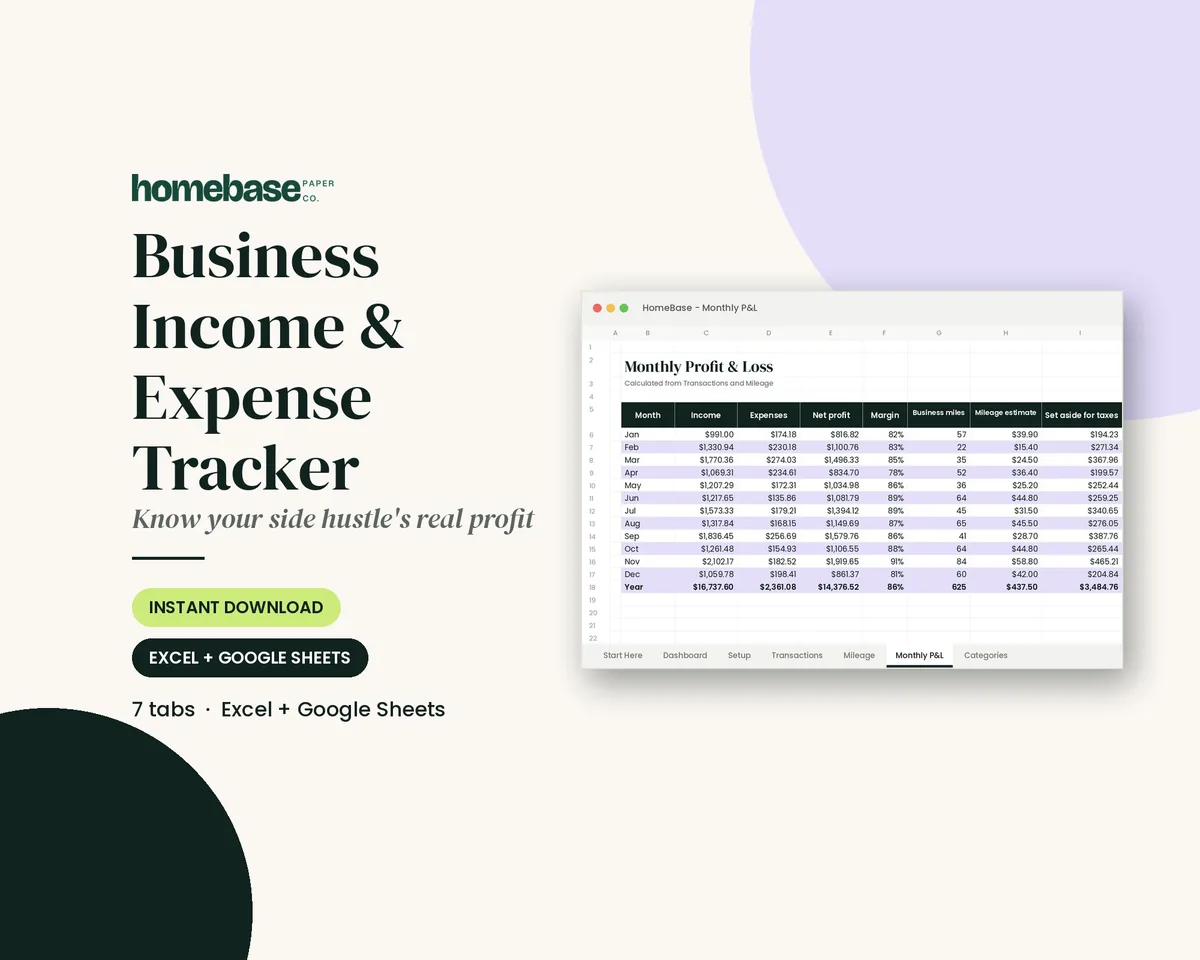
The simplest tool for that part is the Business Income & Expense Tracker ($7.99). It logs sales, expenses and business miles, then shows your monthly profit and a tax set-aside estimate, so side income never turns into a surprise in April.
Ways to make money online: a quick comparison
Not every option suits every household. Here's how the common paths compare on what they ask of you. None of them guarantees a set amount, and pay depends on your skill, your hours and your market.
| Path | What you trade | Startup cost | Time to first payment | Best fit |
|---|---|---|---|---|
| Freelance services (writing, design, bookkeeping, admin) | A skill, by the project or hour | Low | Weeks, once you land a client | People with work experience to reuse |
| Online tutoring or teaching | Knowledge of a subject or language | Low | Days to weeks | Teachers, students, bilingual adults |
| Virtual assistant work | Organization, email, scheduling | Low | Weeks | Former office and admin staff |
| Selling things you no longer use | Items already in your closets | None | Days | Anyone decluttering |
| Selling handmade or digital products | Your own designs and goods | Low to medium | Weeks to months | Makers and creators |
| Remote part-time jobs | Hours, as an employee | None | After hiring | People who want a steady paycheck |
| Small paid tasks and user testing | Short bursts of time | None | Days | Fill-in time, small amounts |
| Content, blogs and video | Time, over a long stretch | Low | Often months or longer | Patient people who enjoy creating |
Use the table to cross out what won't work this season. If you can only spare evenings after bedtime, a client with daytime calls may be the wrong fit, while selling items or doing short tasks might work fine.
Start with what you already know
The fastest legit ways to make money usually reuse skills you already have. Before you browse a single job board, take ten minutes and write three short lists.
- Jobs you've held. Office work, retail, care work, teaching or customer service all carry skills people pay for online.
- Things friends ask you to help with. Résumés, spreadsheets, party planning, sewing, baking or fixing a computer all count.
- Hours you can truly spare. Be honest. Three steady hours a week beat ten hours you can't keep.
Then match each skill to a type of buyer. A former office manager can offer scheduling and inbox help to small businesses. A strong writer can edit newsletters, résumés or product descriptions. Someone who keeps a tidy budget might offer bookkeeping support to local shops, if they learn the basics first.
My own early jobs taught me this. I worked as an executive assistant, in HR and as an ABA technician, and each role left me with skills that still carry over. The coordinating, the paperwork and the listening first all travel well. Your work history probably holds more than you think.
If you'd rather earn offline or close to home, our list of 50 side hustle ideas sorts options by startup cost and how fast they pay.
Legit ways to make money online
Here are the main paths in more detail. Each one is a real way people earn online, and each one takes effort. Read the "watch for" notes before you sign up anywhere.
Freelance services
Freelancing means you sell a skill to clients by the project or by the hour. Common services include writing, editing, graphic design, bookkeeping, web help, social media scheduling and translation. You can find clients through freelance marketplaces, past employers, local businesses and your own network. If you offer social media or blog help, a simple content calendar shows clients what goes out, where and when.
Start small. Offer one clear service with one clear price, finish a few projects well, and ask happy clients if you can share their names as references. Never pay a "membership" to see job leads you can't verify. Once you juggle several clients, a gantt chart template keeps each project's deadlines in view.
Online tutoring and teaching
If you know a school subject, a test, an instrument or a second language, tutoring can work online. Some tutors join established tutoring platforms. Others find families through schools, libraries or word of mouth and meet over video calls.
Check whether a platform needs a degree, a background check or a teaching certificate before you apply. A real platform tells you its pay structure up front.
Virtual assistant work
A virtual assistant handles tasks a busy person or small business doesn't have time for. Think email, calendars, travel booking, data entry, customer messages or simple bookkeeping. Organized people with office experience often do well here, because the work is about follow-through.
Selling things you already own
Clearing out closets is one of the quickest ways to make money with no startup cost. Clothes, toys your family has outgrown, small furniture, books and electronics can all sell online. Take clear photos, describe any flaws honestly, and price by checking what similar items have sold for.
Meet local buyers in a public place, and use the selling site's own payment system when you can. If a buyer offers to overpay and asks you to send back the difference, walk away.
Handmade and digital products
If you make things, you can sell them through online marketplaces or your own small shop. Handmade goods need materials, packaging and shipping time. Digital products such as printables, templates, patterns or guides take more work up front, but you don't have to ship anything.
Expect a slow start. A product shop is a long game, and it works best when you track what each item costs to make against what it earns. If you'd like to turn a skill into a real business, our list of small business ideas includes startup costs.
Remote part-time jobs
Many companies hire remote workers as employees for customer service, scheduling, data entry and other roles. These jobs pay a regular wage and usually withhold taxes for you. Apply through the company's own careers page, and confirm that an offer comes from a real company email address and a real interview.
Small tasks, surveys and user testing
Short paid tasks, website testing and surveys can fill a few spare minutes. Pay is usually small, so treat this as pocket money, not a plan. Read reviews, never pay to join, and don't give out your Social Security number unless you've confirmed the company is a real employer or client.
Content, blogs and video
Writing a blog, recording videos or building a following can lead to income from ads, sponsors or your own products. It's also the slowest path on this list. Most creators put in many months before they earn anything, and some never do. Choose it because you enjoy making the content, not because you need money by the end of the month.
Other ideas to make money offline
Online work isn't the only option. If screens don't suit you, local services can pay sooner, and neighbors often prefer someone they can meet.
- Pet sitting and dog walking for neighbors and friends.
- House sitting while people travel over the holidays.
- Childcare or after-school help, where your state's rules allow it.
- Cleaning, organizing or meal prep for busy households.
- Yard work, snow shoveling and seasonal help.
- Tutoring at the library or a community center.
- Holiday and event help, such as gift wrapping, decorating or serving at parties.
Offline work carries the same rules as online work. Agree on the price before you start, keep records of what you're paid, and report it at tax time.
How to spot fake work-from-home job offers
Scammers know people search for ways to make money from home, so they set traps along the way. The FTC's guide to spotting fake job offers explains the common patterns, and the biggest rule is simple: a real employer won't ask you to pay to get a job.
Watch for these warning signs.
- You have to pay first. Fees for training, starter kits, software, "certification" or job leads are a red flag.
- The pay sounds too good. High pay for little work, or a guaranteed income, is a classic hook.
- You get a check and are told to send some back. Fake check scams leave you owing the bank when the check bounces.
- The job is reshipping packages or moving money. These "jobs" can pull you into fraud.
- The offer came out of nowhere. A surprise text or message offering a job you didn't apply for deserves extra suspicion.
- They rush you. Real employers don't need your answer in an hour.
- They want gift cards, wire transfers or cryptocurrency. Legit employers and clients don't pay or get paid that way.
- You're asked to recruit people. If the money depends on bringing in others rather than selling to real customers, be careful.
When something feels off, stop and look up the company yourself. Search its name with words like "scam" or "complaint," and call a number you found independently, not the one in the message.
Questions to ask before you say yes
Before you accept any online job, client or "opportunity," run through a short checklist. It takes five minutes and can save you weeks.
- Who is paying me, and how? You should know the company or client name and the payment method before you start.
- What exactly is the work? A real job has a clear task, not a vague promise.
- Do I have to spend money first? If yes, find out why, and be very cautious.
- Can I find this company on my own? Look up its website and reviews yourself, without clicking links in the offer.
- Does the pay match the work? Very high pay for simple tasks is a warning sign, not a lucky break.
- Will this fit my week? Count the hours, including messages, travel and setup, not just the paid time.
If an offer passes all six questions, it's worth a closer look. If it fails even one, slow down.
Taxes on side income: what the IRS expects
Extra income is still income. The IRS gig economy tax center says you must report money earned from gig and side work on your tax return, even if you didn't get a 1099 form and even if you were paid in cash.
If you work for yourself, there's a second piece. The IRS explains that self-employment tax covers Social Security and Medicare for people who work for themselves. It applies when your net earnings from self-employment are $400 or more, and the rate is 15.3%. That's on top of regular income tax. If you're unsure whether you're a contractor or an employee, our 1099 vs W2 guide explains the difference.
You don't need to be a tax expert to stay out of trouble. You need a few habits from day one.
- Keep income and expenses in one log. Record every payment and every business cost the day it happens.
- Save receipts. Supplies, software, fees and business miles may be deductible. Keep proof.
- Set aside a share of each payment. Move part of every payment into a separate savings account for taxes.
- Check whether you need estimated payments. Self-employed people often pay tax during the year rather than once in April.
- Ask a tax professional if your side income grows or your situation is complicated.
This is where the Business Income & Expense Tracker ($7.99) earns its spot. It has an income and expense log with category dropdowns, a monthly profit and loss view, a mileage log with a deduction estimate, and a tax set-aside estimate for each month.
Give your extra income a job
Money from a side gig can disappear into everyday spending if it has no plan. Decide what it's for before the first payment lands. A clear goal also makes it easier to keep going on tired nights.
| Goal | Why it helps | Where to start |
|---|---|---|
| Tax set-aside | Keeps April from becoming a crisis | A separate savings account |
| Emergency fund | Covers surprises without debt | How to build an emergency fund |
| Debt payoff | Every extra payment cuts interest | How to get out of debt |
| Planned big costs | Holidays, car repairs, school fees | Sinking funds |
| Giving | Gives generosity its own line | Your monthly budget |
For me, stewardship is part of my faith, and a plan for every dollar is how I practice it. Extra income goes further when it has a name before it arrives.
If your pay now changes from month to month, our guide to budgeting with irregular income shows how to plan around a low month. The Sinking Funds Tracker ($4.99) handles up to 20 savings goals and works out the monthly amount needed to hit each date. The Annual Budget Spreadsheet ($6.99) has 12 monthly tabs and planned versus actual by category, so you can see what the extra income changes.
A simple 30-day plan to start
If you're ready to begin, here's a calm first month. It favors small steps you can repeat over a big leap.
- Days 1 to 3: pick one path. Use your three lists and the comparison table. Choose one, not five.
- Days 4 to 7: set up the basics. Make a simple profile, price list or listing. Open a separate savings account for taxes.
- Days 8 to 14: make your first offers. Apply, post or list. Tell friends what you're offering. Track every step.
- Days 15 to 21: deliver well. Finish what you promised, on time. Ask for a reference or review if it went well.
- Days 22 to 30: review the numbers. Look at your hours, your income and your costs. Keep going, adjust, or try a different path.
At the end of the month, ask one honest question: is this worth the time it takes from my family? If yes, keep building. If not, you've learned something, and you can switch with no money lost.
Make it fit a family schedule
Earning extra money shouldn't cost your evenings with the people you love. A few habits help it fit.
- Block set hours on the family calendar, and protect the rest.
- Choose work that matches your energy. Creative tasks may fit mornings. Simple admin work may fit late evenings.
- Say no to clients who demand constant availability if that doesn't fit your life.
- Talk about it as a household. Share what the money is for so everyone knows why it matters.
Our budgeting for beginners guide is a good next read if you're building your first budget around new income.
Keep it all on one page
I was the oldest of three growing up, and I was always the one keeping track of rides, forms and whose turn it was. Side income needs the same kind of tracking. Knowing what came in, what went out and what you owe is what makes extra money feel calm instead of chaotic.
The Business Income & Expense Tracker ($7.99) keeps your side income, expenses, miles and tax set-aside together. If you want your whole household budget covered too, the Ultimate Budget Bundle ($19.99, regularly $46.42) includes six spreadsheets, among them the Annual Budget, Zero-Based Budget, Paycheck Budget and Sinking Funds Tracker, plus two printable planners. You can browse every option on our budget spreadsheets page or the full money shop.
Prefer to earn from your phone? See our list of apps to earn money, grouped by effort and pay.
Make it easier
Tools for this
Spreadsheets
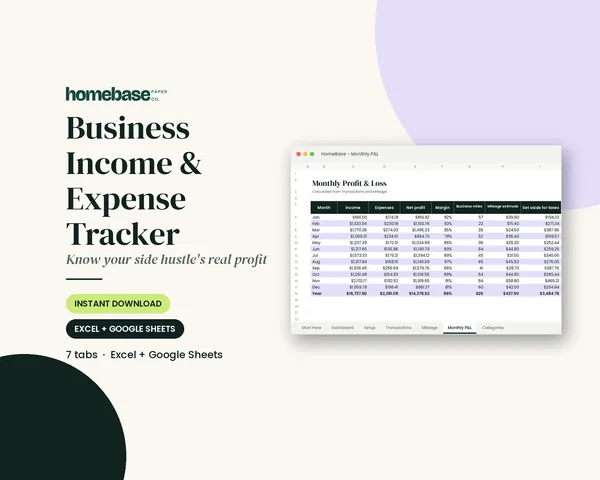
Business Income & Expense Tracker
Log sales, expenses and business miles - see your monthly profit, category totals for tax time and how much to set aside.
Spreadsheets
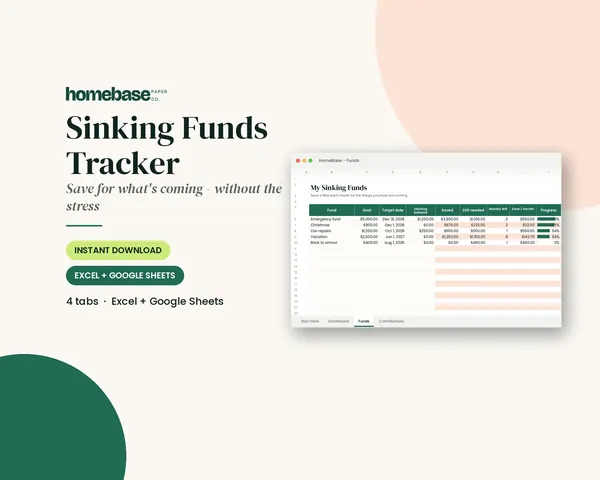
Sinking Funds Tracker
It does the math: how much to set aside each month to hit every goal on time.
Spreadsheets
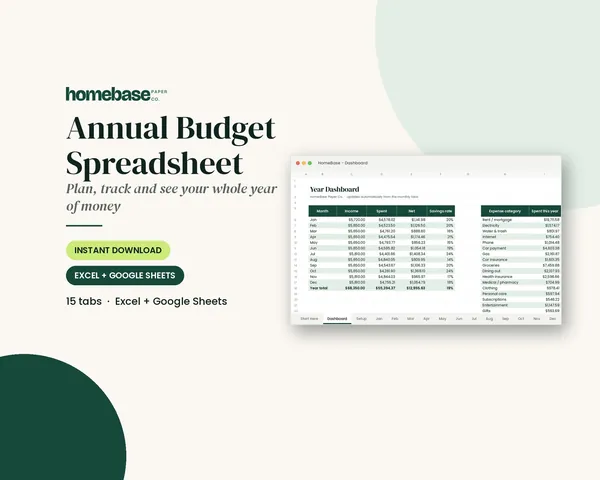
Annual Budget Spreadsheet
See exactly where your money goes every month - without complicated software.
Frequently asked questions
How can I make money online legitimately? The Business Income & Expense Tracker ($7.99) logs every payment and expense, so you can see which online work is really paying off. Legit ways to make money online include freelance services, tutoring, virtual assistant work, selling items you own, selling handmade or digital products and remote part-time jobs. Each trades your time, skill or products for pay, and none should charge you to start.
What is the easiest way to make money online for beginners? The Business Income & Expense Tracker ($7.99) gives beginners a simple log from the first payment, so nothing gets lost. For most beginners, the easiest start is selling things you already own or offering a skill from a past job, such as writing, admin work or tutoring. Both need little or no startup cost and can lead to a first payment fairly quickly.
How much money can I make online? The Business Income & Expense Tracker ($7.99) shows your real monthly profit after costs, which is the honest answer to this question. There's no set amount. Pay depends on the work, your skill, your hours and demand in your market. Be wary of anyone who promises a specific income, because guaranteed earnings are a common sign of a scam.
What are some ways to make money from home? The Annual Budget Spreadsheet ($6.99) tracks planned versus actual income by month, so new earnings from home show up clearly. Ways to make money from home include freelancing, virtual assistant work, online tutoring, remote customer service jobs, selling handmade goods and reselling items you no longer use. Choose one that fits the hours you can protect each week.
What are good ideas to make money fast? The Sinking Funds Tracker ($4.99) can hold your fast cash for a specific goal, so it doesn't get spent by accident. Quick ideas to make money include selling unused items, pet sitting, house sitting, yard work, holiday gift wrapping and short paid tasks. Most fast options pay modest amounts, and anything promising big money quickly deserves extra caution.
Do I have to pay taxes on money I make online? The Business Income & Expense Tracker ($7.99) includes a tax set-aside estimate each month, so you're ready when it's time to file. Yes. The IRS says gig and side income must be reported on your tax return, even without a 1099 form and even if you were paid in cash. If you're self-employed, self-employment tax may also apply.
When do I have to pay self-employment tax? The Business Income & Expense Tracker ($7.99) tracks income and expenses together, which is how you figure net earnings. The IRS says you generally must pay self-employment tax and file Schedule SE if your net earnings from self-employment are $400 or more. The rate is 15.3%, covering Social Security and Medicare, and it's in addition to regular income tax.
How much of my side income should I set aside for taxes? The Business Income & Expense Tracker ($7.99) estimates a monthly tax set-aside so you don't have to guess. The right amount depends on your total income, your deductions and your state. Many people move a share of every payment into a separate savings account, then check their numbers with a tax professional or the IRS estimated tax guidance.
How do I spot a fake work-from-home job offer? The Business Income & Expense Tracker ($7.99) only tracks money you've really earned, which makes a too-good offer easier to spot. The FTC warns that real employers won't ask you to pay to get a job. Other red flags include guaranteed high pay, a check you're told to partly send back, reshipping packages and requests for gift cards or cryptocurrency.
Are online surveys a good way to make money? The Sinking Funds Tracker ($4.99) can collect small survey payments toward one goal, so the little amounts add up visibly. Surveys and small tasks can pay a bit for spare minutes, but the amounts are usually small. Treat them as pocket money, never pay to join, and avoid sites that ask for sensitive details like your Social Security number.
Can I make money online with no money to start? The Business Income & Expense Tracker ($7.99) is a small one-time cost that helps you track earnings from day one, though many paths need no spending at all. Selling items you already own, freelancing with skills you have and applying for remote part-time jobs all cost nothing to begin. Be wary of any opportunity that requires a large upfront purchase.
What should I do with extra income from a side hustle? The Ultimate Budget Bundle ($19.99) includes six budget spreadsheets, so every new dollar can get a job. Start by setting aside taxes. Then decide on a goal, such as an emergency fund, extra debt payments, a sinking fund for holidays or giving. Money with a named purpose is much less likely to slip into everyday spending.
How do I budget when my income changes every month? The Annual Budget Spreadsheet ($6.99) has 12 monthly tabs with planned versus actual by category, which makes uneven months easier to compare. Build your budget on your lowest typical month. Then send anything above that to savings, debt or a buffer account, so a slow month doesn't throw off your bills.
Is it worth making money online if I have a busy family schedule? The Business Income & Expense Tracker ($7.99) shows your monthly profit, so you can compare earnings against the hours you put in. It can be worth it if the work fits the time you can truly protect. Block set hours on the family calendar, choose work that matches your energy, and review the numbers after a month before you commit more time.
More from HomeBase
You may also like

Printables
Budget Planner Printable
Twelve undated pages you can print every month: budget, bills, spending, savings and debt.
Spreadsheets
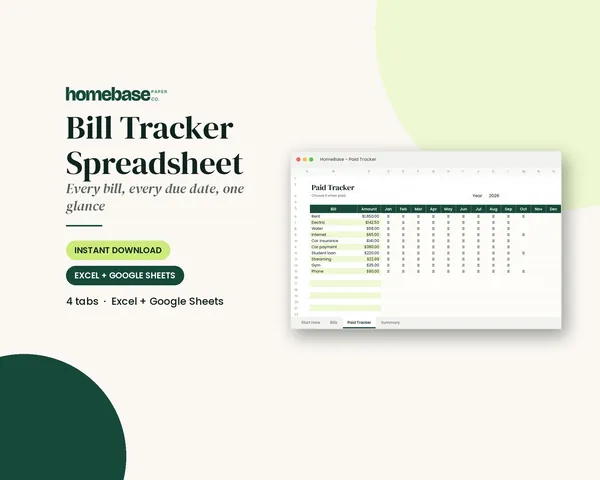
Bill Tracker Spreadsheet
Bills due in 3 days or less light up red, so nothing slips through.
Spreadsheets
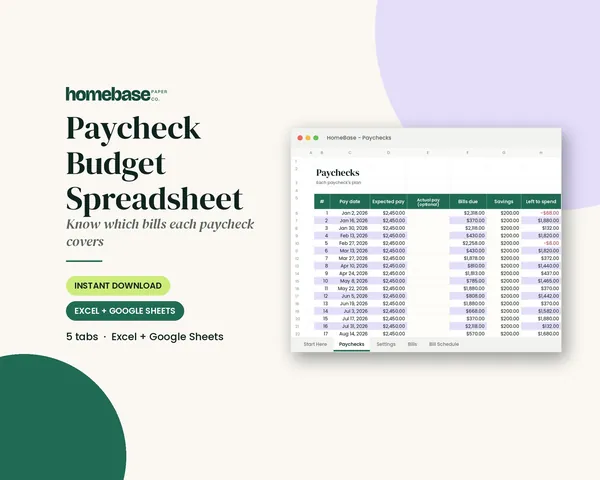
Paycheck Budget Spreadsheet
Enter your bills once. The sheet tells you which paycheck pays each one, all year.
Spreadsheets
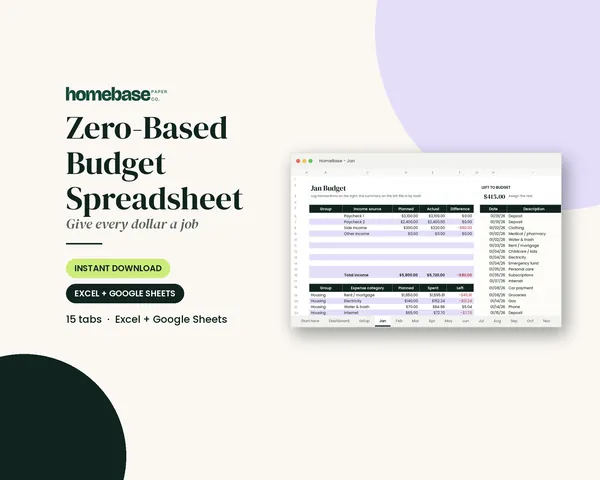
Zero-Based Budget Spreadsheet
The 'Left to budget' counter turns green when every dollar has a job.
 Club
Monthly club
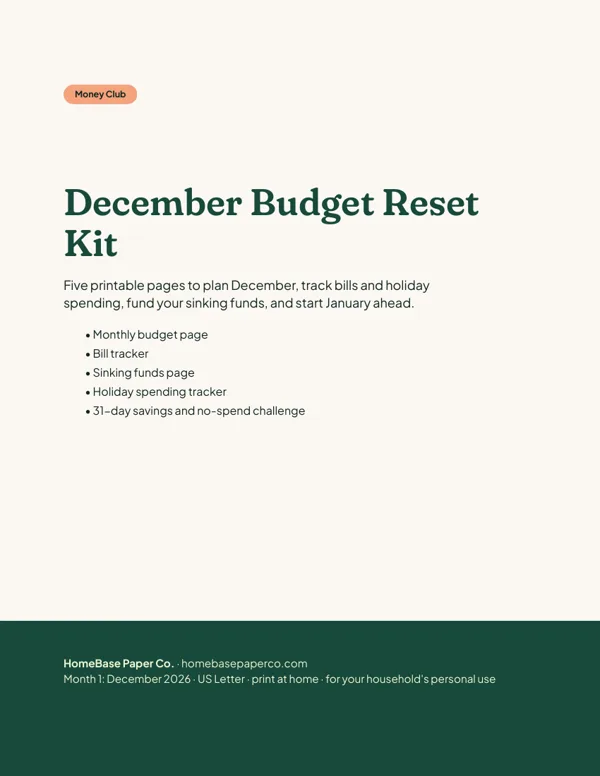
Money Club
Anyone who wants a clear plan for the month's bills, holiday spending and savings.
Free printable
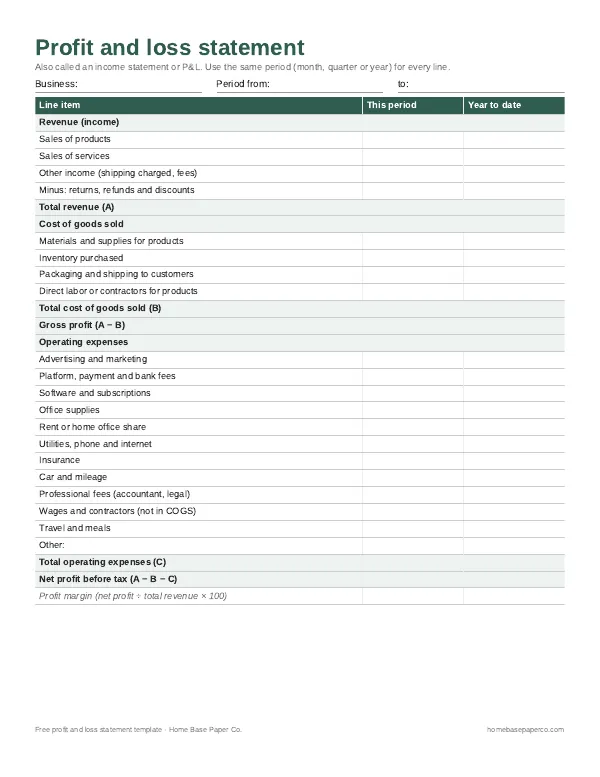
Know your real profit: get the free P&L template
A printable profit and loss statement that walks through revenue, costs and expenses line by line for any month, quarter or year. You'll also get our weekly HomeBase email with simple small business paperwork and money tips.
Sources
- Gig Economy Tax Center (IRS) irs.gov
- Self-Employment Tax (Social Security and Medicare Taxes) (IRS) irs.gov
- Job Scams (FTC Consumer Advice) consumer.ftc.gov