


The short answer: student loan forgiveness in 2026 is not one program. There is no across-the-board cancellation. You get forgiveness only through specific federal routes: Public Service Loan Forgiveness (PSLF) after 120 qualifying payments, income-driven repayment forgiveness after 20 to 30 years, Teacher Loan Forgiveness, or a discharge for disability, school closure or fraud.
- PSLF: 120 qualifying monthly payments (10 years) while working full time for a government or nonprofit employer, on Direct Loans
- Income-driven plans: IBR forgives after 20 or 25 years; the new Repayment Assistance Plan (RAP) after 30 years. SAVE ended in March 2026
- Never pay a company for forgiveness help. Everything is free at StudentAid.gov
- Free budget helper: get the free budget templates (we email them to you). Paying down loans? The Debt Payoff Planner is $6.99, or the Ultimate Budget Bundle is $19.99 (
$46.42when bought separately)
Checked against StudentAid.gov on November 9, 2026. Rules change, so confirm your own loans and plan at StudentAid.gov before you act. Below: every forgiveness route, who qualifies, what changed in 2026, the tax question and how to budget while you wait.
Student loan forgiveness programs at a glance
| Program | Who it's for | How long | Loan types |
|---|---|---|---|
| Public Service Loan Forgiveness (PSLF) | Full-time government or nonprofit employees | 120 qualifying payments (10 years) | Direct Loans |
| IBR forgiveness | Borrowers with loans disbursed before July 1, 2026 on an income-based plan | 20 or 25 years of payments | Direct and FFEL loans |
| RAP forgiveness | Direct Loan borrowers on the Repayment Assistance Plan | 30 years (360 payments) | Direct Loans (not Parent PLUS) |
| Teacher Loan Forgiveness | Full-time teachers in low-income schools or educational service agencies | 5 consecutive years of teaching | Direct and FFEL Subsidized and Unsubsidized |
| Total and Permanent Disability discharge | Borrowers who meet federal disability rules | Application and documentation | Federal loans |
| Borrower defense / closed school | Borrowers whose school closed or misled them | Application and review | Federal loans |
Is there broad student loan forgiveness in 2026?
No. As of this page's date, StudentAid.gov lists no across-the-board cancellation. The 2022 one-time forgiveness plan was struck down by the Supreme Court in 2023, and since then relief has come through the programs in the table above and through corrections to payment counts. Be careful with headlines and social posts that promise "new forgiveness": check the claim against StudentAid.gov first.
What changed in 2026
- SAVE is over. A court order ended the SAVE plan in March 2026, and borrowers who were on it must choose another repayment plan, per StudentAid.gov's SAVE FAQ. If you don't choose, you're placed in a fixed-payment plan.
- Time in the SAVE forbearance does not count toward PSLF or income-driven forgiveness, but payments you made before it still count.
- RAP launched. The Repayment Assistance Plan opened for applications on July 1, 2026. Payments are based on adjusted gross income, up to 10% of AGI divided by 12, reduced by $50 for each dependent, with a $10 minimum monthly payment. The remaining balance is forgiven after 30 years, or after 10 years with PSLF, per Edfinancial's RAP page.
- Loans disbursed on or after July 1, 2026 have two main paths: the Tiered Standard plan or RAP. Tiered Standard payments do not count toward PSLF.
- PSLF rules: new final PSLF regulations took effect July 1, 2026, including changes to employer eligibility. Check StudentAid.gov's forgiveness page and the PSLF employer search before assuming your employer qualifies.
- ICR and PAYE are ending. Both end no later than July 1, 2028.
Public Service Loan Forgiveness (PSLF)
PSLF forgives the remaining balance on your Direct Loans after 120 qualifying monthly payments while you work full time for a qualifying government or nonprofit employer.
What counts as a qualifying payment:
- Payments on Direct Loans (FFEL and Perkins loans must be consolidated into a Direct Consolidation Loan first)
- On a qualifying plan: IBR, ICR, PAYE or RAP, or a standard 10-year plan. Tiered Standard payments don't count
- Made on time and in full for the amount due
- While you work full time for an eligible employer
Worked example: you have 40 qualifying payments. You need 120, so 80 remain. That is 80 months, or 6 years and 8 months, if every month counts. Submit the PSLF form every year and when you change jobs so your employment is certified as you go, as StudentAid.gov recommends.
Income-driven repayment forgiveness
Income-driven plans set your payment from your income and family size, and forgive what's left after a set number of years.
| Plan | Payment basis | Forgiveness after | Notes |
|---|---|---|---|
| IBR | 10% or 15% of discretionary income, depending on when you borrowed | 20 or 25 years | For loans disbursed before July 1, 2026 |
| ICR | Income-contingent formula | Per plan rules | Ends no later than July 1, 2028 |
| PAYE | 10% of discretionary income | Per plan rules | Ends no later than July 1, 2028 |
| RAP | Up to 10% of AGI, minus $50 per dependent, $10 minimum | 30 years | Open to Direct Loan borrowers; only IDR option for loans first disbursed on or after July 1, 2026 |
Use the Repayment Calculator on StudentAid.gov to see your own payment. It uses your actual loan data.
Teacher Loan Forgiveness and other discharges
- Teacher Loan Forgiveness: up to $17,500 for eligible teachers after 5 consecutive years in a low-income school, with higher amounts for certain subjects. Details and the form are on StudentAid.gov.
- Total and Permanent Disability discharge: for borrowers who meet federal disability criteria, including certain VA and Social Security determinations.
- Closed school discharge and borrower defense: for borrowers whose school closed while they were enrolled or who were misled by the school.
- Death: federal loans are discharged if the borrower dies.
Is forgiven student loan debt taxable?
It depends on the program. Per StudentAid.gov, forgiven amounts under RAP may be treated as income for tax purposes. PSLF forgiveness is not counted as federal taxable income. If you expect a large balance to be forgiven after 20 to 30 years, plan for a possible tax bill and ask a tax professional about your state too. A sinking fund ($4.99) is a simple way to set money aside for a future tax bill.
How to avoid student loan forgiveness scams
- Never pay an upfront fee to a company that offers to "get your loans forgiven." Federal help is free.
- Don't share your FSA ID (your StudentAid.gov login) with anyone.
- Use only studentaid.gov and your official servicer. The government does not call to offer instant forgiveness.
- Be wary of "limited time" claims. Real programs have published rules and applications.
How to budget for student loans while you wait
Forgiveness can take 10 to 30 years, so the monthly payment has to fit your budget now.
| Step | What to do |
|---|---|
| 1. List every loan | Servicer, balance, rate and plan. Log in at StudentAid.gov to see them all. |
| 2. Pick the plan that fits | Compare payments in the Loan Simulator, and note which plans count toward PSLF. |
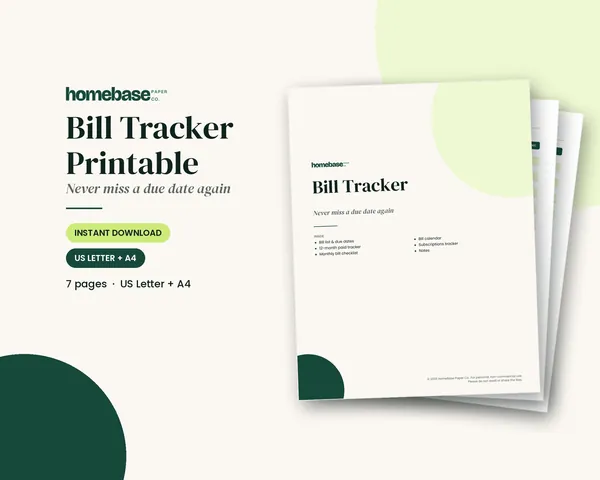
| 3. Put the payment in your budget as a fixed bill | Treat it like rent. Use a bill tracker ($4.99) so you never miss a due date. |
| 4. Decide payoff vs. forgiveness | If you expect forgiveness, pay the minimum on the loan and put extra cash toward high-interest debt or savings. If you don't, see how to pay off student loans fast. |
| 5. Recertify income each year | Missing recertification can raise your payment. Put the date on your calendar. |
For the paper route, the Printable Budget Planner is $5.99. For a full system, the Ultimate Budget Bundle is $19.99 ($46.42 when bought separately: the sum of its eight items), and the Debt Payoff Planner is $6.99. Compare methods in debt snowball vs. avalanche, or see how to get out of debt. Browse all Spreadsheets.
Student loan forgiveness checklist
- Confirm your loan types at StudentAid.gov (Direct, FFEL, Parent PLUS)
- Check if you're on a plan that counts for PSLF or IDR forgiveness
- Run the PSLF Help Tool and submit your employment certification each year
- Save your payment history and employer certification forms
- Recertify your income on time
- Set a reminder for any tax bill on forgiven balances
Make it easier
Tools for this

Spreadsheets
Debt Payoff Planner
Pick snowball or avalanche, add any extra payment, and get your debt-free month instantly.
 Save 57%
Bundles
Ultimate Budget Bundle
All 6 spreadsheets + both printable planners - for less than half the price of buying them separately.

Spreadsheets
Bill Tracker Spreadsheet
Bills due in 3 days or less light up red, so nothing slips through.
Frequently asked questions
Is there student loan forgiveness in 2026? There is no across-the-board student loan forgiveness in 2026, but specific programs still forgive balances: Public Service Loan Forgiveness after 120 qualifying payments, income-driven repayment forgiveness after 20 to 30 years, Teacher Loan Forgiveness, and discharges for disability, school closure or fraud. Check StudentAid.gov to see which program fits your loans.
How do I qualify for Public Service Loan Forgiveness? You qualify for PSLF by working full time for a qualifying government or nonprofit employer and making 120 qualifying monthly payments on Direct Loans under a qualifying repayment plan. Plans that count include IBR, ICR, PAYE and RAP, but Tiered Standard payments do not. Use the PSLF Help Tool and submit your employment certification every year.
What happened to the SAVE plan? The SAVE plan ended in March 2026 because of a court order. Borrowers who were enrolled must choose another repayment plan, and if they don't, they are placed in a fixed-payment plan. Time spent in the SAVE forbearance does not count toward PSLF or income-driven forgiveness, though earlier qualifying payments still count.
What is the Repayment Assistance Plan (RAP)? The Repayment Assistance Plan, or RAP, is an income-driven plan for Direct Loan borrowers. Your payment is based on adjusted gross income, up to 10% of AGI divided by 12, reduced by $50 for each dependent, with a $10 minimum. Any remaining balance is forgiven after 30 years, or after 10 years if you qualify for PSLF.
How long until student loans are forgiven? It depends on the program: PSLF takes 120 qualifying payments, or 10 years, IBR takes 20 or 25 years, and RAP takes 30 years. Teacher Loan Forgiveness needs 5 consecutive years of teaching. Disability and school-closure discharges follow an application process instead of a waiting period.
Is student loan forgiveness taxable? It depends on the program. PSLF forgiveness is not counted as federal taxable income, but StudentAid.gov says forgiven amounts under RAP may be considered income for tax purposes. Ask a tax professional about both federal and state rules before a large balance is forgiven.
Do private student loans qualify for forgiveness? No, federal forgiveness programs apply only to federal student loans. Private loans are not eligible for PSLF or income-driven forgiveness, though some private lenders offer their own hardship options or death and disability discharges. Contact your lender and read the loan terms to see what is offered.
How can I tell if a student loan forgiveness offer is a scam? An offer is likely a scam if it charges an upfront fee, asks for your FSA ID, claims a limited-time deal or promises guaranteed forgiveness. Federal help is free at StudentAid.gov. Only use your official servicer and the StudentAid.gov site for applications.
Should I pay extra on my student loans if I expect forgiveness? If you expect forgiveness under PSLF or an income-driven plan, paying extra may waste money because the remaining balance is forgiven. In that case, many borrowers pay the required amount and put extra cash toward high-interest debt, savings or a tax fund. If you're unsure forgiveness will happen, run both scenarios in the Loan Simulator.
Where do I apply for student loan forgiveness? Apply for each program through StudentAid.gov. PSLF uses the PSLF Help Tool and employment certification form, income-driven plans use the repayment plan application, and Teacher Loan Forgiveness and discharges have their own forms. Your loan servicer can also help with the process.
More from HomeBase
You may also like

Spreadsheets
Paycheck Budget Spreadsheet
Enter your bills once. The sheet tells you which paycheck pays each one, all year.

Spreadsheets
Zero-Based Budget Spreadsheet
The 'Left to budget' counter turns green when every dollar has a job.

Spreadsheets
Annual Budget Spreadsheet
See exactly where your money goes every month - without complicated software.
 Starter pick
 Club
Monthly club
Money Club
Anyone who wants a clear plan for the month's bills, holiday spending and savings.
Free printable
Never miss a payment: get the free bill calendar
A printable monthly bill calendar with room for due dates, amounts and paydays, so every payment has a plan before the month starts. You'll also get our weekly HomeBase email with simple budgeting and bill-paying tips.

Sources
- StudentAid.gov: Student loan forgiveness and other ways the government can help studentaid.gov
- StudentAid.gov: SAVE plan borrower FAQs studentaid.gov
- Edfinancial: Repayment Assistance Plan (RAP) edfinancial.studentaid.gov
- Repayment Calculator on StudentAid.gov studentaid.gov