

The short answer: A family budget meeting agenda keeps money talks short, calm and useful. Meet once a month for about 30 minutes, follow the same five steps in the same order, and finish with one decision. The routine matters more than the tool you use.
Our picks for family budget meeting agenda
Printables
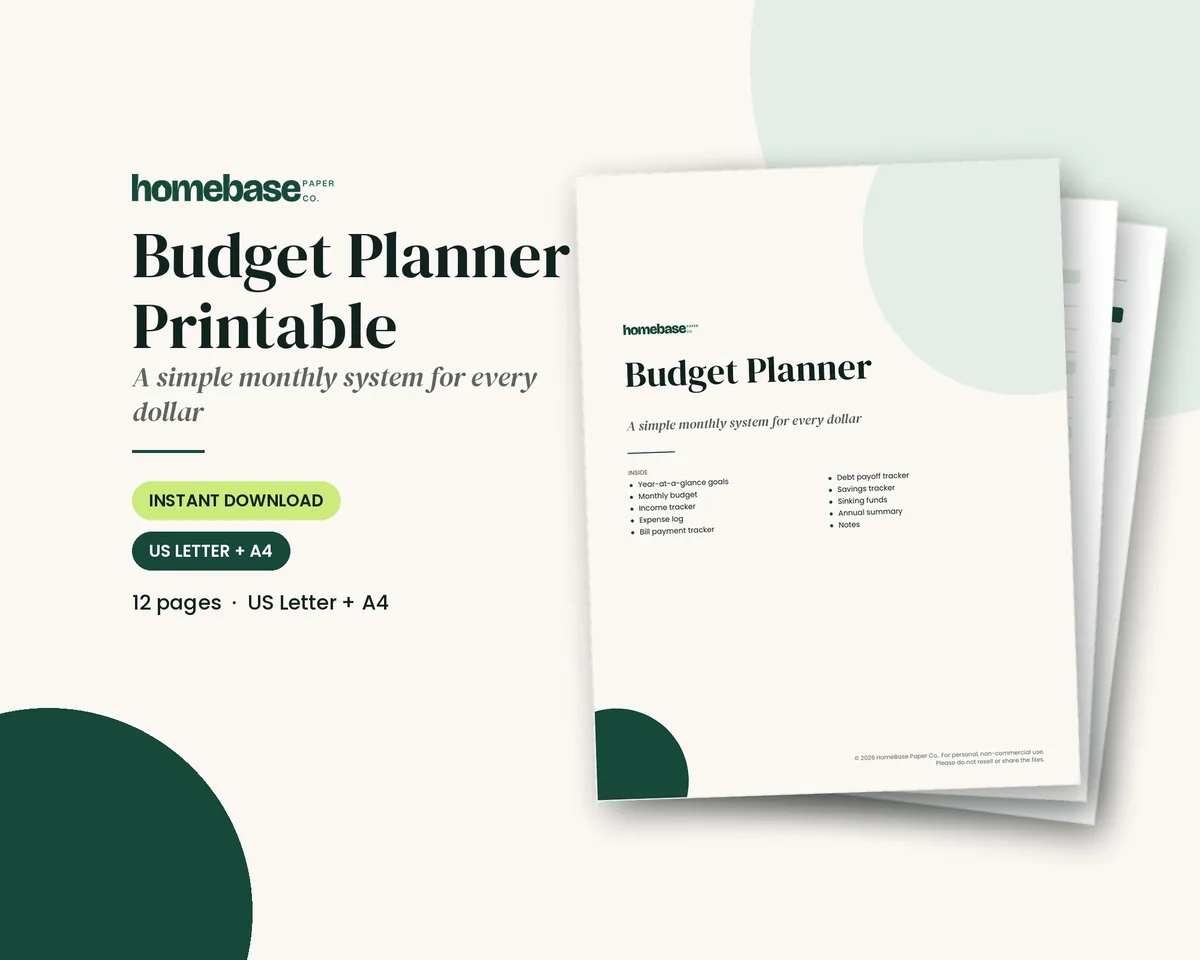
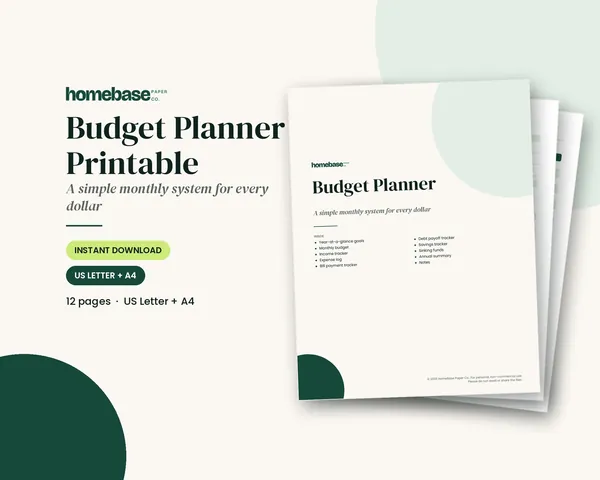
Budget Planner Printable
Twelve undated pages you can print every month: budget, bills, spending, savings and debt.
Spreadsheets
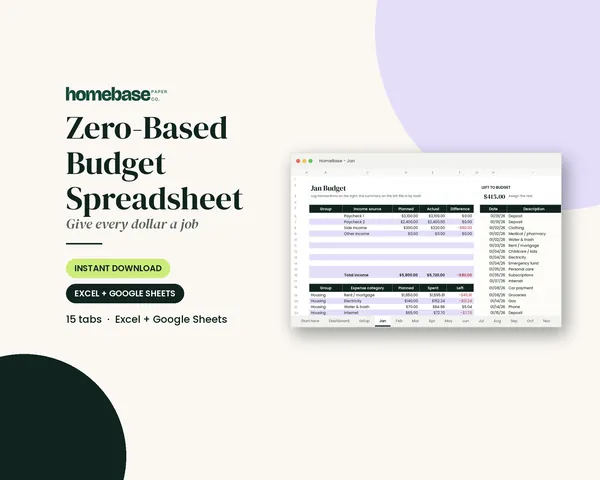
Zero-Based Budget Spreadsheet
The 'Left to budget' counter turns green when every dollar has a job.
Paperback planners
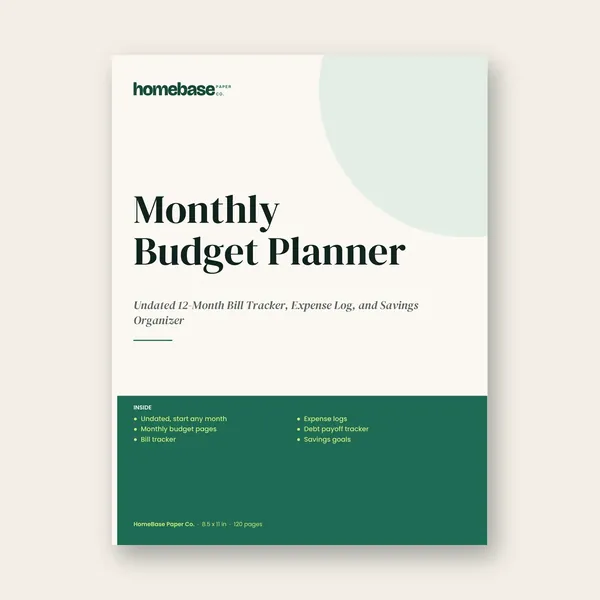
Monthly Budget Planner (Paperback)
Undated 12-Month Bill Tracker, Expense Log, and Savings Organizer
 Save 57%
Bundles
Ultimate Budget Bundle
All 6 spreadsheets + both printable planners - for less than half the price of buying them separately.
Below is the agenda, a sample timetable, how to involve kids, and tips to keep the mood friendly.
Before your next meeting, use the family budget setup guide to assemble income, bills and savings goals into one shared plan.
The 30-minute agenda
| Step | What you do | Time |
|---|---|---|
| 1. Start with a win | Name one thing that went well with money last month | 2 min |
| 2. Review last month | Compare planned vs. actual by category | 8 min |
| 3. Look ahead | List bills, birthdays, events and irregular costs for next month | 8 min |
| 4. Goals check | Savings, sinking funds and debt progress | 7 min |
| 5. One decision | Agree on one change or purchase | 5 min |
Step by step
- Start with a win. It sets the tone. "We stayed under on groceries" or "we paid an extra $50 on the card."
- Review last month. Look at each category. Don't argue about past spending; note what to adjust.
- Look ahead. Next month's calendar drives the budget. School trips, car registration and birthdays are easy to forget.
- Check goals. How close is the emergency fund? Are sinking funds on track for Christmas and car repairs?
- Make one decision. One clear change is more likely to happen than five.
This agenda is for money only. For chores, calendars and fun plans, hold a separate weekly family meeting and keep the budget talk here.
Set up the meeting
- Same time each month. Many couples meet a few days before the month begins.
- Bring the numbers. Bank and card balances, bills due and your budget sheet.
- Keep it short. Thirty minutes. Park bigger topics for a separate talk.
- Make it pleasant. Coffee, a treat or a walk afterwards helps it feel like a date, not a chore.
Involving kids
Kids don't need every number. They can join for the "look ahead" and "goals" parts. Let them help plan a family outing within a set amount, or track progress on a shared savings goal like a holiday trip. Younger children can color in a savings thermometer. Teens can learn how bills, needs and wants are balanced. For more, see our guide to teaching kids about money.
Kids can help too: see our tips for teaching kids to budget for Christmas gifts.
The CFPB's Money as You Grow has age-based activities and conversation starters for including kids in money talks.
Keep money talks calm
Money is one of the most common sources of stress for couples. A few habits help:
- Use the same agenda every time. Predictability lowers tension.
- Talk about the plan, not the person. "Dining out ran over" is better than "you spent too much."
- Give each person some no-questions money. A small personal allowance stops arguments about coffee.
- Stop if it gets heated. Schedule a follow-up rather than forcing a decision.
Tools that make it easier
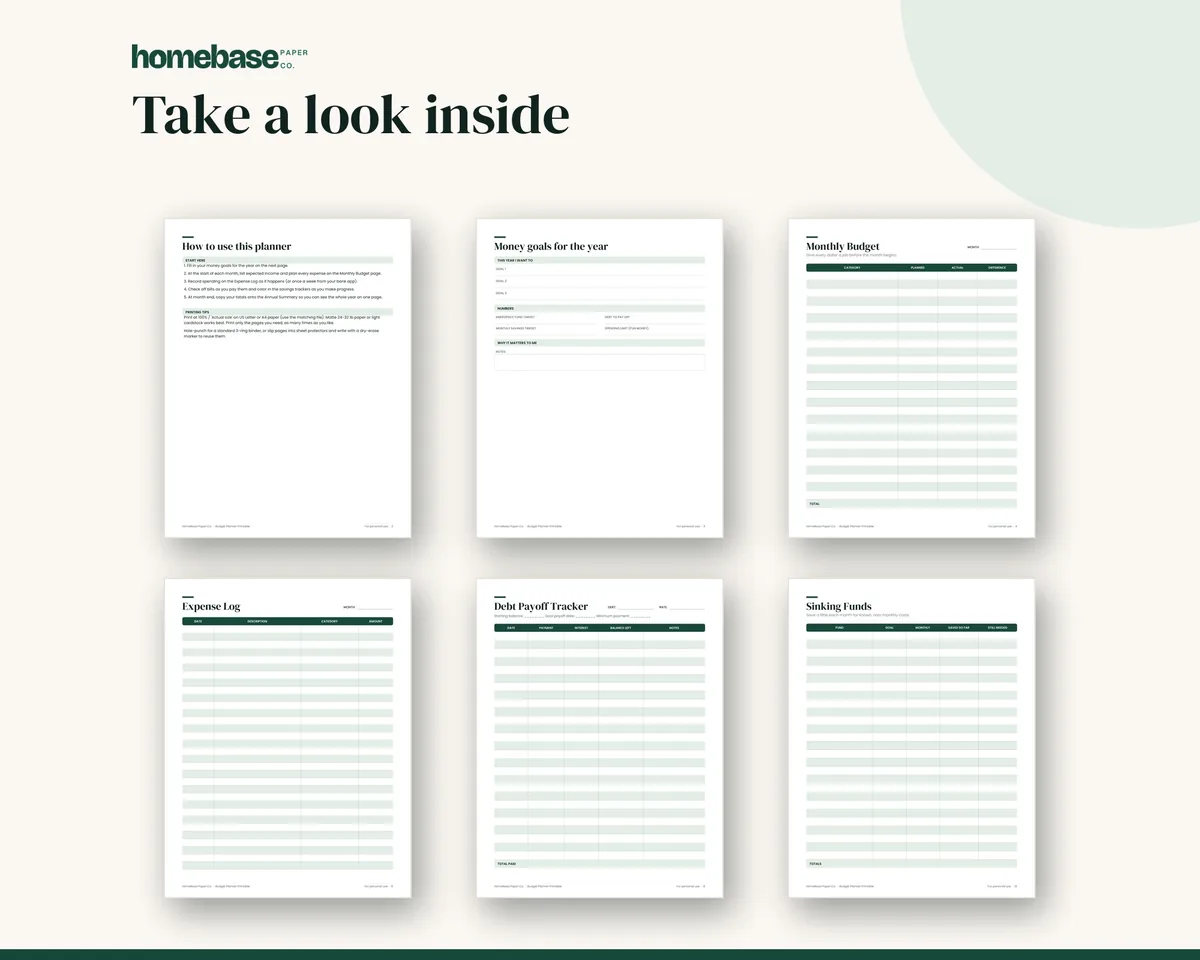
Pick one tool you'll both look at. Our Budget Planner Printable ($5.99) has undated monthly budget, bills, spending, savings and debt pages, which is easy to bring to a kitchen-table meeting. If you prefer a spreadsheet, the Zero-Based Budget Spreadsheet ($6.99) works in Excel and Google Sheets, so both partners can see it. The Ultimate Budget Bundle ($19.99) adds bill, debt and sinking funds spreadsheets. A bound option, the Monthly Budget Planner paperback, is coming soon.
Add a holiday spending check to the November or December meeting
At this time of year, add five minutes to your agenda for the holidays. Bring the gift list, the amount spent so far and the amount left.
| Check | Question to ask |
|---|---|
| Gift budget | How much has been spent and how much is left? |
| Upcoming costs | Travel, food, cards or postage still to come? |
| Who is buying what | Is anyone buying the same gift twice? |
| Payment | Which card or account will each cost come from? |
Use the holiday budget calculator to split the total across categories before the meeting.
A January kick-off meeting
The first meeting of the year is a good time for bigger planning. Set annual goals, list irregular expenses for the year (car registration, insurance, holidays, birthdays), and divide each by 12 to set monthly sinking fund amounts. Then go back to the regular 30-minute meetings from February.
Sharing money with a partner? Learn how to budget as a couple without the fights.
What to bring to each meeting
- Last month's budget with actual spending filled in.
- Current balances for checking, savings and any cards or loans.
- A list of bills due next month and their dates.
- The family calendar for next month.
- One question or idea each person wants to raise.
Bring last month's spending by category. The CFPB's budgeting guide explains how to track it.
Common problems and fixes
- One partner does all the money work. Rotate who prepares the numbers, so both know where things stand.
- Meetings keep getting skipped. Put them in the shared calendar with a reminder, like any other appointment.
- The budget never matches reality. Raise categories that always run over and lower ones that never do. A budget is a plan you adjust, not a test you pass.
- You only talk about problems. Always start with a win and end with something to look forward to.
See also: zero-based budget guide, budget categories list, a college student budget and how to make a budget for the new year.
Need something to bring to the meeting? Start with a household budget template that the whole family can see and update.
Make the monthly budget a 20-minute job
Twelve undated pages you can print every month: budget, bills, spending, savings and debt.
$5.99 · Instant download. Print at home or fill it in on screen. Or browse the full Budget & Money collection.
Frequently asked questions
What should a family budget meeting agenda include? A simple agenda covers last month's spending, upcoming bills and events, savings goals, any debt progress and one decision to make. Thirty minutes is enough for most households.
How often should couples have a budget meeting? Many couples meet once a month before the month starts, with a short weekly check-in. Monthly is enough to plan, and weekly keeps small problems from growing.
Should kids be part of a family budget meeting? Older kids can join for part of it, such as planning a family outing or a savings goal. It teaches them how money decisions are made without sharing every detail.
How do I keep budget meetings from turning into arguments? Use the same agenda every time, start with a win, focus on the plan ahead rather than blame, and end with one clear decision. Short and regular beats long and rare.
What should a family budget meeting cover in December? A family budget meeting in December should cover the usual monthly review plus a holiday spending check: gifts bought so far, money left in the gift budget, upcoming travel and food costs, and which account pays for each. Keep the meeting to 30 minutes and agree on one decision before you end.
Free printable
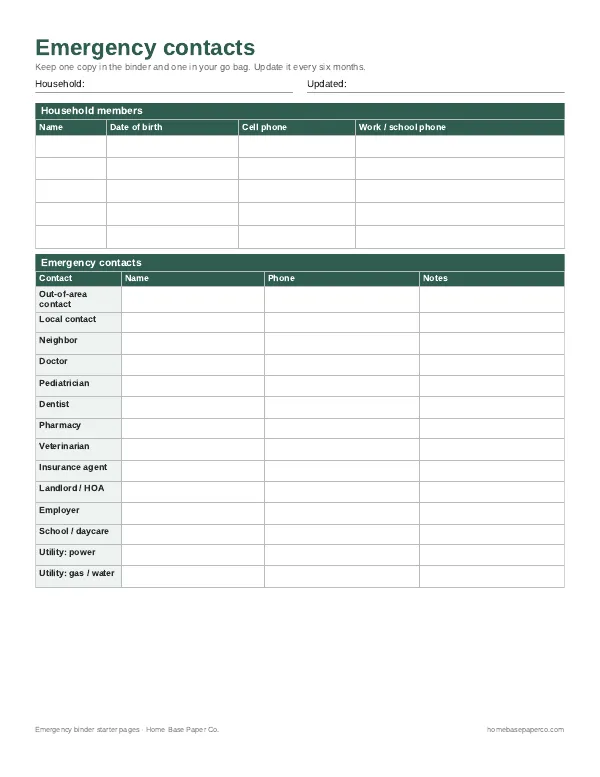
Have the important stuff in one place: get the free emergency binder pages
Printable starter pages for household members, emergency contacts, medical notes and where key documents live. You'll also get our weekly HomeBase email with simple ways to keep family records and important papers in order.
Sources
- Money as You Grow consumerfinance.gov
- Budgeting guide consumerfinance.gov