

The short answer: a budget categories list is the set of labels you sort your money into, such as housing, food, transportation, insurance, debt, savings, personal and giving. Most households do best with 10 to 15 at first.
- Full list: 102 budget categories in 10 groups, tagged fixed, variable or non-monthly
- Printable checklist and 5-, 8- and 12-category versions below
- Combine the small ones and split only what you want to watch
- Add sinking funds for car registration, holidays and back-to-school
- Copy the 12-category starter budget below
- Free tools: check your numbers in the free budget calculator (50/30/20 split included), or get the free monthly budget template (we email it to you)
- Next step: Plan it with the Budget Planner Printable ($5.99).
Our picks for budget categories

Spreadsheets
Annual Budget Spreadsheet
See exactly where your money goes every month - without complicated software.

Printables
Budget Planner Printable
Twelve undated pages you can print every month: budget, bills, spending, savings and debt.

Spreadsheets
Sinking Funds Tracker
It does the math: how much to set aside each month to hit every goal on time.
 Save 57%
Bundles
Ultimate Budget Bundle
All 6 spreadsheets + both printable planners - for less than half the price of buying them separately.
A budget categories list is the set of labels you sort your money into, such as housing, food, transportation, insurance, debt, savings, personal and giving. Most households do best with 10 to 15 budget categories at first. Pick from the full list of 102 below, combine the small ones, and add sinking funds for costs that don't come every month.
Once you've picked your categories, our Budget Planner Printable has a monthly budget page you can label with your own categories, plus bill, savings and debt trackers.
The full list: 102 budget categories in 10 groups
Pick the lines that apply to you and skip the rest. Each one is tagged so you know how to plan it: (F) fixed, the same every month; (V) variable, changes month to month; (N) non-monthly, plan it as a sinking fund.
1. Housing
- Rent or mortgage (F)
- Property tax (if not escrowed) (N)
- Homeowners or renters insurance (F)
- HOA or condo fees (F)
- Home maintenance and repairs (N)
- Lawn care and snow removal (V)
- Pest control (N)
- Furniture and decor (N)
- Home security or alarm monitoring (F)
- Storage unit (F)
- Moving costs (N)
2. Utilities and connectivity 12. Electricity (V) 13. Natural gas or heating oil (V) 14. Water and sewer (V) 15. Trash and recycling (F) 16. Internet (F) 17. Cell phone (F) 18. Landline or home phone (F) 19. Streaming TV or cable (F)
3. Food and household 20. Groceries (V) 21. Eating out and takeout (V) 22. Work and school lunches (V) 23. Coffee and snacks (V) 24. Alcohol (V) 25. Household supplies (paper, cleaning, laundry) (V) 26. Toiletries (V) 27. Bulk or warehouse club runs (V) 28. Meal kits or delivery fees (V)
4. Transportation 29. Car payment or lease (F) 30. Fuel or EV charging (V) 31. Car insurance (F) 32. Oil changes and maintenance (N) 33. Tires (N) 34. Registration, inspection and license fees (N) 35. Parking (V) 36. Tolls (V) 37. Public transit or rideshare (V) 38. Car wash (V) 39. Roadside assistance (N)
5. Health and insurance 40. Health insurance premiums (F) 41. Doctor and specialist copays (V) 42. Prescriptions (V) 43. Dental care (N) 44. Vision care and glasses (N) 45. Therapy or counseling (V) 46. Health savings account (HSA) deposits (F) 47. Life insurance (F) 48. Disability insurance (F) 49. Gym or fitness classes (F)
6. Kids and family 50. Childcare or daycare (F) 51. Babysitting (V) 52. Diapers and baby supplies (V) 53. School tuition and fees (N) 54. School supplies (N) 55. Kids' activities and sports (V) 56. Kids' clothing (V) 57. Allowance (F) 58. Child support or alimony (F) 59. Elder care or help for parents (V) 60. College savings (529) (F)
7. Personal and pets 61. Adult clothing and shoes (V) 62. Haircuts and personal care (V) 63. Dry cleaning and laundromat (V) 64. Beauty and skin care (V) 65. Subscriptions and memberships (F) 66. Apps and software (F) 67. Pet food (V) 68. Vet visits and pet insurance (N) 69. Pet grooming and boarding (N) 70. Hobbies (V) 71. Education and courses (N)
8. Debt payments 72. Credit card payments (V) 73. Student loans (F) 74. Personal loans (F) 75. Medical debt payments (F) 76. Buy now, pay later installments (F) 77. Back taxes or payment plans (F)
9. Savings and investing 78. Emergency fund (F) 79. Retirement (beyond workplace contributions) (F) 80. Brokerage or other investing (F) 81. House down payment (F) 82. Next car fund (F) 83. Big-purchase fund (N) 84. Home repair sinking fund (N) 85. Annual subscriptions sinking fund (N)
10. Giving, fun and irregular 86. Birthday gifts (N) 87. Christmas and holiday gifts (N) 88. Holiday food and decorations (N) 89. Charitable giving (F) 90. Religious giving or tithing (F) 91. Entertainment and outings (V) 92. Date nights (V) 93. Tips for teachers, coaches and service providers (N) 94. Travel and vacations (N) 95. Back-to-school (N) 96. Weddings, showers and parties you attend (N) 97. Fun money for each adult (F) 98. Business or side-hustle expenses (V) 99. Bank fees (V) 100. Postage and shipping (V) 101. Tax preparation (N) 102. Miscellaneous buffer (V)
For a national benchmark, the Bureau of Labor Statistics' Consumer Expenditure Survey breaks household spending into categories such as housing, transportation, food and health care. Average annual spending was $78,535 in 2024.
Budget category percentages: a rough guide
Percentages are a starting point, not a rule. High-cost cities, big families and debt payoff years all bend them. Use them to spot a category that's far out of line, then decide on purpose whether that's OK.
| Group | Common rule of thumb (share of take-home pay) |
|---|---|
| Housing (rent or mortgage, insurance, tax) | 25% to 35% |
| Utilities and connectivity | 5% to 10% |
| Food and household | 10% to 15% |
| Transportation | 10% to 15% |
| Health and insurance | 5% to 10% |
| Debt payments (beyond minimums) | 5% to 15% |
| Savings and investing | 10% to 20% |
| Personal, giving and fun | 5% to 10% |
The popular 50/30/20 budget rolls all of these into just three buckets: 50% needs, 30% wants and 20% savings and debt. If you'd rather give every dollar a specific line, a zero-based budget uses the full category list instead.
Printable budget categories checklist
Copy this onto paper or into a note and tick what applies. Anything you tick gets a line in your budget; anything with an (N) also gets a sinking fund.
- Housing: rent or mortgage, insurance, property tax, HOA, repairs
- Utilities: power, gas, water, trash, internet, phone, TV
- Food: groceries, eating out, lunches, coffee, household supplies
- Transportation: car payment, fuel, insurance, maintenance, registration, parking
- Health: premiums, copays, prescriptions, dental, vision, HSA
- Kids: childcare, school, activities, clothing, allowance, 529
- Personal: clothing, haircuts, subscriptions, hobbies
- Pets: food, vet, grooming, boarding
- Debt: credit cards, student loans, car or personal loans
- Savings: emergency fund, retirement, down payment, next car
- Irregular: gifts, holidays, travel, back-to-school, tax prep
- Giving and fun: charity, date nights, fun money, buffer
Short versions: 5, 8 and 12 budget categories
Not everyone wants 102 lines. Here's how the same list collapses:
| 5 categories | 8 categories | 12 categories |
|---|---|---|
| Housing | Housing | Housing, Utilities |
| Living (food, utilities, transport) | Utilities, Food, Transportation | Groceries, Eating out, Transportation |
| Insurance and health | Health and insurance | Health, Kids |
| Debt and savings | Debt and savings | Debt, Savings, Sinking funds |
| Everything else | Giving and fun | Subscriptions, Personal and fun |
The 12-category column matches the starter budget further down the page.
Fixed, variable and non-monthly: why the tags matter
Fixed costs get the same number every month. Variable costs need a realistic average from your last few statements. Non-monthly costs are the budget-breakers: divide the yearly total by 12 and save that amount every month so the bill is already covered when it lands. If you want to know your bare-minimum number first, add up your living expenses, the fixed and variable needs you can't skip.
The categories people forget
These are the reason many budgets "fail" in month two. They're easy to miss because they don't arrive every month:
| Forgotten cost | How often | Plan it as |
|---|---|---|
| Car registration | Yearly | Sinking fund |
| Birthday gifts | Several times a year | Monthly gifts line |
| Back-to-school | Yearly | Sinking fund |
| Annual subscriptions | Yearly | Sinking fund |
| Holidays | Yearly | Sinking fund |
| Medical deductibles | Unpredictable | Emergency or health fund |
| Household replacements | Unpredictable | Home maintenance line |
How to choose your own categories
Start with your fixed expenses, the costs that stay the same each month, then add the variable ones.
Most of the categories you adjust month to month are variable expenses. Our guide shows how to set a limit for each one and track it weekly.
- Download two or three months of statements and see where money actually went.
- Group similar costs. Phone, internet and streaming might become one "connectivity" line.
- Split only what you want to watch. If eating out is your weak spot, give it its own line; if it isn't, fold it into food.
- Add sinking funds for every cost from the table above that applies to you.
- Aim for 10 to 15 lines. You can always split a category later.
The CFPB's budgeting guide suggests tracking a few weeks of real spending by category before you settle on your list.
A simple 12-category starter budget
Prefer just four categories? The Japanese method called kakeibo sorts spending into needs, wants, culture and extras.
| Category | Includes |
|---|---|
| Housing | Rent or mortgage, insurance, HOA |
| Utilities | Power, water, internet, phone |
| Groceries | Food and household supplies |
| Eating out | Restaurants, takeout, coffee |
| Transportation | Fuel, insurance, parking |
| Kids | Childcare, school, activities |
| Health | Premiums, copays, prescriptions |
| Subscriptions | Streaming, apps, memberships |
| Debt | Minimums plus extra payments |
| Savings | Emergency fund, retirement |
| Sinking funds | Gifts, car, holidays, annual costs |
| Personal and fun | Clothes, hobbies, fun money |
How to turn this into a monthly budget list
A monthly expenses list is the same idea from the other direction: write down every cost you pay in a typical month with its amount, then sort each one into the categories above.
A budget list is your categories with a dollar amount next to each one. Here's how to make one in an evening:
If this is your first budget, our guide on how to make a budget walks through the steps around these categories.
- Write down your monthly take-home pay. Use what actually lands in your account, not your salary.
- Copy the 10 to 15 categories you chose from the list above onto one page or one spreadsheet tab (see how to make a budget spreadsheet).
- Fill in the fixed amounts first: rent or mortgage, insurance, loan minimums, subscriptions.
- Estimate the variable ones (groceries, fuel, household) from your last two or three months of statements.
- Add savings and sinking funds as lines, not leftovers. A yearly cost divided by 12 is the monthly amount.
- Subtract the total from your take-home pay. If the answer is below zero, trim the flexible lines until it isn't. If it's above zero, give the extra a job.
- Check it once a week for the first month and adjust the amounts that were off.
The Annual Budget Spreadsheet ($6.99) does the subtraction for you and shows each category month by month, and the Budget Planner Printable ($5.99) gives you the same budget list on paper.
If you budget with cash, these categories become your envelopes in cash stuffing, the cash envelope system. Not sure which approach fits you? Compare the main budgeting methods.
Affiliate links: we may earn a small commission. As an Amazon Associate we earn from qualifying purchases. Details.
For a physical setup, pair the categories with a cash envelope wallet with tabbed envelopes and Paper Mate InkJoy gel pens for recording each withdrawal. Use envelopes you already own before buying supplies.
Naming categories so they stay useful
Category names matter more than they seem. Use names that tell you what to do: "Groceries (one shop a week)" is clearer than "Food". Keep them consistent from month to month so you can compare. And when two people share a budget, agree on what goes where; one partner's "household" is often the other's "groceries", and the totals stop making sense. For example, a friendship budget line can cover friend birthdays, group dinners and trips.
If a category is always over, it isn't a discipline problem, it's a planning problem. Raise the planned amount to the real average and cut somewhere else on purpose.
Prefer a new printable each month? The Money Club budget kits include a monthly budget page with categories already filled in.
Templates with categories built in
Most of the best budgeting apps also let you rename categories to match this list, and our family budgeting guide shows what to read next.
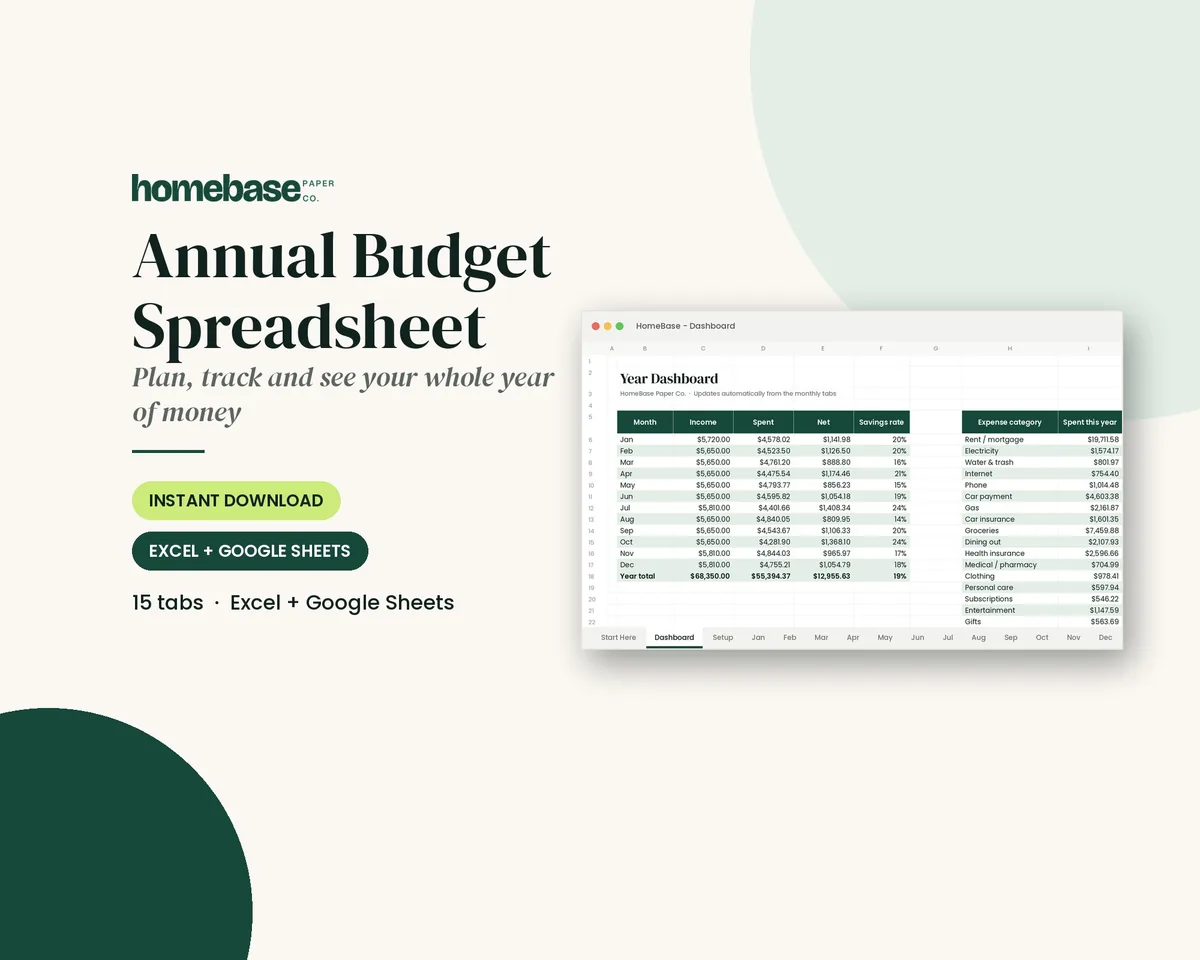
The Annual Budget Spreadsheet ($6.99) starts with a setup tab where you name your own categories and plan amounts, then tracks every transaction with a category dropdown across 12 monthly tabs, with planned vs. actual and a year chart. The Budget Planner Printable ($5.99) has a monthly budget page you can label with your own categories, plus sinking funds and savings trackers.
For hidden holiday expenses and other forgotten costs, the Sinking Funds Tracker ($4.99) handles up to 20 savings goals and works out the monthly amount needed for each. All three, plus our other budget spreadsheets, are in the Ultimate Budget Bundle ($19.99).
Ready to fill in numbers? Use our monthly budget template guide, and read about sinking funds for the irregular costs. Running a side business? Keep its costs out of these household categories with a separate business expense spreadsheet.
Review these categories together each month with a 30-minute family budget meeting agenda.
Planning the whole year at once? Our annual budget template guide shows how to set monthly targets for every category, including the irregular ones.
Once your categories are set, drop them into a household budget template so planned and actual amounts sit side by side.
Make the monthly budget a 20-minute job
See exactly where your money goes every month - without complicated software.
$6.99 · Instant download. Print at home or fill it in on screen. Or browse the full Budget & Money collection.
Frequently asked questions
What are the main budget categories? Most budgets use some version of housing, utilities, food, transportation, health and insurance, family and personal, debt and savings, and giving and fun. A full budget categories list breaks those groups into about 100 specific lines you can choose from; ours has 102 in 10 groups.
How many budget categories should I have? Start with 10 to 15. Fewer categories are easier to track, and you can split one later if you want to watch it more closely. Too many categories is a common reason people give up on budgeting in the first few months.
What budget categories do people forget? Costs that don't come every month: car registration, birthday gifts, back-to-school, annual subscriptions, holidays, medical deductibles and household replacements. Give each a sinking fund and save a little every month.
Should savings be a budget category? Yes, savings should be a budget category. Put savings and extra debt payments on the budget as planned lines, paid at the start of the month, rather than saving whatever happens to be left. That way they actually happen.
What is a budget list? A budget list is a list of your spending and saving categories, such as housing, food, transportation, debt and savings, with the amount you plan to spend on each one this month. Start with your take-home pay, list 10 to 15 categories, fill in fixed bills first, then estimate the rest from recent statements. The Annual Budget Spreadsheet ($6.99) and the Budget Planner Printable ($5.99) both give you a ready-made place to write that list.
What should be on a monthly budget list? A monthly budget list should include every regular bill, your variable spending (groceries, fuel, household and personal), debt payments, savings, and a monthly amount for costs that don't come every month, like car registration and holidays. Leaving out those irregular costs is the most common reason a budget breaks. The Sinking Funds Tracker ($4.99) works out how much to set aside each month for each one.
Can I use the 50/30/20 rule with these budget categories? Yes, the 50/30/20 rule works as a quick check on these budget categories: about 50% of take-home pay for needs, 30% for wants and 20% for savings and extra debt payments. Sort each category on your list into one of the three groups and add them up. If needs come to much more than half, that's a sign to look at housing, transportation or debt rather than cutting small categories.
Is there a budget template with categories built in? Yes, there is a HomeBase budget template with categories built in. The Annual Budget Spreadsheet starts with a setup tab where you name your own categories, then tracks every transaction with a category dropdown across 12 monthly tabs. The Budget Planner Printable has a monthly budget page you can label with your own categories.
What is a monthly expenses list? A monthly expenses list is every cost you pay in a typical month, such as housing, utilities, food, transportation, insurance, debt payments, savings and personal spending, each with a dollar amount. Use the categories above as your checklist, and write it on the monthly budget page in our Budget Planner Printable.
What are the 10 main budget categories? A practical set of 10 main budget categories is housing, utilities, food and household, transportation, health and insurance, kids and family, personal and pets, debt payments, savings and investing, and giving, fun and irregular costs. Each one splits into smaller lines, which is how this page reaches 102 categories.
What percentage of my budget should go to each category? Common rules of thumb are 25% to 35% of take-home pay for housing, 10% to 15% each for food and transportation, 5% to 10% for utilities, 10% to 20% for savings and 5% to 10% for fun and giving. They are rough guides. Use them to spot a category that is far out of line, not as hard limits.
How many budget categories is too many? If you can't remember where a purchase belongs, or you spend more time sorting than reviewing, you have too many. For most households that point is somewhere past 20 to 25 active lines. Keep the full list as a checklist, but merge small, steady costs into broader categories.
What is the difference between fixed, variable and non-monthly expenses? Fixed expenses cost the same each month, like rent or a loan payment. Variable expenses change, like groceries and fuel. Non-monthly expenses come a few times a year or less, like car registration, holidays or annual subscriptions, so you divide the yearly cost by 12 and save that amount each month.
Free printable
Give every dollar a job: get the free monthly budget template
A printable zero-based monthly budget: income, bills, everyday spending and savings on one page, with a planned vs. actual column. You'll also get our weekly HomeBase email with simple budgeting and bill-paying tips.

Sources
- Consumer Expenditure Survey bls.gov
- Budgeting guide consumerfinance.gov