

The short answer: A weekly budget is a spending plan that breaks your income and bills into seven-day blocks, so you set aside money for monthly bills each week and give groceries, gas and personal spending a firm weekly cap. To make one, find your weekly take-home pay, convert every monthly bill to a weekly amount, set caps for everyday spending and check in once a week.
This guide walks through the six steps, a sample weekly budget and what to do with the extra week some months bring.
Before HomeBase, I worked as an executive assistant, and I still think a week is the right size for a plan: short enough to fix mistakes before they snowball. Money works the same way. Our Paycheck Budget Spreadsheet ($5.99) is built for that short-cycle view.
How to make a weekly budget in 6 steps
- Find your weekly take-home pay. Paid weekly? Use your net check. Paid biweekly? Divide by two. Paid monthly? Divide by about 4.33.
- List every bill and its due date. Rent, utilities, phone, insurance, car payment, subscriptions and debt minimums.
- Convert monthly bills to weekly amounts. Multiply by 12 and divide by 52. A $150 phone bill becomes about $35 a week.
- Set weekly caps for everyday spending. Groceries, gas or transit, household supplies and personal or fun money.
- Add savings and a buffer. Even $10 to $25 a week builds a cushion over time.
- Review once a week. Compare planned and spent, then set next week's numbers.
The Consumer Financial Protection Bureau's guide to creating a budget and sticking with it suggests that if tracking feels overwhelming, you start small and look at your expenses one week at a time. It also points out that coming up short at the end of the month is often a timing problem between when bills are due and when pay arrives, which is exactly what a weekly plan helps you see.
Sample weekly budget template
Here is an example for a household bringing home $1,000 a week. Your numbers will differ, so treat this as a layout, not a target.
| Category | Monthly cost | Weekly amount | Spent | Left |
|---|---|---|---|---|
| Rent | $1,300 | $300 | ||
| Utilities and internet | $260 | $60 | ||
| Phone | $130 | $30 | ||
| Car payment and insurance | $520 | $120 | ||
| Groceries | $150 | |||
| Gas or transit | $50 | |||
| Household supplies | $25 | |||
| Debt payments above minimums | $75 | |||
| Savings and sinking funds | $100 | |||
| Personal and fun money | $60 | |||
| Buffer | $30 | |||
| Total | $1,000 |
The weekly amounts for bills go into a bills account or bills envelope each week. When the monthly bill comes due, the money is already there.
Weekly budget examples at different incomes
If you want a quick starting point, divide weekly take-home pay using the 50/30/20 rule: 50% needs, 30% wants and 20% savings and debt. Treat these as starting numbers and then adjust to your real bills.
| Weekly take-home | Needs (50%) | Wants (30%) | Savings and debt (20%) |
|---|---|---|---|
| $500 | $250 | $150 | $100 |
| $750 | $375 | $225 | $150 |
| $1,000 | $500 | $300 | $200 |
| $1,500 | $750 | $450 | $300 |
In high-cost areas, rent alone can push needs past 50%, and that is fine as long as wants shrink to match. If your income changes from week to week, build the plan on your lowest recent week and treat anything above it as extra for savings; our guide to budgeting with irregular income shows the steps. For the full rule, see the 50/30/20 budget.
Weekly vs. monthly vs. biweekly budgets
| Budget type | Best for | Watch out for |
|---|---|---|
| Weekly budget | Weekly pay, grocery and impulse spending | Bills that hit all at once early in the month |
| Biweekly budget | Paid every two weeks | Two "extra" paychecks a year |
| Monthly budget | Salaried pay, mostly fixed bills | Running out of grocery money in week four |
NerdWallet's step-by-step budgeting guide notes that any budget should cover needs, some wants and savings, whatever system you use. A weekly budget is a schedule, so you can pair it with the 50/30/20 split, a zero-based plan or cash envelopes. If you are paid every other week, our biweekly budget template covers that rhythm.
Plan for the costs that are not weekly
Some expenses show up once or twice a year and wreck a tight week if you forget them. Bankrate's guide to making a monthly budget recommends adding annual or twice-a-year expenses, such as car registration, after you review recent spending.
- Car registration, inspections and repairs
- Annual subscriptions and memberships
- Back-to-school costs and birthdays
- Holiday gifts and travel
- Insurance premiums paid twice a year
Divide each yearly cost by 52 and add a weekly line for it. That turns a scary bill into a small, steady amount. Our guide to sinking funds explains how to set these up.
The extra-week trick
Most months have four weeks plus a few extra days, so four months a year bring a fifth payday for weekly earners. Because your bills were planned on a weekly basis, that fifth check is mostly free.
- Send it to your emergency fund first if it is under one month of expenses.
- Put the rest toward the highest-interest debt or a sinking fund.
- Keep a small slice for something fun so the budget feels livable.
Tips to stick to a weekly budget
- Check every two or three days. Midweek check-ins catch overspending while you can still adjust.
- Use a separate card or cash for groceries and fun money. When it runs out, the week's spending is done.
- Plan meals before you shop. A list keeps the grocery line close to its cap.
- Pick a fixed money day. Sunday or payday works well for a 15-minute review.
- Decide where leftovers go. Roll them into savings on purpose instead of letting them drift.
For more ideas, see how to stick to a budget.
Weekly budget tools from HomeBase
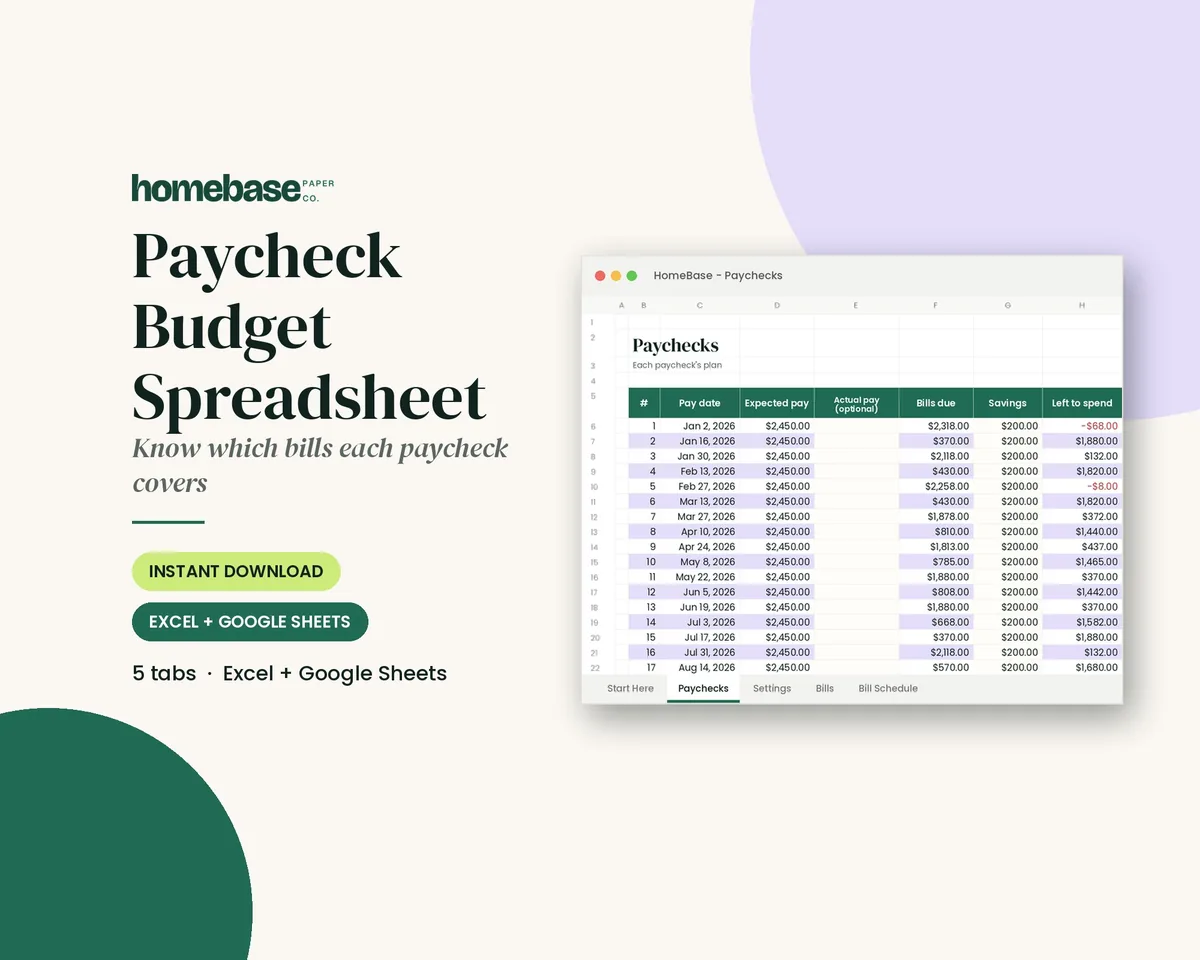
- Paycheck Budget Spreadsheet ($5.99): plan each paycheck and track spending by pay period.
- Budget Planner Printable ($5.99): monthly budget, bill and savings pages you can write weekly caps on.
- Ultimate Budget Bundle ($19.99, $46.42 if bought separately): budget spreadsheets and printables together.
HomeBase planners are undated or can start in any month, so you can begin this week. Browse every budget spreadsheet in the shop. Our free Holiday Budget Starter Kit is three US Letter pages we email you after you join our list.
See also
Make it easier
Tools for this
Spreadsheets
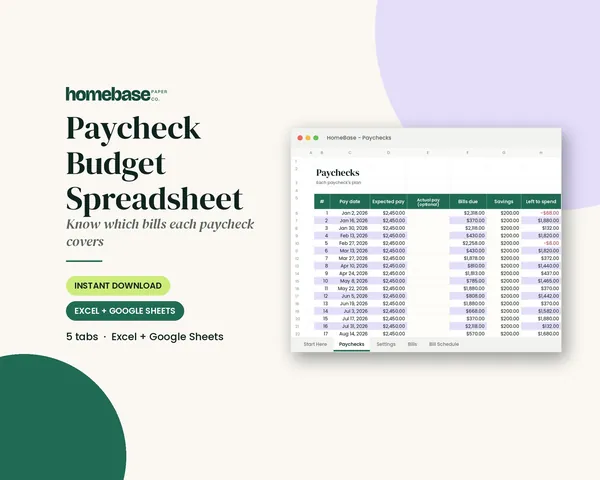
Paycheck Budget Spreadsheet
Enter your bills once. The sheet tells you which paycheck pays each one, all year.

Printables
Budget Planner Printable
Twelve undated pages you can print every month: budget, bills, spending, savings and debt.
 Save 57%
Bundles
Ultimate Budget Bundle
All 6 spreadsheets + both printable planners - for less than half the price of buying them separately.
Frequently asked questions
What is a weekly budget? A weekly budget is a spending plan that splits your income and bills into seven-day blocks instead of one monthly total. It works well for groceries, gas and fun money, which are easier to control in short stretches. Bills still get paid monthly, but you set money aside for them each week.
How do I make a weekly budget? Find your weekly take-home pay, convert monthly bills to a weekly amount, set caps for groceries, gas and personal spending, and review every week. The Paycheck Budget Spreadsheet does the conversions and tracks each pay period, so the math is done for you.
How do I convert monthly bills into a weekly budget? Multiply the monthly bill by 12 and divide by 52 to get an exact weekly amount. For a $1,200 rent payment that is about $277 a week. Dividing by four overstates the weekly cost slightly and leaves a small cushion, which some people prefer.
What should a weekly budget include? A weekly budget should include your take-home pay, your share of monthly bills, groceries, gas or transit, household supplies, personal spending, savings and debt payments. Add a small buffer line for surprises so one unexpected cost does not break the whole week.
Is a weekly budget better than a monthly budget? A weekly budget is better for people who get paid weekly or who overspend on groceries and small purchases, because the check-ins come four times as often. A monthly budget is simpler for big fixed bills. Many households use a monthly plan for bills and a weekly cap for everyday spending.
How much should I budget for groceries each week? Look at your last two or three months of grocery spending and divide by the number of weeks to get your current weekly average. Start your budget at that number, then trim a little each week with a meal plan and a list. There is no single right amount for every household.
What do I do with the extra week in some months? Four months a year have five Fridays or paydays, depending on your pay schedule. Plan that extra week in advance and send most of it to savings, a sinking fund or a debt payment instead of everyday spending. That one habit can add up over a year.
Can I make a weekly budget if I get paid biweekly or monthly? Yes, you can make a weekly budget if you get paid biweekly or monthly. Divide a biweekly paycheck by two or a monthly paycheck by about 4.33 to get a weekly amount, then move that much into your spending account or envelope each week. The Budget Planner Printable has monthly pages where you can write those weekly limits down.
Is there a free weekly budget template? You can make a simple weekly budget template on paper with columns for category, planned, spent and left. For a ready-made option, the Ultimate Budget Bundle includes budget spreadsheets and printables, so you can choose a weekly or paycheck layout without building one.
How do I stick to a weekly budget? Check your spending every two or three days, not just at the end of the week, and stop spending in a category once it hits zero. Using cash or a separate debit card for groceries and fun money makes the limit visible. Carry nothing over by habit; decide each week where leftovers go.
How do I make a weekly budget with an irregular income? To make a weekly budget with irregular income, base it on your lowest recent week of take-home pay and treat anything above that as extra for savings or debt. Fixed bills still get a weekly set-aside, so they are covered even in a slow week.
How much should I save each week in a weekly budget? A common starting point is 20% of weekly take-home pay for savings and debt payments under the 50/30/20 rule, which is $100 on $500 a week or $200 on $1,000. If that is too much, start with $10 to $25 a week and raise it as bills settle.
More from HomeBase
You may also like
Spreadsheets
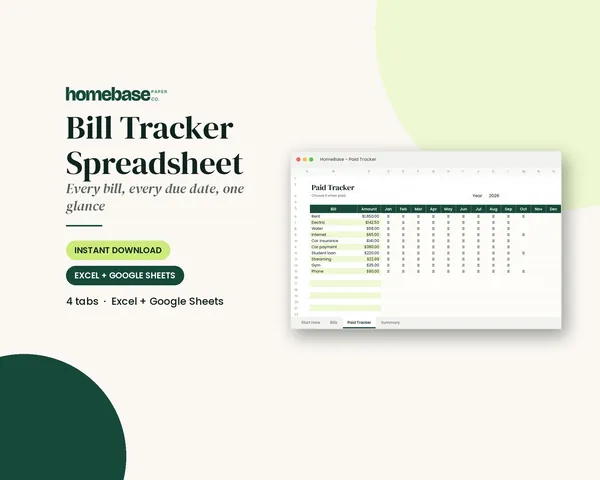
Bill Tracker Spreadsheet
Bills due in 3 days or less light up red, so nothing slips through.
Spreadsheets
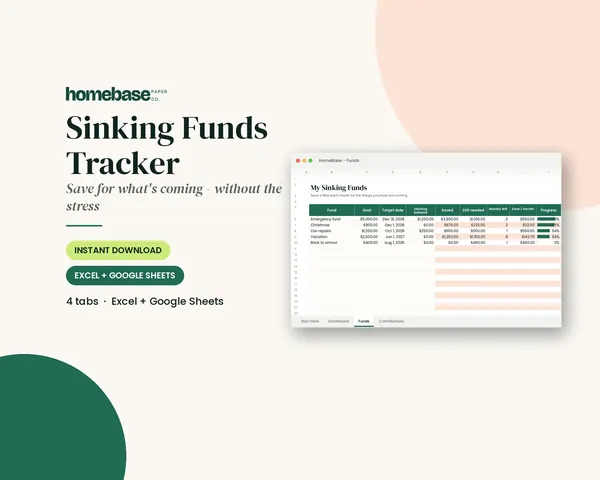
Sinking Funds Tracker
It does the math: how much to set aside each month to hit every goal on time.
Spreadsheets
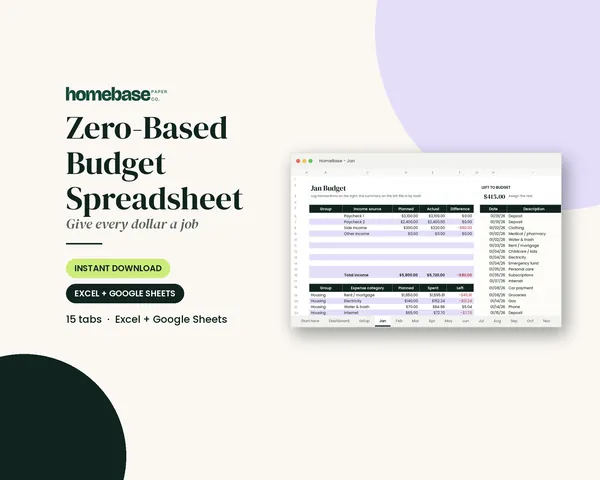
Zero-Based Budget Spreadsheet
The 'Left to budget' counter turns green when every dollar has a job.
Spreadsheets
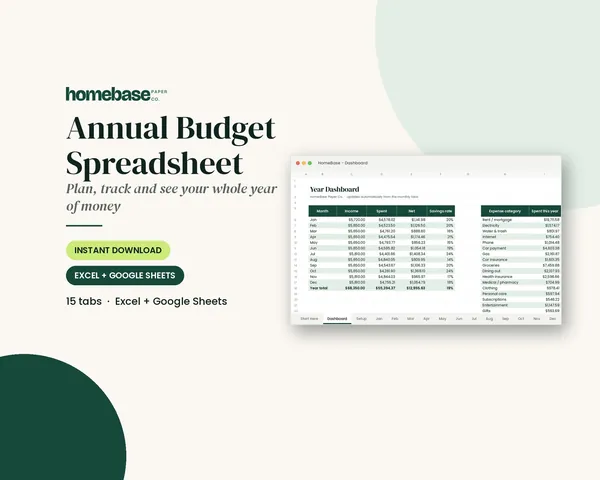
Annual Budget Spreadsheet
See exactly where your money goes every month - without complicated software.
 Club
Monthly club
Money Club
Anyone who wants a clear plan for the month's bills, holiday spending and savings.
Free printable
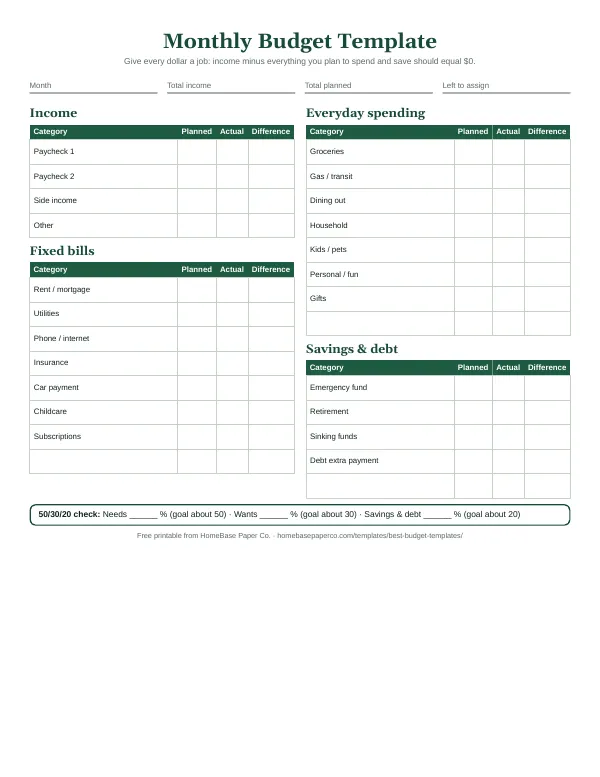
Give every dollar a job: get the free monthly budget template
A printable zero-based monthly budget: income, bills, everyday spending and savings on one page, with a planned vs. actual column. You'll also get our weekly HomeBase email with simple budgeting and bill-paying tips.
Sources
- Budgeting: How to create a budget and stick with it (CFPB) consumerfinance.gov
- How to Make a Budget (NerdWallet) nerdwallet.com
- How to Make a Monthly Budget (Bankrate) bankrate.com