

The short answer: this cash flow statement example follows one small business through a year, quarter by quarter, so you can see exactly what goes on each line and how the numbers add up.
- Three sections: operating, investing and financing activities
- Example year: $33,000 in cash from sales
- Also included: a short personal cash flow statement for a household
- Free template for Excel, Google Sheets or print
- Next step: Get the free cash flow statement template (spreadsheet) (we email it to you); want more? The Business Income & Expense Tracker is $7.99.
Our picks for cash flow statement example
Spreadsheets
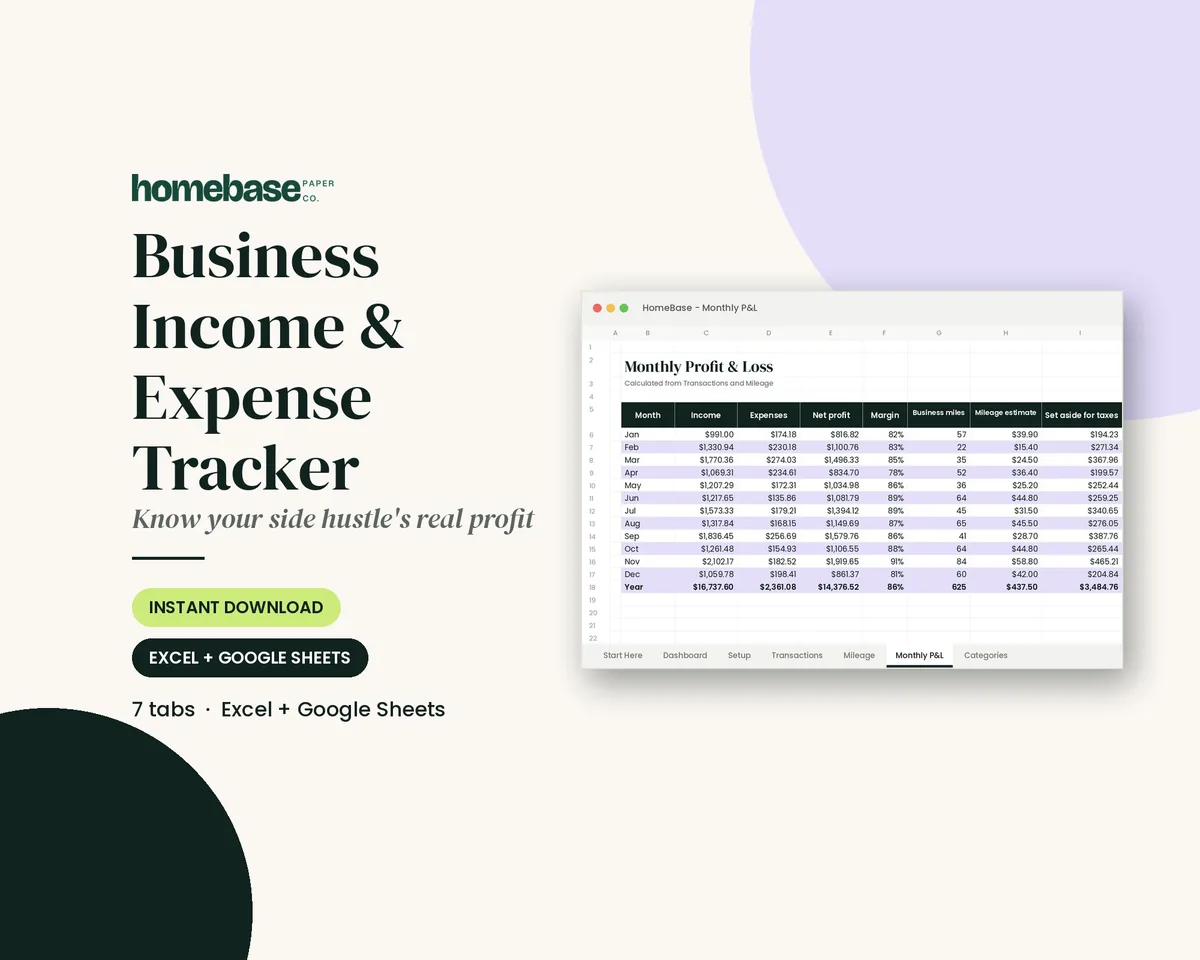
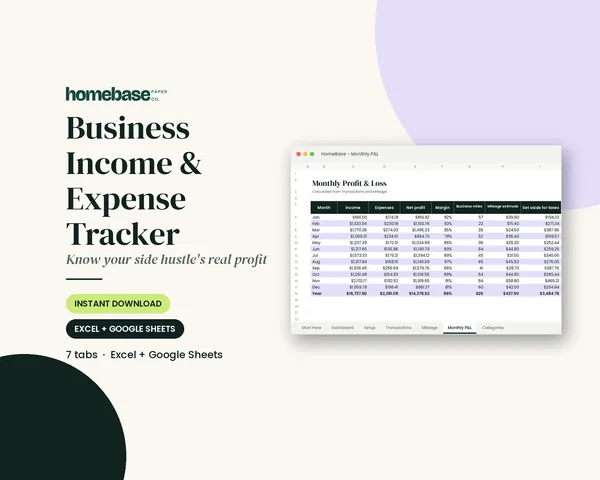
Business Income & Expense Tracker
Log sales, expenses and business miles - see your monthly profit, category totals for tax time and how much to set aside.

Spreadsheets
Annual Budget Spreadsheet
See exactly where your money goes every month - without complicated software.

Spreadsheets
Bill Tracker Spreadsheet
Bills due in 3 days or less light up red, so nothing slips through.
Printables
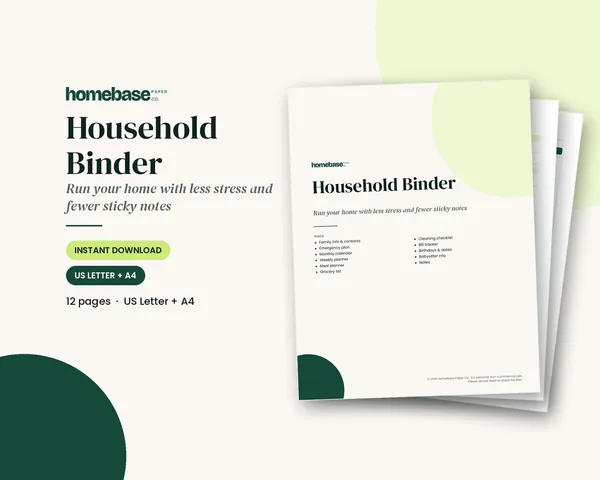
Household Binder
Family info, emergency plan, calendars, meals, groceries, cleaning, bills and sitter notes.
This cash flow statement example follows one small business through a year, quarter by quarter, so you can see exactly what goes on each line and how the numbers add up. It's a made-up business with round numbers, but it's built the same way a real cash flow statement is. After the business example, there's a short personal one for a household, and a free template you can fill in.
What is a cash flow statement?
A cash flow statement is a record of the cash that comes in and goes out during a period. The SEC's Beginners' Guide to Financial Statements puts it simply: an income statement can tell you whether a company made a profit, while a cash flow statement can tell you whether it generated cash. That difference matters because a business needs enough cash on hand to pay its bills and buy what it needs.
The SEC guide divides the statement into three main parts:
- Operating activities: the cash from running the business, like sales coming in and supplies, fees and wages going out.
- Investing activities: buying or selling long-term assets, like equipment. Buying a machine is a cash outflow from investing, and selling one is an inflow.
- Financing activities: borrowing, paying back loans and money from owners or investors.
The bottom line is the net increase or decrease in cash for the period. Add it to the cash you started with, and you get the cash you ended with.
The example business
Our sample is a one-person candle business that sells online and at local markets. It's illustrative, with made-up numbers. The owner keeps a separate business checking account, starts the year with $2,000 in it, and tracks cash by quarter. Sales are slow in the summer and strong before the holidays, which is a common pattern, and it shows why the timing of cash matters as much as the total.
The cash flow statement example, filled in
Here's the full statement. Outflows are shown in parentheses.
| Line | Q1 | Q2 | Q3 | Q4 | Year |
|---|---|---|---|---|---|
| Operating activities | |||||
| Cash from sales | $6,000 | $7,500 | $5,500 | $14,000 | $33,000 |
| Supplies and inventory | ($2,400) | ($3,000) | ($2,200) | ($5,600) | ($13,200) |
| Shipping, platform and card fees | ($600) | ($750) | ($550) | ($1,400) | ($3,300) |
| Rent, utilities and software | ($300) | ($300) | ($300) | ($300) | ($1,200) |
| Wages and contract help | $0 | $0 | $0 | ($2,000) | ($2,000) |
| Estimated tax payments | ($500) | ($500) | ($500) | ($500) | ($2,000) |
| Net cash from operating | $2,200 | $2,950 | $1,950 | $4,200 | $11,300 |
| Investing activities | |||||
| Sale of old equipment | $0 | $0 | $0 | $200 | $200 |
| Purchase of a wax melter | $0 | ($1,500) | $0 | $0 | ($1,500) |
| Net cash from investing | $0 | ($1,500) | $0 | $200 | ($1,300) |
| Financing activities | |||||
| Owner contribution | $1,000 | $0 | $0 | $0 | $1,000 |
| Owner draws | ($1,500) | ($1,500) | ($1,500) | ($1,500) | ($6,000) |
| Net cash from financing | ($500) | ($1,500) | ($1,500) | ($1,500) | ($5,000) |
| Cash position | |||||
| Net change in cash | $1,700 | ($50) | $450 | $2,900 | $5,000 |
| Beginning cash | $2,000 | $3,700 | $3,650 | $4,100 | $2,000 |
| Ending cash | $3,700 | $3,650 | $4,100 | $7,000 | $7,000 |
The same numbers are on the Example tab of the free spreadsheet, so you can change any of them and watch the totals move.
Walking through it line by line
Operating activities. Sales bring in $33,000 over the year. Money out for running the business, including supplies, fees, rent and software, a holiday helper and estimated tax payments, comes to $21,700. That leaves $11,300 in net cash from operating activities. Notice that Q4 brings in more than the first two quarters combined, but it also has the biggest bills, because the owner buys extra supplies and pays a helper for the holiday rush.
Investing activities. In Q2 the owner buys a $1,500 wax melter. It's going to be used for years, so it belongs under investing, not operating. Mississippi State University Extension's guide to the cash flow statement uses the same rule: anything typically used for longer than one year is an investment item. In Q4 the owner sells an old melter for $200, a small investing inflow. Net investing for the year is ($1,300).
Financing activities. The owner puts in $1,000 of personal money in Q1 and takes $1,500 out each quarter to live on. The MSU guide lists owner withdrawals in the financing section along with loan money and principal payments. Net financing for the year is ($5,000).
Cash position. Add the three sections and you get the net change in cash for each quarter: $1,700, then ($50), then $450, then $2,900. Each quarter's ending cash becomes the next quarter's beginning cash, so the business goes from $2,000 to $7,000 over the year, an increase of $5,000.
What this example tells the owner
The year looks good: $5,000 more cash at the end than at the start. But Q2 is the warning sign. Cash dips by $50 because the wax melter, the owner draws and a slow-ish quarter all land at once. If Q2 sales had come in $1,500 lower, the business would have dropped to about $2,150, with summer still ahead.
A cash flow statement makes that kind of squeeze visible before it happens. Looking at it, the owner might:
- Time the next equipment purchase for after the holiday season, when cash is highest.
- Take a smaller draw in a slow quarter and a bigger one in Q4.
- Keep a minimum cash balance, say one quarter's operating outflows, before buying anything big.
- Order holiday supplies in stages instead of all at once.
A real-world example: a farm's year
Extension services publish real-style examples too. The University of Arkansas Cooperative Extension's FSA113 factsheet follows an Arkansas Delta soybean and rice farm through a year. Its total operating inflows are $125,200, but almost all of it, $107,200, arrives in the fourth quarter. The farm ends the year with a positive net operating cash flow of $30,000, yet it runs a $68,200 deficit through the first three quarters, and its cash position falls to -$28,200 by the end of the third quarter before recovering to $35,000 at year end.
The lesson carries over to any small business: the yearly total can look fine while the quarters tell a very different story. The factsheet notes that looking at quarterly activity, not just the yearly total, gives a clearer picture of when surpluses and deficits happen.
Direct vs. indirect method
The example on this page uses the direct method: it lists the actual cash received and paid. That's the easiest way for a small business or household, because the numbers come straight from your bank account and sales records.
Larger companies usually use the indirect method. The SEC guide explains that it starts with net income and adjusts it to actual cash, for example adding back depreciation, which is a non-cash expense. If you're reading a public company's annual report, that's the version you'll see. Both methods end at the same net change in cash.
A personal cash flow statement example
The same idea works at home. A personal cash flow statement lists everything that came in and went out in a month. Here's an illustrative example for a household, with made-up numbers:
| Line | Amount |
|---|---|
| Take-home pay | $4,800 |
| Housing | ($1,500) |
| Food | ($700) |
| Child care | ($600) |
| Transportation (car payment, gas) | ($530) |
| Utilities, phone and internet | ($390) |
| Insurance | ($200) |
| Other spending | ($400) |
| Money in minus money out | $480 |
A positive number means you have room to save or pay down debt. A negative one means you spent more than came in, and the statement shows where. If your income changes month to month, our guide to budgeting with irregular income shows how to plan around the low months. To see the bigger picture of what you own and owe, pair this with a net worth calculation.
How to make your own cash flow statement
- Pick a period. Monthly works best for most people. MSU Extension notes you can also go bimonthly, quarterly or semiannually, but more detail makes it easier to see when cash moves.
- Write down your beginning cash, the balance in your business checking (or household checking and cash) on the first day.
- List cash in and cash out from your bank statements, sales platform and receipts. Only count money that actually moved, not invoices you haven't been paid for yet.
- Sort each item into operating, investing or financing. Day-to-day costs are operating, long-lasting purchases are investing, and loans and owner money are financing.
- Total each section, add them up for the net change in cash, and add that to beginning cash.
- Check it against your bank balance. Ending cash should match. If it doesn't, something was missed or double-counted.
- Carry ending cash forward as next period's beginning cash.
The free spreadsheet does steps 5 and 7 for you. Keeping good records all year makes the rest easy. Our guide to what bookkeeping is covers the basics, and the small business expense tracker template shows a simple way to log expenses as they happen.
Using the statement of cash flows template
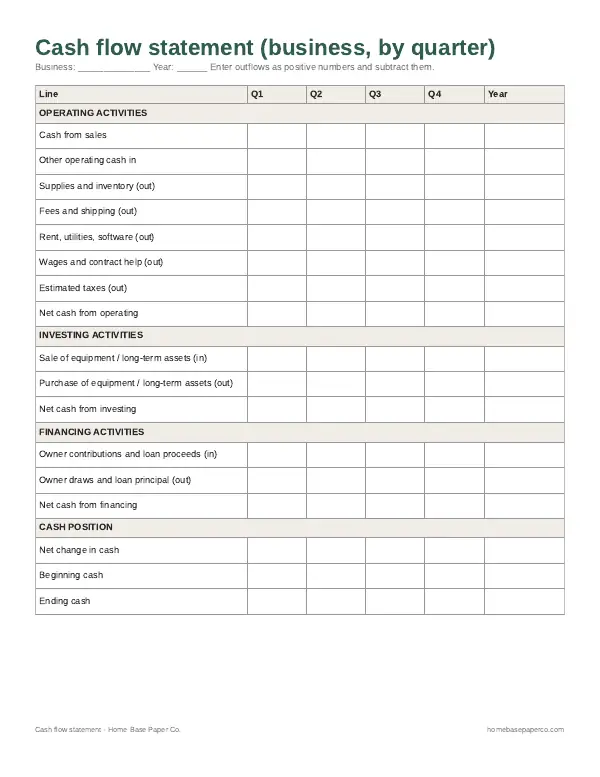
The free statement of cash flows template follows the same layout as the example above, so you can copy it line by line:
- Enter the starting cash from your bank balance on the first day of the period.
- Fill in operating activities: cash from customers in, and cash paid for supplies, wages, rent and other running costs out.
- Fill in investing activities: equipment or other long-term assets bought or sold.
- Fill in financing activities: loans received or repaid, money the owner put in and owner draws. If you're weighing small business loans, this line shows how the payments will affect your cash.
- Check the bottom line. Starting cash plus the net change from all three sections should equal your ending bank balance. If it doesn't, something is missing or counted twice.
Common mistakes
- Mixing business and personal money. A separate account makes the statement far easier and more accurate.
- Counting sales you haven't been paid for. A cash flow statement is about cash received, not sales made.
- Putting equipment under operating. A long-lasting purchase is investing.
- Leaving out owner draws. They're real cash leaving the business, under financing.
- Only looking at the year. As both examples show, the quarters or months are where the trouble shows up.
Tools to keep the numbers
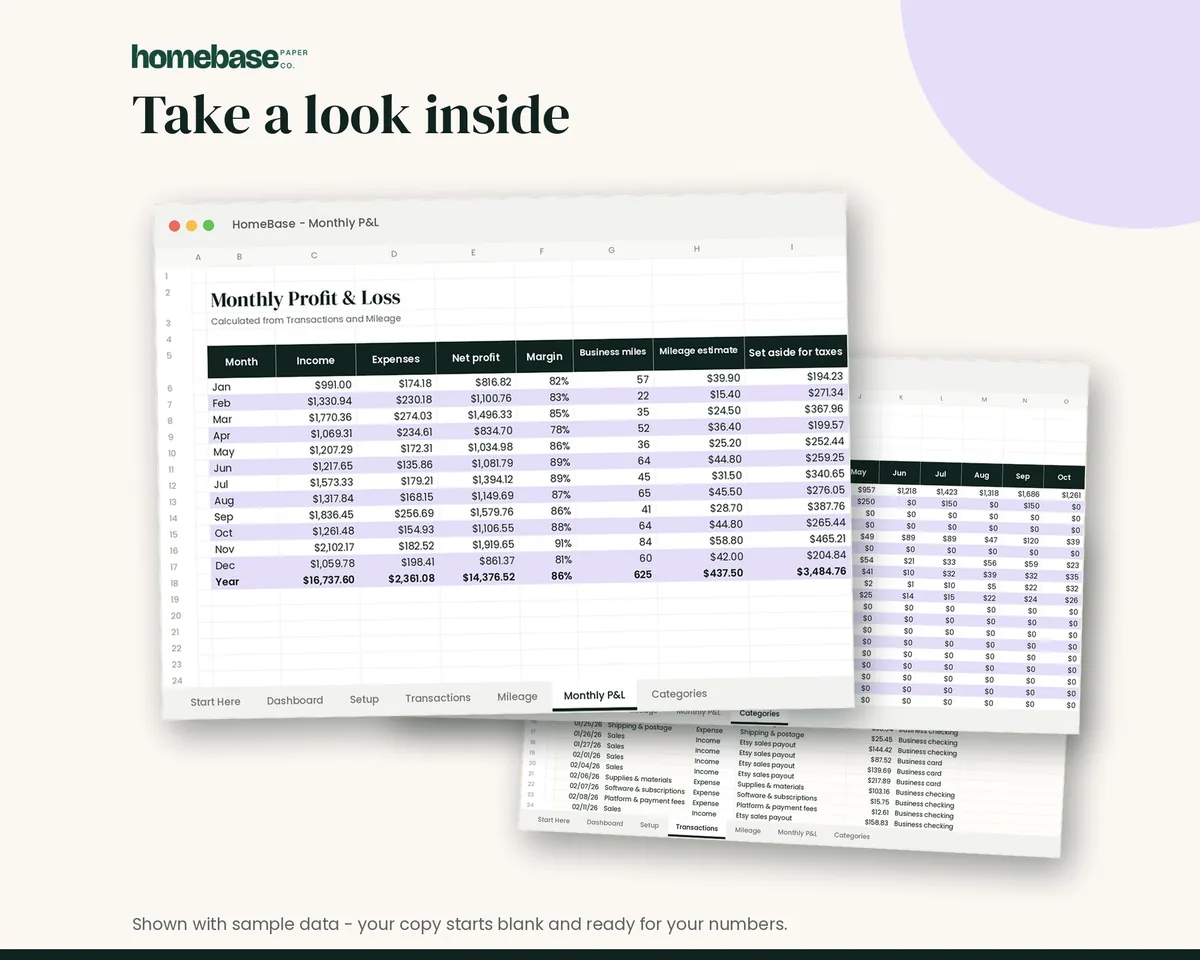
The Business Income & Expense Tracker ($7.99) works in Excel and Google Sheets. It has an income and expense log with a category dropdown, a monthly profit and loss, a mileage log with a deduction estimate, a tax set-aside estimate each month, year and month totals by category, and a dashboard with a chart. Those category totals make it quick to fill in the operating section of your cash flow statement.
For a household, the Annual Budget Spreadsheet ($6.99) has 12 monthly tabs, a transaction log with category dropdowns, planned vs actual by category and a year dashboard. If bills are what trip up your cash, the Bill Tracker Spreadsheet helps you see what's due and when.
To plan cash in and out before the month starts, use a business budget template.
This page is educational, not accounting, tax or financial advice. For business tax questions, our small business tax deduction checklist is a good starting list to bring to a tax professional, and the profit and loss statement template covers the statement that pairs with this one.
Business Income & Expense Tracker
Log sales, expenses and business miles - see your monthly profit, category totals for tax time and how much to set aside.
$7.99 · Instant download. Print at home or fill it in on screen. Or browse the full Budget & Money collection.
Frequently asked questions
What is a cash flow statement example? A cash flow statement example is a filled-in sample that shows cash coming in and going out over a period, sorted into operating, investing and financing activities. The one on this page is a made-up candle business that starts the year with $2,000 and ends it with $7,000.
What are the three parts of a cash flow statement? The three parts of a cash flow statement are operating, investing and financing activities. The SEC's beginners' guide says operating covers normal business cash, investing covers buying or selling long-term assets like equipment, and financing covers borrowing, paying back loans and money from owners or investors.
Is a cash flow statement the same as a profit and loss statement? No, a cash flow statement is not the same as a profit and loss statement. A profit and loss (income) statement tells you whether you made a profit. A cash flow statement tells you whether you generated cash, and when. The SEC notes the two are related but not equivalent. See our profit and loss statement template for the other one.
Is there a free cash flow statement template? Yes, there's a free cash flow statement template on this page. This page has a free cash flow statement template: a spreadsheet for Excel and Google Sheets that totals itself, with the example already filled in on its own tab, plus a printable PDF. Free by email.
What is the bottom line of a cash flow statement? The net increase or decrease in cash for the period, added to beginning cash to get ending cash. In the example on this page, cash rises $5,000 for the year, from $2,000 to $7,000.
Can a profitable business run out of cash? Yes, a profitable business can run out of cash. Timing is the usual reason: bills come due before customers pay. The University of Arkansas farm example ends the year with $30,000 of net operating cash flow but runs a $68,200 deficit through the first three quarters.
How often should I make a cash flow statement? Monthly is best for most small businesses and households. Mississippi State University Extension says you can do it monthly, bimonthly, quarterly or semiannually, but the more detailed it is, the easier it is to see when cash moves in and out.
Where do owner draws go on a cash flow statement? Owner draws go under financing activities on a cash flow statement. Mississippi State University Extension puts owner withdrawals in the financing section, alongside loan proceeds and principal payments. In this page's example, $1,500 a quarter in owner draws is the biggest financing outflow.
Is buying equipment an operating expense on the cash flow statement? No, buying equipment is not an operating expense on the cash flow statement. Buying equipment is an investing activity. Mississippi State University Extension treats items you'll use longer than a year as investments, and the SEC lists buying machinery as an investing cash outflow.
What is the difference between the direct and indirect method? The direct method, used in this example, lists actual cash received and paid. The indirect method starts with net income and adjusts it, for example adding back depreciation, which the SEC describes as a non-cash item. Small businesses and households usually find direct easier.
Can I make a personal cash flow statement? Yes, you can make a personal cash flow statement. A personal cash flow statement lists your money in (take-home pay and other income) and money out for a month. The free PDF on this page has a one-month personal version with planned, actual and difference columns.
What tool can track the numbers for a cash flow statement? The Business Income & Expense Tracker ($7.99) logs sales and expenses with category dropdowns and shows monthly profit and loss and category totals, which you can then sort into the cash flow statement. For a household, the Annual Budget Spreadsheet ($6.99) tracks money in and out each month.
How do I use a statement of cash flows template? To use a statement of cash flows template, enter your starting cash, then record cash in and out under operating, investing and financing activities. The ending cash on the template should match your bank balance for the same date.
Free printable
See where your cash actually went this quarter
A blank business statement by quarter, a personal one-month version and a review page. You'll also get our weekly HomeBase email with simple small business paperwork and money tips.
Sources
- U.S. Securities and Exchange Commission: Beginners' Guide to Financial Statements sec.gov
- Mississippi State University Extension: Farm Financial Analysis Series, the Cash Flow Statement extension.msstate.edu
- University of Arkansas Cooperative Extension: Tracking Cash Flow on Your Farm (FSA113) uaex.uada.edu