

The short answer: money envelopes are small paper or vinyl envelopes made to hold cash, either as a gift or to divide money for budgeting. Most are about 3.5 x 7 inches, sized for flat bills.
- Gift envelopes: birthdays, graduations, weddings and holidays, often with a window
- Budget envelopes: labeled by category and refilled every payday
- Make your own from a sheet of US Letter paper in a few minutes
- Starter version: 6 envelopes to begin with
- Next step: Get the free Holiday Budget Starter Kit (we email it to you); want more? The 100 Envelope Savings Challenge is $3.99.
Money envelopes are small paper or vinyl envelopes made to hold cash, either to give it as a gift or to divide it for budgeting. Most are sized for flat bills, about 3.5 x 7 inches. A gift money envelope often has a window or a spot for a message. A budgeting money envelope is sturdier, labeled with a category like "Groceries" or "Gas," and refilled every payday. You can buy them, print them or fold your own from a sheet of US Letter paper in a few minutes.
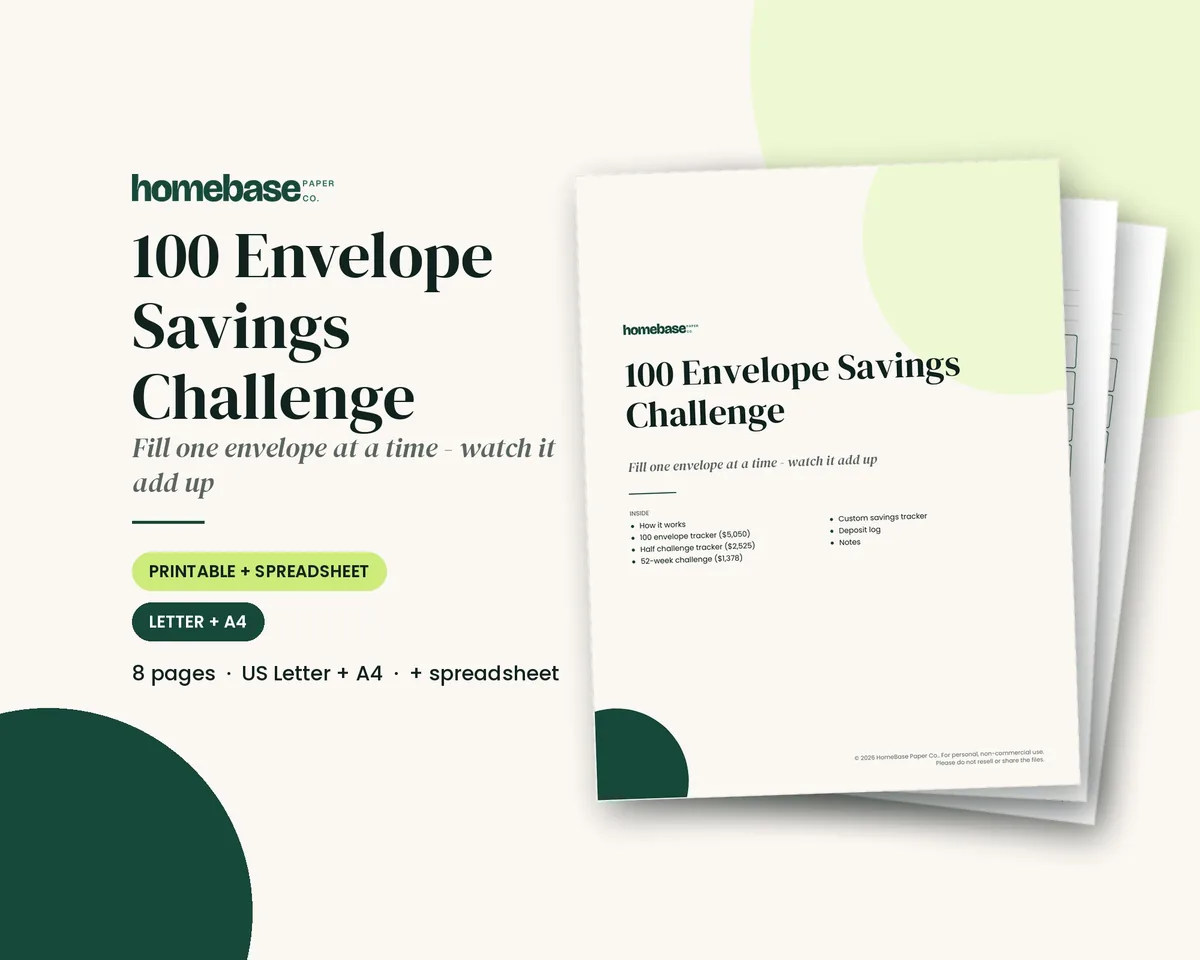
If you're using envelopes to save up for the holidays, the 100 Envelope Savings Challenge ($3.99) gives you a printable tracker for all 100 envelopes so you can see your total grow, up to $5,050. Browse all of our Printables for more money pages.
This guide covers the two main kinds of money envelopes, how to pick or make them, what to write on them and how to keep the cash inside safe. If you want the full budgeting method, our cash envelope system guide walks through it step by step, and our comparison of budgeting methods shows how envelopes stack up against zero-based, 50/30/20 and other systems. If you want clever ways to present cash, see our creative ways to give money.
The two jobs a money envelope does
Before you buy or print anything, decide which job your envelopes need to do. It changes the size, the paper and the label.
| Gift money envelopes | Budget money envelopes | |
|---|---|---|
| Main use | Giving cash for birthdays, graduations, weddings, holidays | Splitting your paycheck into spending categories |
| Typical size | About 3.5 x 7 inches, fits a flat bill | About 3.5 x 7 inches, or binder size |
| Material | Card stock, decorative paper, often with a window | Heavier paper, vinyl or laminated pockets |
| Label | Name, occasion and a short note | Category, amount budgeted, running balance |
| How long it lasts | One use | Months of refills |
| Good add-on | A card, a gift tag or a message | A tracking sheet on the front or a binder |
Many families use both. You might keep budget envelopes all year, then grab gift envelopes in December for teachers, sitters and cousins.
Types of money envelopes, grouped by occasion
Here is a quick list of the most common money envelopes and when they make sense.
Gift envelopes
- Birthday money envelopes. Bright, simple and often printed with "Happy Birthday." Pair one with a note from our birthday wishes list.
- Christmas money envelopes. Holiday prints, sometimes with a slot for a gift card. Handy for teachers, mail carriers and anyone hard to shop for.
- Wedding money envelopes. Plain white or ivory with a flap that seals. Write your names on the outside so the couple knows who gave it. Our wedding card message ideas help with the note.
- Graduation money envelopes. Often in school colors. Good for cash or a check.
- Red envelopes. Used for Lunar New Year and other celebrations, usually with new, crisp bills inside.
- Window money holders. A card with a cutout that shows the bill's face. Fun for kids because they see the amount right away.
- Tip envelopes. Small, plain envelopes for holiday tips to service providers.
Budget envelopes
Affiliate links: we may earn a small commission. As an Amazon Associate we earn from qualifying purchases. Details.
- Paper cash envelopes. The classic version. Cheap, easy to label and easy to replace.
- Laminated or vinyl envelopes. They last longer and survive a purse or glove box.
- Binder envelopes. Zippered pockets that clip into a binder so everything lives in one place.
- Wallet-style envelopes. A cash envelope wallet with tabbed envelopes keeps categories together. Our cash envelope wallet vs app vs printable comparison breaks down the trade-offs.
- Savings challenge envelopes. Numbered envelopes for challenges like the 100 envelope challenge. See how it compares in 100 envelope challenge vs 52 week challenge.
- Sinking fund envelopes. One envelope per future expense: Christmas, car repairs, school fees, birthdays.
Starter version: 6 envelopes to begin with
If you're new to budget envelopes, don't start with 20. Start with the categories where cash helps you most, the ones where it's easy to overspend with a card.
| Envelope | What goes in it | Example amount per paycheck |
|---|---|---|
| Groceries | Food and household basics | $200 |
| Gas | Fuel for the car | $80 |
| Eating out | Takeout, coffee, school lunches bought out | $40 |
| Personal | Haircuts, toiletries, small treats | $30 |
| Gifts | Birthdays and holidays coming up | $25 |
| Christmas | Your holiday sinking fund | $25 |
Every dollar figure here is an example, so swap in your own. Pull the amounts from your real budget, not from a guess. If you need help with the list of lines, our budget categories list has 40 of them in 8 groups. The Budget Planner Printable ($5.99) gives you monthly pages to set those amounts before you fill a single envelope.
Money envelope size and dimensions
A US bill measures about 6.14 x 2.61 inches, so any envelope that is at least that long and wide holds cash flat. These are the sizes you will see most:
| Envelope | Approx. size | Best for |
|---|---|---|
| Standard money envelope | 3.5 x 7 inches | Gift cash, single-category budget envelopes |
| Personal size (A6) cash envelope | about 6.73 x 3.75 inches | Cash binders and planners |
| Homemade from US Letter paper | 7 x 3.5 inches (see steps below) | Free DIY envelopes in any color |
If you plan to carry the envelopes in a binder or wallet, check the binder's inside pocket measurements first. For the cash-envelope budgeting method itself, see our cash envelope system guide.
How to make your own money envelopes
You don't need anything fancy. Plain paper works fine for budget envelopes, and card stock looks nicer for gifts.
Supplies
- US Letter paper or card stock (8.5 x 11 inches)
- A ruler and pencil
- Scissors
- A glue stick or double-sided tape
- A marker for labels, such as Sharpie fine-tip permanent markers
Steps to make a money envelope
- Cut a piece of paper 7 inches wide and 9 inches tall from a US Letter sheet.
- Fold the bottom up 3.5 inches. This makes the pocket.
- Glue or tape the two side edges of the pocket closed, with a thin line just inside each edge.
- Fold the top down about 2 inches so it covers the opening. This makes the flap.
- Trim the flap corners at an angle so it lies neatly.
- Test it with a bill. A US bill is about 6.14 x 2.61 inches, so it should slide into your 7 x 3.5 inch envelope flat, without folding.
- Label the front with the category or the person's name.
For gifts, add a printed tag. Our free Christmas gift tags print on regular paper and fit nicely on the front of a money envelope.
What to write on a money envelope
On a budget envelope
Write the category in big letters at the top. Below it, draw a simple table with three columns: date, amount spent and what's left. Every time you take cash out, write it down. When the balance hits zero, that category is done until the next payday. That small habit is what makes envelopes work: you see the number go down in real time.
On a gift envelope
Keep it short and warm. A few ideas:
- "Happy birthday! Treat yourself to something you love."
- "Congratulations, graduate. So proud of you."
- "Merry Christmas! Thank you for all you do this year."
- "Wishing you both a lifetime of happiness."
Put the recipient's name on the outside and your name inside, so the gift doesn't get mixed up at a party or wedding. Our Christmas card messages list has dozens more holiday lines.
How much money to put in a gift envelope
There's no single rule. A good gift is one you can afford without stress. The Emily Post Institute's guide to the etiquette of gifting is a helpful read on gift etiquette for holidays, weddings, graduations and other occasions.
A simple way to decide is to set one gift budget for the year, then split it by person. Our annual gift budget guide shows how. For December, the Christmas Budget & Gift Planner ($4.99) lets you list every person, the amount you plan to give and what you actually spent, so cash gifts don't sneak past your total. Browse more holiday pages in our Holidays shop.
If you want a free place to start, the Holiday Budget Starter Kit is 3 printable US Letter pages, emailed to you when you join our list.
Do large cash gifts have tax rules?
For most family gifts, no. The IRS explains in its gift tax FAQ that gifts up to the annual exclusion, $19,000 per person for 2026, aren't taxable gifts. Above that, the giver may need to file a gift tax return. If you're planning a large gift, check the IRS page or talk to a tax professional.
How to use money envelopes for budgeting
Here is the short version. The cash envelope system guide has the full walk-through.
- Set your budget first. Decide what each category gets per paycheck.
- Withdraw the cash for your envelope categories only. Bills like rent and utilities stay digital.
- Fill each envelope right away so the money has a job before you spend it.
- Spend only from the envelope for that category.
- Track it on the front of the envelope or on a tracker sheet.
- Decide on leftovers. Roll them into next month, move them to savings or put them in your Christmas envelope.
The Consumer Financial Protection Bureau's budgeting guide covers the basics of building a budget and tracking spending, which is the foundation envelopes sit on.
Saving for the holidays with envelopes
Envelopes are one of the easiest ways to save for Christmas, because you can see and touch the money. Two simple methods:
- A Christmas sinking fund envelope. Put in the same amount every payday from January to November. Our sinking funds guide explains how to work out the amount.
- The 100 envelope challenge. Number 100 envelopes from 1 to 100. Each day or week, pick one and put in that many dollars. Finish all 100 and you've saved $5,050. The 100 Envelope Savings Challenge ($3.99) is the printable tracker for it.
If you want the whole holiday season in one set, the Holiday Season Bundle is $15.99 (reg. $25.94 bought separately). It includes the Christmas Budget & Gift Planner, the 100 Envelope Savings Challenge, the Sinking Funds Tracker and more. See all of our Bundles.
Planning the bigger picture? The Holiday Command Center brings our holiday planners and a 2027 budget together. For Black Friday, subscribers get it early for $47 from Nov 24 to 26 through the link in their email, and everyone can get it at that price Nov 27 to 30.
How to keep cash in envelopes safe
Cash is easy to lose and hard to replace. A few habits help:
- Keep only what you need. Hold a pay period's worth of spending money in envelopes, not months of savings.
- Store envelopes in one spot, like a zippered pouch or a binder, not loose in a purse.
- Seal gift envelopes and hand them to the person directly, or put them in a card box at events.
- Don't mail large amounts of cash. Use a check or a bank transfer for big gifts.
- Bank your savings. Once an envelope holds more than you'll spend soon, deposit it. The FDIC's deposit insurance page explains that deposits at an FDIC-insured bank are automatically insured to at least $250,000.
Quick checklist before you hand over or fill an envelope
- Right size: the bill lies flat inside
- Name or category written on the front
- Amount recorded on your tracker or gift list
- Note or tag added (gifts)
- Flap sealed (gifts) or tucked (budget)
- Stored in one safe place
Money envelopes are simple, cheap and surprisingly powerful. Whether you're tucking a twenty into a birthday card or splitting your paycheck into six categories, the envelope gives every dollar a clear job. Start with a few, track what you spend and add more as you go.
Make it easier
Tools for this
Starter pickPrintables
100 Envelope Savings Challenge
Classic, half and 52-week challenges to print, plus a spreadsheet that tracks every envelope and tells you how much to save each week.
Printables
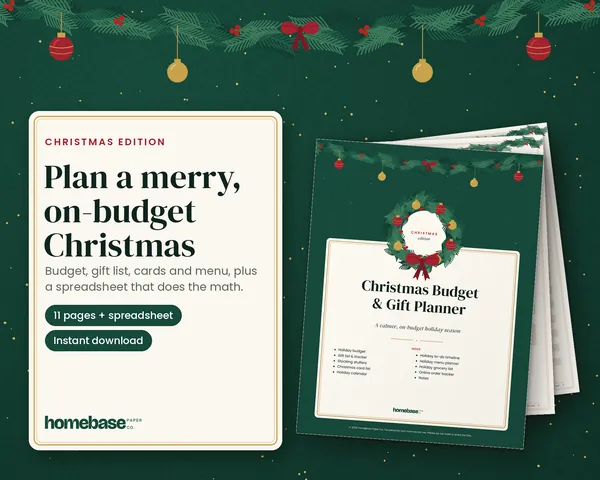
Christmas Budget & Gift Planner
Set a budget for every person, log each purchase, and watch what's left - plus printable gift, card, menu and to-do pages.
Printables
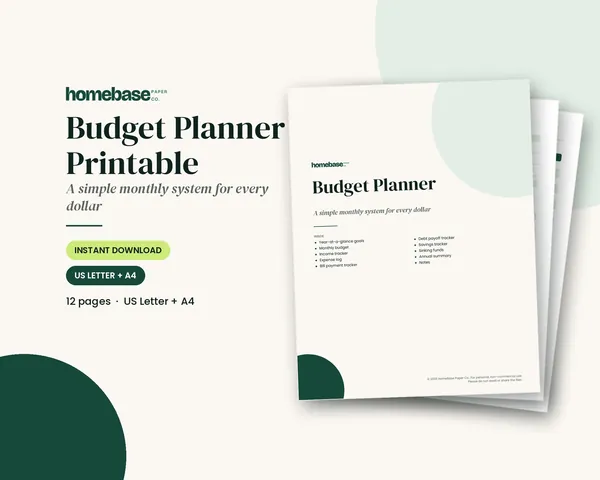
Budget Planner Printable
Twelve undated pages you can print every month: budget, bills, spending, savings and debt.
Frequently asked questions
What are money envelopes? Money envelopes are small envelopes made to hold paper cash, either for giving it as a gift or for splitting it into budget categories. Most are about 3.5 x 7 inches so a bill lies flat inside. Gift versions are decorative and often have a window or a note space, while budget versions are sturdier and labeled with a category like groceries or gas.
What size is a money envelope? Most money envelopes are about 3.5 x 7 inches, just big enough for a US bill to lie flat. A US bill measures about 6.14 x 2.61 inches, so anything a little bigger than that works. Binder-style budget envelopes are often larger so they can hold receipts too.
What are the dimensions of a money envelope? A standard money envelope is about 3.5 x 7 inches, a little bigger than a US bill, which measures about 6.14 x 2.61 inches. Personal-size (A6) cash envelopes for binders run about 6.73 x 3.75 inches, and you can make your own 7 x 3.5 inch envelope from a sheet of US Letter paper.
What is the difference between money envelopes and cash envelopes? Money envelopes is the broad name for any envelope that holds cash, while cash envelopes usually means budget envelopes used in the cash envelope system. Gift money envelopes are made for one use. Budget cash envelopes are labeled by category and refilled every payday. Our cash envelope system guide explains the budgeting method in full.
How do you make a money envelope at home? You can make a money envelope from one sheet of US Letter paper in a few minutes. Cut a piece 7 inches wide and 9 inches tall, fold the bottom up 3.5 inches, glue the side edges, then fold the top down about 2 inches as the flap. Card stock makes a sturdier gift envelope.
What should I write on a money envelope for a gift? Write the person's name on the outside and a short, warm note inside, plus your own name so the gift doesn't get mixed up. Something like "Happy birthday! Treat yourself to something you love" is plenty. Our birthday wishes and Christmas card messages lists have more ideas.
How much money should I put in a gift envelope? Put in an amount you can comfortably afford, because there's no fixed rule for cash gifts. Set one gift budget for the year and split it by person. The Christmas Budget & Gift Planner ($4.99) helps you plan each person's amount and track what you actually give.
What categories should I use for budget money envelopes? Start with the categories where cash keeps you from overspending: groceries, gas, eating out, personal care, gifts and a Christmas fund. Six is a good starting number. Bills like rent and utilities usually stay digital. Our budget categories list has 40 more lines to choose from.
How do I track the money in each envelope? Write a small table on the front of each envelope with the date, the amount spent and what's left, and update it every time you take cash out. The Budget Planner Printable ($5.99) gives you monthly pages to set each envelope's amount before you fill it.
Can I use money envelopes to save for Christmas? Yes, envelopes are one of the easiest ways to save for Christmas because you can see the money grow. Use one Christmas sinking fund envelope and fill it every payday, or try the 100 envelope challenge. The 100 Envelope Savings Challenge ($3.99) is a printable tracker that takes you to $5,050.
What is the 100 envelope challenge? The 100 envelope challenge is a savings game where you number 100 envelopes and fill one at a time with that many dollars until you've saved $5,050. You can go daily, a few times a week or at your own pace. The 100 Envelope Savings Challenge ($3.99) printable tracks which envelopes you've filled.
Is it safe to keep cash in envelopes at home? It's fine for a pay period's worth of spending money, but larger savings are safer in a bank. Keep envelopes together in one zippered pouch or binder, and deposit money once it builds up beyond what you'll spend soon. Insured bank accounts protect your savings in ways an envelope can't.
Are cash gifts in envelopes taxable? Most family cash gifts aren't taxable, because the IRS annual exclusion is $19,000 per person for 2026. Gifts above that amount may require the giver to file a gift tax return. If you plan a very large gift, check the IRS gift tax FAQ or ask a tax professional.
Should I mail cash in a money envelope? It's best not to mail large amounts of cash, because it can't be traced or replaced if it's lost. For small gifts, a sealed card is common, but for bigger amounts use a check or a bank transfer instead. Hand delivery is the safest way to give a cash envelope.
Is there a free printable to help plan holiday money? Yes, the free Holiday Budget Starter Kit gives you 3 printable US Letter pages to plan your holiday spending, emailed after you join our list. Get it on the Holiday Budget Starter Kit page. For the full set, the Holiday Season Bundle is $15.99 (reg. $25.94 bought separately).
More from HomeBase
You may also like
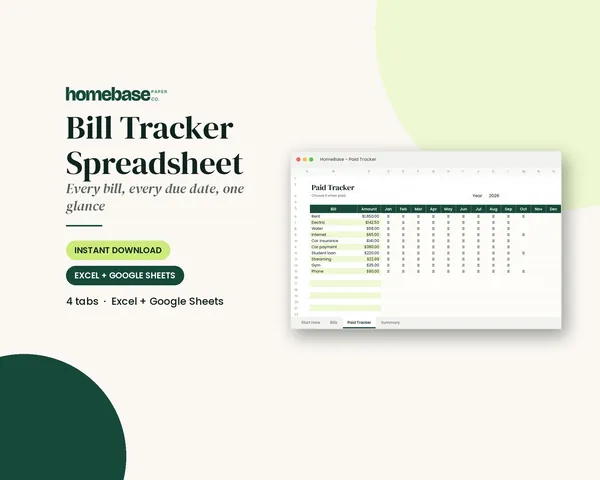
Spreadsheets
Bill Tracker Spreadsheet
Bills due in 3 days or less light up red, so nothing slips through.
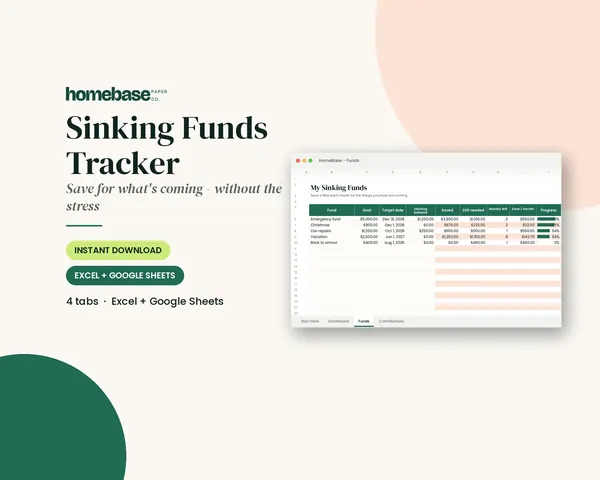
Spreadsheets
Sinking Funds Tracker
It does the math: how much to set aside each month to hit every goal on time.
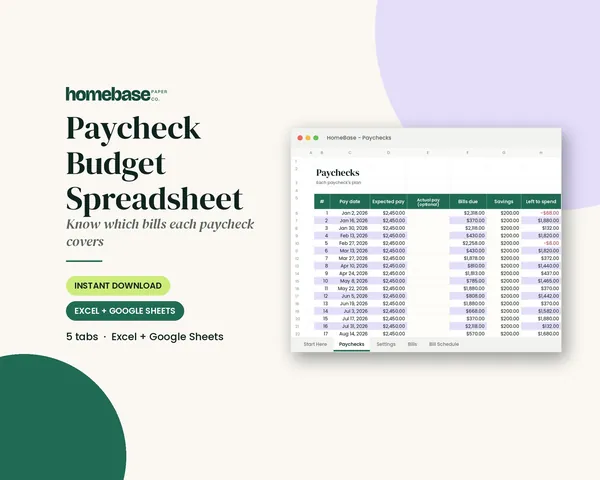
Spreadsheets
Paycheck Budget Spreadsheet
Enter your bills once. The sheet tells you which paycheck pays each one, all year.
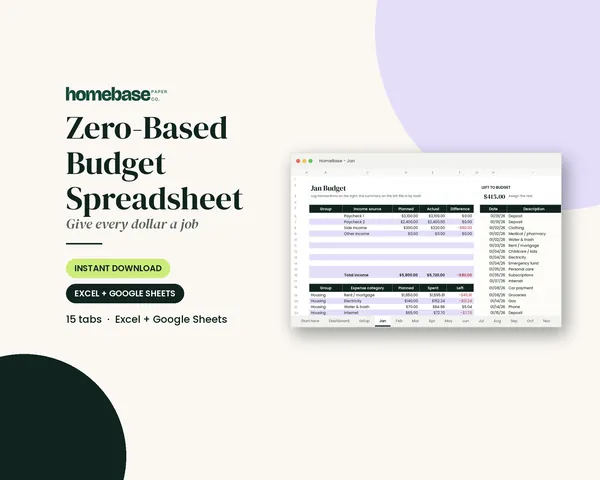
Spreadsheets
Zero-Based Budget Spreadsheet
The 'Left to budget' counter turns green when every dollar has a job.
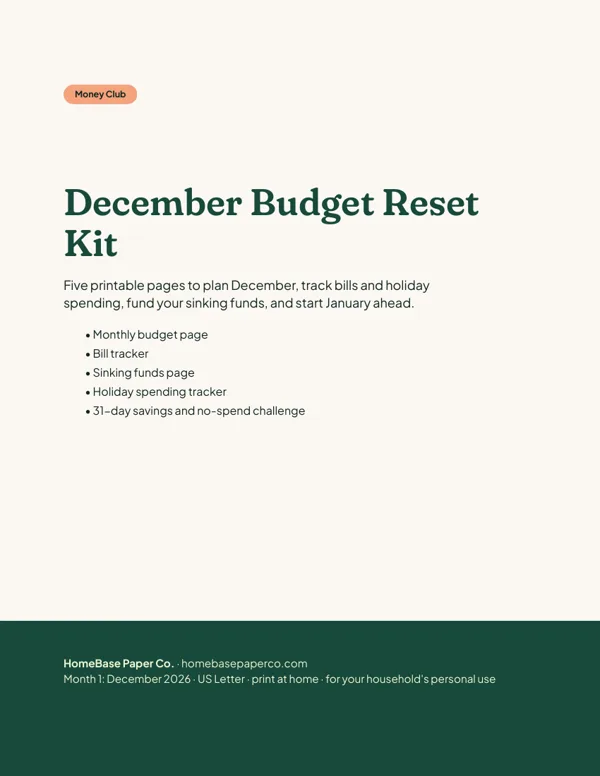 Club
Monthly club
Money Club
Anyone who wants a clear plan for the month's bills, holiday spending and savings.
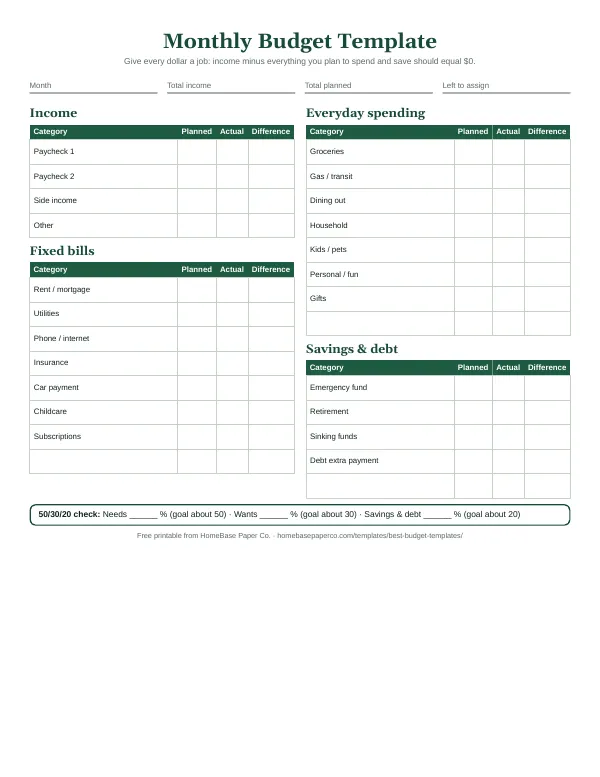
Free printable
Give every dollar a job: get the free monthly budget template
A printable zero-based monthly budget: income, bills, everyday spending and savings on one page, with a planned vs. actual column. You'll also get our weekly HomeBase email with simple budgeting and bill-paying tips.
Sources
- Emily Post Institute: The etiquette of gifting emilypost.com
- IRS: Frequently asked questions on gift taxes irs.gov
- CFPB: Budgeting, how to create a budget and stick with it consumerfinance.gov
- FDIC: Deposit insurance fdic.gov