

The short answer: the cash envelope system gives each spending category an envelope with a set amount of cash on payday. When an envelope is empty, that category is done until next payday.
- Set it up: make a budget, pull out the variable categories and give each one an envelope and an amount
- Best envelopes: groceries, dining out, household and toiletries, and personal fun money
- Refill on payday and spend only from the envelope
- Card user? A hybrid version is below
- Next step: Plan it with the Budget Planner Printable ($5.99).
The cash envelope system is the simplest budget there is: each spending category gets an envelope, each envelope gets a set amount of cash on payday, and when an envelope is empty, that category is done until next payday. It works because you can see and feel the limit. Here's how to set it up in an afternoon, which envelopes to use, and how to keep it going when life doesn't fit neatly into envelopes.
You may also hear it called cash stuffing: same envelopes, same rule. To plan the amounts first, our Budget Planner Printable has a monthly budget page, an expense log and sinking funds pages.
How the cash envelope system works
- Make a budget. List your income for the pay period and every expense.
- Pull out the variable categories. Groceries, gas, dining out, household items and personal spending.
- Give each one an envelope and an amount. Write the category and the amount on the front.
- Withdraw the cash on payday and fill each envelope.
- Spend only from the envelope. Take the grocery envelope to the grocery store. When it's empty, you're done for this period.
- Review at the end of the month. Adjust amounts based on what really happened.
Fixed bills, like rent, the car payment, insurance and utilities, stay as bank transfers or autopay. Envelopes are for the spending you control day to day.
Step 1: Build the budget the envelopes come from
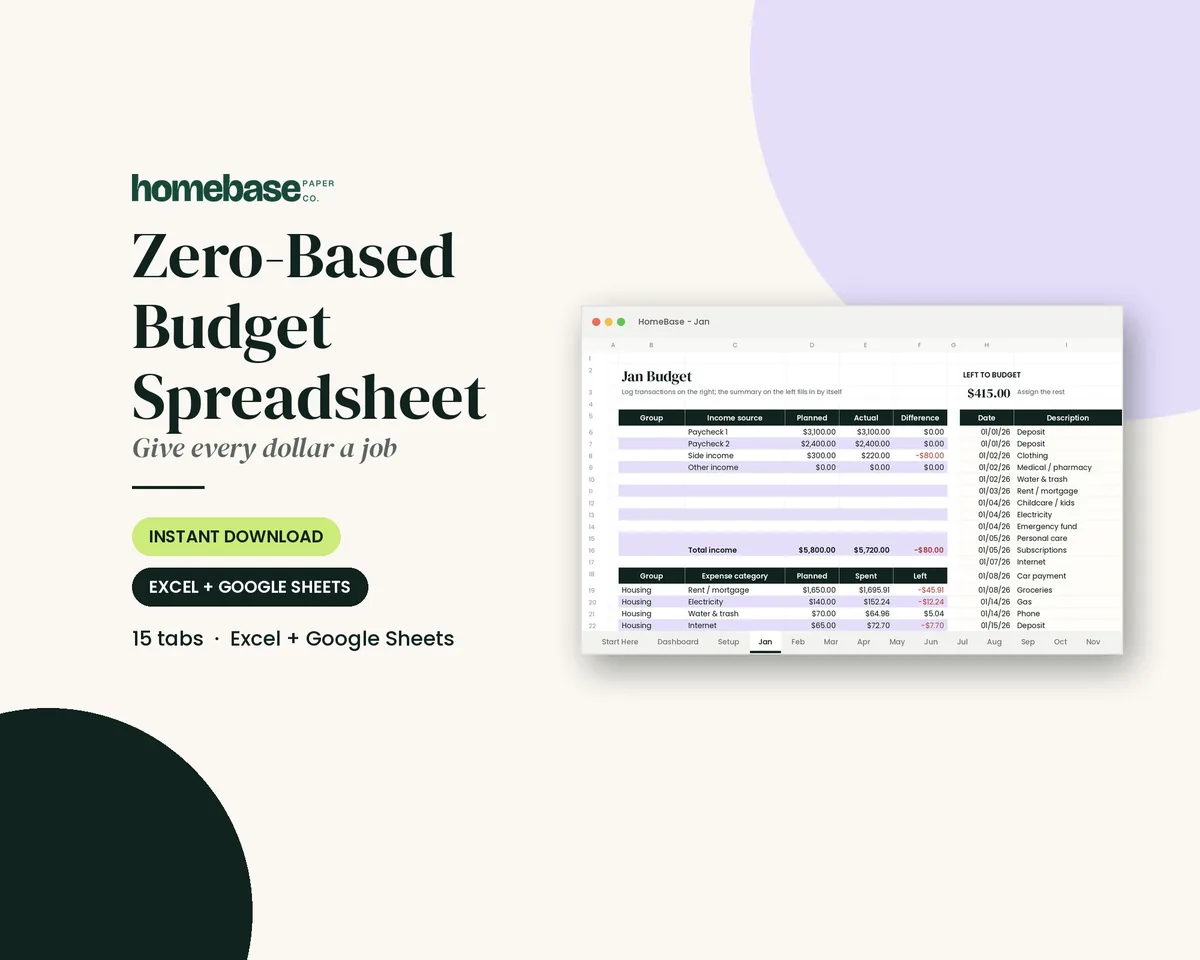
Envelopes don't replace a budget. They carry it out. The easiest starting point is a zero-based budget, where every dollar of income gets assigned to a category until there's nothing left to assign. Our zero-based budget guide explains the method, and the Zero-Based Budget Spreadsheet ($6.99) does the math, with a "left to budget" counter that turns green when every dollar has a job.
To pick realistic amounts, look back at two or three months of bank statements and average each variable category. Start there, not with the number you wish you spent.
Step 2: Choose your envelopes
Start small. Three to six envelopes is plenty for the first month.
| Envelope | Good for cash? | Tip |
|---|---|---|
| Groceries | Yes | The most common envelope; take it to the store |
| Dining out and takeout | Yes | The one that usually surprises people |
| Gas | Sometimes | Paying inside the station works; pay-at-pump needs a card |
| Household and toiletries | Yes | Cleaning supplies, paper goods, toiletries |
| Personal or fun money | Yes | One per adult, no questions asked |
| Kids' activities | Sometimes | Field trips, school events, small extras |
| Gifts | Yes | Birthdays and holidays; refill monthly |
| Bills and subscriptions | No | Keep these on autopay and track them separately |
The budget categories list has a longer list if you want ideas for your own household.
Step 3: Fill them on payday
If you're paid every two weeks, split each monthly amount across your paychecks. A family with $600 a month for groceries puts $300 in the grocery envelope each payday.
For more ways to stretch each envelope, see our guide on how to save money on groceries, bills and everyday spending.
Count out the cash at home, not in the bank lobby, and fill every envelope right away. Cash left in a wallet "for now" is cash that disappears.
You won't be the only one paying with cash. The Federal Reserve's 2026 Diary of Consumer Payment Choice found that U.S. consumers' payment habits stayed largely consistent over the past three years, and that cash was the third most used payment method for the sixth year in a row.
Step 4: Track what's left
Each envelope can carry its own mini ledger. Write the starting amount on the front, then each purchase and the new balance underneath. It takes ten seconds at the register and gives you a record for the monthly review.
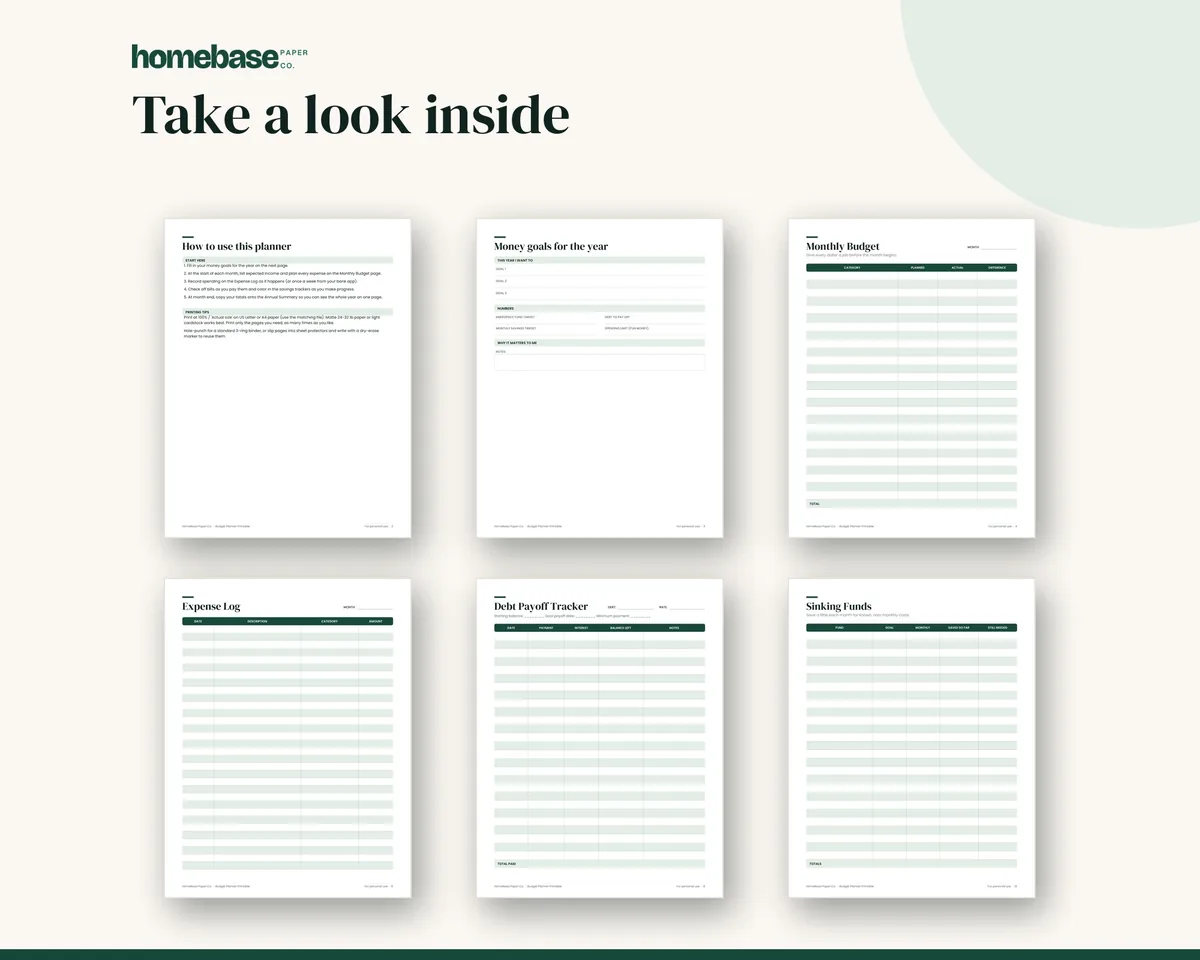
If you prefer paper pages, the Budget Planner Printable ($5.99) has a monthly budget page and an expense log that work well as a master record for your envelopes.
What to do when an envelope runs out (or has money left)
It runs out early. Stop spending in that category, or move cash from another envelope and write down the move. Don't refill from savings or put it on a card, or the system stops working. If the same envelope runs dry every month, the amount is wrong, not you.
There's money left. Decide your rule before the month starts. Common choices:
- Roll it over to the same envelope next month
- Move it to savings or an emergency fund
- Put it toward debt
- Split it: half to savings, half as a reward
Keep the system safe
A cash envelope system works best with a small amount of cash at home: a pay period's worth of variable spending, not your savings. Keep the envelopes somewhere secure and out of sight.
Savings and emergency money belong in a bank. The FDIC explains that deposits at FDIC-insured banks are automatically insured to at least $250,000 at each FDIC-insured bank. Cash in a drawer has no such protection.
A hybrid version for card users
If you shop online or prefer cards, keep the envelope idea without the cash (we compare the options in cash envelope wallet vs. app vs. printable). Give each category a balance on paper or in a spreadsheet and subtract every purchase the same day. Some families use cash for groceries and fun money only, and track everything else digitally. We compare the options in cash envelope wallet vs app vs printable.
Spending envelopes vs saving envelopes
The envelope system is about spending less. The 100 envelope challenge is about saving more. They pair well: once your spending envelopes are working, you can turn the leftovers into a savings habit. The 100 Envelope Savings Challenge ($3.99) includes the classic 100-envelope chart, a half version, a 52-week challenge and a matching spreadsheet. Our 100 envelope vs 52-week challenge guide helps you choose.
The envelope method is one of several approaches in our family budgeting guide, which also covers zero-based budgets, sinking funds and paying off debt.
New to budgeting? Start with budgeting for beginners, then come back and add envelopes once you know your numbers.
Choosing the envelopes themselves? Our guide to money envelopes covers sizes, types, labels and a DIY fold.
Make it easier
Tools for this

Spreadsheets
Zero-Based Budget Spreadsheet
The 'Left to budget' counter turns green when every dollar has a job.

Printables
Budget Planner Printable
Twelve undated pages you can print every month: budget, bills, spending, savings and debt.
 Starter pick
Printables
100 Envelope Savings Challenge
Classic, half and 52-week challenges to print, plus a spreadsheet that tracks every envelope and tells you how much to save each week.
Frequently asked questions
What is the cash envelope system? The cash envelope system is a budgeting method where you put cash for each spending category, like groceries or gas, into its own envelope, and spend only what's inside. Paired with a Zero-Based Budget Spreadsheet, it gives every dollar a job and makes overspending physically impossible.
How do I start the cash envelope system? Start the cash envelope system by making a budget first, choosing three to six variable categories, writing an amount on each envelope and withdrawing that cash on payday. Keep paying fixed bills like rent and utilities by bank transfer.
What categories should I use for cash envelopes? The best cash envelope categories are the variable ones you tend to overspend on: groceries, dining out, gas, household supplies, personal spending and gifts. Fixed bills stay out of envelopes.
How much cash should I put in each envelope? Put in each envelope the amount your budget gives that category for the pay period, based on what you actually spent over the last two or three months. A zero-based budget shows the numbers before you go to the bank.
What happens to leftover money in the envelopes? Leftover money in a cash envelope can roll over to next month's same category, move to savings or go toward debt. Decide the rule in advance so it doesn't turn into a reason to splurge.
What if an envelope runs out early? If a cash envelope runs out early, you either stop spending in that category or move money from another envelope, never from savings. Write down the move so next month's budget reflects reality.
Can I use the cash envelope system without cash? You can use the cash envelope system without cash by tracking digital envelopes in a spreadsheet or on paper: each category has a balance, and you subtract every card purchase. The Budget Planner Printable includes an expense log that works for this.
Is it safe to keep cash envelopes at home? Yes, if the amount is small. Keeping a few weeks of spending cash at home is common for the envelope system, but keep the amount small and store it somewhere secure. Savings belong in an FDIC-insured bank account, where deposits are insured to at least $250,000 at each FDIC-insured bank.
Is the cash envelope system good for beginners? Yes, the cash envelope system is a great fit for beginners because it's simple and visible: when an envelope is empty, that category is done. Start with just two or three envelopes and add more once it feels natural.
How is the cash envelope system different from the 100 envelope challenge? The cash envelope system is a way to spend, while the 100 envelope challenge is a way to save. Envelope budgeting limits spending by category; the 100 envelope savings challenge has you fill numbered envelopes until you've saved $5,050.
How often should I refill cash envelopes? Once every payday: refill the envelopes using the amounts in your budget for that pay period. If you're paid biweekly, split monthly category amounts across your two paychecks.
Does the cash envelope system really work? Yes, the cash envelope system works for many families because it turns a budget into a physical limit you can see. It works best when the budget is realistic and you review it each month.
What is cash stuffing? Cash stuffing is another name for the cash envelope system: you take out cash on payday, stuff it into labeled envelopes for each spending category and spend only what's inside. Plan the amounts first in our Zero-Based Budget Spreadsheet or Budget Planner Printable.
More from HomeBase
You may also like

Spreadsheets
Bill Tracker Spreadsheet
Bills due in 3 days or less light up red, so nothing slips through.

Spreadsheets
Sinking Funds Tracker
It does the math: how much to set aside each month to hit every goal on time.

Spreadsheets
Paycheck Budget Spreadsheet
Enter your bills once. The sheet tells you which paycheck pays each one, all year.
 Save 57%
Bundles
Ultimate Budget Bundle
All 6 spreadsheets + both printable planners - for less than half the price of buying them separately.
 Club
Monthly club
Money Club
Anyone who wants a clear plan for the month's bills, holiday spending and savings.
Free printable
Give every dollar a job: get the free monthly budget template
A printable zero-based monthly budget: income, bills, everyday spending and savings on one page, with a planned vs. actual column. You'll also get our weekly HomeBase email with simple budgeting and bill-paying tips.

Sources
- 2026 Diary of Consumer Payment Choice frbservices.org
- Deposits at FDIC-insured banks fdic.gov