

The short answer: to stop spending money you don't mean to spend, run a 30-day spending audit, set one weekly spending number and add friction to the easy buys. Give every dollar a job before payday.
- Small daily leaks: track every purchase for 7 days
- Subscriptions: cancel anything unused in 30 days
- Stress buys: delete shopping apps from your phone
- 7-day spending reset and 30 grouped ideas below
- Next step: Plan it with the Zero-Based Budget Spreadsheet ($6.99).
To stop spending money you don't mean to spend, start with a 30-day spending audit to find where it's leaking, set one weekly spending number you can check at a glance, add friction to the easy buys (saved cards, store emails, one-click apps) and give every dollar a job before payday so less of it sits loose in checking. You don't have to stop spending altogether. The goal is to stop the spending that doesn't match what you actually care about, and to send that money somewhere that helps you.
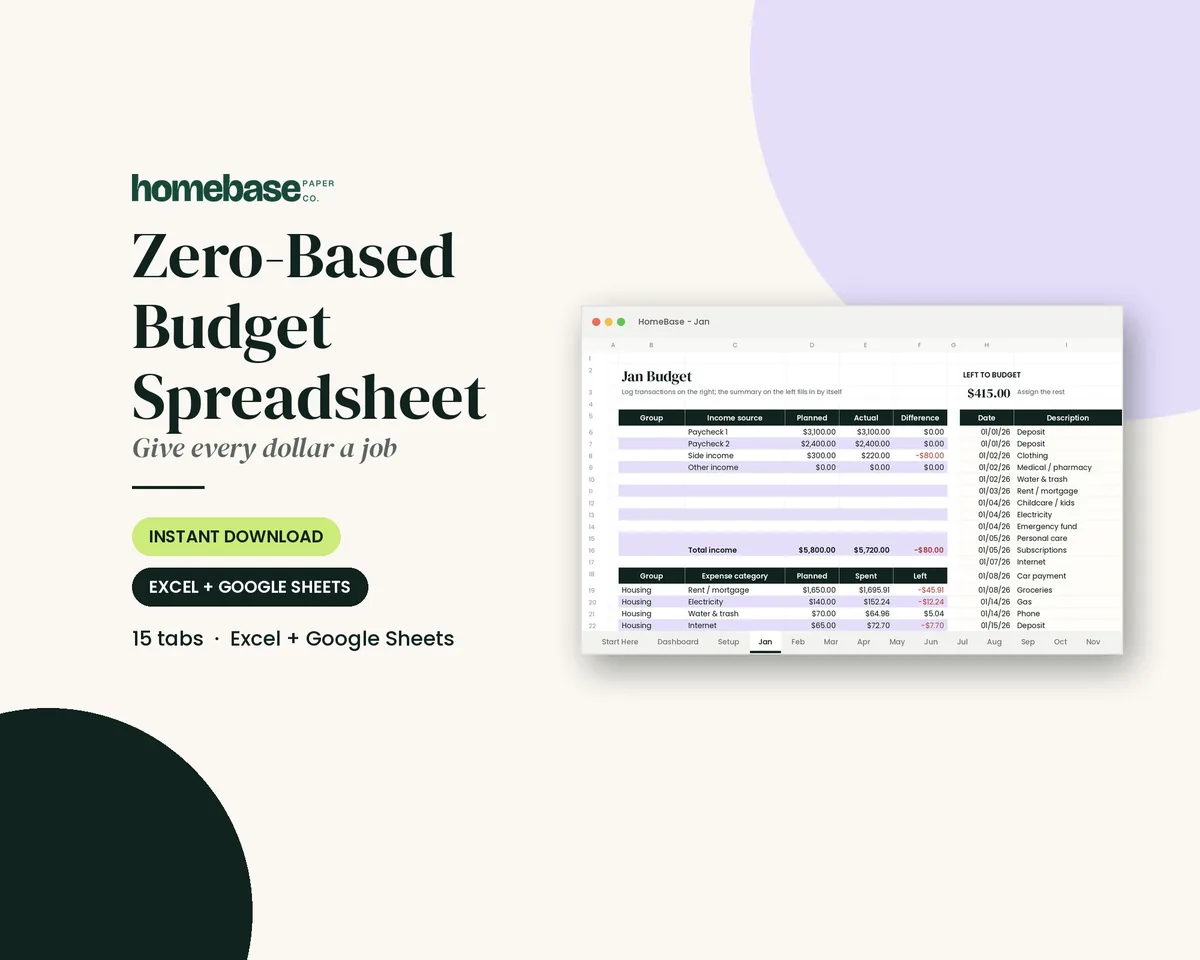
The Zero-Based Budget Spreadsheet ($6.99) makes the "job for every dollar" part easy: planned vs. spent vs. left columns for every category and a 'Left to budget' counter that turns green when nothing is unassigned. See the whole line in our Spreadsheets shop.
This guide covers everyday overspending all year. For holiday impulse buys and in-the-moment urges, see our guide on how to stop impulse spending. If you'd rather take a full break from buying, try our no-buy challenge or a no-spend January. Every dollar figure below is an example, so use your own numbers.
Why it's so hard to stop spending money
Overspending usually isn't a character flaw. It's a system problem: money is easy to spend, hard to see and rarely given a plan before it arrives. Money is also stressful right now. In the American Psychological Association's Stress in America 2026 report, 71% of adults said money is a significant source of stress, and 77% said the same about the cost of living. When everything costs more, small leaks matter more, and guilt doesn't fix them. A plan does.
Most overspending comes from a few predictable places:
- No plan for the money. If nothing is assigned, the balance looks like spending money.
- Too little friction. Saved cards, one-click checkout and tap-to-pay remove the pause.
- Invisible small purchases. A few dollars here and there never feel like a decision.
- Feelings. Boredom, stress, tiredness and celebration can all turn into shopping.
- Social pressure. Group dinners, trips and keeping up with friends.
- Lifestyle creep. Spending rises quietly every time income does.
The 8 kinds of overspending (and the first fix for each)
Figure out which type sounds most like you. Most people have one or two that do most of the damage.
| Type of overspending | What it looks like | First fix to try |
|---|---|---|
| Small daily leaks | Coffee, snacks, drive-thru, app charges | Track every purchase for 7 days |
| Convenience spending | Delivery fees, takeout when tired | Plan three easy backup dinners |
| Subscriptions | Streaming, apps, boxes you forgot | Cancel anything unused in 30 days |
| Stress and boredom buys | Scrolling shops at night | Delete shopping apps from your phone |
| "Good deal" buys | Sales, coupons, free shipping minimums | Only buy what was on your list first |
| Social spending | Dinners out, trips, group gifts | Decide your yes amount before you go |
| Lifestyle creep | Upgrades after a raise | Save half of every raise automatically |
| Seasonal spikes | Back-to-school, holidays, birthdays | Sinking funds for each season |
Step 1: Run a 30-day spending audit
You can't stop spending money if you can't see where it goes. The audit takes about an hour, and it's the single most useful thing on this page.
- Download the last 30 days of transactions from every checking account and credit card.
- Sort each purchase into one of three groups: needs (housing, utilities, groceries, transportation, minimum debt payments), wants you planned, and wants you didn't plan.
- Total each group. The third group is your leak. If an item is hard to sort, our needs vs. wants guide helps.
- Circle your top three leak categories. These are where you'll start.
- Write one sentence for each: when it happens and how you feel. "Weeknights after work, tired" tells you more than a dollar amount.
If you'd rather write things down, the Budget Planner Printable ($5.99) has undated spending log pages you can reuse every month.
Step 2: Set a weekly spending number
A monthly budget is easy to lose track of by the 10th. A weekly number is easier to feel. Add up the flexible categories (groceries, gas, eating out, household items and fun money), divide by the number of weeks in the month and check that one number every few days.
| Example flexible category | Monthly plan | Weekly number |
|---|---|---|
| Groceries | $600 | $139 |
| Gas | $200 | $46 |
| Eating out | $120 | $28 |
| Household and personal | $100 | $23 |
| Fun money | $80 | $18 |
| Total | $1,100 | $254 |
The weekly figures above divide each month by 4.33 weeks and round to the nearest dollar. When the weekly number runs out early, the rest of the week is pantry meals and free plans. That's not failure. That's the plan working.
30 ways to stop spending money, grouped
Pick the group that matches your biggest leak from the audit and try three ideas from it this month.
Add friction (ideas 1 to 6)
- Delete saved cards from shopping sites and food apps.
- Log out of shopping accounts so every purchase needs a password.
- Unsubscribe from store emails and texts. Use one search for "unsubscribe" in your inbox.
- Delete shopping apps from your phone, or move them off the home screen.
- Turn off one-click checkout wherever you can.
- Leave the card at home for errands where you already know what you need.
Plan before you spend (ideas 7 to 12)
- Give every dollar a job before payday, including savings and fun money. Our list of 50 budgeting tips has more ways to make the plan stick.
- Shop from a list only, for groceries and everything else.
- Plan meals for the week so tired nights don't turn into takeout.
- Keep a 30-day want list. Write the item and the date, then decide a month later.
- Set a yes amount for social plans before you leave the house.
- Use cash for your top leak category. The cash envelope system makes the limit physical.
Replace the habit (ideas 13 to 18)
- Name the feeling first. Tired, bored, stressed or celebrating each need a different fix.
- Swap the trigger. If scrolling at night leads to buying, put the phone on the charger in another room.
- Make a free fun list. Library, parks, a movie night at home, a walk with a friend.
- Make the coffee at home most days and keep one coffee out as a planned treat.
- Unfollow accounts that make you want things.
- Celebrate with time, not purchases. A call, a meal at home or a day off.
Protect the money you save (ideas 19 to 24)
- Move savings out on payday so it never sits in checking.
- Split your direct deposit into checking and savings if your employer allows it.
- Name your savings goal. "Emergency fund" or "Christmas 2027" is harder to raid than "savings."
- Turn on balance alerts so you notice before checking runs low.
- Use a sinking fund for each season. Our sinking funds guide shows the monthly math.
- Put windfalls to work. Decide what share of a tax refund or bonus goes to savings before it arrives.
Cut the leaks for good (ideas 25 to 30)
- Cancel unused subscriptions and set a calendar reminder to check again in three months.
- Call about one bill a month. Our guide on how to lower monthly bills has scripts.
- Buy used or borrow first for things you'll use once.
- Wait for the need, not the sale. A sale on something you didn't need still costs money.
- Pick one or two no-spend days each week.
- Save half of every raise so your lifestyle doesn't quietly grow to match it. Our guide on how to live below your means covers lifestyle creep in more depth.
Spending rules that actually stop overspending
Rules work because they make the decision ahead of time. You only need one or two.
| Rule | How it works | Best for |
|---|---|---|
| 48-hour rule | Wait two days before any unplanned want | Online shopping |
| 30-day list | Write it down, decide in a month | Bigger wants |
| Weekly number | One flexible spending limit per week | Everyday leaks |
| Cash only | Spend one category from cash | Groceries or eating out |
| One in, one out | Something leaves when something new comes in | Clothes, toys, decor |
| No-spend days | No purchases at all on set days | Small daily habits |
Starter version: the 7-day spending reset
If the full plan feels like a lot, do this for one week. Each step takes 10 to 20 minutes. A plan you can pick back up beats a perfect plan you quit.
| Day | Do this |
|---|---|
| Day 1 | Pull last week's transactions and circle anything you didn't plan |
| Day 2 | Delete saved cards and shopping apps |
| Day 3 | Unsubscribe from five store email lists |
| Day 4 | Set your weekly spending number |
| Day 5 | Cancel one subscription you don't use |
| Day 6 | Set up one automatic savings transfer, even $10 |
| Day 7 | Check your weekly number and write down one win |
A 30-day plan to stop spending money
- Week 1: See it. Run the 30-day audit and track every purchase this week.
- Week 2: Slow it down. Add friction, set your weekly number and start a want list.
- Week 3: Redirect it. Set up savings on payday and give your leak money a new job.
- Week 4: Review it. Compare this month to last month and keep the two habits that helped most.
Where to send the money you stop spending
Stopping the leak is only half the win. The other half is giving that money a job. A good order for most households:
- A starter emergency fund. The CFPB's guide to building an emergency fund says even a small amount set aside can help you recover faster from a surprise expense, and that automatic recurring transfers are often one of the easiest ways to save. Our guide on how to build an emergency fund breaks it into stages.
- High-interest debt. Extra payments on credit cards save you interest every month. Compare methods in our debt snowball vs. avalanche guide.
- Sinking funds for the holidays, car repairs and other costs you know are coming.
- A goal you're excited about. A trip, a down payment or a fund for the next holiday season. Our guide on how to set financial goals can help you name it.
When you slip (because you will)
Everyone overspends sometimes. What matters is the next step, not the slip.
- Move money, don't quit. Cover the overspend from another flexible line in the same month.
- Look for the pattern. Was it a time of day, a feeling or a place? Add friction there.
- Raise a line that keeps breaking. If the same category runs over two months in a row, the plan was too tight.
- Start again tomorrow, not next month.
Why I plan this way
I'm Malaysia. I grew up in Detroit as the oldest of three, in a working family that rebuilt after 2008, and I learned a lot about steadiness from watching my parents keep going when things got hard. I think of a budget as stewardship, not a cage. It's how you make room for what matters to you. Slow progress is still progress.
Tools to help you stop spending money
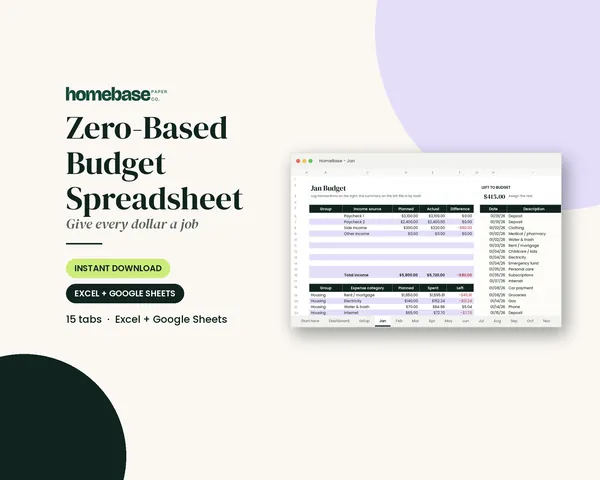
- Zero-Based Budget Spreadsheet ($6.99): gives every dollar a job and shows planned vs. spent vs. left, so leaks show up during the week, not at the end of the month.
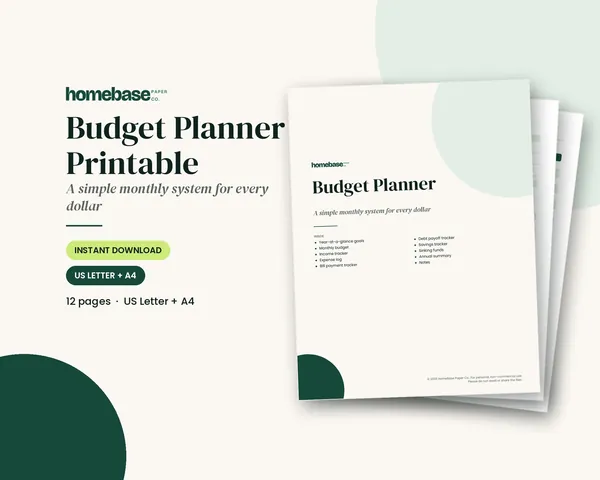
- Budget Planner Printable ($5.99): twelve undated pages for budget, bills, spending, savings and debt, including a spending log for your audit.
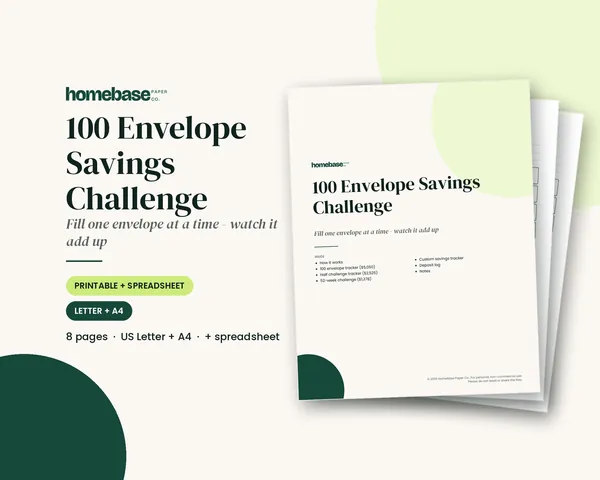
- 100 Envelope Savings Challenge ($3.99): classic, half and 52-week challenges to print, plus a spreadsheet that tracks every envelope, so the money you stop spending has somewhere fun to go.
- Christmas Budget & Gift Planner ($4.99): a budget for every person on your list, with what's left updating as you shop, for the biggest spending season of the year.
Want the full set? The Ultimate Budget Bundle includes all 6 spreadsheets and both printable planners for $19.99 (reg. $46.42 bought separately), and you can browse everything in our Budget & Money shop. Heading into the holidays? The free Holiday Budget Starter Kit is 3 US Letter pages, emailed after you join our list.
This guide is general education, not financial advice. For decisions about your specific situation, talk with a qualified professional.
Make it easier
Tools for this
Spreadsheets
Zero-Based Budget Spreadsheet
The 'Left to budget' counter turns green when every dollar has a job.
Printables
Budget Planner Printable
Twelve undated pages you can print every month: budget, bills, spending, savings and debt.
 Starter pick
Printables
100 Envelope Savings Challenge
Classic, half and 52-week challenges to print, plus a spreadsheet that tracks every envelope and tells you how much to save each week.
Frequently asked questions
How do I stop spending money? To stop spending money you don't mean to spend, run a 30-day spending audit, set a weekly spending number, add friction to easy buys and give every dollar a job before payday. The Zero-Based Budget Spreadsheet ($6.99) shows planned vs. spent vs. left for each category, so leaks show up mid-week instead of at month end.
How do you stop spending money on unnecessary things? You stop spending on unnecessary things by making them harder to buy and easier to notice. Delete saved cards, unsubscribe from store emails, shop from a list and keep a 30-day want list. Most unplanned wants fade once you write them down and wait.
How can I stop overspending every month? Stop overspending every month by planning your flexible spending as one weekly number instead of a monthly total, then checking it every few days. The Budget Planner Printable ($5.99) has undated budget and spending log pages you can reuse each month to keep that number in view.
Why can't I stop spending money? Most people can't stop spending because the money has no plan, buying is too easy and small purchases feel invisible, not because they lack willpower. Stress plays a part too: APA's 2026 Stress in America report found 71% of adults call money a significant source of stress.
What is the 30-day rule for spending? The 30-day rule means writing down any unplanned want with the date and waiting 30 days before deciding to buy it. If you still want it and your budget has room, buy it without guilt. Many items drop off the list on their own.
What is the 48-hour rule for spending? The 48-hour rule means waiting two days before buying any unplanned want, especially online. The pause gives the urge time to pass and gives you time to check whether the right budget line can cover it.
How do I stop spending money on food and takeout? Plan dinners for the week, keep three easy backup meals for tired nights and give takeout its own line in your budget. Planned takeout is a choice. Unplanned takeout is usually a leak, and the backup meals are what stop it.
How do I stop spending money when I'm stressed or bored? Name the feeling before you buy, then swap the trigger. If you shop when you scroll at night, delete shopping apps and charge your phone in another room. Keep a short list of free things that help you feel better, and use it first.
How do I stop spending money online? To stop spending money online, delete saved cards, log out of shopping accounts, turn off one-click checkout and unsubscribe from store emails. Each step adds a pause, and a pause is often enough to change your mind.
What should I do with the money I stop spending? Give it a job right away: a starter emergency fund first, then high-interest debt, then sinking funds and goals. The 100 Envelope Savings Challenge ($3.99) includes classic, half and 52-week challenges plus a tracking spreadsheet, so the money you free up has somewhere fun to go.
Is a no-spend challenge a good way to stop spending? A no-spend challenge is a good reset if you want a clear break, but it works best alongside a weekly plan you can keep afterward. Our no-buy challenge guide covers rules and lengths.
How do I stop overspending during the holidays? Set one total holiday number, give every person on your list a limit and track each purchase as you shop. The Christmas Budget & Gift Planner ($4.99) sets a budget for every person and shows what's left as you go, plus printable gift, card, menu and to-do pages.
How do couples stop overspending together? Couples stop overspending by working from one shared plan, agreeing on an amount that needs a quick check-in before buying and giving each person their own fun money. A short monthly money meeting keeps both of you looking at the same numbers.
How long does it take to stop overspending? Most people see a difference within the first month and feel steady after about three. The first month shows you the leaks, the second tests your fixes and the third turns the habits that stuck into your normal routine.
What if I slip and overspend again? If you overspend again, cover it from another flexible line in the same month and start fresh the next day. The Ultimate Budget Bundle ($19.99, reg. $46.42 bought separately) includes all 6 spreadsheets and both printable planners, so you can rebalance the month without starting from scratch.
More from HomeBase
You may also like
Spreadsheets
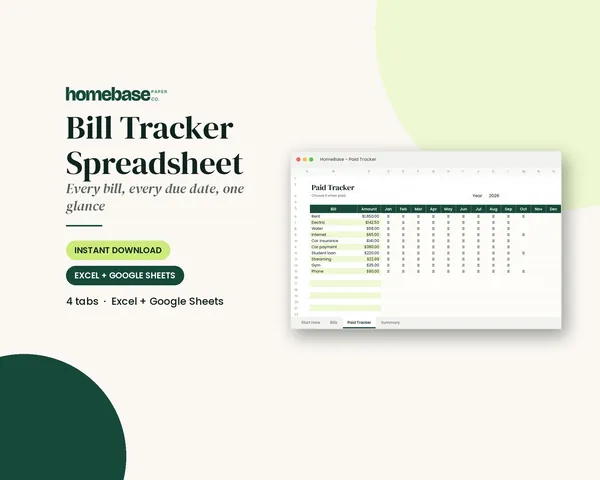
Bill Tracker Spreadsheet
Bills due in 3 days or less light up red, so nothing slips through.
Spreadsheets
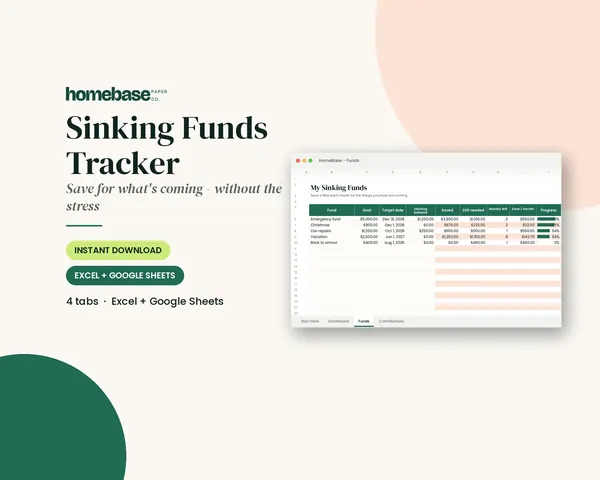
Sinking Funds Tracker
It does the math: how much to set aside each month to hit every goal on time.
Spreadsheets
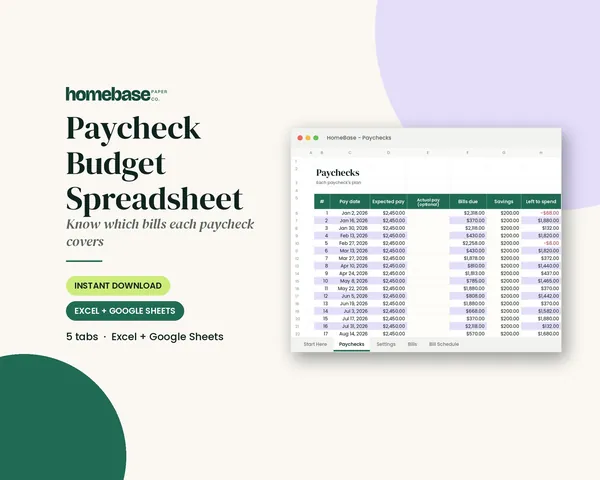
Paycheck Budget Spreadsheet
Enter your bills once. The sheet tells you which paycheck pays each one, all year.
Spreadsheets
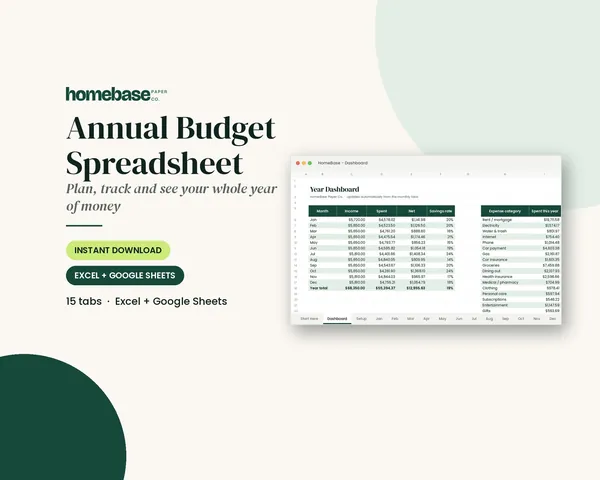
Annual Budget Spreadsheet
See exactly where your money goes every month - without complicated software.
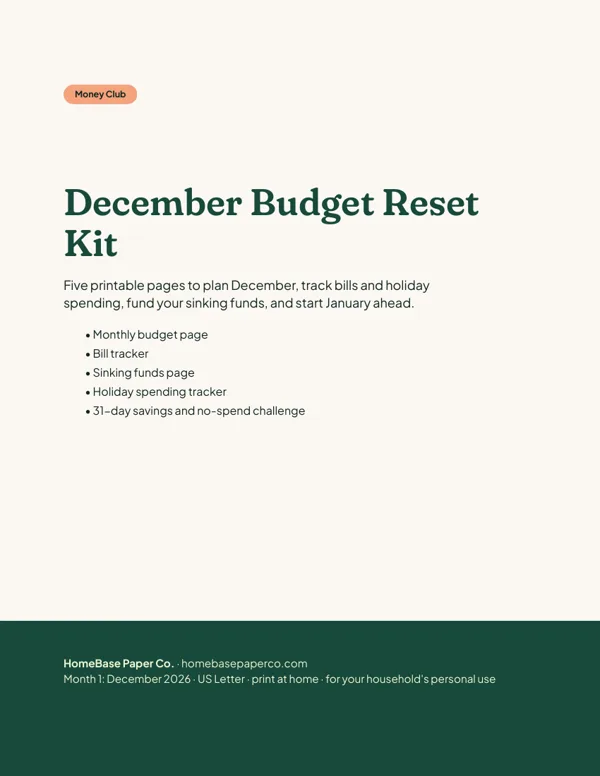 Club
Monthly club
Money Club
Anyone who wants a clear plan for the month's bills, holiday spending and savings.
Free printable
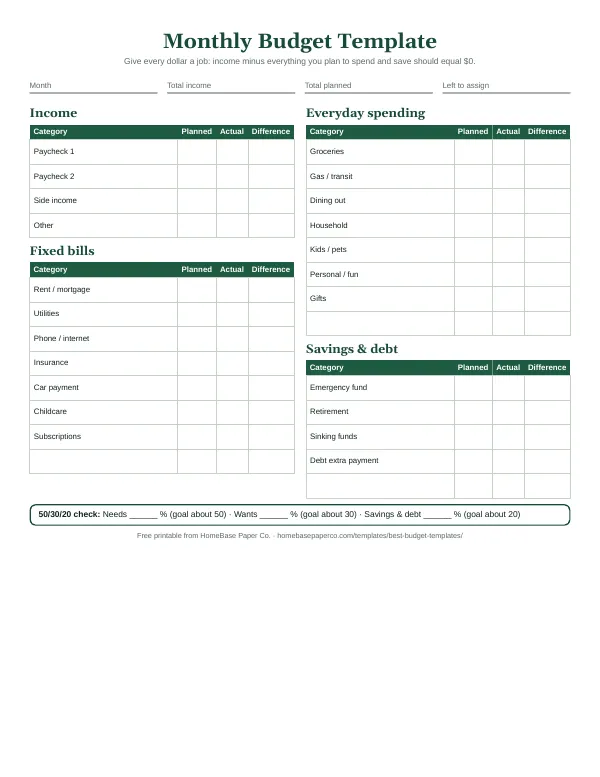
Give every dollar a job: get the free monthly budget template
A printable zero-based monthly budget: income, bills, everyday spending and savings on one page, with a planned vs. actual column. You'll also get our weekly HomeBase email with simple budgeting and bill-paying tips.
Sources
- American Psychological Association: Stress in America 2026 apa.org
- CFPB: An essential guide to building an emergency fund consumerfinance.gov