

The short answer: a bill of sale is a written record that you sold something to someone, for a stated price, on a stated date. It protects both sides, and you need one for almost any private sale of a car, boat, trailer, equipment or other big-ticket item. Many DMVs also ask for it when the buyer registers a vehicle.
- Must include: date, seller and buyer names and addresses, item description (for a vehicle: VIN, make, model, year, odometer), price, payment method and both signatures
- Add: an "as-is" line, the payment details and a line saying the seller has no further claim
- Rules vary by state: some provide their own form and a few require notarization. Check your state DMV before you sign
- Free helper: get the free receipt template (we email it to you) for smaller sales. Selling a car? Hand over the service history from a Vehicle Maintenance Log ($3.99)
Our picks for bill of sale
Printables
Vehicle Maintenance Log
Oil changes, repairs, tires, fuel and MPG, trip mileage and renewal dates - so resale and warranty records are easy.
Spreadsheets
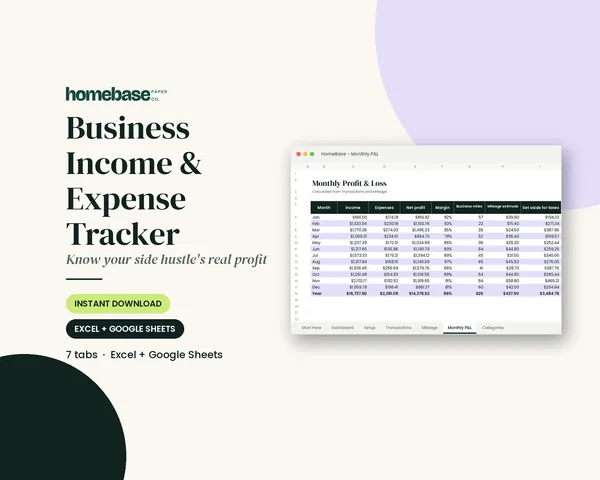
Business Income & Expense Tracker
Log sales, expenses and business miles - see your monthly profit, category totals for tax time and how much to set aside.
Printables
Home Inventory
Printable pages and a spreadsheet that totals the value of every room.
 Save 57%
Bundles
Ultimate Budget Bundle
All 6 spreadsheets + both printable planners - for less than half the price of buying them separately.
Checked November 9, 2026. This page is general information, not legal advice. Below: what a bill of sale is, a fill-in-the-blank sample, what to include for cars, boats and other items, and how to keep your own records.
What is a bill of sale?
A bill of sale is a document that transfers ownership of personal property from a seller to a buyer. It records who sold what to whom, when and for how much. The buyer uses it as proof of purchase, and the seller uses it as proof the item is no longer theirs, which matters if the car is in an accident or gets a parking ticket after the sale.
It is not a title. For a vehicle, the title is the legal ownership document, and the bill of sale supports the title transfer. For smaller items, a bill of sale or receipt may be the only paperwork.
Bill of sale template (fill in the blanks)
Copy this into a document, fill in the brackets, print two copies and have both parties sign each one.
BILL OF SALE
Date of sale: [month/day/year]
Seller: [full legal name], [street address, city, state, ZIP]
Buyer: [full legal name], [street address, city, state, ZIP]
Item sold: [year, make, model, color; VIN or serial number]
Odometer reading (vehicles): [miles] at the time of sale
Sale price: $[amount], paid by [cash / cashier's check / bank transfer] on [date]
As-is statement: The item is sold as-is, with no warranties, expressed or implied, except that the seller states they are the lawful owner and that the item is free of liens unless noted here: [none / describe].
Seller signature: ____________ Date: ______
Buyer signature: ____________ Date: ______
Money-saving tip: take a photo of the signed bill of sale, the front and back of the signed title, and the buyer's ID if they agree. It costs nothing and covers you if something is disputed later.
How to make a bill of sale in 6 steps
- Check your state first. Look up your state DMV (for vehicles) or wildlife or boating agency (for boats). If the state has its own bill of sale form, use that instead of a homemade one.
- Gather the details. Both full legal names and addresses, the item's description and serial number or VIN, and for a vehicle, the odometer reading at the time of sale.
- Agree on the price and payment method. Write the exact amount and how it was paid, such as a cashier's check or bank transfer.
- Fill in the template above. Add an as-is line and note any liens, or write "none."
- Sign two copies. Seller and buyer sign and date both. If your state requires notarization, sign in front of the notary, not before.
- Keep your copy. Store it with the title paperwork and payment record, and follow your state's steps to report the sale or transfer the title.
To create a bill of sale for a smaller item, such as furniture or a bike, steps 2 to 6 are usually enough: a short description, the price, the date and both signatures.
What to include in a bill of sale
| Detail | Why it matters |
|---|---|
| Date and time of sale | Marks when the buyer became responsible |
| Full names and addresses | Identifies both parties |
| Item description | Make, model, year, color, plus VIN or serial number, so the right item is covered |
| Odometer reading | Records mileage for vehicle sales. Federal law requires odometer disclosure on most vehicle title transfers |
| Price and payment method | Proves what was paid and how |
| As-is clause | Makes clear there is no warranty unless you promise one |
| Lien statement | Says whether any loan is still attached to the item |
| Signatures | Both parties sign |
| Notary block (if your state requires it) | Needed in some states |
Bill of sale by item type
| Item | What to add | Watch for |
|---|---|---|
| Car or truck | VIN, odometer, plate number, title number | Many states want the title signed over too, and some have their own bill of sale form |
| Motorcycle or ATV | VIN, engine size | Same title rules as cars in most states |
| Boat or trailer | Hull ID or VIN, motor serial number | Registration and titling rules differ for boats and trailers |
| Used equipment or furniture | Serial numbers, condition, accessories included | A simple receipt style bill of sale is usually enough |
| Business assets | Itemized list with serial numbers and values | Keep a copy for your tax records |
State rules: check before you sign
Bill of sale rules are set by each state, so confirm with your state's motor vehicle agency:
- California: the DMV explains its bill of sale rules and offers its own bill of sale form (REG 135).
- Louisiana: the Office of Motor Vehicles lists used vehicle title and registration requirements, including notarization for some transfers.
- Other states: search "[your state] DMV bill of sale". Look for a state form, notarization rules and whether the title alone is enough.
If your state requires a notary and you cannot get to one in person, you can notarize it online with OneNotary, which explains when a bill of sale needs notarization.
Bill of sale vs. receipt vs. title
| Document | What it proves | When you use it |
|---|---|---|
| Bill of sale | A sale happened, with details and price | Private sales of vehicles and big items |
| Receipt | A payment was made | Smaller sales and resale items. See our free receipt template |
| Title | Legal ownership of a vehicle | Required to transfer a vehicle in all states |
| Purchase order | A buyer's request to buy | Business buying. See our purchase order template |
Tips for a safe private sale
- Meet at a bank, and use a cashier's check or a bank transfer you can verify. Avoid large cash amounts if you can.
- Match the VIN on the title, the bill of sale and the vehicle itself.
- Submit a release of liability with your state DMV right after the sale, if your state offers one, so tickets and tolls go to the buyer.
- Cancel your insurance only after the title is signed and the sale is complete.
- Keep copies for at least as long as your state or tax rules suggest.
Keep your sale records organized
If you sell regularly, such as reselling, flipping furniture or running a small business, keep every bill of sale with the income it created. The Small Business Income & Expense Tracker ($7.99) records sales and expenses by month, and the Home Inventory ($5.49) lists what you own, with serial numbers and values, so you know what you sold and what you still have.
Buying a used car? Budget for the extras
A bill of sale is only one cost of a used car purchase. Plan for taxes, title and registration fees, insurance and the first round of maintenance. The Vehicle Maintenance Log ($3.99) keeps every oil change and repair in one place and gives the next buyer a clear service history when you sell.
See every bill and due date on one page
Oil changes, repairs, tires, fuel and MPG, trip mileage and renewal dates - so resale and warranty records are easy.
$3.99 · Instant download. Print at home or fill it in on screen. Or browse the full Home & Organizing collection.
Frequently asked questions
What is a bill of sale? A bill of sale is a written document that records the sale of personal property from a seller to a buyer, including the date, the parties, a description of the item, the price and both signatures. It serves as proof of purchase for the buyer and proof of transfer for the seller.
Do I need a bill of sale to sell a car? It depends on your state, but you should always have one. Some states require a bill of sale for registration, and others accept only the signed title. Even where it is optional, a bill of sale protects you if the buyer later disputes the sale or gets tickets before registering the car.
Does a bill of sale have to be notarized? In most states a bill of sale does not have to be notarized, but a few states require notarization for certain vehicle transfers. Check your state DMV or motor vehicle agency. Louisiana, for example, lists notarization for some used vehicle transfers.
What should a bill of sale include? A bill of sale should include the date of sale, the full names and addresses of the seller and buyer, a detailed description of the item, such as the VIN and odometer reading for a vehicle, the sale price, how it was paid, an as-is statement and both signatures. Add a notary block if your state requires it.
Is a bill of sale the same as a title? No, a bill of sale is not the same as a title. A title is the legal document that proves ownership of a vehicle. The bill of sale records the sale itself, and many states need both to register the vehicle in the buyer's name.
Can I write my own bill of sale? Yes, in most cases you can write your own bill of sale using a template with the details above. If your state provides an official form, such as California's REG 135 for vehicles, use that form instead because the DMV will accept it without question.
What does as-is mean on a bill of sale? As-is means the buyer accepts the item in its current condition and the seller offers no warranty. It does not allow a seller to lie about the item or hide known defects, so describe the item honestly and state any known issues in writing.
How long should I keep a bill of sale? Keep a copy of your bill of sale for as long as you could face a dispute, tax question or registration issue, which for many people means several years. If the sale involved business income, keep it with your tax records for as long as your tax professional recommends.
Do I need a bill of sale for a gift or a family transfer? For a gift, a bill of sale or gift statement with a price of $0 or 'gift' is helpful, and many states have a separate form for gifted vehicles. Check your state DMV, since taxes and fees can differ for gifts and family transfers.
Where can I get a free bill of sale form? Your state motor vehicle agency is the best source for vehicle bills of sale, and many publish a form for free. For general items, you can use the fill-in-the-blank template on this page or adapt our free receipt template for smaller sales.
Free printable
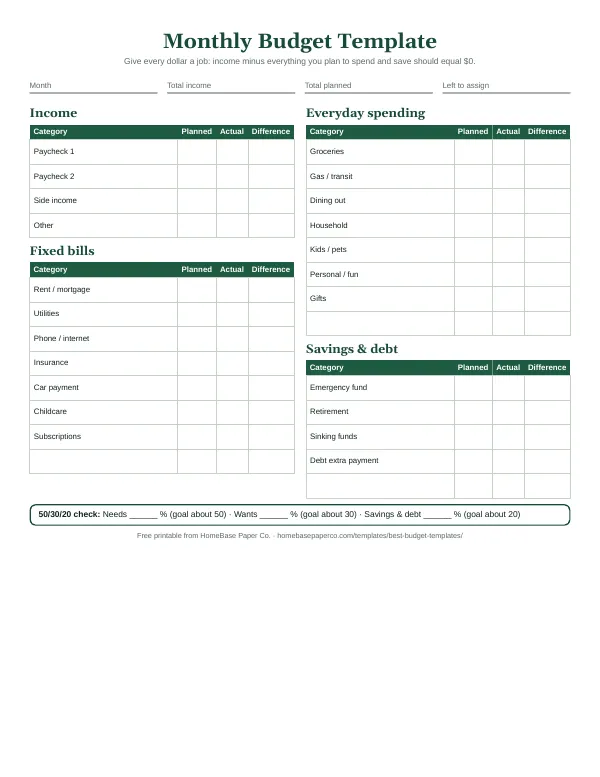
Give every dollar a job: get the free monthly budget template
A printable zero-based monthly budget: income, bills, everyday spending and savings on one page, with a planned vs. actual column. You'll also get our weekly HomeBase email with simple budgeting and bill-paying tips.
Sources
- California DMV: Bill of sale dmv.ca.gov
- Louisiana OMV: Used title and registration expresslane.la.gov
- Notarize it online with OneNotary onenotary.com