

The short answer: a vacation budget is a written plan for the full cost of a trip, turned into a monthly savings amount so the trip is paid for before you leave.
- Price every category with real quotes: transportation, lodging, food and activities
- Add a buffer for surprises
- Subtract what you've saved and divide by the months until you go
- Often forgotten: bag fees, resort fees, airport meals and tips
- Next step: Plan it with the Sinking Funds Tracker ($4.99).
A vacation budget is a written plan for the full cost of a trip, from getting there and sleeping there to food, activities, fees and a buffer, turned into a monthly savings amount so the trip is paid for before you leave. To make one, decide the shape of the trip, price every category with real quotes, add a buffer for surprises, subtract what you've already saved and divide the rest by the months until you go. The steps, the copy-ready template and the worked example below walk you through it in one sitting.
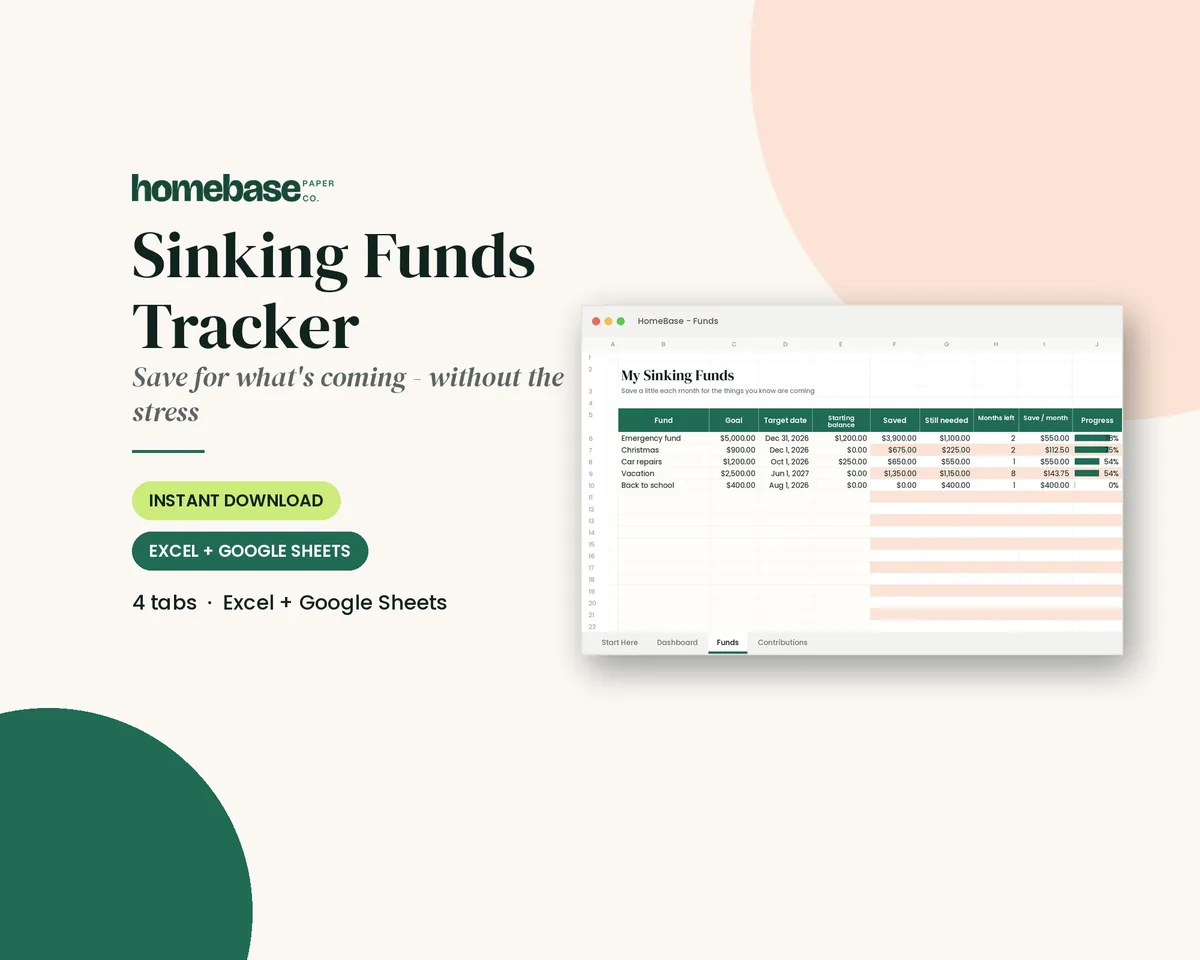
Our Sinking Funds Tracker turns the trip total into a monthly amount: enter the cost and your travel date, and it shows how much to set aside each month, with a progress bar and a deposit log.
Every dollar figure in this guide is an example to show the math. Fares, room rates and gas change constantly, so plug in your own quotes.
What goes into a vacation budget
Most trips go over budget for one reason: the plan counted the flight and the hotel and nothing else. A complete vacation budget has eight categories. Use this table as your checklist before you price anything. A trip planner with a fill-in budget table keeps these categories next to your itinerary.
| Category | What to count | Often forgotten |
|---|---|---|
| Transportation there and back | Flights, train or bus tickets, gas, tolls | Bag and seat fees, airport parking, the ride to the airport |
| Getting around | Rental car, rideshares, transit passes, parking | Rental car fuel, resort or hotel parking per night |
| Lodging | Hotel, vacation rental, campsite | Taxes, cleaning and resort fees, a deposit |
| Food and drinks | Restaurants, groceries for a rental, snacks | Airport meals, coffee runs, tips |
| Activities | Tours, tickets, rentals, entry fees | Lockers, chair and umbrella rentals, photos |
| Before you go | Passport, luggage, sunscreen, travel insurance | Pet care, someone to check on the house, mail hold |
| Spending money | Souvenirs, gifts, small treats | Gifts for whoever watched the pets |
| Buffer | A cushion for surprises | Almost always forgotten |
If a cost isn't on paper, it isn't in the budget. It's just a surprise you haven't met yet.
How to make a vacation budget in 7 steps
If you've never built a budget before, read how to make a budget first; a trip budget uses the same steps on a smaller scale.
Step 1: Decide the shape of the trip
Before you look up a single price, write four things at the top of the page: who is going, where, when and for how many nights. Those four answers drive every other number. Two adults for five nights costs very differently from a group of six for a long weekend.
Then write one sentence about what matters most on this trip. Maybe it's the beach, a great dinner or a show you've wanted to see. That sentence helps later, when you need to decide where to trim.
Step 2: Price transportation with real quotes
Look up actual fares or mileage for your dates. If you're comparing driving and flying, price both all the way through:
- Flying: tickets for each person, bag fees each way, seat fees if your fare charges them, airport parking or rides to and from the airport, and a rental car or rideshares at the other end.
- Driving: round-trip miles divided by your car's miles per gallon, times the price of gas, plus tolls, parking at the destination and any hotel stop on the way.
Write the total, not the "starting at" price. A cheap fare can stop being cheap once two checked bags and a week of airport parking are added.
Step 3: Price lodging with every fee included
Take the nightly rate, multiply by the number of nights, then add taxes, cleaning fees, resort fees and parking. The Federal Trade Commission's rule on lodging and ticket fees says the price you see for hotel rooms and vacation rentals has to be the total price with all mandatory fees, like resort or cleaning fees, and that fees left out of it, like taxes, must be disclosed before you agree to pay. Use that total, not the nightly rate, in your budget.
If you're choosing between a hotel and a rental with a kitchen, keep both totals on the page. A kitchen can lower the food line enough to change the answer.
Step 4: Set a daily food number
Food is the easiest category to underestimate because it arrives in small pieces. Set a per-person, per-day amount and multiply:
Food budget = daily amount per person × number of people × number of days
Count travel days as full days, because airport and road-trip food is rarely cheap. If you'll have a kitchen, split the daily number into a grocery part and an eating-out part.
Step 5: List activities and spending money
Write down the specific things you want to do and look up their prices. Then add a set amount for souvenirs and small treats. Giving spending money its own line keeps it from quietly borrowing from the food budget.
Step 6: Add the before-you-go costs
These are the costs people pay weeks before the trip and forget to count:
- Passport. For international trips, check this first. The U.S. Department of State's passport fees page lists a first-time adult passport book at a $130 application fee plus a $35 acceptance facility fee, and an adult renewal at $130. A child's passport book is $100 plus the $35 acceptance fee. Expedited service adds $60, and 1–3 day return delivery adds $26.87.
- Pet care or a boarding stay
- Travel insurance, if you decide you want it
- Gear such as luggage, sunscreen, chargers or adapters (check our vacation packing list before you buy)
Step 7: Add a buffer, total it and divide
Add everything up, then add a buffer. A common rule of thumb is about 10% of the trip total, and more if your trip has a lot of moving parts. Subtract what you've already saved. Divide what's left by the number of months until you leave. That's your monthly savings number.
Monthly savings = (trip total + buffer − already saved) ÷ months until the trip
If the monthly number is more than your budget can carry, you have three honest options: push the date back, shorten the trip or trim a category. Each of them is better than putting the vacation on a credit card and paying for it long after the tan fades.
Vacation budget template
Use it as your vacation budget planner: copy it into a notebook, a note on your phone or a spreadsheet. Fill in the "Quote" column as you price things and the "Actual" column during and after the trip.
| Category | Line item | Quote | Actual |
|---|---|---|---|
| Transportation | Tickets or gas and tolls | $ | $ |
| Transportation | Bags, seats, parking, rides to the airport | $ | $ |
| Getting around | Rental car, rideshares, transit | $ | $ |
| Lodging | Nightly rate × nights | $ | $ |
| Lodging | Taxes and fees | $ | $ |
| Food | Daily amount × people × days | $ | $ |
| Activities | Tours, tickets, rentals | $ | $ |
| Before you go | Passport, pet care, gear, insurance | $ | $ |
| Spending money | Souvenirs and gifts | $ | $ |
| Subtotal | $ | $ | |
| Buffer | About 10% of subtotal | $ | $ |
| Trip total | $ | $ | |
| Already saved | $ | ||
| Left to save | $ | ||
| Months until the trip | |||
| Save each month | $ |
Worked example: a 5-night beach trip for two adults
Here's the template filled in with example numbers. Every line adds up, so you can check the math against your own.
| Line item | Math | Example cost |
|---|---|---|
| Flights | 2 tickets × $320 | $640 |
| Checked bags | 2 bags × 2 ways × $35 | $140 |
| Airport parking | 6 days × $15 | $90 |
| Lodging | 5 nights × $180 | $900 |
| Lodging taxes and fees | Quoted at checkout | $160 |
| Rideshares at the destination | Estimate | $120 |
| Food | $45 per person × 2 people × 6 days | $540 |
| Activities | Snorkel tour and a show | $300 |
| Souvenirs and gifts | Set amount | $100 |
| Pet sitter | 6 days × $35 | $210 |
| Subtotal | $3,200 | |
| Buffer | 10% of $3,200 | $320 |
| Trip total | $3,520 | |
| Already saved | $520 | |
| Left to save | $3,520 − $520 | $3,000 |
| Save each month | $3,000 ÷ 8 months | $375 |
If you're paid every two weeks, that's about $173 per paycheck ($375 × 12 ÷ 26 = $173.08). Seeing it as a paycheck number often makes the goal feel a lot more doable.
Notice the pet sitter. At $210, it's more than the airport parking and the souvenirs put together, and it's exactly the kind of cost that doesn't show up on a travel site.
How to save for a vacation without stress
The easiest way to pay cash for a trip is a sinking fund: a separate savings bucket you add to every month for one planned expense. Our sinking funds guide explains the method in detail. For a vacation it looks like this:
- Open a separate savings spot, or at least a separate line in your tracker, so trip money doesn't blend with bill money.
- Automate the transfer for the day after payday. The money moves before you have a chance to spend it.
- Add windfalls like a tax refund, a bonus or birthday money straight to the trip.
- Check progress monthly. If you're behind, adjust the date or the plan early, not the week before you leave.
If you'd rather make saving a game, savings challenges work well for trip money. The classic 100 envelope challenge, where you save $1 through $100 one envelope at a time, adds up to $5,050 once every envelope is filled. A 52-week challenge that saves $1 in week one and adds $1 each week reaches $1,378 in a year.
Ways to trim a vacation budget without cutting the fun
Go back to the one sentence you wrote in Step 1 about what matters most. Protect that, and trim around it.
| Lever | How it saves |
|---|---|
| Travel dates | Shifting by a few days or traveling outside school breaks can lower fares and room rates |
| Trip length | One fewer night removes a night of lodging, food and pet care |
| Lodging with a kitchen | Breakfast and a few lunches at "home" shrink the food line |
| Location | Staying a short drive from the main area can cost less, as long as parking or rides don't eat the savings |
| One splurge, not five | Pick one special dinner or tour and keep the rest simple |
| Free activities | Beaches, parks, walking tours and free museum days cost little or nothing |
| Packing smart | Fitting into fewer checked bags lowers bag fees |
How to stay on budget during the trip
Planning is half the job. The other half happens once you're there. For more on this topic, see our travel guides.
To keep bookings, confirmation numbers and the daily plan in one place, print our free travel itinerary template. It has a trip overview, a day-by-day plan and a budget page.
- Use a daily spending number. Take your food, activities and spending money lines, divide by the number of days and treat that as the day's limit. If you come in under, the leftover rolls to tomorrow.
- Write down every purchase each evening. It takes two minutes and shows you where the money is going while you can still adjust.
- Know your card's fees before you leave. The Consumer Financial Protection Bureau's credit card guide points out that if you travel overseas often, you may want a card with a lower foreign transaction fee or none at all. Check your card agreement before an international trip.
- Keep the buffer for real surprises, like a missed connection or a lost bag, not for an extra round of souvenirs.
Book your trip with confidence
A booking is often the biggest single payment of the trip, so check it before you pay. Slow down if you see any of these signs:
- a "free" vacation that you have to pay fees to claim
- a rental priced far below similar places nearby
- pressure to decide right away
- a seller who will only take a wire transfer, gift cards, a payment app or cryptocurrency
Before you pay, get a copy of the cancellation and refund policies, search the company or property name with words like "review" or "complaint," and confirm the property's address really exists. If you're booking a passport appointment or document service online, make sure you're on the real State Department site, since some other sites charge fees for services that are free on the official one.
Why I plan trips this way
I'm Malaysia. I grew up in Detroit as the oldest of three, and I was the one my family counted on to keep things coordinated. A trip is really just a small project with a lot of moving parts, and writing every part down is how you keep it fun instead of stressful.
For the rest of the household plan, see our family budgeting guide.
I love beaches, and my one trip abroad was to Jamaica, which I loved for its culture. A good trip is worth planning well, and paying for it before you go means you come home with memories and not a balance.
Track your vacation fund with the Sinking Funds Tracker
Once you have your trip total, the Sinking Funds Tracker ($4.99) does the monthly math for you. It's a spreadsheet for Excel and Google Sheets with:
Or create a budget spreadsheet of your own and add a vacation line.
- up to 20 savings goals, so the vacation can sit next to Christmas, car repairs and your emergency fund
- the monthly amount you need to reach each goal by its target date
- progress bars and a savings dashboard with a chart
- a deposit and withdrawal log
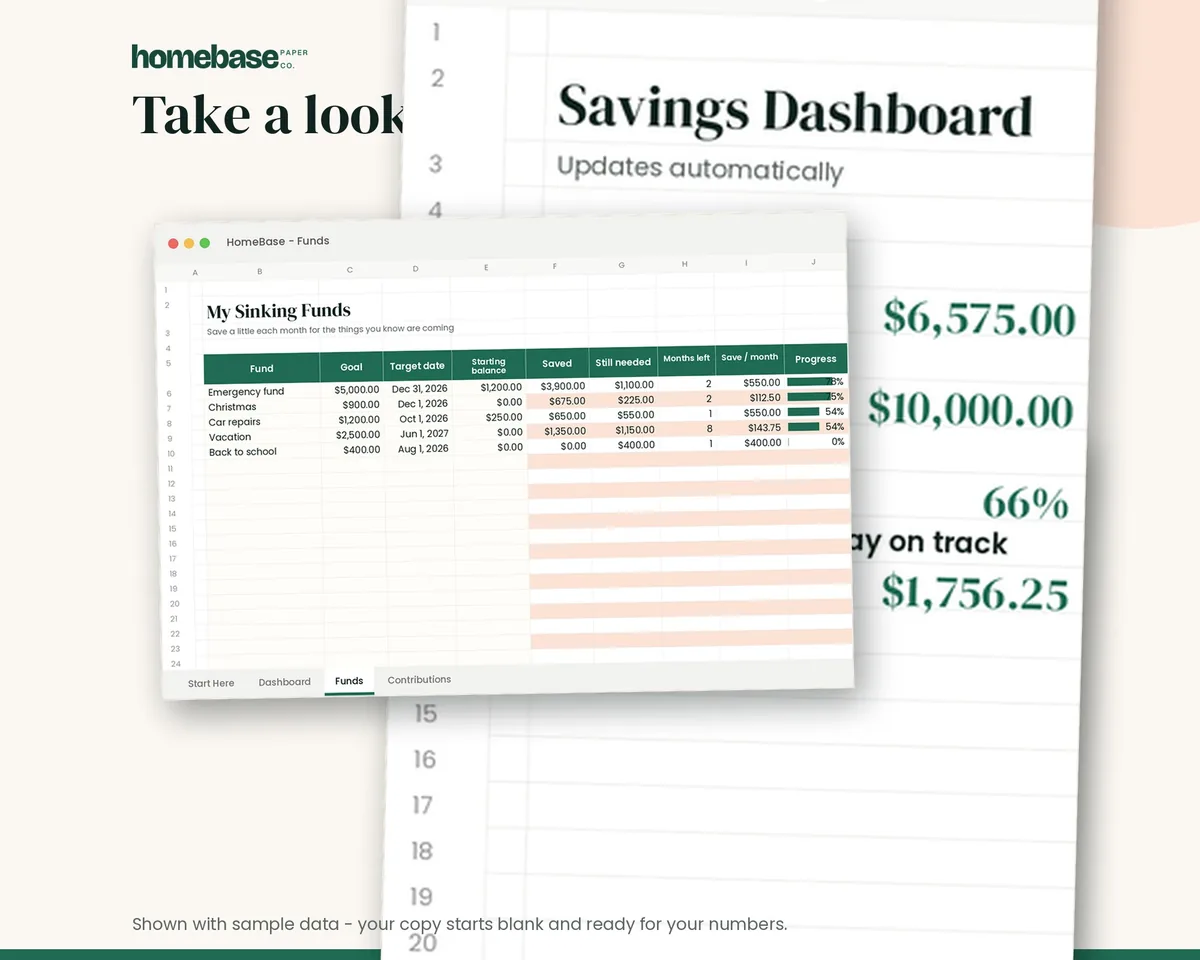
Prefer a challenge you can color in? The 100 Envelope Savings Challenge ($3.99) includes printable classic, half and 52-week challenges plus a spreadsheet that tracks every envelope. And if you like to plan on paper, the Budget Planner Printable ($5.99) has a Sinking Funds page alongside your monthly budget.
You can browse every tool in Spreadsheets or see the paper versions in Printables.
Planning a trip home for the holidays instead? Our holiday travel budget for families covers driving versus flying, packing gifts and winter travel costs.
Want to stretch that budget further? Try these budget travel tips for flights, lodging and food.
Once the budget is set, follow our step-by-step guide on how to plan a trip, with a timeline and a trip planning checklist.
Make it easier
Tools for this
Spreadsheets
Sinking Funds Tracker
It does the math: how much to set aside each month to hit every goal on time.
 Starter pick
Printables
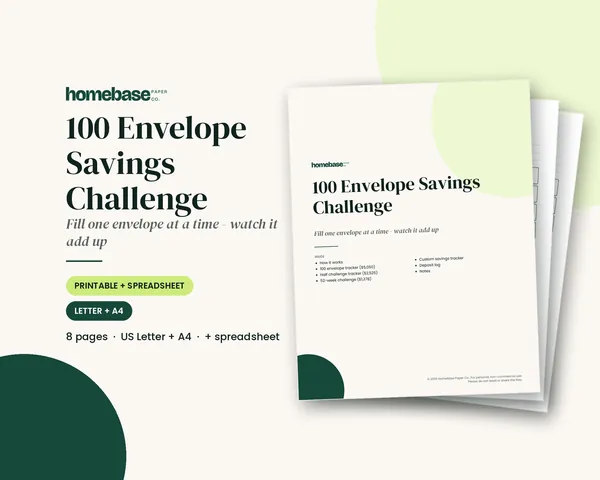
100 Envelope Savings Challenge
Classic, half and 52-week challenges to print, plus a spreadsheet that tracks every envelope and tells you how much to save each week.
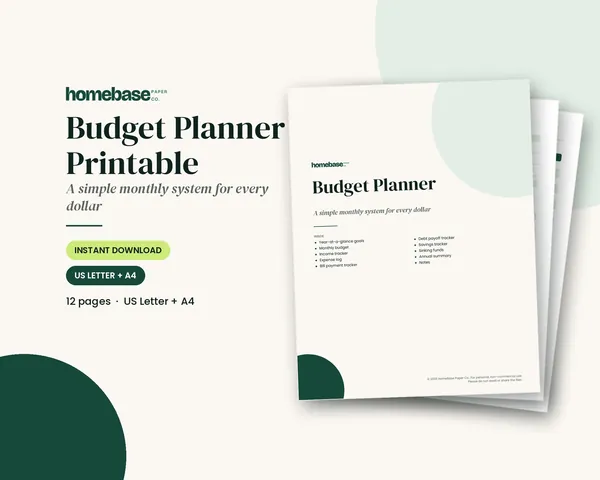
Printables
Budget Planner Printable
Twelve undated pages you can print every month: budget, bills, spending, savings and debt.
Frequently asked questions
What is a vacation budget? A vacation budget is a written plan for the full cost of a trip, turned into a monthly savings amount so you can pay cash before you leave. It covers transportation, getting around, lodging with every fee, food, activities, before-you-go costs like a passport or pet care, spending money and a buffer. The Sinking Funds Tracker ($4.99) takes your trip total and target date and shows how much to set aside each month.
How do I make a vacation budget? To make a vacation budget, price every part of the trip, add a buffer and divide what's left to save by the months until you go. Start by writing who is going, where, when and for how many nights. Then get real quotes for transportation and lodging (with taxes and fees), set a daily food amount, list activities and spending money, and add before-you-go costs. Add about 10% as a buffer, subtract what you've already saved and divide by the months left.
How much should I budget for a vacation? Budget the total of your real quotes plus a 10% buffer. In this guide's example, a 5-night beach trip for two adults totals $3,520, but your total depends on distance, the number of travelers, the number of nights and how you like to travel, so build yours line by line with the template above.
How much should I budget for food on vacation? Set your vacation food budget as a daily amount per person, then multiply by the number of people and days. Count travel days as full days, because airport and road-trip food adds up. If your lodging has a kitchen, split the daily amount into a grocery part and an eating-out part. In the example above, $45 per person per day for 2 people over 6 days comes to $540.
How far ahead should I start saving for a vacation? Start saving for a vacation as soon as you pick a date, because more months means a smaller monthly amount. Divide what you still need by the months until the trip. In the example, $3,000 left to save over 8 months is $375 a month; the same $3,000 over 4 months would be $750 a month. If the monthly amount is too high, move the date, shorten the trip or trim a category.
What is the best way to save for a vacation? The best way to save for a vacation is a sinking fund, and the Sinking Funds Tracker ($4.99) does the math by showing the monthly amount needed to hit your goal on time. Keep trip money in its own savings spot or tracker line, automate a transfer right after payday and add windfalls like a tax refund straight to the trip. Check progress once a month so you can adjust early.
Is there a vacation budget template I can use? Yes, this guide includes a copy-ready vacation budget template with Quote and Actual columns for every category. For a spreadsheet that tracks your trip savings next to your other goals, the Sinking Funds Tracker ($4.99) works in Excel and Google Sheets and holds up to 20 goals. If you prefer paper, the Budget Planner Printable ($5.99) includes a Sinking Funds page.
What costs do people forget in a vacation budget? The most forgotten vacation costs are fees and the things you pay for at home while you're away. Common ones are checked bag and seat fees, airport parking, rides to the airport, hotel or rental taxes and cleaning or resort fees, parking at the hotel, tips, pet care, gifts for whoever helped out, and passport fees for international trips.
How much of a buffer should a vacation budget have? A common rule of thumb is a buffer of about 10% of your trip total. Use more if your trip has many moving parts, like connecting flights, a rental car and several booked activities. Keep the buffer for real surprises, like a missed connection or a lost bag, and not for extra shopping.
How much does a U.S. passport cost? A first-time adult U.S. passport book costs a $130 application fee plus a $35 acceptance facility fee, according to the U.S. Department of State. An adult renewal of a passport book is $130. A child's passport book is $100 plus the $35 acceptance fee. Expedited service adds $60, and 1–3 day return delivery adds $26.87. Check the State Department's fees page for current amounts before you apply.
Should I use a credit card on vacation? Yes, a credit card can be convenient on vacation, but only if the charges fit the budget you already saved for. Before an international trip, check your card agreement for a foreign transaction fee. The CFPB notes that if you travel overseas often, you may want a card with a lower foreign transaction fee or none. Pay the statement in full when you get home so the trip doesn't cost more than you planned.
How do I book a vacation rental safely? You can book a vacation rental safely if you never pay by wire transfer, gift card or cryptocurrency, and walk away from anyone who rushes you. The FTC also warns about rentals priced far below similar places. Get the cancellation and refund policies in writing before you pay, search the property or company name with words like review or complaint, and confirm that the address really exists.
How do I stick to a vacation budget while traveling? The simplest way to stick to a vacation budget is a daily spending limit. Add up your food, activities and spending money lines, divide by the number of days and treat that as each day's limit, rolling any leftover to the next day. Write down purchases each evening so you can adjust while you're still there.
Can a savings challenge pay for a vacation? Yes, a savings challenge can pay for a vacation, and the 100 Envelope Savings Challenge ($3.99) gives you printable challenges plus a spreadsheet that tracks every envelope. The classic 100 envelope challenge adds up to $5,050 once all 100 envelopes are filled, and a 52-week challenge that starts at $1 and adds $1 each week reaches $1,378. Pick the challenge that fits your trip total and timeline.
How do I budget for holiday travel to see family? Budget for holiday travel the same way as any vacation: list every cost, add a buffer and give travel its own line separate from gifts. Holiday trips have extra costs, like gifts for the people you visit, a host gift and shipping or packing presents. Our holiday travel budget for families guide walks through those costs and how to compare driving with flying.
More from HomeBase
You may also like
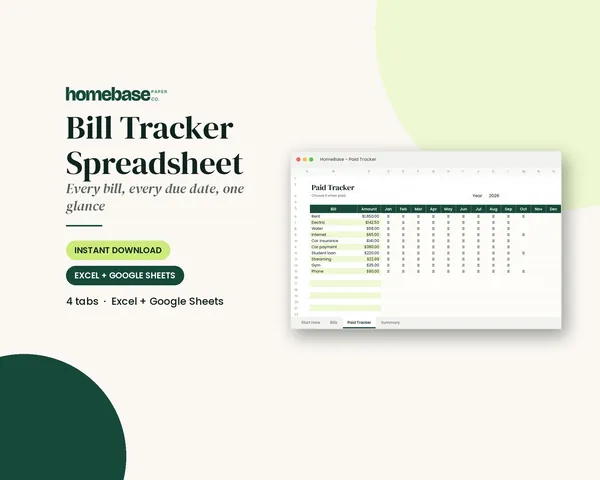
Spreadsheets
Bill Tracker Spreadsheet
Bills due in 3 days or less light up red, so nothing slips through.
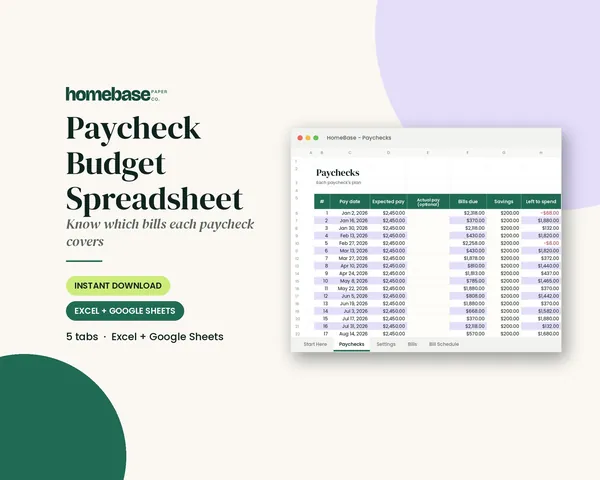
Spreadsheets
Paycheck Budget Spreadsheet
Enter your bills once. The sheet tells you which paycheck pays each one, all year.
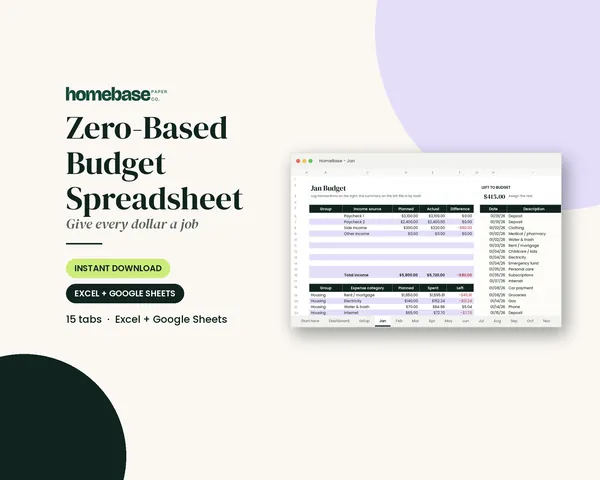
Spreadsheets
Zero-Based Budget Spreadsheet
The 'Left to budget' counter turns green when every dollar has a job.
 Save 57%
Bundles
Ultimate Budget Bundle
All 6 spreadsheets + both printable planners - for less than half the price of buying them separately.
 Club
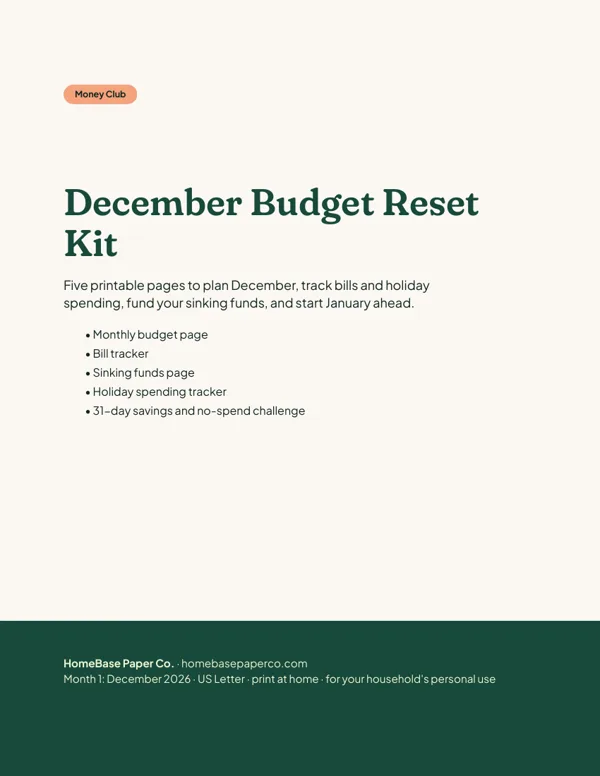
Monthly club
Money Club
Anyone who wants a clear plan for the month's bills, holiday spending and savings.
Free printable
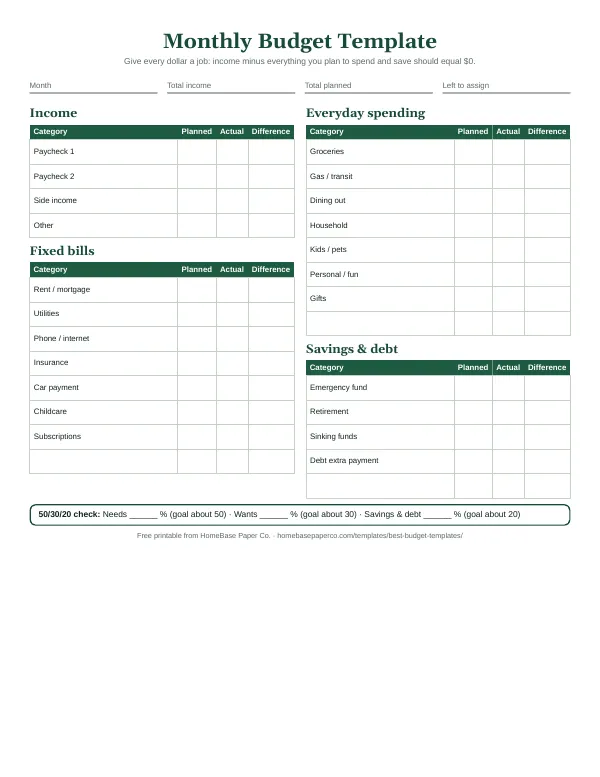
Give every dollar a job: get the free monthly budget template
A printable zero-based monthly budget: income, bills, everyday spending and savings on one page, with a planned vs. actual column. You'll also get our weekly HomeBase email with simple budgeting and bill-paying tips.
Sources
- Rule on lodging and ticket fees ecfr.gov
- Passport fees page travel.state.gov
- Credit card guide consumerfinance.gov