

The short answer: most small business grants come from federal research programs, state and local economic development offices, and private or corporate programs, not from the SBA directly. The biggest federal option, SBIR/STTR, can award up to $335,937 in Phase I without a waiver, but it's only for research and development work.
- Key facts: the SBA does not give grants to start or expand a business, most Grants.gov listings are for organizations, and you must register free in SAM.gov (allow up to 10 business days) before you apply.
- Top moves: match the grant to your business type, read the eligibility section first, register early, and keep clean books so you can show how you'll spend the money.
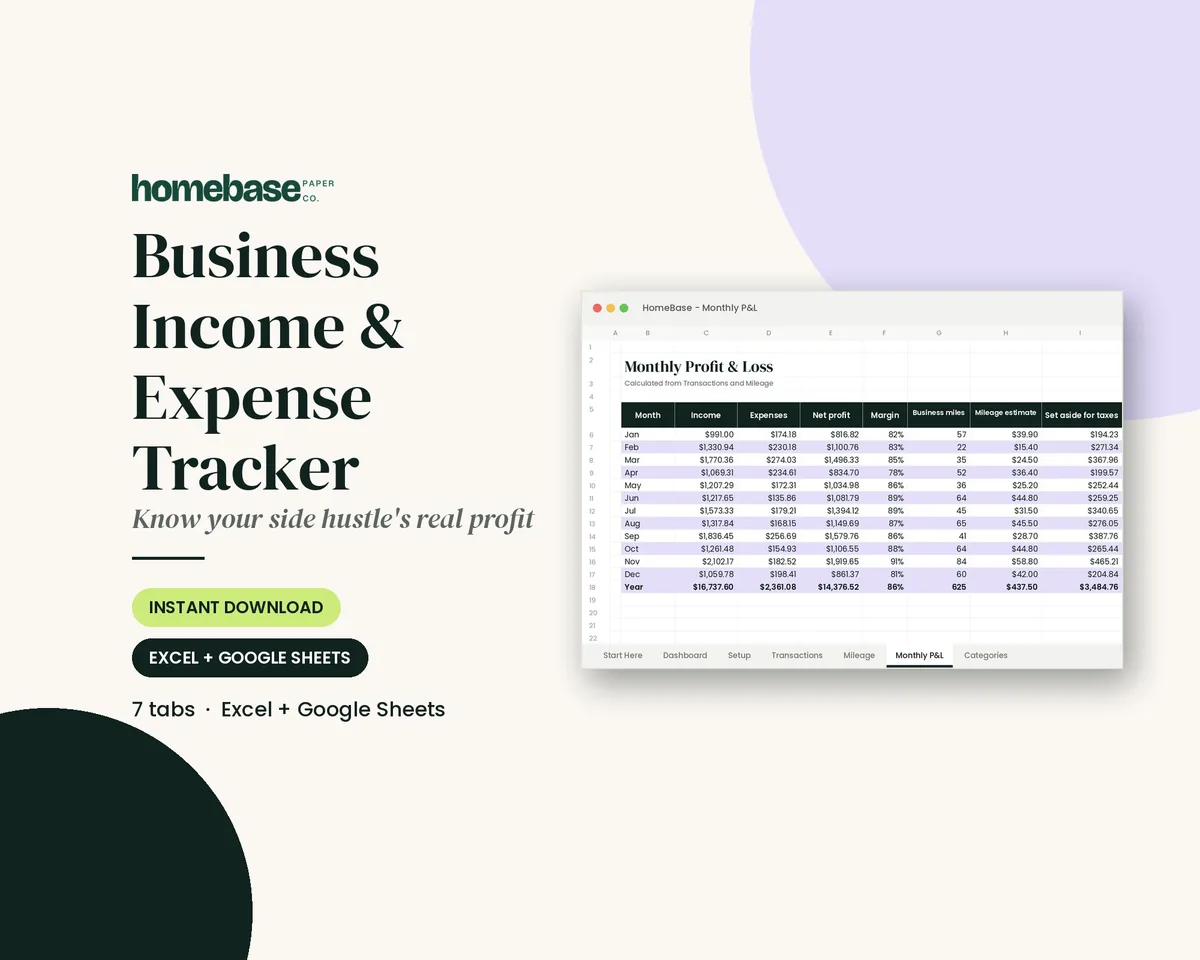
- Free template: get the free business plan template (we email it to you). To track every dollar, the Business Income & Expense Tracker is $7.99 for Excel or Google Sheets.
Checked November 4, 2026. This guide to small business grants covers where grants come from, who qualifies, how to apply step by step, a sample timeline, grants versus loans, and what to do after you win.
Where small business grants come from
Grant money for small businesses flows through four main channels. Knowing which one fits you saves hours of reading listings you can't apply for.
| Source | Who it's for | Typical use | Where to look |
|---|---|---|---|
| Federal R&D grants (SBIR/STTR) | Small businesses doing research and development | Building and testing new technology | SBIR.gov and agency solicitations |
| Other federal grants | Mostly organizations; some open to small businesses | Specific programs set by each agency | Grants.gov |
| State and local programs | Businesses in a given state, city or county | Exporting, hiring, storefronts, local growth | State economic development offices, local SBA partners |
| Private and corporate programs | Varies by program | Often general growth or equipment | The company's or foundation's official rules page |
What the SBA does and doesn't fund
This surprises a lot of owners. The SBA's grants page says plainly that it does not provide grants for starting and expanding a business. Its grants go to nonprofits, resource partners and educational organizations that run counseling and training, plus a few targeted programs:
- SBIR and STTR: federal research and development funding for small businesses (more below).
- State Trade Expansion Program (STEP): the SBA funds states and territories, which then help established small businesses with export costs such as trade missions, trade shows, translation and international marketing.
- Manufacturing and community grants: money for organizations that train small manufacturers or support entrepreneurs, including veteran business programs.
Federal grants: SBIR, STTR and Grants.gov
SBIR and STTR (America's Seed Fund)
If your business is building a new product or technology, the Small Business Innovation Research (SBIR) and Small Business Technology Transfer (STTR) programs are the largest federal grant source made for small companies. According to SBIR.gov, the programs are coordinated by the SBA and funded through 11 participating federal agencies, and the funding is non-dilutive, meaning you don't give up ownership.
| Phase | Purpose | Award limit without an SBA waiver (as of Oct. 16, 2026) |
|---|---|---|
| Phase I | Test whether the idea is feasible | Up to $335,937 |
| Phase II | Develop the product further | Up to $2,239,578 |
Each agency runs its own solicitations, topics and deadlines, so start with the agencies that fund your field. Phase I usually comes first, and Phase II generally builds on the results of a Phase I award.
Other federal grants on Grants.gov
Grants.gov lists funding from across the federal government, but read the fine print. Grants.gov's eligibility guide explains that every notice of funding opportunity (NOFO) has a section defining who can apply, and that small business grants go to companies meeting the SBA's size standards for their industry. It also says most listings are for organizations, and none provide personal financial assistance. Filter your search by the "Small businesses" eligibility type to skip what doesn't fit.
State, local and private grants
For most Main Street businesses, like a bakery, salon, cleaning service or online shop, state and local programs are the more realistic target. Here's where to look:
- State economic development agency: many run grants for hiring, exporting, rural growth or storefront upgrades. Your state's STEP office is listed on the SBA grants page if you sell overseas.
- City and county programs: façade improvement, downtown revitalization and small business recovery grants pop up through local economic development offices.
- Local SBA partners: Small Business Development Centers (SBDCs), SCORE and Women's Business Centers know what's open in your area and can review your application for free.
- Private and corporate programs: some large companies and foundations run grant contests for small businesses. Apply only through the program's official rules page, and read the eligibility and deadline details carefully.
Who qualifies for a small business grant?
There's no single standard. Each program sets its own rules, but these come up again and again:
- Size: you meet the SBA size standard for your industry (usually based on employees or revenue).
- Location: state and local grants require you to operate in that area.
- Business type and stage: some fund research, some exporting, some only established businesses with a set number of years in operation.
- Ownership: some programs focus on women-owned, veteran-owned, minority-owned or rural businesses.
- Use of funds: the money has to go to the specific purpose in the grant, not general expenses.
Tip: read the eligibility section before anything else. Grants.gov's own advice is that applying when you aren't eligible wastes time and money.
How to apply for small business grants, step by step
- Get your paperwork ready. Have your EIN, business formation documents, recent financial statements and a current business plan. If you don't have a plan yet, start with our business plan template.
- Register in SAM.gov for federal grants. Grants.gov's registration guide says organizations must register in SAM.gov first, which is free and gives you a Unique Entity ID (UEI). Allow up to 10 business days, longer if details need checking, and renew every year.
- Create your Grants.gov account. Use the same email as your SAM.gov point of contact and add your organization profile with your UEI.
- Find matching opportunities. Search Grants.gov by eligibility, check SBIR.gov solicitations, and ask your state agency and local SBDC what's open.
- Read the whole notice. Note the deadline, eligibility, award size, matching-funds rules, required forms and how applications are scored.
- Write a focused proposal. Explain the problem, your plan, the budget line by line, measurable results and your timeline. Follow the format exactly.
- Submit early. Portals slow down near deadlines. Save your confirmation and tracking number.
- Follow up and keep going. If you're turned down, ask for reviewer feedback when it's offered and apply to the next round.
Grant application timeline
A realistic schedule for a federal grant looks like this. State and private grants often move faster.
| When | What to do |
|---|---|
| 8 to 12 weeks before the deadline | Register in SAM.gov, gather documents, shortlist opportunities |
| 6 to 8 weeks before | Read the full notice, outline the proposal, request letters of support |
| 3 to 6 weeks before | Draft the narrative and budget, get a second reader (an SBDC advisor works) |
| 1 to 2 weeks before | Finalize forms and attachments, check every requirement |
| 3 to 5 days before | Submit and save confirmations |
| After submission | Track status, keep records ready for questions |
Grants for women, veteran, minority and rural business owners
Searches for these grants are common, and some programs do focus on specific owners. Here's how to find them without wasting time:
| Owner group | Where to start |
|---|---|
| Women-owned businesses | Women's Business Centers, state programs and private grant contests with a women-owned focus |
| Veteran-owned businesses | Veterans Business Outreach Centers and SBA-funded veteran training programs, which can point you to local funding |
| Minority-owned businesses | State and city economic development offices, plus private and corporate programs |
| Rural businesses | State rural development offices and federal agency listings on Grants.gov |
Many "grants for women" or "grants for veterans" are really training programs or contests with a small number of awards, so read what the program actually pays for before you apply.
How to spot a small business grant scam
Because grants sound like free money, scammers use them as bait. Watch for these warning signs:
| Red flag | What to do instead |
|---|---|
| Someone contacts you out of the blue about a grant you never applied for | Ignore it; real grants start with your application |
| You are asked to pay a fee to "release" or "guarantee" a grant | Do not pay; no one can guarantee you a grant |
| Payment by gift card, wire transfer or cryptocurrency | Stop; that is a common scam payment method |
| A "grant list" for sale | Search free listings at Grants.gov and your state's economic development office |
| The agency name sounds official but you cannot find it | Check the program on SBA.gov or Grants.gov before sharing any information |
If you have already paid, contact the company or bank you used to send the money right away and report the scam to the Federal Trade Commission at ReportFraud.ftc.gov.
Common reasons grant applications get turned down
- Not eligible: the business doesn't meet the size, location or ownership rules.
- Late or incomplete: a missing form or attachment can disqualify an otherwise strong application.
- Weak link to the goal: the proposal describes the business but not how it serves the grant's purpose.
- Vague budget: reviewers can't see how each dollar will be used.
- Expired registration: a SAM.gov registration that lapsed before the deadline.
Grants vs. loans: which fits your business?
Grants don't have to be repaid, but they're competitive, slow and tied to a specific purpose. Loans are easier to get and flexible to use, but you pay them back with interest.
| Grants | Loans | |
|---|---|---|
| Repayment | None if you meet the terms | Principal plus interest |
| Competition | High; many applicants per award | Based on credit and cash flow |
| Speed | Months from deadline to award | Days to weeks for many lenders |
| Use of funds | Restricted to the grant's purpose | Usually flexible |
| Reporting | Progress and spending reports | Regular payments |
Many owners apply for grants while lining up a backup. Compare your options in our guide to small business loans.
How to strengthen your application
- Show the numbers: reviewers want clean income and expense records. Our guide on how to track business expenses walks through a simple system.
- Build a line-item budget: use a business budget template so each dollar ties to an activity.
- Tie everything to the grant's goal: echo the program's stated priorities in your own words.
- Get local help: SBDC and SCORE advisors review drafts at no cost.
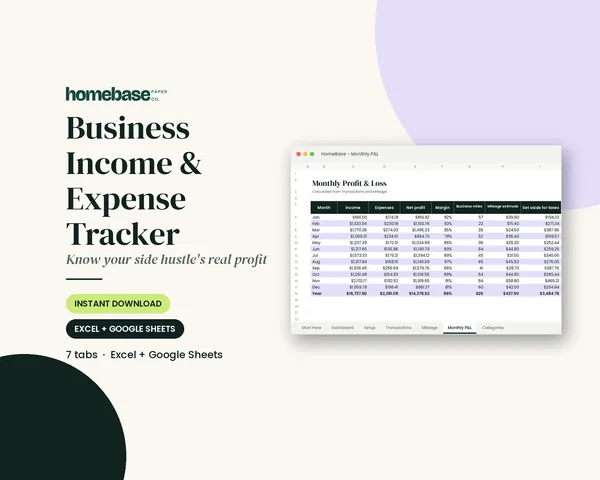
The Business Income & Expense Tracker ($7.99) is a 7-tab spreadsheet for Excel or Google Sheets. Log sales, expenses and miles, and see monthly profit and tax-time totals, which makes grant budgets and spending reports much easier. See more tools in Spreadsheets.
After you win: managing grant money
- Keep grant funds traceable: tag every grant expense in your books so you can report exactly where the money went.
- Meet reporting deadlines: most grants require progress or spending reports.
- Save receipts: keep invoices and receipts for each grant purchase.
- Follow the terms: the SBA reminds grant recipients that federal awards come with administrative, cost and audit requirements, so read the award terms before you spend the first dollar.
- Plan what's next: a finished grant project is strong proof for the next application, so keep notes on results, numbers and lessons learned while they're fresh.
- Talk to a tax pro: ask how to report the grant on your return, and see our small business tax deduction checklist and guide to paying quarterly taxes.
Make it easier
Tools for this
Spreadsheets
Business Income & Expense Tracker
Log sales, expenses and business miles - see your monthly profit, category totals for tax time and how much to set aside.
Frequently asked questions
Where can I find small business grants? Find small business grants on Grants.gov for federal programs, SBIR.gov for research and development awards, your state economic development agency, your city or county, and private or corporate grant programs. A local Small Business Development Center can tell you what's open near you.
Does the SBA give grants to small businesses? No, the SBA does not give grants to start or expand a business. Its grants go mostly to nonprofits, resource partners and educational organizations, plus targeted programs like SBIR/STTR research funding and the State Trade Expansion Program for exporters.
How do I apply for a small business grant? To apply for a small business grant, confirm you're eligible, register free in SAM.gov for federal grants, create a Grants.gov account, read the full notice, write a proposal with a line-item budget, and submit before the deadline. Start 8 to 12 weeks ahead.
Who qualifies for a small business grant? A business usually qualifies for a small business grant if it meets the SBA size standard for its industry and the program's own rules on location, stage, ownership and use of funds. Every notice of funding opportunity spells out eligibility, so read it first.
How much money can you get from a small business grant? Small business grant amounts vary widely, from small local awards to large federal research grants. As of October 16, 2026, SBIR/STTR agencies can award up to $335,937 for Phase I and up to $2,239,578 for Phase II without an SBA waiver.
Do you have to pay back a small business grant? No, you don't pay back a small business grant as long as you use the money for its stated purpose and meet the reporting terms. That's the main difference from a loan, which you repay with interest.
What is SAM.gov registration and is it free? SAM.gov registration is the free federal sign-up that gives your business a Unique Entity ID (UEI), and you need it before you can apply for federal grants on Grants.gov. Allow up to 10 business days for it to go active, and renew it every year.
Can I get a grant to start a business? Grants to start a business are rare. The SBA says it does not fund startups or expansions with grants, and most federal grants go to organizations or research projects. Startups usually look at local programs, private contests, savings or small business loans instead.
Are there small business grants for women? Yes, some small business grants focus on women-owned businesses, mostly through state and local programs and private grant contests. Women's Business Centers, which are SBA resource partners, can help you find current options and review your application.
How long does it take to get a small business grant? Getting a small business grant often takes several months from the deadline to an award, and federal grants need SAM.gov registration first. Plan on 8 to 12 weeks just to prepare a strong federal application.
What is the difference between a grant and a loan? A grant is money you don't repay if you meet its terms, while a loan must be repaid with interest. Grants are competitive and restricted to a set purpose; loans are faster to get and more flexible to use.
What records do I need for a grant application? Most grant applications ask for your EIN, formation documents, recent financial statements, a business plan and a line-item budget. Clean income and expense records make the budget and later spending reports much easier.
Can the Business Income & Expense Tracker help with grant reporting? Yes, the Business Income & Expense Tracker helps with grant reporting by keeping tagged grant purchases next to your sales, expenses and monthly profit. The Business Income & Expense Tracker is $7.99 and works in Excel or Google Sheets, with tabs to log sales, expenses and miles and see monthly profit. Tagging grant purchases there makes spending reports simple to pull together.
What's included in the Business Income & Expense Tracker? The Business Income & Expense Tracker costs $7.99 and has 7 tabs, including transactions, mileage and a monthly profit and loss view that totals income, expenses and net profit. It's an instant download for Excel or Google Sheets.
How can I tell if a small business grant offer is a scam? A small business grant offer is probably a scam if someone contacts you first, asks for a fee, guarantees you will win, or demands payment by gift card, wire transfer or cryptocurrency. Real grants require your application, and federal grants are listed for free at Grants.gov.
More from HomeBase
You may also like
Printables
Budget Planner Printable
Twelve undated pages you can print every month: budget, bills, spending, savings and debt.
Spreadsheets
Bill Tracker Spreadsheet
Bills due in 3 days or less light up red, so nothing slips through.
Spreadsheets
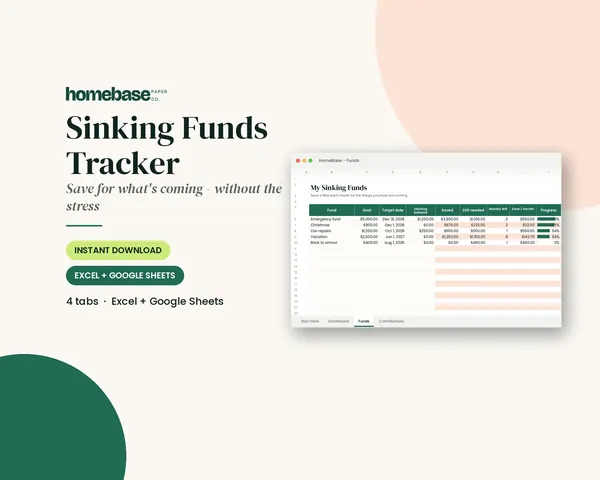
Sinking Funds Tracker
It does the math: how much to set aside each month to hit every goal on time.
Spreadsheets
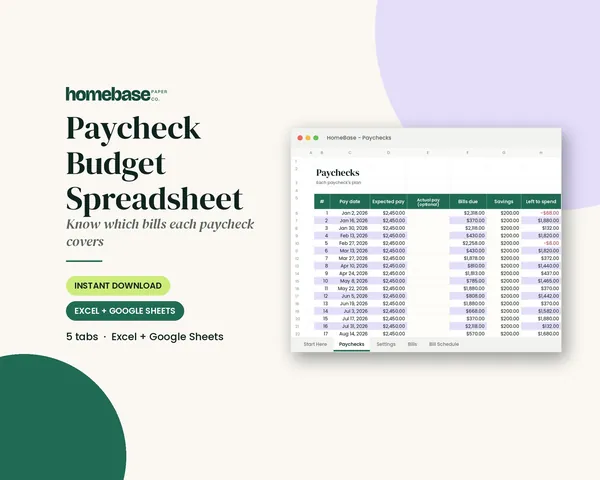
Paycheck Budget Spreadsheet
Enter your bills once. The sheet tells you which paycheck pays each one, all year.
 Club
Monthly club
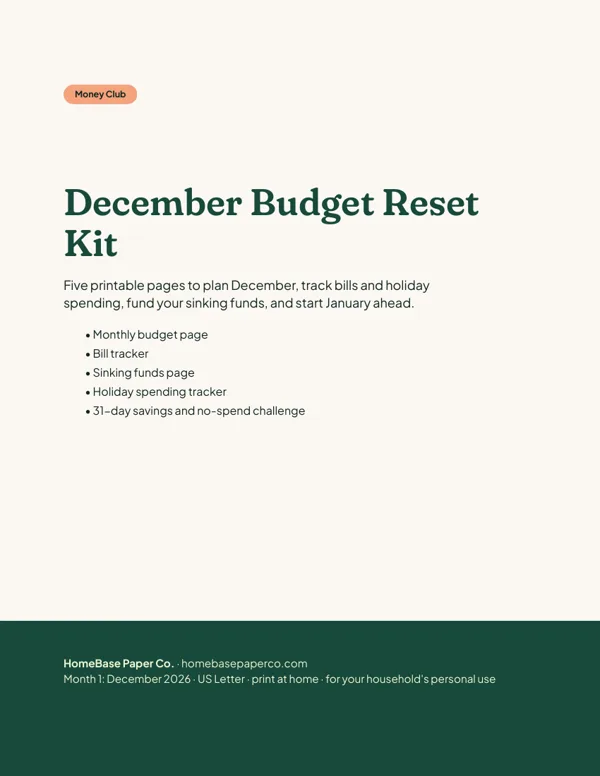
Money Club
Anyone who wants a clear plan for the month's bills, holiday spending and savings.
Free printable
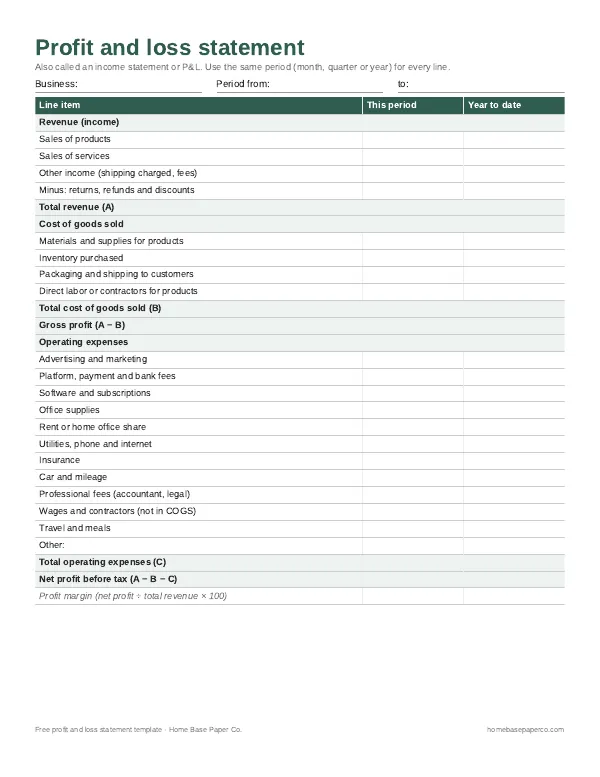
Know your real profit: get the free P&L template
A printable profit and loss statement that walks through revenue, costs and expenses line by line for any month, quarter or year. You'll also get our weekly HomeBase email with simple small business paperwork and money tips.
Sources
- U.S. Small Business Administration: Grants sba.gov
- Grants.gov: Grant eligibility grants.gov
- Grants.gov: Applicant registration grants.gov
- SBIR.gov: About SBIR and STTR sbir.gov
- Grants.gov grants.gov