

The short answer: the S&P 500 is a stock market index that tracks 500 of the largest US public companies, weighted by their size. You can't buy the index itself, but you can buy an index fund or ETF that holds the same stocks. Low-cost S&P 500 funds charge as little as 0.015% to 0.04% a year.
- What it is: an index of about 500 large US companies (503 securities, counting multiple share classes), launched in 1957
- How it works: larger companies have a larger weight. The top 10 holdings made up 37.3% of the index on October 30, 2026
- How to invest: buy a fund that tracks it, such as VOO (0.03%), FXAIX (0.015%) or VFIAX (0.04%)
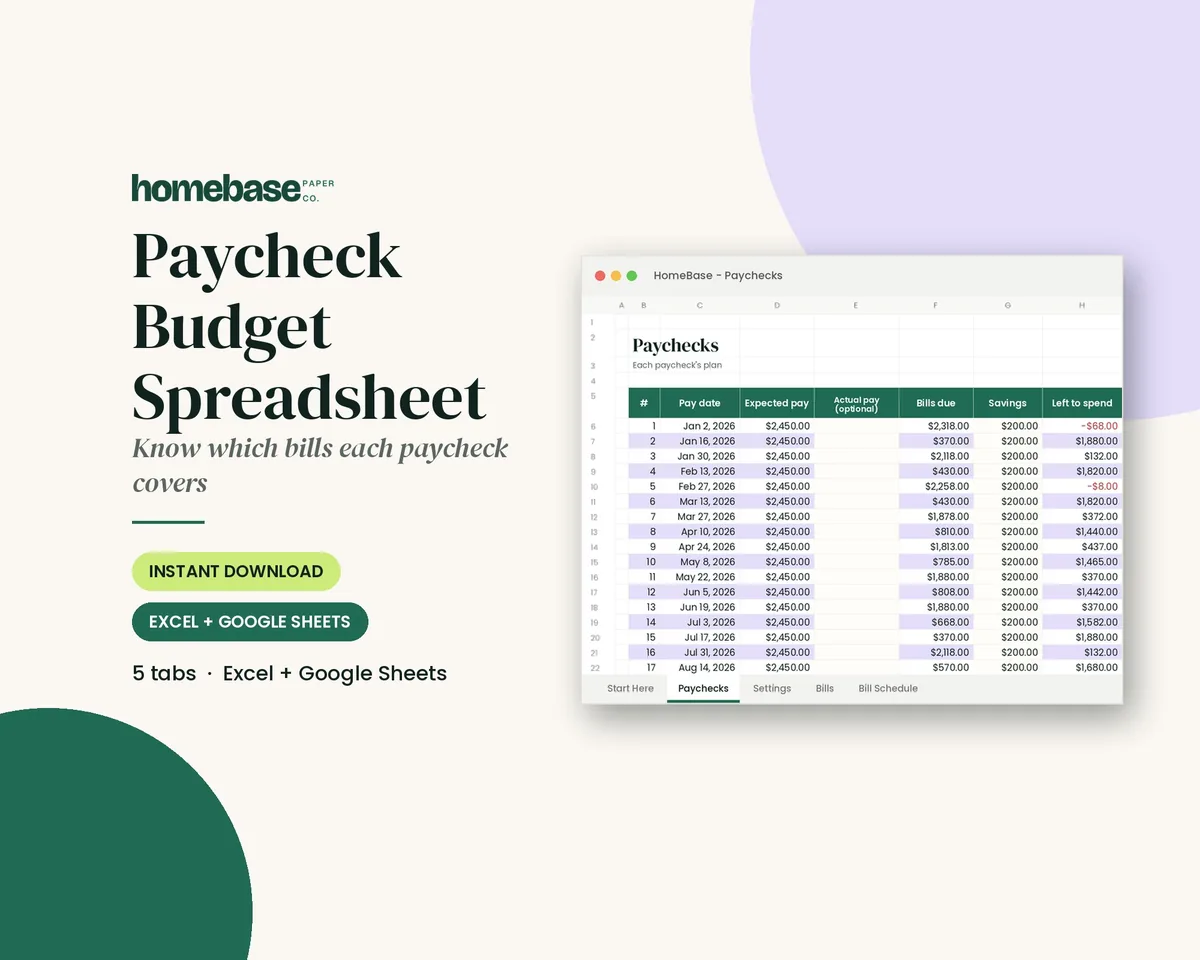
- Free helper: get the free personal financial statement template (we email it to you). To budget your monthly contribution, the Paycheck Budget Spreadsheet is $5.99
Index facts and fund costs checked November 9, 2026. This is education, not investment advice, and investing involves risk, including the loss of money. Below: how the index works, how it differs from the Dow, how to invest in it, what it costs and how to budget for it.
What is the S&P 500?
The S&P 500 is a stock index created and maintained by S&P Dow Jones Indices. It follows 500 large US companies and is one of the most-watched gauges of the US stock market. According to S&P Dow Jones Indices, it's designed to represent large-cap US stocks across the major industries. An index is a list, not an investment. It becomes investable when a fund copies it.
S&P 500 at a glance
| Fact | Detail |
|---|---|
| Created by | S&P Dow Jones Indices |
| Launched | March 4, 1957 |
| Number of companies | 500 (503 securities, including separate share classes) |
| Weighting | Float-adjusted market capitalization |
| Top 10 weight | 37.3% of the index as of October 30, 2026 |
| Who decides what's in | An index committee, using published rules |
How companies get into the S&P 500
A company doesn't get in just by being big. Under S&P's published methodology, a company generally must be:
- US-domiciled and listed on a major US exchange
- Large enough: the minimum market capitalization is set by S&P and updated over time. As of 2026 it is about $22.7 billion
- Liquid, with enough shares available to trade
- Profitable: positive GAAP earnings in the latest quarter and in the sum of the last four quarters
An index committee reviews changes, and the index is rebalanced as companies are added or removed. Check S&P Dow Jones Indices' published methodology for the exact rules.
How the S&P 500 is weighted
The S&P 500 is float-adjusted market-cap weighted. A company's weight depends on the value of the shares available to the public. A company worth $2 trillion has far more influence on the index than one worth $30 billion.
Worked example: imagine a tiny index with three companies. A is worth $600 billion, B is worth $300 billion and C is worth $100 billion. The total is $1 trillion, so the weights are 60%, 30% and 10%. A 10% rise in A moves the index six times as much as a 10% rise in C.
Because of this weighting, a handful of very large companies can dominate. The top 10 stocks were 37.3% of the index on October 30, 2026, so owning an S&P 500 fund is less evenly spread than "500 companies" suggests.
S&P 500 vs. the Dow vs. the Nasdaq
| S&P 500 | Dow Jones Industrial Average | Nasdaq Composite | |
|---|---|---|---|
| Companies | About 500 | 30 | Thousands of Nasdaq-listed stocks |
| Weighting | Market cap (float-adjusted) | Price-weighted | Market-cap weighted |
| Best described as | Broad large-cap US market | Narrow blue-chip index | Technology-heavy index |
See S&P Dow Jones Indices' guide to the S&P 500 and the Dow for a deeper comparison.
How to invest in the S&P 500
You can't buy the S&P 500 itself. You buy a fund that holds the same stocks:
| Option | How it works | Common examples |
|---|---|---|
| Index mutual fund | Buy at the end-of-day price, often with a minimum | Fidelity 500 Index (FXAIX), Vanguard 500 Index Admiral (VFIAX) |
| ETF | Trades all day like a stock, with no fund minimum at most brokers | Vanguard S&P 500 ETF (VOO) |
| Retirement account | A 401(k), IRA or Roth IRA that offers an S&P 500 fund | Check your plan's fund list |
| Target-date or total-market fund | Holds the S&P 500 plus other stocks and bonds | Varies |
To get started you need a brokerage or retirement account. Our how to start investing guide walks through account types and first steps.
How much do S&P 500 funds cost?
Funds charge an annual expense ratio, a percentage of your balance. As of 2026, the expense ratios were about 0.015% for FXAIX, 0.03% for VOO and 0.04% for VFIAX, per each issuer. Check each fund company's page for today's figure.
| Fund | Expense ratio | Yearly cost on $10,000 |
|---|---|---|
| FXAIX | 0.015% | $1.50 |
| VOO | 0.03% | $3.00 |
| VFIAX | 0.04% | $4.00 |
The math: $10,000 x 0.00015 = $1.50; $10,000 x 0.0003 = $3.00; $10,000 x 0.0004 = $4.00. Expense ratio is only one cost. Check trading commissions, account fees and minimums too.
Risks to know
- Prices go up and down. The index can fall sharply, and past performance doesn't guarantee future returns.
- Concentration: a few large companies drive much of the index.
- No guarantee: a diversified US index fund is not FDIC-insured.
- Timing: money you need within a few years usually belongs in safer places, such as a high-yield savings account or CDs.
Budgeting for your first S&P 500 investment
Before you invest, cover the basics in your budget:
| Step | What to do |
|---|---|
| Build a starter emergency fund | Keep a cushion in cash first |
| Pay off high-interest debt | Paying off credit card debt is usually a guaranteed return |
| Pick a monthly amount | Decide a number you can keep up. See how much of your paycheck to save |
| Automate it | Set the transfer for payday |
| Track it | List the account on your net worth sheet |
Worked example: $200 a month for 10 years is $24,000 of your own contributions (200 x 120 months), before any gains or losses. The Paycheck Budget Spreadsheet ($5.99) helps you assign each paycheck to bills, savings and investing, the Annual Budget Spreadsheet ($6.99) shows the whole year, and the Ultimate Budget Bundle is $19.99 ($46.42 when bought separately). Set a target with our financial goals guide. Browse all Spreadsheets.
S&P 500 checklist
- Confirm your emergency fund and high-interest debt are handled
- Choose an account: 401(k), IRA, Roth IRA or brokerage
- Compare expense ratios and minimums on two or three S&P 500 funds
- Pick a monthly amount and automate it
- Review once or twice a year, not daily
Make it easier
Tools for this
Spreadsheets
Paycheck Budget Spreadsheet
Enter your bills once. The sheet tells you which paycheck pays each one, all year.
Spreadsheets
Annual Budget Spreadsheet
See exactly where your money goes every month - without complicated software.
 Save 57%
Bundles
Ultimate Budget Bundle
All 6 spreadsheets + both printable planners - for less than half the price of buying them separately.
Frequently asked questions
What is the S&P 500? The S&P 500 is a stock market index that tracks about 500 of the largest US public companies, weighted by their size. It is maintained by S&P Dow Jones Indices, launched in 1957 and is widely used as a gauge of the US stock market. You cannot buy the index directly, but you can buy a fund that tracks it.
How many companies are in the S&P 500? The S&P 500 has 500 companies, but it includes 503 securities because a few companies have more than one share class. S&P Dow Jones Indices maintains the list and updates it as companies are added and removed.
How does the S&P 500 work? The S&P 500 is float-adjusted market-cap weighted, so each company's weight depends on the value of its publicly available shares. Larger companies move the index more than smaller ones, and an index committee adds or removes companies using published rules.
What is the difference between the S&P 500 and the Dow? The S&P 500 tracks about 500 large US companies weighted by market capitalization, while the Dow Jones Industrial Average tracks 30 companies and is price-weighted. The S&P 500 is broader, so many investors view it as a better gauge of the overall US stock market.
How do I invest in the S&P 500? Open a brokerage account or use a retirement account like a 401(k) or IRA, then buy a mutual fund or ETF that tracks the S&P 500, such as FXAIX, VOO or VFIAX. Compare expense ratios, minimums and fees, and consider setting up automatic monthly contributions.
What is the cheapest way to invest in the S&P 500? Large index funds from major providers charge very low expense ratios: about 0.015% for Fidelity's FXAIX, 0.03% for Vanguard's VOO and 0.04% for Vanguard's VFIAX as of 2026. On $10,000, that is $1.50, $3.00 and $4.00 a year. Check each provider's current figures and any account fees.
What is the minimum to invest in an S&P 500 fund? The minimum varies. Some mutual funds require a minimum, such as $3,000 for Vanguard's VFIAX, while others like Fidelity's FXAIX have none, and ETFs such as VOO are priced per share, with some brokers offering fractional shares. Check the fund and your broker before you invest.
Is the S&P 500 a good investment? Many investors use S&P 500 index funds as a low-cost way to own a broad slice of large US companies, but they carry risk. Prices can fall sharply, a few large companies make up a big share of the index, and past performance does not predict future returns. Decide based on your goals, timeline and risk tolerance.
Can I lose money in the S&P 500? Yes, you can lose money in an S&P 500 fund. The index rises and falls with the stock market, and funds are not FDIC-insured. Money you need in the next few years usually belongs in safer accounts.
How much should I invest each month in the S&P 500? There is no single right amount. Start with a number you can keep up after building an emergency fund and handling high-interest debt, and automate it on payday. For example, $200 a month for 10 years is $24,000 in contributions before any gains or losses.
More from HomeBase
You may also like
Printables
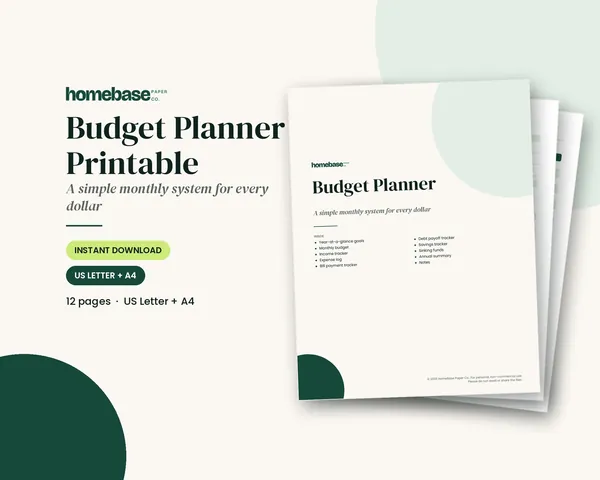
Budget Planner Printable
Twelve undated pages you can print every month: budget, bills, spending, savings and debt.
Spreadsheets
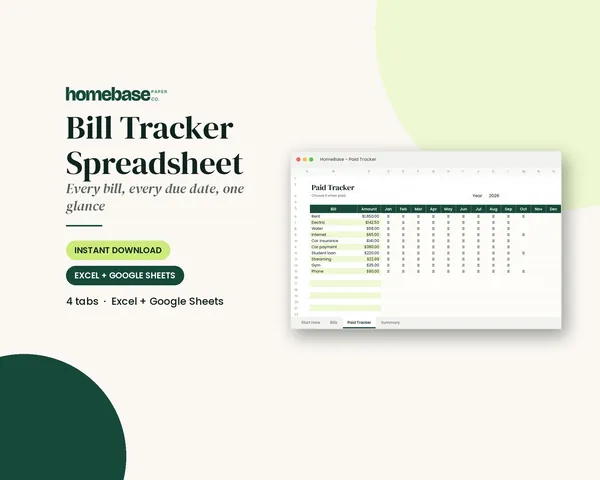
Bill Tracker Spreadsheet
Bills due in 3 days or less light up red, so nothing slips through.
Spreadsheets
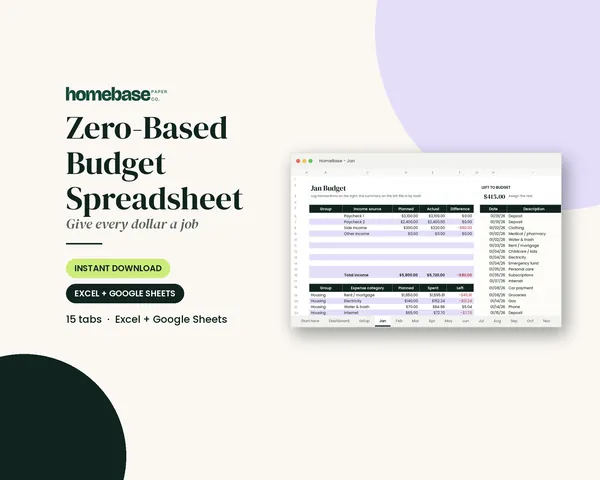
Zero-Based Budget Spreadsheet
The 'Left to budget' counter turns green when every dollar has a job.
Spreadsheets
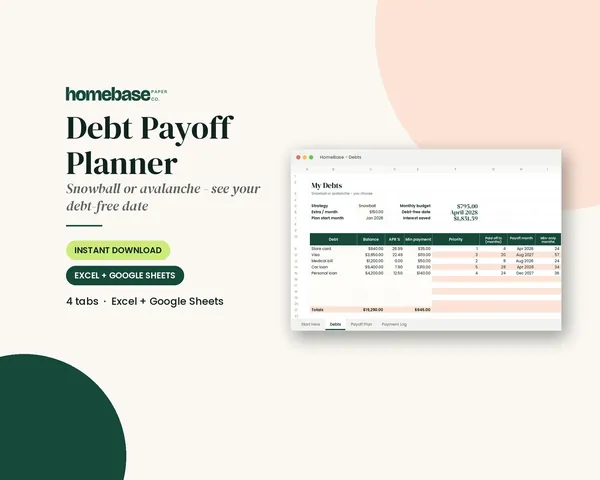
Debt Payoff Planner
Pick snowball or avalanche, add any extra payment, and get your debt-free month instantly.
 Club
Monthly club
Money Club
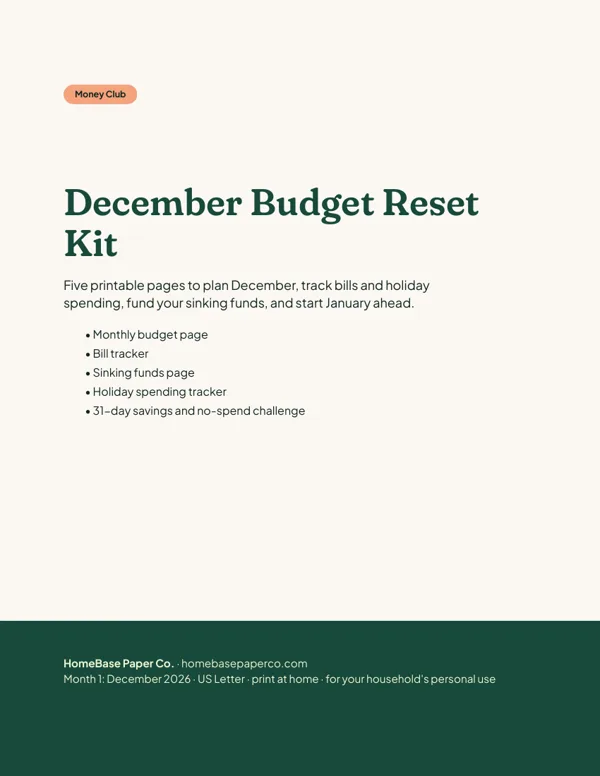
Anyone who wants a clear plan for the month's bills, holiday spending and savings.
Free printable
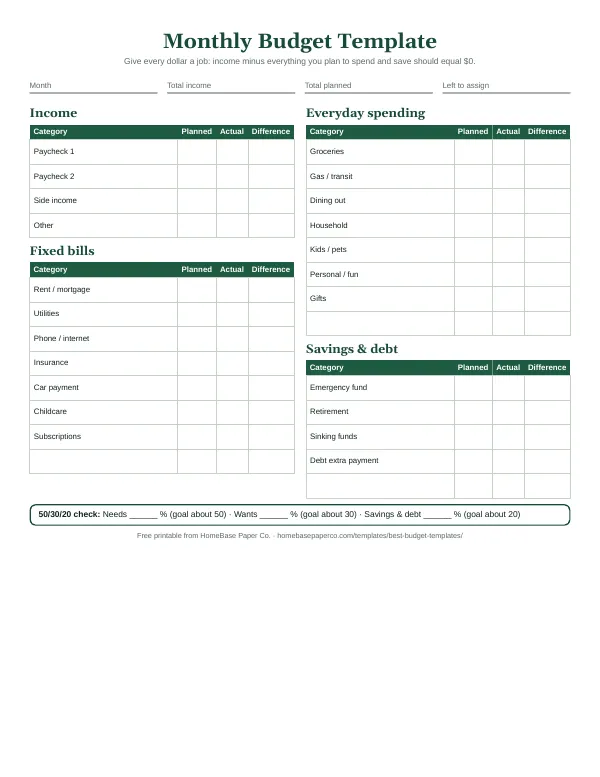
Give every dollar a job: get the free monthly budget template
A printable zero-based monthly budget: income, bills, everyday spending and savings on one page, with a planned vs. actual column. You'll also get our weekly HomeBase email with simple budgeting and bill-paying tips.
Sources
- S&P Dow Jones Indices: US 500 spglobal.com
- S&P Dow Jones Indices: The S&P 500 and the Dow spglobal.com