

The short answer: a no spend challenge for January means paying only for essentials (housing, utilities, groceries, fuel and debt payments) and pausing everything else for the month. It shows where money leaks out after the holidays.
- Paused: takeout, clothes, home decor, new subscriptions and coffee shop drinks
- Plan the month's food first and shop once a week from a list
- One planned treat a week, and track every day
- Unsubscribe from store emails before January 1
- Next step: Plan it with the Budget Planner Printable ($5.99).
A no spend January challenge means you pay only for essentials for the month, such as housing, utilities, groceries, fuel and debt payments, and stop spending on everything else. This no spend challenge is a reset after the holidays: it shows where money leaks out, rebuilds savings and makes February's budget easier to write. Want a cheap send-off for December first? Try a low-key family New Year's Eve at home.
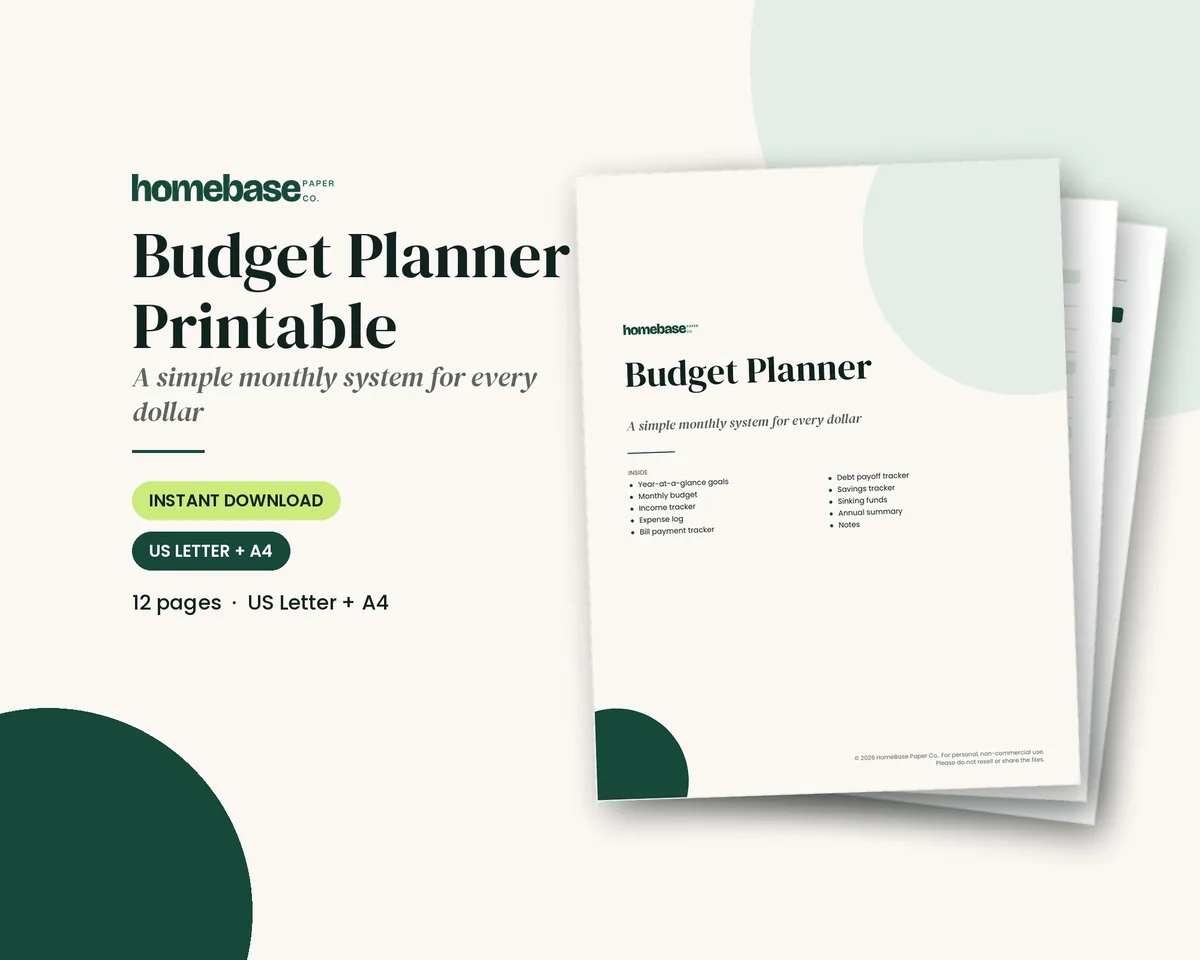
To plan the month on paper, our Budget Planner Printable has undated budget, bills, spending, savings and debt pages you can reuse every month.
Here's how to set the rules, get the household on board, handle the hard days and use what you save. For a longer stretch, from a week to a year, see our no-buy challenge guide.
Step 1: Decide what counts as essential
Write two lists before January 1. Keeping them on paper settles arguments later.
| Allowed (essentials) | Paused (non-essentials) |
|---|---|
| Rent or mortgage, utilities, insurance | Takeout, delivery and restaurants |
| Groceries from a set list | Clothes and shoes (unless replacing something broken) |
| Fuel and transit for work and school | Home decor and gadgets |
| Minimum debt payments and planned extra payments | New subscriptions and app purchases |
| Medicine, school costs, childcare | Coffee shop drinks |
| Gifts for birthdays already planned | Hobby supplies you already have plenty of |
Gray areas are normal. Decide them up front: is a birthday dinner allowed? Do you keep the gym? Write the answer down. If a birthday falls this month, a birthday dinner at home keeps it special without the restaurant bill.
Step 2: Set the household rules
A challenge works best when everyone in the house agrees to it. Keep the rules short:
- Essentials only, from the allowed list.
- Groceries from the plan. Shop with a list, once a week.
- A 48-hour rule for anything not on the list: if it still seems necessary in two days, discuss it.
- One planned treat a week, if a strict month would make people quit.
- Track every day, including the no-spend days.
Some households pair a no-spend month with Dry January. Our guide has a 31-day plan, drink swaps and a way to save what you would have spent.
Kids can join too. Give them a small "fun money" amount for the month and let them decide how to use it.
Step 3: Plan the month's food first
Food is where most no-spend months fail. Before January starts, plan simple meals for four weeks around what's in the pantry and freezer. Holiday leftovers, baking supplies and frozen extras from December can cover several dinners. Then write a weekly grocery list for fresh food only.
Our meal planning on a budget guide has a full method, and the Meal Planner & Grocery List includes pantry and freezer inventory pages for exactly this.
Eating what you already have is the heart of the challenge, and the EPA's tips for preventing wasted food at home on planning, storage and cooking help you use it up.
Step 4: Track it every day
Mark each day on a calendar: a check for a no-spend day, and the amount for an essential purchase. The visible streak is surprisingly motivating. At the end of each week, add up what you'd usually have spent on the paused categories. That's your savings.
A printable monthly budget page or expense log works well. The Budget Planner Printable ($5.99) has a monthly budget, an expense log, a savings tracker and an annual summary, and it's undated so you can start in any month.
No spend January tips that make the month easier
These no spend January tips cover the moments where most challenges fall apart: the first weekend, the grocery run and the boring evenings.
- Start on a payday, not a calendar date, if that's easier. If you're paid on January 3, run the challenge for 31 days from that day so the essentials are already covered.
- Unsubscribe from store emails before January 1. Fewer sale emails means fewer "just looking" visits.
- Delete saved cards from shopping apps and browsers. Typing the card number in by hand gives you a pause before every purchase.
- Write the essentials list where everyone can see it. The fridge door works. It ends the "does this count?" debate.
- Shop for groceries once a week, from a list, without the kids if you can. Most extra spending happens in the store, not at the register.
- Plan "use it up" meals. Build the first two weeks of dinners around the pantry, the freezer and holiday leftovers.
- Pack the car kit. A water bottle, a snack and a thermos stop the drive-through stop.
- Keep a "wait list." Write down anything you want to buy and the date. Review the list on January 31; most items won't seem necessary anymore.
- Swap, borrow or use the library for books, movies, tools and kids' activities.
- Count the wins weekly. Add up what you didn't spend on the paused categories every Sunday and move it to savings the same day.
If you want those weekly totals on paper, the Budget Planner Printable ($5.99) has an expense log and a savings tracker on undated pages, so January can start on any day. For more on this topic, see our savings challenge hub.
Ideas for free things to do in January
Boredom is the second reason challenges fail. Make a list of free plans before the month starts:
- Library visits for books, movies and events
- Walks, hikes and park days
- Board game nights with games you already own
- Free museum days in your area
- Batch cooking with friends
- A home reset: decluttering one room each weekend and selling what you don't need
What to do with the money you save
Need cash even sooner? Our plan for how to save money fast covers the quickest wins in 30 days. Decide before January where the savings go, so they don't quietly get spent in February:
- Rebuild the emergency fund, if December drained it.
- Pay off holiday credit card balances before interest builds.
- Start sinking funds for next Christmas, car repairs and birthdays.
- Fill a savings challenge such as the 100 envelope challenge.
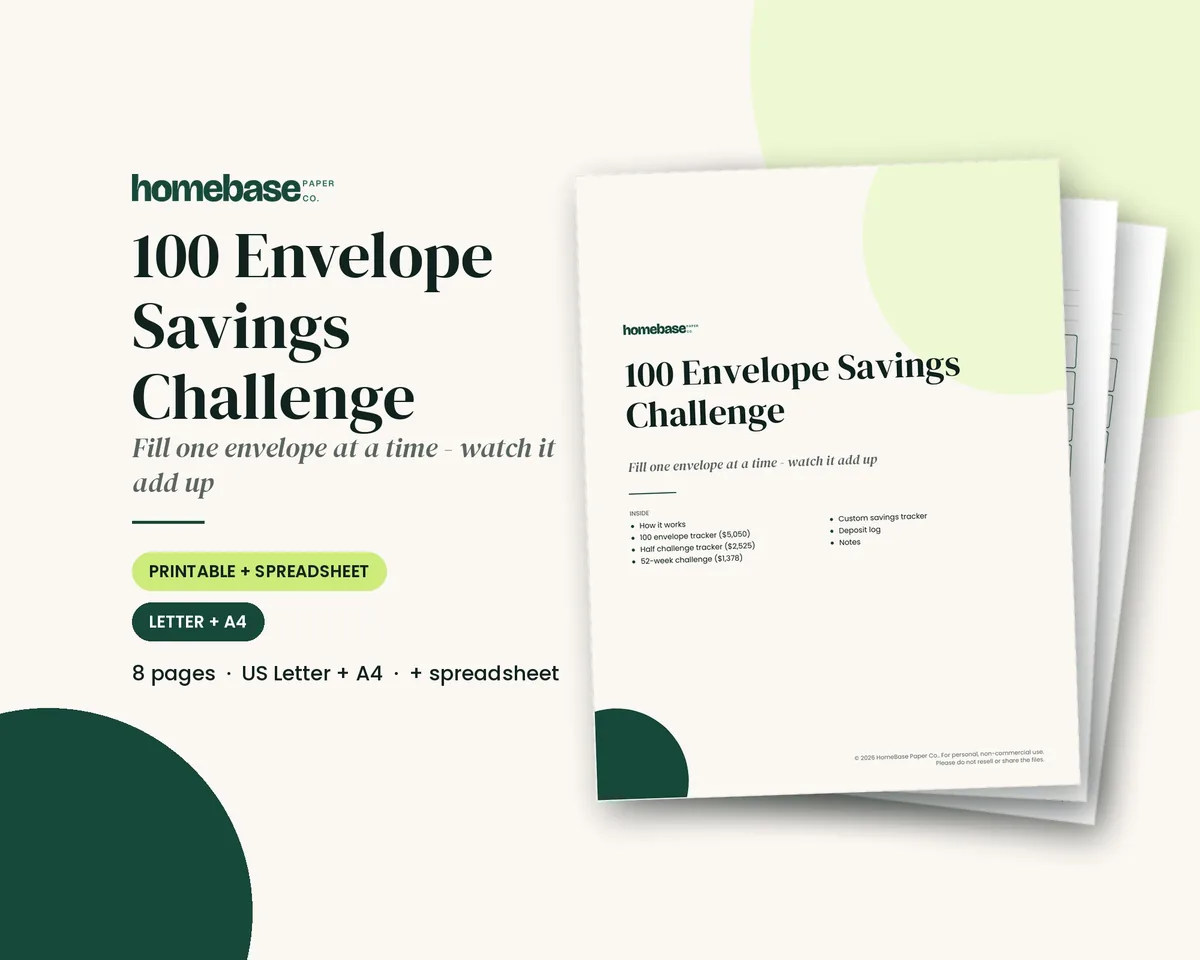
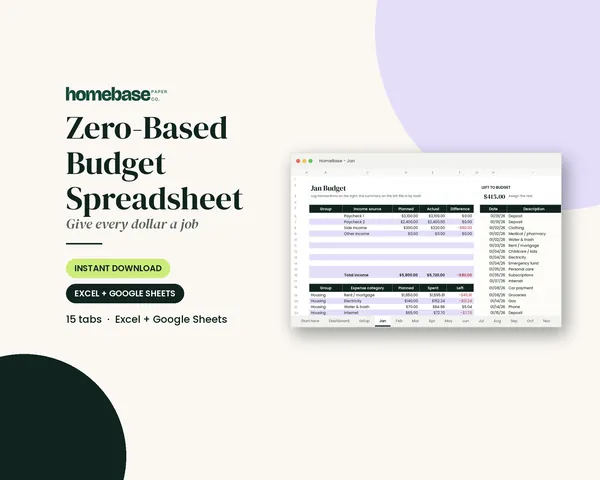
The 100 Envelope Savings Challenge ($3.99) pairs well with a no-spend month: move each week's savings into envelopes and color them in. If you'd rather give every dollar a job, the Zero-Based Budget Spreadsheet ($6.99) has a "left to budget" counter that shows when all of February's income is assigned.
A good home for the savings is an emergency fund. The CFPB's guide explains how even small amounts help you handle unplanned expenses.
A sample week
Here's what a realistic no-spend week can look like for a family of four:
| Day | Spending | Note |
|---|---|---|
| Monday | $0 | Leftover chili, library after school |
| Tuesday | $42 | Gas for the commute (essential) |
| Wednesday | $0 | Packed lunches |
| Thursday | $0 | Movie night with a film you own |
| Friday | $0 | Homemade pizza instead of delivery |
| Saturday | $118 | Weekly grocery shop from the list |
| Sunday | $0 | Park and a board game |
Two essential purchases and five no-spend days. The takeout, coffee runs and "quick" store trips that usually fill the gaps simply don't happen.
Doing it with a partner who isn't keen
You don't need both people to love the idea. Agree on a shorter version, such as two no-spend weeks, or on one category only, like eating out. Share the weekly savings number on Sunday; seeing a real figure tends to win people over faster than any argument. And let each person keep a small personal allowance so nobody feels policed.
Handling slip-ups
Most people buy something unplanned at some point. Write it down, don't hide it, and carry on. One coffee doesn't end the challenge. If the same slip happens twice, it's a signal: maybe that item belongs on the essentials list, or maybe you need a plan for that moment, like a thermos in the car.
After January: keep what worked
At the end of the month, look at the paused categories. Which ones did you barely miss? Those are the easiest permanent cuts. Which ones did you really miss? Give them a sensible amount in February's budget rather than cutting them to zero forever. If you're new to budgeting, our guide on how to make a budget walks through setting up that first full monthly budget.
To keep the habit going after January, see how to stop spending money, with a 30-day plan and spending rules that make the decision ahead of time.
Make it easier
Tools for this
Printables
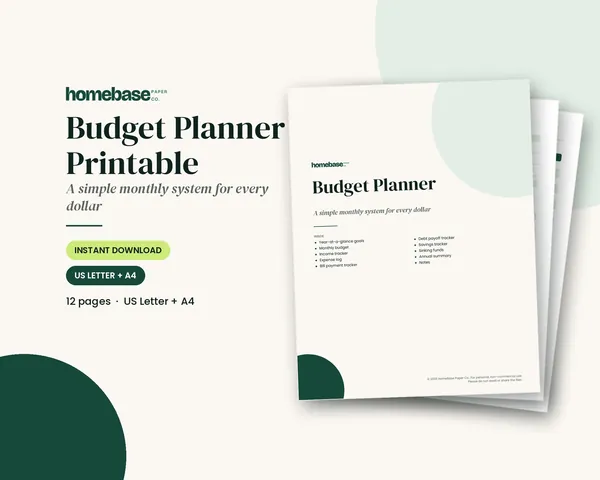
Budget Planner Printable
Twelve undated pages you can print every month: budget, bills, spending, savings and debt.
 Starter pick
Printables
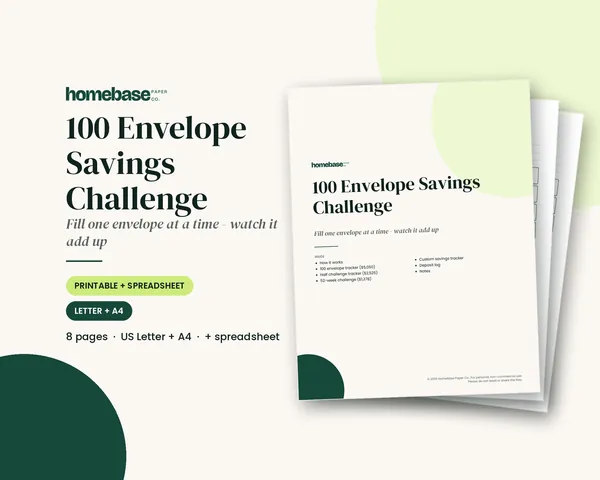
100 Envelope Savings Challenge
Classic, half and 52-week challenges to print, plus a spreadsheet that tracks every envelope and tells you how much to save each week.
Spreadsheets
Zero-Based Budget Spreadsheet
The 'Left to budget' counter turns green when every dollar has a job.
Frequently asked questions
What is a no spend January challenge? It's a month where you pay only for essentials such as housing, utilities, groceries, fuel and debt payments, and pause everything else, like takeout, shopping and new subscriptions. It's a common reset after holiday spending and helps rebuild savings.
What is allowed during a no spend month? Bills, insurance, groceries from a list, fuel and transit, medicine, childcare, school costs and debt payments are usually allowed. Decide gray areas such as gym memberships or planned birthday dinners before you start, and write the rules down.
How much can you save with a no spend challenge? A no spend challenge saves roughly one month of what you usually spend on the categories you pause. Add up last month's takeout, shopping, coffee and other extras; that's roughly what a strict month could free up. Tracking each week's savings shows the real number.
What should I do with money saved from a no spend month? Decide in advance: rebuild your emergency fund, pay down holiday credit card balances, start sinking funds for big yearly costs, or put it toward a savings challenge. Moving it out of checking quickly stops it from being spent in February.
What are the best no spend January tips? The best no spend January tips are to write your essentials list before January 1, shop for groceries once a week from a list, delete saved cards from shopping apps, and move what you save into savings every week. Plan the first two weeks of meals around your pantry and freezer, keep a wait list for anything you want to buy, and line up free plans such as library visits and game nights so boredom doesn't turn into spending. The Budget Planner Printable ($5.99) has an expense log and savings tracker for keeping the weekly totals.
Can you do a no spend January with kids? Yes, a no spend January works with kids if you give them a small fun-money amount for the month and let them choose how to spend it. Explain the goal in kid terms, such as saving for a family trip, and let them color in the savings each week. The 100 Envelope Savings Challenge ($3.99) gives them something visible to fill in: each week's savings go into numbered envelopes they can color.
What if something breaks during a no spend month? A broken essential, such as a furnace, a car repair or a child's winter boots, is an essential purchase and doesn't break a no spend challenge. Pay for it, write it down, and keep going. Use the 48-hour rule to separate real replacements from upgrades: replace what you need now, and put any upgrade on your wait list for February.
Is a low spend January better than a no spend January? Yes, a low spend January is better if a strict month would make your household quit, because a smaller, steady cut beats a challenge you abandon in week two. Set a small weekly allowance for one or two treats, such as one takeout night, and pause everything else. You can always tighten it next year once the habits are in place.
What are the rules of a no spend challenge? The basic no spend challenge rules are: pay for essentials only from a list you write before the month starts, buy groceries from a plan, wait 48 hours before any unplanned purchase, and track every day, including the days you spend nothing. Many households also allow one small planned treat a week so nobody quits.
More from HomeBase
You may also like
Spreadsheets
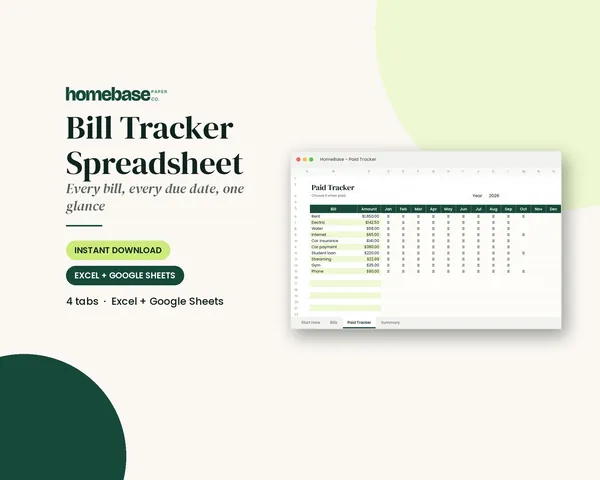
Bill Tracker Spreadsheet
Bills due in 3 days or less light up red, so nothing slips through.
Spreadsheets
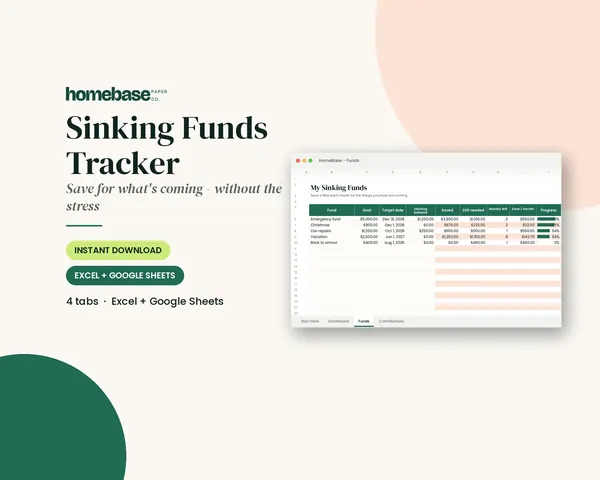
Sinking Funds Tracker
It does the math: how much to set aside each month to hit every goal on time.
Spreadsheets
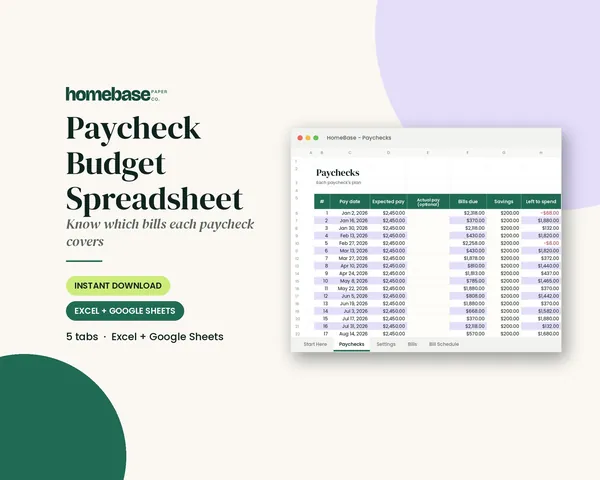
Paycheck Budget Spreadsheet
Enter your bills once. The sheet tells you which paycheck pays each one, all year.
 Save 57%
Bundles
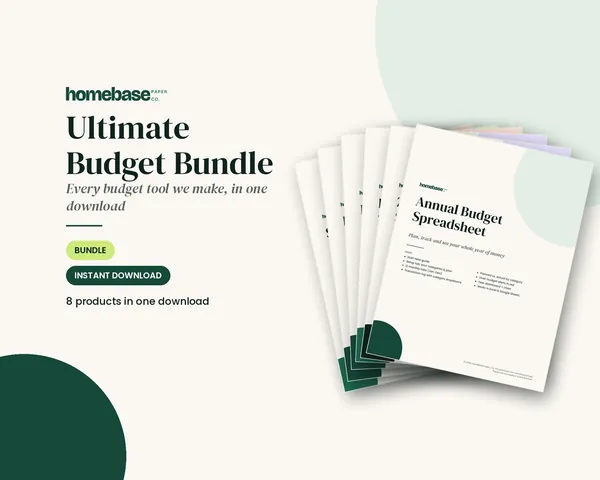
Ultimate Budget Bundle
All 6 spreadsheets + both printable planners - for less than half the price of buying them separately.
 Club
Monthly club
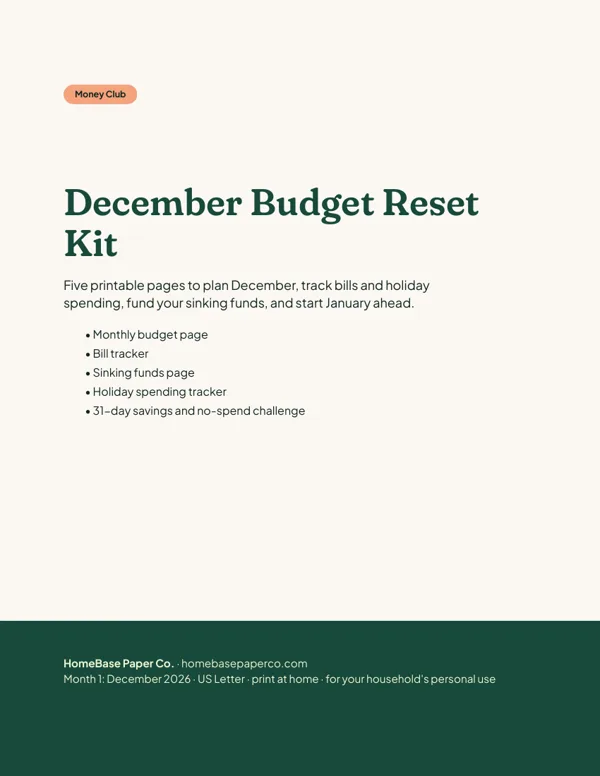
Money Club
Anyone who wants a clear plan for the month's bills, holiday spending and savings.
Free printable
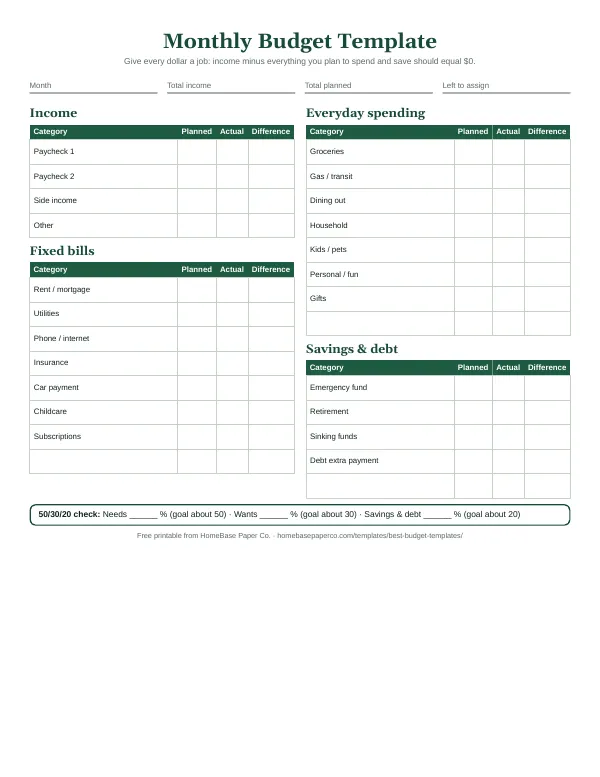
Give every dollar a job: get the free monthly budget template
A printable zero-based monthly budget: income, bills, everyday spending and savings on one page, with a planned vs. actual column. You'll also get our weekly HomeBase email with simple budgeting and bill-paying tips.
Sources
- Tips for preventing wasted food at home epa.gov
- Guide consumerfinance.gov