

The short answer: monthly goals are one to three specific things you plan to finish or practice in a single month. Look back at last month, check your calendar, pick no more than three, give each a number and a weekly first step, and review on the last day of the month.
- Make each goal specific and measurable
- Write them where you'll see them
- Turn yearly goals into monthly steps: divide it, split it
- 60 ideas and a 5-question month-end review below
- Next step: Plan it with the Budget Planner Printable ($5.99).
Monthly goals are one to three specific things you plan to finish or practice in a single month. They're small enough to start today and big enough to add up over a year. To set them, look back at last month, check what's on your calendar, pick no more than three goals, give each one a number and a weekly first step, and review them on the last day of the month.
A month is a friendly size for a goal. A year feels far away, and a week is too short to see much change. If one of your goals is about money, the Budget Planner Printable ($5.99) has a "Money goals for the year" page and undated monthly budget pages, so you can start in January or any month you're ready.
Below you'll find a 6-step method, a simple monthly goals template, 60 monthly goals ideas, a 12-month plan and a way to break big yearly goals into monthly steps.
Why monthly goals work better than one big resolution
Most of us have set a big goal on January 1 and quietly dropped it by February. That isn't a character flaw. The goal was usually too big, too vague or too far away. Monthly goals fix all three. If you're starting from scratch, our guide on how to set goals walks through the full seven-step method.
| Goal size | Good for | Watch out for |
|---|---|---|
| Yearly goal | Direction: where you want to be by December | Feels far away, easy to put off |
| Quarterly goal | Projects that take a season, like paying off a card | Can still drift without a monthly check |
| Monthly goal | The next real step, with a clear finish line | Picking too many at once |
| Weekly task | The actions that move a monthly goal forward | Busywork that doesn't connect to a goal |
The NIH's guide to creating healthy habits recommends a plan with "small, reasonable goals and specific actions," along with tracking your progress and planning for obstacles. That's exactly what a good monthly goal is.
There's another reason to think in months. Research on habit formation summarized in the British Journal of General Practice reports that new daily habits reached peak automaticity after about 66 days on average, with a lot of variation between people. That's roughly two months. So if your goal is a habit, give it two monthly cycles before you judge it.
I learned this slowly myself. It took me much longer than four years to finish school at Oakland University, and the lesson stuck: a plan you can pause and pick back up is worth more than a perfect plan you quit in February. Monthly goals are built for that. Every month is a fresh start.
How to set monthly goals in 6 steps
Set aside about 30 minutes near the end of the month. Bring your calendar, your budget and something to write on.
- Look back at last month. What got done? What slipped? What felt heavy? Two or three honest lines are enough.
- Check next month's calendar. Write in birthdays, holidays, travel, paydays and big bills first. A month with a holiday and two birthdays isn't the month for your biggest goal.
- Choose one to three goals. Pick from different areas of life if you can, such as one money goal, one home goal and one personal goal.
- Make each goal specific and measurable. "Save more" becomes "Save $100 in the emergency fund by the 30th." "Get organized" becomes "Declutter the hall closet."
- Give each goal a weekly first step. Write down what you'll do in week one. If you can't name it, the goal is still too vague.
- Write the goals where you'll see them. The top of your monthly calendar, the fridge or the first page of your planner all work. Out of sight usually means out of mind.
| Step | Time | What you need |
|---|---|---|
| 1. Look back | 5 minutes | Last month's planner or calendar |
| 2. Check the calendar | 5 minutes | Next month's dates and paydays |
| 3. Choose goals | 5 minutes | The ideas list below |
| 4. Make them specific | 5 minutes | Your budget numbers |
| 5. Weekly first steps | 5 minutes | A weekly planner page |
| 6. Write them down | 5 minutes | Calendar, fridge or planner |
If you want a sturdier test for each goal, our SMART goals template walks through specific, measurable, achievable, relevant and time-bound. With monthly goals, the "time-bound" part is already built in.
A simple monthly goals template
You don't need a special planner to start. Copy these lines onto a sheet of paper or the notes column of a printable monthly calendar:
| Section | What to write | Example (hypothetical) |
|---|---|---|
| Month and theme | The month plus one word to focus on | "January: reset" |
| Goal 1 | Specific result with a number | "Save $100 for the emergency fund" |
| Goal 2 | Specific result with a number | "Cook dinner at home 5 nights a week" |
| Goal 3 (optional) | Specific result with a number | "Clear out the junk drawer and hall closet" |
| Why it matters | One sentence per goal | "So a car repair doesn't go on a card" |
| Week 1 to 4 steps | One action per goal per week | "Week 1: set up an automatic $25 transfer" |
| Possible obstacles | What could get in the way | "Payday falls late this month" |
| Month-end result | Done, partly done or moved | "Saved $75, moving $25 to February" |
How to turn yearly goals into monthly goals
Big goals feel lighter when each month only has to carry its share. There are two ways to break them down:
- Divide it. For a number goal, divide the total by the months you have. Saving $1,200 by December is $100 a month.
- Split it. For a project, list the pieces and give each month one piece. "Organize the whole house" becomes one room or zone per month. A gantt chart template shows how the pieces line up over the year.
| Yearly goal (hypothetical) | Monthly goal | Weekly step |
|---|---|---|
| Save $1,200 for emergencies | Save $100 | Move $25 every Friday |
| Pay off a $1,800 card | Pay $150 a month plus interest | Check the balance each payday |
| Declutter the whole house | One room or zone per month | One 20-minute session each weekend |
| Read 12 books | One book a month | 20 minutes most nights |
| Cook at home more | Five home dinners a week | Plan meals every Sunday |
| Save $600 for holiday gifts | Save $50 a month | Set aside $12.50 a week |
For savings goals, the Consumer Financial Protection Bureau's guide to building an emergency fund notes that automatic recurring transfers are often one of the easiest ways to save, and that watching your progress can encourage you to keep going. A monthly savings goal plus an automatic transfer is a strong pair.
If you're saving for several things at once, the Sinking Funds Tracker ($4.99) does the dividing for you. You enter up to 20 goals with due dates, and it shows how much to set aside each month, with progress bars as you add deposits. Our guide to sinking funds explains how to set each one up.
January goals: start the year with a reset
January is the most popular month to set goals, and also the easiest month to overdo it. Instead of a long list of resolutions, treat January as a setup month. These goals make every other month easier:
- Make a monthly budget. Our guide on how to make a budget for the new year walks you through it.
- List every bill and due date. Put them on a calendar next to your paydays.
- Start or top up an emergency fund, even if it's a small amount.
- Pick one money challenge, such as a no spend January challenge, if you want a quick win.
- Declutter one area. Our January decluttering checklist breaks it into easy zones.
- Choose one health habit and track it with a free habit tracker printable. If the habit is eating better, a printable calorie tracker logs each meal.
- Set up your planner so it's ready for February. Our free January 2027 calendar includes a goals and budget page. Want the whole year on one page? The free 2027 calendar has a year-at-a-glance page.
If you'd like a bigger-picture look first, do a short year in review in late December. Your answers point straight to January's goals. For yearly ideas to break down, see our list of new year's resolutions.
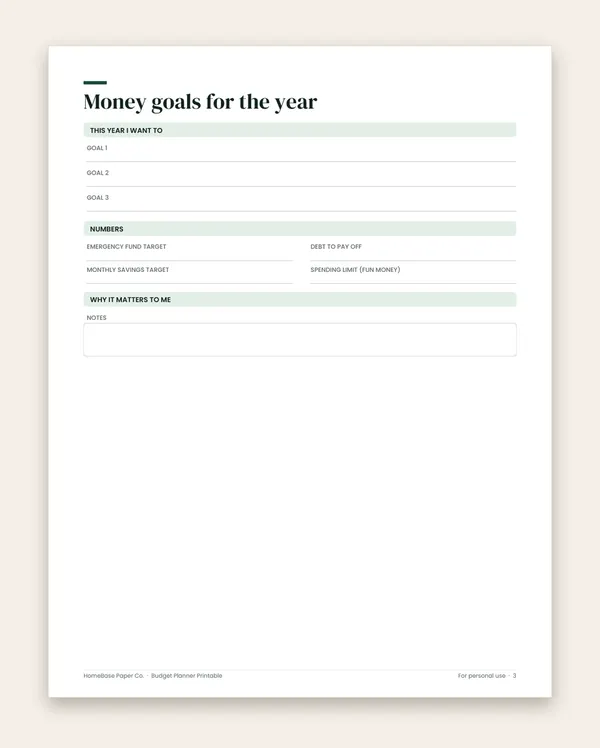
The Budget Planner Printable ($5.99) starts with that page: three money goals for the year, your emergency fund target, monthly savings target, debt to pay off and a fun money limit. The undated monthly budget, bill, spending, savings and debt pages then turn those yearly numbers into monthly goals you can actually check off.
60 monthly goals ideas
Pick one or two from different lists. Change the numbers to fit your budget and your season of life.
Money goals
- Save $50 or $100 toward an emergency fund.
- Pay an extra $25 or $50 on one debt.
- Track every purchase for 30 days.
- Cancel one subscription you don't use.
- Stay under a set grocery budget.
- Hold one monthly money date with your partner.
- Check your three free credit reports.
- Set up one automatic savings transfer.
- Sell one item you no longer need.
- Start a sinking fund for the next big bill.
- Plan next month's budget before the month starts.
- Call one company about a lower rate.
Home goals
- Declutter one closet or cabinet.
- Clean out the fridge and freezer.
- Organize the pantry.
- Deep clean one room.
- Set up a weekly cleaning routine.
- Fix one small thing that's been broken for too long.
- Sort and shred old paperwork.
- Donate one bag of clothes.
- Organize photos from last month.
- Change filters and test smoke alarms.
- Make a home inventory of one room.
- Clear the entryway drop zone.
Health and self-care goals
- Walk three times a week.
- Drink water with every meal.
- Go to bed 30 minutes earlier on weeknights.
- Book one checkup you've been putting off.
- Cook dinner at home five nights a week.
- Try one new vegetable recipe each week.
- Stretch for 10 minutes each morning.
- Take one full screen-free evening a week.
- Pack lunch four days a week.
- Spend 15 minutes outside each day.
- Keep a gratitude list three nights a week.
- Schedule one afternoon just for rest. For more on this topic, see our productivity hub.
Family and relationship goals
- Have one phone-free family dinner a week.
- Plan one free family outing.
- Send a card to someone you miss.
- Call a parent or sibling every week.
- Start a family game night.
- Write birthdays for the year on one calendar.
- Plan a simple date night at home.
- Cook a family recipe together.
- Hold a short family meeting about the month ahead.
- Teach one money lesson at the kitchen table.
- Make a shared chore plan.
- Thank one person who helped you this year.
Personal growth goals
- Read one book.
- Learn one new recipe.
- Finish one project you started.
- Take one free online class.
- Journal twice a week.
- Update your resume.
- Volunteer once.
- Practice a hobby for 20 minutes three times a week.
- Plan one day trip.
- Try one new place in your own city.
- Say no to one commitment that drains you.
- Write next year's dream list.
A 12-month goals plan
The seasons shape what's realistic. Here's a simple theme for each month that you can borrow or rearrange:
| Month | Theme | Example goal (hypothetical) |
|---|---|---|
| January | Reset | Make a budget and list every bill |
| February | Relationships | One money date and one date night |
| March | Spring clean | Declutter one room per weekend |
| April | Taxes and paperwork | File taxes and shred old papers |
| May | Health | Walk three times a week |
| June | Summer plan | Budget for summer trips and camps |
| July | Midyear check | Review your yearly goals and adjust |
| August | Back to routine | Set up a weekly meal plan |
| September | Home care | Fall maintenance and filters |
| October | Holiday prep | Start a holiday savings fund |
| November | Gratitude | Send thank-you cards, plan Thanksgiving |
| December | Celebrate and reflect | Stick to the gift budget, do a year in review |
Prefer working in shorter sprints? The 12 week year groups goals into 12-week cycles with a weekly scorecard.
The month-end review: 5 questions
A monthly goal only works if you look at it again. On the last day or two of the month, spend 15 minutes on these questions:
- Which goals did I finish, partly finish or skip?
- What helped, and what got in the way?
- What did I spend compared with my plan?
- What do I want to carry into next month?
- What will I drop or shrink?
Partly done still counts. If you saved $75 instead of $100, that's $75 more than you had. Move the rest forward or adjust next month's number, and keep going.
Common monthly goal mistakes
- Setting too many. Five goals in one month usually means none of them get finished. Stick to three or fewer.
- Skipping the calendar check. A goal that ignores the holidays, travel or a tight pay period sets you up to miss it.
- Leaving out the number. "Save money" can't be checked off. "Save $100" can.
- No weekly step. A monthly goal without weekly actions tends to become a last-week scramble.
- Starting over in January only. Any month can be a fresh start, which is why every HomeBase planner can begin in any month.
- Treating a miss as failure. A missed goal is information. Shrink it, move it or rewrite it.
Keep your monthly goals on paper
Goals you can see are goals you remember. For money goals, the Budget Planner Printable ($5.99) keeps your yearly goals, monthly budget, savings and debt trackers in one binder. For family goals, the Household Binder ($6.99) adds a monthly calendar, a weekly planner and a birthdays page.
If you want the whole money system at once, the Ultimate Budget Bundle is $19.99 instead of $46.42 bought separately, with six budget spreadsheets and both printable planners. You can also browse all our printables, spreadsheets and bundles.
Pick one goal for next month, write down its first step and put it where you'll see it tomorrow morning. Small, repeatable steps add up.
Want goals that last a few months instead of one? Our guide to short term goals shows how to set them in 7 steps.
Make it easier
Tools for this
Printables
Budget Planner Printable
Twelve undated pages you can print every month: budget, bills, spending, savings and debt.
Spreadsheets
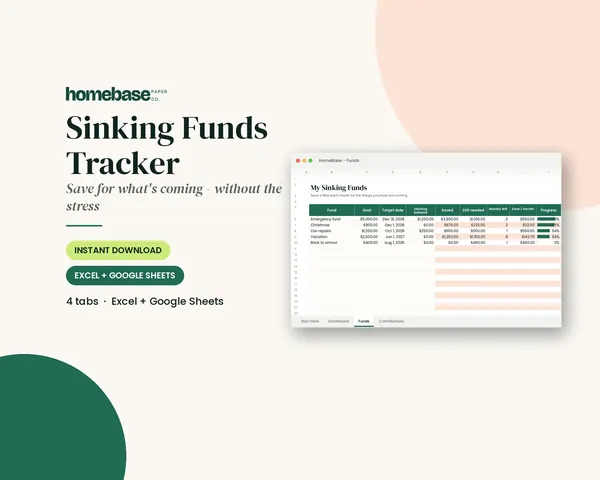
Sinking Funds Tracker
It does the math: how much to set aside each month to hit every goal on time.
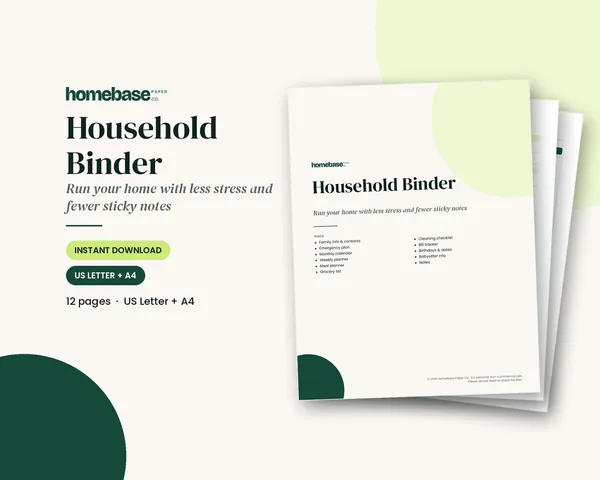
Printables
Household Binder
Family info, emergency plan, calendars, meals, groceries, cleaning, bills and sitter notes.
Frequently asked questions
What are monthly goals? The Budget Planner Printable ($5.99) gives your money goals a home, with a 'Money goals for the year' page and undated monthly budget pages you fill in as you go. Monthly goals are two or three specific things you plan to finish or practice in one calendar month, such as saving $100, clearing one closet or walking three times a week.
How many goals should I set each month? The Budget Planner Printable ($5.99) has room for three yearly money goals, and that same number works for a month. Set one to three monthly goals. One is enough in a busy month, and more than three usually means none of them get your full attention.
How do I set monthly goals? The Budget Planner Printable ($5.99) helps with the money side, because the monthly budget page shows whether a savings goal fits before you commit to it. To set monthly goals, look back at last month, check your calendar, choose one to three goals, make each one specific, give each a weekly first step and write them where you'll see them.
What are good monthly goals examples? The Sinking Funds Tracker ($4.99) turns a money example like 'save for car insurance' into an exact amount to set aside each month. Good monthly goals examples include saving $100 toward an emergency fund, paying an extra $50 on one card, cooking dinner at home five nights a week, decluttering one room, reading two books or having a phone-free family dinner once a week.
What should my January goals be? The Budget Planner Printable ($5.99) is a good place to write January goals, because its monthly budget page starts the year's money plan at the same time. Strong January goals are small and foundational: set up a monthly budget, list every bill and due date, start an emergency fund, declutter one area and pick one health habit to practice.
How do I turn yearly goals into monthly goals? The Sinking Funds Tracker ($4.99) does this math for money goals: enter the goal and the due date and it shows the monthly amount. For any yearly goal, divide the total by the months you have, or split the project into 12 smaller pieces, then give each month one piece and one weekly action.
What's the difference between monthly goals and a monthly to-do list? The Household Binder ($6.99) keeps both in view, with a monthly calendar for dates and a weekly planner for tasks. A to-do list holds one-off tasks, while a monthly goal is a result you work toward over several weeks. 'Call the dentist' is a task. 'Get every family checkup booked this month' is a goal.
Should monthly goals be SMART? The Budget Planner Printable ($5.99) makes money goals measurable, because each goal sits next to real numbers like a monthly savings target. Monthly goals work best when they're specific and measurable with a clear end date. The end of the month already gives you the time limit, so you mostly need to name the result and the number.
How do I track monthly goals? The Sinking Funds Tracker ($4.99) tracks money goals for you, with progress bars that fill in as you add deposits. For other goals, write them at the top of your monthly calendar, check them during a weekly planning session and tick off each weekly step. A habit tracker works well for goals you repeat several times a week.
What if I don't reach my monthly goal? The Budget Planner Printable ($5.99) is undated, so a missed month never wastes a page or leaves you feeling behind. If you miss a monthly goal, ask why: was it too big, the wrong month, or unclear? Then shrink it, move it to a better month or rewrite it. Slow progress is still progress.
Are monthly goals better than yearly goals? The Budget Planner Printable ($5.99) uses both: one page for the year's money goals and monthly pages that move you toward them. You don't have to choose. Yearly goals give you direction, and monthly goals give you the next step. Most people find monthly goals easier to act on, because the finish line is a few weeks away.
How do I set monthly goals as a family? The Household Binder ($6.99) gives a family one shared place for goals, with monthly calendars, a weekly planner and a birthdays page. Hold a short meeting near the end of each month, let each person suggest one idea, agree on one family goal, and write it where everyone can see it, such as the fridge.
When should I set my monthly goals? The Budget Planner Printable ($5.99) fits a month-end routine, since you can fill in next month's budget page at the same sitting. Set next month's goals in the last few days of the current month, right after a short month-end review, so you start day one with a plan.
What are good monthly money goals? The Ultimate Budget Bundle ($19.99, $46.42 if bought separately) covers most monthly money goals, with tools for budgeting, bills, debt payoff and sinking funds. Good monthly money goals include saving a set amount, paying one bill or card down by an extra amount, spending under a grocery limit, canceling one unused subscription and checking your credit reports.
More from HomeBase
You may also like
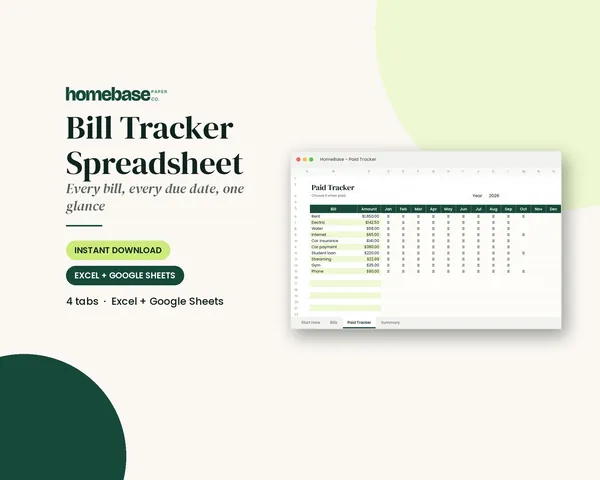
Spreadsheets
Bill Tracker Spreadsheet
Bills due in 3 days or less light up red, so nothing slips through.
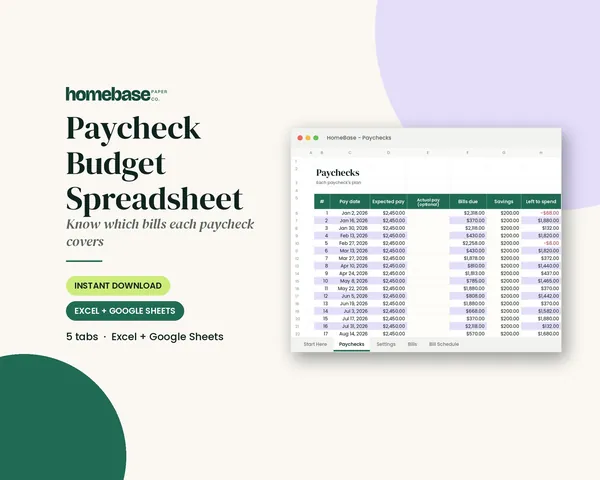
Spreadsheets
Paycheck Budget Spreadsheet
Enter your bills once. The sheet tells you which paycheck pays each one, all year.
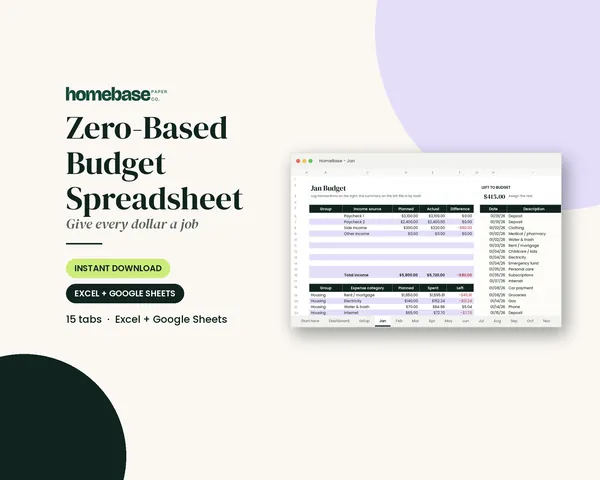
Spreadsheets
Zero-Based Budget Spreadsheet
The 'Left to budget' counter turns green when every dollar has a job.
Spreadsheets
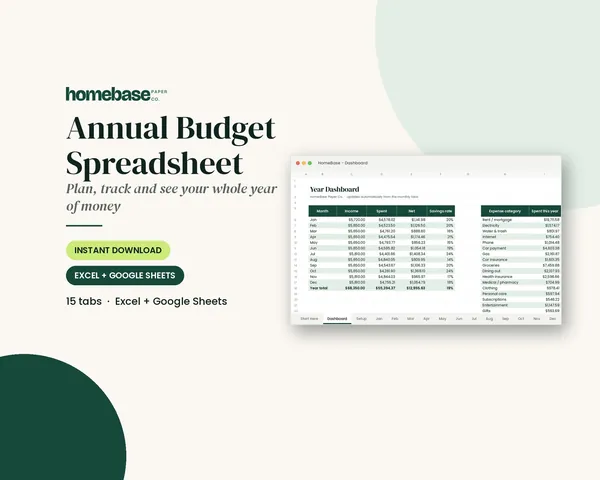
Annual Budget Spreadsheet
See exactly where your money goes every month - without complicated software.
 Club
Monthly club
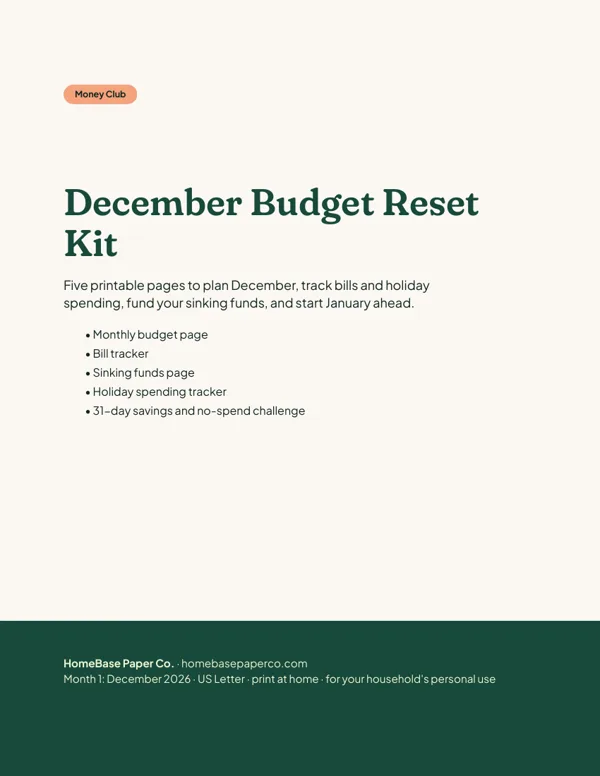
Money Club
Anyone who wants a clear plan for the month's bills, holiday spending and savings.
Free printable
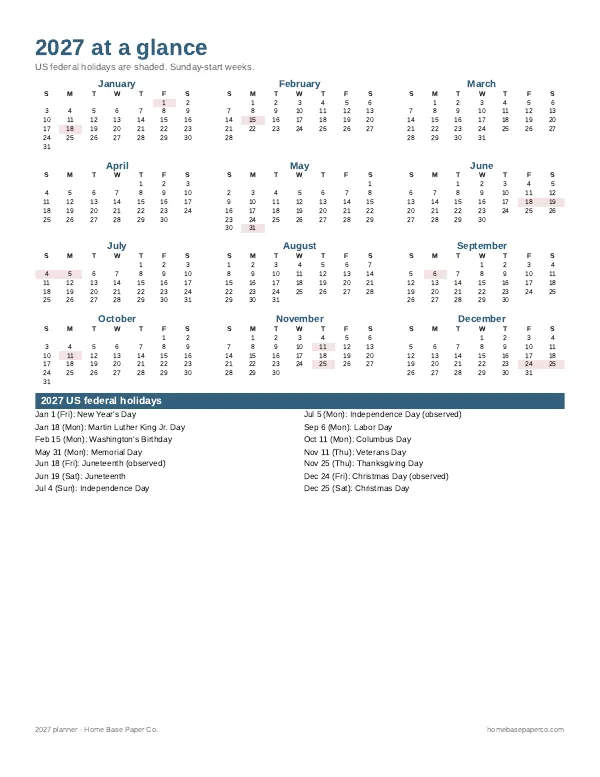
Get organized for the new year: get the free 2027 planner
A 16-page printable 2027 planner with a year-at-a-glance page and monthly calendars with US holidays marked. You'll also get our weekly HomeBase email with simple planning and home organization tips.
Sources
- Creating Healthy Habits (NIH News in Health) newsinhealth.nih.gov
- Making health habitual: the psychology of 'habit-formation' and general practice (British Journal of General Practice, via PubMed Central) pmc.ncbi.nlm.nih.gov
- An essential guide to building an emergency fund (Consumer Financial Protection Bureau) consumerfinance.gov