

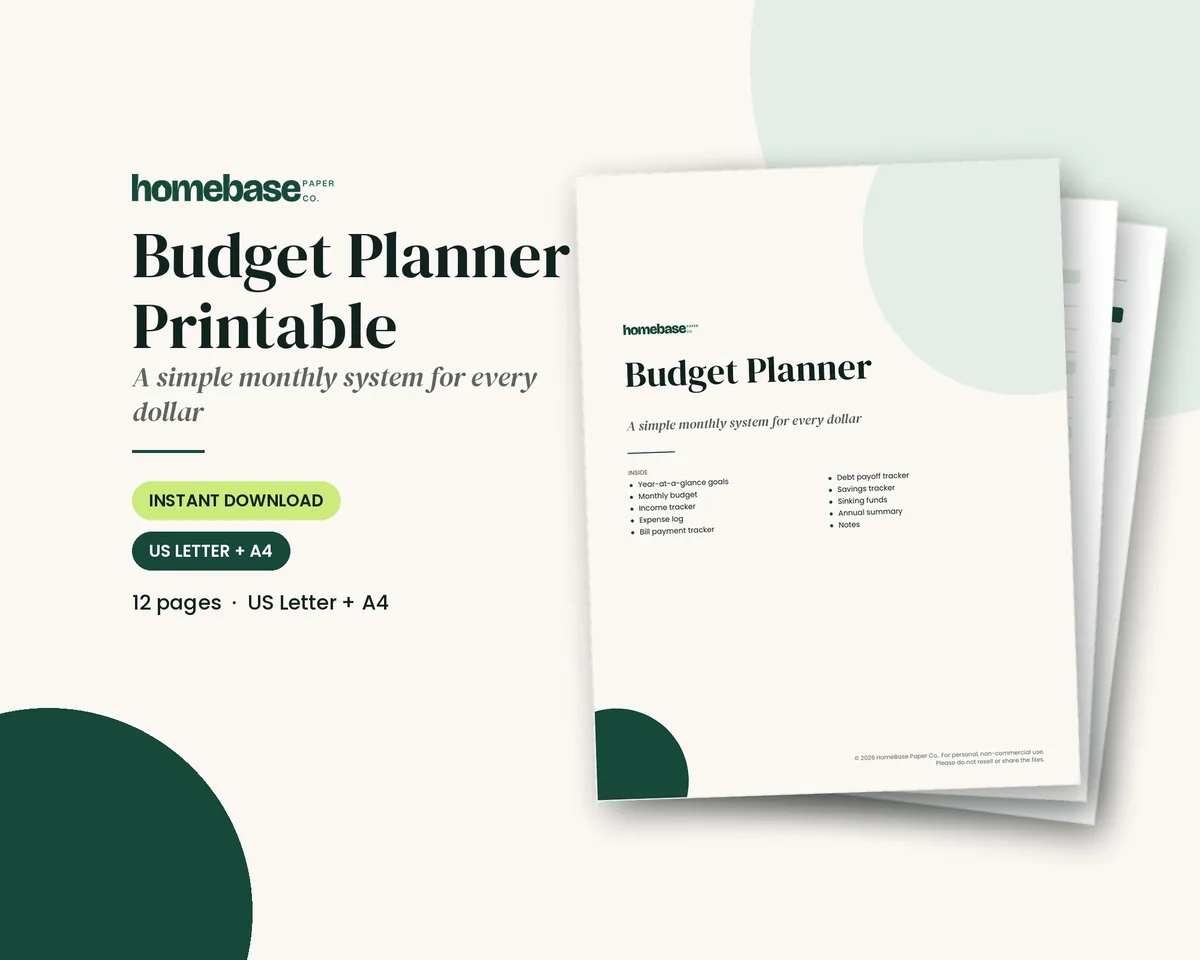
The short answer: the 12 week year treats every 12 weeks as a full year: pick one to three goals, plan weekly actions, score yourself each week and use a 13th week to review. It comes from the book by Brian P. Moran and Michael Lennington.
- Seven steps: look back, write a short vision, pick one to three goals, break them into weekly tactics, put them on your calendar, score every week, use week 13
- Example goal: "Save $1,200 by March 28" with a tactic like moving $100 to savings every Friday
- Weekly routine: a 20-minute Sunday session to score last week and plan the next
- Why Q1: the first quarter is a natural place to start (template and sample plan below)
- Next step: Plan it with the Budget Planner Printable ($5.99).
The 12 week year is a planning method that treats every 12 weeks as a full year: you pick one to three goals, map out weekly actions, score yourself each week and take a 13th week to review and reset. It comes from the book The 12 Week Year by Brian P. Moran and Michael Lennington, and it works just as well for a household as for a sales team. Twelve weeks is about 2.8 months, a little short of a calendar quarter (see how many months is 12 weeks), which is why the 13th review week fits so neatly. The first quarter of the year (Q1) is a natural place to try it.
Here's the short version for home: choose up to three goals for January through March, give each one a few weekly actions you control, check them off on a weekly page and score the week every Sunday. If one of your goals is about money, the Budget Planner Printable ($5.99) gives you undated savings, debt and budget pages for all 12 weeks. For family schedules and meals, the Household Binder ($6.99) adds a monthly calendar, a weekly planner and a meal planner.
Below you'll find what the book actually teaches, a 7-step Q1 plan with real 2027 dates, a fill-in 12 week year template, a hypothetical family example and a weekly scorecard.
What is the 12 week year?
The 12 Week Year: Get More Done in 12 Weeks than Others Do in 12 Months was published by Wiley in 2013. Much of it speaks to business owners and teams. Its core idea is simple: an annual plan gives you too much time, so urgency only shows up in the last few weeks of the year. A 12-week "year" puts the deadline close enough that every week counts.
The method has a handful of parts. Here's how each one translates to running a home:
| Part of the method | What the book means | What it looks like at home |
|---|---|---|
| Vision | A picture of the life you want a few years out | "Debt-free by 2029 and dinner at home most nights" |
| 12-week goals | One to three measurable results for the cycle | "Save $1,200 by March 28" |
| Tactics | Specific actions, each with a due week | "Move $100 to savings every Friday" |
| Weekly plan | This week's tactics, written down before the week starts | A weekly planner page filled in on Sunday |
| Time blocks | Protected time for the most important work | A 30-minute Sunday money session |
| Weekly score | The share of planned tactics you finished | 8 of 10 done = 80% |
| 13th week | A week between cycles to review, rest and plan | March 29 to April 4 for a Q1 plan |
The book adds three principles (accountability, commitment and what it calls "greatness in the moment") and talks about lead and lag indicators. A lag indicator is the result you want, like a savings balance. A lead indicator is the action you control that drives it, like a weekly transfer. Most of the method is about watching your lead indicators every week instead of waiting to see the result.
What the book does and doesn't promise
The subtitle promises more done in 12 weeks than others do in 12 months. That's the authors' pitch, not a measured result, and the book isn't a research study. The authors suggest 85% as the target weekly score: if you finish about 85% of your tactics week after week, you'll likely reach the goal. Treat that as a rule of thumb, not a guarantee.
Two pieces of the method do line up with research. A large meta-analysis in Psychological Bulletin found that monitoring goal progress promotes goal attainment, with larger effects when progress was physically recorded or shared. That's the weekly score. And research on temporal landmarks by Dai, Milkman and Riis found that emphasizing the start of a new time period increased people's intentions to start on their goals. A 12-week cycle gives you four of those fresh starts a year instead of one.
12 week year vs. yearly and monthly goals
Each planning timeline does a different job:
| Planning cycle | Good for | Weak spot | Where we cover it |
|---|---|---|---|
| Yearly goals or resolutions | Direction for the whole year | The deadline feels far away | New year's resolutions |
| 12 week year | Projects that need steady weekly effort | Takes a weekly routine to work | This page |
| Monthly goals | One clear next step with a short finish line | Too short for bigger projects | Monthly goals |
| Weekly plan | The actions that move everything forward | Easy to fill with busywork | Weekly planner |
A good way to combine them: let a yearly goal set the direction, use a 12-week plan for the big push and let the weekly page carry the actual work.
Why Q1 is the best quarter to start
January brings holiday bills and a natural fresh start. Tax forms arrive soon after, and spring break and Easter (March 28, 2027) close out the quarter. Writing your Q1 goals as one 12-week plan gives that season a shape. It's the same idea as quarterly planning at work, sized for a household.
If you start on Monday, January 4, 2027, your Q1 12-week year looks like this:
| Week | Dates (2027) | Calendar notes |
|---|---|---|
| 1 | Jan 4 to Jan 10 | Holiday bills arrive; set up your weekly page |
| 2 | Jan 11 to Jan 17 | First full routine week |
| 3 | Jan 18 to Jan 24 | Martin Luther King Jr. Day (Jan 18) |
| 4 | Jan 25 to Jan 31 | End of month: quick budget check |
| 5 | Feb 1 to Feb 7 | Tax forms usually arriving |
| 6 | Feb 8 to Feb 14 | Valentine's Day (Feb 14) |
| 7 | Feb 15 to Feb 21 | Presidents' Day (Feb 15) |
| 8 | Feb 22 to Feb 28 | End of month: budget check |
| 9 | Mar 1 to Mar 7 | Last stretch begins |
| 10 | Mar 8 to Mar 14 | Spring break planning for many families |
| 11 | Mar 15 to Mar 21 | Push to finish |
| 12 | Mar 22 to Mar 28 | Final week; Easter Sunday (Mar 28) |
| 13th week | Mar 29 to Apr 4 | Review, celebrate, rest and plan Q2 |
Before January 4, do a short year in review in late December. Your answers point straight to the goals worth carrying into Q1.
How to make a 12-week plan for Q1 in 7 steps
Set aside an hour in late December with your calendar and budget.
- Look back first. Write down what worked last year, what drained you and what you keep putting off. Three honest lines per question are enough.
- Write a short vision. Where do you want your household to be in three years? Two or three sentences work. If you think in pictures, a vision board does the same job.
- Pick one to three 12-week goals. One goal is plenty in a busy season. Each one needs a number and the March 28 deadline. If a goal feels fuzzy, run it through our SMART goals template.
- Break each goal into weekly tactics. List the actions that drive the result, and give each one a week or a "weekly" label. Tactics should be things you control, like "cook from the meal plan five nights," not "spend less on takeout."
- Put the tactics on your calendar. Block the time they need. A 30-minute Sunday session for money and meals covers most household goals.
- Score every week. On Sunday, count the tactics you finished and divide by the tactics you planned. Write the percentage at the top of the page.
- Use your 13th week. From March 29 to April 4, look at the results, celebrate what worked and plan Q2 with what you learned.
I spent years as an executive assistant keeping other people's calendars in order, and a calendar only helps if somebody looks at it every week. Step 6 is that look, so keep it short.
A 12 week year template for your household
You don't need a special 12 week year planner to start. Copy this onto a sheet of paper, the notes area of a monthly calendar or a spreadsheet:
| Section | What to write | Example (hypothetical) |
|---|---|---|
| Cycle dates | Start, end and 13th week | Jan 4 to Mar 28, 2027; review Mar 29 to Apr 4 |
| Vision | Two or three sentences | "Calm money, no surprise bills, dinner together" |
| Goal 1 | Result + number + deadline | "Save $1,200 for the emergency fund by Mar 28" |
| Goal 2 | Result + number + deadline | "Pay $900 toward the holiday credit card balance" |
| Goal 3 (optional) | Result + number + deadline | "Cook dinner at home 5 nights a week" |
| Weekly tactics | 2 to 4 actions per goal | "Friday $100 transfer; Sunday meal plan" |
| Lead indicator | The action you'll count | Transfers made, meal plans written |
| Lag indicator | The result you'll check | Savings balance, card balance |
| Weekly score | Done ÷ planned | Week 3: 8 of 10 = 80% |
| 13th week notes | Keep, change, drop | "Keep the Friday transfer; shrink the meal goal" |
A hypothetical Q1 family plan
Here's a full plan for a family recovering from holiday spending. All figures are hypothetical.
| Goal (by Mar 28) | Weekly tactics | Lead indicator | Lag indicator |
|---|---|---|---|
| Save $1,200 for emergencies | Automatic $100 transfer every Friday | 12 transfers | Savings balance |
| Pay $900 extra on the holiday card | $75 extra payment every other payday | 6 payments, plus a $450 tax refund payment | Card balance |
| Dinner at home 5 nights a week | Sunday meal plan and one grocery trip | Meal plans written | Takeout spending |
The emergency fund goal follows a tip from the CFPB's guide to building an emergency fund: setting up automatic recurring transfers is often one of the easiest ways to save. The same guide says watching your progress can offer gratification and encouragement to keep going. That's why each goal above has a number you can see grow.
For the meal goal, our guides to meal planning on a budget and how to meal plan for a family cover the Sunday routine in detail.
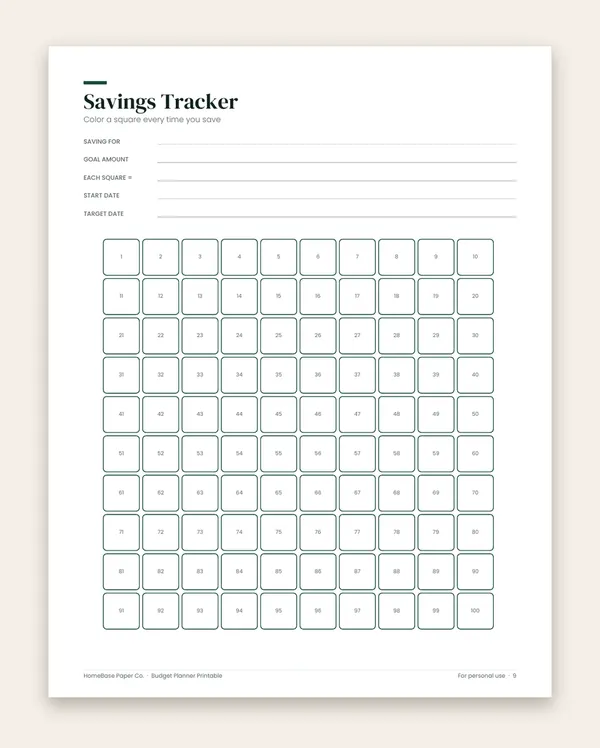
The Budget Planner Printable ($5.99) includes this Savings Tracker page. Write "Jan 4" as the start date and "Mar 28" as the target date, set each square to $12 for a $1,200 goal and color one in every time you save.
The weekly scorecard
The weekly score measures what you did, not what happened to you. A surprise car repair can shrink your savings, but it can't erase the transfers you made.
| Week 3 tactic (hypothetical) | Planned | Done |
|---|---|---|
| Friday $100 savings transfer | 1 | 1 |
| Extra card payment | 1 | 1 |
| Sunday meal plan | 1 | 1 |
| Grocery trip with a list | 1 | 1 |
| Dinners at home | 5 | 3 |
| Sunday money session | 1 | 1 |
| Total | 10 | 8 (80%) |
An 80% week is a good week. If you land well below 85% for two or three weeks in a row, the plan is probably too big, so cut a tactic instead of trying harder. When I finally finished school at Oakland University, it took much longer than four years. That taught me a plan you can pause and pick back up is worth more than a perfect plan you quit in February. A low week is information, not failure.
12 week year goal ideas for home and money
Pick one to three, and fit the numbers to your own budget. Each goal comes with a lead indicator you can count weekly.
| Area | 12-week goal idea | Weekly lead indicator |
|---|---|---|
| Money | Start a $1,000 emergency fund | One automatic transfer |
| Money | Pay off one small debt | One extra payment |
| Money | Fund a sinking fund for summer | One deposit |
| Money | Track every purchase for 12 weeks | Receipts logged on Sunday |
| Money | Cut grocery spending by a set amount | Shopping trips with a list |
| Home | Declutter one room per month | Two 30-minute sessions |
| Home | Build a weekly cleaning routine | Checklist days completed |
| Home | Finish one repair or project | One project step |
| Family | Hold a weekly family meeting | Meetings held |
| Family | Cook dinner at home most nights | Meal plans written |
| Personal | Read six books | Pages or chapters read |
| Personal | Walk three times a week | Walks logged |
For money goals, the Sinking Funds Tracker ($4.99) shows how much to set aside each month to hit a savings goal on time. If you want the bigger picture behind your numbers, our guide on how to set financial goals goes deeper. For decluttering, the January decluttering checklist breaks Q1 into easy zones, and a free habit tracker printable works for repeat habits like walks.
Your weekly routine: 20 minutes on Sunday
The book calls for a short weekly planning session and a weekly check-in with others. At home, that can be one sitting:
- Score last week (5 minutes). Count the tactics done and write the percentage down.
- Check the numbers (5 minutes). Update the savings and debt trackers and glance at the budget.
- Plan this week (5 minutes). Copy this week's tactics onto the weekly page and note any calendar conflicts.
- Check in together (5 minutes). If a partner shares the goals, compare notes. Our family budget meeting guide has a simple agenda.
ABA work taught me that big changes come from small, repeatable steps and from making the next step obvious. The Sunday routine does exactly that.
Common 12 week year mistakes
- Setting too many goals. Three goals with four tactics each is twelve things a week. Most households do better with one or two.
- Writing results as tactics. "Lose the takeout habit" isn't a tactic. "Write a meal plan on Sunday" is.
- Skipping the score. Without it, a skipped week feels harmless until March.
- Ignoring the calendar. Holiday weeks and spring break need lighter tactics.
- Skipping the 13th week. Rolling straight into Q2 without a review means repeating the same mistakes.
- Quitting after a bad week. One low score doesn't end the plan. Shrink it and keep going.
Keep your 12-week plan on paper
A plan you can see is a plan you'll use. For money goals, the Budget Planner Printable ($5.99) gives you a "Money goals for the year" page, monthly budgets and savings, debt and sinking fund trackers, all undated so you can start any week. For the family side, the Household Binder ($6.99) keeps a monthly calendar, weekly planner, meal planner and bill tracker together.
If your Q1 plan includes a big debt goal, the Debt Payoff Planner ($6.99) maps your payoff timeline. For the whole money system at once, the Ultimate Budget Bundle is $19.99 instead of $46.42 bought separately, with six budget spreadsheets and both printable planners. You can also browse all our printables, spreadsheets and bundles.
Write down one 12-week goal tonight, add the first weekly tactic and put it where you'll see it on Monday. Twelve good weeks can change a whole year.
Make it easier
Tools for this

Printables
Budget Planner Printable
Twelve undated pages you can print every month: budget, bills, spending, savings and debt.
Printables
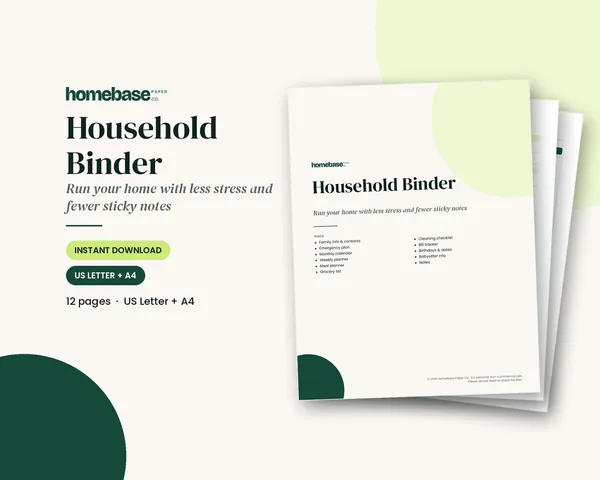
Household Binder
Family info, emergency plan, calendars, meals, groceries, cleaning, bills and sitter notes.

Spreadsheets
Sinking Funds Tracker
It does the math: how much to set aside each month to hit every goal on time.
Frequently asked questions
What is the 12 week year? The Budget Planner Printable ($5.99) gives a 12 week year money goal a home, with undated savings, debt and budget pages you can start any week. The 12 week year is a planning method from the book by Brian P. Moran and Michael Lennington that treats every 12 weeks as a full year. You set one to three goals, plan weekly actions, score each week and use a 13th week to review.
Who wrote The 12 Week Year? The Household Binder ($6.99) is a simple way to bring the book's weekly planning into family life, with a monthly calendar and weekly planner in one place. The 12 Week Year was written by Brian P. Moran and Michael Lennington and published by Wiley in 2013. Much of the book speaks to business owners and teams, but the method works for personal and household goals too.
How does the 12 week year work? The Budget Planner Printable ($5.99) covers the tracking side, with a savings tracker and debt payoff tracker you update every week. The 12 week year works in a loop: write a short vision, set one to three 12-week goals, break them into weekly tactics, plan each week ahead, score how many tactics you finished and review everything in the 13th week.
How many goals should I set in a 12 week year? The Sinking Funds Tracker ($4.99) can handle several savings goals at once, but most households do best with one to three goals per cycle. The book recommends a small number of goals, and one is plenty in a busy season. Each goal adds weekly tactics, so too many goals make the weekly plan impossible to finish.
What is a good weekly score in the 12 week year? The Budget Planner Printable ($5.99) makes the score easy to see, because each savings square or debt payment you mark is a tactic done. The book treats about 85% as the target: finish roughly 85% of your planned tactics week after week and you'll likely reach the goal. Treat it as a rule of thumb, and shrink the plan if you keep landing far below it.
What is the 13th week in the 12 week year? The Household Binder ($6.99) has a monthly calendar where you can block off the 13th week before Q1 even starts. The 13th week is the week after each 12-week cycle. You use it to review results, celebrate progress, rest and plan the next cycle. For a Q1 plan that starts January 4, 2027, it runs March 29 to April 4.
How do I make a 12-week plan for Q1? The Budget Planner Printable ($5.99) is a good place to write Q1 money goals, since its undated pages start whenever your 12 weeks do. To make a 12-week plan for Q1, review last year, write a short vision, pick one to three goals with a March 28 deadline, list weekly tactics, put them on your calendar and score each Sunday.
When should I start a 12 week year? The Budget Planner Printable ($5.99) is undated, so you can start a 12 week year any Monday without wasting pages. You can start anytime, but the first Monday of a quarter is an easy anchor. In 2027, a Q1 cycle can run from Monday, January 4, through Sunday, March 28.
Do I need a 12 week year planner? The Household Binder ($6.99) works as a simple 12 week year planner, with a weekly planner page for tactics and a monthly calendar for the big picture. You don't need a special planner. A weekly page, a goal sheet and a place to write your score are enough. Some people use the book's own worksheets, and others use a notebook or spreadsheet.
Is there a 12 week year template? The Budget Planner Printable ($5.99) pairs well with the free template in this guide, giving your money goals real pages to track. A 12 week year template needs cycle dates, a vision, one to three goals, weekly tactics, lead and lag indicators, a weekly score and notes for the 13th week. You can copy the table in this guide onto paper.
What's the difference between lead and lag indicators? The Sinking Funds Tracker ($4.99) shows both: your deposits are the lead indicator and the progress bar is the lag indicator. A lag indicator is the result you want, like a savings balance. A lead indicator is an action you control that drives it, like a weekly transfer. The 12 week year asks you to track lead indicators every week.
Is the 12 week year better than yearly goals? The Budget Planner Printable ($5.99) uses both timelines, with a page for the year's money goals and monthly pages that move you toward them. The 12 week year isn't proven better for everyone, but a closer deadline makes weekly progress easier to see. Many people keep a yearly direction and use 12-week cycles to do the work.
Can a family or couple use the 12 week year? The Household Binder ($6.99) gives a family one shared place for the plan, with a monthly calendar, weekly planner and meal planner. Yes, a family or couple can use it. Agree on one or two shared goals, split the weekly tactics, and hold a short weekly check-in on Sunday to score the week together.
What are good 12 week year goals for money? The Ultimate Budget Bundle ($19.99, $46.42 if bought separately) covers most 12 week year money goals, with six budget spreadsheets and both printable planners. Good 12-week money goals include starting a $1,000 emergency fund, paying off one small debt, funding a summer sinking fund, tracking every purchase or cutting grocery spending by a set amount.
More from HomeBase
You may also like

Spreadsheets
Bill Tracker Spreadsheet
Bills due in 3 days or less light up red, so nothing slips through.

Spreadsheets
Paycheck Budget Spreadsheet
Enter your bills once. The sheet tells you which paycheck pays each one, all year.

Spreadsheets
Zero-Based Budget Spreadsheet
The 'Left to budget' counter turns green when every dollar has a job.

Spreadsheets
Annual Budget Spreadsheet
See exactly where your money goes every month - without complicated software.
 Club
Monthly club
Money Club
Anyone who wants a clear plan for the month's bills, holiday spending and savings.
Free printable
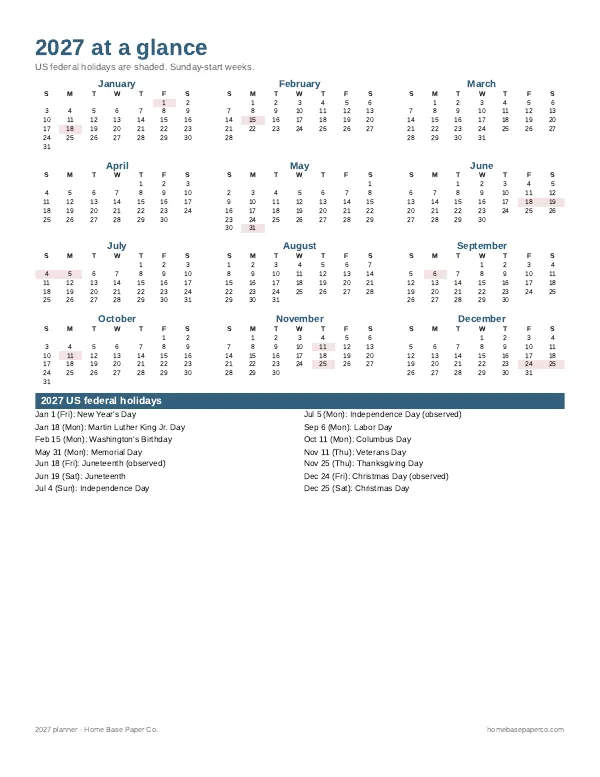
Get organized for the new year: get the free 2027 planner
A 16-page printable 2027 planner with a year-at-a-glance page and monthly calendars with US holidays marked. You'll also get our weekly HomeBase email with simple planning and home organization tips.
Sources
- Does monitoring goal progress promote goal attainment? A meta-analysis of the experimental evidence (Psychological Bulletin, via PubMed) pubmed.ncbi.nlm.nih.gov
- Put Your Imperfections behind You: Temporal Landmarks Spur Goal Initiation When They Signal New Beginnings (Psychological Science, via PubMed Central) pmc.ncbi.nlm.nih.gov
- An essential guide to building an emergency fund (Consumer Financial Protection Bureau) consumerfinance.gov