

The short answer: the budgeting tips that make the biggest difference are simple: budget from what you really spent last month, plan bills around paydays, give irregular costs their own savings lines and automate what you can.
- Weekly habit: a 15-minute budget check-in
- When a category runs over, move money from another line instead of quitting
- Start here: pull your last 30 days of statements and use take-home pay
- 50 tips grouped by bills, groceries, saving, debt, families, holidays and irregular income, plus 10 to start this week
- Next step: Plan it with the Ultimate Budget Bundle ($19.99).
The budgeting tips that make the biggest difference are simple: build your budget from what you really spent last month, plan bills around your paydays, give irregular costs their own savings lines, automate the bills and savings you can, and check in for 15 minutes once a week. When a category runs over, move money from another line instead of quitting. Below are 50 budgeting tips grouped by where money usually slips away, plus a starter list of 10 you can try this week.
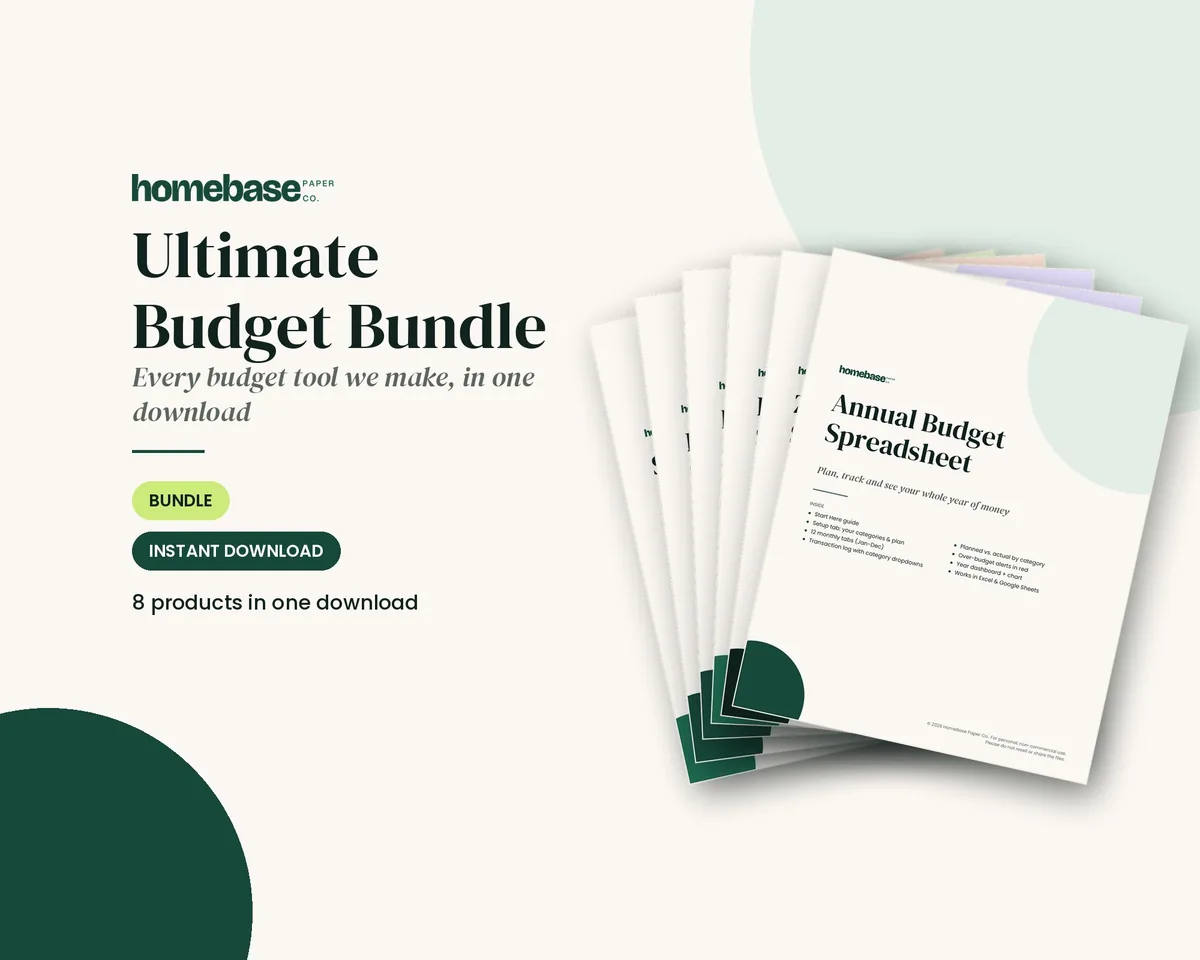
The Ultimate Budget Bundle puts most of these tips into ready-made tools: all 6 HomeBase budget spreadsheets plus both printable planners for $19.99 (reg. $46.42 bought separately). See every set in our bundles shop.
This page is a big list of practical tips. If you haven't made a budget yet, start with our guide on how to make a budget. If you have one that keeps falling apart, our guide on how to stick to a budget goes deeper on habits, and our list of money saving tips covers cutting costs. Every dollar amount below is an example, so swap in your own numbers.
The 10 budgeting tips that matter most
If you only read one section, read this one. These ten tips do most of the work, and every other tip on the page builds on them.
| Tip | Why it works |
|---|---|
| Budget from real spending, not guesses | Guessed numbers are the most common reason a budget breaks in week two |
| Match bills to paydays | Shortfalls often come from timing, not from earning too little |
| Give every dollar a job | Money without a plan tends to get spent on nothing in particular |
| Save first, automatically | A transfer you set once beats willpower every payday |
| Add sinking funds for irregular costs | Car registration and birthdays stop feeling like emergencies |
| Keep a small buffer line | One surprise doesn't wreck the whole month |
| Give each adult fun money | Small treats stop feeling like failure |
| Check in weekly for 15 minutes | You catch problems while you can still fix them |
| Move money when you overspend | Adjusting is budgeting; quitting is the only real failure |
| Review and adjust monthly | Your first budget is a draft, and that's fine |
50 budgeting tips, grouped by where money slips
Pick one group that sounds like your biggest leak and try two or three tips from it. Trying all 50 at once is a fast way to burn out.
Setting up your budget (tips 1 to 7)
- Pull your last 30 days of statements first. Write down what you actually spent before you decide what you should spend.
- Use your take-home pay. Budget from the money that lands in your account, not your salary before taxes and deductions.
- Start with a short category list. Housing, utilities, food, transportation, debt, savings and personal is enough for month one. Our budget categories list has the full version when you're ready.
- List every income source. Include side work, child support and benefits so the plan matches what really comes in.
- Pick one method and stay with it for three months. The 50/30/20 budget is a gentle start, and a zero-based budget gives the most control.
- Round up expenses and round down income. The gap becomes a small cushion instead of a surprise.
- Keep it in one place. A single spreadsheet or planner beats three apps and a sticky note.
Bills and paydays (tips 8 to 13)
- Make a bill calendar. Write each bill's due date next to the paycheck that will cover it.
- Ask to move a due date. The CFPB's budgeting guide points out that coming up short at the end of the month can simply mean your bill dates and income don't line up. It's worth asking each company whether it can move your due date.
- Turn on autopay for fixed bills. Rent, insurance and loan minimums rarely change, so let them pay themselves.
- Keep a manual check on variable bills. Look at utilities and phone bills before they post, since those amounts move.
- Review subscriptions every quarter. Cancel anything you didn't use in the last 30 days.
- Call about one bill a month. Insurance, internet and phone plans are often negotiable. Our guide on how to lower monthly bills has scripts.
Groceries and meals (tips 14 to 19)
- Plan dinners before you shop. Even five planned dinners a week cut down on last-minute takeout.
- Shop your pantry first. Build one or two meals around what's already in the house.
- Set a weekly grocery number. A weekly limit is easier to feel than a monthly one.
- Shop with a list and a full stomach. Both make it easier to skip the extras.
- Give takeout its own line. Planned takeout is a choice; unplanned takeout is a leak.
- Cook once, eat twice. Doubling a recipe covers a second night or a lunch. More ideas are in our guide on how to grocery shop on a budget.
Shopping and everyday spending (tips 20 to 25)
- Use a 48-hour wait for wants. If you still want it two days later, check whether the budget line can cover it.
- Delete saved cards from shopping sites. One extra step is often enough to pause. For a full 30-day plan, see our guide on how to stop spending money.
- Unsubscribe from store emails. Fewer sale alerts means fewer sales you didn't need.
- Keep a running wish list. Writing an item down satisfies some of the urge to buy it now.
- Use cash for your leakiest category. The cash envelope system works well for groceries, eating out or fun money.
- Track small purchases for one week. Coffee, snacks and app charges add up faster than most of us expect.
Saving and emergencies (tips 26 to 31)
- Pay yourself first. Move savings out on payday, before you spend anything else. Our pay yourself first guide shows how to set it up.
- Start an emergency fund, even a tiny one. In the Federal Reserve's latest household well-being survey, 63 percent of adults said they would cover a hypothetical $400 expense entirely with cash or its equivalent. A small fund is how you join that group.
- Build the first $500, then the first month. Our guide on how to build an emergency fund breaks it into stages.
- Use sinking funds for things you know are coming. Total yearly costs like gifts and car repairs, divide by 12 and save that monthly. Our sinking funds guide shows how.
- Keep savings in a separate account. Out of sight really does help.
- Save windfalls on purpose. Decide what share of a tax refund or bonus goes to savings before it arrives.
Debt (tips 32 to 36)
- List every debt on one page. Balance, rate, minimum and due date for each.
- Always pay every minimum. Missed payments cost more in fees and credit damage than almost anything else.
- Choose snowball or avalanche. Our debt snowball vs. avalanche guide compares them.
- Send extra money to one debt at a time. Focus beats spreading small extra amounts everywhere.
- Pause new debt while you pay off old debt. Put cards away while you work the plan.
Budgeting tips for families and couples (tips 37 to 41)
- Hold a monthly money meeting. Twenty minutes, one shared plan and no blame. Our family budget meeting agenda keeps it short.
- Agree on a check-in amount. Any purchase above it gets a quick conversation first.
- Give each adult their own fun money. It keeps small choices from turning into arguments. Our guide on how to budget as a couple has more.
- Plan for school and activity costs. Fees, supplies and field trips belong in a sinking fund, not a surprise.
- Let kids see a simple version. A jar or a short list teaches that money runs out and choices matter.
Holidays and gifts (tips 42 to 46)
- Set one total holiday number first. Then split it across gifts, food, travel and extras. Our holiday budget guide walks through it.
- Give every person on your list a limit. Write it down before you shop.
- Save monthly for December. Our guide on how to save money for Christmas turns the total into a monthly amount.
- Count the hidden costs. Wrapping, shipping, teacher gifts and hosting food add up.
- Track every holiday purchase. Seeing what's left keeps the season from creeping into January.
Irregular income (tips 47 to 50)
- Budget from your lowest normal month. Plan your basics on that number.
- Rank your spending. Know which lines get paid first when a month runs short.
- Hold extra money in a buffer. Use good months to cover lean ones.
- Pay yourself a steady amount. Move a set amount from your buffer to spending each payday to make income feel regular. Our guide on how to budget with irregular income goes deeper on this.
Pick your first budgeting tip by problem
You do not need all 50 budgeting tips at once. Start with the one that matches your biggest leak.
| Your problem | Start with |
|---|---|
| Money disappears and you do not know where | Track every purchase for two weeks |
| Late fees and missed bills | Put due dates and paydays on one calendar |
| Impulse buys | Wait 24 hours, see how to stop impulse spending |
| Big bills that surprise you | Set up sinking funds |
| Not sure which method to use | Compare the budgeting methods |
Starter version: 10 tips to start this week
If 50 tips feel like too much, start here. Each one takes less than 20 minutes, and together they give you a working budget by the weekend. Slow progress is still progress.
| Day | Tip | Time |
|---|---|---|
| Monday | Pull last month's statements and total your spending | 20 min |
| Monday | Write down your take-home pay | 5 min |
| Tuesday | List your bills with due dates | 15 min |
| Tuesday | Match each bill to a paycheck | 10 min |
| Wednesday | Set a weekly grocery number | 5 min |
| Wednesday | Cancel one subscription you don't use | 10 min |
| Thursday | Set up one automatic savings transfer, even $10 | 10 min |
| Thursday | Add a small buffer line | 5 min |
| Friday | Pick a fun money amount for each adult | 5 min |
| Sunday | Hold your first 15-minute check-in | 15 min |
A 15-minute weekly budget check-in
The weekly check-in is the habit that keeps every other tip working. Here's a simple routine.
- Log anything you haven't recorded. Pull up your bank app and catch the week's purchases.
- Compare planned vs. spent. Look at each category and note anything more than half used before mid-month.
- Move money early. If groceries are running high, shift money from a flexible line now, not on the 30th.
- Check the next two weeks of bills. Make sure the money is there before they're due.
- Note one win. A paid bill, a skipped impulse buy or a transfer that went through all count.
Budgeting tips by situation
| Your situation | Start with this tip | Helpful guide |
|---|---|---|
| Brand new to budgeting | Budget from last month's real spending | Budgeting for beginners |
| Paid every two weeks | Match bills to paychecks | Biweekly budget template |
| Tight income | List needs first and protect them | How to budget on a low income |
| Budget keeps failing | Weekly check-in plus fun money | How to stick to a budget |
| Spending too much | 48-hour wait and saved cards removed | How to live below your means |
| Holiday season ahead | One total, then per-person limits | Holiday budget |
Common budgeting mistakes to avoid
- Making the budget too strict. A plan with no fun money tends to last about two weeks.
- Forgetting yearly costs. Annual fees, gifts and car registration need a monthly savings line.
- Only looking once a month. By then, the overspending already happened.
- Copying someone else's numbers. Percentages and rules are starting points, not grades. Our budget percentages guide shows how to adjust them.
- Quitting after one bad month. Adjust the line that broke and keep going.
Why I plan this way
I'm Malaysia. I grew up in Detroit as the oldest of three, the one my family leaned on to keep everyone coordinated. That taught me that a plan you can pause and pick back up is worth more than a perfect plan you quit in February. To me, a budget is stewardship, not a cage, and big changes come from small, repeatable steps.
Tools that make these budgeting tips easier

- Zero-Based Budget Spreadsheet ($6.99): the 'Left to budget' counter turns green when every dollar has a job, which makes tip 3 in the top ten automatic.
- Paycheck Budget Spreadsheet ($5.99): enter your bills once and it shows which paycheck pays each one, all year.
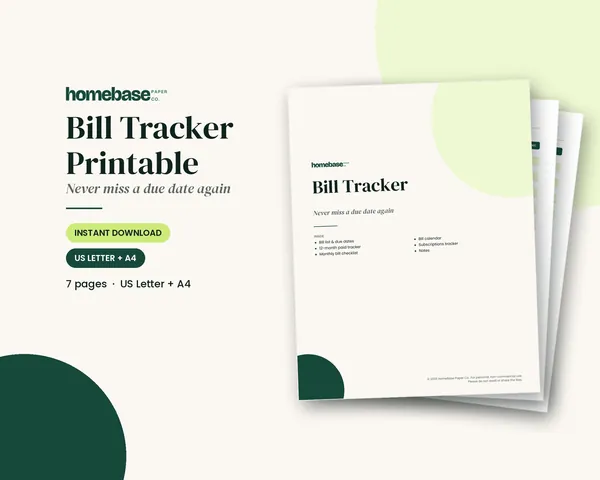
- Bill Tracker Spreadsheet ($4.99): bills due in 3 days or less light up red.
- Sinking Funds Tracker ($4.99): does the math on how much to set aside each month for every goal.
- Budget Planner Printable ($5.99): twelve undated pages for budget, bills, spending, savings and debt if you'd rather write it down.
- Christmas Budget & Gift Planner ($4.99): a budget for every person on your list, with what's left updating as you shop.
The Ultimate Budget Bundle includes all 6 spreadsheets and both printable planners for $19.99 (reg. $46.42 bought separately). Browse the full line in our Spreadsheets shop. If the holidays are your biggest worry right now, the free Holiday Budget Starter Kit is 3 US Letter pages, emailed after you join our list.
This guide is general education, not financial advice. For decisions about your specific situation, talk with a qualified professional.
Make it easier
Tools for this
 Save 57%
Bundles
Ultimate Budget Bundle
All 6 spreadsheets + both printable planners - for less than half the price of buying them separately.
Spreadsheets
Zero-Based Budget Spreadsheet
The 'Left to budget' counter turns green when every dollar has a job.

Spreadsheets
Paycheck Budget Spreadsheet
Enter your bills once. The sheet tells you which paycheck pays each one, all year.
Frequently asked questions
What are the best budgeting tips for beginners? The best budgeting tips for beginners are to budget from last month's real spending, use take-home pay, match bills to paydays and check in once a week. The Zero-Based Budget Spreadsheet ($6.99) does the math for you, so a first budget takes about an hour instead of a weekend.
What is the most important budgeting tip? The most important budgeting tip is to build your budget from what you actually spend, not what you hope to spend. Guessed numbers are why many first budgets break in the second week. Pull 30 days of bank and card statements, total each category and use those totals as your starting plan.
How can I budget my money better? You can budget your money better by checking in weekly, giving irregular costs their own savings lines and moving money between categories instead of quitting when one runs over. The Sinking Funds Tracker ($4.99) shows how much to set aside each month for every yearly cost, so those bills stop wrecking the plan.
What are good budgeting tips for families? Good budgeting tips for families are a monthly money meeting, one shared plan, fun money for each adult and sinking funds for school, activity and holiday costs. The Ultimate Budget Bundle ($19.99, reg. $46.42 bought separately) gives a family the budget, bill, savings and debt tools in one download.
What are some household budget tips that actually save money? Household budget tips that save money fastest are canceling unused subscriptions, calling to lower one bill a month, planning dinners before you shop and using a 48-hour wait for wants. Start with the biggest leak you can see in last month's statements and fix that one first.
How do I budget when my bills and paychecks don't line up? When bills and paychecks don't line up, write each bill next to the paycheck that will cover it and ask companies to move due dates where you can. The Paycheck Budget Spreadsheet ($5.99) lets you enter bills once and shows which paycheck pays each one, all year.
How much should I save each month? Save whatever amount you can repeat every month, even if it's small, then raise it as bills come down or income goes up. Many people start with a few percent of take-home pay. Our guide on how much of your paycheck to save walks through common targets.
What is the 50/30/20 budgeting rule? The 50/30/20 rule splits take-home pay into about 50% for needs, 30% for wants and 20% for savings and extra debt payments. It's a starting point, not a grade. If your housing costs more, shift the percentages and keep the habit of saving something every month.
How often should I check my budget? Check your budget for about 15 minutes once a week and review it fully once a month. The Bill Tracker Spreadsheet ($4.99) highlights bills due in 3 days or less in red, so the weekly check-in catches anything coming up.
How do I budget with irregular income? Budget with irregular income by planning your basics on your lowest normal month, ranking your expenses and holding extra money from good months in a buffer. Then pay yourself a steady amount from that buffer each payday, so your income feels regular even when it isn't.
Is a budget spreadsheet or a paper planner better? Both work, so pick the one you'll actually open every week. The Zero-Based Budget Spreadsheet ($6.99) adds everything up in Excel or Google Sheets, while the Budget Planner Printable ($5.99) gives you twelve undated pages for people who remember what they write by hand.
What are budgeting tips for the holidays? The best holiday budgeting tips are to set one total first, give every person on your list a limit and track each purchase as you go. The Christmas Budget & Gift Planner ($4.99) sets a budget for every person and shows what's left as you shop, plus printable gift, card, menu and to-do pages.
What should I do if I blow my budget? If you blow your budget, cover the overspend from another line in the same month instead of giving up. Pull from your buffer first, then a flexible category like eating out, then fun money. If the same category runs over two months in a row, raise it and lower something else.
How do I start budgeting when I'm already behind? Start by protecting the essentials: housing, utilities, food, transportation and minimum debt payments. Then list what's past due and call those companies about payment plans. Our guide on how to budget on a low income covers this step by step.
Do budgeting tips work if I'm paid every two weeks? Yes, budgeting tips work well with biweekly pay once you plan each paycheck separately. Most months have two paychecks and two months a year have three, so a plan for each check, plus a plan for the extra one, keeps bills covered. See our biweekly budget template for a layout.
What is the best first budgeting tip? The best first budgeting tip is to track every purchase for two weeks, because you cannot fix spending you cannot see. After that, pick the one leak that costs you most, such as impulse buying, late fees or surprise bills, and apply the matching tip from this list.
More from HomeBase
You may also like

Spreadsheets
Annual Budget Spreadsheet
See exactly where your money goes every month - without complicated software.

Spreadsheets
Debt Payoff Planner
Pick snowball or avalanche, add any extra payment, and get your debt-free month instantly.
 Starter pick
 Starter pick
Printables
100 Envelope Savings Challenge
Classic, half and 52-week challenges to print, plus a spreadsheet that tracks every envelope and tells you how much to save each week.
 Club
Monthly club
Money Club
Anyone who wants a clear plan for the month's bills, holiday spending and savings.
Free printable
Give every dollar a job: get the free monthly budget template
A printable zero-based monthly budget: income, bills, everyday spending and savings on one page, with a planned vs. actual column. You'll also get our weekly HomeBase email with simple budgeting and bill-paying tips.

Sources
- CFPB: Budgeting, how to create a budget and stick with it consumerfinance.gov
- Federal Reserve: Economic Well-Being of U.S. Households in 2025, Savings and Investments federalreserve.gov