

The short answer: the 50/30/20 budget splits take-home pay into 50% for needs, 30% for wants and 20% for savings and extra debt payments. You track three totals instead of twenty categories.
- On $3,000 a month: $1,500 needs, $900 wants, $600 savings and debt
- On $4,500: $2,250, $1,350 and $900. On $6,000: $3,000, $1,800 and $1,200
- Set it up in one evening: find your real take-home pay, list fixed bills, estimate variable spending, total the three buckets
- Needs over 50%? Start at 60/20/20 and protect savings, even if it's small
- Next step: Plan it with the Paycheck Budget Spreadsheet ($5.99).
The 50/30/20 budget splits your take-home pay three ways: 50% for needs, 30% for wants and 20% for savings and extra debt payments. It's popular because you track three totals instead of twenty categories, and you can set it up in one evening with your last two months of statements. Below is how the rule works, a worked example at three incomes, a table for sorting tricky expenses and what to do when your needs simply don't fit in half.
If you're paid every week or two, our Paycheck Budget Spreadsheet assigns each bill to the paycheck that pays it, so you can check the 50% needs line one payday at a time.
How the 50/30/20 rule works
Start with the money that actually reaches your bank account each month after taxes. Then divide it like this:
The 50/30/20 split is a simple way to plan your disposable income, the money left after taxes. Our guide explains the formula and a worked example.
- 50% for needs. Housing, utilities, basic groceries, insurance, transportation to work, child care and minimum debt payments.
- 30% for wants. Eating out, streaming, hobbies, travel, gifts, upgrades and anything you'd cut first in a hard month.
- 20% for savings and debt payoff. Emergency fund, retirement, sinking funds and anything you pay above a debt minimum.
That's the whole system. As Investopedia's explainer on the 50/30/20 rule notes, the split is applied to after-tax income, and needs include essentials like housing, utilities and minimum debt payments. The split simply gives you a starting target for each part of your money.
A 50/30/20 example at three incomes
Here's what the split looks like at three take-home amounts. Use your own number; these are round figures to show the math.
| Monthly take-home pay | Needs (50%) | Wants (30%) | Savings and debt (20%) |
|---|---|---|---|
| $3,000 | $1,500 | $900 | $600 |
| $4,500 | $2,250 | $1,350 | $900 |
| $6,000 | $3,000 | $1,800 | $1,200 |
If you're paid every other week, budget from two paychecks a month and treat the third paycheck that shows up twice a year as a bonus for the 20% bucket. Our paycheck budget planner guide walks through that timing.
The 50/30/20 budget per paycheck
If you budget paycheck by paycheck instead of by month, apply the same split to each check. Needs are the tricky part, because rent usually comes out of one paycheck, so plan the needs bucket across both checks of the month.
| Take-home per biweekly paycheck | Needs (50%) | Wants (30%) | Savings and debt (20%) | Two-paycheck month total |
|---|---|---|---|---|
| $1,400 | $700 | $420 | $280 | $2,800 |
| $2,100 | $1,050 | $630 | $420 | $4,200 |
| $2,800 | $1,400 | $840 | $560 | $5,600 |
Example: with $2,100 paychecks and $1,500 rent due on the 1st, put $1,050 from the first check plus $450 from the second toward rent, and the second check's remaining $600 of needs money covers groceries, utilities and gas. Over the month, needs still total $2,100, or 50%. To run your own numbers, try the free budget calculator.
Needs, wants or savings? Sorting the tricky ones
Most expenses are obvious. The arguments start with the in-between ones. Here's how I sort them:
Groceries, gas and fun money are variable expenses, so they can sit in either needs or wants. Our guide has 12 ways to lower them.
Most fixed expenses, like rent and insurance, are needs, but some, like streaming services, are wants.
| Expense | Bucket | Why |
|---|---|---|
| Rent or mortgage | Needs | You'd pay it in any month |
| Basic phone plan | Needs | Upgrades and new phones go in wants |
| Groceries | Needs | Takeout and restaurant meals go in wants |
| Car payment | Needs | If it's far above what you need, plan to downsize |
| Minimum credit card payment | Needs | Extra payments go in savings and debt |
| Gym membership | Wants | Unless a doctor prescribed it |
| Christmas and birthday gifts | Wants | Saving ahead for them in a sinking fund counts as savings |
| 401(k) contribution | Savings | Add it back if it comes out before your paycheck |
| Pet food and vet visits | Needs | Treats and toys go in wants |
When an item is half need and half want, split it. A $90 phone bill on a plan you could get for $45 is $45 of needs and $45 of wants. That honesty is what makes the totals useful.
Setting up your 50/30/20 budget in one evening
- Find your real take-home pay. Average your last two or three months of deposits, not your salary.
- List every fixed bill. Rent (check how much rent you can afford), utilities, insurance, loan minimums, subscriptions. Mark each one need or want.
- Estimate variable spending. Pull two months of card and bank statements and total groceries, gas and dining out.
- Total the three buckets. Compare each one with 50%, 30% and 20% of your take-home pay.
- Pick one move. If wants are over, choose the single biggest want to cut. If savings are under, set up an automatic transfer on payday.
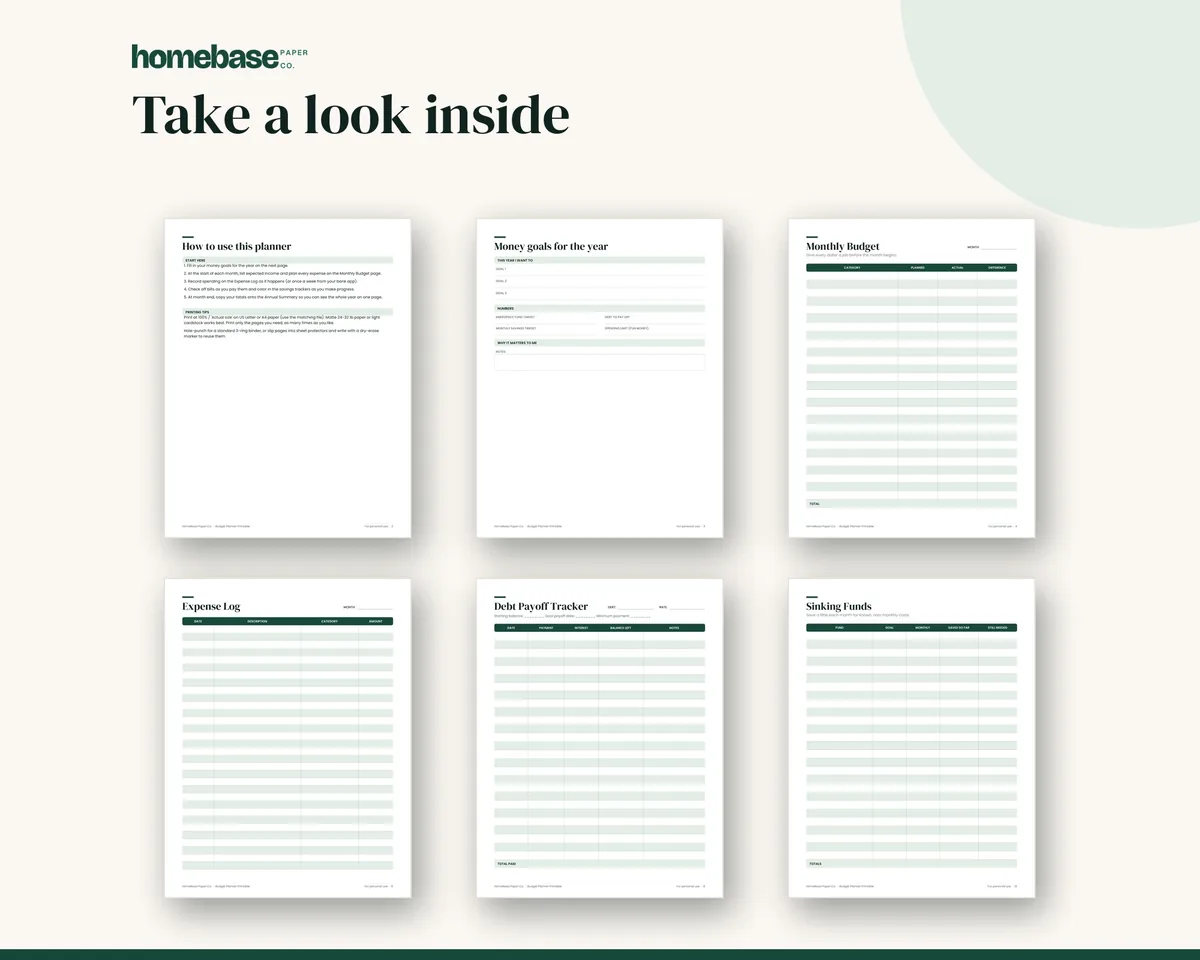
- Track for one month. Write each expense in its bucket. A Budget Planner Printable has an expense log you can tag with N, W or S as you go.
Don't try to fix everything in month one. The first month is for learning where the money really goes.
When your needs are more than 50%
For a lot of families, especially renters in expensive areas, needs alone take more than half of take-home pay. The Bureau of Labor Statistics' Consumer Expenditure Survey found average annual housing spending of $26,266 per household in 2024, up 3.3% from the year before, and housing is only one of the needs.
If that's you, the rule still helps. Try one of these:
- Start at 60/20/20. Keep the 20% savings target and trim wants to 20% while you work on needs.
- Protect savings, even if it's small. A 10% savings slice you keep is better than a 20% one you abandon in week two.
- Attack the biggest need, not the smallest. Refinancing, a cheaper insurance quote or a roommate does more than skipping coffee. Our guide to lowering monthly bills has a list to work through.
- Recheck every six months. As debts are paid off, the minimum payments drop out of needs and the split gets easier.
What goes in the 20%: savings order
The 20% bucket does a lot of work, so give it an order:
For the full step-by-step list, see our guide to the financial order of operations, from a starter emergency fund to 2026 retirement limits.
To grow that 20%, our guide on how to save money covers simple cuts that add up over a year.
- A starter emergency fund. The Federal Reserve's Survey of Household Economics and Decisionmaking found that 63% of adults would cover a $400 emergency expense with cash or its equivalent, which means more than a third would not. A small cushion comes first.
- Any employer retirement match. It's part of your pay, so don't leave it on the table.
- High-interest debt above the minimum. See our debt snowball vs. avalanche guide to pick an order.
- Sinking funds for known costs. Car repairs, holidays and annual bills. Our sinking funds guide shows how to set them up.
- Long-term goals. A full emergency fund, more retirement savings and a house fund.
50/30/20 vs. other budgets
The 50/30/20 rule is a framework, not a method for tracking every dollar. For a side-by-side look at six types of budgets, see our beginner's guide. If it's not enough structure, here's where to go next:
For a pen-and-paper alternative, kakeibo uses four spending categories and a monthly reflection. Our guide has a free printable.
- Zero-based budget: every dollar gets a job until income minus spending equals zero. More control, more work. See the zero-based budget guide.
- Cash envelopes: spending categories in physical envelopes, good for groceries and fun money. See the cash envelope system.
- Pay-yourself-first: save first, then spend what's left without tracking categories. For a different three-bucket split, see the 70/20/10 budget.
If you're brand new to budgeting, start with budgeting for beginners and come back to 50/30/20 once you've tracked a month.
Tools that make the 50/30/20 budget easy
You can run a 50/30/20 budget on the back of an envelope, or check your numbers in a minute with our free 50/30/20 budget calculator, which compares your needs, wants and savings with the targets as you type. If you'd like it already laid out:
If you'd rather track the three buckets on your phone, our comparison of the best budgeting apps shows which apps let you set up needs, wants and savings categories, and what each one costs in a year.
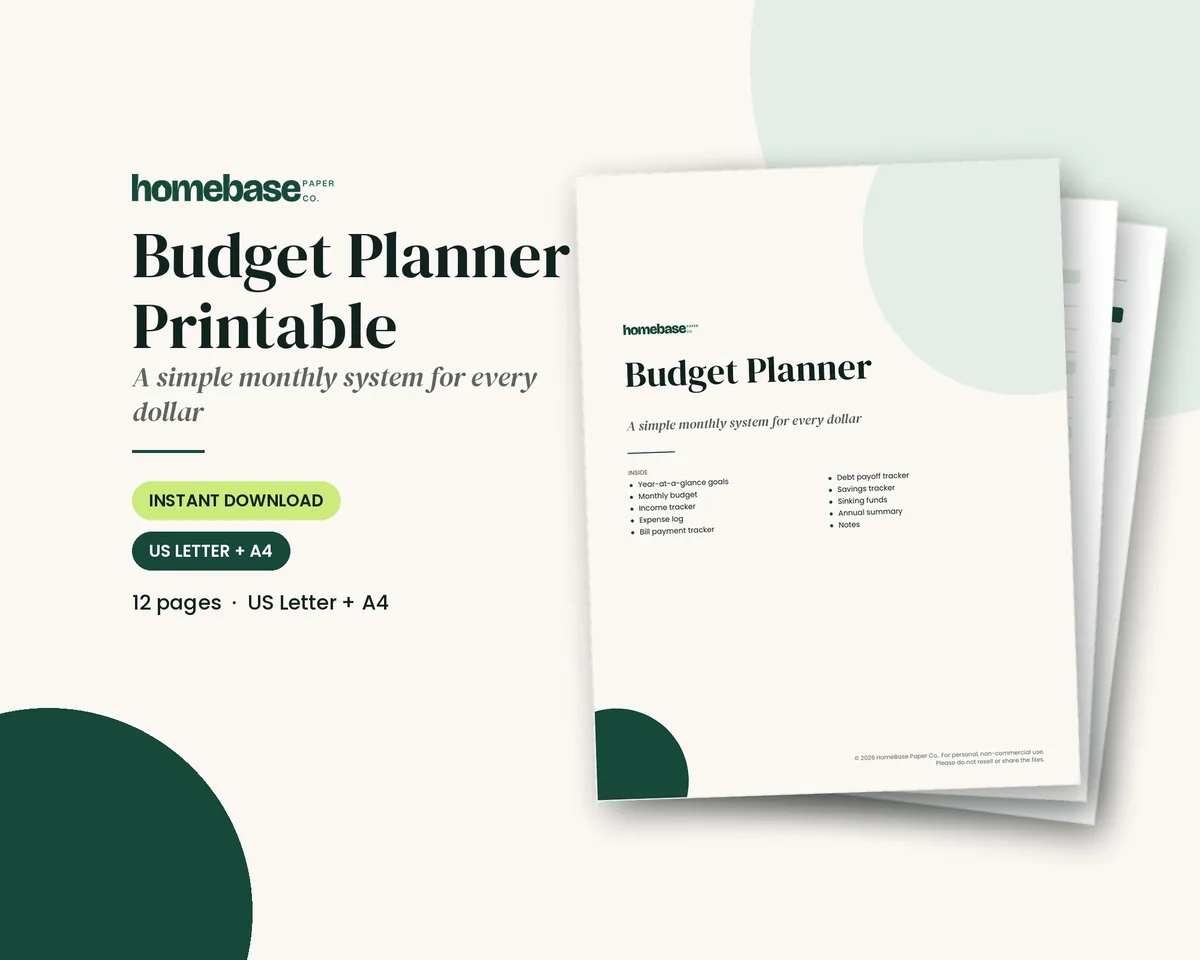
- The Budget Planner Printable ($5.99) has a monthly budget page, an expense log and a savings tracker in US Letter and A4.
- The Paycheck Budget Spreadsheet ($5.99) assigns bills to each paycheck, so the 50% needs bucket is covered before payday.
- The Ultimate Budget Bundle ($19.99, $46.42 if bought separately) includes all six budget spreadsheets plus the Budget Planner Printable and the Printable Bill Tracker, if you want to try 50/30/20 and zero-based side by side.
Give the split three months. By then you'll know whether 50/30/20 fits your life as written or needs a version of your own, and either answer is fine. If you'd rather track every dollar, start with a monthly budget template, and browse more methods in our budgeting guides. Not sure which layout to use? Compare the best budget templates by budgeting style.
Want more detail than three buckets? See our guide to budget percentages by category for housing, food, transportation, savings and more.
Make it easier
Tools for this

Printables
Budget Planner Printable
Twelve undated pages you can print every month: budget, bills, spending, savings and debt.

Spreadsheets
Paycheck Budget Spreadsheet
Enter your bills once. The sheet tells you which paycheck pays each one, all year.
 Save 57%
Bundles
Ultimate Budget Bundle
All 6 spreadsheets + both printable planners - for less than half the price of buying them separately.
Frequently asked questions
What is the 50/30/20 budget? The 50/30/20 budget is a simple rule that splits take-home pay into three buckets: 50% for needs, 30% for wants and 20% for savings and extra debt payments. You track three totals instead of twenty categories, which makes it one of the easiest budgets to start.
Is the 50/30/20 rule based on gross or net income? Net income: the 50/30/20 rule uses take-home pay, the money that actually lands in your account after taxes. If retirement contributions come out of your paycheck before you see it, you can add them back and count them toward the 20% savings bucket.
What counts as a need in a 50/30/20 budget? Needs in a 50/30/20 budget are the bills you'd have to pay even in a lean month: rent or mortgage, utilities, basic groceries, insurance, transportation to work, child care and minimum debt payments. Upgrades on top of the basic version, like a bigger phone plan, count as wants.
What if my needs are more than 50% of my income? If needs take more than 50% of your take-home pay, the 50/30/20 budget still works as a direction rather than a rule. Many families start at 60/20/20 or 65/15/20, protect the savings slice first and shrink wants, then chip away at the biggest fixed bills over time.
Do debt payments go in needs or savings? Minimum debt payments belong in the 50% needs bucket because skipping them has real consequences. Anything you pay above the minimum goes in the 20% bucket, since paying down debt faster improves your finances the same way saving does.
Is the 50/30/20 rule good for beginners? Yes, the 50/30/20 rule is a good first budget because it asks for just three numbers and one month of honest tracking. Once you know where your money goes, you can move to a zero-based budget for more control, or stay with 50/30/20 if it keeps you on track.
How do I track a 50/30/20 budget? Track a 50/30/20 budget by tagging each expense as a need, want or saving, then totaling the three columns each week. Our Budget Planner Printable or Paycheck Budget Spreadsheet works well because you can see the three totals at a glance before the month ends.
Does the 50/30/20 budget work with irregular income? Yes, the 50/30/20 budget works with irregular income if you base it on your lowest typical month. Cover the 50% needs from that baseline, then split anything extra between savings and wants after the money actually arrives.
Where does an emergency fund go in a 50/30/20 budget? An emergency fund comes out of the 20% savings bucket in a 50/30/20 budget, and it usually comes first. Once you have a starter cushion, the same 20% can shift toward retirement, extra debt payments and sinking funds for known costs like holidays.
Is 50/30/20 better than a zero-based budget? Neither budget is better for everyone: the 50/30/20 budget is faster to run, while a zero-based budget gives every dollar a job and more control. Many people start with 50/30/20, then switch when they want to find money for a specific goal.
More from HomeBase
You may also like

Spreadsheets
Bill Tracker Spreadsheet
Bills due in 3 days or less light up red, so nothing slips through.

Spreadsheets
Sinking Funds Tracker
It does the math: how much to set aside each month to hit every goal on time.

Spreadsheets
Zero-Based Budget Spreadsheet
The 'Left to budget' counter turns green when every dollar has a job.

Spreadsheets
Annual Budget Spreadsheet
See exactly where your money goes every month - without complicated software.
 Club
Monthly club
Money Club
Anyone who wants a clear plan for the month's bills, holiday spending and savings.
Free printable
Give every dollar a job: get the free monthly budget template
A printable zero-based monthly budget: income, bills, everyday spending and savings on one page, with a planned vs. actual column. You'll also get our weekly HomeBase email with simple budgeting and bill-paying tips.

Sources
- Consumer Expenditures in 2024 (Bureau of Labor Statistics) bls.gov
- The 50/30/20 budget rule (Investopedia) investopedia.com
- Economic Well-Being of U.S. Households in 2025 (Federal Reserve) federalreserve.gov