

The short answer: a baby budget covers the one-time costs of getting ready and the new monthly costs after the baby arrives. List both, check what insurance and tax benefits cover, then save for each big cost monthly in its own sinking fund.
- One-time costs: car seat, crib or bassinet, stroller, clothes and feeding gear
- Monthly costs: start once the baby arrives, including childcare
- Check benefits: your health plan may cover a breast pump; don't miss the insurance deadline
- Avoid: buying everything at once, forgetting medical bills and counting tax credits as monthly income
- Next step: Plan it with the Ultimate Budget Bundle ($19.99).
A baby budget is a plan for the one-time costs of getting ready for a baby and the new monthly costs that start once the baby arrives. To make one, list both kinds of costs, check what your health plan and tax benefits cover, then divide each big cost by the months until your due date and save that amount each month in its own sinking fund. The steps, a fill-in template and a worked example below walk you through it.
Every dollar amount in this guide is an example to show the math. Your health plan, where you live, your childcare choices and your leave will set your real numbers, so swap in your own.
A bedtime activity does not need another purchase: this lullaby guide starts with songs you already know, humming and a repeatable sequence.
Why a baby needs its own budget
Most new costs show up in two waves. The first wave comes before and right around the birth: gear, the nursery, medical bills and any unpaid time off. The second wave is the ongoing monthly cost: diapers, feeding, childcare and a bigger insurance premium.
For every tool in one download, see the budget planner bundle.
A paperback newborn baby log book is easy to keep by the crib.
If you plan for only one wave, the other one lands on a credit card. A baby budget handles both. You save for the first wave over the months before the due date, and you rebuild your monthly budget for the second wave before it starts.
Step 1: List the one-time costs
Start with everything you'll buy or pay once. Write a real price next to each line when you can, and an estimate when you can't.
Packing for the birth? Our hospital bag checklist lists what to bring for the parent giving birth, the support person and the baby.
| One-time cost | What to count | Ways to lower it |
|---|---|---|
| Car seat | Infant or convertible seat | Buy new for safety; skip extras you don't need |
| Crib or bassinet and mattress | Safe sleep space | Ask family; check hand-me-downs carefully |
| Stroller | Basic or travel system | Wait to see how you'll really use it |
| Clothes and blankets | Newborn and 0–3 month sizes | Babies outgrow these fast; buy a few |
| Feeding gear | Bottles, pump, bibs, burp cloths | Check whether your health plan covers a breast pump |
| Changing supplies | Changing pad, diaper pail, wipes | Use a dresser top with a pad |
| Medical bills for the birth | Your deductible and coinsurance | Call your plan and ask what you'll owe |
| Time off work | Any unpaid leave or lower pay | Ask HR about leave and benefits early |
Not everything on this list has to be bought before the birth. Mark each item "before" or "after" so the money goes to what you need first.
Step 2: List the new monthly costs
Next, list what will cost money every month after the baby comes. These lines go into your regular monthly budget.
| Monthly cost | What to count |
|---|---|
| Diapers and wipes | Newborns go through a lot of them |
| Feeding | Formula, or supplies if you're breastfeeding |
| Health insurance | The change in premium after adding the baby |
| Childcare | Daycare, a sitter or a family arrangement |
| Doctor visits and medicine | Copays for well-baby visits and prescriptions |
| Clothes and supplies | Bigger sizes every few months |
| Savings for the baby | Emergency fund or a long-term account |
Childcare is often the biggest monthly line, so get real quotes from providers near you early. Many have waitlists, and the price matters for your whole plan.
Step 3: Check your insurance and benefits
Before you save a dollar, find out what's already covered. These four rules can change the numbers in your plan.
While you are checking coverage with your hospital and provider, go over your birth plan template too. Our free 3-page printable covers labor, delivery and the first hours after birth.
| Benefit | What it means for your budget | Source |
|---|---|---|
| Adding the baby to a Marketplace plan | Having a baby qualifies you for a Special Enrollment Period, and coverage can start the day of the birth even if you enroll up to 60 days afterward | HealthCare.gov |
| Child Tax Credit | Worth up to $2,200 per qualifying child; you and your child need a Social Security number valid for employment, issued before the return's due date | IRS |
| Child and Dependent Care Credit | Starting with tax year 2026, the top credit rate rises from 35% to 50% of qualifying care costs, on up to $3,000 of costs for one child | IRS |
| Dependent care FSA at work | For 2026, the tax-free limit rose from $5,000 to $7,500 a year ($3,750 if married filing separately), if your employer's plan allows it | IRS Publication 15-B |
The IRS also says you qualify for the full Child Tax Credit if your income isn't more than $200,000 ($400,000 if filing jointly), and higher earners may get a partial credit. If you get health insurance through work, ask HR how long you have to add the baby, because job-based plans set their own deadlines.
The same IRS page on the new tax law covers Trump Accounts: the federal government will make a one-time $1,000 contribution for each eligible child's account, and contributions began on July 4, 2026. Check the IRS page to see whether your child qualifies.
Tax credits come back at tax time, not the month you spend the money. Don't count them in your monthly budget. Treat them as a bonus that can refill your savings.
Step 4: Build sinking funds for the big costs
A sinking fund is money you set aside a little at a time for a cost you know is coming. It's the best tool for a baby budget because you know the due date.
Registry gifts can cover some of the big items. Our baby registry checklist shows what to add and what can wait.
Monthly amount = cost ÷ months until you need it
Give each big cost its own fund so you always know what's ready. A $1,200 gear fund with eight months to go is $150 a month. You can read more in our sinking funds guide.
Step 5: Plan for leave and childcare
If your pay drops while you're on leave, that gap is a cost too. Figure out how many weeks you'll be paid less, multiply by the weekly difference, and save for it like any other sinking fund. To turn weeks into months, use our weeks to months converter.
Then plan the month childcare starts. Write a new monthly budget with childcare, diapers and the new insurance premium in it, and see what has to shrink to make room. Doing this before the baby arrives is much easier than doing it on four hours of sleep.
Step 6: Keep an emergency fund
Babies come with surprises: an extra doctor visit, a formula you didn't plan on, a car repair the same week. Keep a separate emergency fund apart from your baby sinking funds so a surprise doesn't empty the gear or leave money.
Step 7: Review the budget after the baby comes
Your estimates won't be perfect, and that's fine. About a month after the birth, compare what you planned with what you spent. Move money from lines you overestimated to the ones you underestimated, then do a quick check every month after that.
Baby budget template
Copy this into a notebook or spreadsheet. Fill in the cost and the months until you need it, and the monthly amount falls out. For more on this topic, see our new baby checklist hub.
| Sinking fund | Total cost | Months until needed | Save per month | Saved so far |
|---|---|---|---|---|
| Gear and nursery | $ | $ | $ | |
| Medical bills for the birth | $ | $ | $ | |
| Leave income gap | $ | $ | $ | |
| First month of supplies | $ | $ | $ | |
| Childcare deposit | $ | $ | $ | |
| Total | $ | $ | $ |
And for the new monthly budget:
| Monthly line | Before baby | After baby | Change |
|---|---|---|---|
| Diapers and wipes | $0 | $ | $ |
| Feeding | $0 | $ | $ |
| Health insurance premium | $ | $ | $ |
| Childcare | $0 | $ | $ |
| Doctor visits and medicine | $ | $ | $ |
| Total change | $ |
Worked example: eight months until the due date
Here's the sinking fund template filled in with example numbers. Every line adds up.
| Sinking fund | Total cost | Months | Save per month |
|---|---|---|---|
| Gear and nursery | $1,200 | 8 | $150 |
| Medical bills for the birth | $1,600 | 8 | $200 |
| Leave income gap | $2,400 | 8 | $300 |
| First month of supplies | $400 | 8 | $50 |
| Total | $5,600 | $700 |
$5,600 ÷ 8 months = $700 a month, and each fund is checked against its own goal. If $700 is more than the budget can hold, there are three levers: lower a cost (hand-me-downs, a simpler stroller), start sooner, or move an "after" item, like a high chair, out of the before-birth fund.
A month-by-month baby budget timeline
Spreading the work out keeps it from piling up in the last few weeks. Here's a simple order to follow once you know your due date.
| When | Money task |
|---|---|
| As soon as you can | Call your health plan about birth costs; ask HR about leave and benefits |
| Early on | List one-time and monthly costs; open your sinking funds |
| Mid-pregnancy | Get childcare quotes; check whether you can join a dependent care FSA |
| Last few months | Buy the "before" items; finish the first month of supplies |
| After the birth | Add the baby to your health plan on time; switch to the new monthly budget |
| About a month later | Compare plan with actual and adjust |
| Tax time | File for the credits you qualify for; put any refund back into savings |
Common baby budget mistakes
- Buying everything at once. Many items can wait until you know what you'll actually use.
- Forgetting the medical bills. Your deductible and coinsurance can be one of the biggest one-time costs.
- Counting tax credits as monthly income. They arrive at tax time, so they can't pay October's diapers.
- Waiting on childcare. Waitlists and prices both matter, so start asking early.
- Missing the insurance deadline. Put the date to add the baby on your calendar before the due date.
Where the money can come from
- Trim flexible spending. Eating out, subscriptions and shopping are the easiest lines to cut for a few months.
- Pause extra goals. Extra debt payments or vacation savings can slow down for a while, as long as minimums are paid.
- Use windfalls. A tax refund or bonus can fill a fund in one step.
- Accept help, with a list. If family wants to help, a registry or a clear list of needs keeps gifts from doubling up.
Planning the holidays too? See our guide to baby's first Christmas on a budget.
Why I plan this way
I'm Malaysia. I grew up in Detroit as the oldest of three, and I was the one my family leaned on for guidance and for keeping everyone coordinated. That's taught me that big life changes go smoother when everyone can see the plan. A baby budget does exactly that: it turns a long, scary list into a few monthly numbers you can actually hit.
Save for baby with the Sinking Funds Tracker
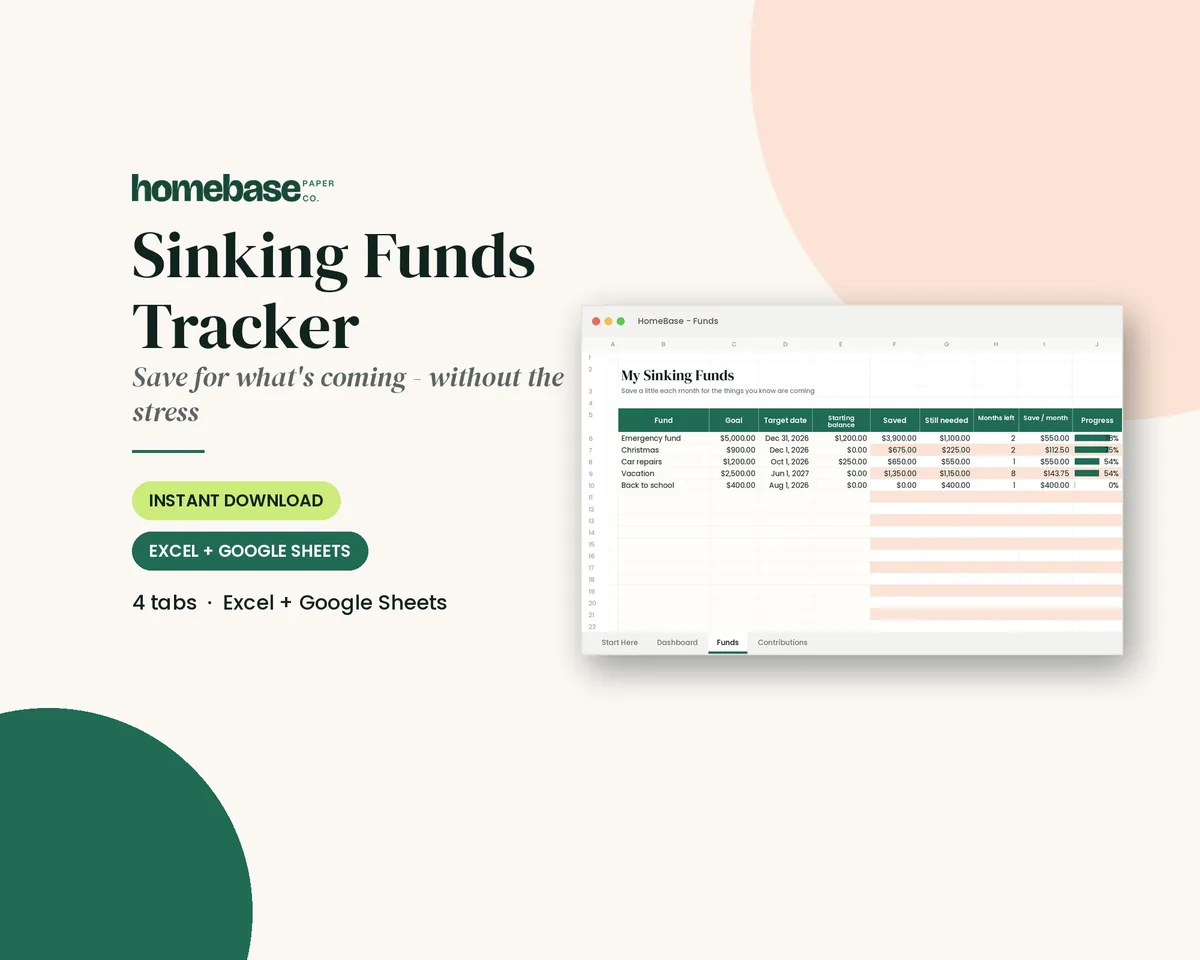
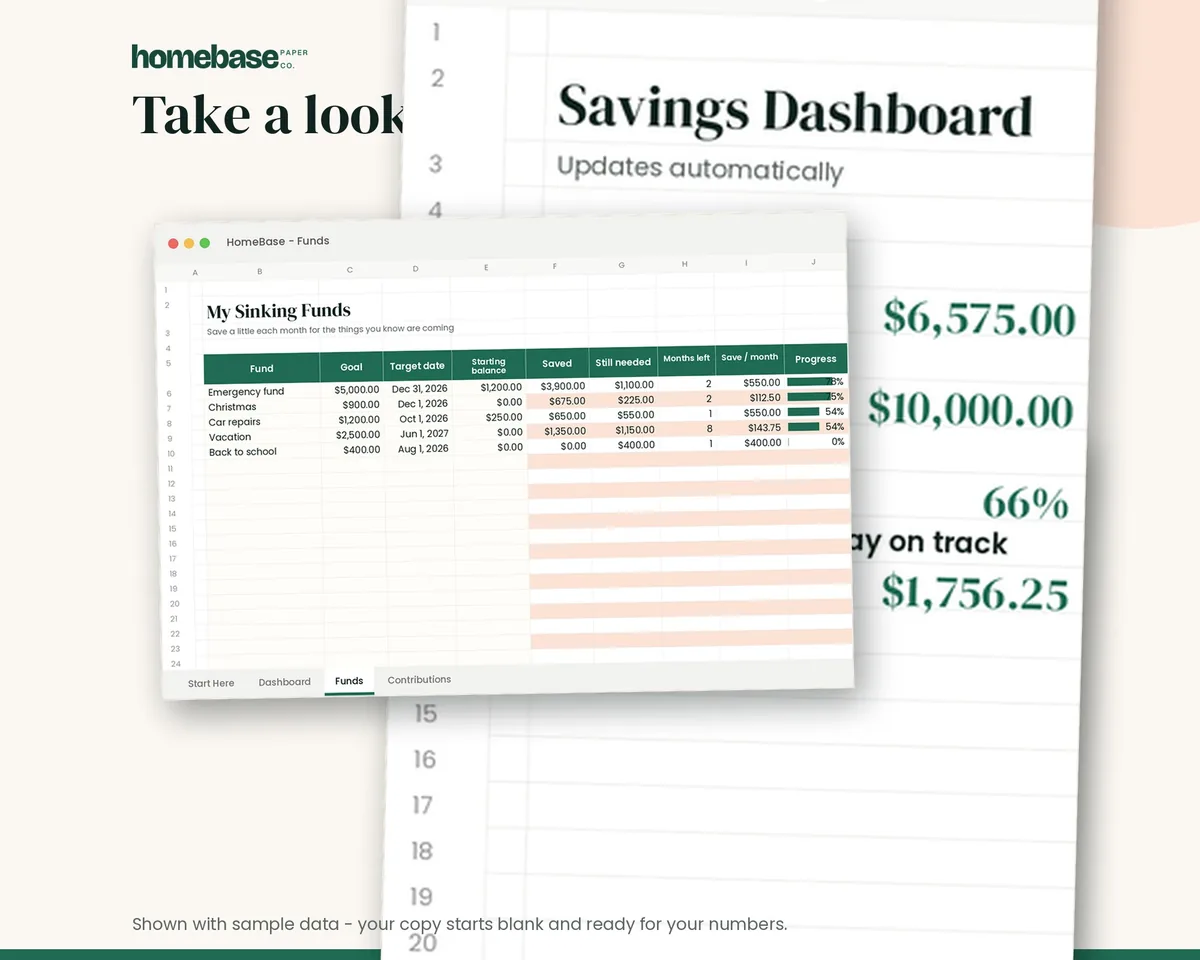
The Sinking Funds Tracker ($4.99) does the sinking fund math for you. It works in Excel and Google Sheets and gives you:
- up to 20 savings goals, each with its own target and date
- the monthly amount needed to hit each date
- progress bars and a deposit and withdrawal log
- a savings dashboard to see every fund at once
Prefer paper? The Budget Planner Printable ($5.99) has twelve undated pages, including a monthly budget, expense log, bill tracker and savings pages, so you can rebuild your monthly budget for life with a baby. Once the baby arrives, the Newborn Baby Tracker ($3.99) printable logs feeds, diapers, sleep and pediatrician visits.
Browse every tool in Spreadsheets or see the paper versions in Printables. For more on what to log in the first weeks, see our baby feeding log guide, and if you're starting from scratch with money, our budgeting for beginners guide covers the basics.
If friends or family are planning a shower, our baby shower food ideas guide shows how to feed guests well on a set per-guest budget.
Hosting it yourself? Our budget baby shower plan shows how to feed and entertain 30 guests for under $300.
Looking further ahead? Our cost of raising a child guide breaks down the USDA estimate by age, category and income.
For a naming shortlist that explores flexible styles, see these gender neutral baby name ideas and compare pronunciation, initials and current usage before deciding.
Make it easier
Tools for this
Spreadsheets
Sinking Funds Tracker
It does the math: how much to set aside each month to hit every goal on time.
Printables
Budget Planner Printable
Twelve undated pages you can print every month: budget, bills, spending, savings and debt.
Printables
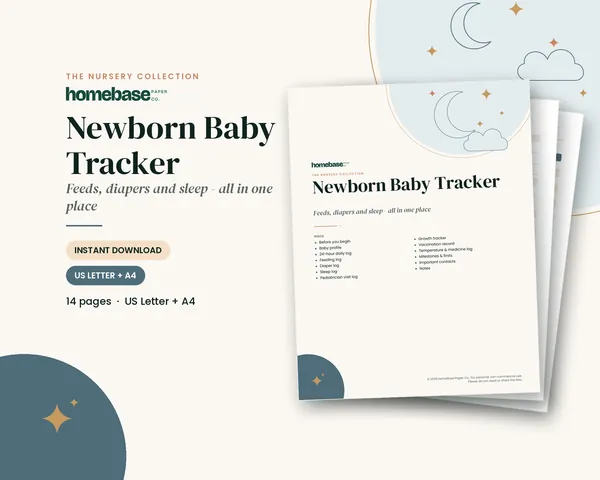
Newborn Baby Tracker
A 24-hour daily log plus feeding, diaper, sleep, growth and pediatrician-visit pages - easy to bring to checkups.
Frequently asked questions
What is a baby budget? A baby budget is a plan for the one-time costs of getting ready for a baby and the new monthly costs after the birth. The Sinking Funds Tracker ($4.99) turns each big cost into a monthly savings amount.
How do I budget for a baby? List one-time and monthly costs, check your insurance and tax benefits, then divide each big cost by the months until your due date. The Sinking Funds Tracker ($4.99) does that math for every goal.
How much should I save before having a baby? Add up your own one-time costs and divide by the months you have left; there's no single right number, because it depends on your health plan, leave and childcare.
What are the one-time costs of having a baby? The main one-time costs are gear, the nursery, clothes, feeding supplies, medical bills for the birth and any unpaid leave. Mark each one 'before' or 'after' so the money goes to what you need first.
What monthly costs does a baby add? A baby adds diapers, feeding, a higher insurance premium, childcare, doctor visits and growing-out-of clothes. The Budget Planner Printable ($5.99) has monthly budget pages to rebuild your budget around them.
Is there a baby budget template? Yes, this guide has a free fill-in sinking fund template and a monthly before-and-after template. For a ready-made version, the Sinking Funds Tracker ($4.99) works in Excel and Google Sheets.
How do I add a baby to my health insurance? Having a baby qualifies you for a Special Enrollment Period on the Marketplace. HealthCare.gov says coverage can start the day of the birth even if you enroll up to 60 days afterward; job-based plans set their own deadlines.
How much is the Child Tax Credit? The IRS says the Child Tax Credit is worth up to $2,200 per qualifying child. You and your child need Social Security numbers valid for employment, issued before the return's due date.
What changed for the Child and Dependent Care Credit in 2026? Starting with tax year 2026, the top credit rate rises from 35% to 50% of qualifying care costs. The cap on qualifying costs stays at $3,000 for one child and $6,000 for two or more.
What is the dependent care FSA limit for 2026? The tax-free dependent care FSA limit is $7,500 a year for 2026, up from $5,000 in 2025. Your employer has to update its plan for you to use the higher limit.
What is a Trump Account? A Trump Account is a new savings account a parent can open for an eligible child. The IRS says the federal government will make a one-time $1,000 contribution for each eligible child's account.
Should I count tax credits in my monthly baby budget? No, tax credits arrive at tax time, not the month you spend the money. Use them to refill savings instead.
What is a sinking fund for a baby? A sinking fund for a baby is money set aside a little each month for a known cost, like gear or birth bills. The Sinking Funds Tracker ($4.99) tracks up to 20 goals with progress bars.
How do I budget for maternity or paternity leave? Multiply the weeks of lower pay by the weekly difference, then save that total as its own sinking fund. Ask HR early about what leave and benefits you have.
How do I track feeds and diapers after the baby comes? Use a simple daily log for feeds, diapers and sleep. The Newborn Baby Tracker ($3.99) printable logs feeds, diapers, sleep and pediatrician visits.
More from HomeBase
You may also like
Spreadsheets
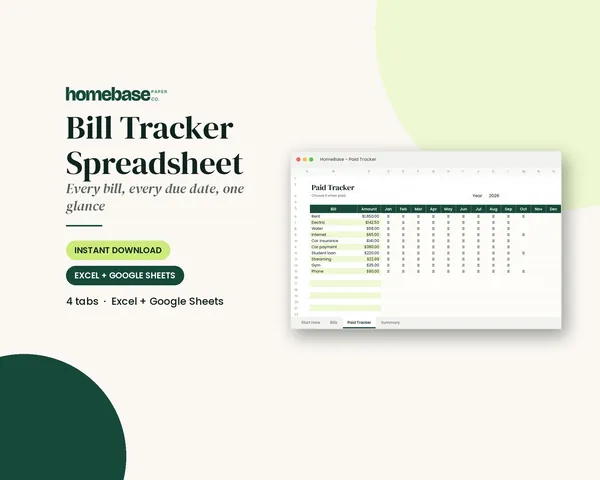
Bill Tracker Spreadsheet
Bills due in 3 days or less light up red, so nothing slips through.
Spreadsheets
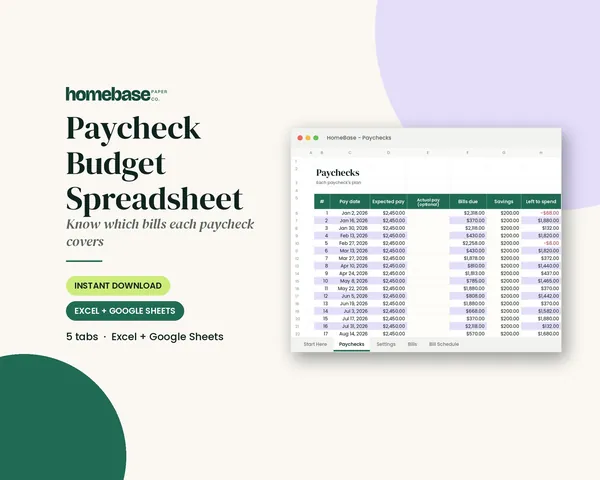
Paycheck Budget Spreadsheet
Enter your bills once. The sheet tells you which paycheck pays each one, all year.
Spreadsheets
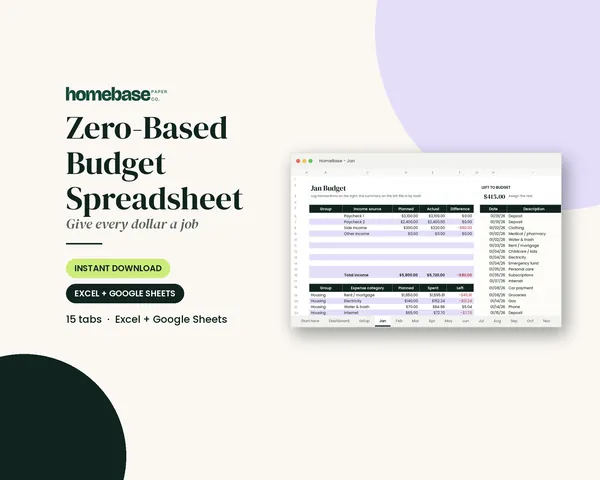
Zero-Based Budget Spreadsheet
The 'Left to budget' counter turns green when every dollar has a job.
 Save 57%
Bundles
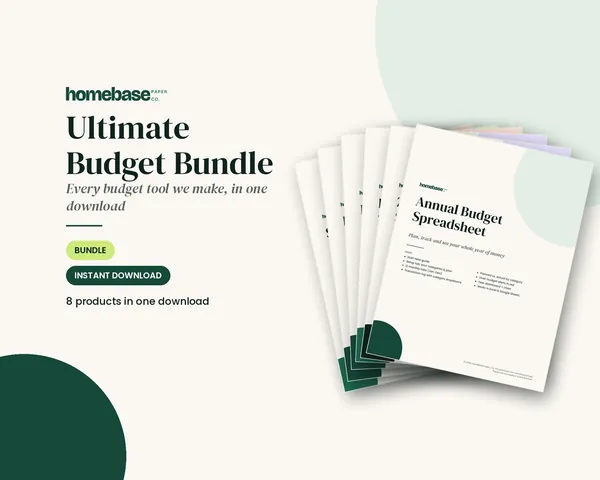
Ultimate Budget Bundle
All 6 spreadsheets + both printable planners - for less than half the price of buying them separately.
 Club
Monthly club
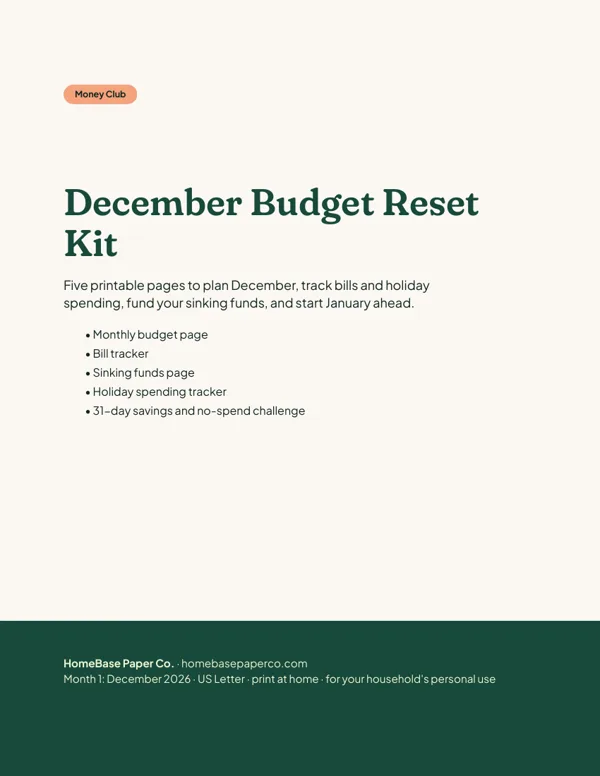
Money Club
Anyone who wants a clear plan for the month's bills, holiday spending and savings.
Free printable
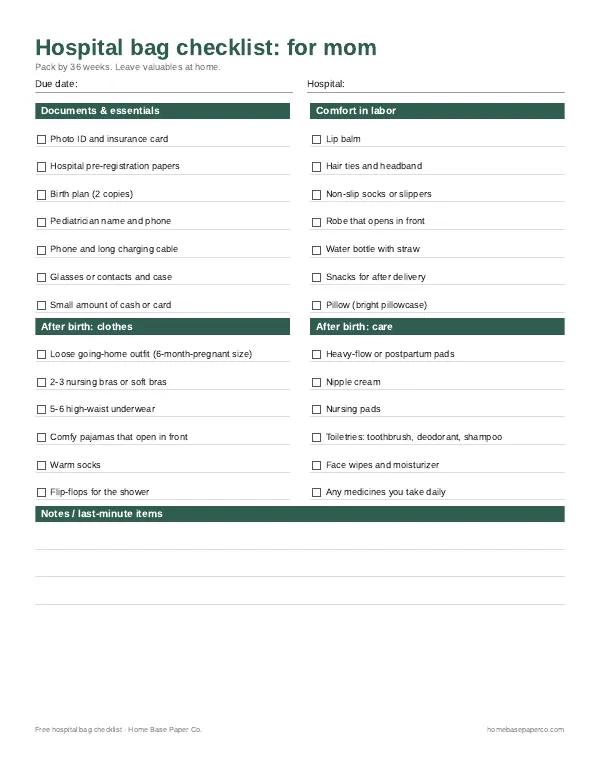
Pack once, pack right: get the free hospital bag checklist
A printable hospital bag checklist for mom, baby and partner, with documents and comfort items grouped so nothing is forgotten. You'll also get our weekly HomeBase email with simple, practical tips for getting ready for baby.
Sources
- HealthCare.gov healthcare.gov
- IRS irs.gov
- IRS irs.gov
- IRS Publication 15-B irs.gov