


The short answer: a goodwill letter is a polite request asking a lender to remove an accurate late payment from your credit reports as a courtesy.
- Works best when the late payment was a one-time slip and you've paid on time since
- Ask for one or two late payments, not ten
- Wrong late payment? Use a dispute instead
- Free template and what to do if the lender says no
- Next step: Plan it with the Bill Tracker Printable ($3.49).
A goodwill letter is a polite request to a lender asking it to remove an accurate late payment from your credit reports as a courtesy. It works best when the late payment was a one-time slip, you've paid on time since, and you ask nicely. It costs nothing but a stamp or a few minutes in a secure message center, and the worst a lender can say is no. Below you'll find when a goodwill letter makes sense, a sample letter you can copy, and what to do if the answer is no.
When a goodwill letter makes sense
A goodwill letter is worth sending when:
- The late payment is accurate, but it was a one-time thing. Maybe autopay failed when you switched banks, a bill went to an old address, or you were in the hospital.
- You've paid on time since. Six months or more of on-time payments helps, and years helps more.
- The account is in good standing now, either current or paid off.
- You have a reason to ask now, such as applying for a mortgage or car loan soon.
A goodwill letter is not the right tool if the late payment is wrong. If the date, amount or account isn't yours, that's an error, and you have the right to dispute it. The CFPB explains how to dispute an error with both the credit bureau and the company that reported it, and they must look into it. A goodwill letter, by contrast, is asking for a favor.
Why one late payment matters
Payment history is one of the biggest factors in most credit scores. The CFPB's guide to credit scores notes that scores are based on the information in your credit reports, including whether you pay on time. According to the CFPB, negative information such as late payments can generally stay on your report for up to seven years.
The good news is that a late payment usually hurts less as it ages, especially as you add new on-time payments. So if your late payment is several years old and you're not applying for credit soon, a goodwill letter is optional. If it's recent and you're about to apply for a mortgage, it's worth a try.
How to write a goodwill letter: step by step
1. Check your credit reports first
Pull your reports from all three bureaus. The CFPB explains that you can get a free report from Equifax, Experian and TransUnion once a week at AnnualCreditReport.com. Note exactly which month or months show as late, and on which reports. If anything looks wrong, dispute it instead.
2. Find the right address
Send the letter to the lender, not to the bureaus. Look for a customer service, executive office or credit reporting address on your statement or the lender's website. Many card issuers also accept messages through their online secure message center. Our general letter template shows the standard business letter layout.
3. Keep it short and honest
One page is plenty. Lenders read many of these, and a clear, sincere letter stands out more than a long one.
4. Take responsibility
Explain what happened in a sentence or two without blame. "I missed the March 2025 payment because my autopay didn't transfer when I changed banks" works better than a long story.
5. Show what has changed
Mention your on-time record since and what you've done to prevent it from happening again, such as autopay, reminders or a bill tracker.
6. Make a specific request
Ask the lender to "update its reporting to the credit bureaus to remove the late payment for [month and year]." A specific ask is easier to approve.
7. Follow up once
Give it about 30 days, then check your reports. If nothing has changed and you haven't heard back, follow up once by phone or with a short second letter to a different department.
Free goodwill letter template
Copy this, fill in the brackets and adjust it to your own words.
[Your name] [Your address] [Date]
[Lender name] [Lender address]
Re: Account ending in [last 4 digits]
Dear [Lender name] team,
I'm writing to ask for a goodwill adjustment on my account ending in [last 4 digits]. My credit report shows a late payment for [month and year].
That payment was late because [brief, honest reason, one or two sentences]. This was unusual for me. Since then I have [paid on time for X months / paid the account in full], and I've [set up autopay / added reminders] so it doesn't happen again.
I value my relationship with [lender name]. I'm [planning to apply for a mortgage / working to improve my credit], and this late payment is holding my score back. Would you consider a goodwill adjustment and update your reporting to the credit bureaus to remove the late payment for [month and year]?
Thank you for your time and consideration.
Sincerely, [Your name] [Phone number]
Don't include your full account number or Social Security number in a letter sent by regular mail. The last four digits plus your name and address are enough for the lender to find you.
Tips that improve your odds
- Ask for one or two late payments, not ten. A single slip on a long, clean history is the strongest case.
- Be polite even if you're frustrated. You're asking a person for a favor.
- Mention your loyalty. How long you've been a customer matters.
- Pay first. If the account is behind, bring it current before you write.
- Keep copies. Save a copy of the letter and note the date you sent it.
- Don't pay anyone to do this for you. The CFPB warns against paying upfront fees to companies that promise to fix your credit, because no one has the right to remove accurate late payments from a report. You can dispute real errors yourself at no cost.
Goodwill letter vs. other options
It helps to know where a goodwill letter fits among the other things people try:
| Situation | Best tool | Who has to act |
|---|---|---|
| The late payment is wrong or not yours | A dispute | The bureau and the lender must investigate |
| The late payment is accurate, one-time and old | Time and on-time payments | No one; it fades on its own |
| The late payment is accurate and recent, with a good history | A goodwill letter | The lender may agree, but doesn't have to |
| You're behind right now | Call the lender about a hardship plan | The lender, before more late marks are added |
If you're behind right now, call before the next due date. Many lenders have hardship programs that can lower a payment for a while, and stopping the next late mark matters more than removing an old one.
What if the lender says no?
Some lenders have firm policies against goodwill adjustments, especially for recent or repeated late payments. If you get a no:
- Try once more with a short letter to a different department, or call and ask whether they offer any goodwill program.
- Let time work. Each month of on-time payments pushes the late payment further into the past and makes it count for less.
- Build positive history. Keep balances low and pay every account on time.
- Check that it's reported correctly. If the late payment shows on the wrong month or after the reporting period has passed, dispute it.
Make sure it doesn't happen again
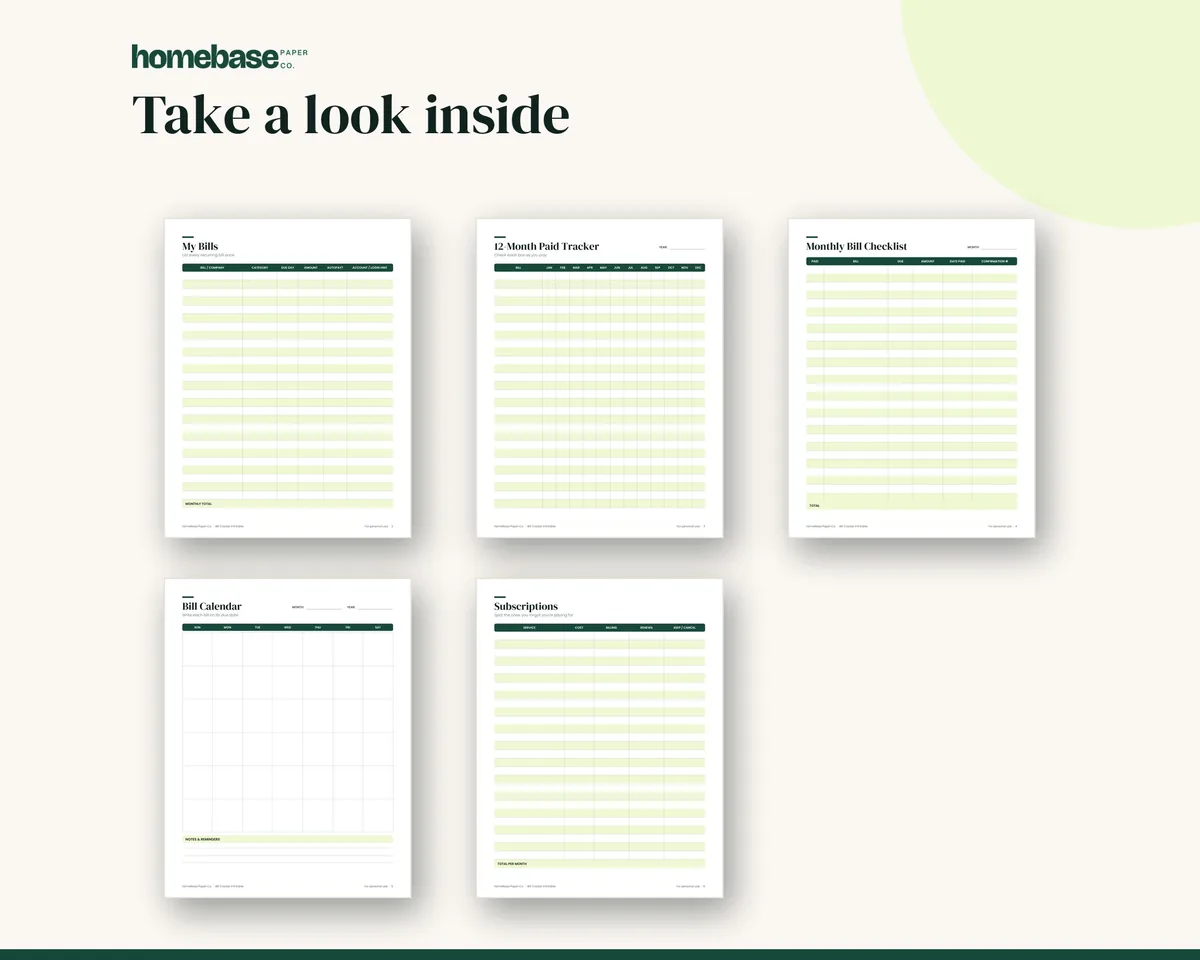
The lender is more likely to say yes if you can say you have a system now, and a system is what keeps the next late payment from happening. Start with autopay for at least the minimum on every account. Then keep every bill and due date on one page.
Our Bill Tracker Printable ($3.49) lets you list your bills once, with their due dates, then check them off every month. The Budget Planner Printable ($5.99) is 12 undated pages, including a Monthly Budget, Bill Payment Tracker, Debt Payoff Tracker and Savings Tracker, in US Letter and A4.
If you're paying down balances at the same time, the Debt Payoff Planner ($6.99) handles up to 10 debts and builds a month-by-month payoff schedule. It shows each debt's payoff month and your debt-free date, using snowball or avalanche. The Ultimate Budget Bundle ($19.99) includes six spreadsheets (among them a bill tracker and the debt payoff planner) plus the budget planner and bill tracker printables, $46.42 if bought separately.
The bottom line
A goodwill letter is a low-cost, low-risk way to ask for a second chance on an honest mistake. Write it yourself, keep it short and sincere, and send it to the lender. Whatever the answer, put a bill system in place so your next on-time payment is automatic.
Make it easier
Tools for this

Spreadsheets
Debt Payoff Planner
Pick snowball or avalanche, add any extra payment, and get your debt-free month instantly.
 Starter pick

Printables
Budget Planner Printable
Twelve undated pages you can print every month: budget, bills, spending, savings and debt.
Frequently asked questions
What is a goodwill letter? A goodwill letter is a short, polite request asking a lender or card issuer to remove an accurate late payment from your credit reports as a courtesy. You explain what happened, show that you have been paying on time since, and ask them to update how they report that account.
Do goodwill letters actually work? Yes, goodwill letters can actually work sometimes. Goodwill letters can work, but there is no guarantee. Lenders are not required to remove accurate information, and some have policies against it. Your odds are best with a single late payment, a long record of on-time payments, a clear reason and a polite, honest letter.
Who do I send a goodwill letter to? Send a goodwill letter to the lender or card issuer that reported the late payment, not to the credit bureaus. Look for a customer service or credit reporting mailing address on your statement or the lender's website. Some people also send it through the lender's secure message center.
What should a goodwill letter say? A goodwill letter should say who you are, which account and month the late payment was, briefly why it happened, what you have done since, and the specific request: that the lender update its reporting to the credit bureaus. Keep it to one page and avoid demands or blame.
Is a goodwill letter the same as a dispute? No, a goodwill letter is not the same as a dispute. A dispute is for information that is wrong, and the credit bureau and lender must investigate it. A goodwill letter is for information that is accurate, and you are asking for a favor. If the late payment is an error, dispute it instead.
How long does a late payment stay on my credit report? A late payment can generally stay on your credit report for up to seven years, according to the CFPB. Its effect on your score usually fades over time, especially as you add new on-time payments, so a late mark from years ago matters less than a recent one.
Can I send a goodwill letter for a collection account? You can send a goodwill letter for a paid collection account, though results vary more than with a single late payment. Send it to whoever is reporting the account, which may be the original lender or the collection agency. Paying the account first improves your chances.
How long does a lender take to answer a goodwill letter? Lenders often take a few weeks to answer a goodwill letter, and some never reply. Wait about 30 days, then check your credit reports. If nothing has changed, you can follow up once by phone or with a second short letter to a different department.
Should I pay someone to write a goodwill letter? You do not need to pay anyone to write a goodwill letter. It is a one-page letter you can write yourself in about 15 minutes. The CFPB warns against paying upfront fees to companies that promise to fix your credit, since no one has the right to remove accurate negative information.
Will a goodwill letter hurt my credit? No, a goodwill letter will not hurt your credit. Writing to a lender does not create a credit inquiry or change your report. The worst outcome is that the lender says no and the late payment stays where it is, which is the same as not asking.
Can I send more than one goodwill letter? Yes, you can send more than one goodwill letter, either to different lenders or as a single follow-up to the same lender. Avoid sending many letters to one lender in a short time. A thoughtful second try to a different department or a manager is more effective.
How do I avoid late payments in the future? To avoid late payments in the future, set up autopay for at least the minimum on every account, add due-date reminders a few days early, and keep a single list of all bills with their due dates. A bill tracker you check each payday catches anything autopay misses.
More from HomeBase
You may also like

Spreadsheets
Bill Tracker Spreadsheet
Bills due in 3 days or less light up red, so nothing slips through.

Spreadsheets
Sinking Funds Tracker
It does the math: how much to set aside each month to hit every goal on time.

Spreadsheets
Paycheck Budget Spreadsheet
Enter your bills once. The sheet tells you which paycheck pays each one, all year.

Spreadsheets
Zero-Based Budget Spreadsheet
The 'Left to budget' counter turns green when every dollar has a job.
 Club
Monthly club
Money Club
Anyone who wants a clear plan for the month's bills, holiday spending and savings.
Free printable
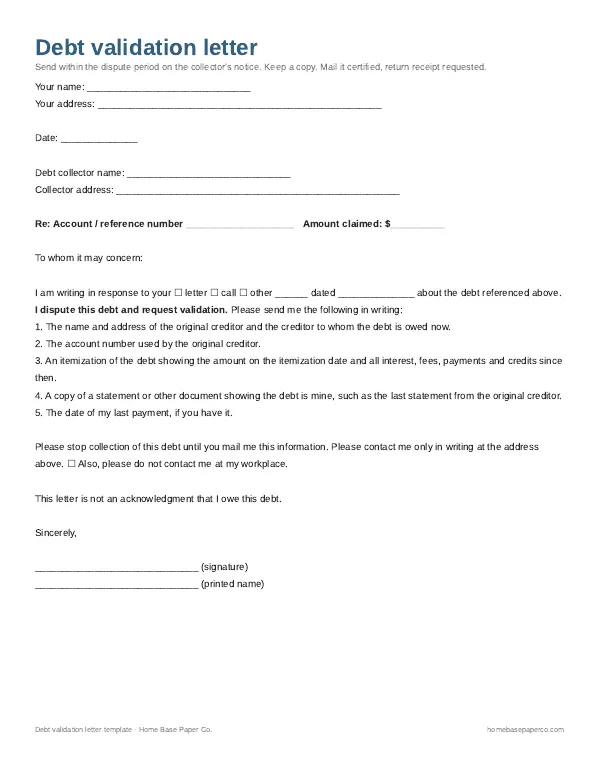
Get the free debt validation letter template
A fill-in letter asking a collector to verify a debt, with a short checklist for sending it and keeping records. You'll also get our weekly HomeBase email with simple budgeting and bill-paying tips.
Sources
- CFPB: How long does information stay on my credit report? consumerfinance.gov
- CFPB: How do I dispute an error on my credit report? consumerfinance.gov
- CFPB: What is a credit score? consumerfinance.gov
- CFPB: How do I get a free copy of my credit reports? consumerfinance.gov