

The short answer: how does Social Security work? You pay 6.2% of your wages into it while you work (your employer pays another 6.2%), and after 40 credits, about 10 years of work, you qualify for a monthly check for life based on your highest 35 years of earnings.
- 2027 numbers: benefits rise 3.6% in January 2027, the average retired worker gets about $2,170 a month, and the taxable maximum is $192,300.
- Timing matters: claim at 62 and you get 70% of your full benefit for life; wait until 70 and you get 124% (full retirement age is 67 for anyone born in 1960 or later).
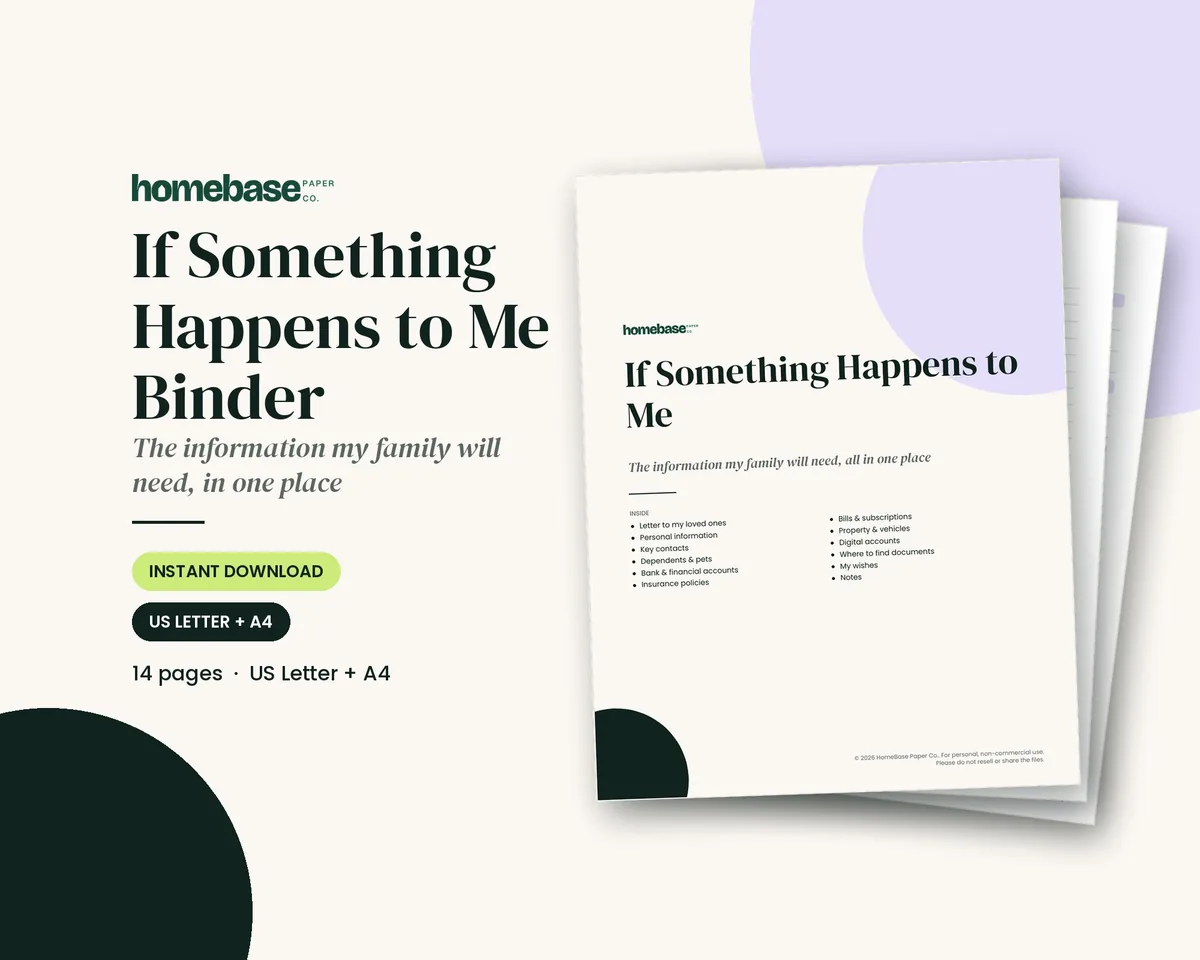
- Free download: get the free personal financial statement template (we email it to you) to see where Social Security fits next to your savings. To keep benefit paperwork in one place, the If Something Happens to Me Binder is $11.99.
Checked November 4, 2026, against the Social Security Administration's 2027 COLA announcement and benefit rules. Below: who qualifies, the benefit formula with worked examples, claiming ages, family and disability benefits, taxes, the trust fund outlook and a step-by-step checklist.
Social Security explained in 60 seconds
Social Security is a federal insurance program run by the Social Security Administration (SSA). It is mostly a pay-as-you-go system: today's workers pay payroll taxes, and that money pays today's beneficiaries. The SSA says about 76 million Americans get Social Security or Supplemental Security Income (SSI) payments.
It pays four main kinds of benefits:
| Benefit | Who gets it | Based on |
|---|---|---|
| Retirement | Workers 62 and older with 40 credits | Your own earnings record |
| Disability (SSDI) | Workers who can't work because of a severe, long-term medical condition | Your own earnings record and recent work |
| Survivors | Widows, widowers, children and some parents of a worker who died | The deceased worker's record |
| Family (spouse and child) | Spouses, some ex-spouses and children of a retired or disabled worker | The worker's record |
SSI is a separate, needs-based program run by the SSA. It is paid from general tax money, not from your Social Security taxes, and it doesn't depend on work history.
How Social Security is paid for
Social Security is funded mostly by payroll taxes under the Federal Insurance Contributions Act (FICA), the line on your pay stub.
| Who pays | Social Security tax | Medicare tax (separate) | Earnings it applies to |
|---|---|---|---|
| Employee | 6.2% | 1.45% | Social Security: up to $192,300 in 2027 ($184,500 in 2026) |
| Employer | 6.2% | 1.45% | Same cap for Social Security; no cap for Medicare |
| Self-employed | 12.4% | 2.9% | Same caps, on net self-employment earnings |
What that means for a paycheck: on a $60,000 salary, you pay $3,720 a year in Social Security tax and your employer pays another $3,720. Earnings above the taxable maximum are not taxed for Social Security, and they also don't count toward your benefit.
Other money comes from income taxes some retirees pay on their benefits and interest on the trust fund reserves. For more on the Medicare side, see our guide to what Medicare is and how it works.
Who qualifies: Social Security credits
You qualify for retirement benefits by earning 40 credits. You earn credits from wages or self-employment income, up to 4 a year, so 40 credits means at least 10 years of work.
| Year | Earnings for 1 credit | Earnings for the maximum 4 credits |
|---|---|---|
| 2026 | $1,890 | $7,560 |
| 2027 | $1,970 | $7,880 |
Key point: credits only decide whether you qualify. Your benefit amount comes from your earnings, not your number of credits, so working 40 years instead of 10 doesn't help unless those years raise your 35-year average.
Disability and survivor benefits can need fewer credits, depending on age. For example, a worker who becomes disabled at 31 or older generally needs 20 credits earned in the 10 years before the disability began.
How is Social Security calculated?
The SSA's benefit formula turns your work history into one number, your primary insurance amount (PIA). That's what you get each month if you claim at full retirement age. It takes four steps:
- Index your earnings. The SSA adjusts each past year's earnings for wage growth, so a $30,000 salary from the 1990s counts like a much bigger salary today. Earnings from age 60 on count at face value.
- Pick your 35 best years. The SSA uses your highest 35 years of indexed earnings. If you worked fewer than 35 years, the missing years count as zeros.
- Find your AIME. Add those 35 years and divide by 420 months. That's your average indexed monthly earnings (AIME).
- Apply the bend points. For people who turn 62 in 2027, the PIA is 90% of the first $1,340 of AIME, plus 32% of AIME between $1,340 and $8,077, plus 15% of AIME above $8,077.
The formula is weighted toward lower earners. The first dollars of your average are replaced at 90%, while higher earnings are replaced at 32% or 15%. That's why Social Security replaces a bigger share of income for people who earned less.
Worked examples with 2027 bend points
These use the 2027 formula for someone turning 62 in 2027. They're in today's dollars, before any future cost-of-living adjustments, and benefits are rounded down to the dollar as SSA does.
| Average indexed monthly earnings (AIME) | Full benefit at 67 (PIA) | Claim at 62 (70%) | Claim at 70 (124%) |
|---|---|---|---|
| $2,500 (about $30,000 a year) | $1,577 | $1,104 | $1,955 |
| $5,000 (about $60,000 a year) | $2,377 | $1,664 | $2,947 |
| $10,000 (about $120,000 a year) | $3,650 | $2,555 | $4,526 |
Math check for the middle row: 90% of $1,340 is $1,206. 32% of the next $3,660 is $1,171.20. Together that's a PIA of $2,377.20.
Zeros hurt: if you have only 30 years of earnings, five zero years go into your average. One more year of work can replace a zero and raise your benefit for life.
Shortcut: you don't need to do this math yourself. A free my Social Security account at ssa.gov shows your actual earnings record and personal benefit estimates at 62, full retirement age and 70. Check it once a year for missing earnings, since a missing year can lower your benefit.
When to claim: 62 vs. 67 vs. 70
You can start retirement benefits any month from 62 to 70. Starting early cuts your benefit for life, and waiting past full retirement age adds delayed retirement credits of 8% a year until 70.
| Claiming age | Monthly benefit for a $1,000 PIA (full retirement age 67) | Change |
|---|---|---|
| 62 | $700 | 30% less |
| 63 | $750 | 25% less |
| 64 | $800 | 20% less |
| 65 | $867 | 13.3% less |
| 66 | $933 | 6.7% less |
| 67 | $1,000 | Full benefit |
| 68 | $1,080 | 8% more |
| 69 | $1,160 | 16% more |
| 70 | $1,240 | 24% more |
The reduction is 5/9 of 1% a month for the first 36 months early and 5/12 of 1% for each month before that. There's no extra credit for waiting past 70.
Full retirement age by birth year
| Born in | Full retirement age | Benefit at 62 |
|---|---|---|
| 1943 to 1954 | 66 | 75% |
| 1955 | 66 and 2 months | 74.2% |
| 1956 | 66 and 4 months | 73.3% |
| 1957 | 66 and 6 months | 72.5% |
| 1958 | 66 and 8 months | 71.7% |
| 1959 | 66 and 10 months | 70.8% |
| 1960 or later | 67 | 70% |
Born on January 1? Use the year before. The SSA figures your age as if your birthday were the day before.
How to decide
- Claiming early can make sense if you need the income now, have health concerns that shorten your expected lifespan, or you're the lower earner in a married couple.
- Waiting usually pays more if you're healthy, still working or have savings to cover the gap. A bigger check also means a bigger survivor benefit for your spouse.
- Medicare is separate. Medicare starts at 65 even if you delay Social Security, so sign up on time to avoid late penalties.
Use our guide on how to save for retirement to plan the years between when you stop working and when you claim. A Roth IRA can be a useful bridge because qualified withdrawals are tax-free.
Working while you collect: the earnings test
You can work and collect Social Security. Before full retirement age, an earnings limit applies.
| Situation | 2026 limit | 2027 limit | What SSA withholds |
|---|---|---|---|
| Under full retirement age all year | $24,480 | $25,560 | $1 for every $2 over the limit |
| Reaching full retirement age that year | $65,160 | $67,920 | $1 for every $3 over, until the month you reach it |
| At or past full retirement age | No limit | No limit | Nothing |
Example: someone under full retirement age all of 2026 who gets $800 a month and earns $33,400 is $8,920 over the limit, so $4,460 is withheld for the year.
Not lost for good: at full retirement age, SSA recalculates your benefit to credit the months it withheld. Only wages and self-employment income count. Pensions, investment income and interest don't.
Spouse, survivor and family benefits
Social Security also protects your family, which is why it works like insurance and not just a savings account.
| Benefit | How much | When |
|---|---|---|
| Spouse | Up to 50% of the worker's PIA | Full amount at the spouse's full retirement age; 32.5% at 62 |
| Divorced spouse | Up to 50% of the ex-spouse's PIA | Marriage generally lasted 10+ years and you're unmarried |
| Surviving spouse | 71.5% to 100% of the deceased worker's benefit | 71.5% at 60, up to 100% at survivor full retirement age |
| Child of a retired, disabled or deceased worker | Up to 50% (living parent) or 75% (deceased parent) | Generally under 18, or under 19 in high school |
| Lump-sum death payment | $255 one time | Paid to an eligible spouse or child |
Two rules trip people up:
- No double dipping. If you qualify on your own record and as a spouse or survivor, you get the higher amount, not both.
- Family maximum. Total family benefits on one record are capped, so each person's check can be lowered to stay under it.
Real-life tip: when a parent dies, the family usually needs their Social Security number, the death certificate and benefit letters fast. Keeping those in one binder saves hours of searching. Our If Something Happens to Me Binder ($11.99) has pages for accounts, insurance, bills, documents and contacts.

Disability: SSDI vs. SSI
People mix these up because the SSA runs both, but they work differently.
| SSDI (Social Security Disability Insurance) | SSI (Supplemental Security Income) | |
|---|---|---|
| Who qualifies | Workers with enough recent credits who can't work due to a severe medical condition | People 65+, blind or disabled with low income and few assets |
| Paid from | Social Security payroll taxes | General tax revenue |
| Amount | Based on your earnings record; average disabled worker about $1,701 after the 2027 COLA | Up to $1,029 a month (individual) or $1,544 (couple) in 2027 |
| Work limit in 2027 | $1,770 a month ($2,950 if blind) | Income reduces the payment |
| Health coverage | Medicare after a waiting period | Medicaid in most states |
Some people qualify for both. SSDI replaces only part of your pay, which is why some workers add private disability insurance. If you're helping a family member apply, gather medical records, work history and contact information first.
2027 Social Security numbers at a glance
The 3.6% cost-of-living adjustment was announced October 14, 2026. It changes most of the program's dollar amounts for 2027, as listed in the SSA 2027 COLA fact sheet.
| Item | 2027 | Note |
|---|---|---|
| Cost-of-living adjustment (COLA) | 3.6% | First paid in January 2027; SSI on December 31, 2026 |
| Average retired worker | $2,170 a month | Up $75 from $2,095 |
| Average retired couple | $3,355 a month | Up $117 |
| Average aged widow(er) | $2,005 a month | Up $69 |
| Maximum benefit at 62 / 67 / 70 | $3,094 / $4,188 / $5,358 | Retiring in January 2027 with maximum earnings since age 22 |
| Taxable maximum | $192,300 | Up from $184,500 |
| Earnings for one credit | $1,970 | Up from $1,890 |
| Bend points | $1,340 and $8,077 | For people first eligible in 2027 |
| Maximum federal SSI | $1,029 individual / $1,544 couple | Monthly |
COLA notices: most beneficiaries can see their new 2027 amount in the Message Center of their my Social Security account starting in late November 2026.
Is Social Security taxed?
Some people owe federal income tax on part of their benefits. Under the thresholds in the Trustees Report:
- Up to 50% taxable if your income is over $25,000 (single) or $32,000 (married filing jointly).
- Up to 85% taxable if your income is over $34,000 (single) or $44,000 (married filing jointly).
These thresholds aren't adjusted for inflation, so more retirees cross them each year. You'll get a Form SSA-1099 each January to file with your return; add it to your tax documents checklist. Some states tax benefits too.
Will Social Security run out?
No. Social Security won't disappear, but it faces a funding gap. The 2026 Trustees Report projects:
- Retirement and survivors fund (OASI): reserves run out in late 2032. After that, incoming taxes could pay about 78% of scheduled benefits.
- Combined with disability (OASDI): reserves would last until the third quarter of 2034, then pay about 83%.
- Disability fund (DI): can pay full benefits through at least 2100.
Congress can close the gap by raising taxes, trimming benefits or both, and the Trustees urge acting sooner. A cautious way to plan: run your retirement budget at both 100% and about 80% of your estimate to see how much cushion you'd need.
Your Social Security checklist
- Create a my Social Security account at ssa.gov and check your earnings record for missing years.
- Note your full retirement age from the table above.
- Compare your estimates at 62, full retirement age and 70.
- Build your retirement budget around the check. Our Ultimate Budget Bundle ($19.99,
$46.42bought separately) has all six budget spreadsheets plus two printable planners; the Annual Budget Spreadsheet ($6.99) tracks 12 months of income and bills. - Line up your other savings. Compare yourself with average savings by age and keep your emergency cushion in a high-yield savings account.
- Write it all down for your family. The Family Peace of Mind Bundle ($17.99) pairs the If Something Happens to Me Binder with a Caregiver Organizer, Pet Health Records and a Password Log.
Browse more tools in our Spreadsheets and Printables lines, or save with Bundles.
The bottom line
Social Security is earned insurance: you pay in while you work, qualify with 40 credits and get a lifetime check based on your best 35 years. When you claim moves that check by up to 30% down or 24% up, and your spouse and children may qualify too. Check your record, pick your claiming age on purpose and build the rest of your plan around it.
This guide is general information, not financial, tax or legal advice. For decisions about your own benefits, check your my Social Security account, contact SSA, or talk with a qualified financial professional.
Make it easier
Tools for this
Printables
If Something Happens to Me Binder
Accounts, insurance, bills, contacts, documents and your wishes - so your family isn't left guessing.
 Save 57%
Bundles
Ultimate Budget Bundle
All 6 spreadsheets + both printable planners - for less than half the price of buying them separately.

Spreadsheets
Annual Budget Spreadsheet
See exactly where your money goes every month - without complicated software.
Frequently asked questions
How does Social Security work? Social Security works like insurance you pay into while you work. Workers and employers each pay 6.2% of wages up to $192,300 in 2027, and once you earn 40 credits you qualify for monthly retirement benefits based on your highest 35 years of indexed earnings. The same system pays disability, survivor and family benefits.
How is Social Security calculated? Social Security is calculated in three steps. The SSA indexes your earnings for wage growth, averages your highest 35 years into average indexed monthly earnings (AIME), then applies a formula: 90% of the first $1,340, 32% up to $8,077 and 15% above that for people turning 62 in 2027. The result is your full retirement age benefit.
What is the Social Security COLA for 2027? The Social Security cost-of-living adjustment for 2027 is 3.6%, announced October 14, 2026. It starts with benefits paid in January 2027, and SSI payments rise starting December 31, 2026. The SSA estimates the average retired worker's check goes from $2,094 to $2,170 a month.
How many years do you have to work to get Social Security? You generally need about 10 years of work to get Social Security retirement benefits, because you need 40 credits and can earn at most 4 a year. In 2027, one credit takes $1,970 in earnings, so $7,880 earns all four. Extra credits beyond 40 do not raise your benefit.
What is full retirement age for Social Security? Full retirement age is 67 for anyone born in 1960 or later. It is 66 and some months for people born from 1955 to 1959. At full retirement age you get 100% of your primary insurance amount; claiming earlier lowers it for life, and waiting until 70 raises it by 8% a year.
Is it better to take Social Security at 62 or 67? Taking Social Security at 62 instead of 67 cuts your monthly benefit by 30% for life, so a $2,000 benefit becomes $1,400. Claiming at 67 pays the full amount, and waiting to 70 pays 124%. Early claiming can still make sense if you need the income, have health concerns or are not the higher earner in a couple.
What is the maximum Social Security benefit in 2027? The maximum Social Security retirement benefit for someone retiring in January 2027 is $5,358 a month at age 70, $4,188 at age 67 and $3,094 at age 62, according to SSA. These amounts assume maximum taxable earnings every year since age 22, which very few workers have.
Can I work and collect Social Security at the same time? Yes, you can work and collect Social Security, but before full retirement age an earnings limit applies. In 2027 the SSA withholds $1 for every $2 you earn over $25,560, or $1 for every $3 over $67,920 in the year you reach full retirement age. At full retirement age, SSA recalculates your benefit to credit the withheld months.
How much does a spouse get from Social Security? A spouse can get up to 50% of the worker's full retirement age benefit, and less if they claim before their own full retirement age. A spouse claiming at 62 gets 32.5% if their full retirement age is 67. If the spouse's own benefit is higher, they get that instead; the two are not added together.
What happens to Social Security when a spouse dies? When a spouse dies, the surviving spouse can get survivor benefits worth up to 100% of the deceased spouse's benefit at the survivor's full retirement age, or 71.5% as early as age 60. Survivors receive the higher of their own benefit or the survivor benefit, and eligible spouses or children may also get a one-time $255 payment.
What is the difference between SSI and Social Security disability? SSDI pays disabled workers based on their work record and the Social Security taxes they paid, while SSI is a needs-based program for people with low income and few assets who are 65 or older, blind or disabled. In 2027 the maximum federal SSI payment is $1,029 a month for an individual.
Will Social Security run out of money? Social Security will not run out of money, but the 2026 Trustees Report projects the retirement trust fund reserves will be used up in late 2032. After that, incoming payroll taxes could still pay about 78% of scheduled retirement and survivor benefits unless Congress changes the law.
What HomeBase planner helps me organize Social Security paperwork? The If Something Happens to Me Binder at $11.99 is the best HomeBase pick for Social Security paperwork. It has pages for accounts, insurance, bills, documents and contacts, so where your Social Security card and benefit letters are kept is written down in one place your family can find.
Which HomeBase budget template helps plan around a Social Security check? The Ultimate Budget Bundle at $19.99 is the best fit for planning around a Social Security check, since it includes all six budget spreadsheets plus two printable planners (compare at $46.42 bought separately). If you only want one sheet, the Annual Budget Spreadsheet is $6.99 and tracks all 12 months of income and bills.
Is there a HomeBase bundle for family emergency and benefits records? The Family Peace of Mind Bundle at $17.99 combines the If Something Happens to Me Binder with a Caregiver Organizer, Pet Health Records and a Password Log. It suits families who help an aging parent with Social Security, Medicare and other benefits and need everything written down in one binder.
More from HomeBase
You may also like

Printables
Budget Planner Printable
Twelve undated pages you can print every month: budget, bills, spending, savings and debt.

Spreadsheets
Bill Tracker Spreadsheet
Bills due in 3 days or less light up red, so nothing slips through.

Spreadsheets
Sinking Funds Tracker
It does the math: how much to set aside each month to hit every goal on time.

Spreadsheets
Paycheck Budget Spreadsheet
Enter your bills once. The sheet tells you which paycheck pays each one, all year.
 Club
Monthly club
Money Club
Anyone who wants a clear plan for the month's bills, holiday spending and savings.
Free printable
Give every dollar a job: get the free monthly budget template
A printable zero-based monthly budget: income, bills, everyday spending and savings on one page, with a planned vs. actual column. You'll also get our weekly HomeBase email with simple budgeting and bill-paying tips.
