

The short answer: renters insurance protects your belongings and finances when you rent. Your landlord's insurance covers the building, not your couch, laptop or clothes, and it won't pay if a guest is hurt and sues you.
- Covers: personal property, personal liability, loss of use and medical payments to others
- Usually doesn't cover: floods, earthquakes, pest damage or roommates' belongings
- Choose actual cash value or replacement cost
- Compare quotes in about an hour
- Next step: Plan it with the Household Binder ($6.99).
Renters insurance protects the things you own and your finances when you rent an apartment, house or room. Your landlord's insurance covers the building itself, but not your couch, laptop, clothes or bike, and it will not pay if a guest trips in your kitchen and sues you. This guide explains what renters insurance covers, what it usually leaves out, how much coverage you need, what affects the price, and how to compare renters insurance quotes in about an hour.
This page is general education, not insurance, legal or financial advice. Coverage rules vary by state and by policy, so always read your own policy documents. Knowing what you own makes buying coverage and filing a claim much easier. The Household Binder has pages for policies, accounts and a home inventory, and the Ultimate Budget Bundle helps you fit the premium into your monthly budget.
What renters insurance covers
Most renters policies are built from three main parts. The Texas Department of Insurance describes the same building blocks for renters and homeowners policies, and they are similar in most states:
| Coverage | What it pays for | Example |
|---|---|---|
| Personal property | Your belongings damaged or stolen by a covered event | A kitchen fire ruins your furniture and clothes |
| Personal liability | Injuries to others or damage you cause, plus legal defense | A guest slips on your stairs and needs stitches |
| Loss of use (additional living expenses) | Extra costs to live elsewhere while your home is repaired | Hotel and meal costs after a fire makes your unit unlivable |
| Medical payments to others | Small medical bills for guests, regardless of fault | A friend's child is hurt while visiting |
Personal property coverage usually follows you, so a bike stolen from a coffee shop or a suitcase taken from your car may be covered too, minus your deductible. Covered events, often called perils, typically include fire, smoke, lightning, windstorms, hail, theft, vandalism and certain kinds of water damage, such as a burst pipe.
What renters insurance usually does not cover
Knowing the gaps matters just as much as knowing the coverage. Standard renters policies generally exclude:
- Floods. Damage from rising water needs a separate flood policy. FEMA's FloodSmart site explains flood insurance for renters, which can cover your belongings even though you do not own the building.
- Earthquakes. These usually require a separate policy or an add-on, called an endorsement.
- The building itself. Walls, floors and built-in appliances are the landlord's responsibility.
- Pest damage and wear and tear. Bedbugs, mold from long-term leaks and normal aging are not sudden, accidental losses.
- High-value items above set limits. Jewelry, watches, collectibles and some electronics may have low limits unless you add a scheduled personal property endorsement.
- Roommates' belongings. Your policy usually covers you and relatives who live with you, not unrelated roommates, who need their own policies.
How much renters insurance do you need?
Start with personal property. Walk through your home, room by room, and estimate what it would cost to replace everything: furniture, clothes, kitchen gear, electronics, bedding and decor. Many people are surprised to find the total is $20,000 to $40,000 or more. Our printable home inventory list makes this quick, and photos or a short video of each room are a good backup.
For liability, $100,000 is a common starting point, and many renters choose $300,000 if they have savings or a higher income to protect. Pick a deductible you could comfortably pay tomorrow from your emergency fund, such as $500 or $1,000. A higher deductible lowers the premium, but only makes sense if you could cover it without stress.
Also choose between actual cash value coverage, which pays what your things were worth after depreciation, and replacement cost coverage, which pays what it costs to buy them new today. Replacement cost costs a little more, but it is usually the better value after a large loss.
What affects the cost of renters insurance
Renters insurance is one of the least expensive kinds of insurance, often costing less per month than a streaming subscription. Investopedia notes that the price depends on several factors:
- Where you live, including local weather risks and theft rates
- How much personal property and liability coverage you choose
- Your deductible
- Actual cash value versus replacement cost
- Your claims history, and in many states your insurance score
- Safety features, such as smoke detectors, deadbolts and sprinklers
- Whether you bundle with a car insurance policy from the same company
How to compare renters insurance quotes
- Make a rough home inventory and total up the value of your belongings.
- Check your lease for any required liability amount or for naming the landlord as an interested party.
- Decide on liability coverage, a deductible and replacement cost versus actual cash value.
- Get quotes from two or three insurers, including the company that insures your car, since a bundle discount is common. Our guide to car insurance explains how to compare those quotes too.
- Compare the same limits and deductibles side by side, not just the monthly price.
- Ask about add-ons you may need, such as coverage for jewelry, a home business or earthquake damage. For more on this topic, see our insurance guides hub.
- Buy the policy, save the declarations page, and set a calendar reminder to review it each year at renewal.
How to file a renters insurance claim
If something happens, make sure everyone is safe first. If there was a break-in, file a police report. Take photos of the damage before you clean up, then prevent further damage if you can, such as covering a broken window. Contact your insurer as soon as possible, describe what happened, and send your inventory, photos and any receipts. Keep a written log of every call, including dates and names, and save receipts for hotel stays or meals if you cannot live at home. Organized records are the single biggest thing that speeds up a claim.
Renters insurance and your budget
Treat the premium like any other fixed bill. If you pay yearly, you may get a small discount; if you pay monthly, add it to your list of automatic payments. When you move, update your address and coverage before moving day, since your new place may have different risks. Our moving checklist and first apartment checklist include renters insurance so it does not get forgotten.
The bottom line
Renters insurance covers your belongings, your liability and extra living costs after a covered loss, usually for a modest monthly price. Know what is excluded, especially floods, choose limits that match what you own, compare a few renters insurance quotes with the same coverage, and keep a simple home inventory so a claim goes smoothly.
Make it easier
Tools for this
Printables
Household Binder
Family info, emergency plan, calendars, meals, groceries, cleaning, bills and sitter notes.
 Save 57%
Bundles
Ultimate Budget Bundle
All 6 spreadsheets + both printable planners - for less than half the price of buying them separately.
Frequently asked questions
What does renters insurance cover? Renters insurance generally covers three things: your personal belongings if they are damaged or stolen by a covered event such as fire, smoke or theft; personal liability if someone is hurt in your home or you accidentally damage someone else's property; and additional living expenses if a covered loss forces you to live somewhere else while your home is repaired.
Is renters insurance required? No state law requires renters insurance, but many landlords and property managers require it in the lease, often with a minimum amount of liability coverage. Even when it is not required, renters insurance is usually one of the cheapest kinds of coverage you can buy, because the landlord's policy covers the building, not your things.
Does renters insurance cover flooding? Standard renters insurance policies usually do not cover damage from flooding caused by rising water, storm surge or overflowing rivers. Renters can buy separate flood insurance for their belongings through the National Flood Insurance Program or a private insurer, and there is often a waiting period before a new flood policy takes effect.
How do I get renters insurance quotes? To get renters insurance quotes, make a quick list of what you own and its rough value, decide how much liability coverage you want, and pick a deductible. Then request quotes from two or three insurers, including the company that insures your car, since bundling can lower the price. Compare the coverage limits and deductibles, not just the monthly cost.
What is the difference between actual cash value and replacement cost? Actual cash value pays what your belongings were worth at the time of the loss, after depreciation, so an older laptop may be worth very little. Replacement cost pays what it costs to buy a similar new item today. Replacement cost coverage costs a bit more but usually pays much more after a big loss.
More from HomeBase
You may also like

Printables
Budget Planner Printable
Twelve undated pages you can print every month: budget, bills, spending, savings and debt.

Spreadsheets
Bill Tracker Spreadsheet
Bills due in 3 days or less light up red, so nothing slips through.

Spreadsheets
Sinking Funds Tracker
It does the math: how much to set aside each month to hit every goal on time.

Spreadsheets
Paycheck Budget Spreadsheet
Enter your bills once. The sheet tells you which paycheck pays each one, all year.
 Club
Monthly club
Money Club
Anyone who wants a clear plan for the month's bills, holiday spending and savings.
Free printable
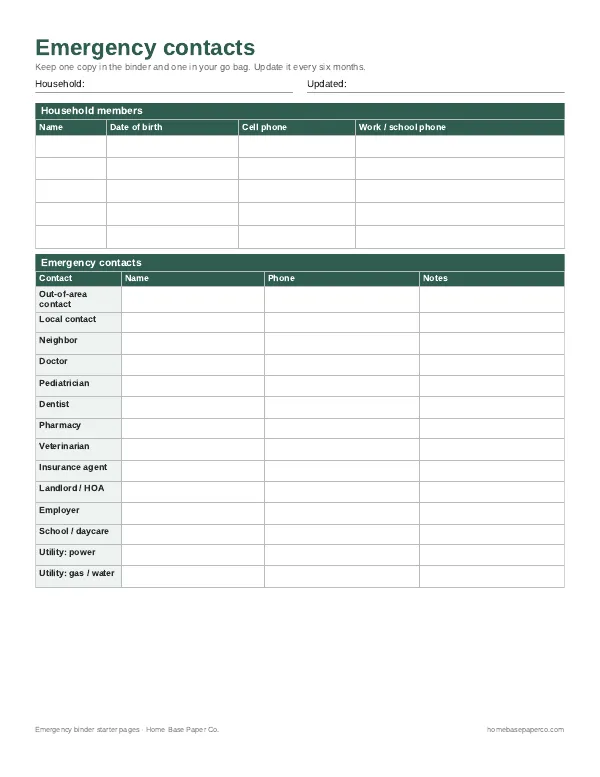
Have the important stuff in one place: get the free emergency binder pages
Printable starter pages for household members, emergency contacts, medical notes and where key documents live. You'll also get our weekly HomeBase email with simple ways to keep family records and important papers in order.
Sources
- Texas Department of Insurance: Home insurance guide tdi.texas.gov
- FEMA FloodSmart floodsmart.gov
- Investopedia: Renters insurance investopedia.com