

The short answer: the 70/20/10 budget splits take-home pay into 70% for living expenses, 20% for savings and 10% for debt or giving. On $4,000 a month, that's $2,800 to live on, $800 to save and $400 for debt or giving.
- Living (70%): housing, utilities, groceries, transportation, insurance, minimum debt payments, fun money
- Savings (20%): a starter emergency fund, retirement, sinking funds and bigger goals
- Debt or giving (10%): extra debt payments, or giving once you're debt-free
- Start in five steps: find take-home pay, do the math, list living costs, automate the 20% and 10%, track the 70% weekly
- Next step: Plan it with the Budget Planner Printable ($5.99).
The 70 20 10 budget splits your take-home pay three ways: 70% for living expenses, 20% for savings and 10% for paying off debt or giving. On $4,000 a month after taxes, that's $2,800 to live on, $800 to save and $400 for debt or giving. It's one of the simplest budget rules there is, because you only track three numbers.
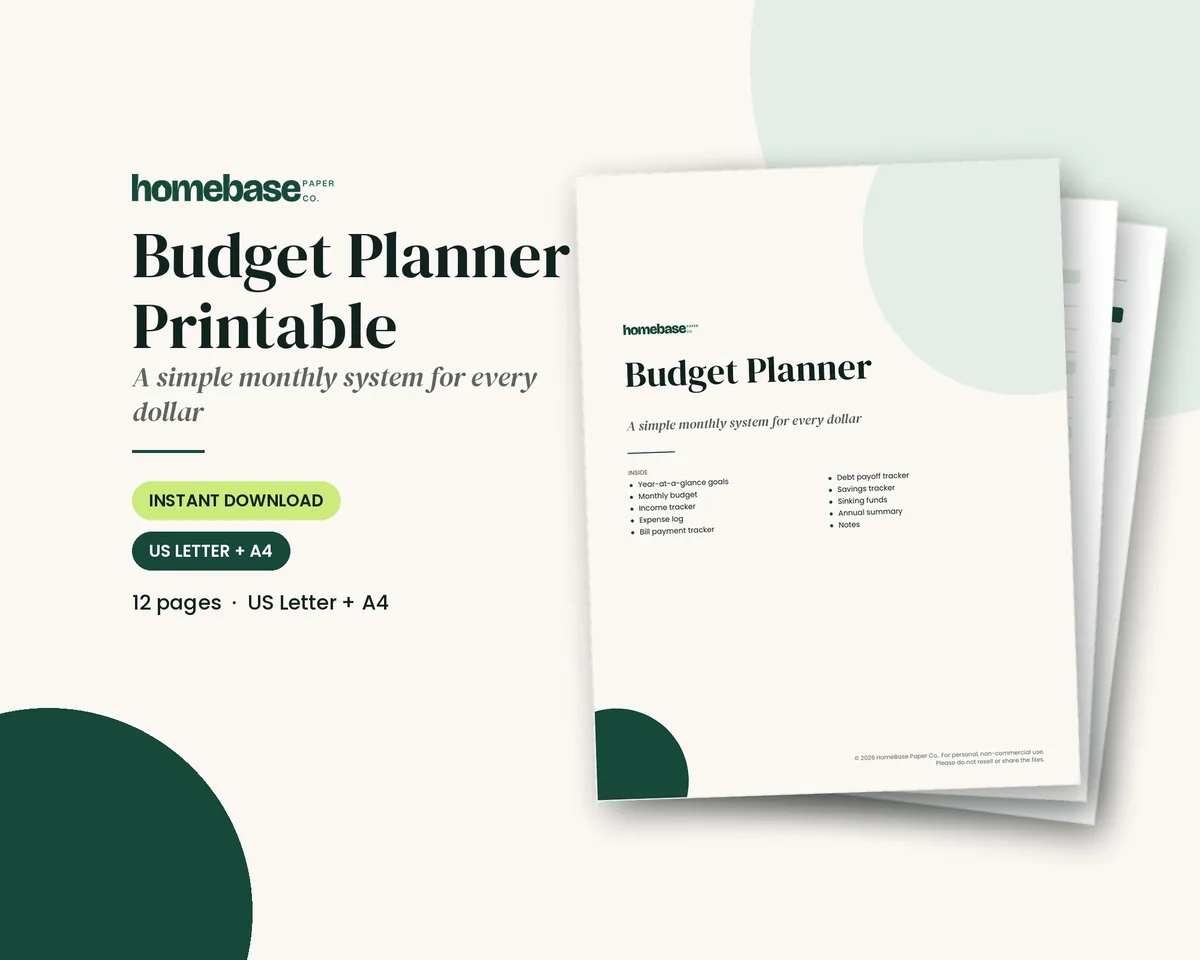
Our Budget Planner Printable has pages that match each bucket: a monthly budget for the 70%, a savings tracker for the 20% and a debt payoff tracker for the 10% if it goes to debt.
I'm the family coordinator type, the oldest of three from Detroit, and I like a plan that fits on one page. The 70/20/10 rule is exactly that.
How the 70/20/10 budget works
| Bucket | Share of take-home pay | What it covers |
|---|---|---|
| Living expenses | 70% | Housing, utilities, groceries, transportation, insurance, phone, minimum debt payments, subscriptions, eating out, fun money |
| Savings | 20% | Emergency fund, retirement, sinking funds, a house down payment, other goals |
| Debt or giving | 10% | Extra payments on debt, or giving and tithing once you're debt-free |
Start with take-home pay, the amount that actually hits your account after taxes and paycheck deductions. If you already save for retirement through your paycheck, you can count that toward your 20%.
70/20/10 budget examples by income
| Monthly take-home pay | 70% living | 20% savings | 10% debt or giving |
|---|---|---|---|
| $2,500 | $1,750 | $500 | $250 |
| $3,500 | $2,450 | $700 | $350 |
| $4,000 | $2,800 | $800 | $400 |
| $5,000 | $3,500 | $1,000 | $500 |
| $6,500 | $4,550 | $1,300 | $650 |
| $8,000 | $5,600 | $1,600 | $800 |
70/20/10 on a biweekly paycheck: $2,000 example
If you're paid every two weeks, run the same math on each paycheck. A $2,000 biweekly paycheck becomes $1,400 for living costs, $400 for savings and $200 for debt or giving.
| Take-home per biweekly paycheck | 70% living | 20% savings | 10% debt or giving |
|---|---|---|---|
| $1,500 | $1,050 | $300 | $150 |
| $2,000 | $1,400 | $400 | $200 |
| $2,500 | $1,750 | $500 | $250 |
| $3,000 | $2,100 | $600 | $300 |
Keep in mind that 26 biweekly paychecks a year means two months have three paychecks. Many people plan the 70% for rent and bills around the two-paycheck months and send the third check to savings or debt. Our Paycheck Budget Spreadsheet ($5.99) assigns each bill to the right check.
What goes in each bucket
The 70%: living expenses
This bucket holds needs and wants together. That's the big difference from other rules. Rent, the electric bill, groceries and gas live here, and so do takeout, streaming and a new pair of shoes. Minimum payments on your debts belong here too, because they're a bill you have to pay.
Because everything shares one bucket, you get flexibility. If rent is high, you trim wants. If you have a cheap month, you have more room for fun.
The 20%: savings
Fill these in order:
- A starter emergency fund. The CFPB's guide to building an emergency fund suggests setting a savings goal, starting small and making consistent contributions, with automatic recurring transfers often one of the easiest ways to save.
- Retirement. At least enough to get any employer match.
- Sinking funds. Save monthly for known costs like Christmas, car repairs, back-to-school and annual bills. Read more in sinking funds.
- Bigger goals, like a down payment or a full emergency fund.
The 10%: debt payoff or giving
If you carry credit card or other high-interest debt, this 10% goes on top of your minimum payments. The CFPB's How to reduce your debt explains two common ways to aim it: the highest interest rate method and the snowball method, which starts with your smallest debt. Compare them in debt snowball vs. avalanche.
Once you're debt-free, the 10% can go to giving. My Christian faith is important to me, and for many families of faith a 10% bucket is a natural fit for tithing and generosity. If giving is your priority, see how to budget for charitable giving.
70/20/10 vs. 50/30/20
| 70/20/10 | 50/30/20 | |
|---|---|---|
| Needs and wants | Together in 70% | 50% needs, 30% wants |
| Savings | 20% | 20% (savings and extra debt payments) |
| Debt or giving | Separate 10% | Inside the 20% |
| Best for | Higher-cost areas, people who want a simple plan, active debt payoff or giving | People who overspend on wants and want a clear limit |
Both rules save 20%. The 70/20/10 rule simply adds a dedicated 10% for debt or giving and stops splitting needs from wants. If you want a separate wants limit, read our guide to the 50/30/20 budget.
How to start a 70/20/10 budget in 5 steps
- Find your monthly take-home pay. Use your average if it changes. For variable pay, see how to budget with irregular income.
- Do the math. Multiply by 0.70, 0.20 and 0.10.
- List last month's living expenses. Check bank and card statements and compare the total with your 70%.
- Automate the 20% and 10%. Schedule transfers to savings and extra debt payments on payday, so they happen before you spend.
- Track the 70% weekly. If you're on pace to go over, trim wants first.
When 70/20/10 doesn't fit (and what to do)
- Living costs are over 70%. Start at 80/15/5 or 85/10/5 and move one step each time you cut a bill or get a raise.
- You have a lot of high-interest debt. Try 70/10/20 for a while: a smaller emergency fund and more toward debt.
- You want every dollar assigned. A zero-based budget gives every dollar a job, and you can still use 70/20/10 as your targets.
Track your 70/20/10 budget on paper
Three numbers are easy to remember, but spending is easy to forget. The Budget Planner Printable ($5.99) has 12 undated pages, including a monthly budget, expense log, savings tracker, sinking funds page and debt payoff tracker. Print a fresh set every month.
Put the 20% and 10% to work
For your 10%, the Debt Payoff Planner Spreadsheet ($6.99) lets you pick snowball or avalanche, add your extra payment and see your debt-free month. For your 20%, the Sinking Funds Tracker ($4.99) shows how much to set aside each month for up to 20 savings goals. Both work in Excel and Google Sheets.
Get the full budgeting set
The Ultimate Budget Bundle ($19.99, $46.42 if bought separately) includes all three tools above plus the Annual, Zero-Based and Paycheck Budget Spreadsheets and two bill trackers. Browse all money planners.
See also
Make it easier
Tools for this

Printables
Budget Planner Printable
Twelve undated pages you can print every month: budget, bills, spending, savings and debt.

Spreadsheets
Debt Payoff Planner
Pick snowball or avalanche, add any extra payment, and get your debt-free month instantly.

Spreadsheets
Sinking Funds Tracker
It does the math: how much to set aside each month to hit every goal on time.
Frequently asked questions
What is the 70/20/10 budget rule? The 70/20/10 budget rule splits your take-home pay into three parts: 70% for living expenses, 20% for savings and 10% for paying off debt or giving. It's a simple way to budget without tracking dozens of categories.
What goes in the 70% of the 70/20/10 rule? Everything you spend to live: rent or mortgage, utilities, groceries, gas, insurance, phone, minimum debt payments, subscriptions, eating out and fun money.
Is the 20% in the 70/20/10 rule for savings or investing? The 20% in the 70/20/10 rule covers both savings and investing. Use the 20% for your emergency fund first, then for retirement contributions, sinking funds and other savings goals.
Should the 10% go to debt or giving? Put the 10% toward debt first if you carry credit card debt, then switch it to giving once you're debt-free. If you carry credit card debt, the 10% usually goes to extra debt payments, and the Debt Payoff Planner shows how much sooner those extra payments get you out. Once you're debt-free, many families use it for giving, tithing or a bigger savings goal.
Is 70/20/10 better than 50/30/20? Neither is better for everyone. 70/20/10 is simpler and fits higher-cost areas because needs and wants share one 70% bucket. 50/30/20 separates needs from wants, which helps if wants are where your money leaks.
Does the 70/20/10 rule use gross or net income? The 70/20/10 rule uses net income, also called take-home pay: the amount that lands in your bank account after taxes and paycheck deductions. That's the money you actually have to divide, so start from your deposit amount rather than your salary.
What if my living expenses are more than 70%? Start with the split you can manage, like 80/15/5, and move toward 70/20/10 as you cut costs or earn more. Savings and debt payments still happen, just at a smaller percentage.
What's the easiest way to track a 70/20/10 budget? Write your three numbers at the top of a monthly budget page and log spending against the 70%. The Budget Planner Printable ($5.99) has a monthly budget, expense log, savings tracker and debt payoff tracker.
How do I use the 70/20/10 budget with a $2,000 biweekly paycheck? With a $2,000 biweekly paycheck, the 70/20/10 budget gives you $1,400 for living costs, $400 for savings and $200 for debt payoff or giving from each check. Move the savings and debt amounts out on payday so the money is spent before you see it.
More from HomeBase
You may also like

Spreadsheets
Bill Tracker Spreadsheet
Bills due in 3 days or less light up red, so nothing slips through.

Spreadsheets
Paycheck Budget Spreadsheet
Enter your bills once. The sheet tells you which paycheck pays each one, all year.

Spreadsheets
Zero-Based Budget Spreadsheet
The 'Left to budget' counter turns green when every dollar has a job.

Spreadsheets
Annual Budget Spreadsheet
See exactly where your money goes every month - without complicated software.
 Club
Monthly club
Money Club
Anyone who wants a clear plan for the month's bills, holiday spending and savings.
Free printable
Give every dollar a job: get the free monthly budget template
A printable zero-based monthly budget: income, bills, everyday spending and savings on one page, with a planned vs. actual column. You'll also get our weekly HomeBase email with simple budgeting and bill-paying tips.

Sources
- CFPB: An essential guide to building an emergency fund consumerfinance.gov
- CFPB: How to reduce your debt consumerfinance.gov