

The short answer: an escrow account is a holding account your mortgage servicer uses to pay your property taxes and homeowners insurance for you. A slice of each monthly mortgage payment goes in, and the servicer pays the big bills when they come due. Your payment changes when those bills change.
- What it covers: property taxes, homeowners insurance, and sometimes mortgage or flood insurance
- Monthly amount: about one-twelfth of the yearly bills plus a small cushion
- Cushion limit: no more than two months' worth under federal rules
- Surplus of $50 or more: refunded within 30 days if you're current
- Free help: download the bill calendar to see every due date
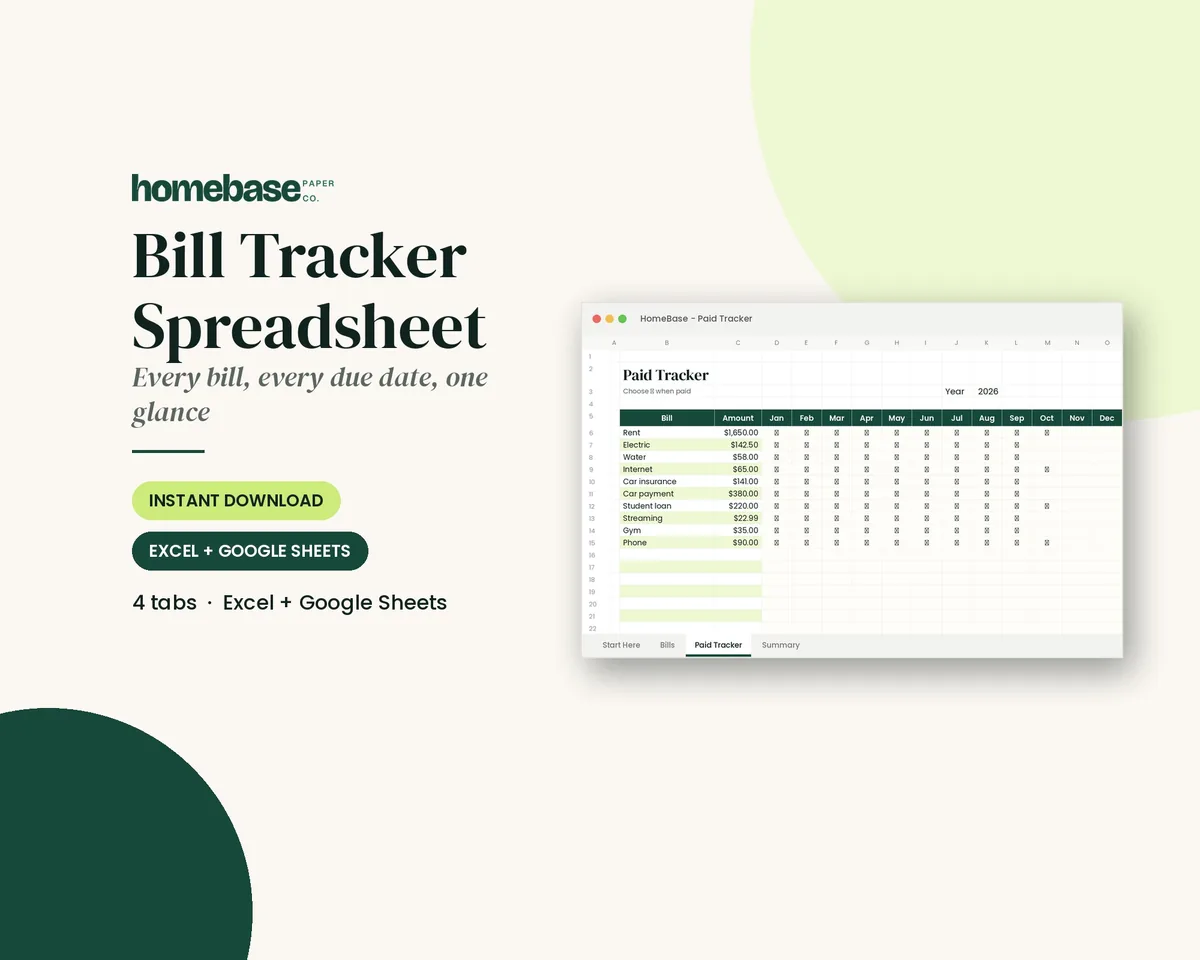
- Next step: Track your house payment and every other bill in the Bill Tracker Spreadsheet ($4.99).
Our picks for what is an escrow account

Spreadsheets
Bill Tracker Spreadsheet
Bills due in 3 days or less light up red, so nothing slips through.
Printables
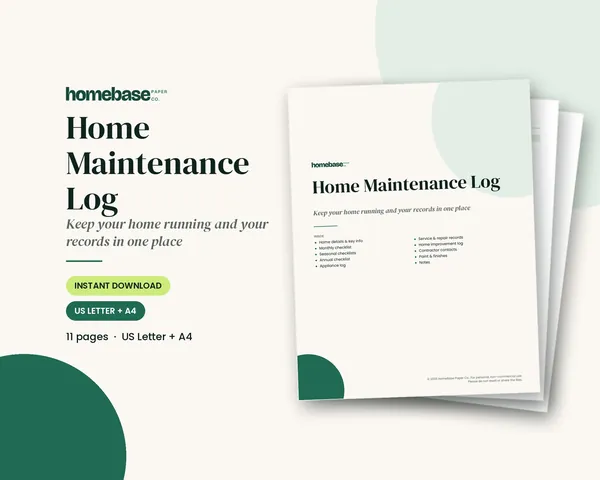
Home Maintenance Log
Monthly, seasonal and annual checklists plus a record of every appliance and repair.

Spreadsheets
Sinking Funds Tracker
It does the math: how much to set aside each month to hit every goal on time.
Checked November 4, 2026 against the CFPB's escrow guidance and Regulation X (12 CFR 1024.17).
How a mortgage escrow account works
The CFPB describes escrow, also called an impound account, as an account your lender sets up to pay certain property-related expenses. Here is the cycle:
- At closing you usually fund the account with a few months of taxes and insurance, so it has money from day one.
- Every month your payment includes principal, interest and an escrow amount.
- When bills come due the servicer pays your property tax bill and insurance premium from the account.
- Once a year the servicer runs an escrow analysis, sends you a statement and resets your monthly escrow amount for the next 12 months.
- Any surplus or shortage is refunded to you or spread into your new payment.
Many lenders require escrow so they know the taxes and insurance get paid. If those bills went unpaid, a tax lien or a lapse in coverage would put both you and the lender at risk.
What your monthly payment looks like with escrow
Here is a sample payment on a home with $3,600 a year in property taxes and $1,800 a year in homeowners insurance.
| Part of the payment | Yearly cost | Monthly amount |
|---|---|---|
| Principal and interest (sample) | n/a | $1,600 |
| Property taxes | $3,600 | $300 |
| Homeowners insurance | $1,800 | $150 |
| Total monthly payment | $2,050 |
At closing the servicer can also collect a cushion of up to one-sixth of the yearly escrow total. Here that is $5,400 ÷ 6 = $900, about two months of escrow.
Escrow rules that protect you
Federal Regulation X (12 CFR 1024.17) sets the main limits on how servicers run escrow accounts.
| Rule | What it means for you |
|---|---|
| Monthly charge | No more than 1/12 of the expected yearly escrow bills, plus the cushion |
| Cushion | No more than 1/6 of the estimated yearly escrow payments (about 2 months) |
| Annual analysis | The servicer must review the account each year and send a statement |
| Statement timing | Within 30 days of the end of the escrow year |
| Surplus | $50 or more is refunded within 30 days if you're current on payments |
| Shortage | One month's escrow or more can be spread over at least 12 months |
The CFPB's mortgage servicing FAQs list what the annual statement must show: your payment amounts, what was paid in and out, the ending balance and how any surplus or shortage is handled.
Escrow shortages, surpluses and payment changes
Property taxes and insurance premiums change, so your escrow payment does too, even on a fixed-rate loan.
- Shortage: the account is projected to run low. Your payment goes up for the next year to cover the gap and the higher bills.
- Deficiency: the account actually went negative because the servicer paid more than you had in it. You repay it under the same spread-out rules.
- Surplus: you paid in more than needed. You get a check, or a credit if it is under $50.
What to do when your escrow payment jumps
- Read the annual escrow statement line by line, and compare the tax and insurance amounts with your actual bills.
- Shop your homeowners insurance before the renewal date. A lower premium lowers your escrow payment.
- Check your property tax assessment, and appeal it if it looks wrong.
- Decide whether to pay any shortage in one lump sum or spread it over 12 months.
- Update your monthly budget with the new payment right away.
Escrow at closing vs a mortgage escrow account
The word "escrow" means two things in real estate. When you buy a house, a title or escrow company holds your earnest money and closing funds until the sale is complete. That account closes when you get the keys. The mortgage escrow account is the one that stays open for the life of your loan. If you are still house hunting, start with how much house you can afford and how to save for a house.
Budget for the bills escrow covers
Whether or not you have escrow, it helps to see the real yearly cost of owning a home. If your loan has no escrow, set the money aside yourself each month in a sinking fund.
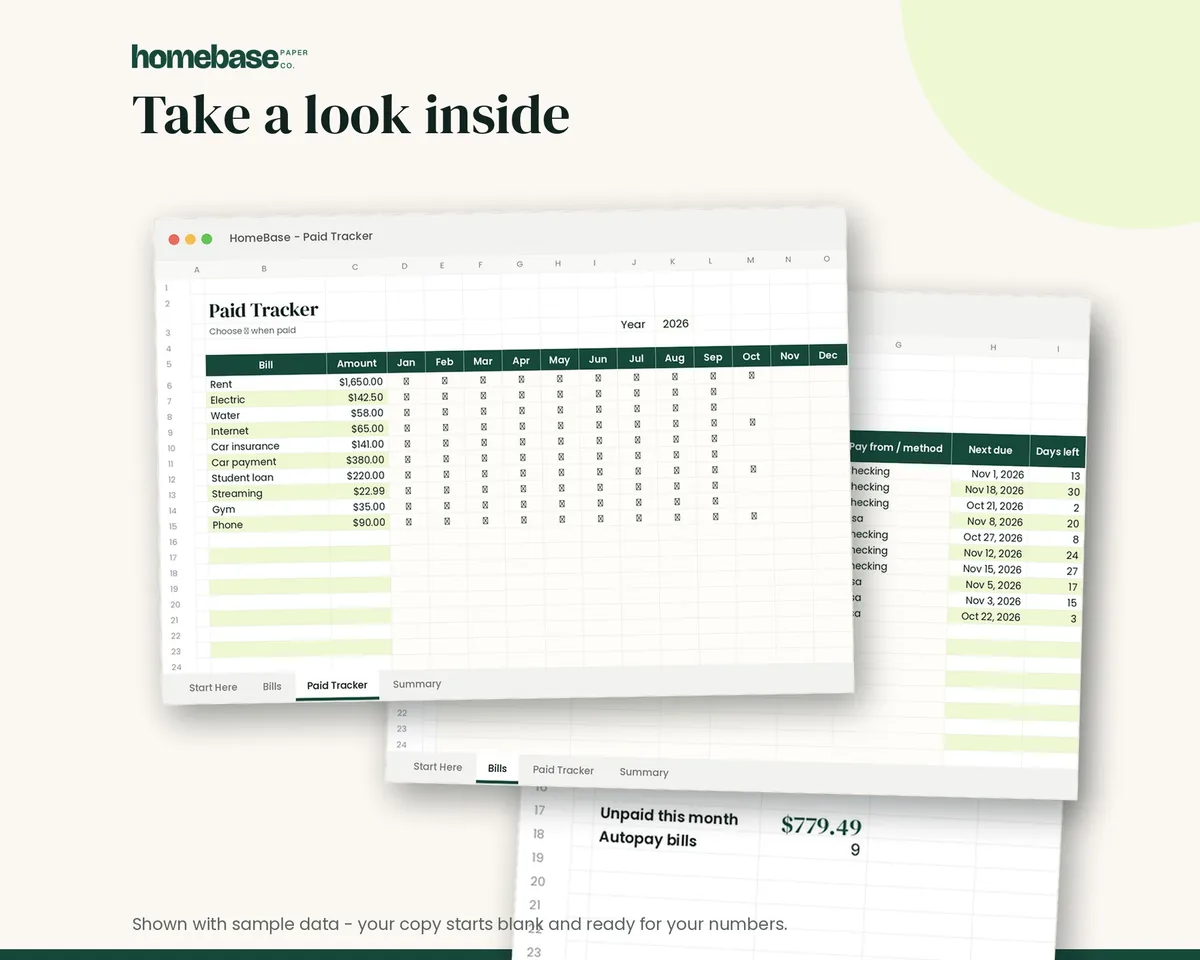
- Bill Tracker Spreadsheet ($4.99): list your mortgage, escrow changes and every other bill with due dates.
- Sinking Funds Tracker Spreadsheet ($4.99): save monthly for property taxes and insurance if you pay them yourself.
- Home Maintenance Log ($5.99): track the repairs and upkeep escrow does not cover.
See also our home inspection checklist, rent to own homes guide and the budget categories list, or browse all printable planners.
Bill Tracker Spreadsheet
Bills due in 3 days or less light up red, so nothing slips through.
$4.99 · Instant download. Print at home or fill it in on screen. Or browse the full Budget & Money collection.
Frequently asked questions
What is an escrow account in simple terms? An escrow account is a holding account your mortgage servicer sets up to pay your property taxes and homeowners insurance for you. Part of every monthly mortgage payment goes into it, and when the tax or insurance bill comes due the servicer pays it from that account, so you are not hit with one big bill once or twice a year.
Is escrow part of my mortgage payment? Yes, if your loan has escrow. Your monthly payment is usually principal and interest plus an escrow amount that covers one-twelfth of your estimated yearly property tax and insurance bills, and sometimes mortgage insurance or flood insurance too. That is why your payment can change even on a fixed-rate loan.
Why did my escrow payment go up? Usually because your property taxes or homeowners insurance premium went up, so the servicer needs more each month to cover next year's bills. If last year's bills were higher than the estimate, you may also have a shortage to repay, which raises the payment for the next 12 months on top of the new higher estimate.
What is an escrow shortage and do I have to pay it all at once? A shortage means the account is projected to fall below its target balance. Federal rules say that if the shortage is one month's escrow payment or more, the servicer must let you spread repayment over at least 12 months. You can usually choose to pay it in one lump sum instead, which keeps your monthly payment lower.
Will I get a refund if there is extra money in escrow? You'll often get a refund when your escrow account has extra money. Under federal Regulation X, if your annual escrow analysis shows a surplus of $50 or more and you are current on your payments, the servicer must refund it within 30 days. A surplus under $50 can be refunded or credited against next year's escrow payments instead.
How much extra can a lender keep in my escrow account? Federal rules allow a cushion of no more than one-sixth of the estimated total yearly escrow payments, which is about two months' worth. State law or your loan documents can set a smaller cushion. The cushion is there so a slightly higher tax or insurance bill does not overdraw the account.
Can I get rid of my escrow account? You can sometimes get rid of an escrow account, depending on your loan. Many conventional lenders will let you waive or cancel escrow once you have enough equity, often with a fee or a slightly higher rate, but FHA and some other government-backed loans generally require it. If you drop escrow, set the money aside yourself every month so the tax and insurance bills never catch you short.
Who manages my escrow account? Your mortgage servicer, the company you send your monthly payment to. It may be your original lender or a company the loan was sold to. The servicer must review the account once a year and send you an annual escrow statement showing what came in, what went out and what next year's payment will be.
What is the difference between escrow at closing and an escrow account? When you buy a home, a neutral third party holds your earnest money and closing funds in escrow until the sale is complete. That is a one-time purchase escrow. A mortgage escrow account is different: it stays open for the life of the loan and pays property taxes and insurance every year.
Does my escrow account earn interest? Most escrow accounts don't earn interest. Federal law does not require servicers to pay interest on escrow balances, though a handful of states do require it for certain loans. Because the balance is kept close to what is needed for upcoming bills, any interest would be small either way.
What happens if my servicer pays a tax bill late? If your escrow account has the money and your payments are current, the servicer is responsible for paying the bills on time. If a late payment leads to a penalty, contact the servicer in writing, ask them to fix it and keep copies of your letters and statements. You can also submit a complaint to the CFPB.
Is it better to have an escrow account or pay taxes myself? Escrow is easier for most people because the bills are paid automatically in small monthly amounts. Paying yourself gives you more control and lets your savings earn interest, but you must have the full tax and insurance amounts ready on the due dates. If you skip escrow, a sinking fund is the simplest way to stay ready.
Free printable
Give every dollar a job: get the free monthly budget template
A printable zero-based monthly budget: income, bills, everyday spending and savings on one page, with a planned vs. actual column. You'll also get our weekly HomeBase email with simple budgeting and bill-paying tips.

Sources
- CFPB: What is an escrow or impound account? consumerfinance.gov
- CFPB: Regulation X, 12 CFR 1024.17 Escrow accounts consumerfinance.gov
- CFPB: Mortgage servicing FAQs consumerfinance.gov