

The short answer: the average grocery cost per month for a US household was about $541 in 2025, according to the Bureau of Labor Statistics. What a healthy diet costs depends on who's eating.
- One adult (USDA, Sept 2026): $305 to $584 a month
- Couple: $630 to $1,008 a month
- Family of four: $1,024 to $1,682 a month
- Eating out adds about $345 a month for the average household, on top of groceries
- Next step: Plan it with the Meal Planner & Grocery List ($3.99).
The average grocery cost per month for a US household was about $541 in 2025, based on $6,491 a year spent on food at home in the Bureau of Labor Statistics Consumer Expenditure Survey. What a healthy diet costs depends on who's eating: USDA's September 2026 food plans put one adult at $305 to $584 a month, a couple at $630 to $1,008 and a family of four at $1,024 to $1,682. Below are the numbers for 1 to 6 people, how to pick the right level for your household and a simple way to set a grocery budget you can keep.
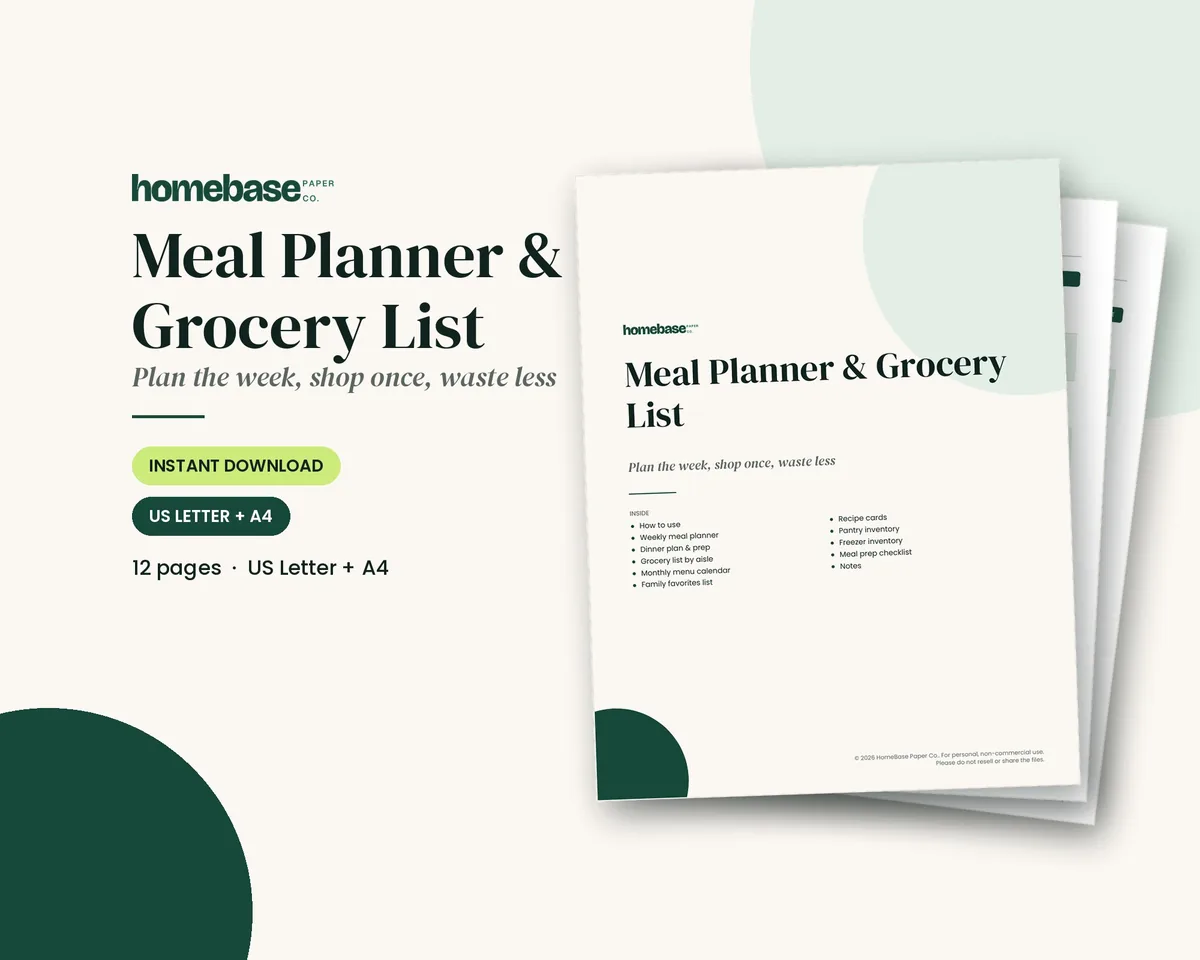
Our Meal Planner & Grocery List printable ($3.99) has a weekly menu, an aisle-sorted grocery list and pantry and freezer inventories, so the number you pick actually holds up at the checkout.
I love cooking, and I grew up as the oldest of three, the one my family leaned on to keep everything coordinated. Grocery money was always part of that picture. What I learned is that a grocery budget works best when it starts from a real number, not a guess.
Average grocery cost per month at a glance
There are two ways to answer "what's average?" One is what households actually spend. The other is what a healthy, home-cooked diet costs. Both are useful, and they answer different questions.
| Measure | Monthly cost | What it tells you |
|---|---|---|
| Average US household, food at home (BLS, 2025) | about $541 | What a typical household actually spent on groceries |
| Average US household, eating out (BLS, 2025) | about $345 | Restaurant, takeout and coffee spending, on top of groceries |
| One adult, USDA plans (Sept 2026) | $305 to $584 | What a healthy diet costs one person cooking at home |
| Couple, USDA plans (Sept 2026) | $630 to $1,008 | Same, for two adults ages 20 to 50 |
| Family of 4, USDA plans (Sept 2026) | $1,024 to $1,682 | Same, for two adults and two school-age kids |
The BLS monthly figures are our math: $6,491 a year for food at home and $4,142 for food away from home in 2025, divided by 12. The survey averages households of every size together, so a single person or a large family should use the household tables below instead.
Average grocery cost per month by household size (USDA, September 2026)
USDA publishes four food plans every month, from Thrifty to Liberal. Each one prices a healthy diet made at home at a different cost level. The Monthly Cost of Food Reports list a cost for each age and sex, and USDA tells you to add those up for your household, then adjust for size: add 20% for one person, 10% for two and 5% for three, and subtract 5% for five or six people.
We did that math for the most common households:
| Household | Thrifty | Low-Cost | Moderate-Cost | Liberal |
|---|---|---|---|---|
| 1 woman, 20 to 50 | $305 | $332 | $404 | $516 |
| 1 man, 20 to 50 | $383 | $381 | $478 | $584 |
| 1 woman, 51 to 70 | $284 | $323 | $398 | $479 |
| Couple, 20 to 50 | $630 | $653 | $808 | $1,008 |
| Couple, 51 to 70 | $569 | $625 | $777 | $933 |
| Couple, 71 and older | $582 | $621 | $764 | $927 |
| Family of 3 (child 2 to 3) | $783 | $806 | $989 | $1,227 |
| Family of 3 (child 6 to 8) | $821 | $898 | $1,091 | $1,337 |
| Family of 4 (kids 6 to 8 and 9 to 11) | $1,024 | $1,127 | $1,389 | $1,682 |
| Family of 5 (kids 4 to 5, 6 to 8, 9 to 11) | $1,152 | $1,241 | $1,530 | $1,853 |
| Family of 6 (kids 2 to 3, 4 to 5, 6 to 8, 9 to 11) | $1,315 | $1,405 | $1,727 | $2,092 |
Only the $1,024 family-of-four Thrifty total is printed by USDA as a household number; it's in the Thrifty Food Plan report for September 2026, listed on USDA's monthly reports page. Every other row is our calculation from USDA's per-person costs. The Thrifty plan uses a 20-to-50 age band for adults, and the other three plans use 19 to 50. That's also why one man's Thrifty cost comes out slightly above his Low-Cost cost: the Thrifty plan was rebuilt in 2021, and the other three plans still use an older market basket.
For a deeper look at families of four, including how toddlers and teens change the number, see our grocery budget for a family of 4 guide.
Weekly grocery cost by household size
Most of us shop weekly, so here are the same numbers divided by 4.33 weeks, the factor USDA uses:
| Household | Thrifty | Low-Cost | Moderate-Cost | Liberal |
|---|---|---|---|---|
| 1 woman, 20 to 50 | $70 | $77 | $93 | $119 |
| 1 man, 20 to 50 | $88 | $88 | $110 | $135 |
| Couple, 20 to 50 | $145 | $151 | $186 | $233 |
| Family of 3 (child 6 to 8) | $189 | $207 | $252 | $309 |
| Family of 4 (kids 6 to 11) | $236 | $260 | $321 | $388 |
| Family of 5 | $266 | $286 | $353 | $428 |
| Family of 6 | $303 | $324 | $399 | $483 |
Which USDA plan matches your household?
The four plans are all healthy diets. The difference is how much convenience, variety and brand choice you're paying for.
- Thrifty: a tight budget that takes weekly meal planning, store brands, sale shopping and lots of cooking from scratch. It's the basis for SNAP benefits.
- Low-Cost: a realistic target for most budget-minded households that plan meals and cook most nights.
- Moderate-Cost: room for some name brands, convenience foods, more fresh produce and more meat and fish.
- Liberal: generous, with premium items, specialty foods and lots of variety.
If you've never tracked groceries before, start by comparing your last month of receipts to the Low-Cost column. If you're well above Moderate-Cost, there's usually money to free up. If you're near Thrifty and stretched thin, the goal is planning, not cutting further.
What pushes your grocery bill above (or below) average
The averages are a starting point. These are the things that move a real household's number the most.
Things that raise your grocery cost:
- Teenagers, especially teen boys. USDA's monthly cost for a boy 14 to 19 on the Thrifty plan ($326) is higher than for an adult man ($319).
- Special diets, food allergies or gluten-free and dairy-free swaps.
- Convenience foods: pre-cut produce, meal kits, frozen entrees and single-serve snacks. Our meal delivery services comparison prices kits per serving against USDA grocery costs.
- Living in a high-cost area. USDA's numbers are US averages, and Alaska and Hawaii have their own reports.
- Non-food items on the same receipt: paper towels, cleaning supplies, toiletries and pet food.
- Shopping without a list, or several small trips a week.
Things that lower your grocery cost:
- Planning a week of dinners before you shop.
- Building meals around what's already in the pantry and freezer.
- Store brands for staples like flour, rice, canned tomatoes and frozen vegetables.
- Cooking once and eating twice: soups, casseroles, chili and big-batch grains.
- Buying meat in family packs and freezing portions.
- Tracking prices on the items you buy most, so you can tell a real sale from a fake one. A grocery price book does exactly that.
How to set your monthly grocery budget in 6 steps
- Pull last month's receipts. Add up every grocery store, warehouse club and online order. That's your real starting number.
- Take out the non-food items. Move paper goods, cleaning supplies, toiletries and pet food to a separate household line.
- Find your USDA row. Use the table above, or add up USDA's per-person costs for your household and apply the size adjustment.
- Pick a target plan. If your real number is above Moderate-Cost, aim for Moderate-Cost first. If it's near Low-Cost, hold it there and work on waste.
- Turn it into a weekly number. Divide the monthly target by 4.33. That's your shopping limit each week.
- Plan meals before every trip. Write the week's dinners, check the pantry, then make the list. Shop the list and nothing else.
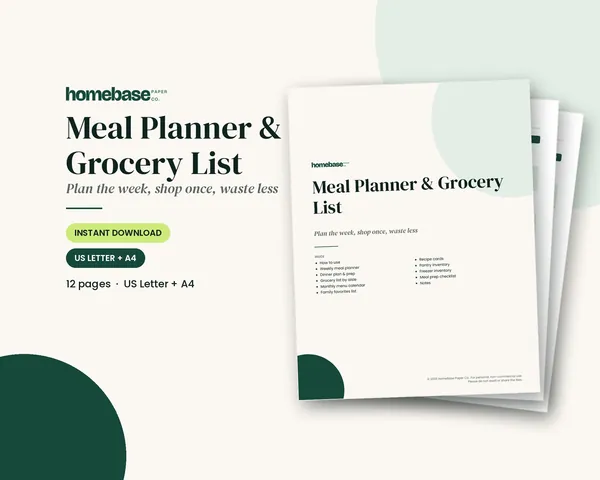
Our Meal Planner & Grocery List printable ($3.99) is built for step 6. To fit groceries into the rest of your money, the Budget Planner Printable ($5.99) gives you twelve undated monthly pages for budget, bills, spending, savings and debt. You can also run the numbers in our free budget calculator.
Starter grocery budget: a 4-week plan
If you're starting from scratch, this simple plan gets you to a real number in one month.
| Week | What to do | Goal |
|---|---|---|
| Week 1 | Shop as usual, but keep every receipt and note eating-out spending | Know your real number |
| Week 2 | Set a weekly limit at your USDA Moderate-Cost row and plan five dinners | Shop once, with a list |
| Week 3 | Do a pantry and freezer inventory, then plan meals around it | Spend less by using what you have |
| Week 4 | Compare your four weeks, then set next month's target | A budget you can repeat |
Many households find the biggest change happens in week 3. Using up what's already in the freezer usually saves more than any coupon.
Groceries vs. eating out: the other half of food spending
BLS figures show the average household spent about $345 a month on food away from home in 2025, on top of about $541 on groceries. Groceries were about 7.9% of total household spending that year. Eating out often goes up when the grocery plan breaks down, so the two numbers move together. When you do eat out, the healthiest fast food orders compare calories, protein and sodium at five chains.
A simple fix is to treat them as one food budget with two lines. Plan three or four "easy nights" a week, like breakfast for dinner, leftovers or a sheet-pan meal, so takeout isn't the default when everyone's tired. If you use a 50/30/20 budget, groceries go in the 50% needs share, and restaurant meals go in the 30% wants share.
Grocery cost by budget category: where the money goes
The BLS survey also breaks food at home into groups. For 2025, the average household's yearly grocery spending split like this:
| Grocery group | Yearly spending (2025) | About per month |
|---|---|---|
| Meats, poultry, fish and eggs | $1,579 | $132 |
| Fruits and vegetables | $988 | $82 |
| Cereals and bakery products | $741 | $62 |
| Dairy products | $644 | $54 |
| Other food at home (snacks, drinks, oils, prepared foods and more) | $2,539 | $212 |
Protein is the biggest single group, and BLS reports it rose 11.7% from 2024 to 2025. If your bill is climbing, that's the first place to look. Bean, egg and chicken-thigh dinners a couple of nights a week can make a real difference.
For a household of one, the meals-for-one plan and grocery list helps you reuse ingredients and calculate cost per portion from your receipts.
Next steps
Pick your USDA row, compare it to last month's receipts and set a weekly limit. Then plan the week before you shop. For more ways to stretch the money, read how to grocery shop on a budget and meal planning on a budget, or grab a free grocery list template.
If you want every budgeting tool in one place, the Ultimate Budget Bundle has all six of our spreadsheets plus both printable planners for $19.99 (reg. $46.42 bought separately). You can browse every printable in our Printables shop.
To summarize your own recorded spending rather than relying only on a national average, use the statistics calculator to compare the mean, median and range of consistent, same-unit observations.
Make it easier
Tools for this
Starter pickPrintables
Meal Planner & Grocery List
Weekly meals, a grocery list sorted by aisle, and pantry and freezer inventories so you shop once and waste less.
Printables
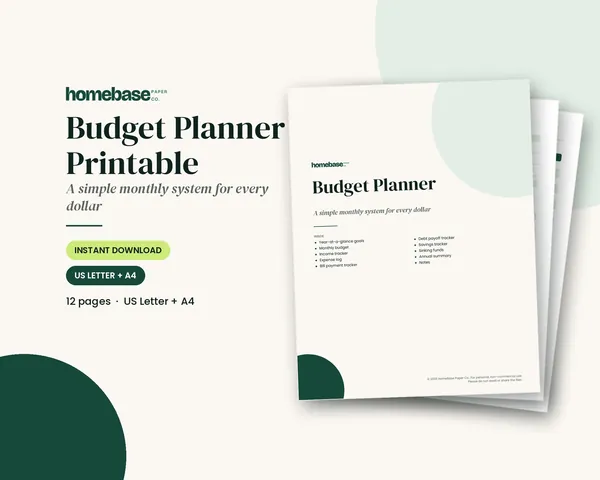
Budget Planner Printable
Twelve undated pages you can print every month: budget, bills, spending, savings and debt.
 Save 57%
Bundles
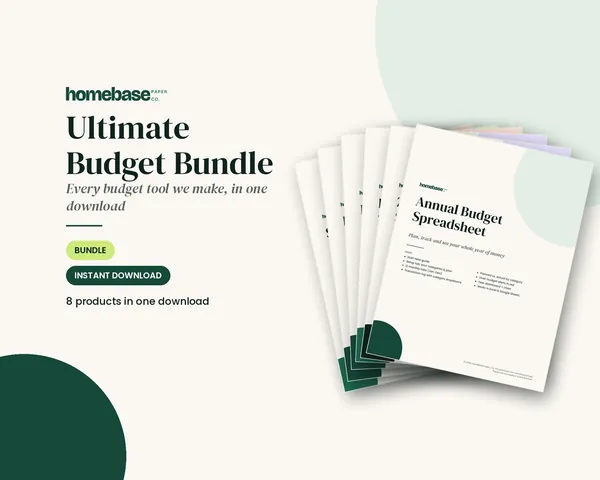
Ultimate Budget Bundle
All 6 spreadsheets + both printable planners - for less than half the price of buying them separately.
Frequently asked questions
What is the average grocery cost per month? The average US household spent about $541 a month on groceries in 2025, based on $6,491 a year for food at home in the Bureau of Labor Statistics Consumer Expenditure Survey. A healthy home-cooked diet on USDA's September 2026 food plans costs $305 to $584 a month for one adult and $630 to $1,008 for a couple.
What is the average grocery bill for one person? One adult ages 20 to 50 needs about $305 to $516 a month for a woman and $381 to $584 for a man on USDA's September 2026 food plans, including USDA's 20% single-person adjustment. Most single shoppers who plan meals land near the low end of that range.
What is the average grocery cost per month for 2 people? Two adults ages 20 to 50 spend about $630 to $1,008 a month on groceries on USDA's September 2026 food plans, or roughly $145 to $233 a week. A couple ages 51 to 70 runs about $569 to $933 a month.
How much should a family of 3 spend on groceries a month? A family of 3 with two adults and a child ages 6 to 8 needs about $821 to $1,337 a month on USDA's September 2026 food plans. With a toddler instead, it's about $783 to $1,227.
How much should a family of 4 spend on groceries per month? A family of 4 with two adults and two school-age kids needs about $1,024 to $1,682 a month on USDA's September 2026 food plans. Our full breakdown for families of four, including younger kids and teens, is in our grocery budget for a family of 4 guide.
How much do 5 or 6 people spend on groceries a month? A family of 5 with three kids ages 4 to 11 needs about $1,152 to $1,853 a month, and a family of 6 with four kids ages 2 to 11 needs about $1,315 to $2,092, on USDA's September 2026 food plans. USDA takes 5% off for these larger households because buying in bulk costs less per person.
Is $500 a month enough for groceries? Yes, $500 a month is enough for one adult on any USDA food plan except the Liberal plan, and it covers most of a couple's Thrifty budget. For a family of 3 or more it's below USDA's lowest plan, so it would take careful meal planning and a lot of cooking from scratch.
What is a realistic grocery budget? A realistic grocery budget is your own last month of receipts, compared against the USDA plan that fits your household. If you're above USDA's Moderate-Cost plan, a Meal Planner & Grocery List printable is the simplest way to bring the number down, because planning meals before you shop is what cuts impulse buys and waste.
What percentage of income should go to groceries? There's no official rule, but groceries took about 7.9% of total spending for the average US household in 2025, based on BLS figures of $6,491 for food at home out of $81,905 in total spending. In a 50/30/20 budget, groceries belong in the 50% needs share.
Do groceries include toiletries and cleaning supplies? No, USDA and BLS grocery figures cover food and drinks only, not paper goods, cleaning supplies or toiletries. If your grocery receipts include those, move them to a separate household category so you can compare your food spending to the averages fairly.
Why is my grocery bill higher than the average? Your grocery bill is likely higher than average because of local prices, teen appetites, special diets, convenience foods or non-food items on the same receipt. USDA's food plans also assume every meal and snack is made at home, so they leave out takeout, coffee runs and prepared foods.
How much should I spend on groceries per week? Divide your monthly target by 4.33 to get a weekly grocery budget, which is how USDA converts its own numbers. For example, a couple on USDA's Low-Cost plan at $653 a month should aim for about $151 a week.
How do I lower my monthly grocery cost? The fastest way to lower your monthly grocery cost is to plan a week of meals before you shop and buy only what's on the list. Our Meal Planner & Grocery List printable ($3.99) puts the weekly menu, an aisle-sorted list and pantry and freezer inventories on paper, so you shop once and throw away less.
Does SNAP use the USDA food plans? Yes, the maximum SNAP benefit is based on the cost of USDA's Thrifty Food Plan for a reference family of four, then adjusted for household size. That's why the Thrifty plan is often called the government's bare-bones grocery budget.
More from HomeBase
You may also like
Printables
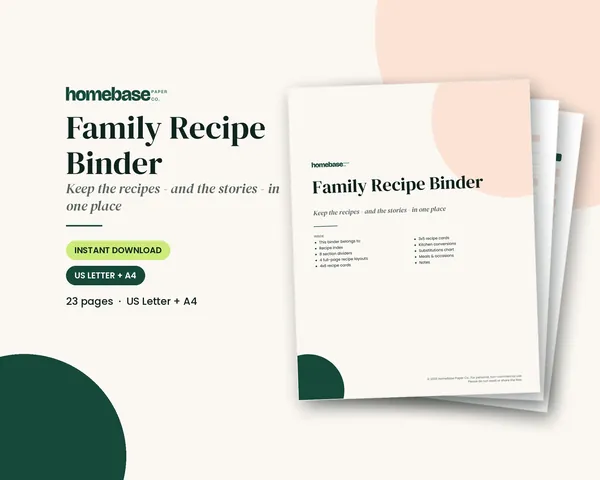
Family Recipe Binder
Section dividers, four recipe page layouts with room for the family story, 4x6 and 3x5 cards and a conversion chart - print it or type into the fillable version.
 Thanksgiving Edition
Printables
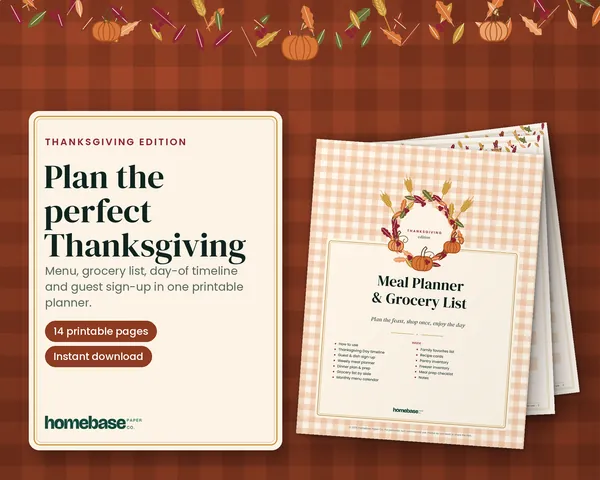
Meal Planner & Grocery List: Thanksgiving Edition
Plan the perfect Thanksgiving: our meal planner in a warm harvest design, with a Thanksgiving Day timeline, a guest & dish sign-up, an aisle-sorted grocery list and pantry and freezer trackers.

Printables
Household Binder
Family info, emergency plan, calendars, meals, groceries, cleaning, bills and sitter notes.
 Starter pick
Printables
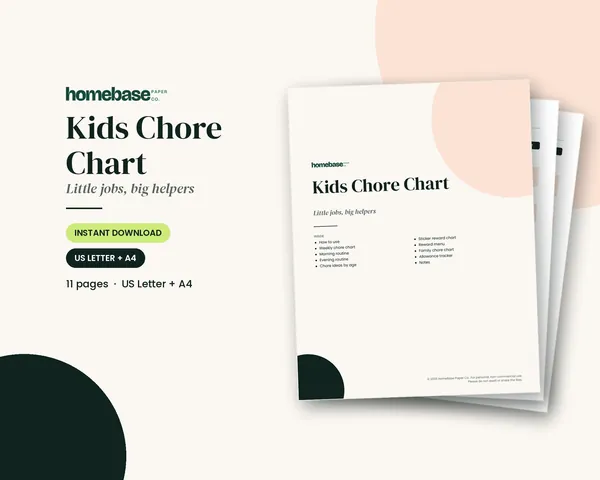
Kids Chore Chart
Weekly chore chart, morning and evening routines, chore ideas by age, a sticker reward chart and an allowance tracker.
 Club
Monthly club
Meal Plan Club
Families who want dinner planned and a grocery list ready every week.
Free printable
Save the family favorites: get the free recipe book pages
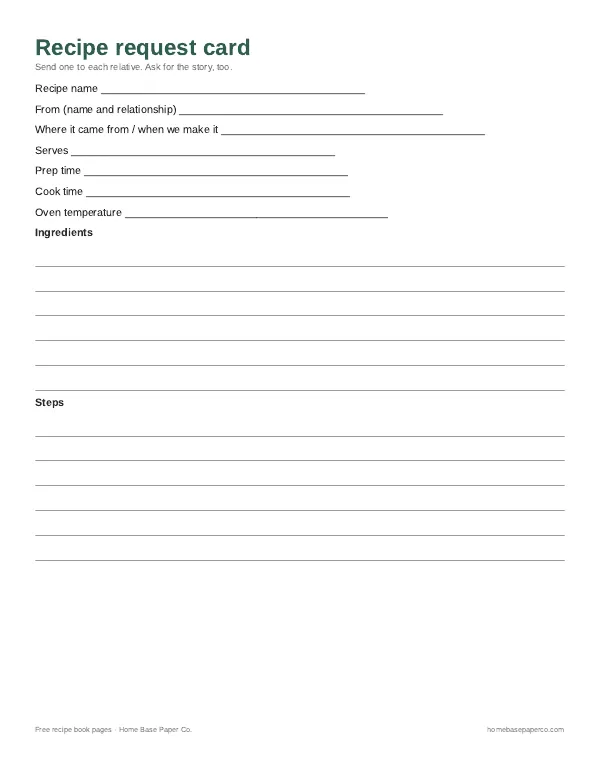
Printable recipe pages and a recipe request card to send to relatives, so the dishes everyone loves end up in one book. You'll also get our weekly HomeBase email with easy meal planning ideas and family recipe tips.
Sources
- USDA: Monthly Cost of Food Reports fna.usda.gov
- BLS: Consumer Expenditures, 2025 (news release) bls.gov