

The short answer: needs vs wants: needs are what you must have to live, earn an income and protect what you have, like housing, utilities, groceries and insurance. Wants are extras that make life nicer, like dining out and streaming.
- Budget order: needs first, savings second, wants get what's planned for them
- 3-question test, starting with "What happens if I don't buy it this month?"
- 50 examples sorted into needs, wants and gray areas
- Give wants a line, not a guilt trip, and use a 48-hour pause
- Next step: Plan it with the Budget Planner Printable ($5.99).
Needs are the things you must have to live, earn an income and protect what you have: housing, utilities, groceries, basic transportation, insurance and minimum debt payments. Wants are upgrades and extras that make life nicer but aren't necessary, like dining out, streaming, new clothes you don't need yet and the latest phone. In a budget, needs get paid first, savings second, and wants get whatever is planned for them.
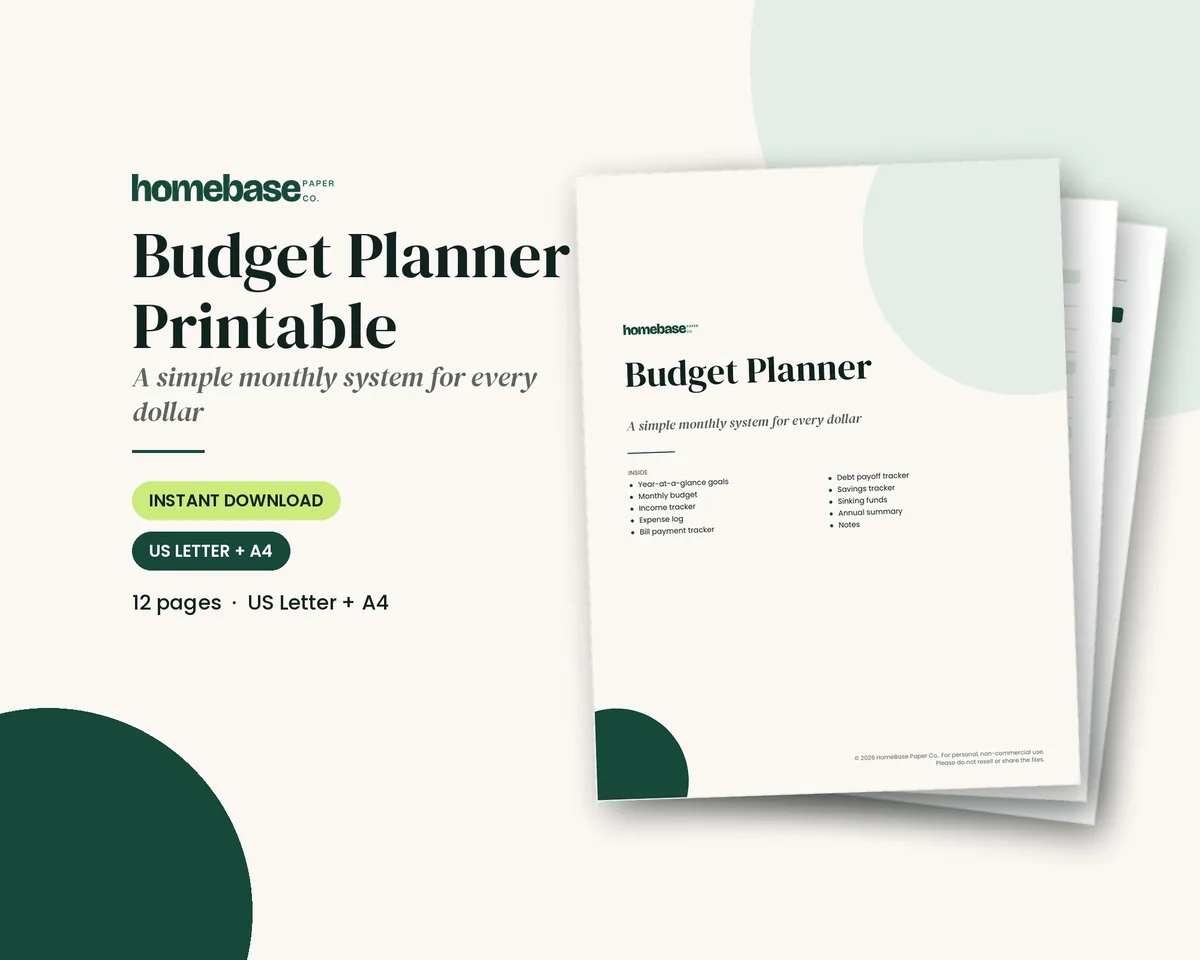
Our Budget Planner Printable has a monthly budget page, an expense log and a savings tracker, so you can sort each month's spending into needs and wants on paper.
That's the quick version. The tricky part is the gray area, where one expense is half need and half want. Below you'll find a simple test, 50 everyday examples sorted into needs, wants and gray areas, and a way to make room for both without guilt.
Needs vs. wants: the definitions
The Consumer Financial Protection Bureau's needs and wants lesson defines needs as the basic things people must have to survive (food, clothing, shelter), the resources they need to do their jobs (such as reliable transportation), and the things that protect their money and property (such as emergency savings and insurance). Wants are upgrades and other nice-to-haves that aren't necessary for living, earning or protecting what you have.
| Needs | Wants | |
|---|---|---|
| What it does | Keeps you housed, fed, healthy, working and protected | Adds comfort, fun, convenience or style |
| If you skip it | Real harm: late fees, lost job, health or safety risk | Disappointment, but life goes on |
| Budget order | Paid first | Paid after needs and savings |
| Flexibility | The amount can shrink, the category can't disappear | Can pause, shrink or disappear for a season |
The 3-question test
When you're not sure, ask these three questions about the purchase in front of you:
- What happens if I don't buy it this month? If the honest answer is "nothing bad," it's a want.
- Is there a cheaper version that does the job? If yes, the cheaper version is the need and the difference is a want.
- Does it keep me housed, fed, healthy, working or protected? If not, it's a want, even if it feels urgent.
Question 2 is the one that changes budgets. You need shoes for work; you want the $140 pair. You need a way to get to work; you want the newer car. Splitting the cost this way shows you exactly how much of a bill is "want" money.
50 examples of needs vs. wants
Usually needs
- Rent or mortgage payment
- Electricity, gas, water and trash
- Basic groceries (produce, protein, grains, dairy)
- Health insurance premiums
- Prescriptions and necessary medical care
- Car insurance (required in almost every state if you drive)
- Renters or homeowners insurance
- Basic transportation: gas, bus pass, car payment on a modest car
- Minimum debt payments
- Childcare so you can work
- A basic phone plan
- Internet, if you work or study from home
- Basic clothing and shoes for work and weather
- Toiletries and hygiene items
- Cleaning supplies and laundry detergent
- Necessary car repairs and maintenance
- School supplies that are required
- Child support or alimony
- Emergency savings deposits
- Taxes you owe
Usually wants
- Takeout, delivery and restaurant meals
- Coffee shop drinks
- Streaming services
- Cable TV
- Video games and in-app purchases
- New clothes when your current ones still fit and work
- Salon and spa visits beyond basic grooming
- Vacations and weekend trips
- Concert, movie and event tickets
- Hobby supplies
- Home decor
- Upgrading a phone that still works
- Premium cable or data add-ons
- Subscription boxes
- Gym memberships you don't use
- Name-brand groceries when store brand works
- Alcohol and specialty drinks
- Holiday decorations
- Most gifts beyond what you've planned
- Rideshares when the bus or your own car would work
Gray areas (part need, part want)
| Expense | The need part | The want part |
|---|---|---|
| Car | Reliable transportation | Bigger model, premium trim, newest year |
| Phone | Basic smartphone and plan | Latest model, unlimited premium data |
| Groceries | Staples for meals | Snacks, specialty items, convenience foods |
| Housing | A safe place near work or school | Extra bedrooms, upscale neighborhood |
| Clothing | Weather and work basics | Trends, extra pairs, designer labels |
| Internet | Speed you need to work or study | The fastest tier |
| Kids' activities | One activity for health or development | Several at once, travel teams |
| Gifts | Planned gifts within a limit | Extras added on impulse |
| Pet costs | Food, vet care, vaccinations | Treats, toys, grooming upgrades |
| Furniture | A bed, a table, seating | Matching sets, decor pieces |
Sorting your own gray areas this way, into a need part and a want part, is the most useful thing you can do with this list.
How to budget for needs and wants
It also helps to sort costs as fixed expenses or variable ones, because fixed costs are harder to cut quickly.
- Add up your needs. Use last month's bank statement. For gray areas, count only the need part.
- Set your savings amount. Even $20 a paycheck counts. Savings is the protection the CFPB lists as a need.
- What's left is your wants money. Give it a number and spend it on purpose, not by accident.
- Check the split. The 50/30/20 budget suggests about 50% for needs, 30% for wants and 20% for savings. If your needs run high, wants shrink for a season. That's normal, not failure.
- Track for one month. Tag each purchase N, W or S. It takes seconds, and the totals usually surprise people.
If you'd like a page that does this for you, the Budget Planner Printable ($5.99) has a monthly budget page, an expense log, a savings tracker and a sinking funds page in US Letter and A4. If you prefer a spreadsheet, the Zero-Based Budget Spreadsheet ($6.99) groups categories and shows a "left to budget" counter, so needs, savings and wants all get a job before the month starts. Browse all our printables or spreadsheets to compare formats.
Most wants are variable expenses, costs that change month to month, which makes them the easiest place to adjust.
Tips for keeping wants in check (without giving them up)
- Give wants a line, not a guilt trip. A planned $60 for fun is healthier than "no fun" that ends in a $200 weekend.
- Use a 48-hour pause. Put unplanned wants on a list and wait two days. Many lose their pull. Our guide on how to stop impulse buying has more tricks.
- Save for bigger wants. A vacation or a new couch is a fine goal. Give it a sinking fund so it's paid in cash.
- Revisit gray areas once a year. Phone plans, insurance and subscriptions creep up. See how to lower monthly bills.
- Talk about it as a family. A short family budget meeting helps everyone agree on what's a need in your house.
Needs vs. wants at the holidays
December is when the line blurs most. A planned gift for each person is a need in your holiday plan; the extra "just because it's on sale" gift is a want. Decide your total before the sales start, then shop from the list. Our holiday budget guide walks through it, and the free Holiday Budget Starter Kit is 3 US Letter pages, emailed after you join our list.
If you're starting from scratch
Needs vs. wants is the first idea in any budget. Once you can sort your spending, you're ready for the next step. Start with budgeting for beginners, and if you want every tool in one place, the Ultimate Budget Bundle ($19.99, $46.42 if bought separately) includes six budget spreadsheets plus the Budget Planner Printable and the Bill Tracker Printable. More options are on our bundles page.
Make it easier
Tools for this

Printables
Budget Planner Printable
Twelve undated pages you can print every month: budget, bills, spending, savings and debt.

Spreadsheets
Zero-Based Budget Spreadsheet
The 'Left to budget' counter turns green when every dollar has a job.
 Save 57%
Bundles
Ultimate Budget Bundle
All 6 spreadsheets + both printable planners - for less than half the price of buying them separately.
Frequently asked questions
What is the difference between needs and wants? A need is something you must have to live, earn an income or protect what you have, like housing, groceries, utilities, basic transportation and insurance. A want is an upgrade or extra that makes life nicer but isn't necessary, like dining out, streaming services or a newer phone.
Is a car a need or a want? Usually both: basic transportation is a need if you rely on it to get to work, school or appointments, and the extras are wants. The car itself can be part need and part want: a reliable, affordable car is the need, while the premium trim, the bigger model or the newest year is the want.
Is a cell phone a need or a want? Yes, a basic phone plan is a need for most adults today, because work, school, banks and doctors expect you to be reachable. Unlimited premium data, the newest model and phone upgrades every year are wants.
Are groceries a need or a want? Yes, groceries are a need, but not every item in the cart is. Staples like produce, protein, grains and dairy are needs, while snacks, specialty drinks and pricey convenience foods are wants. Many families split the grocery line into a needs amount and a treats amount.
How do I budget for needs and wants? List your needs first and give each one a dollar amount, then save, then spend what's left on wants you choose on purpose. The Budget Planner Printable ($5.99) has a monthly budget page, an expense log and a savings tracker, so you can see needs, wants and savings side by side every month.
What percentage of my budget should go to wants? The 50/30/20 rule suggests about 30% of take-home pay for wants, 50% for needs and 20% for savings. It's a starting point, not a law: if needs take more than half your income, wants usually shrink for a season while you rebuild.
Is saving money a need or a want? Yes, saving money is closer to a need than a want. The Consumer Financial Protection Bureau counts emergency savings and insurance as needs, because they protect your ability to meet future needs. Even a small automatic transfer each payday counts.
How do I stop spending on wants? You don't have to stop. Give wants a set amount each month and spend it guilt-free, then use a 48-hour pause for anything unplanned. A zero-based budget, like the Zero-Based Budget Spreadsheet ($6.99), gives every dollar a job before the month starts, so wants have a limit instead of a leak.
More from HomeBase
You may also like

Spreadsheets
Bill Tracker Spreadsheet
Bills due in 3 days or less light up red, so nothing slips through.

Spreadsheets
Sinking Funds Tracker
It does the math: how much to set aside each month to hit every goal on time.

Spreadsheets
Paycheck Budget Spreadsheet
Enter your bills once. The sheet tells you which paycheck pays each one, all year.

Spreadsheets
Annual Budget Spreadsheet
See exactly where your money goes every month - without complicated software.
 Club
Monthly club
Money Club
Anyone who wants a clear plan for the month's bills, holiday spending and savings.
Free printable
Give every dollar a job: get the free monthly budget template
A printable zero-based monthly budget: income, bills, everyday spending and savings on one page, with a planned vs. actual column. You'll also get our weekly HomeBase email with simple budgeting and bill-paying tips.

Sources
- Triple-I: Background on compulsory auto and uninsured motorists iii.org
- Needs and wants lesson consumerfinance.gov