

The short answer: a smart goals template turns a vague wish into a clear plan with a number and a deadline.
- Free 3-page PDF
- Test your goal against each letter: specific, measurable, achievable, relevant, time-bound
- Break it into steps and track progress month by month
- Works for money, health, home, school and work goals
- Next step: Get the free SMART goals template (we email it to you); want more? The Sinking Funds Tracker is $4.99.
A SMART goals template turns a wish like "get my money together" into a clear plan with a number and a deadline. Download the free 3-page SMART goals template below: write your goal, test it against each letter, break it into steps, and track your progress month by month. It works for money, health, home, school and work goals. Not sure which goals to pick yet? Our goal setting guide helps you choose one to three before you fill in the worksheet.
What SMART stands for
SMART goals are a simple test for whether a goal is clear enough to act on. Lake Superior State University's SMART goals worksheet frames each letter as a question:
| Letter | Stands for | Question to ask |
|---|---|---|
| S | Specific | What am I going to do? Why is this important to me? |
| M | Measurable | How will I measure my success? How will I know when I have achieved my goal? |
| A | Achievable (or Attainable) | What will I do to achieve this goal? How will I accomplish it? |
| R | Relevant | Is this goal worthwhile? How will achieving it help me? Does it fit my values? |
| T | Time-bound | When will I accomplish my goal? How long will I give myself? |
Stanford Medicine's guide to how to write SMART goals adds that a specific goal answers the "W" questions (who, what, when, where, which and why), and that measurable goals can use milestones: a series of steps that add up to the main goal.
How to use the SMART goals template
The template has three pages, and each builds on the last.
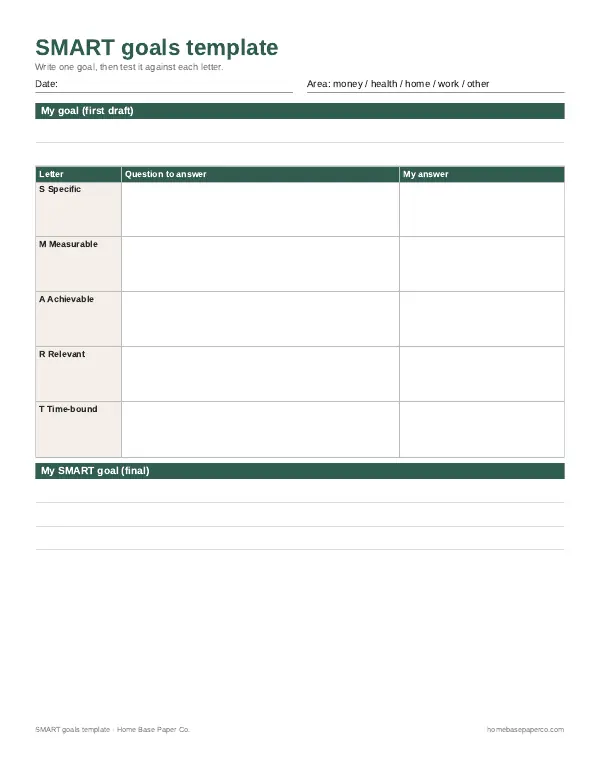
Page 1: the SMART worksheet
- Write your goal as a first draft, in plain words.
- Answer the question for each letter in the grid.
- Rewrite the goal as one sentence that includes your answers. That is your final SMART goal.
Page 2: the action plan
- Write the goal and finish date at the top.
- List the action steps, the time each needs and a target date. Check them off as you go.
- List obstacles that might come up and how you will respond.
- Note the tools and support you need: an app, a planner, a person to check in with.
This matches the structure of the LSSU worksheet, which includes steps with time estimates, obstacles and responses, and helpful tools and resources.
Page 3: the goal tracker
List goals by timeframe: short-term (under 3 months), intermediate (3 to 12 months) and long-term (a year or more), with any cost, start and target dates, and priority. Then use the monthly check-in rows to record progress and whether you need to adjust.
SMART goal examples
Here is how a vague goal becomes a SMART one:
| Vague goal | SMART goal |
|---|---|
| Save more money | Save $1,200 for an emergency fund by December 31 by moving $100 on each payday into a separate savings account |
| Pay off debt | Pay off my $2,400 store card in 12 months by paying $200 a month and stopping new charges |
| Get organized | Declutter one room each weekend in January, starting with the kitchen, and donate everything I do not keep by February 1 |
| Spend less on food | Cut takeout from 8 to 4 meals a month by planning dinners every Sunday, for the next 3 months |
| Exercise more | Walk 30 minutes, 4 days a week, for 8 weeks, logged on my calendar |
| Read more | Read 12 books this year, one a month, 20 minutes before bed |
Notice the pattern: a number, a method and a date. The second example works because the math checks out: $200 a month for 12 months is $2,400 (before any interest).
SMART goals vs. regular goals
A regular goal names a direction. A SMART goal names a destination, a route and an arrival time.
| Regular goal | SMART goal | |
|---|---|---|
| Wording | "Get out of debt" | "Pay off the $3,000 credit card by next October" |
| Measure | None | Balance on each statement |
| Plan | Hope for extra money | $250 a month on payday, plus any windfalls |
| Deadline | Someday | A specific month |
| Progress check | When you remember | Monthly check-in |
The SMART version is not more ambitious. It is just clearer, which makes it far easier to act on and to notice when you are drifting.
SMART goal ideas by life area
Not sure where to start? Pick one area and use one of these as your first draft on page 1 of the template:
Money
- Build a starter emergency fund of $1,000 in six months.
- Save a set amount for the holidays by November.
- Pay off one credit card using the snowball or avalanche method.
- Track every expense for 30 days to see where your money goes.
Home
- Declutter one closet a week for the next month.
- Set up a weekly cleaning routine and follow it for 8 weeks.
- Create a home maintenance schedule before the season changes.
Health and wellbeing
- Walk 8,000 steps on five days a week for the next two months.
- Cook dinner at home five nights a week for the next month.
- Go to bed by 10:30 on weeknights for 30 days.
Work and learning
- Finish an online course by the end of the quarter.
- Update your resume and apply for three roles this month.
- Read one professional book each month this year.
How to stay on track with your SMART goal
Writing the goal is the easy part. A few habits help you follow through:
A free habit tracker printable turns the daily action into a box you can check, which makes streaks easy to see.
- Put the goal where you will see it. Tape page 1 inside a cabinet door or use it as the first page of your planner.
- Schedule the first step today. The smallest step on your action plan should happen within 48 hours. For more on this topic, see our productivity guides.
- Use milestones. Stanford Medicine's guide suggests milestones for longer goals: smaller steps that add up to the main goal. Celebrate each one.
- Find a check-in partner. Share your goal with someone who will ask how it is going.
- Adjust instead of quitting. If a month goes badly, use the "Adjust?" column on page 3 to change the plan, not abandon it.
SMART financial goals
Money goals are some of the easiest to make SMART because they are measurable by nature. A few tips:
- Do the math first. Divide the total by the number of months to see the monthly amount. If it does not fit your budget, adjust the amount or the date. That is the Achievable test.
- Automate the step. An automatic transfer on payday turns "I will save" into something that happens without willpower.
- Track it where you budget. A goal you see every month is a goal you keep.
- Separate goals by purpose. A holiday fund and an emergency fund are different goals with different dates.
Our guide on how to set financial goals covers choosing and ranking money goals, and our savings goal tracker is a simple way to color in your progress.
Tools that do the math for you
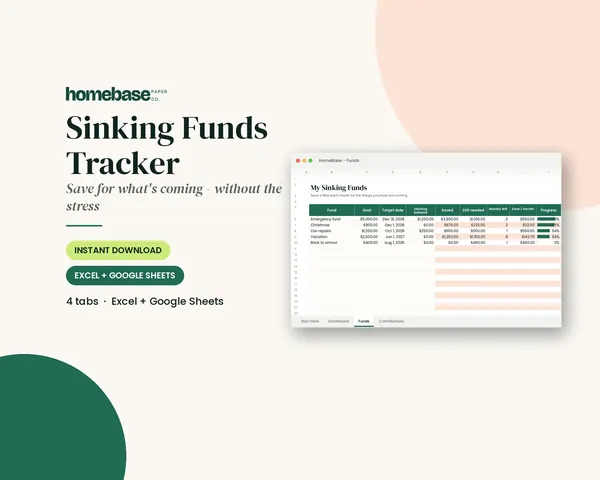
- The Sinking Funds Tracker ($4.99) is an Excel and Google Sheets spreadsheet for up to 20 savings goals. It calculates the monthly amount needed to hit each date, with progress bars, a deposit and withdrawal log, and a savings dashboard with a chart.
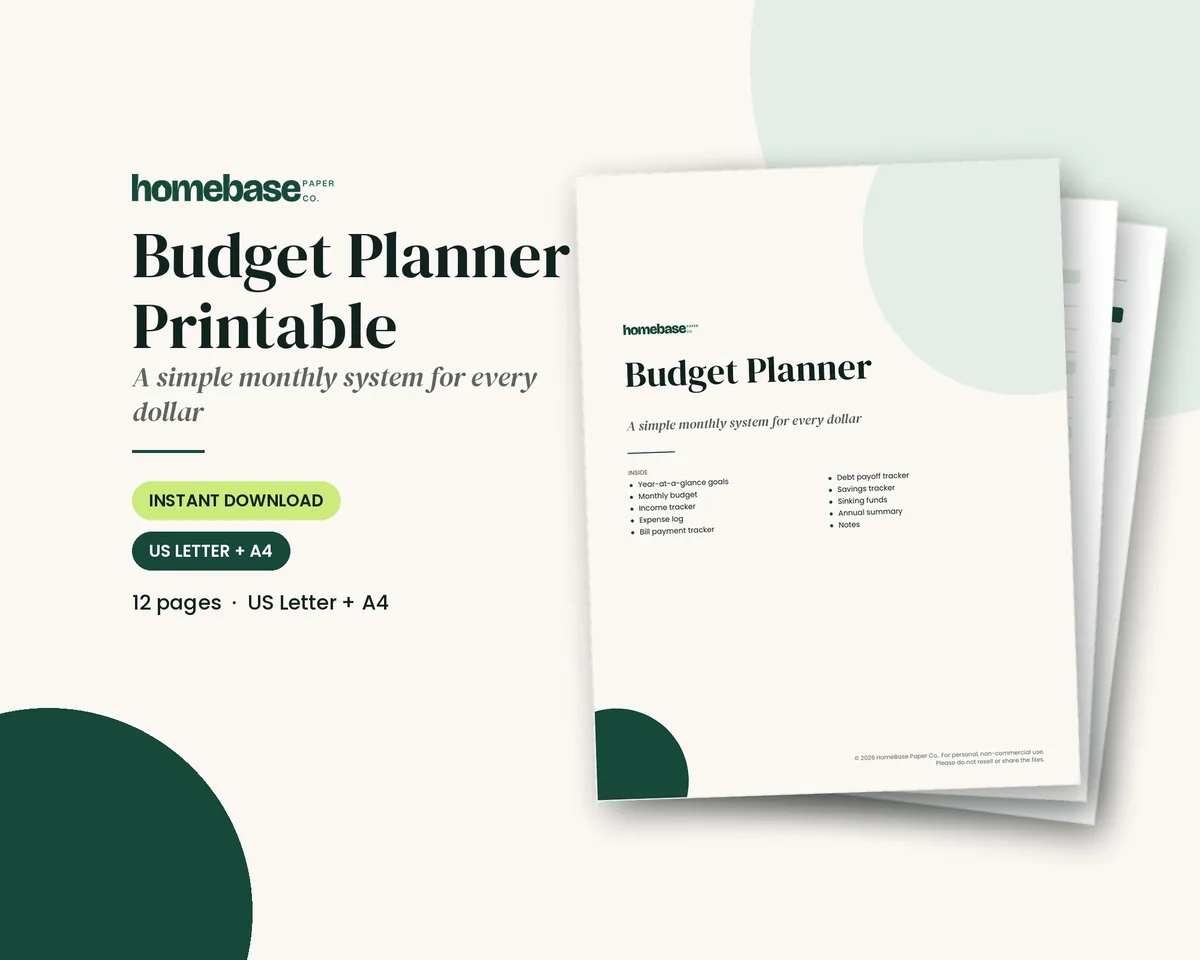
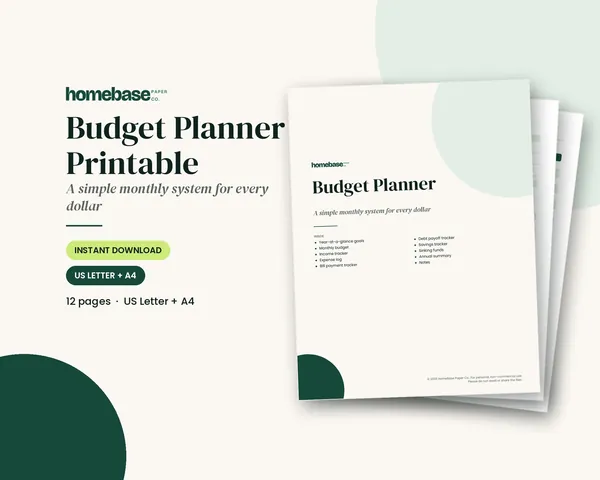
- The Budget Planner Printable ($5.99) is 12 pages, in Letter and A4, that start with money goals for the year and include a monthly budget, income tracker, expense log, bill payments, debt payoff tracker, savings tracker, sinking funds and an annual summary.
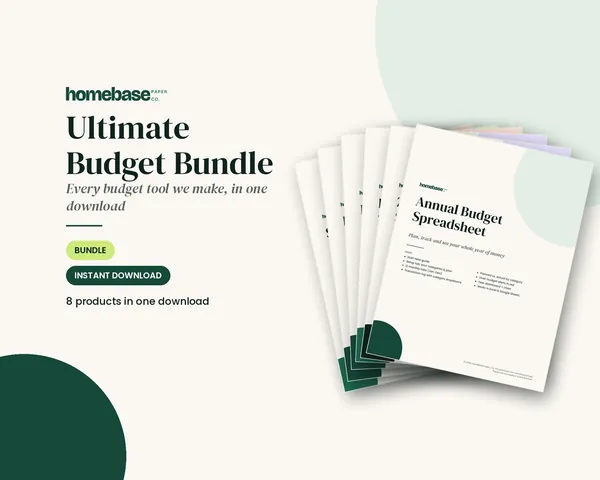
- The Ultimate Budget Bundle ($19.99, $46.42 if bought separately) includes 8 products: 6 spreadsheets plus the Budget Planner Printable and Bill Tracker Printable.
Common SMART goal mistakes
- Too vague. "Be healthier" has no measure. Pick one behavior you can count.
- Too many goals at once. Choose one to three active goals and park the rest on the tracker page.
- No deadline. Without a date, a goal slides. Even a rough date beats none.
- Unrealistic numbers. If the monthly amount or weekly hours do not fit your life, shrink the goal or extend the date.
- No plan for obstacles. Write down what might get in the way now, while you are motivated, and how you will respond.
- Never checking in. Set a monthly reminder to fill in the check-in row.
SMART goals for the new year
January is a natural time to set goals, but SMART goals work any month. If you are planning for the year ahead, pair this template with our guide to making a budget for the new year and write one SMART money goal for each quarter. Short-term wins in the first three months keep the momentum going for longer goals.
For more ideas, our list of new year's resolutions covers money, health, home and family goals, with tips for sticking to them.
Looking for goals you can finish this year? See our short term goals examples, grouped by area of life.
Make it easier
Tools for this
Printables
Budget Planner Printable
Twelve undated pages you can print every month: budget, bills, spending, savings and debt.
Spreadsheets
Sinking Funds Tracker
It does the math: how much to set aside each month to hit every goal on time.
 Save 57%
Bundles
Ultimate Budget Bundle
All 6 spreadsheets + both printable planners - for less than half the price of buying them separately.
Frequently asked questions
What is a SMART goals template? A SMART goals template is a worksheet that helps you turn a vague goal into one that is Specific, Measurable, Achievable, Relevant and Time-bound. The free SMART goals template on this page is a 3-page PDF: a SMART worksheet, an action plan with steps and obstacles, and a short, medium and long-term goal tracker with monthly check-ins.
What does SMART stand for? SMART stands for Specific, Measurable, Achievable (sometimes Attainable), Relevant and Time-bound. Lake Superior State University's worksheet frames each as a question, such as 'How will I measure my success?' for Measurable and 'When will I accomplish my goal?' for Time-bound.
What is an example of a SMART goal? Instead of 'save more money', a SMART goal would be: 'Save $1,200 for an emergency fund by December 31 by setting up an automatic transfer of $100 on each payday and tracking it monthly.' It is specific, has a number, is realistic for the budget, matters to you and has a deadline.
How do I write a SMART goal? Write your goal in one sentence, then test it against each letter. Add details until it says exactly what you will do, how you will measure it, why it is realistic, why it matters and when you will finish. Then break it into steps with target dates.
What is the difference between Achievable and Attainable in SMART goals? They mean the same thing. Some worksheets, such as Lake Superior State University's, use Attainable; others, such as Stanford Medicine's guide, use Achievable. Both ask whether the goal is doable with the time, skills and resources you have.
How many SMART goals should I set at once? Most people do best with one to three active goals at a time. Too many goals split your attention. Use the tracker page to list future goals, and move them into your action plan when you finish a current one.
What should a SMART goal action plan include? An action plan lists the steps to reach the goal with time estimates and target dates, the obstacles that might come up and how you will respond, and the tools and resources that will help. The LSSU worksheet includes each of these, and so does page 2 of our template.
Can I use a SMART goals template for money goals? Yes, you can use a SMART goals template for money goals. Money goals work especially well because they are easy to measure. Saving for a trip, paying off a credit card or building an emergency fund all fit the SMART format. Pair the template with a savings or debt tracker to measure progress.
How often should I review my SMART goals? Check in at least monthly. Page 3 of the template has a monthly check-in row for each month so you can note progress and decide whether to adjust the plan.
What if I miss my SMART goal deadline? Review what got in the way, update the obstacles section, and set a new realistic date. A missed deadline is information, not failure. Often the goal was too big for the timeframe or a step was missing.
Is there a SMART goals worksheet for students or work? Yes, the same template works for school, work and personal goals. Stanford Medicine's guide shows how managers and employees use SMART goals for work, and the LSSU worksheet was made for students. Our version adds a goal area line so you can mark money, health, home, work or other. For money goals, the Sinking Funds Tracker works out the monthly amount needed to hit each date.
Is the SMART goals template free? Yes, the SMART goals template is free. The 3-page SMART goals template PDF on this page is free for personal use; we email it to you.
More from HomeBase
You may also like
Spreadsheets
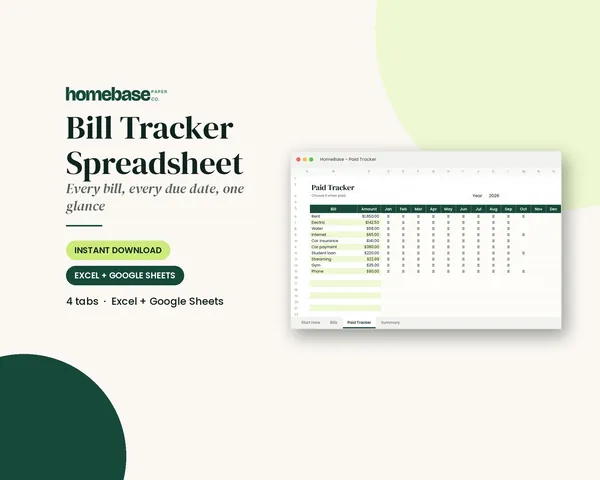
Bill Tracker Spreadsheet
Bills due in 3 days or less light up red, so nothing slips through.
Spreadsheets
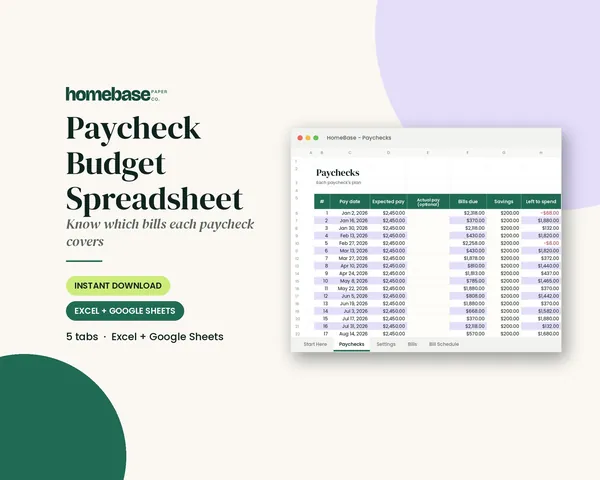
Paycheck Budget Spreadsheet
Enter your bills once. The sheet tells you which paycheck pays each one, all year.
Spreadsheets
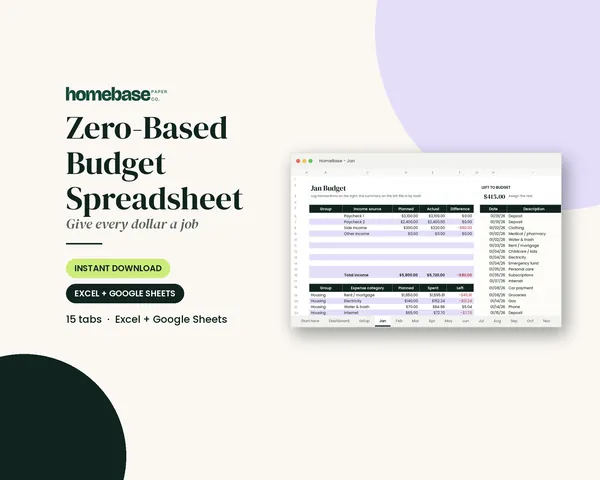
Zero-Based Budget Spreadsheet
The 'Left to budget' counter turns green when every dollar has a job.
Spreadsheets
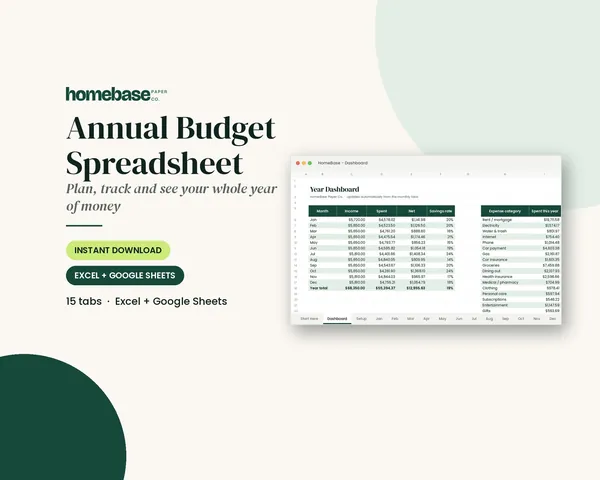
Annual Budget Spreadsheet
See exactly where your money goes every month - without complicated software.
 Club
Monthly club
Money Club
Anyone who wants a clear plan for the month's bills, holiday spending and savings.
Free printable
Turn a vague goal into a plan you'll follow
A SMART worksheet, an action plan and a goal tracker. You'll also get our weekly HomeBase email with simple planning and home organization tips.
Sources
- SMART Goals Worksheet (Lake Superior State University) lssu.edu
- How to Write SMART Goals (Stanford Medicine) med.stanford.edu