The short answer: short term goals are goals you can reach in a year or less, like saving $500 for an emergency fund in 90 days or walking 30 minutes five days a week. The best ones are specific, measurable, written down and tied to a date.
- Make it SMART and break it into weekly actions
- Track progress every week; review monthly and adjust
- 80 examples for money, health, work, school and home
- Starter version: set 3 short-term goals in 15 minutes
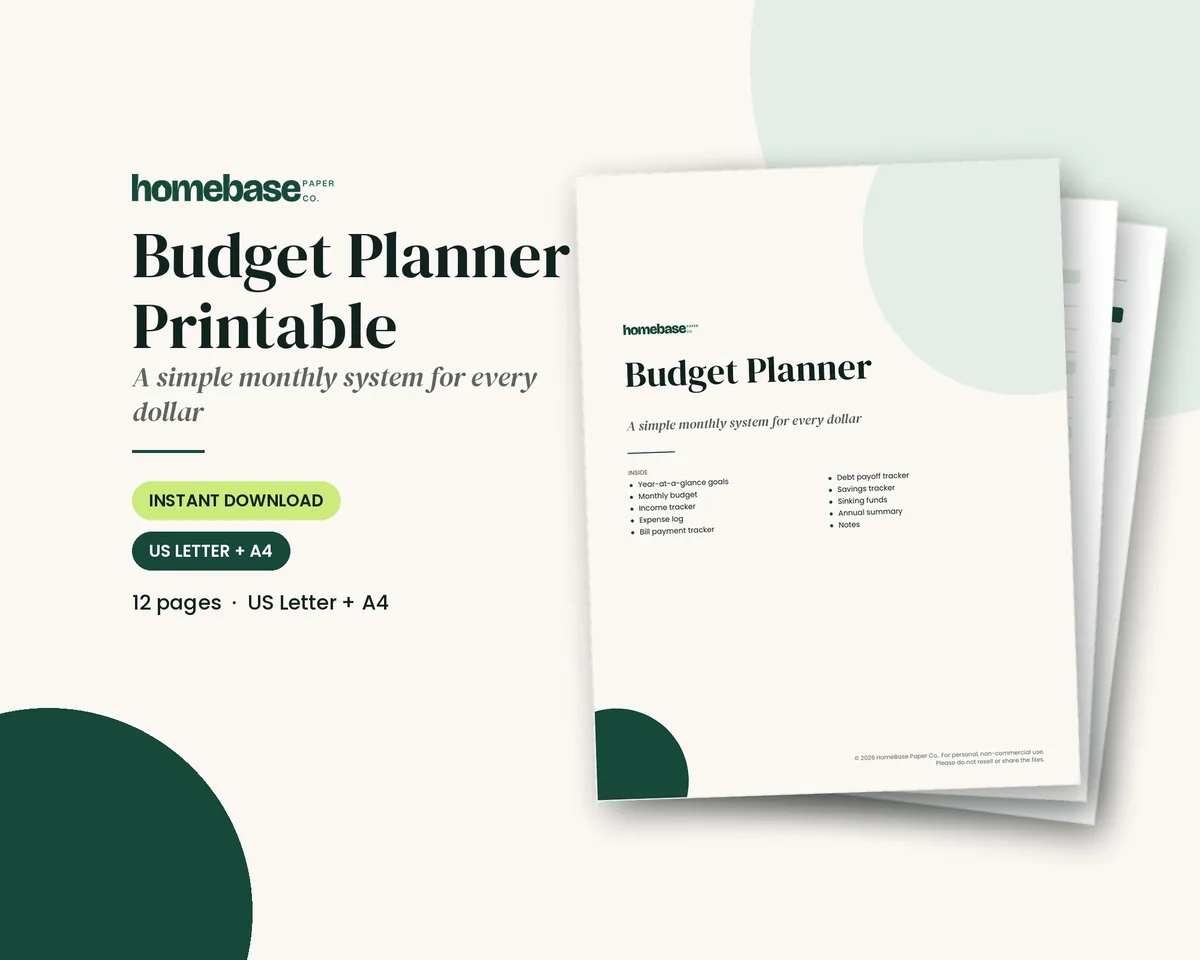
- Next step: Plan it with the Budget Planner Printable ($5.99).
Short term goals are goals you can reach in a year or less, usually in a few days, weeks or months. Good examples are saving $500 for an emergency fund in 90 days, walking 30 minutes five days a week, paying off one credit card by June or reading one book a month. The best short-term goals are specific, measurable, written down and tied to a date.
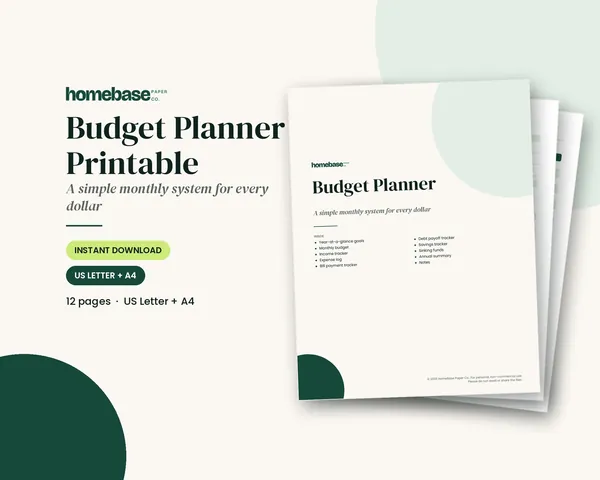
The Budget Planner Printable ($5.99) has a "Money goals for the year" page, so you can write your short-term money goals, give each one a deadline and check them off month by month. Browse all of our Printables for more planning pages.
Below you'll find a quick definition, a short term vs long term goals table, 80 short-term goals examples grouped by area of life, a 7-step method for setting them, a starter version you can finish in 15 minutes, and answers to the most common questions.
What are short term goals?
A short-term goal is a target you plan to reach within the next 12 months. Many people think of it in three sizes:
- Very short (1 to 4 weeks): clean out the pantry, start a morning routine, cancel two unused subscriptions.
- Short (1 to 3 months): save $300, finish a beginner course, walk a 5K.
- Up to a year (4 to 12 months): pay off a small debt, save for a trip, finish a certificate.
Short-term goals do two jobs. They're useful on their own, and they're the stepping stones to bigger plans. "Save $1,000 by March 31" is a short-term goal. "Buy a house in five years" is a long-term goal that needs a long list of short-term goals to get there.
Short term vs long term goals
| Short term goals | Long term goals | |
|---|---|---|
| Time frame | A few days to 12 months | Usually 1 to 5 years or more |
| Size | Small and concrete | Big and broad |
| Example | Save $500 in 90 days | Save a 20% house down payment |
| How you track it | Weekly or monthly check-ins | Yearly reviews and milestones |
| Main benefit | Quick wins and momentum | Direction and purpose |
| Risk | Busywork that leads nowhere | Feels too far away to start |
The fix for both risks is to connect them. Write your long-term goal first, then ask, "What do I need to finish this year, this quarter and this month to move toward it?" The answers are your short-term goals. Our goal setting guide walks through that bigger-picture process in more detail.
80 short term goals examples
Use these short-term goals examples as a menu. Pick two or three that fit your season of life, then add your own numbers and dates.
Short term financial goals
- Build a $500 starter emergency fund in 90 days.
- Write a monthly budget before January 1 and use it every month.
- Track every purchase for 30 days.
- Pay off one credit card by a set date.
- Cancel subscriptions you haven't used in 60 days.
- Save $1,000 in the next six months.
- Open a separate savings account for holiday spending.
- Check your credit reports and fix any errors.
- Set up automatic transfers to savings on payday.
- Do a No-Spend January challenge.
- Start sinking funds for car repairs, gifts and annual bills.
- Lower one monthly bill, like phone or insurance.
Personal goals
- Read one book a month.
- Write in a journal three nights a week.
- Learn 20 minutes of a new language each day.
- Limit social media to 30 minutes a day for a month.
- Try one new recipe every week.
- Call or write to a friend each week.
- Plan one fun, low-cost outing a month.
- Finish one hobby project you started and put away.
- Volunteer once a month.
- Plan your week every Sunday.
Health and fitness goals
- Walk 30 minutes, five days a week.
- Drink a glass of water with every meal.
- Add strength training two days a week.
- Go to bed at the same time for 30 days.
- Pack lunch four days a week.
- Eat a vegetable with every dinner.
- Book overdue checkups and dental cleanings.
- Stretch for 10 minutes every morning.
- Train for and finish a local 5K.
- Cut back on sweet drinks to one a week.
Career and work goals
- Update your resume and online profile.
- Finish one online course or certificate.
- Ask for feedback from your manager this quarter.
- Clear your email inbox to zero once a week.
- Learn one new software skill well.
- Ask about a raise with notes on your results.
- Meet one new person in your field each month.
- Arrive 10 minutes early every day for a month.
- Lead one meeting or project.
- Set up a simple filing system for work papers.
Goals for students
- Turn in every assignment on time this semester.
- Raise one grade by a letter.
- Study for 25 minutes, then rest 5, four times a day.
- Use a planner for every class.
- Meet with a teacher or advisor once a month.
- Apply for three scholarships before the deadline.
- Read for fun 20 minutes a day.
- Join one club or group.
- Learn to cook five simple meals.
- Save a set amount from every paycheck from a part-time job.
Home and organizing goals
- Declutter one drawer or shelf a day for 30 days.
- Make a weekly cleaning schedule and stick to it for a month.
- Plan meals every week for a month.
- Set up a family calendar everyone can see.
- Clean out the fridge every Friday.
- Organize important papers in one binder.
- Donate one bag of items each month.
- Make a list of household bills and due dates.
- Finish one small repair you've been putting off.
- Set up a coat, key and mail drop spot by the door.
Relationship and family goals
- Plan a weekly date night or friend night.
- Eat dinner together at the table four nights a week.
- Hold a 20-minute family money meeting each month.
- Write thank-you notes within a week of every gift.
- Put phones away during meals.
- Plan one family day trip this season.
- Learn one new thing about a relative and write it down.
- Send birthday cards on time all year.
Holiday and seasonal goals
- Set a holiday budget before you buy a single gift.
- Finish holiday shopping by December 10.
- Save $50 a month toward next year's holidays.
- Pay off holiday spending by February 28.
- Plan a New Year budget the last week of December.
- Pick three New Year's resolutions and break each into monthly steps.
- Take down and pack holiday decor with labels by mid-January.
- Plan a low-cost winter getaway with a set budget.
- Make a list of gift ideas all year so December is easy.
- Do a full home reset in the first two weeks of January.
How to set short-term goals in 7 steps
- Start with what matters. Write the three areas of life you most want to change this year, such as money, health and work.
- Pick one goal per area. More than three at once is hard to keep up with. You can add new ones as you finish old ones.
- Make it SMART. Specific, measurable, achievable, relevant and time-bound. "Save money" becomes "Save $600 by April 30." Our SMART goals template has fill-in examples.
- Break it into weekly actions. $600 in 17 weeks is about $35 a week. A habit you can do this week is easier to start than a number on a page.
- Write it where you'll see it. Put goals in your planner, on the fridge or in your budget, not just in your head.
- Track progress every week. The American Psychological Association reported on a review of 138 studies that found people who checked their progress more often were more likely to reach their goals, especially when they wrote it down or shared it. A check mark, a running total or a savings goal tracker is enough.
- Review monthly and adjust. If a goal is too easy, raise it. If it's too hard, shrink it. Celebrate each finished goal with something small and free.
Short term financial goals: a closer look
Money goals are the most common short-term goals, and they work best when each one has a number, a date and a home.
| Goal | Example target | Where the money goes | Good tool |
|---|---|---|---|
| Starter emergency fund | $500 to $1,000 | High-yield savings | Budget page + tracker |
| Pay off a small debt | One card by June | Extra debt payment | Debt list |
| Holiday fund | $50 a month | Sinking fund | Sinking Funds Tracker |
| Annual bills | Car insurance, fees | Sinking fund | Sinking Funds Tracker |
| Spending reset | 30 days of tracking | Budget categories | Budget Planner |
For emergency savings, the Consumer Financial Protection Bureau's emergency fund guide suggests looking at the unexpected expenses you've had before to choose a target, and notes that even a small amount set aside helps you recover faster. Our guide on how to build an emergency fund walks through the steps.
If your short-term money goals include planned costs like holidays, car repairs or annual fees, the Sinking Funds Tracker ($4.99) splits each one into a monthly amount and shows your progress. Learn how sinking funds work in our sinking funds guide, and see our bigger guide on how to set financial goals.
Short term health goals that are easy to measure
Health goals stick best when you can count them. The CDC's activity guidelines for adults recommend at least 150 minutes of moderate activity a week, such as 30 minutes a day, five days a week, plus muscle-strengthening activity at least two days a week. That turns "get in shape" into a clear short-term goal: walk 30 minutes, five days a week, for the next eight weeks, and add two short strength sessions.
Starter version: set 3 short-term goals in 15 minutes
Short on time? Do this today.
- Minutes 1 to 5: Write one money goal, one health goal and one personal goal.
- Minutes 6 to 10: Add a number and a date to each one.
- Minutes 11 to 13: Write the first action for this week under each goal.
- Minutes 14 to 15: Put a weekly check-in on your calendar, like Sunday at 7 PM.
A finished starter example might look like this:
- Money: Save $300 by February 28. This week: set up a $25 automatic transfer each payday.
- Health: Walk 30 minutes, five days a week, through March. This week: pick a route and a time.
- Personal: Read one book a month in January, February and March. This week: choose book one.
Why short-term goals fail (and quick fixes)
- Too many at once. Fix: three goals max, then add more as you finish.
- No number or date. Fix: rewrite each goal with "how much" and "by when."
- Out of sight, out of mind. Fix: write goals in your planner and check them weekly.
- All or nothing thinking. Fix: a missed week isn't a failed goal. Restart the next day.
- No link to a bigger plan. Fix: tie each goal to a long-term goal so it feels worth it.
- Too big. Fix: cut it in half. Finishing a smaller goal beats quitting a big one.
Turn short-term goals into a monthly habit
The easiest way to keep going is a monthly rhythm. On the first of each month, review last month's goals, mark what you finished and set the next one or two. Our monthly goals guide has a simple review checklist, and the 12 week year method is a good fit if you like working in quarters.
Want all of your money goals, budget and sinking funds in one place for the new year? The Ultimate Budget Bundle is $19.99 (reg. $46.42 bought separately) and includes the Budget Planner Printable, the Sinking Funds Tracker and six more budget tools. See all of our Bundles.
Make it easier
Tools for this
Printables
Budget Planner Printable
Twelve undated pages you can print every month: budget, bills, spending, savings and debt.

Spreadsheets
Sinking Funds Tracker
It does the math: how much to set aside each month to hit every goal on time.
 Save 57%
Bundles
Ultimate Budget Bundle
All 6 spreadsheets + both printable planners - for less than half the price of buying them separately.
Frequently asked questions
What are short term goals? Short term goals are goals you can reach within 12 months or less. They usually take a few days, weeks or months, like saving $500 in 90 days, walking 30 minutes five days a week or finishing one online course. They often serve as steps toward bigger, long-term goals.
What are some examples of short term goals? Good short term goals are small, specific and dated. Examples include building a $500 emergency fund in 90 days, reading one book a month, paying off one credit card by June, packing lunch four days a week, updating your resume this month and decluttering one drawer a day for 30 days.
What is the difference between short term and long term goals? Short term goals take a year or less, while long term goals take a year or more. A long term goal, like saving a house down payment, gives you direction. Short term goals, like saving $1,000 by March, are the steps that get you there and give you quick wins along the way.
What are short term financial goals? Short term financial goals are money goals you can reach within a year. Common ones are a starter emergency fund, paying off a small debt, saving for holidays or a trip, tracking spending for 30 days and lowering one monthly bill. The Budget Planner Printable has a money goals page that keeps them in front of you all year.
How long is a short term goal? A short term goal usually lasts anywhere from one day to 12 months. Many people split them into very short goals of one to four weeks, short goals of one to three months and goals of up to a year. Anything longer than a year is usually called a long term goal.
How many short term goals should I have at once? Two or three short term goals at a time is a good number for most people. Fewer goals means more attention and energy for each one. When you finish a goal, add the next one so you keep moving without feeling overwhelmed.
How do I set short term goals? Set short term goals by picking what matters most, making each goal specific with a number and a date, and breaking it into weekly actions. Write the goal where you'll see it, track progress every week and review it once a month so you can adjust if it's too easy or too hard.
What are good short term goals for students? Good short term goals for students are tied to one semester or one month. Examples include turning in every assignment on time, raising one grade by a letter, using a planner for every class, applying for three scholarships, joining a club and studying in short, focused blocks each day.
What are short term goals for work? Short term goals for work are career steps you can finish within a few months. Examples include updating your resume, finishing a certificate, asking your manager for feedback, learning one new software skill, leading a project and meeting one new person in your field each month.
How do I track short term savings goals? The Sinking Funds Tracker makes short term savings goals easy to track because it splits each goal into a monthly amount and shows your progress. You can also use a simple paper tracker, a running total in your budget or a separate savings account for each goal.
Are SMART goals the same as short term goals? SMART is a way to write a goal, not a length of time. A SMART goal is specific, measurable, achievable, relevant and time-bound. Short term goals work best when they're written the SMART way, like turning save money into save $600 by April 30.
Why do short term goals fail? Short term goals usually fail because they're too vague, too big or too many at once. Others fail because people stop checking on them. The fix is to set two or three goals, add a number and date to each, write them down and check your progress every week.
What is a good short term goal for the new year? A good new year short term goal is one you can finish by the end of the first quarter. Examples include saving $300 by February 28, tracking spending for all of January, walking 30 minutes five days a week through March and paying off holiday spending by the end of February.
What is the best planner for short term money goals? The Budget Planner Printable ($5.99) is a simple choice for short term money goals because it pairs a money goals page with monthly budget pages. If you want more tools, the Ultimate Budget Bundle ($19.99, reg. $46.42) adds the Sinking Funds Tracker and six more budget tools.
More from HomeBase
You may also like
Spreadsheets
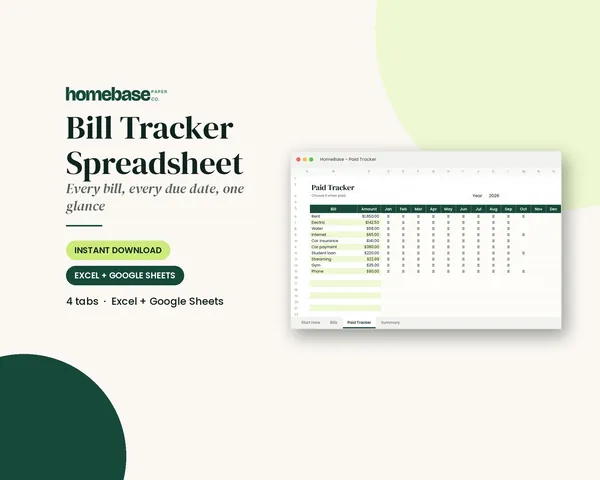
Bill Tracker Spreadsheet
Bills due in 3 days or less light up red, so nothing slips through.
Spreadsheets
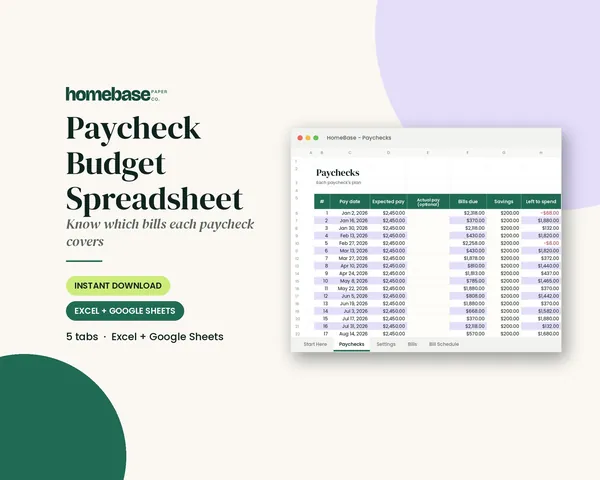
Paycheck Budget Spreadsheet
Enter your bills once. The sheet tells you which paycheck pays each one, all year.
Spreadsheets
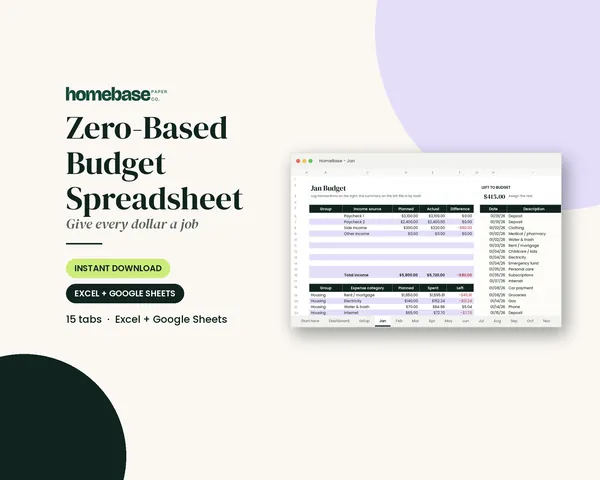
Zero-Based Budget Spreadsheet
The 'Left to budget' counter turns green when every dollar has a job.
Spreadsheets
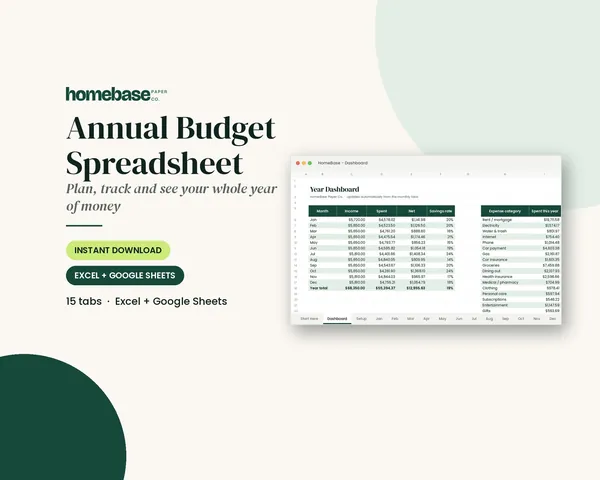
Annual Budget Spreadsheet
See exactly where your money goes every month - without complicated software.
 Club
Monthly club
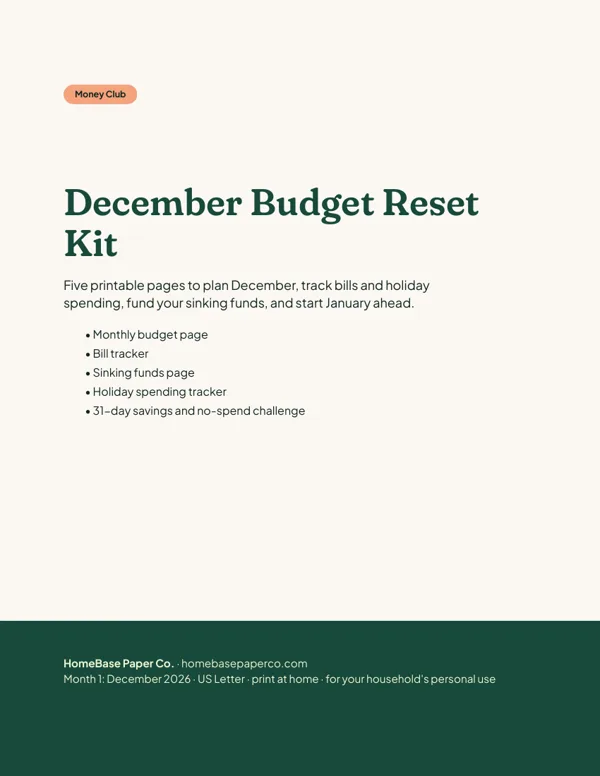
Money Club
Anyone who wants a clear plan for the month's bills, holiday spending and savings.
Free printable
Get organized for the new year: get the free 2027 planner
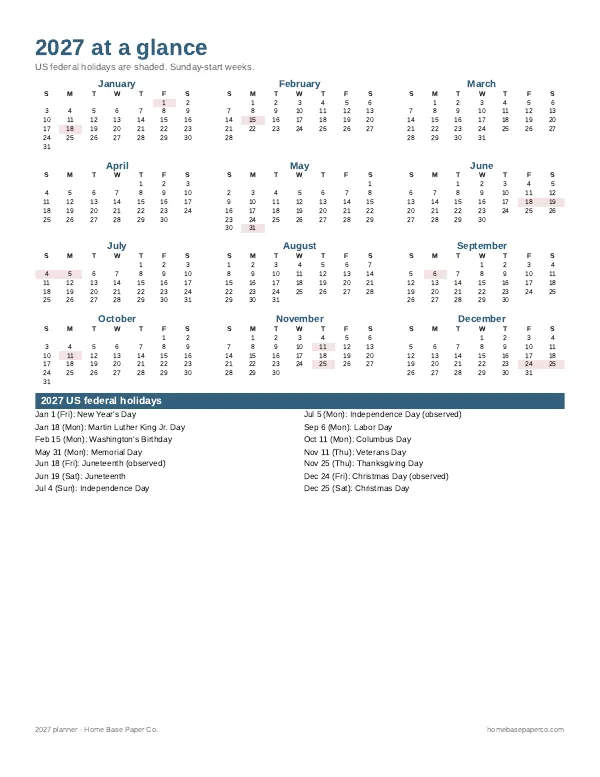
A 16-page printable 2027 planner with a year-at-a-glance page and monthly calendars with US holidays marked. You'll also get our weekly HomeBase email with simple planning and home organization tips.