

The short answer: dry january is simple: no alcohol for the 31 days of January. It's also one of the easiest money challenges of the year.
- Two cocktails out each Friday and Saturday: about $250 saved
- A $12 bottle of wine twice a week: about $100 saved
- Start: write your reason, clear the house, stock swaps, set a savings target
- A 31-day plan and 10 drink swaps
- Next step: Plan it with the 100 Envelope Savings Challenge ($3.99).
Dry January is simple: no alcohol for the 31 days of January. After a month of holiday parties, champagne toasts and "one more glass," many people like a clean start. It's also one of the easiest money challenges of the year, because the savings are easy to see. Every bottle you don't buy and every bar tab you don't run is cash you can move straight into savings. This guide covers the rules for Dry January 2027, a week-by-week plan, drink swaps, what to say at parties and how to turn the month into real savings.
What is Dry January?
Dry January is a one-month break from alcohol. It started in the UK in 2013 as a campaign by the charity Alcohol Change UK and has grown into a habit for millions of people. In the U.S., it fits neatly after the holidays and alongside other January resets, like a no-spend January challenge or new year's resolutions.
Dry January 2027 runs from Friday, January 1, through Sunday, January 31, 2027. That means five full weekends, and the month starts right after New Year's Eve, so a little planning in late December goes a long way. Hosting the night before? Our NYE party ideas include mocktails. For more ways to spend the night itself, see our New Year's Eve ideas.
The rules
There's only one real rule: no alcohol for the month. That includes beer, wine, spirits, hard seltzer, hard cider and cocktails.
Most people allow:
- Alcohol-free beer and wine (usually under 0.5% alcohol)
- Mocktails and alcohol-free spirits
- Kombucha (check the label, since some are higher in alcohol)
If you slip, you don't fail. Write down what happened, plan for that situation and keep going the next day.
Why people do Dry January
- Health. The CDC says drinking less is better for your health than drinking more, and that even moderate drinking carries some risk compared with not drinking. A month off is an easy way to drink less.
- Money. Alcohol is one of the easiest line items to cut, and it adds up fast.
- Awareness. A month off shows you when and why you usually drink: after work, with certain friends or when you're stressed.
- A reset. Many people use February to drink less on purpose, not out of habit.
One important note: if you drink heavily every day, talk to a doctor before stopping suddenly, because alcohol withdrawal can be serious and may need medical support.
How much money can you save?
The answer depends on your habits, so do the math for yourself. The U.S. Bureau of Labor Statistics found the average household spent $643 on alcoholic beverages in 2024, or about $54 a month. That figure is an average across all households, including people who don't drink, and drinks at restaurants and bars can cost much more.
Here are some typical January savings:
| Usual habit | Approximate cost | Saved in 31 days |
|---|---|---|
| A $12 bottle of wine twice a week | $24 a week | About $100 |
| A 12-pack of beer each weekend | $18 a week | About $80 |
| Two cocktails out each Friday and Saturday | $56 a week | About $250 |
| A $30 bar tab once a week plus a ride home | $45 a week | About $200 |
Pick the line closest to your normal month, or add your own. Then decide now where that money goes.
A 31-day Dry January plan
Before January 1: set up
- Write your reason. Health, sleep, savings, setting an example for the kids. Put it somewhere you'll see it.
- Clear the house. Give away open bottles or put them out of sight.
- Stock swaps. Buy sparkling water, limes, ginger beer, alcohol-free beer or a few mocktail ingredients.
- Tell someone. A partner or friend who knows will help you through a tough Friday.
- Set a savings target. Use the table above and pick a number.
Week 1 (Jan 1 to 7): break the routine
The first week is about habits, not willpower. Drink your swap in the same glass at the same time you'd normally have a drink. Go to bed a little earlier on the weekend.
Week 2 (Jan 8 to 14): handle the first social event
Plan what you'll order and what you'll say before you go. "I'm doing Dry January" is enough. Arrive with a drink in hand so no one offers you one.
Week 3 (Jan 15 to 21): find new rewards
Many people find this week the hardest, when the novelty fades. Use part of your savings for a treat: a movie, a nice coffee or a new book.
Week 4 and the last weekend (Jan 22 to 31): finish and plan
Look back at your tracker. Notice which days were hard. Then decide how you want to drink in February, on purpose.
What to drink instead: 10 easy swaps
- Sparkling water with lime and a pinch of salt. Simple and crisp.
- Ginger beer with lime juice. A virgin mule in a copper mug.
- Cranberry spritz. Cranberry juice, sparkling water and rosemary.
- Tart cherry and soda. Half tart cherry juice, half seltzer.
- Alcohol-free beer. Many brands now taste close to the real thing.
- Kombucha. Choose one labeled under 0.5% alcohol.
- Arnold Palmer. Half iced tea, half lemonade.
- Hot apple cider with a cinnamon stick. Perfect for cold nights.
- Shrub and soda. A splash of drinking vinegar over ice with seltzer.
- Herbal tea. Chamomile or peppermint for a calm evening.
What to say at parties, dinners and work events
Social events are where most Dry January plans get tested. A short, friendly line works better than a long explanation:
- "I'm doing Dry January this year."
- "I'm driving tonight."
- "I'm saving up for a trip, so I'm skipping drinks this month."
- "I'll have a ginger beer with lime, thanks."
A few more tips help:
- Get your drink first. With a glass in your hand, people rarely offer you another.
- Bring something good. Take a four-pack of alcohol-free beer or a bottle of sparkling cider to share.
- Plan your exit. Decide when you'll leave before you arrive. Late nights are when slips happen.
- Suggest other plans. Breakfast, a walk, a movie or game night replaces "meet for drinks."
Doing Dry January as a couple or with friends
Dry January is easier with company. If your partner or a friend joins in, agree on the rules up front, such as whether alcohol-free beer counts, and set a shared savings goal. Some couples put the money toward a date night in February. Others pay down a holiday credit card bill. Either way, write the goal at the top of your tracker and check it together each Sunday. If only one of you is taking part, ask the other to keep their drinks out of sight for the month.
Know your standard drink for February
When January ends, it helps to know what counts as one drink. The National Institute on Alcohol Abuse and Alcoholism (NIAAA) defines a U.S. standard drink as about 14 grams of pure alcohol: 12 ounces of regular beer at about 5% alcohol, 5 ounces of wine at about 12%, or 1.5 ounces of 80-proof distilled spirits. Many restaurant cocktails, large wine pours and craft beers count as more than one. NIAAA's free Rethinking Drinking site has tools to help set limits that fit your goals.
Turn Dry January into real savings
Savings you don't move are savings you'll spend. Each Sunday, add up what you would have spent on drinks that week and move it into a savings envelope or a separate account.
- Track the dry days. Our free habit tracker printable has a 31-day grid that works for counting dry days.
- Fill envelopes as you go. Our 100 Envelope Savings Challenge ($3.99) includes classic, half and 52-week challenges plus a spreadsheet that tracks every envelope and tells you how much to save each week.
- Point the money at a goal. Holiday bills, an emergency fund or a summer trip. Our Sinking Funds Tracker ($4.99) works out how much to set aside each month to hit every goal on time.
- See the whole month. Our Budget Planner Printable ($5.99) has 12 undated pages you can print every month: budget, bills, spending, savings and debt, so you can see what changed when the bar tab went to zero.
Dry January at a glance
- 31 days, January 1 to 31, 2027
- No alcohol; alcohol-free drinks are fine for most people
- Write a reason, stock swaps and tell a friend
- Track each dry day and move the money every Sunday
- Talk to a doctor first if you drink heavily every day
- Decide on purpose how you'll drink in February
Make it easier
Tools for this
 Starter pick
Printables
100 Envelope Savings Challenge
Classic, half and 52-week challenges to print, plus a spreadsheet that tracks every envelope and tells you how much to save each week.

Printables
Budget Planner Printable
Twelve undated pages you can print every month: budget, bills, spending, savings and debt.
Spreadsheets
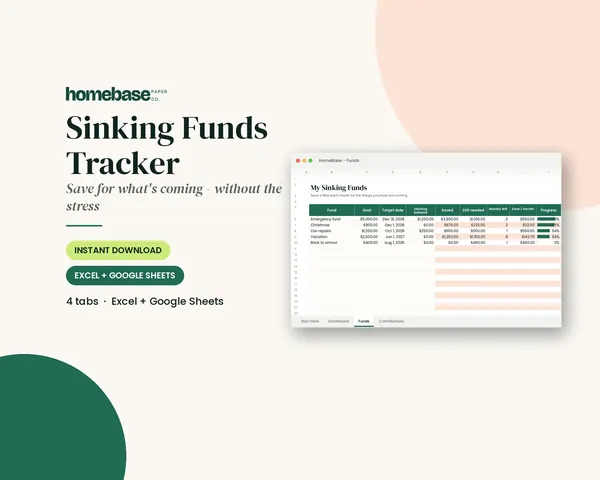
Sinking Funds Tracker
It does the math: how much to set aside each month to hit every goal on time.
Frequently asked questions
What is Dry January? Dry January is a challenge to drink no alcohol for the whole month of January. It began in the UK in 2013 as a campaign by the charity Alcohol Change UK and is now popular in the U.S. and around the world. Many people use it as a reset after the holidays and a chance to save money.
When does Dry January 2027 start and end? Dry January 2027 starts on Friday, January 1, 2027, and ends on Sunday, January 31, 2027. That is 31 days with no alcohol. Many people plan a little in late December so they have drinks to swap in and a reason written down before New Year's Day.
What are the rules of Dry January? The only rule of Dry January is no alcohol for the month: no beer, wine, spirits, hard seltzer or cocktails. Alcohol-free beer, wine and mocktails are allowed for most people. If you slip, you do not have to quit. Just start again the next day and keep going.
How much money can you save during Dry January? You can save $50 to $300 or more during Dry January, depending on how much they usually spend on alcohol at home and when out. Federal spending data show the average U.S. household spent $643 on alcoholic beverages in 2024, about $54 a month, but bar and restaurant drinks can add up much faster.
What are the benefits of Dry January? The benefits of Dry January include lower health risks from alcohol for the month, money saved and a clearer look at your drinking habits. The CDC says drinking less is better for your health than drinking more, and that you can lower your risks by drinking less or not drinking at all.
Is Dry January good for you? Yes, for most adults a month without alcohol is a healthy choice, since the CDC says drinking less lowers health risks. If you drink heavily every day, talk to a doctor before you stop, because quitting suddenly can cause withdrawal that may need medical care.
What can I drink instead of alcohol during Dry January? Good drinks for Dry January include sparkling water with citrus, alcohol-free beer, kombucha, ginger beer with lime, tart cherry spritzers, herbal tea and simple mocktails. Pour them in your usual glass, since the routine often matters more than the alcohol. Recipes are on this page.
How do I stick to Dry January? To stick to Dry January, write down your reason, clear alcohol out of the house or put it out of sight, stock alcohol-free drinks, tell a friend and plan what you will say at social events. Track each dry day on a calendar and move the money you save into a savings envelope.
What if I slip during Dry January? If you slip during Dry January, don't throw out the whole month. Note what led to the drink, such as a party or a stressful day, plan for it next time and start again the next morning. Most people still drink less overall in a month with one slip.
What is a standard drink? A standard drink in the U.S. has about 14 grams of pure alcohol. NIAAA says that is about 12 ounces of regular beer at 5% alcohol, 5 ounces of wine at 12% or 1.5 ounces of 80-proof spirits. Many cocktails and craft beers hold more than one standard drink.
What should I do after Dry January ends? After Dry January ends, decide on purpose how you want to drink going forward, such as only on weekends or a set number of drinks a week. Keep any habits that helped, like mocktails on weeknights. NIAAA's Rethinking Drinking site has free tools for setting limits.
How do I track the money I save during Dry January? Track the money you save during Dry January by writing down what you would have spent each day and moving it into a savings envelope or account every Sunday. Our 100 Envelope Savings Challenge ($3.99) has printable challenges and a spreadsheet that tracks every envelope.
More from HomeBase
You may also like
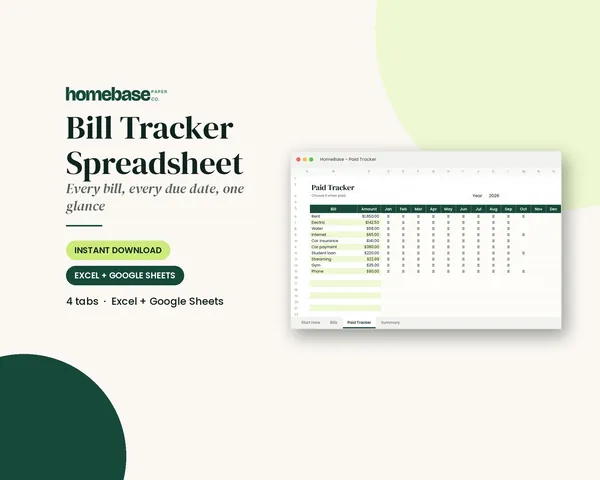
Spreadsheets
Bill Tracker Spreadsheet
Bills due in 3 days or less light up red, so nothing slips through.
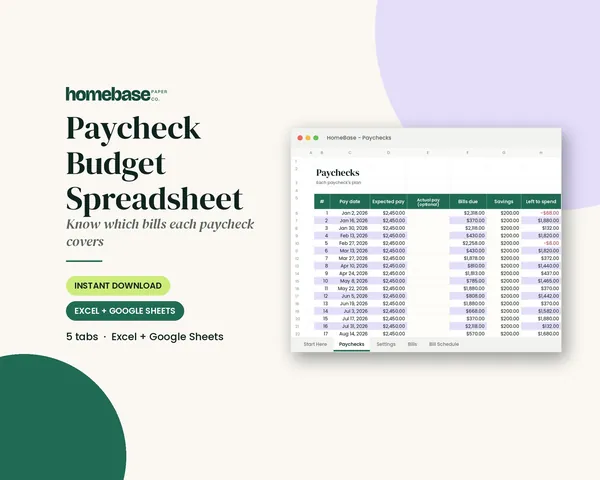
Spreadsheets
Paycheck Budget Spreadsheet
Enter your bills once. The sheet tells you which paycheck pays each one, all year.
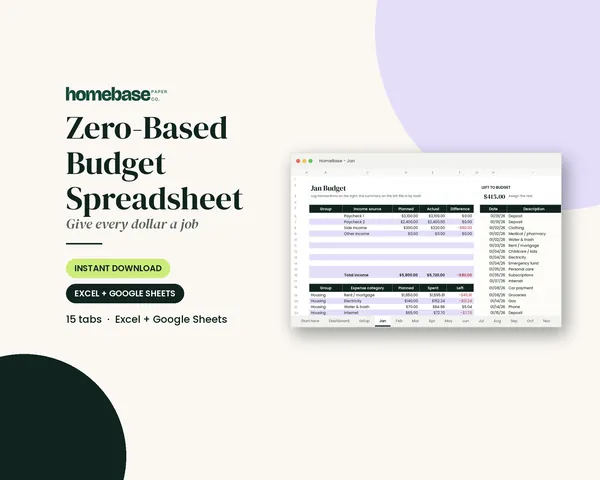
Spreadsheets
Zero-Based Budget Spreadsheet
The 'Left to budget' counter turns green when every dollar has a job.
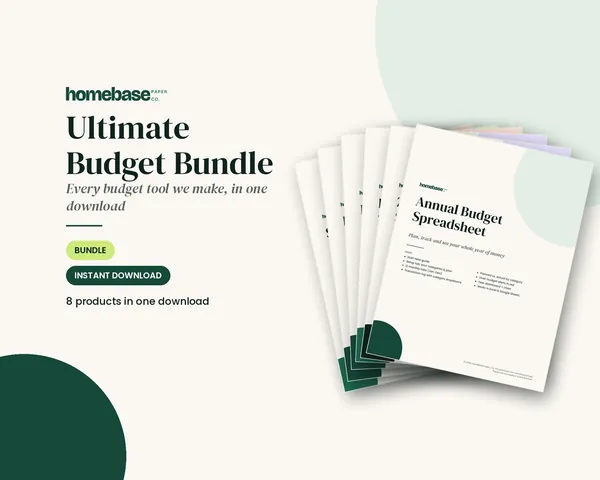 Save 57%
Bundles
Ultimate Budget Bundle
All 6 spreadsheets + both printable planners - for less than half the price of buying them separately.
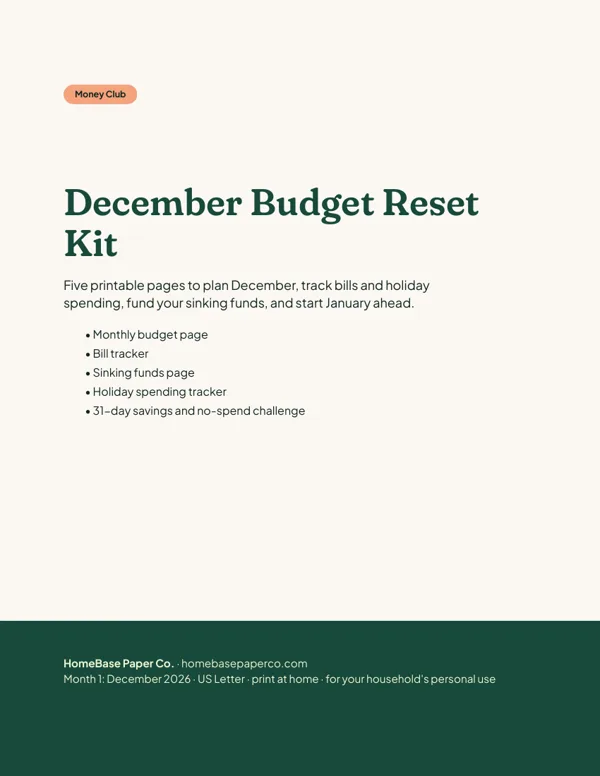 Club
Monthly club
Money Club
Anyone who wants a clear plan for the month's bills, holiday spending and savings.
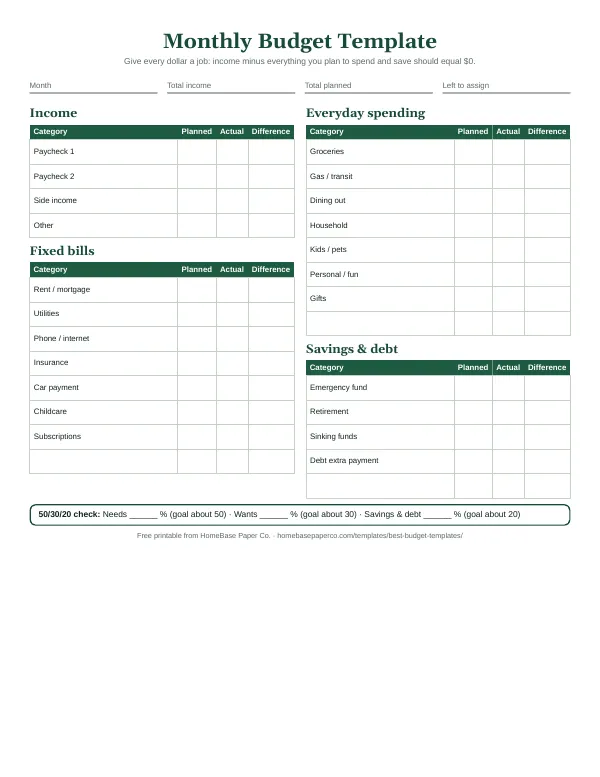
Free printable
Give every dollar a job: get the free monthly budget template
A printable zero-based monthly budget: income, bills, everyday spending and savings on one page, with a planned vs. actual column. You'll also get our weekly HomeBase email with simple budgeting and bill-paying tips.
Sources
- CDC: About moderate alcohol use cdc.gov
- NIAAA: What is a standard drink? niaaa.nih.gov
- NIAAA: Rethinking Drinking rethinkingdrinking.niaaa.nih.gov
- U.S. Bureau of Labor Statistics: Consumer Expenditures 2024 bls.gov