

The short answer: a habit tracker printable is one of the simplest tools for change: write down a few habits, then check a box each day you do them. This free one has three pages.
- Pages: a monthly tracker, a weekly tracker and a habit plan
- Pick 3 to 5 habits and make each one small and specific
- Check the box right after you do it, and review each Sunday
- 40 habit ideas to try below
- Next step: Get the free habit tracker (we email it to you); want more? The Kids Chore Chart is $3.49.
A habit tracker printable is one of the simplest tools for change. You write down a few habits, then check a box each day you do them. That's it. Yet seeing a row of filled boxes is a strong reason to keep going, and a row of blanks tells you exactly where your plan needs work. Our free habit tracker printable has three pages: a monthly tracker, a weekly tracker and a habit plan. Below you'll find how to use it, 40 habit ideas and tips for keeping habits past the first few weeks.
What's in the free habit tracker printable
The PDF is three pages, sized for US Letter, and it prints on A4 with "fit to page."
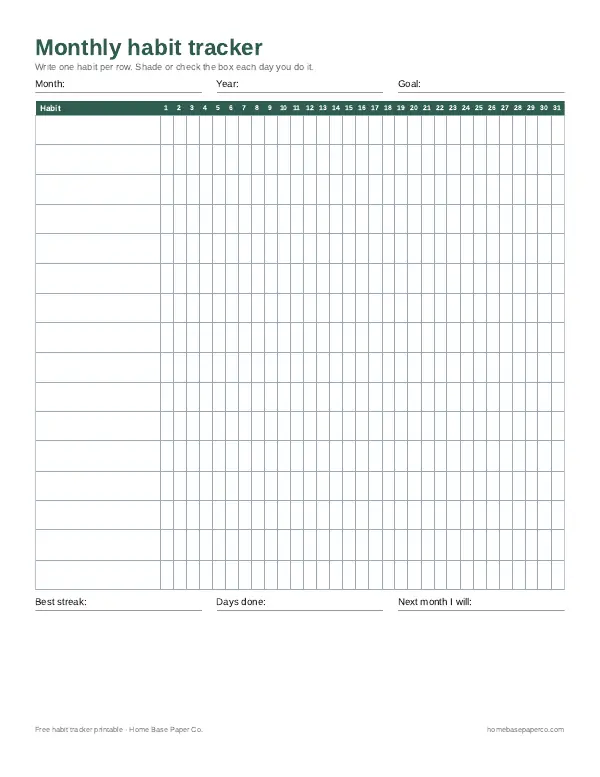
- Monthly habit tracker. Sixteen habit rows across a 31-day grid, with spaces for the month, year and a goal. At the bottom you'll find lines for your best streak, total days done and what you'll change next month.
- Weekly habit tracker. Four weeks, each with room for four habits, a Monday-to-Sunday row of boxes and a "days done" column.
- Habit plan. Space to set up three habits before you track them, with the habit, when and where, the cue ("after I..."), the reward and why it matters. It also has a monthly review.
You can download it from the box at the top of this page. It's free, and you don't need to give an email.
How to use a habit tracker, step by step
- Pick 3 to 5 habits. Fewer is better at the start. You can add more once the first ones feel easy.
- Make each one small and specific. "Walk 20 minutes" beats "exercise more." If you can't check it off in a single day, it's too big.
- Fill in the habit plan. Decide when and where each habit happens and what it follows. "After I pour my coffee, I'll check my budget."
- Write the habits on the tracker. Use the monthly page for steady habits and the weekly page for new ones.
- Check the box right after you do it. Don't wait until night. The check mark is a small reward in itself.
- Review each Sunday. Count the days done. Look for the day of the week you miss most, and change the plan for that day.
Why tracking habits works
NIH News in Health lists simple steps for building healthy habits. Plan small, realistic goals. Change your surroundings so the healthy choice is easy. Ask for support. Track your progress. Reward yourself for small wins. And be patient, because setbacks happen. A habit tracker printable covers several of those steps on one sheet of paper. To choose the goal behind each habit, start with our goal setting guide.
Habits form through repetition. A second NIH article on breaking bad habits explains that repeated behaviors become automatic, so the brain doesn't have to think about them. That's helpful for good habits and hard for bad ones. The same piece suggests replacing an unwanted habit with a healthier one and rewarding small steps. Your tracker can hold both the habit you're building and the one you're replacing.
How long does it take? A widely cited 2009 study from University College London found habits took about 66 days on average to feel automatic, with a range of 18 to 254 days. In plain terms, plan on two months or more for most habits. That's why the monthly page has a line for "next month I will." Most habits need at least a second month.
40 habit ideas to track
Pick the ones that fit your life. Each is small enough to check off in a day.
Money habits
- Log every purchase.
- No-spend day.
- Pack lunch.
- Check the bank balance.
- Move $5 to savings.
- Review the budget for 5 minutes.
- Unsubscribe from one store email.
- Cook dinner instead of ordering in.
Health habits
- Walk 20 minutes.
- Drink 8 glasses of water.
- In bed by 10:30.
- Stretch for 5 minutes.
- Eat a vegetable at lunch.
- No phone in the first hour of the day.
- Take medication or vitamins.
- Get outside for 10 minutes.
The CDC's activity guidelines for adults recommend at least 150 minutes of moderate activity a week, such as brisk walking, plus muscle-strengthening activity on 2 days. A 30-minute walk on 5 days meets the first part. That makes it a neat habit to track.
Home habits
- 10-minute tidy before bed.
- Run the dishwasher at night.
- Wipe the kitchen counters.
- One load of laundry, start to finish.
- Make the bed.
- Clear the entry table.
- Open the mail and sort it.
- Follow the day's cleaning task.
Family habits
- Family dinner at the table.
- Read with the kids.
- Call a parent or grandparent.
- Ten minutes of one-on-one time with each child.
- Plan tomorrow's lunches.
- Check the family calendar.
- Write a thank-you note.
- Screen-free hour after dinner.
Personal habits
- Read 10 pages.
- Write in a journal.
- Practice a skill for 15 minutes.
- Write three things you're grateful for.
- Plan tomorrow in your planner.
- Pray or meditate for 5 minutes.
- Drink coffee at home.
- Do one thing you've been putting off.
Habit tracker layouts: which one fits you
A habit tracker is any grid where you mark each day you do a habit. The layout changes how it feels to use:
| Layout | What it looks like | Best for |
|---|---|---|
| Daily checklist | A short list of habits you tick off each day | Building a morning or evening routine |
| Weekly tracker | Seven columns, one row per habit | Starting out, or habits that aren't daily, like workouts 3x a week |
| Monthly grid | 31 columns, one row per habit | Seeing streaks and patterns across a whole month |
| Yearly tracker | 365 small squares, colored in for each day done | One habit you want to keep all year, like reading or a daily walk |
| Habit plan page | Cue, routine, reward and a start date for each habit | Planning a new habit before you track it |
Most people do best starting with a weekly tracker for two to three habits, then moving to the monthly grid once the habits feel routine.
Bullet journal habit tracker ideas
If you keep a bullet journal, the habit tracker is usually a monthly spread. A few layouts that work well:
- Classic grid: habits down the left, the days of the month across the top, one square per day.
- Circle or mandala tracker: each habit is a ring and each day is a segment, which you color in as you go.
- Mini weekly boxes: a small seven-square row for each habit beside your weekly log.
- Mood plus habits: pair the grid with a mood or sleep tracker to spot what helps.
- Color code by area: one color for health, one for home, one for money habits.
Draw the grid in pencil first, or print our monthly page and tape it in. More layout ideas are in our bullet journal ideas guide.
Paper habit tracker vs. a habit tracker app
Both work; the best tracker is the one you'll look at every day.
- Paper is visible: a tracker on the fridge or desk reminds you without a notification, and coloring in a square is satisfying. It also works for kids and families.
- Apps send reminders and keep long-term stats, which helps if you're away from home a lot.
- Spreadsheets (Excel or Google Sheets) sit in the middle: make a grid with dates across the top, type 1 for each day done and use
=SUM()at the end of each row to count your streak.
If you try an app and stop opening it, switch to a printed page and keep it where you'll see it, such as next to your toothbrush, on the fridge or inside your planner.
Monthly vs. weekly habit tracker
Both pages are in the PDF, because they suit different goals.
If you like drawing your own layouts, our list of bullet journal ideas shows how to build a habit grid, monthly log and trackers into a dotted notebook.
| Monthly tracker | Weekly tracker | |
|---|---|---|
| Best for | Steady daily habits | New habits or busy weeks |
| Habits per page | Up to 16 | Up to 4 per week |
| Shows | Long streaks and patterns | Days done each week |
| Easy to restart | At the start of a month | Every Monday |
Many people use the weekly page for the first month of a new habit, then move it to the monthly page once it sticks.
Tips to keep your habits going
- Never miss twice. One blank box is normal. Two in a row is the start of a new habit you don't want.
- Make it smaller on hard days. If a 20-minute walk won't happen, walk for 5 minutes and check the box.
- Keep the tracker in sight. On the fridge, in your planner or next to the coffee maker.
- Stack habits. Link a new habit to one you already have. "After I brush my teeth, I'll set out tomorrow's clothes."
- Reward the streak. Pick a small reward for a full week and a bigger one for a full month.
- Review, don't judge. Your tracker is a record, not a report card.
Habit trackers for the whole family
Kids like checking boxes too. Give each child three or four habits with pictures or stickers. Morning and evening routines work well. Our Kids Chore Chart ($3.49) has a weekly chart, morning and evening routines, chores by age, a sticker reward chart and an allowance tracker.
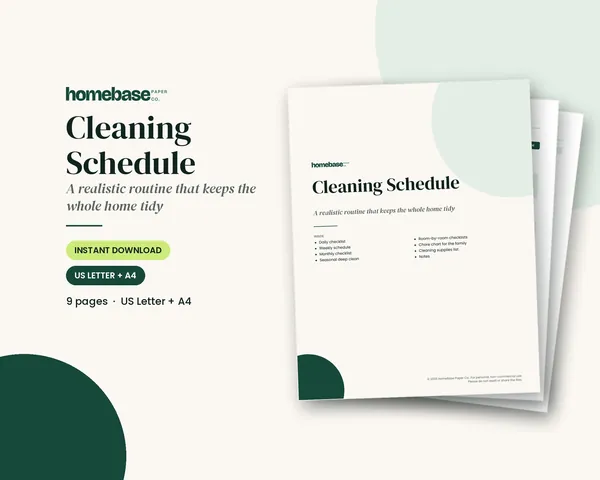
For the house, a shared cleaning plan keeps habits like "wipe the counters" from falling on one person. Our Cleaning Schedule ($4.49) has daily, weekly, monthly and seasonal lists plus a family chore chart.
Not sure which habits to track? Our guide to ways to stay healthy has 25 everyday habits worth tracking.
A filled-in habit plan example
Here is how one habit looks on the habit plan page before it goes on the tracker.
- The habit: Log every purchase in my budget.
- When and where: At the kitchen table, right after dinner.
- After I...: After I load the dishwasher.
- Reward: A cup of tea and one episode of a show.
- Why it matters: I want to know where $300 a month disappears to.
Notice how small the habit is. It takes two or three minutes. It is tied to something that already happens every night. And the reason is written down, so it's easy to remember on a night when you'd rather skip it. Fill in all three habit slots this way before day one, even if you start with just one habit.
At the end of the month, use the review box. Write what went well, what got in the way, and whether to keep, change or drop each habit. Then print a fresh monthly page and carry your habits forward.
Pair your habit tracker with a budget
Money habits work best when you can see the numbers behind them. Track the daily habit, like "logged every purchase," on the free habit tracker. Then keep the totals in a budget. Our Budget Planner Printable ($5.99) has 12 undated monthly budget pages plus pages for bills, spending, savings and debt. If you're setting goals for 2027, our guide to new year's resolutions has 60 ideas and a plan to keep them.
Building habits with kids? A sticker chart printable is the kid-friendly version of a habit tracker.
Make it easier
Tools for this
Printables
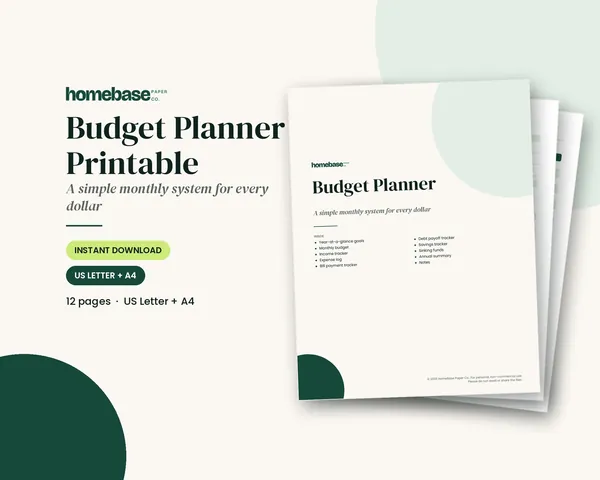
Budget Planner Printable
Twelve undated pages you can print every month: budget, bills, spending, savings and debt.
 Starter pick
Printables
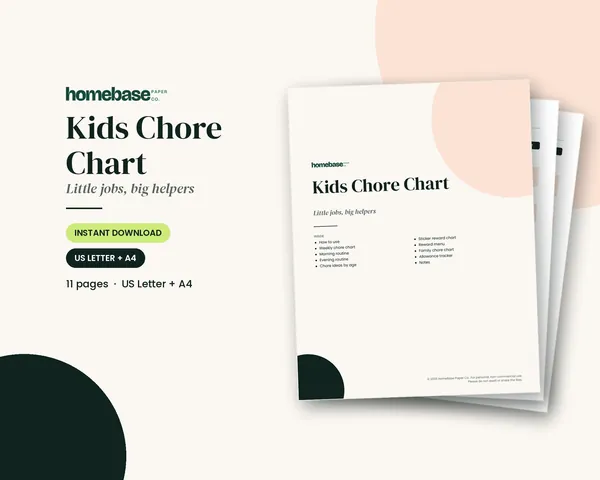
Kids Chore Chart
Weekly chore chart, morning and evening routines, chore ideas by age, a sticker reward chart and an allowance tracker.
Printables
Cleaning Schedule
Daily, weekly, monthly and seasonal lists - plus a family chore chart.
Frequently asked questions
Is this habit tracker printable free? Yes, this habit tracker printable is free. The habit tracker printable on this page is a free 3-page PDF that we email to you. You get a monthly tracker with a 31-day grid, a weekly tracker with four weeks and a habit plan page. Print as many copies as you need for personal use.
What is a habit tracker? A habit tracker is a simple chart where you mark each day you do a habit, like walking, reading or sticking to your budget. Over a week or a month, the marks show your streaks and the days you missed. That picture makes it easier to stay on track and spot patterns.
How do you use a habit tracker printable? To use a habit tracker printable, write one habit per row, then shade or check the box for each day you do it. Keep the page where you will see it, like the fridge or your planner. At the end of the week, count the days done and adjust the plan if a habit keeps slipping.
How many habits should I track at once? Track 3 to 5 habits at once if you are just starting. A short list keeps the tracker quick to fill in and the goals easy to keep. Our monthly page has room for 16 habits, but you don't need to fill every row.
How long does it take to form a habit? About 66 days on average, according to a well-known 2009 study from University College London, though it ranged from 18 to 254 days. Simple habits form faster than hard ones. A monthly habit tracker helps you get through the first few weeks, when habits are easiest to drop.
Do habit trackers actually work? Yes, for many people habit trackers work because they make progress visible. NIH News in Health lists tracking your progress as one of its steps for building healthy habits, along with planning, changing your surroundings and rewarding small wins.
What should I put on my habit tracker? Put small, specific daily actions on your habit tracker, like "walk 20 minutes," "no-spend day," "read 10 pages" or "10-minute tidy." Avoid vague goals like "be healthier." If you can't check it off in one day, break it into a smaller action.
What is the best way to track money habits? The best way to track money habits is to put one or two on your habit tracker, like "logged every purchase" or "no-spend day," and keep the numbers in a budget. Our Budget Planner Printable ($5.99) has monthly budget, bill, spending, savings and debt pages to go with it.
Should I use a monthly or weekly habit tracker? Use a monthly habit tracker for steady daily habits and a weekly one when you are trying something new or your weeks vary a lot. The monthly page shows longer streaks. The weekly page is easier to restart. Our free PDF includes both.
Can kids use a habit tracker? Yes, kids can use a habit tracker for things like brushing teeth, making the bed or reading. Keep it to 3 or 4 habits with pictures for young kids. Our Kids Chore Chart ($3.49) includes a weekly chart, morning and evening routines and a sticker reward chart.
What do I do if I miss a day on my habit tracker? If you miss a day, leave the box blank and do the habit the next day. Try never to miss two days in a row. A blank box isn't a failure. It is information, and a pattern of blanks on the same weekday tells you which part of the plan to change.
How do I print the habit tracker printable? Download the PDF and open it in any browser or PDF viewer. Choose US Letter paper, or A4 with "fit to page" turned on. Plain paper works, and cardstock holds up better if it will hang on the fridge all month.
What are the different types of habit trackers? The most common are a daily checklist, a weekly tracker with seven columns, a monthly grid with a column for each day of the month, and a yearly tracker with 365 small squares you color in. Bullet journal users also draw circle or mandala trackers. A habit plan page, where you write the cue, routine and reward for each habit, is useful before you start tracking. Start with a weekly or monthly layout and two or three habits.
How do I make a habit tracker in a bullet journal? On a fresh page, write the month at the top, list your habits down the left side and draw a column for each day of the month across the top, using the dot grid to keep squares even. Fill in a square each day you do the habit. Pencil the grid in first, keep the list to a few habits, and use one color per area of life if you like. You can also print the monthly page from this post and tape it in.
Is a paper habit tracker better than an app? Neither is better for everyone. A paper tracker is always visible, works for kids and families, and many people find coloring in a square motivating. An app sends reminders and keeps long-term statistics. A spreadsheet is a middle ground. Pick the one you'll check every day, and if you find yourself ignoring an app, try a printed tracker in a spot you see daily.
Can I make a habit tracker in Excel or Google Sheets? Yes, you can make a habit tracker in Excel or Google Sheets. Put the dates across the top row and your habits down the first column, then type a 1 in each cell for a day you complete the habit. Add a SUM formula at the end of each row to total the days done, and use conditional formatting to color cells that contain a 1 so streaks stand out. Copy the tab at the start of each month.
More from HomeBase
You may also like
Printables
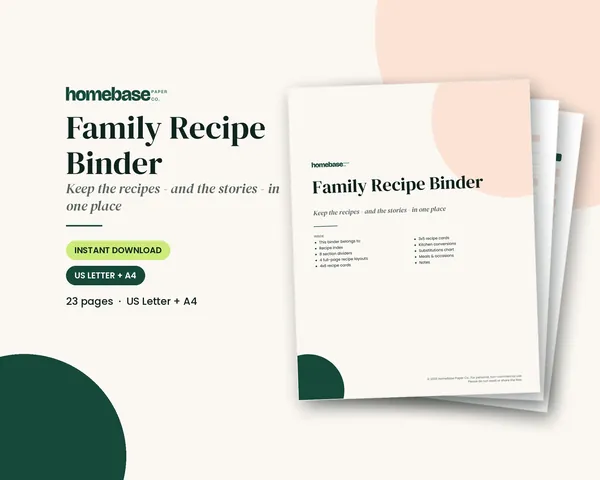
Family Recipe Binder
Section dividers, four recipe page layouts with room for the family story, 4x6 and 3x5 cards and a conversion chart - print it or type into the fillable version.
Printables
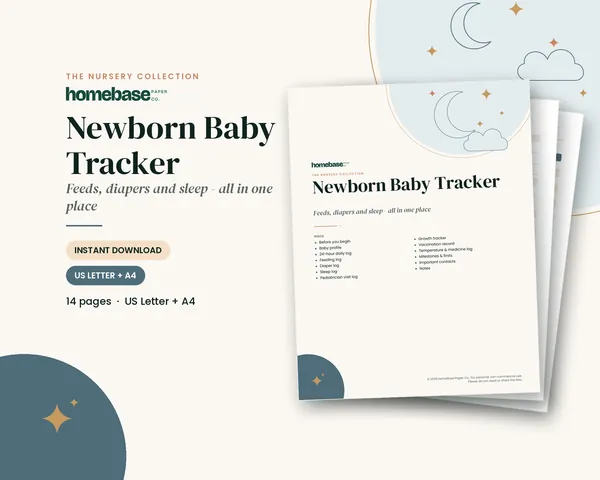
Newborn Baby Tracker
A 24-hour daily log plus feeding, diaper, sleep, growth and pediatrician-visit pages - easy to bring to checkups.
Printables
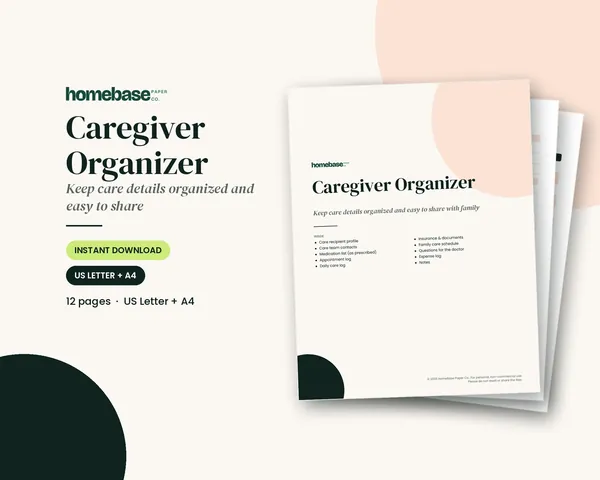
Caregiver Organizer
One place for contacts, appointments, the medication list from the doctor, and daily notes.
 Save 33%
Bundles
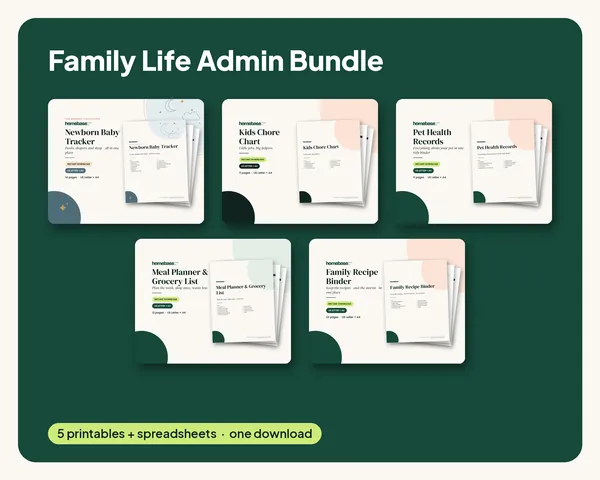
Family Life Admin Bundle
Baby logs, chore charts, pet records, meal plans and family recipes in one tidy set.
 Club
Monthly club
Meal Plan Club
Families who want dinner planned and a grocery list ready every week.
Free printable
Build habits you can see
A monthly tracker, a weekly tracker and a habit plan. You'll also get our weekly HomeBase email with simple planning and home organization tips.
Sources
- NIH News in Health: Creating healthy habits newsinhealth.nih.gov
- NIH News in Health: Breaking bad habits newsinhealth.nih.gov
- CDC: Physical activity guidelines for adults cdc.gov