

The short answer: a bullet journal is a notebook you turn into your own planner, to-do list and tracker. These bullet journal ideas cover spreads, trackers, money, meals and home pages.
- Core pages first: key, index, future log, monthly spread and weekly log
- Symbols: a dot for a task, X for done, > for moved
- Trackers for habits, mood and health
- Pick five or six that solve a real problem this month, not all fifty
- Next step: Plan it with the Budget Planner Printable ($5.99).
A bullet journal is a notebook you turn into your own planner, to-do list and tracker, one page at a time. These bullet journal ideas cover every part of a busy life: the core planning pages, weekly and monthly spreads, habit and mood trackers, money pages, meal plans and the home pages that keep a household running. Pick five or six that solve a real problem this month, not all fifty at once.
You'll also find a simple setup order, a sample week, and when it makes more sense to print a ready-made page than to draw one by hand.
What a bullet journal is (and why it works)
A bullet journal is a blank notebook that you turn into a planner, a to-do list and a set of trackers, one page at a time. The method comes from Ryder Carroll, author of The Bullet Journal Method. Most people use short symbols for speed, such as a dot for a task, a circle for an event and a dash for a note. Because every page is drawn by you, the journal holds exactly what your life needs and nothing else.
Writing things down is also part of why it works. Purdue Global's goal-setting guide recommends writing goals down, displaying them where you'll see them, and tracking progress, and it names bullet journaling as one way to track and remember goals. The University of Rochester Medical Center's page on journaling for emotional wellness adds that journaling can help you manage anxiety, reduce stress and cope with depression, by helping you prioritize problems and track symptoms day to day. It also points out that a journal doesn't need any set structure, which is the whole idea of a bullet journal.
The core pages: start here
Every bullet journal is built on a few core pages. Set these up first:
- Key. A small box showing your symbols: task, event, note, done, moved and cancelled.
- Index. The first two pages. Number every page and list what's on it, so you can find your budget page in March.
- Future log. Six or twelve months on two to four pages for birthdays, holidays, trips and appointments that are months away.
- Monthly spread. A list or grid of the days, plus the month's goals and tasks.
- Weekly or daily log. Where the real work happens: today's tasks, appointments and notes.
That's a working bullet journal. Everything below is optional.
If journaling has you curious about other creative pastimes, browse our list of hobbies, sorted by what each one costs to start.
Bullet journal symbols and migration
A bullet journal uses quick symbols, often called rapid logging, so you can write a task, event or note in a few words. Many people start with this simple key and add to it only when they need to:
| Symbol | Meaning |
|---|---|
| • (dot) | A task to do |
| X | A task that's done |
| > | A task moved to the next day, week or month |
| < | A task scheduled for a later date in the future log |
| ○ (circle) | An event or appointment |
| – (dash) | A note or idea |
| Line through a task | A task you decided not to do |
At the end of each month, look at every open task and decide: do it, move it forward to the new month or cross it out. That review is called migration, and it keeps old tasks from piling up. If you keep rewriting the same task, break it into a smaller first step or drop it.
Bullet journal supplies: what you actually need
You need only a notebook and a pen to start a bullet journal. A dotted notebook is popular because the dots help with straight lines without crowding the page, but grid or lined paper works too. Extras such as a ruler, a few colored pens and sticky tabs are nice to have, not required. If you'd rather not draw some pages, print them and tuck them into a binder or tape them in.
Bullet journal ideas for monthly spreads
- Calendar list. Days down the left margin, one line each. Fast and easy to read.
- Grid calendar. A traditional month grid. Pre-printed monthly calendars, like our free monthly calendar, can be trimmed and taped in if you don't want to draw one.
- Goals box. Three goals for the month, no more. Need ideas? See our list of monthly goals.
- Bills and paydays. Write each bill on its due date and mark paydays, so you can see where money is tight.
- Birthdays and events. Copy them from the future log on the first of the month.
- Month in review. A box at the end for wins, lessons and what to change next month.
Bullet journal ideas for weekly spreads
Stanford's Center for Teaching and Learning describes weekly planning with time blocking: schedule your non-negotiables and regular commitments first, then appointments, then give each to-do a time slot, and leave buffer time. A weekly spread is the paper version of that routine. A few layouts to try:
- Seven boxes. One box per day plus a notes box. Simple and quick.
- Vertical columns. One column per day with times down the side, for time blocking. Our guide on how to be more productive explains time blocking and batching.
- Week plus meals. Days across the top and dinners and a grocery list below.
- Top three. The three priorities for the week in a box at the top.
- Week on one page. For light weeks, so you save pages.
If you prefer printed pages for the week, our free weekly planner guide compares layouts and has a sample week to copy.
Trackers: habits, mood and health
Trackers are the most popular bullet journal pages, and the easiest to overdo. Pick three to five:
- Habit tracker. A grid with the days across the top and habits down the side: water, reading, a walk, no phone in bed. Our free habit tracker printable has ready-made grids if you'd rather not draw them. Tracking food too? Add our calorie tracker pages.
- Mood tracker. A color for each mood, one square per day. Over a month you start to see patterns.
- Sleep log. Bedtime and wake time for each day.
- Water or step tracker. A row of eight cups or a small bar for steps.
- Symptom tracker. Useful for headaches, allergies or anything you want to talk to a doctor about. The URMC journaling page notes that tracking symptoms day to day can help you recognize triggers.
- Reading log. Titles, dates finished and a one-line review.
- Workout log. Type, time and how you felt.
Bullet journal ideas for money
A bullet journal is a good place to see money and dates side by side. These pages work well:
| Page | What goes on it | How often |
|---|---|---|
| Monthly budget | Income, fixed bills, flexible spending and savings | Once a month |
| Bill due dates | Each bill, its due date, amount and a checkbox | Once a month |
| Spending log | Date, item, amount and category | Daily |
| No-spend calendar | A small grid; shade each day you spend nothing extra | Daily |
| Savings tracker | A goal, a picture to color in and a running total | Each deposit |
| Sinking funds | Small pots for gifts, car repairs, holidays and annual bills | Monthly |
| Debt payoff | Each debt, balance and a bar to fill as you pay | Monthly |
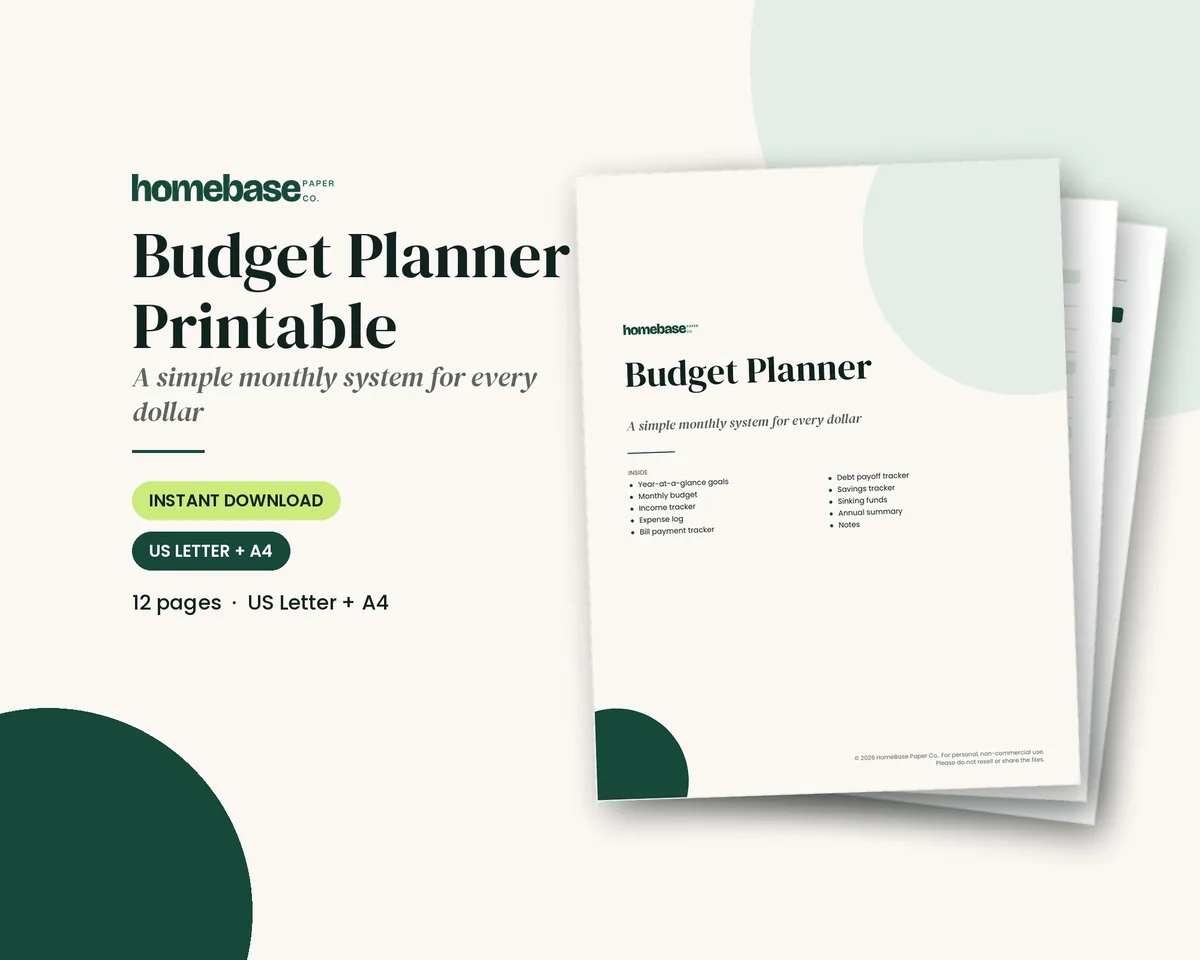
If you want the math done for you, the Budget Planner Printable ($5.99) has monthly budget pages, a bill payment tracker and an expense log you can print and tuck into the back of the journal. Our guide to budget categories helps with the category column, and a free savings goal tracker is a good page to copy.
Bullet journal ideas for meals and groceries
- Weekly meal plan. Seven dinners in a column. Plan the busiest night first.
- Grocery list. Split by store section so the shop is faster.
- Pantry and freezer list. What you already have, so you don't buy it twice.
- Recipes to try. One line per recipe and where you found it.
- Family favorites. The 10 meals everyone eats. Use it when you're stuck.
For a printed version, the Meal Planner & Grocery List ($3.99) has a weekly meal planner, a grocery list, a monthly menu and pantry and freezer inventory pages. Our monthly meal planner guide shows how to plan a whole month at once.
Bullet journal ideas for home and cleaning
These pages turn a bullet journal into a home management notebook:
- Cleaning schedule. Daily, weekly and monthly tasks, with a checkbox for each.
- Zone cleaning. One room or zone per day of the week.
- Home maintenance list. Furnace filters, smoke alarm tests, gutters and anything else that comes round once or twice a year.
- Decluttering tracker. One drawer, shelf or closet per day for 30 days. Our guide to closet organization has a step-by-step plan.
- Chore chart. Who does what, by day.
- Important numbers. The plumber, the vet, the school office.
If you'd rather not draw cleaning pages each month, the Cleaning Schedule ($4.49) has daily, weekly, monthly and seasonal checklists to print. Our cleaning schedule guide explains how to build one.
Bullet journal ideas for family life
- Family calendar. Everyone's activities on one page, one color per person.
- Birthdays and anniversaries. A year page you copy into each month.
- School page. Teachers, schedules, supply lists and days off.
- Gift ideas. One line per person, added all year.
- Packing lists. For trips, sleepovers and the hospital bag.
- Party planning. Guest list, menu, budget and a timeline.
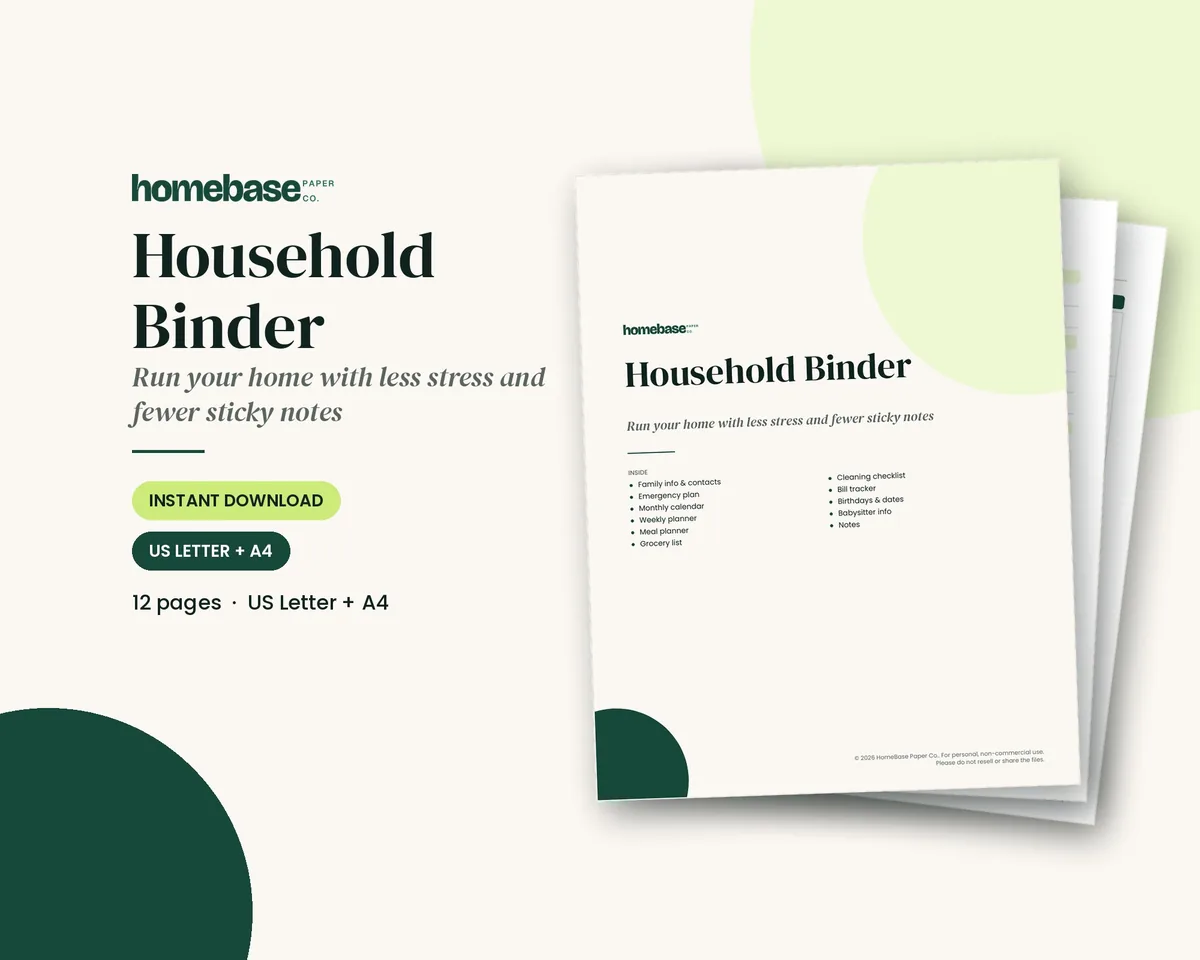
For a whole-family system, the Household Binder ($6.99) is a printable binder with a weekly planner page, a monthly calendar, a meal planner, a grocery list, a weekly cleaning page, a bill tracker and birthdays and important dates. It pairs well with a bullet journal: the binder holds the shared pages on the counter, and your journal holds your own lists.
Bullet journal ideas for goals and growth
- Year goals. Three to five goals on one page, broken into steps.
- Vision page. Words or sketches for how you want the year to feel.
- Gratitude log. One line a day.
- Brain dump. A free page to empty your head before planning the week.
- Wins list. Small and big. Read it on a bad day.
- Books, shows and places. Lists to want and lists to remember.
Purdue Global's guide suggests breaking goals into smaller, measurable mini-goals so you can see progress and adjust. A goals page with a few checkboxes under each goal does exactly that. Our SMART goals template has a worksheet if you want more structure.
Bullet journal ideas for the holiday season
| Spread | What goes on it |
|---|---|
| Gift list | Name, idea, budget, bought and wrapped boxes |
| Holiday budget | Total, categories, spent so far and what is left |
| Card list | Names and addresses, sent and received (see the Christmas card list) |
| Countdown | A weekly strip with the days left and the main task for each week |
| Meal plan | The menu for the big day and a shopping list by store section |
Use a double page for the gift list and the budget, so the two stay side by side. A holiday countdown planner can fill the countdown strip with the right numbers.
A sample week in a bullet journal
| Day | Tasks | Event | Tracker |
|---|---|---|---|
| Monday | Pay phone bill, plan dinners | Soccer 5:30 | Water, walk |
| Tuesday | Return library books | Water | |
| Wednesday | Order birthday gift | Dentist 3:00 | Water, walk |
| Thursday | Laundry catch-up | Late meeting | Water |
| Friday | Weekend grocery order | Water, walk | |
| Saturday | Clean out the fridge | Swim lesson 9:00 | Walk |
| Sunday | Set up next week | Family dinner | Review |
Five minutes a night is enough: tick off what's done, move what isn't with an arrow, and add tomorrow's tasks.
How to set up a bullet journal in one afternoon
- Number the pages and leave two for the index.
- Draw your key on the first page after the index.
- Make a future log for the next six or twelve months.
- Set up this month's spread with dates, goals and bills.
- Add one tracker, not five.
- Set up this week's spread and copy in fixed events.
- Pick a daily time to review it. The URMC page suggests setting aside a few minutes every day and keeping a pen and paper handy, which is good advice for any journal.
Minimal vs. decorated spreads
Both work. A minimal spread is black ink, straight lines and plain headers, and you can set up a week in ten minutes. A decorated spread adds color, lettering and doodles, and it can be a relaxing hobby in its own right. If you fall behind, go minimal for a while. A plain page you use beats a beautiful page you skip.
When to print a page instead of drawing it
Drawing every page is part of the fun for some people and a chore for others. Print pages that are the same every month, such as a monthly calendar, a budget sheet, a cleaning checklist or a meal plan, and draw the pages that change. Trim printed pages to fit and tape or glue them in, or keep them in a binder beside the journal. Our paper planner vs. digital planner guide can help if you're deciding between a notebook and an app.
Common bullet journal mistakes
- Too many trackers. Five trackers is plenty. Drop any you haven't filled in for a week.
- Setting up a year at once. Set up one month at a time.
- Copying every spread you see. Use what solves a problem for you.
- Skipping the index. You'll want it by month three.
- Quitting after a missed week. Leave the gap, start a new week and keep going.
Using your journal for money too? See our bullet journal bill tracker ideas for layouts that are quick to draw.
Make it easier
Tools for this

Printables
Household Binder
Family info, emergency plan, calendars, meals, groceries, cleaning, bills and sitter notes.
 Starter pick
Printables
Meal Planner & Grocery List
Weekly meals, a grocery list sorted by aisle, and pantry and freezer inventories so you shop once and waste less.
Printables
Budget Planner Printable
Twelve undated pages you can print every month: budget, bills, spending, savings and debt.
Frequently asked questions
What are some good bullet journal ideas for beginners? Start with four pages: a future log for the year, a monthly spread, a weekly spread and one habit tracker. Those four bullet journal ideas cover planning, tasks and habits. Add a budget page or a meal plan only after the basics have stuck for a month.
What should I put in my bullet journal first? You should put an index and a future log in your bullet journal first. Number the pages, keep the first two for an index, then add a future log with the year's birthdays, holidays and big dates. Your first monthly spread comes next.
How many pages should a monthly spread take? Two pages is the usual choice: a calendar list or grid on the left, and the month's goals, tasks and bills on the right. Add a third page for a habit tracker if you want one.
What are bullet journal ideas for money? A monthly budget page, a bill due-date list, a savings tracker, a no-spend calendar, a sinking funds page and a debt payoff tracker. Keep one page per month for the budget and one running page for each savings goal.
What can I track in a bullet journal? Almost anything you do or measure: habits, sleep, water, mood, workouts, spending, savings, chores, reading and symptoms. Track only three to five things at a time, or the tracker becomes a chore of its own.
Can a bullet journal help with stress? It can help some people. The University of Rochester Medical Center says journaling can help you manage anxiety, reduce stress and cope with depression, partly by helping you prioritize problems and track symptoms day to day. It is one part of a healthy routine, not a substitute for care.
How much time does a bullet journal take? A bullet journal takes about five to ten minutes a day and 20 to 30 minutes to set up each new month or week. A minimal layout takes the least time. Decorated spreads take longer, so save those for pages you enjoy making.
Does a bullet journal have to be a dotted notebook? No, a bullet journal doesn't have to be a dotted notebook. A dot-grid notebook makes straight lines and boxes easier, but lined, grid or blank notebooks all work. Use whatever notebook you already have and buy a dotted one later if you like the habit.
What is the difference between a bullet journal and a planner? A planner comes with pages already printed, while a bullet journal starts blank and you draw only the pages you need. Many people use both: printed planner pages for the fixed parts of the week, and a bullet journal for lists and trackers.
What are bullet journal ideas for home and family? Good bullet journal ideas for home and family are a cleaning schedule, a meal plan and grocery list, a chore chart, a home maintenance list, a family calendar, birthdays, a packing list and a decluttering tracker. These pages turn the journal into a home management notebook.
What helps you stick with a bullet journal? Make it small and make it daily. Keep the journal and a pen where you already sit each morning or evening, review the day in two minutes, and move unfinished tasks forward. Skip decorating when you are busy.
Who created the bullet journal? Ryder Carroll, the author of The Bullet Journal Method: Track the Past, Order the Present, Design the Future. Purdue Global's goal-setting guide points beginners to his method as one way to track and remember goals.
What is a bullet journal? Our Household Binder ($6.99) is a printable alternative for the home pages many people draw in a bullet journal, like a weekly planner, meal plan and bill tracker. A bullet journal is a notebook you turn into your own planner, to-do list and tracker, one page at a time, using short symbols to log tasks, events and notes.
What supplies do I need to start a bullet journal? Our Budget Planner Printable ($5.99) gives you ready-made money pages to add if you would rather not draw them. To start a bullet journal, you need only a notebook and a pen. A dotted notebook is popular, but grid or lined paper works too, and a ruler or colored pens are optional extras.
What does migration mean in a bullet journal? Our Meal Planner & Grocery List ($3.99) is a printable page you can drop into any bullet journal each week. Migration means reviewing open tasks at the end of a month and moving each one forward, scheduling it for later or crossing it out, so old tasks don't pile up.
What spreads should I add to a bullet journal for Christmas? For Christmas, add a gift list, a holiday budget, a card list, a countdown strip and a meal plan to your bullet journal. Put the gift list and the budget on facing pages so you can see what you have spent while you plan what is left.
More from HomeBase
You may also like
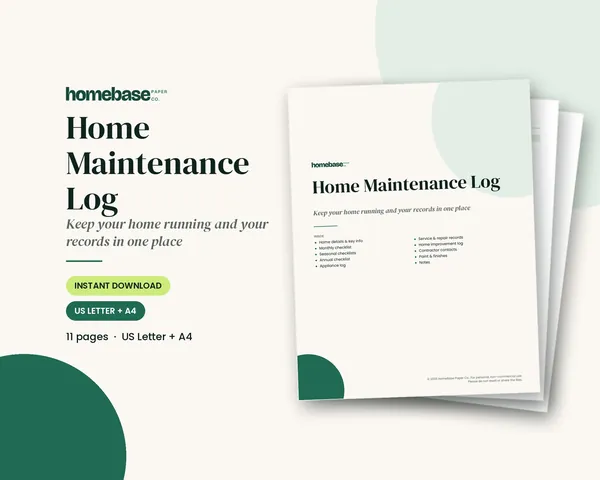
Printables
Home Maintenance Log
Monthly, seasonal and annual checklists plus a record of every appliance and repair.
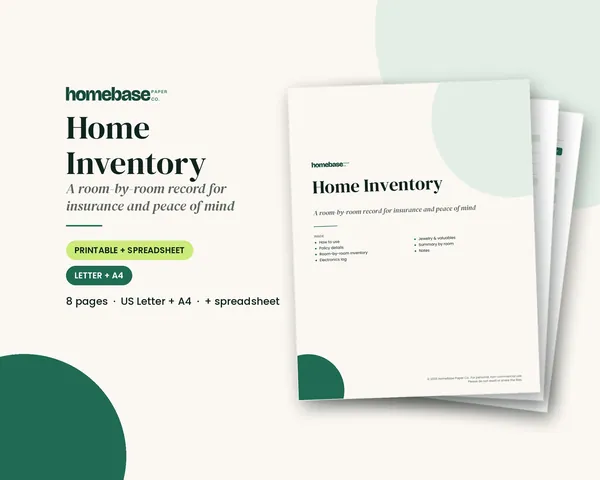
Printables
Home Inventory
Printable pages and a spreadsheet that totals the value of every room.
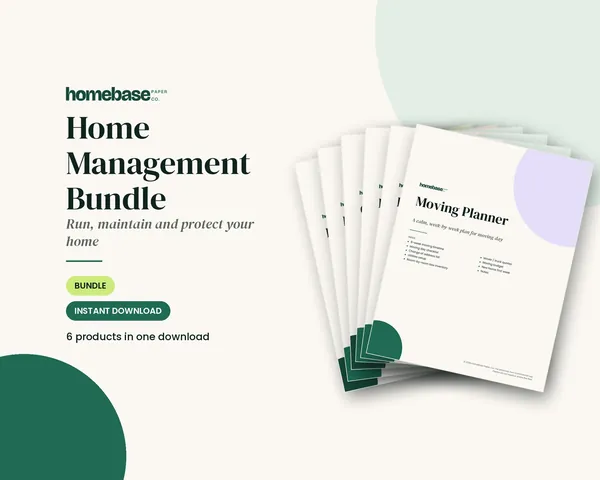 Save 48%
Bundles
Home Management Bundle
Household binder, maintenance log, moving planner, cleaning schedule, home inventory and password log.
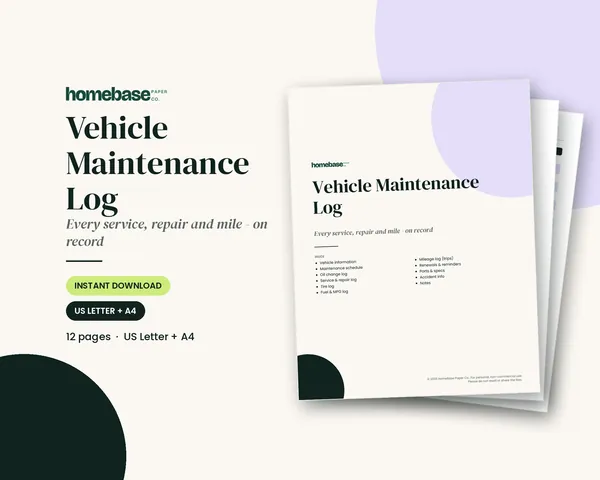
Printables
Vehicle Maintenance Log
Oil changes, repairs, tires, fuel and MPG, trip mileage and renewal dates - so resale and warranty records are easy.
 Club
Monthly club
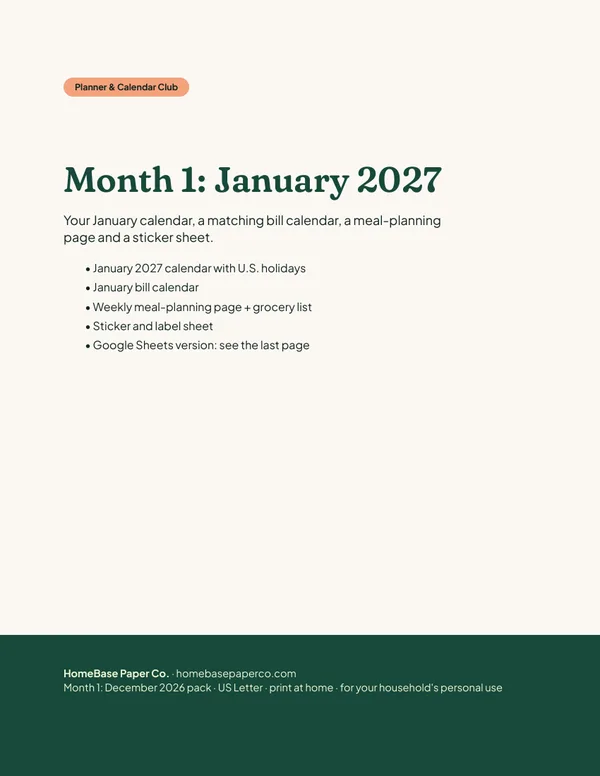
Planner & Calendar Club
Anyone who wants a monthly calendar, bill calendar and meal plan ready to print.
Free printable
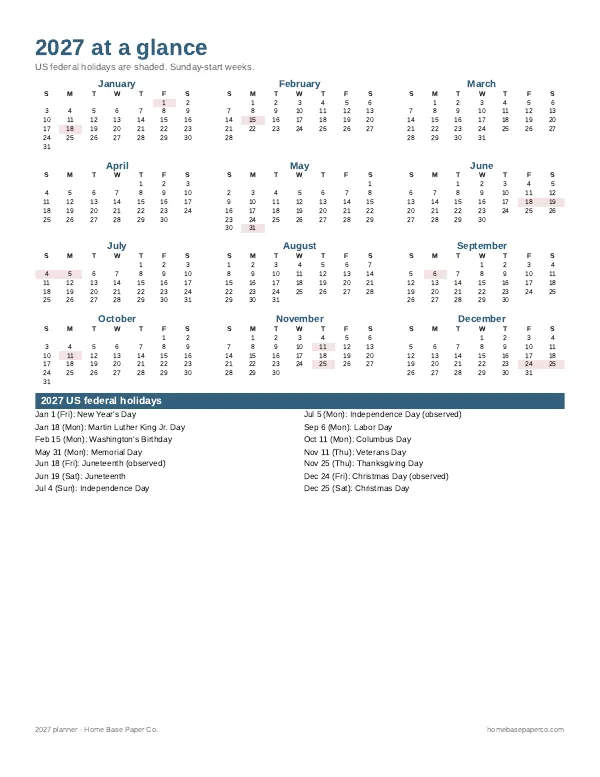
Get organized for the new year: get the free 2027 planner
A 16-page printable 2027 planner with a year-at-a-glance page and monthly calendars with US holidays marked. You'll also get our weekly HomeBase email with simple planning and home organization tips.
Sources
- University of Rochester Medical Center: Journaling for emotional wellness urmc.rochester.edu
- Purdue Global: Goal-setting worksheet and tips purdueglobal.edu
- Stanford Center for Teaching and Learning: Weekly planning, time blocking method ctl.stanford.edu