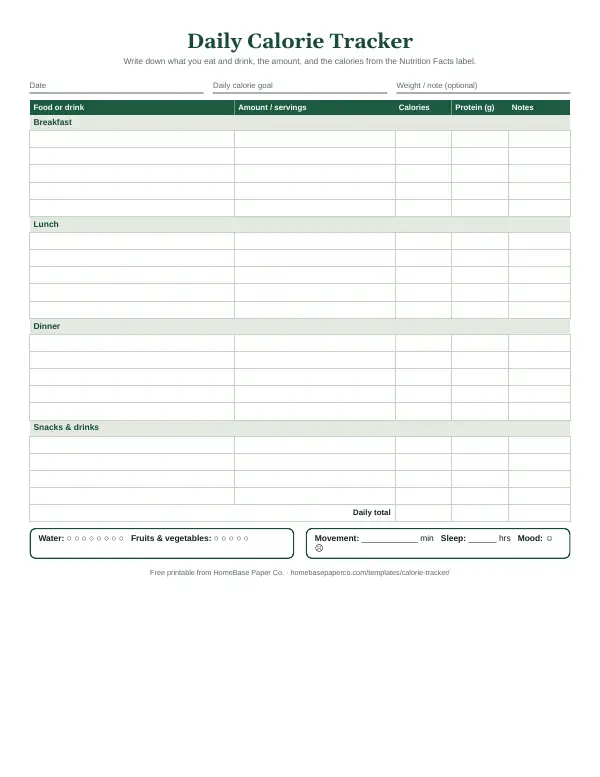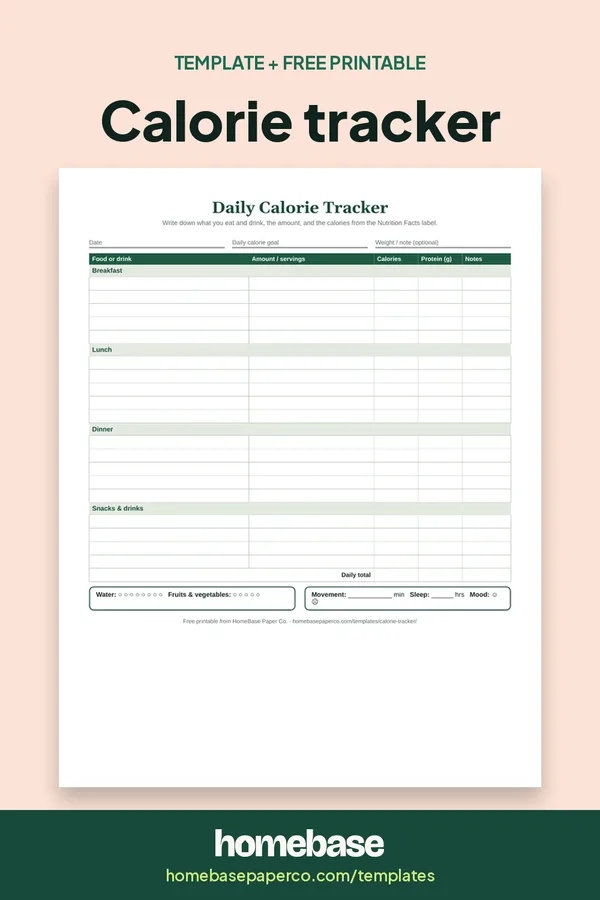
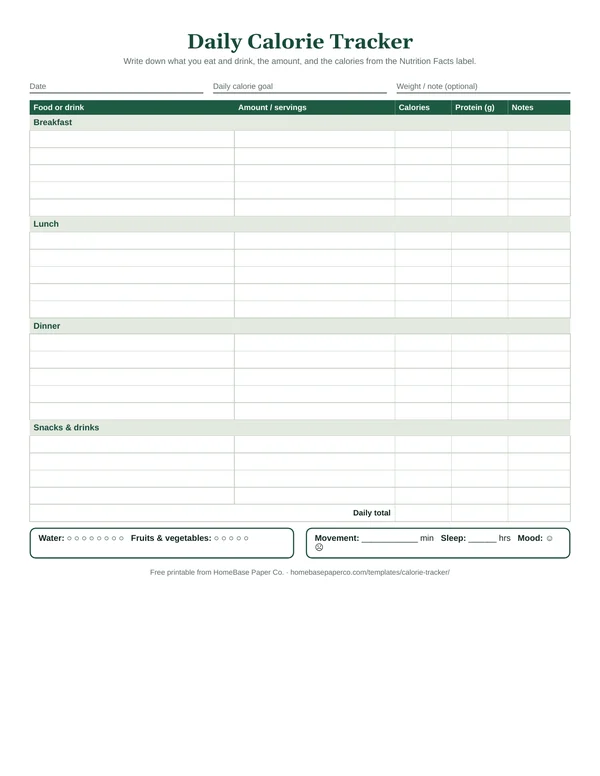
The short answer: A calorie tracker is a simple log of what you eat and drink each day, with the calories for each item, so you can see how your meals add up. Our free printable calorie tracker has two pages: a daily food log organized by breakfast, lunch, dinner and snacks, with columns for amount, calories, protein and notes, and a weekly page that collects each day's totals.
It's made for anyone who wants a clearer picture of their eating, people whose doctor or dietitian asked for a food diary, athletes watching protein, and anyone who'd rather use paper than another app.
This tracker is for personal record keeping. It isn't medical or nutrition advice. Talk with your doctor or a registered dietitian about the right goal for you, especially if you're pregnant, have diabetes or another health condition, or have a history of disordered eating.
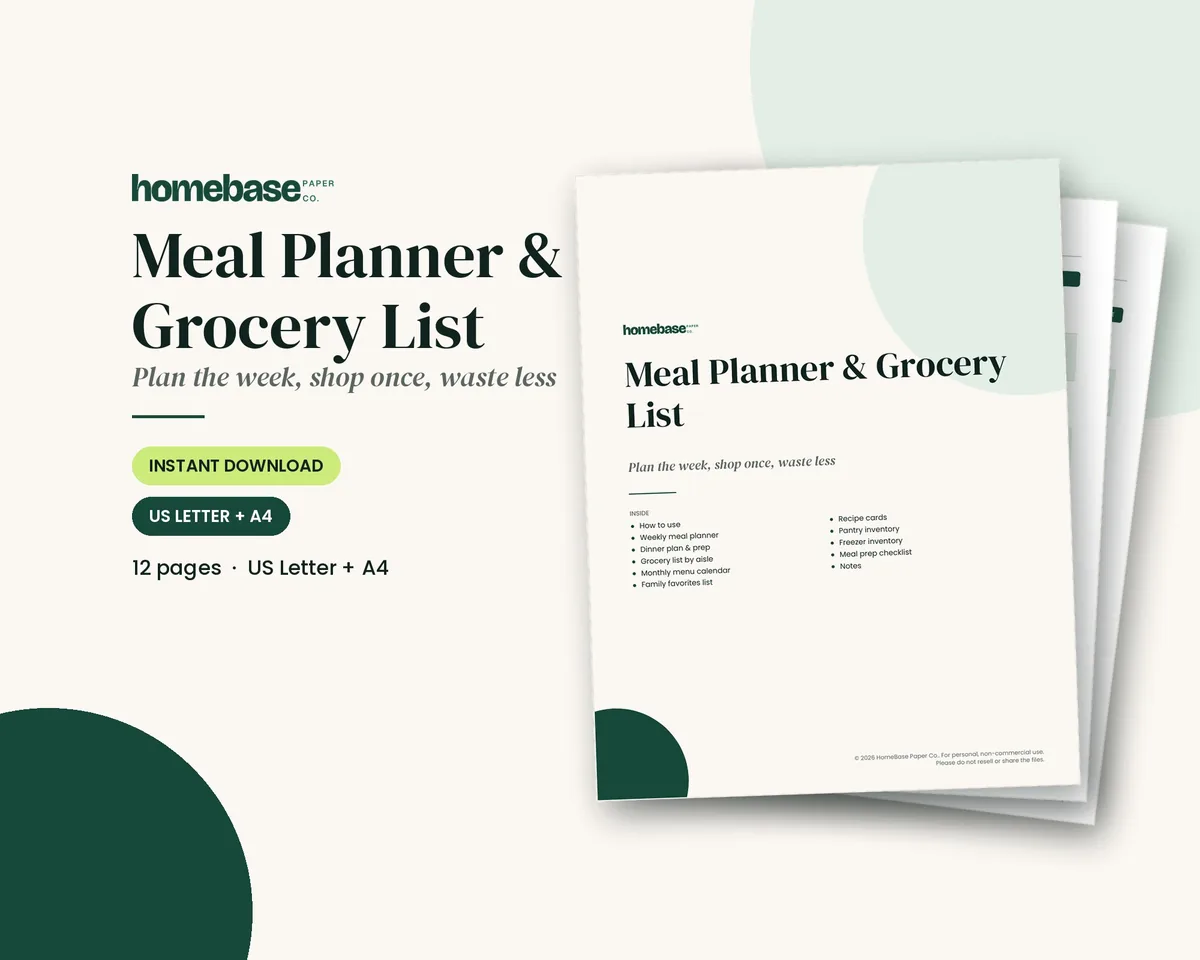
What's included in the Meal Planner & Grocery List
- How to use this planner
- Weekly Meal Planner
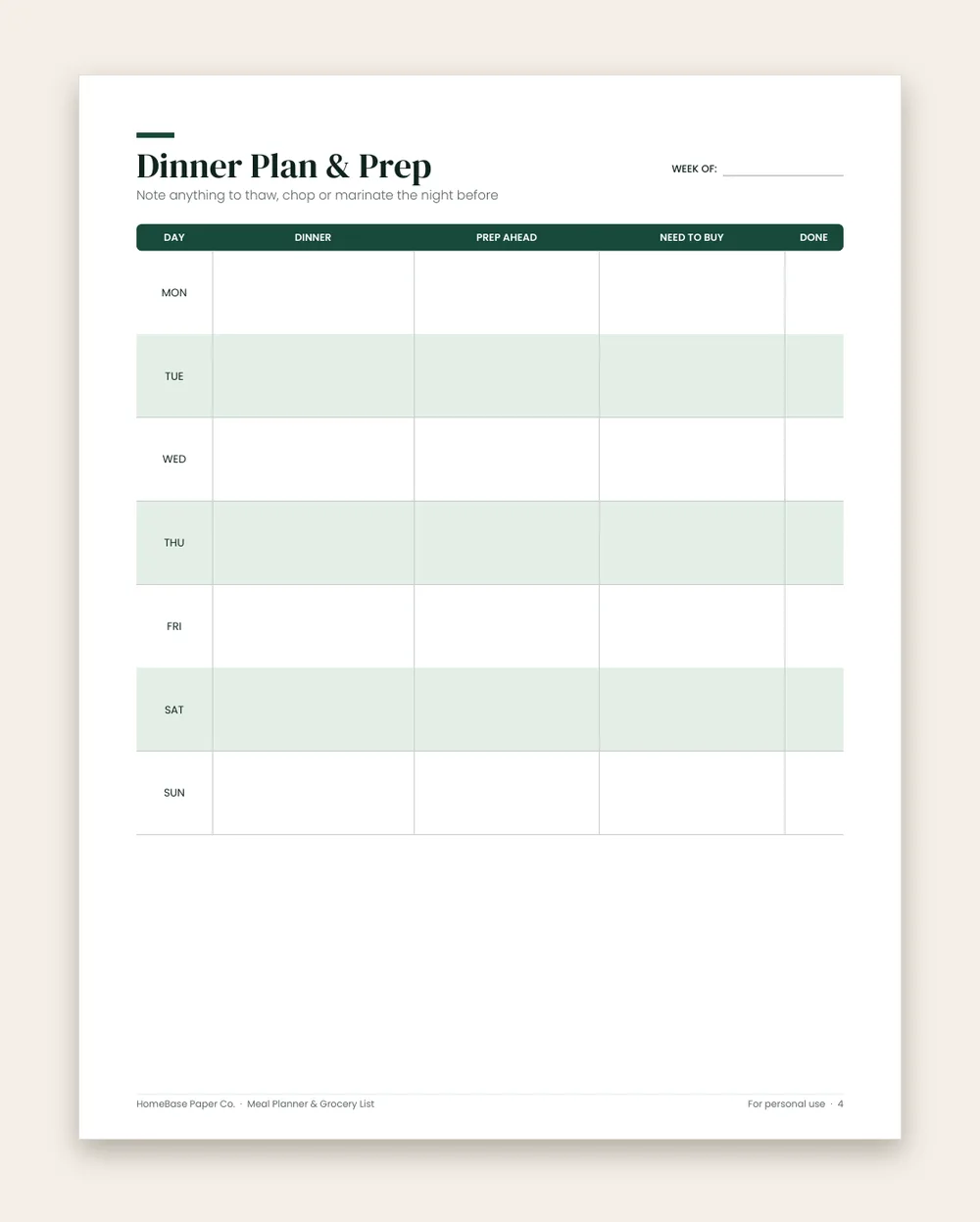
- Dinner Plan & Prep
- Grocery List
- Monthly Menu
- Family Favorites
- Recipe Cards
- Pantry Inventory
- Freezer Inventory
- Meal Prep Checklist
- Notes
Printable PDF, $3.99. Instant download; nothing is shipped. See every page on the product page.
Who it's for
- Anyone building awareness of what and how much they eat.
- People working with a doctor or dietitian who asked for a food diary.
- Athletes and lifters tracking calories and protein.
- Meal planners who want to see how a weekly menu adds up.
- People who prefer paper over apps and notifications.
How to use the calorie tracker
- Set a goal with a professional. Ask your doctor or a registered dietitian for a calorie goal that fits you, and write it at the top.
- Log as you go. Write down each food and drink right after you have it, under the right meal.
- Note the amount. Write the serving size or amount you actually ate.
- Add the calories. Use the Nutrition Facts label, a nutrition database or the recipe's nutrition information.
- Total the day. Add up the calories and protein and fill in water, movement and sleep.
- Copy totals to the week. Move each day's totals onto the weekly page and note what went well.
What's on the free calorie tracker printable
| Page | What's included |
|---|---|
| 1. Daily calorie tracker | Date, daily goal and note fields, sections for breakfast, lunch, dinner and snacks and drinks, columns for food, amount, calories, protein and notes, a daily total, and water, fruit and vegetable, movement, sleep and mood trackers |
| 2. Weekly calorie tracker | Week-of and goal fields, a row for each day with totals by meal, total calories, protein and water, a weekly average, and "what went well" and "what to try next week" boxes |
How to read a Nutrition Facts label
The label is the fastest way to get an accurate number. The FDA's guide to the Nutrition Facts label says to start with the serving size and the number of servings in the package, because every number below it is for one serving.
- Check the serving size. If it's 1 cup and you ate 2, double everything.
- Find the calories. They're in large type near the top.
- Note the protein. It's listed in grams lower down.
- Glance at the % Daily Value. As a general guide, 5% or less is low and 20% or more is high.
How to log food accurately
- Write it down right away. It's easy to forget a handful of crackers by evening.
- Count the extras. Cooking oil, butter, dressings, sauces, creamer and bites while cooking add up.
- Log drinks. Coffee drinks, juice, soda and alcohol all have calories.
- Measure for a week. Using cups and spoons for a week or two makes eyeballing more accurate.
- Use recipe math for homemade food. Add up the ingredients and divide by the servings.
Quick portion guide
| Food | Handy estimate | Roughly |
|---|---|---|
| Rice, pasta, cereal | Your fist | 1 cup |
| Meat, chicken, fish | Your palm | 3 ounces |
| Cheese | Two thumbs | 1½ ounces |
| Nuts | A cupped hand | 1 ounce |
| Peanut butter, oil | Your thumb | 1 tablespoon |
Calorie needs vary
There's no single right number. The Dietary Guidelines for Americans estimate that adult calorie needs range from about 1,600 to 3,000 calories a day depending on age, sex, size and activity. A professional can help you pick a goal. Many people find the bigger benefit of a food log isn't the total at all. It's noticing patterns, like skipped lunches, late-night snacking or how a week of take-out compares with a week of home cooking.
Tracking through the holidays
Between Thanksgiving and New Year's, there's more food around and less routine. You don't need to skip the pie. Log the plate you actually eat, enjoy the treats you love most, and use the notes column for the occasion. It's simply a way to stay aware.
Make logging easier with a meal plan
When you've planned the week's meals, filling in a food log takes half the time. The Meal Planner & Grocery List ($3.99) gives you a weekly menu, dinner prep page and an aisle-sorted grocery list. Keep your go-to recipes and their serving sizes in the Family Recipe Binder ($6.99).
Ready to use
Plan the meals you'll be logging
 Starter pick
Printables
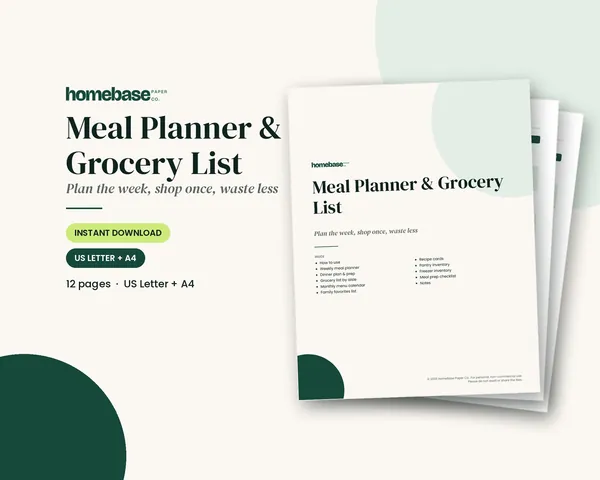
Meal Planner & Grocery List
Weekly meals, a grocery list sorted by aisle, and pantry and freezer inventories so you shop once and waste less.
Printables
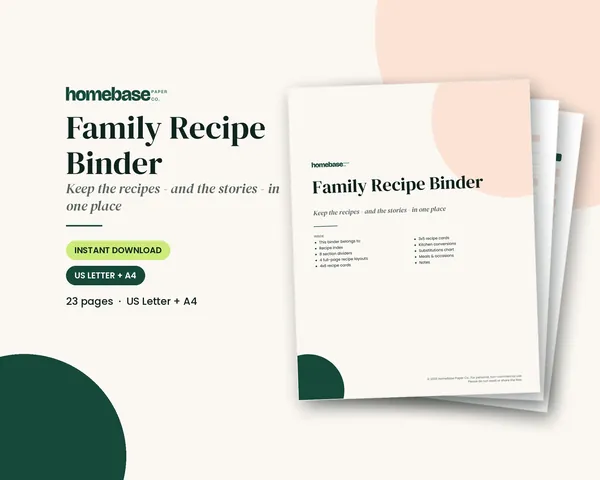
Family Recipe Binder
Section dividers, four recipe page layouts with room for the family story, 4x6 and 3x5 cards and a conversion chart - print it or type into the fillable version.
Frequently asked questions
How do I use a printable calorie tracker? Write down everything you eat and drink on the daily page of the calorie tracker as soon as you have it, grouped by breakfast, lunch, dinner and snacks. Note the amount and the calories from the Nutrition Facts label or a reliable nutrition database, then add up the daily total. Copy each day's totals onto the weekly page.
Where do I find the calories in my food? For packaged food, the calories are on the Nutrition Facts label, listed per serving. Check the serving size and how many servings you actually ate, then multiply. For fresh foods, restaurant meals and home recipes, use the restaurant's posted nutrition information, the USDA's FoodData Central database, or a recipe's nutrition information divided by the number of servings.
How many calories should I eat a day? Calorie needs vary a lot with age, sex, height, weight, activity level and health conditions. The Dietary Guidelines for Americans estimate that most adults need somewhere between about 1,600 and 3,000 calories a day. Your doctor or a registered dietitian can help you set a goal that fits you. This tracker is a record-keeping tool, not medical advice.
Is a paper calorie tracker better than an app? A paper calorie tracker and an app both work, and the best one is the one you'll keep using. Paper is quick, private and free of ads and notifications, and writing things down by hand helps some people notice their habits. Apps can look up calories for you. Many people use an app to look up numbers and paper to log them.
Should I track drinks and snacks too? Yes, you should track drinks and snacks too. Drinks and small snacks are the easiest things to forget and can add a lot of calories over a day. Log coffee drinks, juice, soda, alcohol, cooking oil, sauces, dressings and bites while cooking. The calorie tracker has a separate snacks and drinks section and water circles so those don't get lost between meals.
How do I estimate portion sizes without a scale? Use measuring cups and spoons at home for a week or two until you can eyeball portions. As a rough guide, a fist is about one cup, a palm of meat is about three ounces, a cupped hand is about an ounce of nuts, and a thumb is about a tablespoon of peanut butter or oil. Write the amount you estimated.
How long should I keep a food log? Even one or two weeks of a food log can show you patterns, like skipped breakfasts, big evening snacks or how often you eat out. Some people track for a few weeks to learn and then check in once in a while. Others track every day. Use the weekly page to note what went well and one thing to try next week.
Can I use this calorie tracker during the holidays? Yes, you can use this calorie tracker during the holidays. Holiday meals, parties and baking can make it hard to keep track, so a simple daily log helps you stay aware without giving up the foods you love. Log the plate you actually eat, enjoy the treats you care about most, and use the notes column for the occasion. A planned menu makes logging much easier too.
Free printable
A simple daily food log you can fill in by hand
Meals, calories, protein, water, movement, sleep and mood on one page. You'll also get our weekly HomeBase email with easy meal planning ideas and family recipe tips.