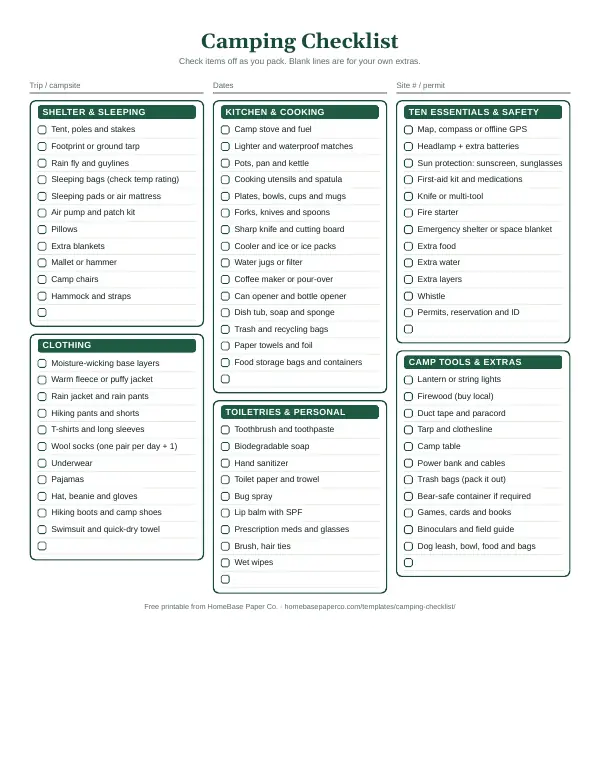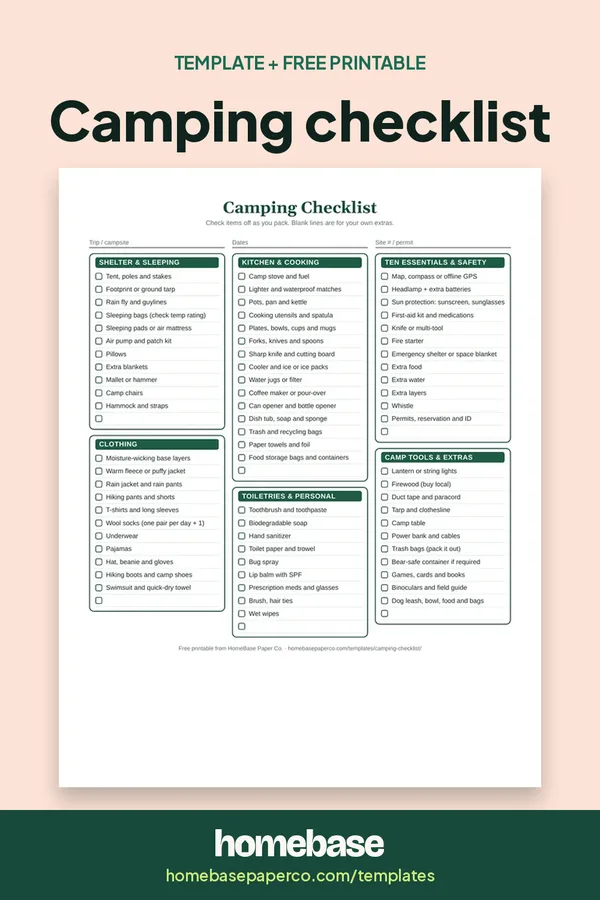
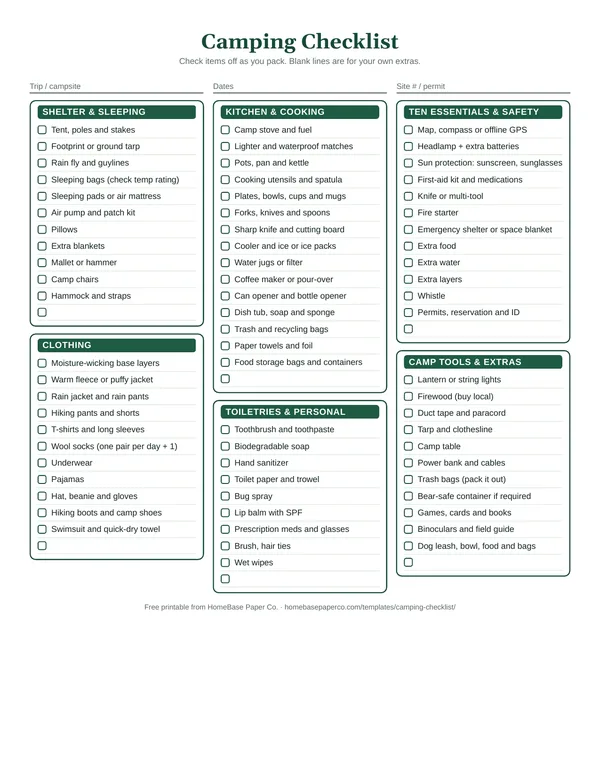
The short answer: A camping checklist is a packing list of the gear, food, clothing and safety items you need for a night or more outdoors, so nothing important gets left at home. Our free camping checklist printable has more than 70 check-off items in six categories, from tent stakes to the ten essentials, plus a second page with a camp meal plan, a camp grocery list, before-you-go steps and a leave-camp checklist.
It's made for families, first-time campers, car campers and anyone who's ever driven two hours and realized the tent poles are still in the garage.
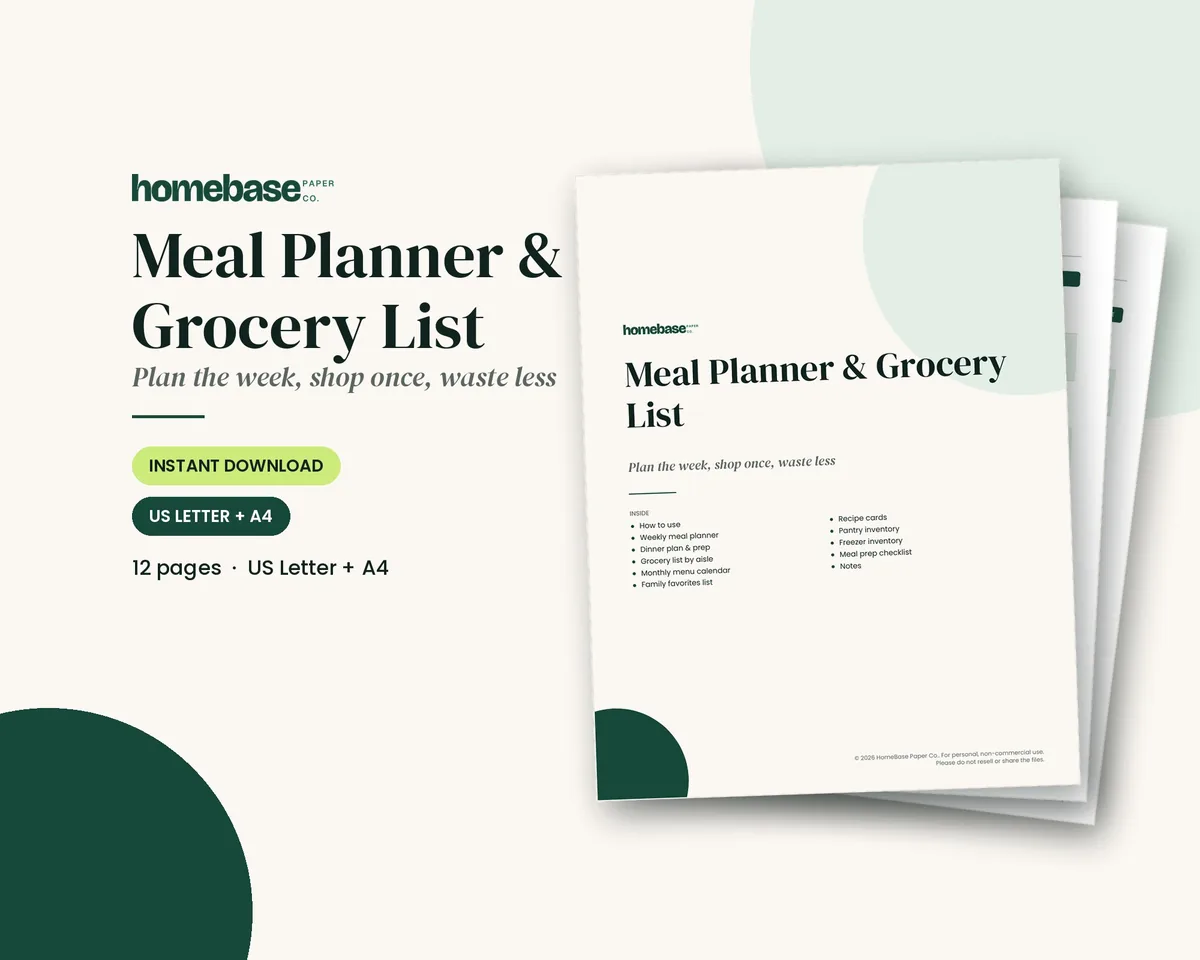
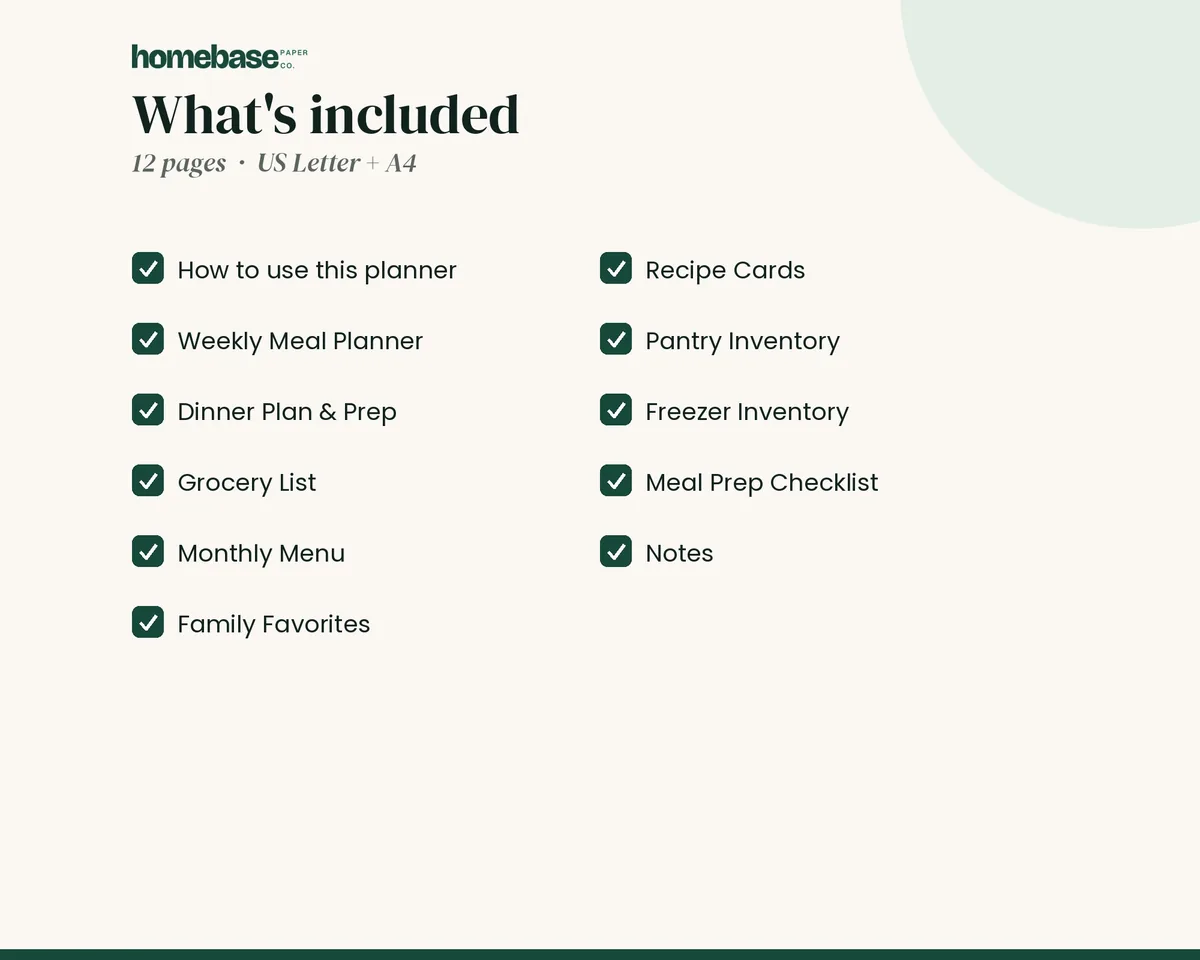
What's included in the Meal Planner & Grocery List
- How to use this planner
- Weekly Meal Planner
- Dinner Plan & Prep
- Grocery List
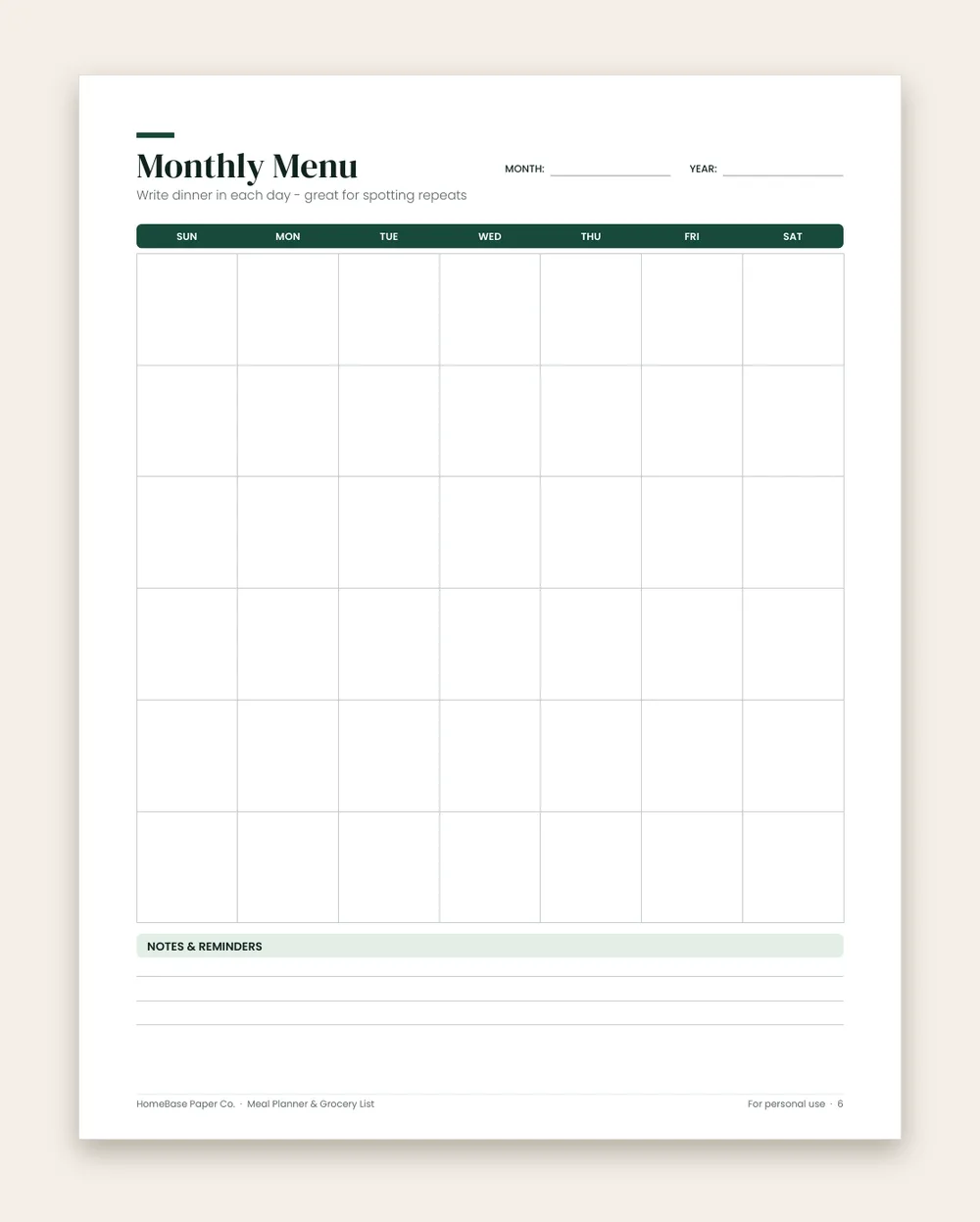
- Monthly Menu
- Family Favorites
- Recipe Cards
- Pantry Inventory
- Freezer Inventory
- Meal Prep Checklist
- Notes
Printable PDF, $3.99. Instant download; nothing is shipped. See every page on the product page.
Who it's for
- Families packing a car for a weekend at a campground.
- First-time campers who don't know what they'll need yet.
- Scout leaders and group organizers handing out a packing list.
- Experienced campers who want a list to reuse every trip.
- Anyone planning camp meals who wants to shop once.
How to use a camping checklist printable
- Print it a week ahead. Early packing gives you time to buy or borrow missing gear.
- Cross off what you don't need. Adjust the list for the season, place and trip length.
- Add your extras. Write baby gear, medications or hobby gear on the blank lines.
- Plan the meals. Fill in the meal plan and copy ingredients onto the camp grocery list.
- Check the gear. Set up the tent at home, test the stove and charge lights.
- Pack by category. Use one bin for the kitchen, one for sleeping gear and one bag per person.
- Check items off as they go in the car. Mark items only once they're packed.
- Run the leave-camp list. Make sure the fire is out and nothing is left behind.
Why use a printable camping checklist
Packing for camping is different from packing for a hotel. There's no front desk to borrow a can opener from, and the nearest store may be an hour away. A printed list you can check off as items go into the car takes the guesswork out of packing, and it's easy to hand to kids or a partner so everyone packs their part.
A good list also covers safety, not just comfort. The National Park Service recommends that visitors always carry the ten essentials, including navigation, a headlamp, sun protection, first aid, a knife, fire, shelter, and extra food, water and clothes. Page 1 of the checklist gives them their own box so they don't get buried under marshmallows.
What's on the free camping checklist printable
The PDF has two US Letter pages. Print a fresh copy for each trip, or slip it into a sheet protector and use a dry-erase marker.
| Page | Section | What's included |
|---|---|---|
| 1. Camping checklist | Shelter & sleeping | Tent, footprint, rain fly, sleeping bags and pads, pump, pillows, chairs and hammock |
| 1. Camping checklist | Kitchen & cooking | Stove and fuel, lighter, pots, utensils, dishes, cooler, water, coffee, dish tub and trash bags |
| 1. Camping checklist | Clothing | Base layers, warm jacket, rain gear, socks, hats and gloves, boots and camp shoes |
| 1. Camping checklist | Ten essentials & safety | Map, headlamp, sun protection, first aid, knife, fire starter, emergency shelter, extras and permits |
| 1. Camping checklist | Toiletries & camp tools | Toiletries, bug spray, medications, lantern, local firewood, tarp, power bank, games and pet gear |
| 2. Meal plan & trip prep | Planning tables | A four-day meal plan, a camp grocery list, before-you-go and leave-camp checklists and emergency info |
How to use the camping checklist, step by step
- Print it a week ahead. Early packing gives you time to buy or borrow anything you're missing.
- Cross off what you don't need. A summer car-camping trip won't need a beanie; a fall trip in the mountains will.
- Add your extras. Write baby gear, medications, fishing gear or bikes on the blank lines.
- Plan the meals. Fill in the meal plan on page 2, then copy every ingredient onto the camp grocery list.
- Check the gear. Set the tent up in the yard, test the stove and charge headlamps and power banks.
- Pack by category. Use one bin for the kitchen, one for sleeping gear and one bag per person for clothes.
- Check items off as they go in the car. Don't check something because you own it; check it when it's packed.
- Run the leave-camp list. Before you drive home, make sure the fire is out and nothing is left behind.
Camping checklist by trip type
| Trip type | Add these | You can usually skip |
|---|---|---|
| Car camping at a campground | Camp table, big cooler, lantern, extra chairs | Lightweight gear, water filter |
| Tent camping with kids | Extra clothes, games, night lights, snacks, wipes | Fancy cooking gear |
| Cold-weather camping | Warmer sleeping bags, wool layers, hand warmers, extra fuel | Swimsuits, hammock |
| Beach or lake camping | Sunscreen, shade canopy, water shoes, life jackets | Heavy boots |
| Backpacking | Water filter, lightweight stove, bear canister if required | Camp chairs, large cooler, lantern |
Campground and safety tips
Check the rules before you go. The NPS camping at a campground guide suggests making a reservation where you can, checking the park's site for alerts and fire restrictions, and storing food properly so wildlife can't get it. Buy firewood near your campsite instead of bringing it from home, since moving firewood can spread pests.
Weather can change fast outdoors. The National Weather Service says when thunder roars, go indoors and that no place outside is safe during a thunderstorm, so check the forecast, know where the nearest hard-topped car or building is, and have a plan to head there if a storm rolls in. A tent doesn't protect you from lightning.
Common camping packing mistakes
- Forgetting tent stakes or poles. Pack the tent as a complete set and set it up once at home.
- Bringing too few warm layers. Nights in the mountains or desert get cold even in summer.
- No light plan. Bring a headlamp for every person and spare batteries.
- Not enough water. Plan on at least a gallon per person per day for drinking, cooking and washing.
- Packing the cooler last. Pre-chill the cooler, freeze water bottles and pack it in the order you'll eat.
- Skipping the trip plan. Tell someone at home where you're going and when you'll be back.
Make meal planning part of the trip
Food is the part of camping most people overpack or underpack. Page 2 handles a weekend, and if you plan meals every week at home too, the Meal Planner & Grocery List ($3.99) gives you a weekly menu and an aisle-sorted grocery list in one printable. Keeping a trip on budget? The Printable Budget Planner has spaces to plan gas, campsite fees, food and gear.
For more trip planning, see our packing list guide, the travel itinerary template and the free grocery list template.
Planning the whole getaway? Our guide on how to plan a trip covers the budget, dates, bookings and a simple timeline.
Ready to use
Plan the meals and the budget, at camp and at home
 Starter pick
Printables
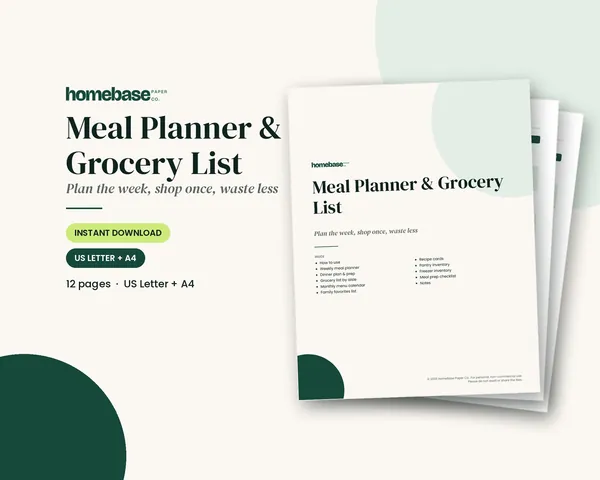
Meal Planner & Grocery List
Weekly meals, a grocery list sorted by aisle, and pantry and freezer inventories so you shop once and waste less.
Printables
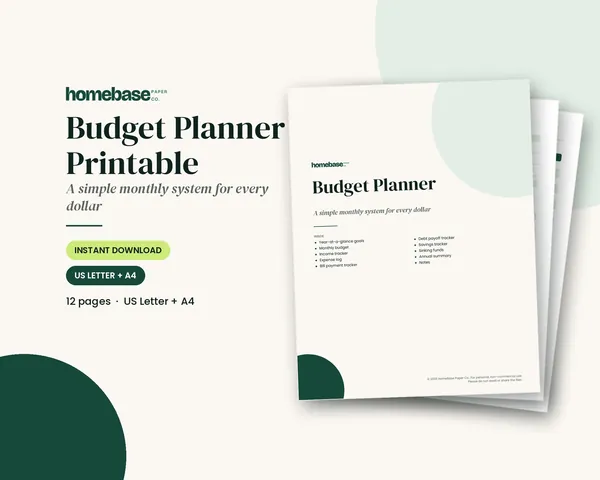
Budget Planner Printable
Twelve undated pages you can print every month: budget, bills, spending, savings and debt.
Frequently asked questions
What should be on a camping checklist? A camping checklist should cover shelter and sleeping gear, a kitchen kit with a stove, fuel, cooler and dishes, weather-ready clothing in layers, toiletries and medications, camp tools like a lantern and tarp, and the ten essentials for safety. Our free camping checklist printable organizes more than 70 items into those six groups.
Is this camping checklist printable free? Yes, the camping checklist printable is free. Enter your email and we will send the two-page PDF to print. Page 1 is a check-off packing list in six categories, and page 2 has a four-day camp meal plan, a camp grocery list, before-you-go and leave-camp checklists, and a box for emergency contact information.
What are the ten essentials for camping? The ten essentials the National Park Service recommends are navigation, a headlamp, sun protection, a first-aid kit, a knife, a fire starter, emergency shelter, and extra food, water and clothing. They're meant to help you handle an emergency or an unexpected night out, so pack them even for short hikes away from camp.
What do I need for tent camping for the first time? For your first tent camping trip, you need a tent with stakes and a rain fly, a sleeping bag rated for the night's low temperature, a sleeping pad, a headlamp, a stove or a plan for cooking, a cooler, plenty of water, warm layers, rain gear, a first-aid kit and your campsite reservation. Practice setting up the tent at home.
What food should I bring camping? Bring easy foods that travel well, such as oatmeal, eggs, bagels, sandwich fixings, foil-packet dinners, pasta, chili, hot dogs, fruit, trail mix and s'mores supplies. Plan each meal on page 2 of the checklist, prep and chop ingredients at home, pre-chill the cooler, and pack it in the order you'll eat.
How much water should I bring camping? Plan on at least one gallon of water per person per day for drinking, cooking and cleaning, and more in hot weather or if you're hiking. Check whether your campground has potable water before you go. If you'll use streams or lakes, bring a water filter or purification tablets.
What do people forget most when camping? Campers most often forget tent stakes or poles, a lighter or matches, a can opener, headlamps or spare batteries, warm layers for cold nights, trash bags, bug spray, sunscreen and pillows. Checking items off as they go into the car, not just as you think of them, prevents most of those misses.
What should I pack for camping with kids? For camping with kids, add extra clothes and socks, layers for cold nights, a headlamp for each child, favorite snacks, games and books, wipes, a small first-aid kit, sunscreen and bug spray, and a comfort item for bedtime. Let older kids pack their own bag with a copy of the checklist.
How do I stay safe from lightning while camping? The National Weather Service says no place outside is safe during a thunderstorm, and a tent offers no protection. Check the forecast before you go, watch the sky, and when you hear thunder, move into a hard-topped vehicle or an enclosed building. Wait 30 minutes after the last thunder before going back out.
Should I bring my own firewood camping? In most cases, you shouldn't bring your own firewood camping. Many parks and campgrounds ask you to buy firewood locally or at the campground, because moving firewood can spread insects and tree diseases. Check the campground's rules and current fire restrictions before your trip, and always put your fire out completely before you leave or go to sleep.
What clothes should I pack for a weekend camping trip? For a weekend camping trip, pack moisture-wicking base layers, a warm fleece or puffy jacket, a rain jacket, hiking pants or shorts, a couple of T-shirts, one pair of wool socks per day plus a spare, pajamas, a hat and gloves for cold nights, hiking shoes and an easy pair of camp shoes.
How do I leave my campsite clean? Before you leave, drown your fire with water, stir it and feel the ashes to make sure they're cold. Pack out all trash and food scraps, pick up small items like twist ties and bottle caps, and walk the whole site once more. The leave-camp checklist on page 2 lists these steps.
Free printable
Pack for camping without forgetting the essentials
A one-page packing list by shelter, kitchen, safety and more. You'll also get our weekly HomeBase email with simple routines for kids, school days and family life.