

The short answer: how to stay healthy comes down to a few daily habits done most days: move about 150 to 300 minutes a week, sleep 7 to 9 hours, eat a variety of healthy foods, manage stress, skip tobacco, limit alcohol and keep up with checkups and vaccines. All 25 habits are listed below.
- Key numbers: 150–300 minutes of moderate activity a week · muscle-strengthening on at least 2 days · 7–9 hours of sleep for adults · about 30 minutes of walking a day can lift mood · get help if low mood or poor sleep lasts 2 weeks or more
- Top moves: set one wake-up time, take a daily walk, plan the week's meals, add a strength session twice a week and book any checkup you're overdue for
- Free and paid next step: get the free habit tracker printable (we email it to you) to check off each habit, and plan healthier meals with the Meal Planner & Grocery List ($3.99).
Guidance checked November 13, 2026 against HHS, NIH and MedlinePlus pages. This is general information, not medical advice: if you have a health condition, are pregnant or take medicine, ask your doctor which targets fit you. Below: the 25 habits, a habit table, activity and sleep numbers, preventive care, a 7-day starter plan, budget tips and how to track it all.
How to stay healthy: 25 habits that matter most
The MedlinePlus healthy living guide from the National Library of Medicine says you don't have to change everything at once, and small, steady changes are easier to keep. Pick 3 to 5 habits from this list, get them steady, then add more.
Eating and drinking
- Eat a variety of healthy foods. Build meals around vegetables, fruit, whole grains, beans and lean protein. Our healthy eating guide covers the food groups and daily targets.
- Limit added sugar and saturated fat. MedlinePlus names both, along with extra calories, as things to cut back on.
- Eat regular meals. The National Institute of Mental Health (NIMH) says healthy, regular meals can improve your energy and focus during the day.
- Plan the week's meals. A plan on paper makes the healthy choice the default on busy nights. Start with how to meal plan and a few healthy meals.
- Keep healthy snacks ready. Fruit, yogurt and cut vegetables beat a vending machine. See our healthy snacks list.
- Stay hydrated. NIMH pairs plenty of water with a balanced diet for energy and focus. Keep a filled bottle where you work.
- Notice caffeine. NIMH suggests paying attention to how caffeine and alcohol affect your mood; for some people, cutting back helps.
Movement
- Get 150 to 300 minutes of moderate activity a week. That is the adult target in the Physical Activity Guidelines for Americans, such as brisk walking or fast dancing.
- Strengthen muscles at least 2 days a week. Lifting weights or doing push-ups counts, per the same guidelines.
- Move more and sit less. This is the first key guideline for adults, because more sitting is linked to higher risk of heart disease and high blood pressure.
- Count every short bout. The second edition dropped the old 10-minute minimum; any amount of activity has some benefit.
- Walk every day. NIMH says just 30 minutes of walking a day can boost your mood and improve your health, and small amounts add up.
Sleep
- Sleep 7 to 9 hours. That is what experts recommend for adults, per the NHLBI. Adults who sleep less than 7 hours may have more health issues.
- Keep one sleep schedule. NIMH advises sticking to a schedule so you get enough sleep.
- Dim screens before bed. Blue light from phones and computers can make it harder to fall asleep, per NIMH.
Stress, mood and connection
- Do one relaxing thing a day. Meditation, muscle relaxation or breathing exercises are NIMH's examples.
- Set priorities. Decide what must get done now and what can wait, and say no when you're taking on too much.
- Write down what you're grateful for. NIMH suggests being specific.
- Stay connected. Reach out to friends, family or community groups for support and for activities you enjoy.
Prevention and checkups
- See your health care provider regularly. MedlinePlus lists regular checkups as a core habit.
- Get the screening tests recommended for you, including those specific to women's or men's health.
- Stay up to date on vaccines. They protect you from disease, per MedlinePlus.
- Book the dentist and eye doctor. Routine dental and eye care is on the same list.
- Know your blood pressure and cholesterol, and keep them in a healthy range with your provider's help.
Things to avoid
- Don't smoke, limit alcohol and protect your skin. MedlinePlus says to quit smoking if you do, limit alcohol or choose not to drink, and protect your skin from too much sun.
Healthy habits table: targets, sources and how to start
Use this table to pick your first habits. "Our suggestion" means it is a starting step, not an official number.
| Habit | Target | Source | How to start this week |
|---|---|---|---|
| Aerobic activity | 150–300 min a week, moderate | HHS Physical Activity Guidelines | Walk 10 minutes after lunch, 5 days. |
| Strength training | At least 2 days a week | HHS Physical Activity Guidelines | Push-ups and squats, Monday and Thursday. |
| Sitting less | Move more, sit less | HHS Physical Activity Guidelines | Stand up every hour during TV or work. |
| Daily walk | About 30 minutes | NIMH | Split it into three 10-minute walks. |
| Sleep | 7–9 hours a night | NHLBI | Set one wake-up time for all 7 days. |
| Sleep schedule | Same times daily | NIMH | Phone on the charger outside the bedroom. |
| Healthy foods | A variety; less added sugar and saturated fat | MedlinePlus | Plan 4 dinners on Sunday. |
| Water | Plenty during the day | NIMH | Fill a bottle each morning. |
| Stress | A relaxing activity, scheduled | NIMH | 5 minutes of slow breathing at bedtime (our suggestion). |
| Gratitude | Daily, specific | NIMH | Write 1 line in your planner each night. |
| Checkups | Regular visits | MedlinePlus | Write the date of your last visit; book if overdue. |
| Vaccines and screenings | Up to date | MedlinePlus | Ask what's due at your next visit. |
| Tobacco | None | MedlinePlus | Ask your provider about quitting help. |
| Alcohol | Limit or none | MedlinePlus | Pick alcohol-free days and mark them. |
How to improve health with exercise: the activity numbers
If you only change one thing, the HHS guidelines make a strong case for movement. Physical activity has immediate benefits, like lower anxiety and blood pressure and better sleep quality. Over time, it lowers the risk of heart disease, stroke, type 2 diabetes, depression, dementia and 8 types of cancer, and it improves bone health and quality of life.
| Who | Weekly target | Plus |
|---|---|---|
| Adults | 150–300 minutes of moderate aerobic activity | Muscle-strengthening on 2 or more days |
| Youth ages 6–17 | At least 60 minutes of moderate-to-vigorous activity every day | Activities that build muscles and bones |
| Children ages 3–5 | Active play, aiming for at least 3 hours a day | Light, moderate or vigorous play all count |
Starter tip: you don't need a gym. Brisk walking counts as moderate activity, and short walks add up because the guidelines no longer require 10-minute bouts. If you've been inactive or have a chronic condition, ask your doctor how to start.
How much sleep adults and kids need
Sleep is the habit people trade away first. The NHLBI recommends these hours, including naps for younger kids:
| Age | Recommended sleep |
|---|---|
| Babies 4 months to 1 year | 12–16 hours a day |
| Children 1–2 years | 11–14 hours a day |
| Children 3–5 years | 10–13 hours a day |
| Children 6–12 years | 9–12 hours a day |
| Teens 13–18 years | 8–10 hours a day |
| Adults | 7–9 hours a night |
Bedtime tip: set bedtime from your wake-up time. If you get up at 6:00 a.m., lights out by 10:00 p.m. gives you 8 hours. Talk to your doctor if you or your child sleep too much or too little.
Stress, mood and staying connected
Mental health is part of staying healthy, not an extra. The NIMH self-care guide says self-care can help you manage stress, lower your risk of illness and increase your energy, and even small acts help.
- Schedule it: put a walk, a hobby or time outside on your calendar like any appointment.
- Write it down: a gratitude line or a quick mood note each night shows patterns over a month.
- Ask for help: NIMH advises professional help when symptoms like trouble sleeping, appetite changes or loss of interest last 2 weeks or more.
For seasonal pressure, see our guide to holiday stress, and for more ideas, our list of self-care ideas. If you care for a parent or partner, our caregiver burnout guide covers that load.
Preventive care: checkups, screenings and vaccines
Prevention is the part of staying healthy that is easiest to forget, because nothing reminds you. MedlinePlus lists regular checkups, the screenings recommended for you, vaccines, dental care and eye care.
- Keep one list: write each provider, your last visit date and what's due next.
- Bring questions: ask which screenings and vaccines fit your age, sex and health history. Only your provider can say what you need.
- Track the numbers: jot down your blood pressure and cholesterol after each visit so you can see the trend.
If you also manage appointments and a medication list for someone else, the Caregiver Organizer ($6.99) keeps contacts, appointments, the doctor's medication list and daily notes in one place.
7-day starter plan to improve your health
This plan adds one small habit a day, so by Sunday you are running seven. Keep each habit going after the day you add it.
| Day | New habit | Target | Check it off when |
|---|---|---|---|
| Mon | Fixed wake-up time | Same time all week | You get up within 15 minutes of it. |
| Tue | Daily walk | 10–30 minutes | You've walked, in one go or in parts. |
| Wed | Water bottle | Refill it at least once | The bottle is empty twice. |
| Thu | Strength session | Push-ups, squats, lunges | You finish 2 rounds. |
| Fri | Screen curfew | Screens off before bed | Phone is charging outside the bedroom. |
| Sat | Plan next week's meals | 4 dinners and a grocery list | The list is written. |
| Sun | Weekly review | Count your checks | You've picked next week's focus. |
Second-week upgrade: add a second strength day, stretch the walk toward 30 minutes and book any overdue checkup. For Saturday's meal plan, pull ideas from healthy dinner ideas, healthy breakfast ideas and healthy meal prep ideas, and write it on a grocery list template.
Staying healthy on a budget
Most of these habits are free: walking, sleep, water from the tap, a gratitude line and a strength routine with your own body weight. Food is where cost comes in, so plan it.
- Money-saving tip: plan before you shop. A weekly plan stops extra takeout. See meal planning on a budget and cheap meal ideas.
- Money-saving tip: shop from a list. Our guide to how to grocery shop on a budget covers store and list tactics.
- Money-saving tip: track prices. A grocery price book shows where produce and protein cost least.
- Money-saving tip: give health a budget line. Gym fees, co-pays and groceries belong in your plan; start with budgeting for beginners.
How to track your healthy habits
A habit you can see is a habit you keep. A row of checked boxes is a reason to keep going, and a row of blanks shows where the plan needs work. As the oldest of three, I was the one my family leaned on to keep everything coordinated, and health works the same way: write it down once and it stops living in your head.
- Check off habits: the free habit tracker printable has a 31-day monthly grid, weekly trackers and a habit plan page. Get the free habit tracker (we email it to you).
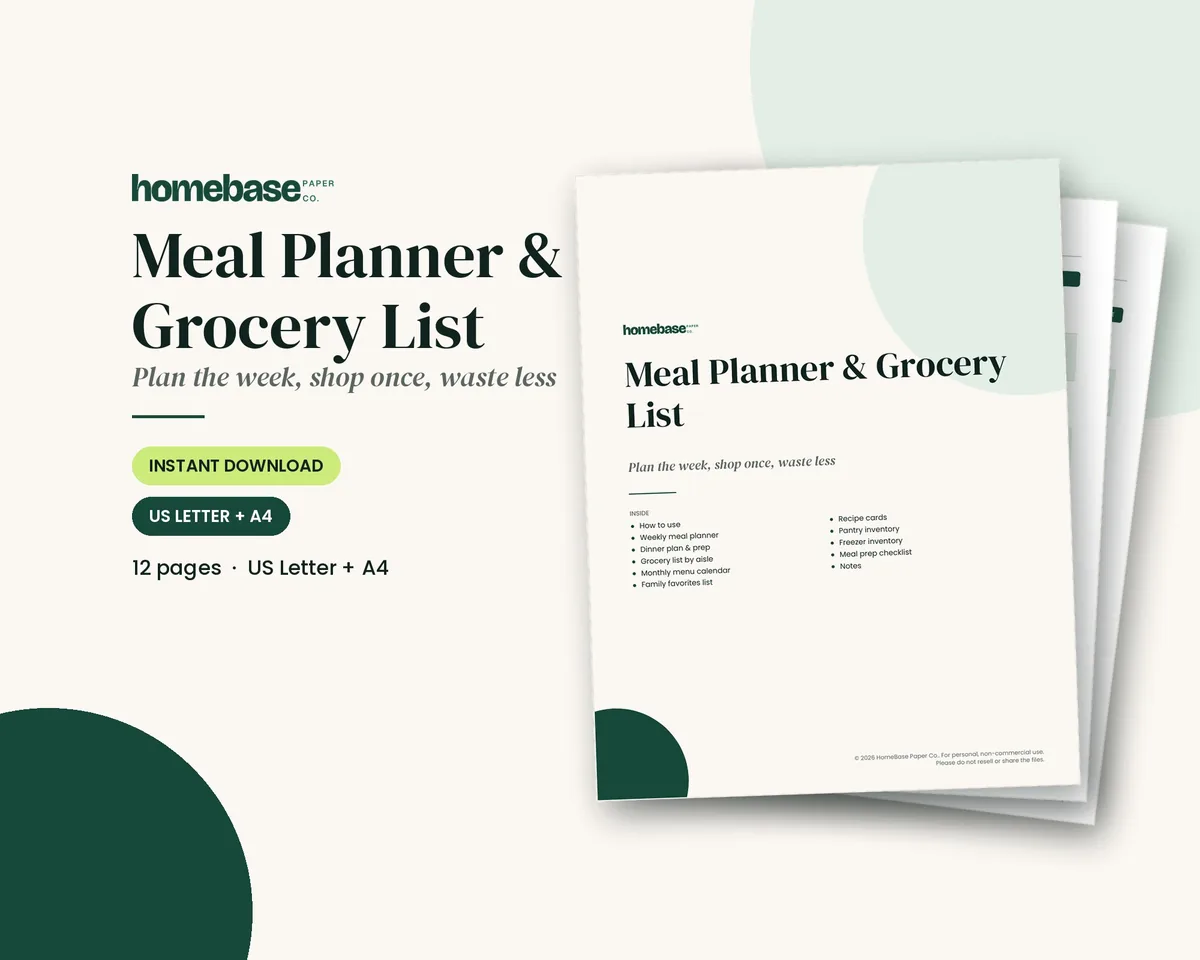
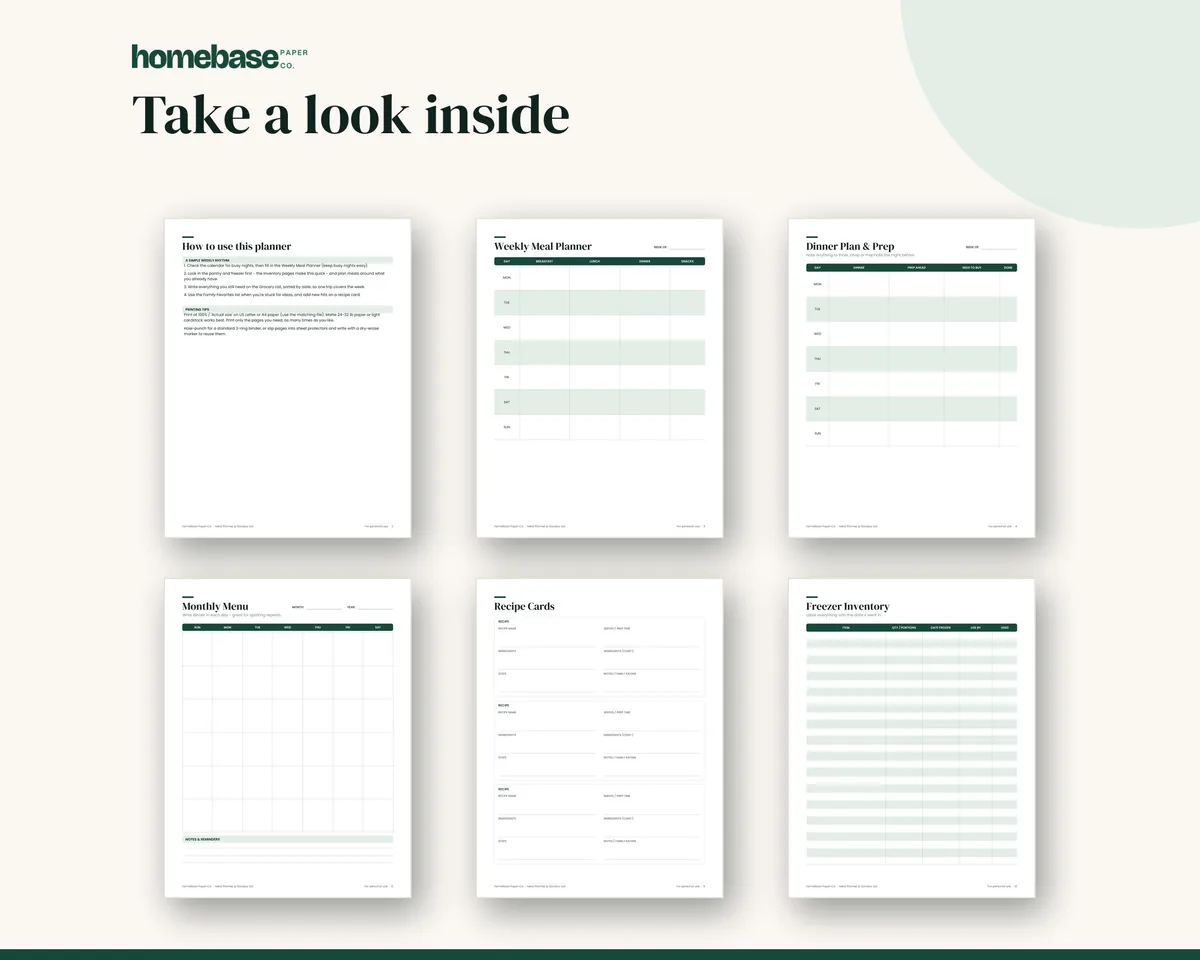
- Plan the food: the Meal Planner & Grocery List ($3.99) has a weekly meal planner, a monthly menu, an aisle-sorted grocery list and pantry and freezer inventories.
- Run the household: the Household Binder ($6.99) holds family info, calendars, meals, groceries and cleaning in one binder.
- Get more for less: the Family Life Admin Bundle is $15.99 (
$23.95when bought separately) and includes the meal planner and a family recipe binder.
Browse all of our Printables or the Bundles. Prefer a page per day or per week? See our daily planner and weekly planner guides.
When to talk to your doctor
These habits are safe starting points for most adults, but they are not a treatment plan. Talk to your doctor before you start if you have heart disease, diabetes, high blood pressure, joint problems or another condition, if you are pregnant, or if you take medicine. Also call if your sleep, appetite or mood changes for 2 weeks or more.
If you or someone you know is struggling or having thoughts of suicide, call or text the 988 Suicide & Crisis Lifeline at 988. In a life-threatening emergency, call 911.
Make it easier
Tools for this
 Starter pick
Printables
Meal Planner & Grocery List
Weekly meals, a grocery list sorted by aisle, and pantry and freezer inventories so you shop once and waste less.

Printables
Household Binder
Family info, emergency plan, calendars, meals, groceries, cleaning, bills and sitter notes.
Printables
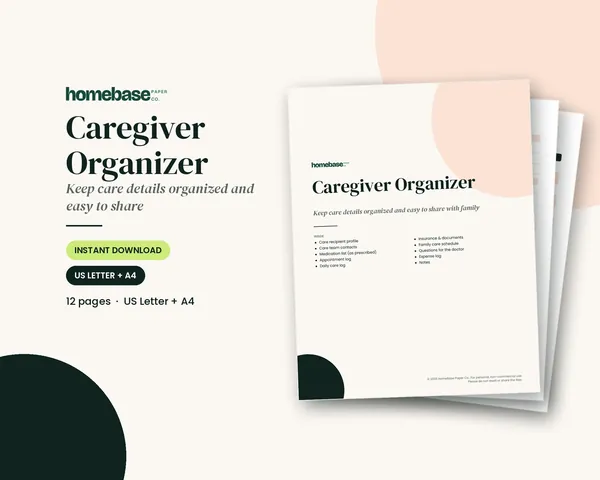
Caregiver Organizer
One place for contacts, appointments, the medication list from the doctor, and daily notes.
Frequently asked questions
How can I stay healthy every day? Stay healthy every day by moving, sleeping 7 to 9 hours, eating a variety of healthy foods and managing stress. Add regular checkups, vaccines and screenings, don't smoke, and limit alcohol. You don't have to start all of these at once; MedlinePlus says small, steady changes are easier to keep, so begin with three.
What are the 10 most important healthy habits? The ten habits with the strongest official backing are 150 to 300 minutes of weekly activity, strength training 2 days a week, sitting less, 7 to 9 hours of sleep, a variety of healthy foods, less added sugar and saturated fat, not smoking, limiting alcohol, regular checkups and staying up to date on vaccines and screenings.
How can I improve my health quickly? The fastest win is usually more movement. The Physical Activity Guidelines for Americans say activity has immediate benefits, including lower anxiety and blood pressure and better sleep quality. A daily walk, a consistent wake-up time and a water bottle on your desk are three changes you can make today.
How much exercise do I need to stay healthy? Adults need at least 150 to 300 minutes of moderate-intensity aerobic activity a week, such as brisk walking, plus muscle-strengthening activity on at least 2 days, per the Physical Activity Guidelines for Americans. Any amount counts, so short walks through the day add up toward the total.
How much sleep do adults need? Adults need 7 to 9 hours of sleep a night, according to the NIH's National Heart, Lung, and Blood Institute. Adults who sleep less than 7 hours may have more health issues. Teens need 8 to 10 hours and children 6 to 12 need 9 to 12 hours a day.
How much should kids exercise? Kids ages 6 to 17 need at least 60 minutes of moderate-to-vigorous activity every day, including activities that build muscles and bones. Children ages 3 to 5 should be active throughout the day, and adults caring for them should aim for at least 3 hours of active play a day.
Does walking 30 minutes a day help? Yes, walking 30 minutes a day helps. The National Institute of Mental Health says just 30 minutes of walking a day can boost your mood and improve your health, and you can split it into shorter walks. Five days of 30 minutes of brisk walking also meets the 150-minute weekly minimum for adults.
What preventive care do adults need? Adults need regular checkups, the screening tests recommended for their age and sex, up-to-date vaccines, and routine dental and eye care, per MedlinePlus. Ask your provider at each visit which screenings and vaccines are due, and keep a list of dates so nothing slips.
How do I manage stress to stay healthy? Manage stress by scheduling one relaxing activity a day, such as slow breathing, meditation or a walk, and by setting priorities and saying no when you're overloaded. NIMH also suggests writing down what you're grateful for and staying connected to friends and family. Seek professional help if symptoms last 2 weeks or more.
Can I stay healthy on a budget? Yes, you can stay healthy on a budget, because walking, sleep, tap water, body-weight exercise and gratitude cost nothing. Food is the main cost, so plan meals for the week, shop from a list and cook beans, eggs, oats and frozen vegetables at home.
When should I see a doctor about my health habits? See your doctor before you start a new exercise plan if you have a chronic condition, are pregnant or take medicine. Also call if your sleep, appetite or mood changes for 2 weeks or more. This guide is general information and not medical advice.
Is there a free habit tracker for healthy habits? Yes, our free habit tracker printable is a 3-page PDF with a monthly 31-day grid, a weekly tracker and a habit plan page. Enter your email on the download page and we email it to you. Write your 3 to 5 habits down the side and check a box each day you do them.
What planner helps me eat healthier? The Meal Planner & Grocery List ($3.99) from HomeBase Paper Co. is a printable with a weekly meal planner, a monthly menu, a grocery list sorted by aisle and pantry and freezer inventories. Plan four healthy dinners on the weekly page, then shop once from the list.
How do I keep track of doctor appointments and medications? The Caregiver Organizer ($6.99) from HomeBase Paper Co. keeps contacts, appointments, the medication list from the doctor and daily notes in one printable. It's built for caring for someone else, but the same pages work for tracking your own checkups and screenings.
More from HomeBase
You may also like
Printables
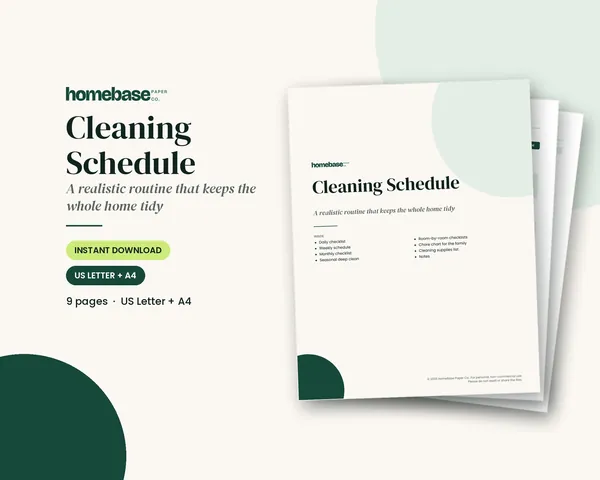
Cleaning Schedule
Daily, weekly, monthly and seasonal lists - plus a family chore chart.
Printables
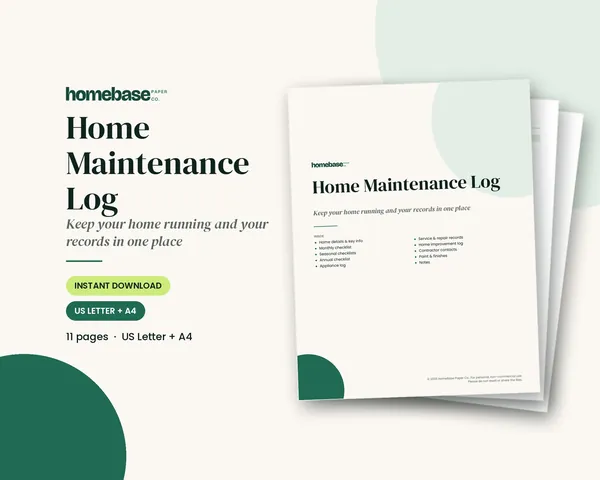
Home Maintenance Log
Monthly, seasonal and annual checklists plus a record of every appliance and repair.
Printables
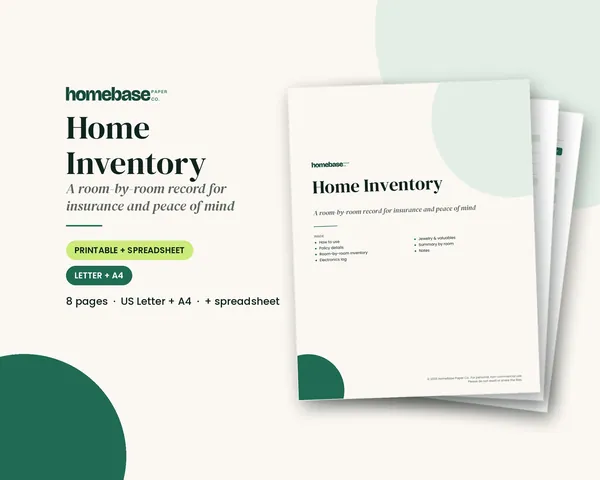
Home Inventory
Printable pages and a spreadsheet that totals the value of every room.
 Save 48%
Bundles
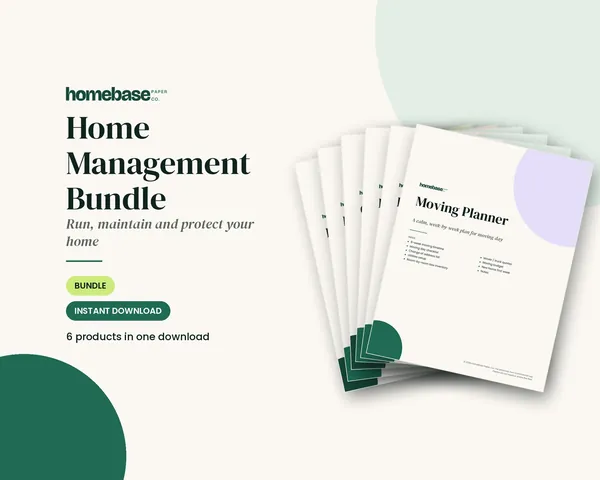
Home Management Bundle
Household binder, maintenance log, moving planner, cleaning schedule, home inventory and password log.
 Club
Monthly club
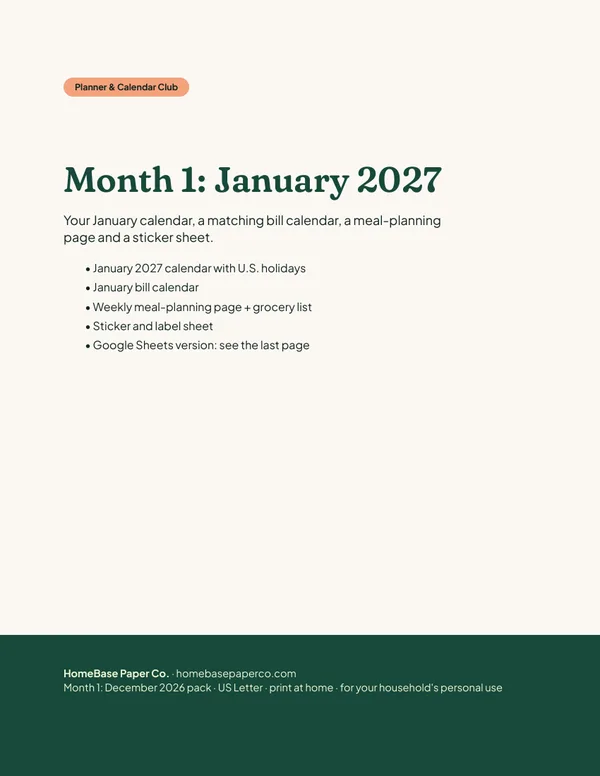
Planner & Calendar Club
Anyone who wants a monthly calendar, bill calendar and meal plan ready to print.
Free printable
Get organized for the new year: get the free 2027 planner
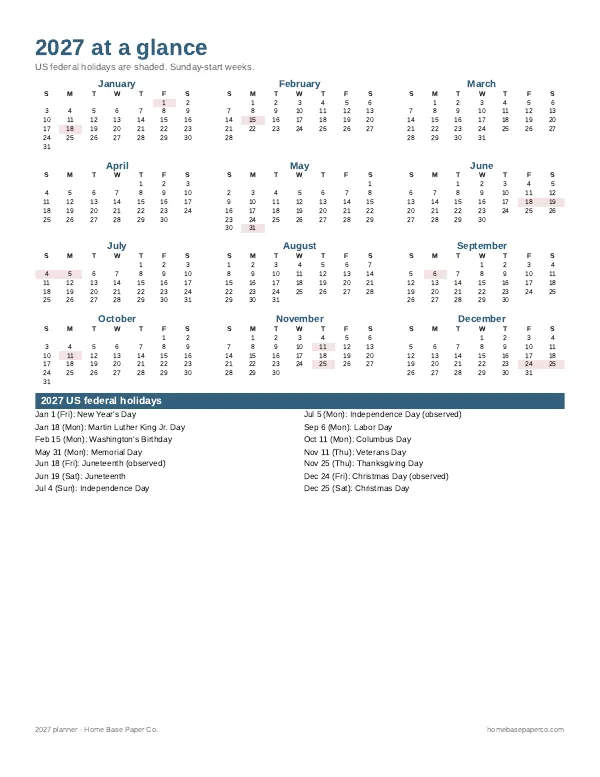
A 16-page printable 2027 planner with a year-at-a-glance page and monthly calendars with US holidays marked. You'll also get our weekly HomeBase email with simple planning and home organization tips.
Sources
- ODPHP (HHS): Top 10 Things to Know About the Second Edition of the Physical Activity Guidelines for Americans odphp.health.gov
- NIH NHLBI: How Much Sleep Is Enough? nhlbi.nih.gov
- MedlinePlus (National Library of Medicine): Healthy Living medlineplus.gov
- NIH NIMH: Caring for Your Mental Health nimh.nih.gov