

The short answer: healthy eating means building most meals from whole, nutrient-dense foods (protein, vegetables, fruit, dairy, healthy fats and whole grains) and cutting back on highly processed foods, added sugars and sugary drinks. Start with protein and a vegetable at every meal and plan the week before you shop.
- Daily targets at 2,000 calories (Dietary Guidelines 2025–2030): 3 servings of vegetables · 2 of fruit · 3 of dairy · 2–4 of whole grains · protein at every meal · sodium under 2,300 mg
- Top 5 moves: protein at every meal, half the plate vegetables or fruit, water instead of soda, whole grains instead of white bread, cook at home most nights
- Next step: get the free calorie tracker (we email it to you), or plan healthy meals for the week with the Meal Planner & Grocery List ($3.99).
Our picks for healthy eating
 Starter pick
Printables
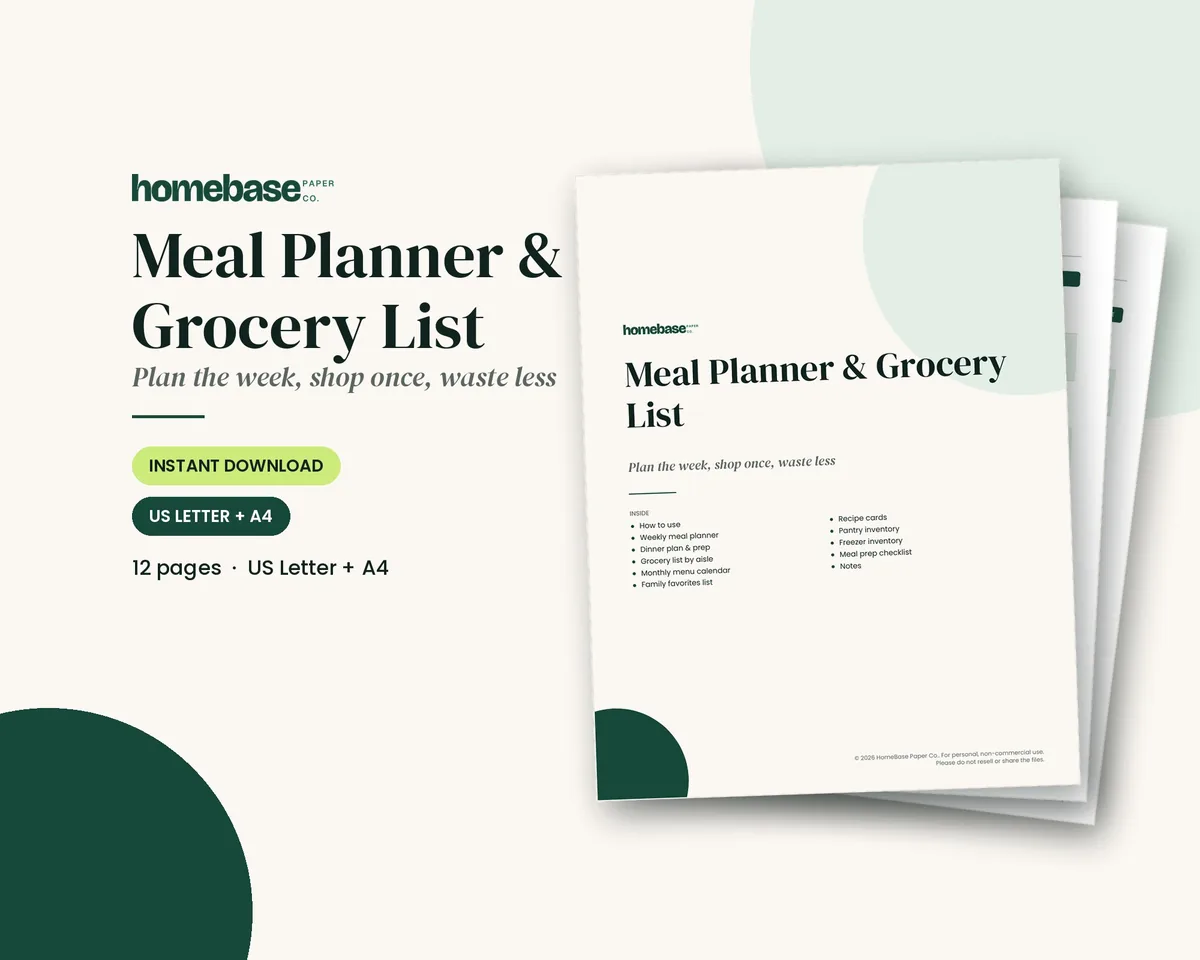
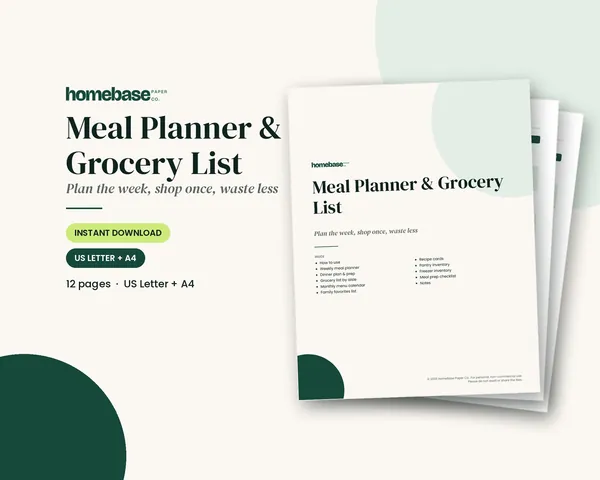
Meal Planner & Grocery List
Weekly meals, a grocery list sorted by aisle, and pantry and freezer inventories so you shop once and waste less.
Printables
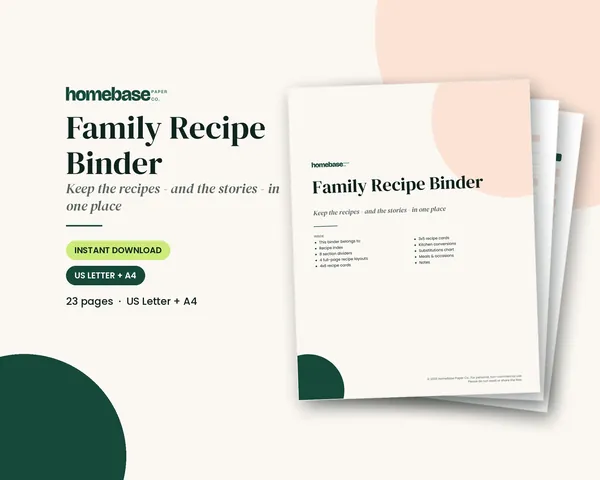
Family Recipe Binder
Section dividers, four recipe page layouts with room for the family story, 4x6 and 3x5 cards and a conversion chart - print it or type into the fillable version.
 Save 33%
Bundles
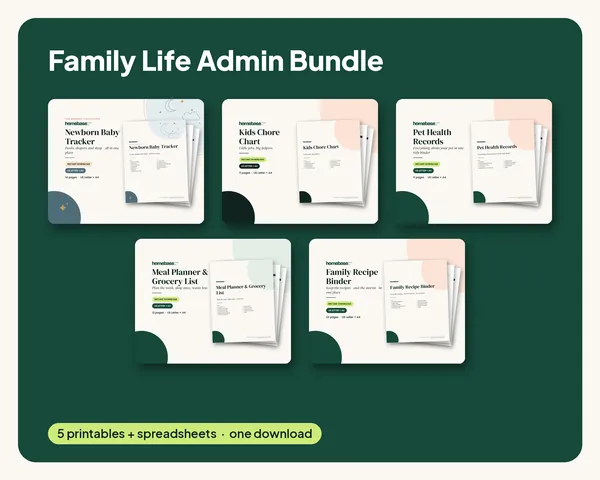
Family Life Admin Bundle
Baby logs, chore charts, pet records, meal plans and family recipes in one tidy set.
Targets checked November 2026 against the Dietary Guidelines for Americans, 2025–2030. This is general information, not medical advice. Below: the food groups, 15 healthy eating tips, a sample day, a healthy grocery list and how to eat healthy on a budget.
Healthy eating basics: the food groups and daily targets
| Food group | Daily goal (2,000 calories) | Easy choices |
|---|---|---|
| Protein | At every meal; 1.2–1.6 g per kg of body weight a day | Eggs, chicken, fish, beef, beans, lentils, tofu, nuts |
| Dairy | 3 servings | Milk, plain yogurt, cheese (no added sugar) |
| Vegetables | 3 servings | Fresh, frozen or canned with little or no added sugar |
| Fruit | 2 servings | Whole fruit; keep juice to small portions |
| Whole grains | 2–4 servings | Oats, brown rice, whole wheat bread, quinoa |
| Healthy fats | Saturated fat at 10% of calories or less | Olive oil, nuts, seeds, avocado, fish |
| Limit | Added sugar: none recommended, max 10 g per meal · sodium under 2,300 mg | Soda, candy, chips, cookies, packaged snacks |
All targets are from the Dietary Guidelines for Americans, 2025–2030, which suggest adjusting servings to your own calorie needs.
15 healthy eating tips that actually stick
At meals
- Put protein on every plate. Eggs at breakfast, chicken or beans at lunch, fish or meat at dinner. See high protein foods. For every food group with USDA numbers, see the healthy foods list.
- Fill half the plate with vegetables and fruit. Frozen vegetables count and cost less. For meal-by-meal ideas, see these ways to eat more vegetables.
- Pick whole grains like oats, brown rice and whole wheat in place of white bread and packaged breakfast foods.
- Bake, roast, grill or stir-fry instead of deep-frying. The Dietary Guidelines list these swaps.
- Cook with olive oil and season with herbs, spices and a little salt.
Drinks and snacks 6. Drink water instead of soda, fruit drinks and energy drinks. 7. Keep juice small, or mix it with water. 8. Plan snacks so they're food, not packaged sweets. Try healthy snacks or high protein snacks. 9. Watch portion sizes for higher-calorie foods and drinks.
Shopping and planning 10. Plan the week before you shop so healthy dinners are already decided. Our how to meal plan guide shows the steps. 11. Read the label for serving size, sodium and added sugars. The FDA Nutrition Facts guide explains each line. 12. Spot hidden sugar. The guidelines say to look for ingredient names with "sugar" or "syrup" or that end in "-ose." 13. Cook at home most nights. The guidelines say to choose home-prepared meals over highly processed ready-to-eat foods. See our guide to ultra-processed foods for how to spot them on a label. 14. Batch-cook once a week so healthy lunches are ready. See healthy meal prep ideas. 15. Change one habit at a time. Start with breakfast or drinks, then move on. Beyond food, how to stay healthy covers activity, sleep and checkups.
A healthy eating day: sample meal plan
| Meal | What to eat | Food groups covered |
|---|---|---|
| Breakfast | Two eggs, whole wheat toast, an orange | Protein, whole grain, fruit |
| Lunch | Chicken, brown rice and roasted vegetable bowl with olive oil | Protein, whole grain, vegetables, healthy fat |
| Snack | Plain Greek yogurt with berries | Dairy, protein, fruit |
| Dinner | Baked salmon, roasted potatoes and green beans, glass of milk | Protein, vegetables, dairy, healthy fat |
| Snack | Apple slices with peanut butter | Fruit, healthy fat, protein |
More ideas for each meal: healthy breakfast ideas, healthy lunch ideas, healthy dinner ideas and our full healthy recipes collection. For a ready week of dinners, see healthy meals.
Healthy eating grocery list
| Section | Buy |
|---|---|
| Produce | Leafy greens, carrots, broccoli, onions, potatoes, apples, bananas, berries, oranges |
| Frozen | Mixed vegetables, spinach, berries, fish fillets |
| Protein | Eggs, chicken thighs or breasts, ground beef or turkey, canned tuna or salmon |
| Pantry | Dried or canned beans and lentils, oats, brown rice, whole wheat pasta, peanut butter, olive oil |
| Dairy | Milk, plain yogurt, cheese |
| Skip or limit | Soda, candy, chips, cookies, sugary cereal |
Print a blank list with our grocery list template.
How to eat healthy on a budget
Healthy eating doesn't have to cost more. These are the cheapest healthy staples:
- Beans, lentils and eggs for protein that costs less than meat
- Frozen and canned vegetables and fruit, which the Dietary Guidelines say are good options when they have little or no added sugar
- Oats, brown rice and potatoes bought in bulk
- Whole chickens or chicken thighs in place of boneless breasts
Money-saving tip: plan 5 dinners around what's on sale, cook double twice, and shop once with a list. Our meal planning on a budget and grocery shopping on a budget guides go step by step.
For the earlier MyPlate food-group portions and a sample week, use our balanced diet guide.
Healthy eating for kids and families
The Dietary Guidelines say children ages 5–10 should focus on whole, nutrient-dense foods, with no added sugars recommended and no caffeinated drinks. They also suggest making cooking fun and a regular part of family routine, and note a young child may need 8 to 10 tries of a new food before accepting it. For kid-friendly ideas, see easy snacks for kids, school lunches and family dinner ideas.
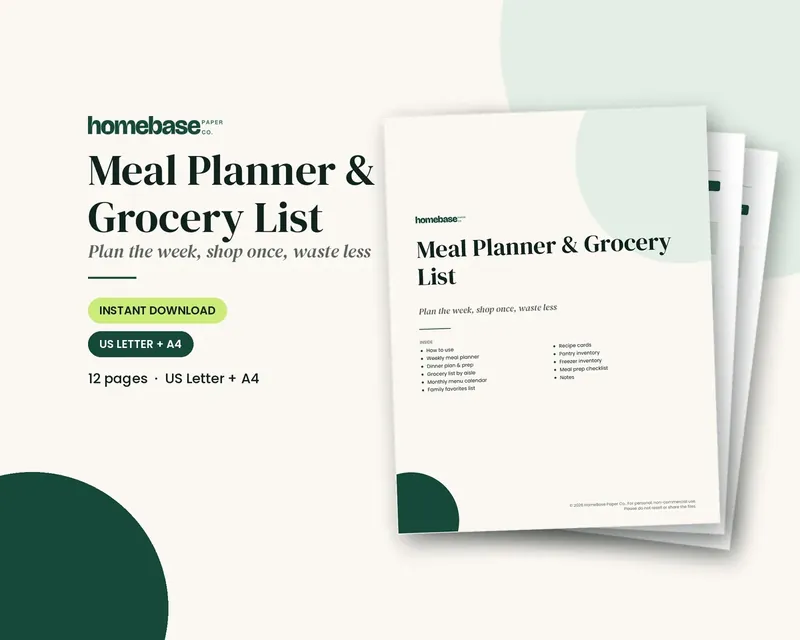
The Meal Planner & Grocery List ($3.99) gives you a weekly meal plan and an aisle-sorted grocery list, so healthy eating is planned before you shop. Keep your family's healthy recipes in the Family Recipe Binder ($6.99), or get both in the Family Life Admin Bundle ($15.99, $23.95 bought separately). See all printables.
Meal Planner & Grocery List
Weekly meals, a grocery list sorted by aisle, and pantry and freezer inventories so you shop once and waste less.
$3.99 · Instant download. Print at home or fill it in on screen. Or browse the full Home & Organizing collection.
Frequently asked questions
What is healthy eating? Healthy eating means building most of your meals from whole, nutrient-dense foods such as protein foods, vegetables, fruit, dairy, healthy fats and whole grains, while limiting highly processed foods, added sugars, refined carbohydrates and sugary drinks. That is the core message of the Dietary Guidelines for Americans, 2025–2030.
How many servings of vegetables and fruit should I eat a day? For a 2,000-calorie day, the Dietary Guidelines for Americans, 2025–2030 set a goal of 3 servings of vegetables and 2 servings of fruit. Fresh, frozen, dried or canned options with little or no added sugar all count. Adjust the servings to your own calorie needs.
How much protein do I need for healthy eating? The 2025–2030 Dietary Guidelines set a protein goal of 1.2 to 1.6 grams per kilogram of body weight per day, adjusted for your calorie needs, and recommend protein foods at every meal from both animal and plant sources.
What are the best healthy eating tips for beginners? Start with five habits: put protein on every plate, fill half the plate with vegetables or fruit, drink water instead of soda, choose whole grains over white bread and packaged breakfast foods, and plan the week's meals before you shop.
How much added sugar is OK? The 2025–2030 Dietary Guidelines say no amount of added sugar is recommended, and that one meal should contain no more than 10 grams. To spot added sugar, look for ingredient names that include sugar or syrup or end in -ose.
How much sodium should I have a day? The Dietary Guidelines say people ages 14 and older should have less than 2,300 mg of sodium a day. Limits for children are lower: under 1,200 mg for ages 1 to 3, under 1,500 mg for ages 4 to 8 and under 1,800 mg for ages 9 to 13.
How can I eat healthy on a budget? Lean on beans, lentils and eggs for protein, buy frozen and canned vegetables and fruit with little or no added sugar, buy oats, rice and potatoes in bulk, and plan five dinners around what is on sale. Shopping once a week with a list cuts impulse buys.
Is frozen food part of healthy eating? Frozen, dried or canned vegetables and fruits with no or very limited added sugars can be good options, according to the Dietary Guidelines. Frozen vegetables, berries and fish fillets are cheap healthy staples that keep for months.
What printable helps with healthy eating? The HomeBase Meal Planner & Grocery List costs $3.99 and gives you a weekly meal plan plus an aisle-sorted grocery list. The Family Recipe Binder is $6.99, and both come in the Family Life Admin Bundle for $15.99, compared with $23.95 bought separately.
Free printable
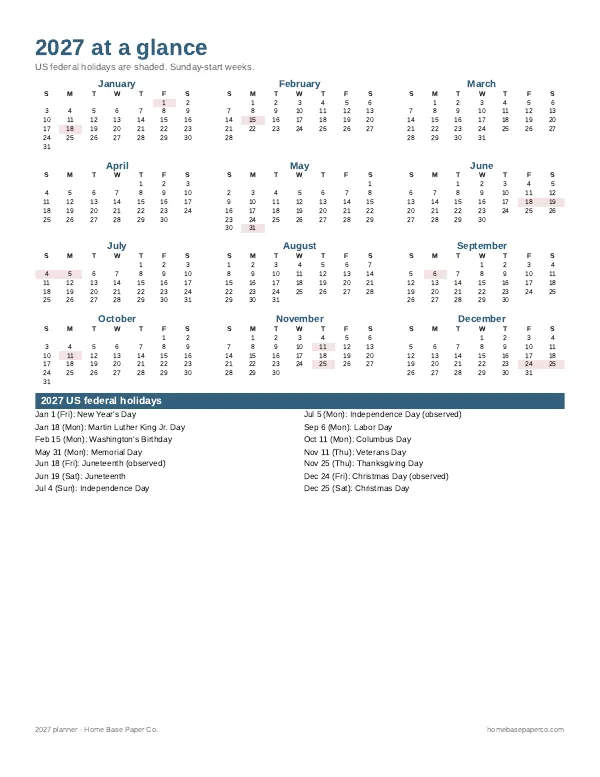
Get organized for the new year: get the free 2027 planner
A 16-page printable 2027 planner with a year-at-a-glance page and monthly calendars with US holidays marked. You'll also get our weekly HomeBase email with simple planning and home organization tips.
Sources
- Dietary Guidelines for Americans, 2025–2030 cdn.realfood.gov
- FDA: How to Understand and Use the Nutrition Facts Label fda.gov