

The short answer: a balanced diet means eating from all five food groups (vegetables, fruits, grains, dairy and protein foods) every day, in amounts that fit your calorie needs, while keeping added sugars, saturated fat and sodium low. In the 2020–2025 USDA pattern at 2,000 calories, that's about 2½ cups of vegetables, 2 cups of fruit, 6 oz of grains, 3 cups of dairy and 5½ oz of protein foods.
- The plate: half vegetables and fruit · a quarter grains (at least half whole) · a quarter protein · dairy or a fortified soy drink on the side
- Top moves: a vegetable at lunch and dinner, whole grains instead of white, protein at every meal, water instead of sugary drinks, and a written weekly plan
- Free and paid next step: get the free calorie tracker (we email it to you), or plan the week with the Meal Planner & Grocery List ($3.99).
Amounts checked November 12, 2026 against the Dietary Guidelines for Americans, 2020-2025, the source of MyPlate. This is general information, not medical advice. Below: the food groups, MyPlate portions by calorie level, a 7-day balanced meal plan, a plate checklist, a grocery list, budget tips and common mistakes.
What is a balanced diet? The 5 food groups
A balanced diet isn't a special diet. It's an everyday eating pattern. The Dietary Guidelines for Americans, 2020-2025 list the core elements as vegetables of all types, fruits (especially whole fruit), grains (at least half whole), dairy or fortified soy alternatives, protein foods and oils. The same guidelines set three limits for everyone age 2 and older: added sugars under 10% of calories, saturated fat under 10% of calories, and sodium under 2,300 mg a day.
| Food group | What counts | 1 serving equals (USDA "equivalent") |
|---|---|---|
| Vegetables | Dark green, red and orange, beans/peas/lentils, starchy and other vegetables; fresh, frozen or canned | 1 cup raw or cooked vegetables · 2 cups leafy salad greens |
| Fruits | Fresh, frozen, canned or dried fruit and 100% juice | 1 cup fruit or 100% juice · ½ cup dried fruit |
| Grains | Oats, brown rice, whole-wheat bread and pasta, quinoa, tortillas, cereal | 1 slice bread or tortilla · ½ cup cooked rice, pasta or oatmeal · 1 oz cereal (about 1 cup of flakes) |
| Dairy | Milk, yogurt, cheese, lactose-free milk, fortified soy milk or soy yogurt | 1 cup milk, yogurt or fortified soy milk · 1½ oz natural cheese |
| Protein foods | Lean meats, poultry, eggs, seafood, beans, peas, lentils, nuts, seeds, soy | 1 oz meat, poultry or fish · 1 egg · ¼ cup cooked beans or tofu · 1 tbsp peanut butter · ½ oz nuts |
Serving equivalents come from Appendix 3 of the 2020-2025 guidelines. Beans, peas and lentils can count as either a vegetable or a protein food. In the plan below they count as protein.
MyPlate portions by calorie level
MyPlate turns the guidelines into a plate: half fruits and vegetables, half grains and protein foods, and dairy on the side. The guidelines' MyPlate messages are simple: make half your plate fruits and vegetables, focus on whole fruits, vary your veggies, make half your grains whole grains, vary your protein routine, and choose foods with less added sugars, saturated fat and sodium.
How much you need depends on calories. The guidelines estimate that most adult women need 1,600 to 2,400 calories a day and most adult men need 2,000 to 3,000, with needs dropping as you age. Here are the daily amounts from the Healthy U.S.-Style Dietary Pattern (Table A3-2):
| Calories a day | Vegetables | Fruits | Grains (whole at least) | Dairy | Protein foods | Oils |
|---|---|---|---|---|---|---|
| 1,600 | 2 cups | 1½ cups | 5 oz (3 oz) | 3 cups | 5 oz | 22 g |
| 1,800 | 2½ cups | 1½ cups | 6 oz (3 oz) | 3 cups | 5 oz | 24 g |
| 2,000 | 2½ cups | 2 cups | 6 oz (3 oz) | 3 cups | 5½ oz | 27 g |
| 2,200 | 3 cups | 2 cups | 7 oz (3½ oz) | 3 cups | 6 oz | 29 g |
| 2,400 | 3 cups | 2 cups | 8 oz (4 oz) | 3 cups | 6½ oz | 31 g |
| 2,600 | 3½ cups | 2 cups | 9 oz (4½ oz) | 3 cups | 6½ oz | 34 g |
| 2,800 | 3½ cups | 2½ cups | 10 oz (5 oz) | 3 cups | 7 oz | 36 g |
| 3,000 | 4 cups | 2½ cups | 10 oz (5 oz) | 3 cups | 7 oz | 44 g |
At 2,000 calories, the weekly targets also include 8 oz of seafood and 1½ cups of beans, peas or lentils, plus 1½ cups of dark-green and 5½ cups of red and orange vegetables. Kids' amounts are different, so use the guidelines' child patterns for anyone under 9.
What changed with the 2025-2030 Dietary Guidelines
On January 7, 2026, USDA and HHS released the Dietary Guidelines for Americans, 2025-2030 and reclaimed the food pyramid "as a tool for nourishment and education." The new edition tells Americans to prioritize protein at every meal, choose full-fat dairy with no added sugars, eat vegetables and fruits throughout the day, focus on whole grains while sharply reducing refined carbohydrates, and limit highly processed foods and added sugars. The table above documents the earlier 2020–2025 pattern; it is not the new edition's serving schedule. For the 2025-2030 daily targets, see our healthy eating guide.
What a balanced plate looks like
Harvard's Healthy Eating Plate uses the same split: half vegetables and fruits, a quarter whole grains and a quarter healthy protein, with healthy plant oils in moderation and water, coffee or tea to drink. Harvard adds two cautions: potatoes don't count as vegetables on its plate, and it suggests limiting red meat and avoiding processed meats like bacon and sausage. In USDA's food groups, potatoes count as a starchy vegetable, so they're in the plan below once.
Balanced plate checklist (print it or copy it onto your meal planner):
- ☐ Half the plate is vegetables and fruit, and vegetables are the bigger share
- ☐ A quarter is grains, and at least half of the day's grains are whole
- ☐ A quarter is protein: chicken, fish, eggs, beans, lentils, tofu or lean meat
- ☐ A cup of milk, yogurt or fortified soy milk (or 1½ oz cheese) on the side
- ☐ A little oil for cooking: olive, canola or another plant oil
- ☐ Water, unsweetened tea or coffee to drink
- ☐ At least two colors of vegetables today
- ☐ Sauces and canned foods checked for sodium and added sugars
7-day balanced meal plan using MyPlate food groups
This sample menu uses the food groups in the 2020–2025 pattern. Calories and nutrient totals have not been calculated; brands, portions and preparation change them. All grains are whole, beating the "at least half" minimum. Days 4 and 6 use leftovers from the night before, so cook a double batch of the Day 3 lentil soup and the Day 5 turkey chili.
| Day | Breakfast | Lunch | Dinner | Snacks |
|---|---|---|---|---|
| 1 | 1 cup cooked oatmeal, ½ cup blueberries, 1 cup milk | Chicken sandwich (2 slices whole-wheat bread, 2½ oz sliced cooked chicken, lettuce and tomato), 1 cup baby carrots | 3 oz baked chicken, 1 cup roasted broccoli, 1 cup brown rice | 1 cup apple slices · 1 cup plain yogurt with ½ cup strawberries · 1½ oz cheddar |
| 2 | 2 scrambled eggs, 2 slices whole-wheat toast, 1 cup melon, 1 cup milk | Burrito bowl: 1 cup brown rice, ½ cup black beans, 2 cups romaine, ½ cup salsa, 1½ oz cheese | 1 cup whole-wheat spaghetti with 1½ oz ground turkey in ½ cup tomato sauce, 1 cup green beans | 1 cup grapes · 1 cup plain yogurt |
| 3 | 1 cup plain yogurt, ½ cup berries, 1 oz whole-grain cereal; 1 slice whole-wheat toast with 1 tbsp peanut butter | Tuna wraps: 3 oz tuna, 2 small whole-wheat tortillas, 2 cups spinach, 1 cup cucumber and peppers | Lentil soup (½ cup lentils, 1 cup carrots, celery and tomato), 2 slices whole-wheat bread, 1 cup milk | 1 cup orange sections · ½ cup unsweetened applesauce · 1½ oz cheese |
| 4 | 1 cup cooked oatmeal with 1 tbsp peanut butter and ½ cup sliced banana, 1 cup milk | Leftover lentil soup, 2 slices whole-wheat bread | 3 oz baked white fish, 1 cup roasted sweet potato, 1 cup cooked spinach, ½ cup brown rice | 1 cup apple slices · ½ cup pear · 1 cup yogurt · 1½ oz cheese · 1 oz whole-grain oat cereal |
| 5 | 2 eggs scrambled with ½ cup peppers and onions, 2 slices whole-wheat toast, 1 cup milk | Chicken wraps: 1½ oz chicken, 2 small whole-wheat tortillas, 2 cups salad greens | Turkey chili (1½ oz ground turkey, ¼ cup kidney beans, 1 cup tomatoes and onion) with 1½ oz cheddar over 1 cup brown rice | 1 cup berries · 1 cup pineapple (canned in juice) · 1 cup yogurt |
| 6 | 2 oz whole-grain cereal (about 2 cups of flakes), 1 cup milk, ½ cup berries | Leftover turkey chili, 1 slice whole-wheat bread | Chicken fajitas: 2½ oz chicken, 1 cup peppers and onions, 2 small whole-wheat tortillas, 1½ oz cheese | 1 cup apple slices · ½ cup grapes · 1 cup yogurt · 1 slice whole-wheat toast with 1 tbsp peanut butter · ½ cup baby carrots |
| 7 | 2-egg omelet with ½ cup cooked spinach, 2 slices whole-wheat toast, ½ cup strawberries, 1 cup milk | Chickpea salad: 2 cups romaine, ½ cup chickpeas, ½ cup cucumber and tomato, 1½ oz feta, 1 cup quinoa | 2 oz baked salmon (fillet or canned), 1 cup roasted potatoes, 1 cup brown rice | 1 cup melon · ½ cup blueberries · 1 cup yogurt |
Daily food-group totals (cup-equivalents for vegetables, fruits and dairy; ounce-equivalents for grains and protein):
| Day | Vegetables | Fruits | Grains (all whole) | Dairy | Protein foods |
|---|---|---|---|---|---|
| 1 | 2½ | 2 | 6 | 3 | 5½ |
| 2 | 3 | 2 | 6 | 3 | 5½ |
| 3 | 3 | 2 | 6 | 3 | 6 |
| 4 | 3 | 2 | 6 | 3 | 6 |
| 5 | 2½ | 2 | 6 | 3 | 6 |
| 6 | 2½ | 2 | 6 | 3 | 6 |
| 7 | 3 | 2 | 6 | 3 | 6 |
| Target at 2,000 | 2½ | 2 | 6 (3 whole) | 3 | 5½ |
The sample week includes 8 oz of seafood from tuna, white fish and salmon. Cooking oils are not totaled. For an individual calorie or nutrient target, ask a registered dietitian rather than treating this menu as a prescribed plan.
Want more meals that fit the plate? Browse healthy meals, healthy recipes, healthy breakfast ideas, healthy lunch ideas, healthy dinner ideas and healthy snacks. For a protein-first week, see high protein meals and our list of high protein foods.
Balanced diet grocery list by food group
This list covers the plan for one adult.
| Food group | What to buy |
|---|---|
| Vegetables | 1 head romaine · 2 bags fresh spinach (10 oz each), or 1 bag plus 1 box frozen spinach · baby carrots · 1 bag frozen broccoli · 1 bag frozen green beans · 3 bell peppers · 2 onions · 1 cucumber · 2 tomatoes · carrots and celery for soup · 1 sweet potato · 2 small potatoes · 2 cans no-salt-added diced tomatoes · 1 small can tomato sauce · 1 jar salsa |
| Fruits | 1 bag frozen mixed berries · 1 pint strawberries · 1 cantaloupe · grapes · 3 apples · 2 oranges · 1 banana · 1 pear · 1 can pineapple in juice · unsweetened applesauce cups |
| Grains | 1 loaf whole-wheat bread · 6 small whole-wheat tortillas · old-fashioned rolled oats · brown rice · whole-wheat spaghetti · quinoa · whole-grain cereal |
| Dairy | ½ gallon milk or fortified soy milk · 2 tubs (32 oz) plain yogurt · 1 block cheddar (8 oz) · small container of feta |
| Protein foods | 6 eggs · about 1¼ lb boneless chicken (cook half on Day 1 for dinner and sandwiches, and half on Day 5) · 1 lb lean ground turkey (freeze what's left) · 1 can tuna · 1 white fish fillet · 1 can salmon or a small fillet · 1 can each black beans, kidney beans and chickpeas · dry lentils · peanut butter |
| Oils and extras | Olive or canola oil · garlic · chili powder and cumin · black pepper |
Prefer a printable? Try our grocery list template and track prices in a grocery price book.
Balanced diet on a budget
The 2020-2025 guidelines say a healthy pattern can fit a tight budget with advance planning, seasonal foods and a mix of fresh, frozen, dried and canned options. In practice:
- Money-saving tip: build three or four dinners a week around beans, lentils, eggs or canned fish. They cover the protein quarter of the plate for less than most meat.
- Buy frozen vegetables and fruit. They count toward the food groups and don't spoil by Friday.
- Buy grains plain and in bulk. Rolled oats, brown rice and dry lentils cost less than instant cups and flavored packets.
- Cook once, eat twice. The lentil soup and turkey chili in this plan each cover a dinner and the next day's lunch.
- Buy cheese in blocks and yogurt in big tubs, then portion them yourself.
- Plan around what's on sale, then write the list before you shop.
More help: how to grocery shop on a budget, meal planning on a budget, the average grocery cost per month, a grocery budget for a family of 4 and cheap meal ideas.
Common balanced diet mistakes
- Saving all the vegetables for dinner. 2½ cups is hard to eat in one meal. Add carrots at lunch and peppers to eggs.
- Counting sweetened drinks as fruit. Only 100% juice counts, and MyPlate says to focus on whole fruits.
- Eating mostly refined grains. Swap white bread and white rice for whole-grain versions, one at a time.
- Skipping dairy. Adults need 3 cups a day at every calorie level from 1,600 to 3,000.
- Protein only at dinner. The 2025-2030 guidelines say to prioritize protein at every meal.
- Ignoring labels. Sauces, soups and flavored yogurt can add sodium and added sugars.
- Aiming for perfect meals. The guidelines look at how choices add up over a day or week.
- Not writing it down. Our guide to how to meal plan walks through it, and the meal planning hub has templates.
Tools that make balanced portions easier
Measuring a few times teaches your eye what a cup of rice or 3 oz of chicken looks like.
Affiliate links: we may earn a small commission. As an Amazon Associate we earn from qualifying purchases. Details.
- Etekcity digital food kitchen scale: weighs in grams and ounces, so you can check a 3 oz portion of chicken or fish.
- OXO Good Grips stainless steel measuring cups: ¼, ⅓, ½ and 1 cup sizes for rice, oatmeal, fruit and vegetables.
- KOMUEE 30 oz glass meal prep containers, 10-pack: portion leftover lentil soup, chili and brown rice for the next day's lunch.
Comparing eating styles? Our diet plans hub covers the Mediterranean diet meal plan, the keto diet plan and more.
To fill each food group with whole foods, start from our healthy foods list.
Plan your balanced week and print your list
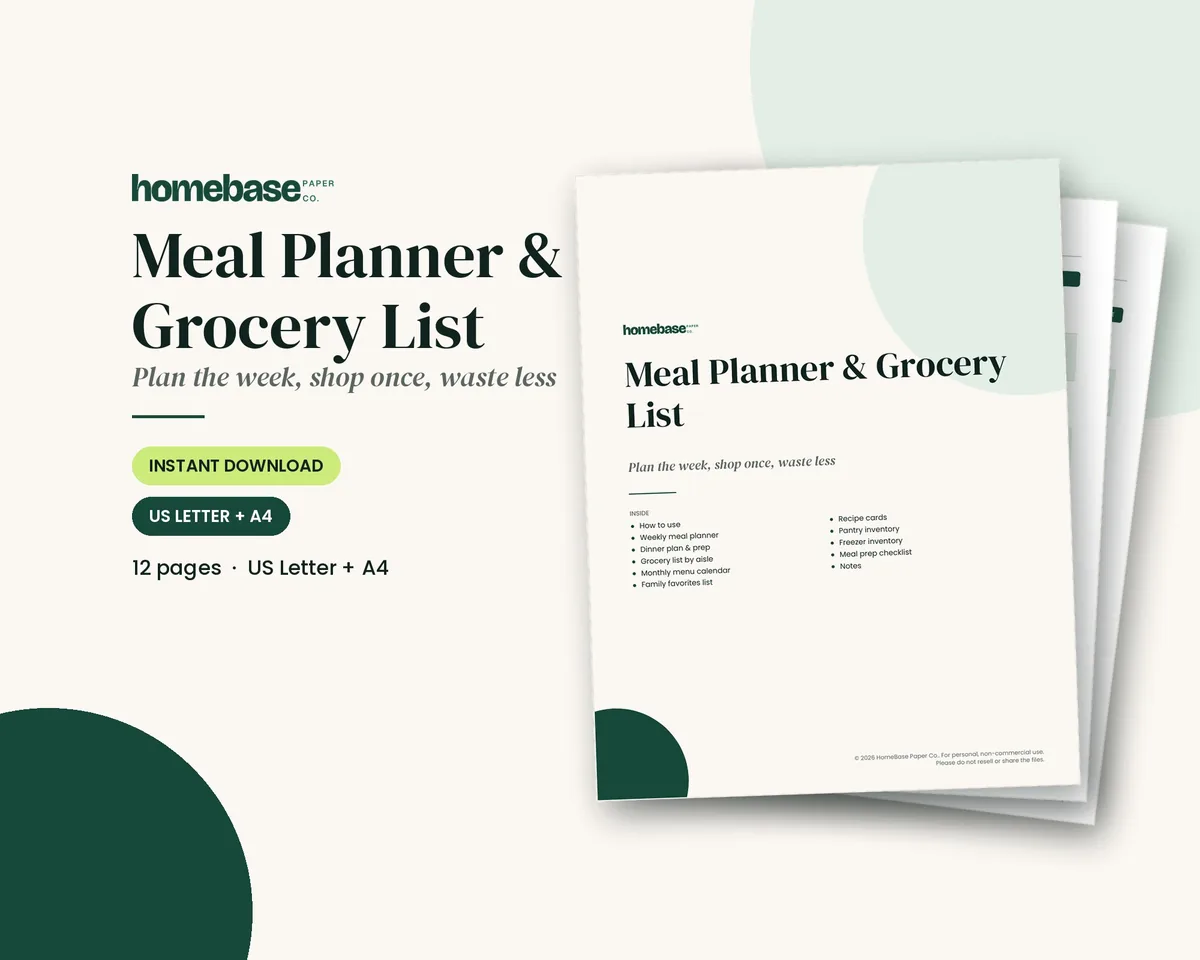
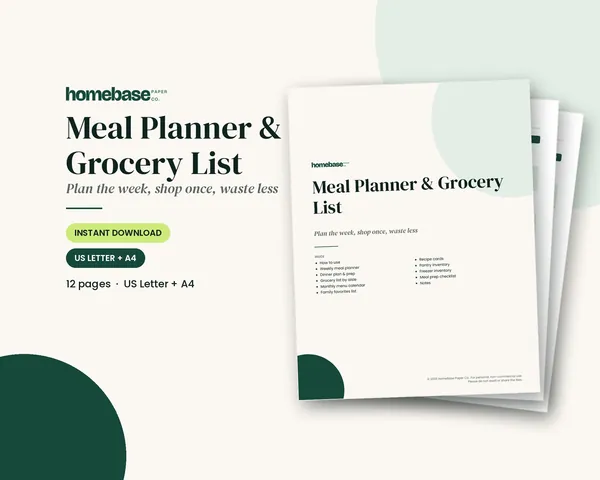
A balanced diet is easier when the week is already decided. The Meal Planner & Grocery List ($3.99) has a weekly meal planner, a monthly menu, a meal prep checklist, an aisle-sorted grocery list, and pantry and freezer inventories. Copy the 7-day plan onto the weekly page and the grocery list above onto the list page.
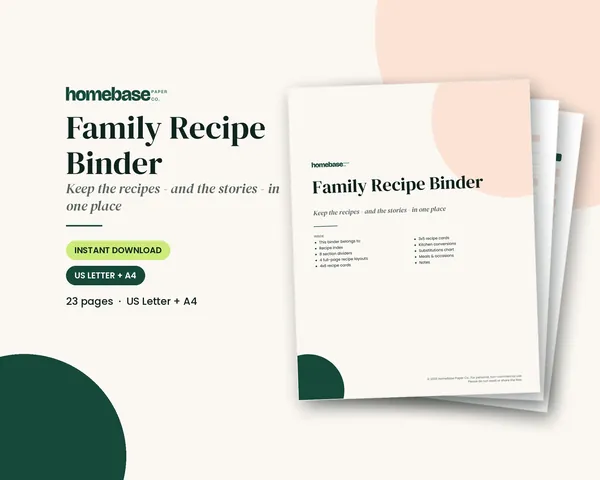
Save the balanced dinners your household likes in the Family Recipe Binder ($6.99), with section dividers, recipe cards and a fillable type-in version.
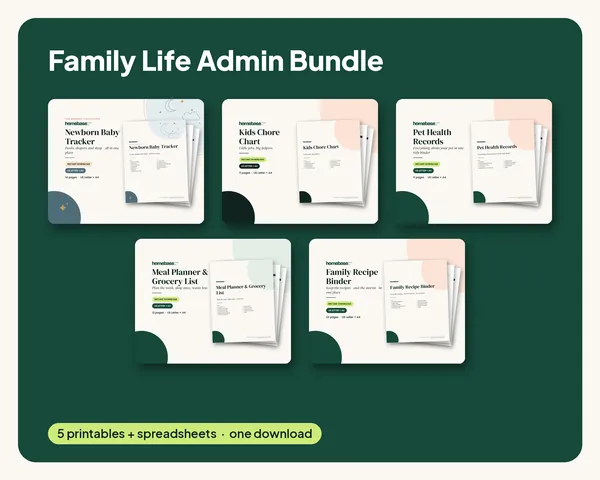
Want both? The Family Life Admin Bundle is $15.99 ($23.95 bought separately) and also includes a kids chore chart, a newborn baby tracker and pet health records. See all our Printables or Bundles.
Not ready to buy? Get the free calorie tracker (we email it to you) and log one week to see which food groups you're short on.
Frequently asked questions
What is a balanced diet?
A balanced diet is a way of eating that includes all five food groups (vegetables, fruits, grains, dairy and protein foods) in amounts that fit your calorie needs. The Dietary Guidelines for Americans, 2020-2025 describe it as mostly nutrient-dense foods, with limits on added sugars, saturated fat and sodium.
What are the 5 food groups in a balanced diet?
The five food groups are vegetables, fruits, grains, dairy and protein foods. Oils are counted separately. Under the Dietary Guidelines for Americans, 2020-2025, at least half of your grains should be whole grains, and fortified soy milk and soy yogurt count as dairy alternatives.
What is MyPlate?
MyPlate (sometimes searched as "my plate") is the USDA's plate-shaped guide to the Dietary Guidelines for Americans, 2020-2025. It shows half the plate as fruits and vegetables, the other half as grains and protein foods, and dairy on the side. Its daily amounts depend on your calorie level.
Is MyPlate still current in 2026?
MyPlate reflects the Dietary Guidelines for Americans, 2020-2025, which were followed by a 2025-2030 edition on January 7, 2026. USDA and HHS reclaimed the food pyramid as a tool for nourishment and education in the new edition. The portion table here documents the earlier 2020–2025 pattern, not the new edition's serving schedule.
How much of each food group should I eat a day?
At 2,000 calories a day, the Healthy U.S.-Style Dietary Pattern calls for 2½ cups of vegetables, 2 cups of fruit, 6 ounce-equivalents of grains (at least 3 whole), 3 cups of dairy and 5½ ounce-equivalents of protein foods. The amounts rise or fall with your calorie needs, which run 1,600 to 2,400 a day for most adult women and 2,000 to 3,000 for most adult men.
What does a balanced plate look like?
A balanced plate is about half vegetables and fruit, a quarter whole grains and a quarter protein, with a dairy food or fortified soy drink on the side. Harvard's Healthy Eating Plate uses the same half-quarter-quarter split and adds healthy plant oils in moderation and water to drink.
What is an example of a balanced meal?
A simple balanced meal is 3 ounces of baked chicken, 1 cup of roasted broccoli, 1 cup of cooked brown rice and a glass of milk. That covers vegetables, grains, protein and dairy in one plate. Add a piece of fruit for dessert and every food group is covered.
Can you eat a balanced diet on a budget?
Yes, you can eat a balanced diet on a budget. The Dietary Guidelines for Americans, 2020-2025 say a healthy pattern can fit tight budgets with advance planning, seasonal foods and a mix of fresh, frozen, dried and canned options. Beans, lentils, eggs, oats, brown rice and frozen vegetables are low-cost staples.
Do frozen and canned foods count toward a balanced diet?
Yes, frozen and canned foods count. The Dietary Guidelines for Americans, 2020-2025 include fresh, frozen and canned vegetables and fresh, frozen, canned and dried fruit in the food groups. Compare labels and pick versions with less sodium and added sugars.
Does a balanced diet have to be balanced at every meal?
No, a balanced diet doesn't have to be perfect at every meal. The Dietary Guidelines for Americans, 2020-2025 ask you to think about how your choices come together over the course of a day or week. If lunch was light on vegetables, make dinner half vegetables.
What are the most common balanced diet mistakes?
The most common mistakes are skipping vegetables at breakfast and lunch, eating mostly refined grains, counting sweetened drinks as fruit, leaving out dairy or a fortified alternative, and eating protein only at dinner. Planning the week on paper fixes most of them before you shop.
What printable helps me plan a balanced diet?
The HomeBase Meal Planner & Grocery List is $3.99 and gives you a weekly meal planner, a monthly menu, a meal prep checklist and an aisle-sorted grocery list. Copy the 7-day balanced meal plan onto the weekly page and the grocery list by food group onto the list page.
Is there a printable for saving balanced recipes?
Yes. The HomeBase Family Recipe Binder is $6.99 and has section dividers, recipe cards and a fillable type-in version, so you can save the balanced dinners your household actually eats, like the lentil soup and turkey chili in this plan.
What is the best-value bundle for meal planning?
The HomeBase Family Life Admin Bundle is $15.99 instead of $23.95 bought separately. It includes the Meal Planner & Grocery List and the Family Recipe Binder, plus a kids chore chart, a newborn baby tracker and pet health records.
Is there a free printable to track what I eat?
Yes. The free HomeBase calorie tracker lets you log meals for a week and see which food groups you're missing. Request it on the calorie tracker download page and we email it to you.
Make it easier
Tools for this
 Starter pick
Printables
Meal Planner & Grocery List
Weekly meals, a grocery list sorted by aisle, and pantry and freezer inventories so you shop once and waste less.
Printables
Family Recipe Binder
Section dividers, four recipe page layouts with room for the family story, 4x6 and 3x5 cards and a conversion chart - print it or type into the fillable version.
 Save 33%
Bundles
Family Life Admin Bundle
Baby logs, chore charts, pet records, meal plans and family recipes in one tidy set.
More from HomeBase
You may also like
Printables
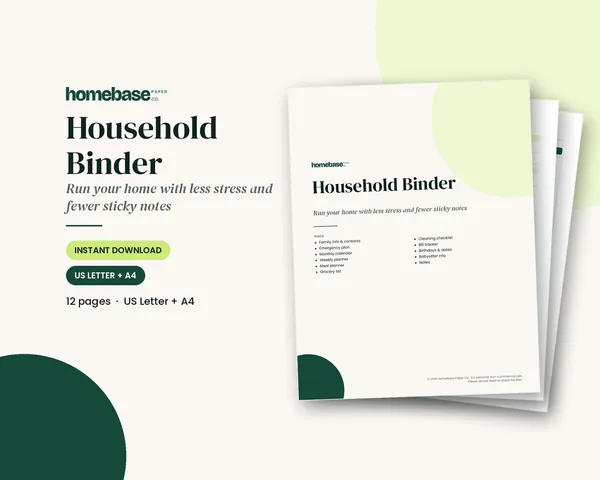
Household Binder
Family info, emergency plan, calendars, meals, groceries, cleaning, bills and sitter notes.
Printables
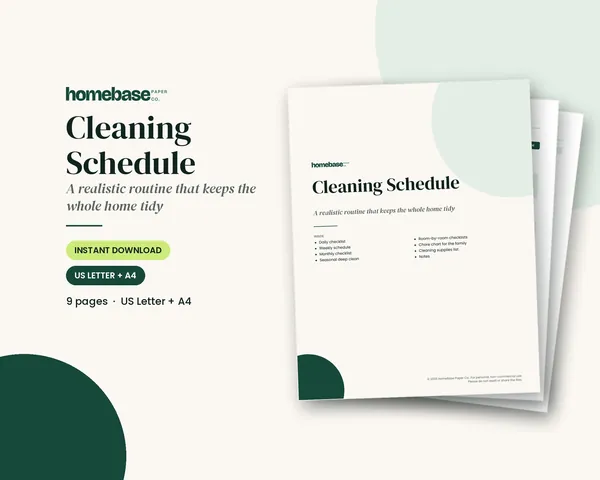
Cleaning Schedule
Daily, weekly, monthly and seasonal lists - plus a family chore chart.
Printables
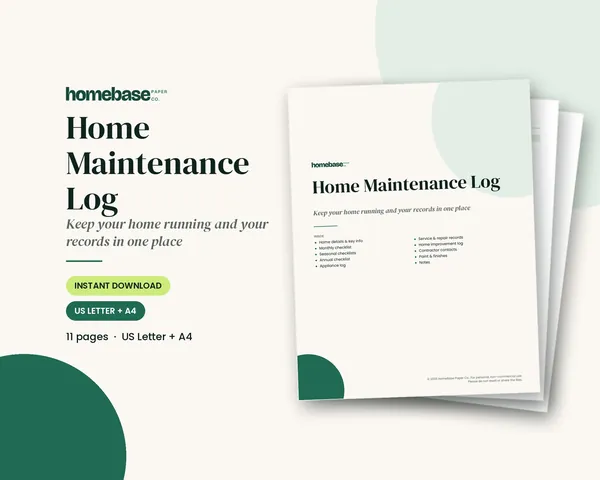
Home Maintenance Log
Monthly, seasonal and annual checklists plus a record of every appliance and repair.
Printables
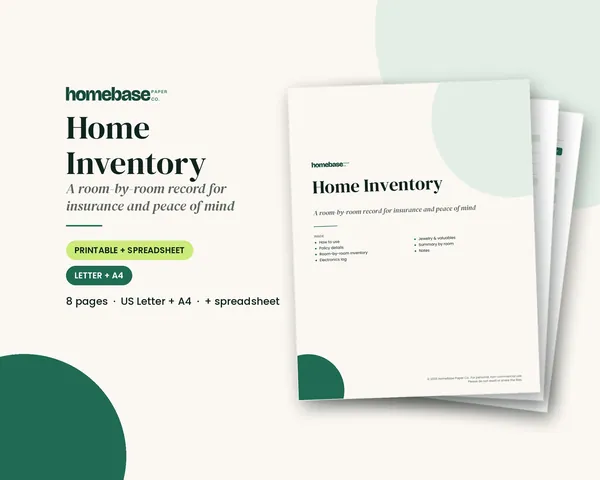
Home Inventory
Printable pages and a spreadsheet that totals the value of every room.
 Club
Monthly club
Planner & Calendar Club
Anyone who wants a monthly calendar, bill calendar and meal plan ready to print.
Free printable
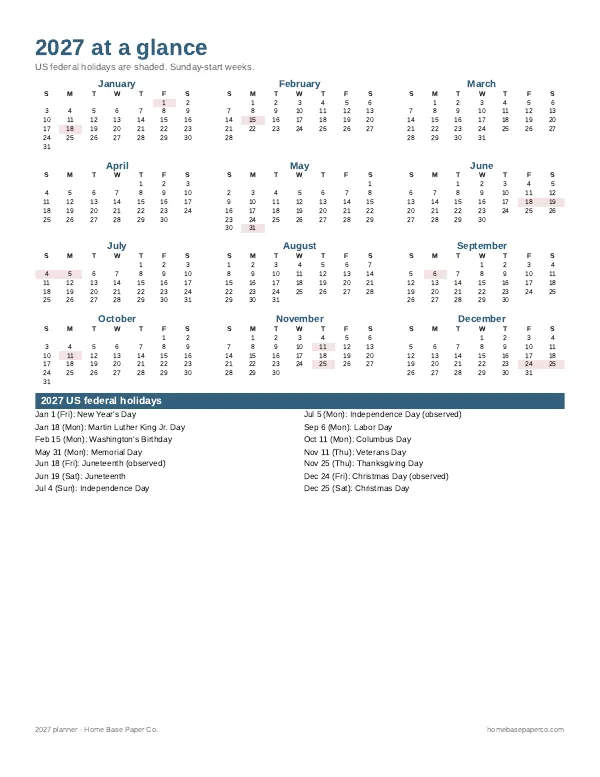
Get organized for the new year: get the free 2027 planner
A 16-page printable 2027 planner with a year-at-a-glance page and monthly calendars with US holidays marked. You'll also get our weekly HomeBase email with simple planning and home organization tips.
Sources
- Dietary Guidelines for Americans, 2020-2025 (USDA and HHS) dietaryguidelines.gov
- Kennedy, Rollins Unveil Historic Reset of U.S. Nutrition Policy (USDA, January 7, 2026) usda.gov
- Healthy Eating Plate (Harvard T.H. Chan School of Public Health, The Nutrition Source) nutritionsource.hsph.harvard.edu