

The short answer: how to clean a mattress: strip the bed, vacuum, treat any stains, let baking soda do its work and air it out.
- Vacuum every surface, especially the seams
- Spot-clean with mild dish soap or an enzyme cleaner
- Deodorize with baking soda (a 1-pound box for a queen)
- Use a protector to keep it cleaner longer
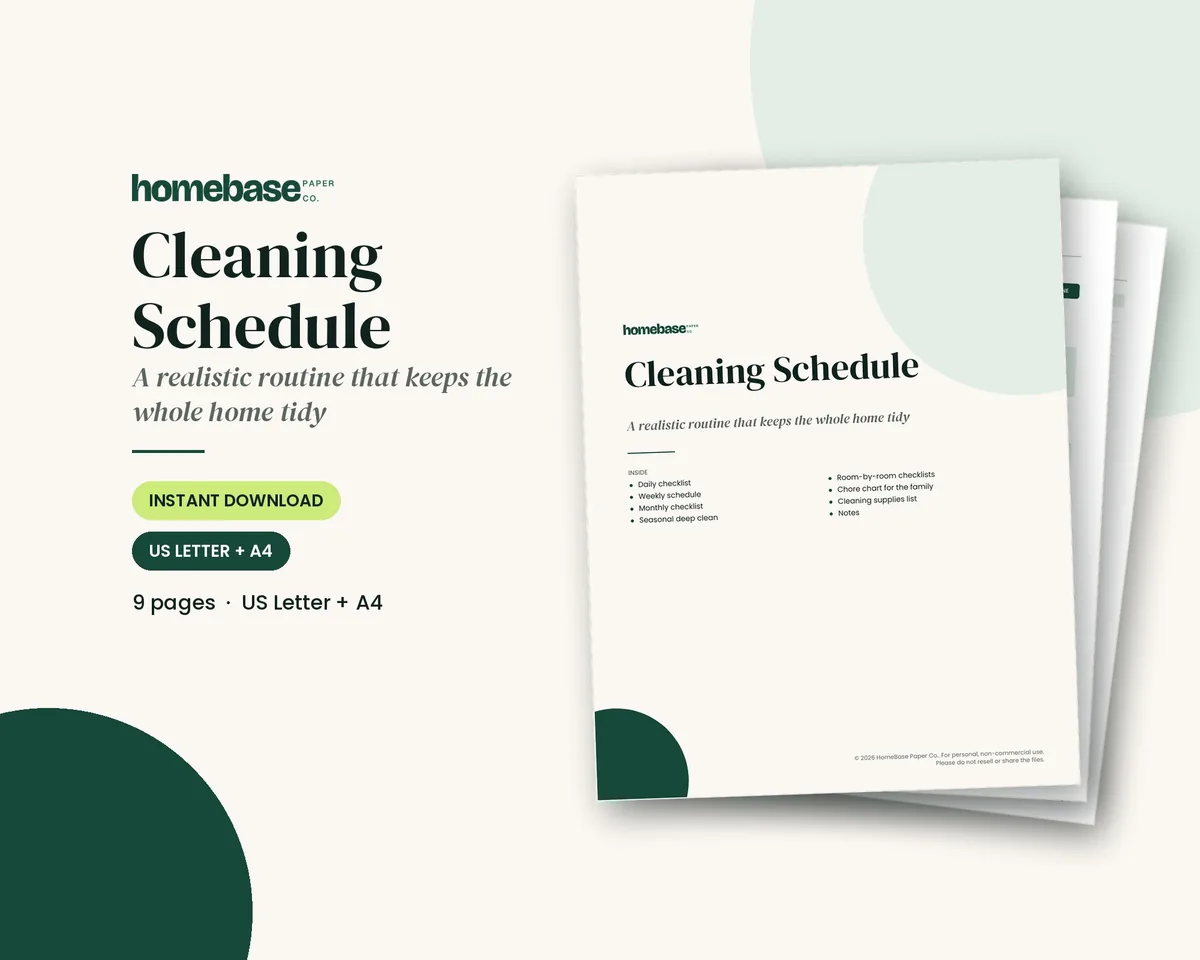
- Next step: Plan it with the Cleaning Schedule ($4.49).
Knowing how to clean a mattress matters more than most people think. You spend about a third of your life on it, and over time it collects sweat, skin flakes, dust, spills and odors that a weekly sheet change never touches. The good news is that a deep clean takes only a little hands-on time. You strip the bed, vacuum, treat any stains, let baking soda do its work and air it out. This guide walks through each step, then covers specific stains, memory foam and how often to do it.

How to clean a mattress: the quick version
- Strip the bed and wash all the bedding.
- Vacuum the mattress, including the seams and sides.
- Spot-clean stains by blotting with a mild soap solution or an enzyme cleaner.
- Deodorize with a layer of baking soda for several hours, or up to 24.
- Vacuum again and let the mattress air out before you remake the bed.
Consumer Reports' guide to cleaning a mattress follows the same basic order. It says to clean the mattress at least twice a year, and four times a year if you do not use a mattress encasement.
What you need
| Item | What it is for |
|---|---|
| Vacuum with an upholstery or crevice tool | Lifting dust, crumbs and skin flakes, especially from seams |
| Mild dish soap and warm water | A gentle spot cleaner for everyday stains |
| Enzyme cleaner | Sweat, urine, blood and other organic stains |
| Baking soda (a 1-pound box for a queen) | Absorbing odors and moisture |
| Clean white cloths or microfiber towels | Blotting without transferring dye |
| A fan or an open window | Drying and airing out |
Step 1: Strip the bed and wash the bedding
Take off the sheets, pillowcases, mattress protector and any mattress pad. Wash them in the hottest water the care labels allow. MedlinePlus recommends washing bedding and pillows once a week in hot water, 130°F to 140°F, for people with dust allergies. NC State Extension's healthy home guide gives similar advice and adds that allergen-proof covers on mattresses and pillows help keep dust mites in check.
While the laundry runs, the mattress gets a chance to breathe, and you will be able to see every stain.
Step 2: Vacuum every surface
Use the upholstery attachment and go slowly over the whole top of the mattress in overlapping rows. Switch to the crevice tool for the seams, the piping around the edges and any tufts or buttons, where dust and crumbs settle. Do the sides too. If your mattress is not one-sided, flip it and vacuum the other side.
You do not need a special mattress vacuum. A regular vacuum with a clean filter works well. A vacuum with a HEPA filter is a good choice if anyone in the house has allergies, because it traps fine dust instead of blowing it back out.
Step 3: Spot-clean stains
The rule for any mattress stain is to blot, not rub, and to use as little liquid as you can. A mattress is thick, and water that soaks deep into it takes a long time to dry.
- General stains, dirt and food: mix 1 teaspoon of mild dish soap with 1 cup of warm water. Dip a clean cloth in it, wring it out and dab the stain. Then dab with a cloth dampened in plain water to rinse.
- Sweat and yellow stains: use an enzyme cleaner or upholstery cleaner, following the label. Yellowing that has built up over years may lighten but not disappear.
- Urine: blot up as much as possible with dry towels right away. Then apply an enzyme cleaner made for urine, which breaks down the odor-causing compounds rather than just covering them.
- Blood: use cold water, never hot, which sets protein stains. Dab with cold water and a little mild soap or an enzyme cleaner.
Test any cleaner on a hidden spot first. When you are done, blot the area with a dry towel and let it dry completely.
Step 4: Deodorize with baking soda
Once any damp spots are mostly dry, sprinkle baking soda in a thin, even layer over the whole top of the mattress. For a queen-size mattress, a 1-pound box is about right. Consumer Reports suggests leaving it for 24 hours if you can, ideally near a sunny window. If you need the bed tonight, even a few hours helps.
The baking soda soaks up odors and a bit of moisture. It is cheap, safe and does not leave a scent behind.
Step 5: Remove the baking soda and air it out
Wipe off as much baking soda as you can with a dry cloth, then vacuum the rest with the upholstery tool. Fine powder can be hard on some vacuums, so check your manual and empty or change the bag or filter afterward.
Open a window or run a fan for an hour or two. Then put on a clean mattress protector and fresh sheets.
How to clean different types of mattresses
| Mattress type | What to do | What to avoid |
|---|---|---|
| Innerspring or hybrid | Vacuum, spot-clean, baking soda, rotate head to foot if the label says so | Soaking the top layers |
| Memory foam | Vacuum, very light spot-cleaning, baking soda, air dry | Steam, soaking, putting the foam in a washer |
| Latex | Vacuum and spot-clean with mild soap, dry quickly | Harsh solvents and direct heat |
| Pillow-top | Use the crevice tool around every fold and seam | Heavy liquid on the padded top |
| Removable cover | Wash the cover only if the label says it is washable | Drying the cover on high heat |
How often to clean a mattress
| Task | How often |
|---|---|
| Wash sheets and pillowcases | Every week |
| Wash the mattress protector | Every 1 to 2 months, and after any spill |
| Vacuum the mattress | Every 1 to 3 months |
| Full deep clean with baking soda | At least twice a year, or four times a year without an encasement |
| Rotate head to foot | Follow the label, often every 3 to 6 months |
Many people pair the twice-a-year deep clean with the time change in spring and fall, which makes it easy to remember. Not sure when is daylight savings this year? Our guide lists the 2026 and 2027 dates.
Keep your mattress cleaner for longer
- Use a protector. A washable, waterproof mattress protector stops most stains before they start. An allergen-proof encasement helps with dust mites.
- Keep humidity down. MedlinePlus notes that dust mites thrive in moist air and recommends keeping indoor humidity between 30% and 50%.
- Let the bed breathe. Pull the covers back for a while in the morning so moisture from the night can escape.
- Skip eating in bed, and keep pets on their own bedding if you can.
- Treat spills right away. A fresh stain is far easier to lift than an old one.
When to replace a mattress
Cleaning will not fix sagging, lumps or broken springs. If you wake up stiff, see a body-shaped dip or have stains and smells that come back no matter what you do, it may be time for a new one. Many mattresses last somewhere around 7 to 10 years, but comfort and support matter more than the calendar.
Put it on the schedule
The hardest part of mattress care is remembering it. Mattresses do not look dirty, so they get skipped for years. Writing the jobs down fixes that.
Our Cleaning Schedule ($4.49) is a 9-page printable with daily, weekly and monthly checklists, a seasonal deep clean list, room-by-room checklists, a family chore chart and a cleaning supplies list. Put "wash sheets" on the weekly page, "vacuum mattress" on the monthly page, and "deep clean and rotate mattress" on the seasonal list, so all three happen on time.
If you would like to get the whole household organized at once, the Home Management Bundle ($16.99) includes the Cleaning Schedule along with the Household Binder, Home Maintenance Log, Home Inventory, Moving Planner and Password & Accounts Log. Bought separately, those six come to $32.94.
A simple mattress cleaning calendar
Keep it easy to remember. Wash sheets and pillowcases weekly, and the mattress protector monthly or after any spill. Vacuum the mattress top and sides with the upholstery tool each season, and rotate it at the same time unless the maker says not to. Once or twice a year, do the full refresh: baking soda, a long sit, a slow vacuum and an airing in a sunny room.
Pillows next: our guide on how to wash pillows covers every fill type.
Your next step
Pick a day this week when you can leave the bed bare for a few hours. Strip it, vacuum it, treat any stains and sprinkle on the baking soda before you head out. By evening you will have a fresher bed, and you can write the next deep clean date on your calendar for six months from now.
Make it easier
Tools for this
Printables
Cleaning Schedule
Daily, weekly, monthly and seasonal lists - plus a family chore chart.
 Save 48%
Bundles
Home Management Bundle
Household binder, maintenance log, moving planner, cleaning schedule, home inventory and password log.
Frequently asked questions
What is the best way to clean a mattress? The best way to clean a mattress is to strip the bedding, vacuum the whole surface and seams with an upholstery tool, spot-clean any stains, then sprinkle baking soda over the top and leave it for several hours or up to 24 hours. Wipe and vacuum the baking soda off, let the mattress air out and remake the bed with fresh sheets.
How do you clean a mattress with baking soda? To clean a mattress with baking soda, vacuum it first, then sprinkle a thin, even layer of baking soda over the whole top. Consumer Reports suggests leaving it for 24 hours if you can, near a sunny window. Wipe off as much as possible with a dry cloth, then vacuum the rest with the upholstery tool.
How often should you clean a mattress? Clean a mattress at least twice a year. Consumer Reports suggests four times a year if you do not use a mattress encasement or protector. Wash your sheets every week in between, and spot-clean spills as soon as they happen so they do not set.
How do you get stains out of a mattress? To get stains out of a mattress, blot, do not rub. For dirt or general stains, dab with a mix of 1 teaspoon mild dish soap and 1 cup warm water on a cloth. For sweat, urine or other body fluids, use an enzyme cleaner. Use as little liquid as possible and let the spot dry completely.
How do you clean a mattress with urine on it? Blot up as much urine as you can with dry towels right away, then apply an enzyme-based cleaner made for urine and follow the label. Blot again, sprinkle baking soda over the damp area once it is mostly dry, leave it for several hours and vacuum it up. Do not soak the mattress.
How do you get rid of a mattress smell? To get rid of a mattress smell, sprinkle baking soda over the whole surface and leave it for several hours or up to 24 hours, then vacuum it off. Open windows or run a fan so the mattress can air out, and wash the mattress protector. A smell that comes back after cleaning may mean moisture is trapped inside.
Can you steam clean a mattress? You can, but be careful: steam adds moisture, and a mattress that stays damp can grow mold or mildew. If you use a handheld steamer, keep it moving, use light passes and let the mattress dry fully in a warm, airy room before you put sheets back on. Many memory foam makers advise against it, so check the label.
How do you clean a memory foam mattress? Clean a memory foam mattress the same way as other mattresses, with less water. Vacuum it, spot-clean with a barely damp cloth and a little mild soap, blot dry and deodorize with baking soda. Never soak memory foam or put the foam itself in a washing machine, because it holds water and dries slowly.
Does vacuuming a mattress help with dust mites? Yes, vacuuming a mattress removes some dust, skin flakes and mite debris, especially from seams. MedlinePlus says most dust mites in a home live in bedding, mattresses and box springs, and advises mite-proof covers and washing bedding weekly in hot water. A HEPA vacuum helps keep dust from blowing back into the room.
Should I use a mattress protector? Yes, a washable mattress protector or encasement is one of the easiest ways to keep a mattress clean. It blocks sweat, spills and stains from soaking in, and an allergen-proof encasement keeps dust mites out. Wash the protector every month or two, or right after any spill.
How long does a mattress take to dry after cleaning? A mattress usually takes a few hours to dry after spot-cleaning, and up to a full day if a large area got wet. Speed it up with a fan, an open window or sunlight. Press a dry paper towel on the spot to check, and do not remake the bed until it is completely dry.
How do I remember to clean my mattress? Put mattress cleaning on a written cleaning schedule: weekly sheet washing, a monthly or quarterly vacuum and a twice-a-year deep clean. The Cleaning Schedule ($4.49) has a seasonal deep clean list where the mattress can sit next to other twice-a-year jobs, so it does not get forgotten.
More from HomeBase
You may also like

Printables
Household Binder
Family info, emergency plan, calendars, meals, groceries, cleaning, bills and sitter notes.

Printables
Home Maintenance Log
Monthly, seasonal and annual checklists plus a record of every appliance and repair.

Printables
Home Inventory
Printable pages and a spreadsheet that totals the value of every room.

Printables
Vehicle Maintenance Log
Oil changes, repairs, tires, fuel and MPG, trip mileage and renewal dates - so resale and warranty records are easy.
 Club
Monthly club
Planner & Calendar Club
Anyone who wants a monthly calendar, bill calendar and meal plan ready to print.
Free printable
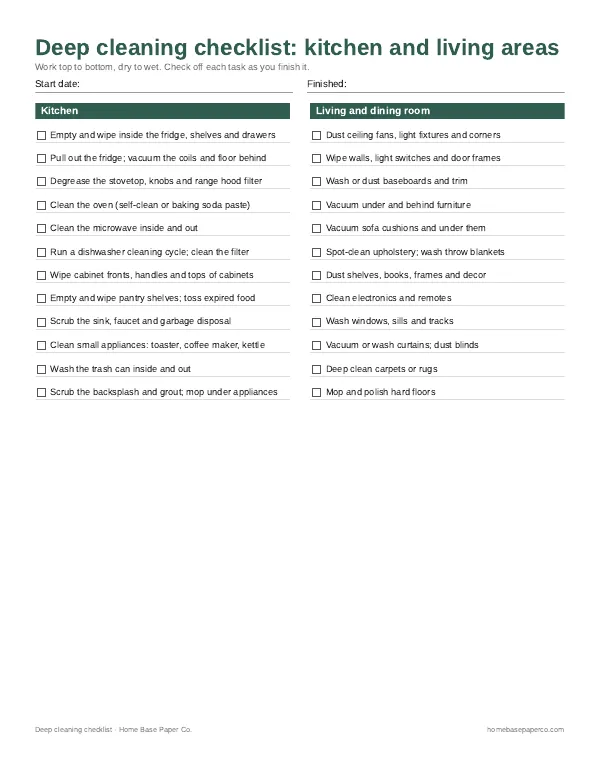
Clean the whole house in order: get the free deep cleaning checklist
A printable room-by-room deep cleaning checklist that tells you what to do first, so nothing gets cleaned twice. You'll also get our weekly HomeBase email with simple cleaning routines and chore ideas the whole family can help with.
Sources
- Consumer Reports: How to Clean a Mattress (and Why) consumerreports.org
- MedlinePlus: Allergies, asthma, and dust medlineplus.gov
- NC State Extension: Creating a Healthy Home, Step 1: Clean healthyhomes.ces.ncsu.edu