

The short answer: how to wash pillows: read the care label, wash two at a time on gentle with a little detergent, then dry them slowly with dryer balls.
- Polyester and most down can go in the washer
- Solid memory foam and latex cannot; spot-clean only
- Add an extra rinse and dry on low
- When to replace a pillow
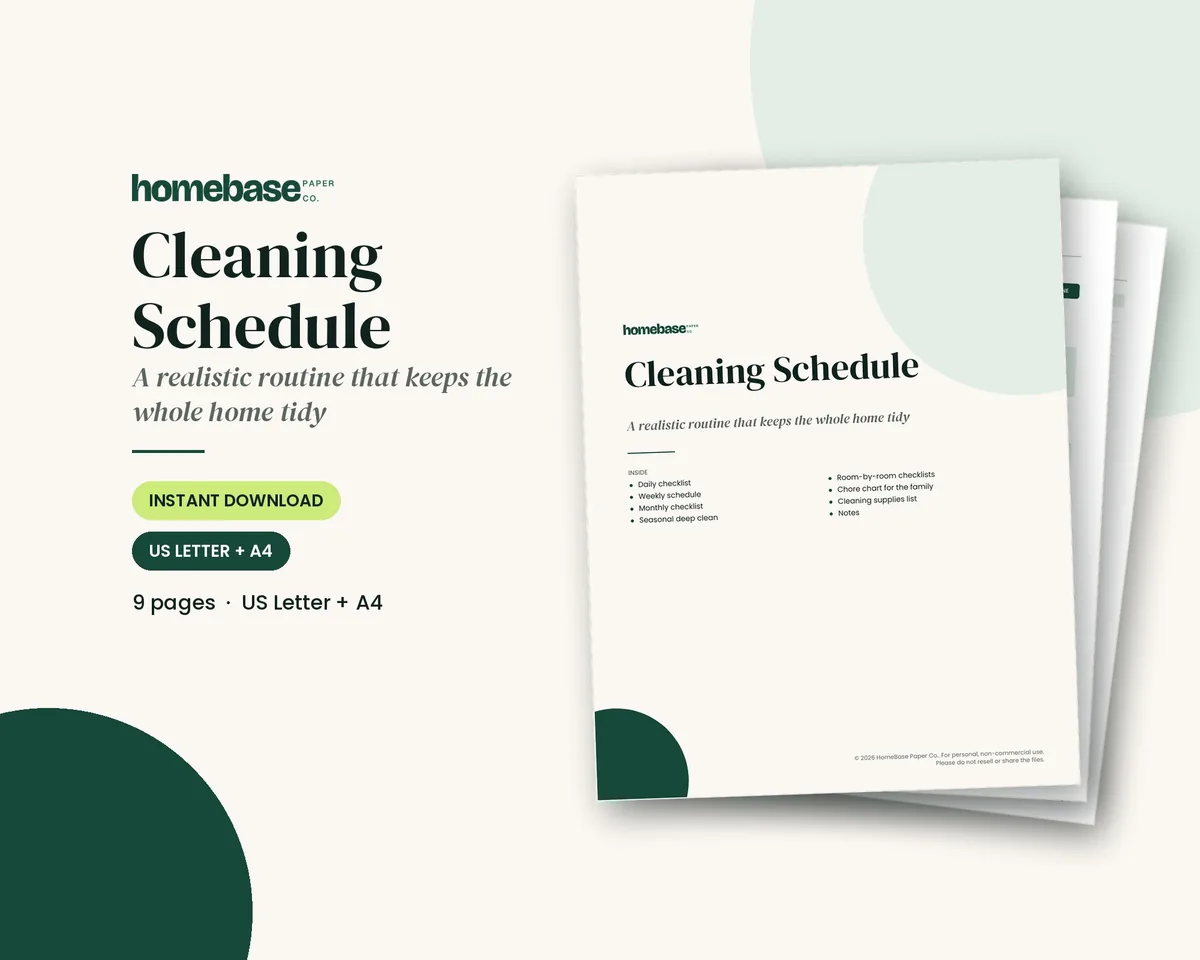
- Next step: Plan it with the Cleaning Schedule ($4.49).
Here is how to wash pillows so they come out clean, fluffy and dry all the way through. Read the care label, wash two at a time on gentle with a little detergent, then dry them slowly with dryer balls. Polyester and most down pillows can go in the washer. Solid memory foam and latex cannot. This guide covers each type, how often to wash, how to dry pillows fully and when to replace them.

How to wash pillows: the quick version
- Read the care label. It tells you if the pillow is machine washable.
- Strip it. Remove pillowcases and protectors and wash them separately.
- Spot-treat stains with a stain remover.
- Wash two at a time on the gentle cycle with about 1 tablespoon of liquid detergent.
- Add an extra rinse to clear out soap.
- Dry on low with dry towels and dryer balls or tennis balls, until there is no damp spot left.
Why washing pillows matters
A pillow is part of your bed, and it takes in sweat, skin oils and dust every night. MedlinePlus says most dust mites in a home are found in bedding, mattresses and box springs, and dust is a common trigger for allergy and asthma symptoms. Consumer Reports quotes its laundry expert Rich Handel: "Don't forget your pillow when it comes to cleaning." A clean pillowcase only goes so far if the pillow inside has not been washed in years.
Check the label first
Consumer Reports says to always read the label first. Many pillows can be machine-washed, but not all. Look for:
- Machine wash symbols and a temperature.
- Tumble dry settings (low, no heat).
- Spot clean only or do not wash, common on foam and latex pillows.
If the label is gone, find the fill type below and follow its steps.
How to wash pillows by type
| Fill | Washer? | Water | Cycle | Dryer |
|---|---|---|---|---|
| Polyester (fiberfill) | Yes | Warm | Gentle, about 1 Tbsp detergent | Low to moderate heat |
| Down or feather | Usually | Cool | Gentle, mild detergent | No heat (air-dry setting) |
| Shredded foam | Check label | Per label | Per label | Per label |
| Solid memory foam or latex | No | n/a | Spot-clean only | Air-dry only |
Polyester pillows
Consumer Reports' advice: wash in warm water on the gentle cycle, and be sparing with detergent, about 1 tablespoon of liquid soap. Washing several pillows at a time balances the load.
Down and feather pillows
Most down pillows can go in the washing machine, Consumer Reports says. Use cool water and a mild detergent. For drying, use the no-heat air-dry setting with dryer balls or tennis balls, because high temperatures can damage the down. It takes a while, so plan for a long cycle or two.
Memory foam and latex pillows
Washer agitation can break up slab-style foam pillows, so Consumer Reports' laundry expert suggests skipping the washing machine for them. Instead:
- Remove and wash the cover.
- Vacuum the foam on both sides with an upholstery tool.
- Spot-clean with a damp cloth and a small amount of mild detergent.
- Wipe with a clean damp cloth to remove soap.
- Let it air-dry completely before replacing the cover.
Some shredded foam pillows are machine washable, so check the care label.
Washer tips
- Wash two at a time. If your machine is big enough, Consumer Reports says two pillows balance the load and let water and detergent circulate better.
- Be gentle with an agitator. Consumer Reports says the agitator on a conventional top-loader can be tough on pillows, so run the gentle cycle for only a few minutes, or the shortest setting. A laundromat front-loader is another option.
- Go easy on detergent. Too much soap leaves residue that makes pillows stiff and can attract dirt.
- Add an extra rinse and spin. Extra spin removes more water, which cuts drying time.
How to dry pillows completely
This is the most important step. Consumer Reports says it is crucial to get the pillow completely dry, otherwise you risk mildew.
- Skip auto-dry. The sensors only detect surface moisture, leaving the inside damp.
- Use low to moderate heat for polyester pillows, about an hour.
- Use no heat for down and feather pillows, and expect it to take a while.
- Add two dry towels to absorb moisture faster.
- Add two tennis balls or dryer balls to keep the filling from clumping.
- Check by squeezing. If any part feels cool or damp, keep drying. Fluff and turn the pillows every 20 to 30 minutes.
How often to wash pillows
| Task | How often |
|---|---|
| Fluff pillows | Every day |
| Wash pillowcases and protectors | Every week |
| Air out pillows (clothesline or no-heat fluff) | Every month |
| Wash the pillows themselves | Every 3 to 6 months, at least twice a year |
| Replace pillows | When they stay flat or lumpy |
These are the intervals Consumer Reports recommends. For monthly airing, it suggests hanging pillows outdoors on a bright, breezy day, or using the dryer's no-heat setting for pillows that do not fluff, such as foam.
Washing pillows when someone has allergies
If someone in your home has dust allergies or asthma, the schedule changes. MedlinePlus advises wrapping mattresses, box springs and pillows in mite-proof covers, and washing bedding and pillows once a week in hot water, 130°F to 140°F (54°C to 60°C). Check that your pillows' care labels allow hot water first. If they do not, a washable mite-proof cover over the pillow, washed weekly in hot water, does the same job and protects the pillow.
MedlinePlus also suggests keeping indoor humidity between 30% and 50%, since dust mites thrive in moist air, and wiping dust with a damp cloth and vacuuming once a week. Those habits make clean pillows stay clean longer.
Common pillow-washing mistakes
Washing one pillow alone. A single pillow throws the drum off balance and can come out lopsided. Add a second pillow or a couple of towels.
Too much detergent. Extra soap stays in the filling, leaves pillows stiff and can attract dirt. A tablespoon is plenty for a polyester pillow.
Pulling them out too soon. A pillow that feels dry on the outside can still be wet in the middle, which is how mildew starts. Dry longer than you think you need.
Using high heat on down. Heat can damage down and feathers. Use the no-heat setting and be patient.
Stains and smells
Spot-treat stains on both the pillowcase and the pillow with a stain cleaner suited to the stain before washing. Consumer Reports notes the same trick works on mattress stains. For yellowing from sweat, an enzyme stain remover works well. If a pillow still smells after washing and drying, it was probably not dried fully. Run it through another drying cycle. For pen marks on fabric, see how to get ink out of clothes.
When to replace a pillow
Even well-washed pillows wear out. Replace yours if:
- It stays flat after fluffing.
- It has lumps that do not break up in the dryer.
- It fails the fold test (fold it in half; it should spring back).
- It still smells after a full wash and dry.
- You wake up with neck pain that eases on a different pillow.
A pillow protector, washed weekly, keeps pillows fresh longer and is easier to wash than the pillow itself.
Put it on the schedule
Pillows are a classic "I'll do it someday" chore. A written schedule turns someday into a date. Our Cleaning Schedule ($4.49) is a 9-page printable with daily, weekly and monthly checklists, a seasonal deep clean list, room-by-room checklists, a family chore chart and a cleaning supplies list. Put "wash pillowcases" on the weekly page and "wash pillows" on the seasonal list, next to "clean mattress."
Doing the whole bed? See our guide on how to clean a mattress.
If you want one system for the whole house, the Home Management Bundle ($16.99) includes the Cleaning Schedule along with the Household Binder, Home Maintenance Log, Home Inventory, Moving Planner and Password & Accounts Log. Bought separately, those six come to $32.94.
Your next step
Check the labels on your pillows tonight. If they are machine washable and it has been more than 6 months, strip them and run a gentle wash this weekend, two at a time, with dryer balls in the dryer. Then add the next wash date to your seasonal cleaning list, so your pillows get washed on a schedule instead of only when you happen to notice them.
Make it easier
Tools for this
Printables
Cleaning Schedule
Daily, weekly, monthly and seasonal lists - plus a family chore chart.
 Save 48%
Bundles
Home Management Bundle
Household binder, maintenance log, moving planner, cleaning schedule, home inventory and password log.
Frequently asked questions
What is the best way to wash pillows? The best way to wash pillows is to check the care label, then wash two at a time on the gentle cycle with a small amount of mild liquid detergent and an extra rinse. Dry them on low heat with dryer balls or tennis balls until they are dry all the way through, which can take an hour or more.
How often should you wash pillows? Wash pillows at least twice a year, and ideally every 3 to 6 months, which is the guidance from Consumer Reports. Wash pillowcases and pillow protectors every week, and fluff the pillows every day to keep their shape.
Can you wash pillows in the washing machine? Yes, most polyester and down pillows can be washed in the washing machine. Solid memory foam and latex pillows usually cannot, because agitation breaks them apart. Always read the care label first, since some pillows are spot-clean only.
How do you wash down or feather pillows? Wash down or feather pillows in cool water with a mild detergent on the gentle cycle, two at a time. Consumer Reports says to dry them on the no-heat air-dry setting with dryer balls or tennis balls to break up clumps. It takes a while, but high heat can damage the down.
How do you wash memory foam pillows? Do not put a solid memory foam pillow in the washer. Remove the cover and wash it, vacuum the foam, then spot-clean it with a damp cloth and a little mild detergent. Let it air-dry completely before you put the cover back. Some shredded foam pillows are machine washable, so check the label.
How much detergent should you use to wash pillows? Use about 1 tablespoon of liquid detergent for polyester pillows, the amount Consumer Reports suggests. Too much soap leaves residue in the filling. Add an extra rinse cycle so the pillows come out clean and soft.
Should you wash pillows in hot or cold water? Use neither extreme: wash polyester pillows in warm water and down or feather pillows in cool or cold water, per Consumer Reports. Use the gentle cycle for both. Follow the care label if it gives a different temperature.
How do you dry pillows after washing? Dry pillows on low to moderate heat for about an hour, with two dry towels and two tennis balls or dryer balls to speed drying and stop clumps. Skip the auto-dry setting, because it senses only surface moisture. Squeeze the pillow; if any part feels damp, keep drying.
How do you get yellow stains out of pillows? To get yellow stains out of pillows, spot-treat the stain with a stain remover made for sweat or body oils before washing, as Consumer Reports suggests. Then wash as the label directs. Using a pillow protector and washing it weekly keeps new stains from soaking in.
When should you replace a pillow? Replace a pillow when it stays flat after fluffing, has lumps that will not break up, or still smells after washing. Folding it in half is a quick test: if it does not spring back, it no longer supports your neck.
Do pillows collect dust mites? Yes, pillows can collect dust mites. MedlinePlus says most dust mites in a home are found in bedding, mattresses and box springs. For people with dust allergies, it advises wrapping pillows in mite-proof covers and washing bedding and pillows weekly in hot water.
How do I keep track of when I washed my pillows? Put pillow washing on a seasonal list so it comes up every 3 to 6 months. The Cleaning Schedule ($4.49) has weekly pages for pillowcases and sheets and a seasonal deep clean list for pillows, mattresses and duvets.
More from HomeBase
You may also like

Printables
Household Binder
Family info, emergency plan, calendars, meals, groceries, cleaning, bills and sitter notes.

Printables
Home Maintenance Log
Monthly, seasonal and annual checklists plus a record of every appliance and repair.

Printables
Home Inventory
Printable pages and a spreadsheet that totals the value of every room.

Printables
Vehicle Maintenance Log
Oil changes, repairs, tires, fuel and MPG, trip mileage and renewal dates - so resale and warranty records are easy.
 Club
Monthly club
Planner & Calendar Club
Anyone who wants a monthly calendar, bill calendar and meal plan ready to print.
Free printable
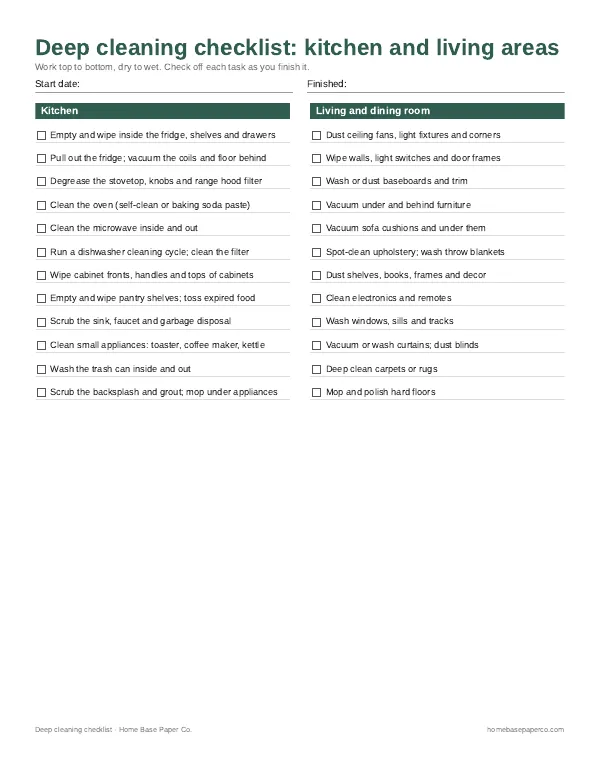
Clean the whole house in order: get the free deep cleaning checklist
A printable room-by-room deep cleaning checklist that tells you what to do first, so nothing gets cleaned twice. You'll also get our weekly HomeBase email with simple cleaning routines and chore ideas the whole family can help with.
Sources
- Consumer Reports: How to Wash a Pillow consumerreports.org
- MedlinePlus: Allergies, asthma, and dust medlineplus.gov