

The short answer: an address book keeps the people you care about in one place: names, addresses, phone numbers, emails and birthdays. This free printable has A–Z pages with three entries per letter.
- Includes an emergency contacts page and a meeting place page
- Works without a battery and is ready for holiday cards
- File by last name
- Keep it current and make a digital backup
- Next step: Get the free printable address book (we email it to you); want more? The Household Binder is $6.99.
Our picks for address book

Printables
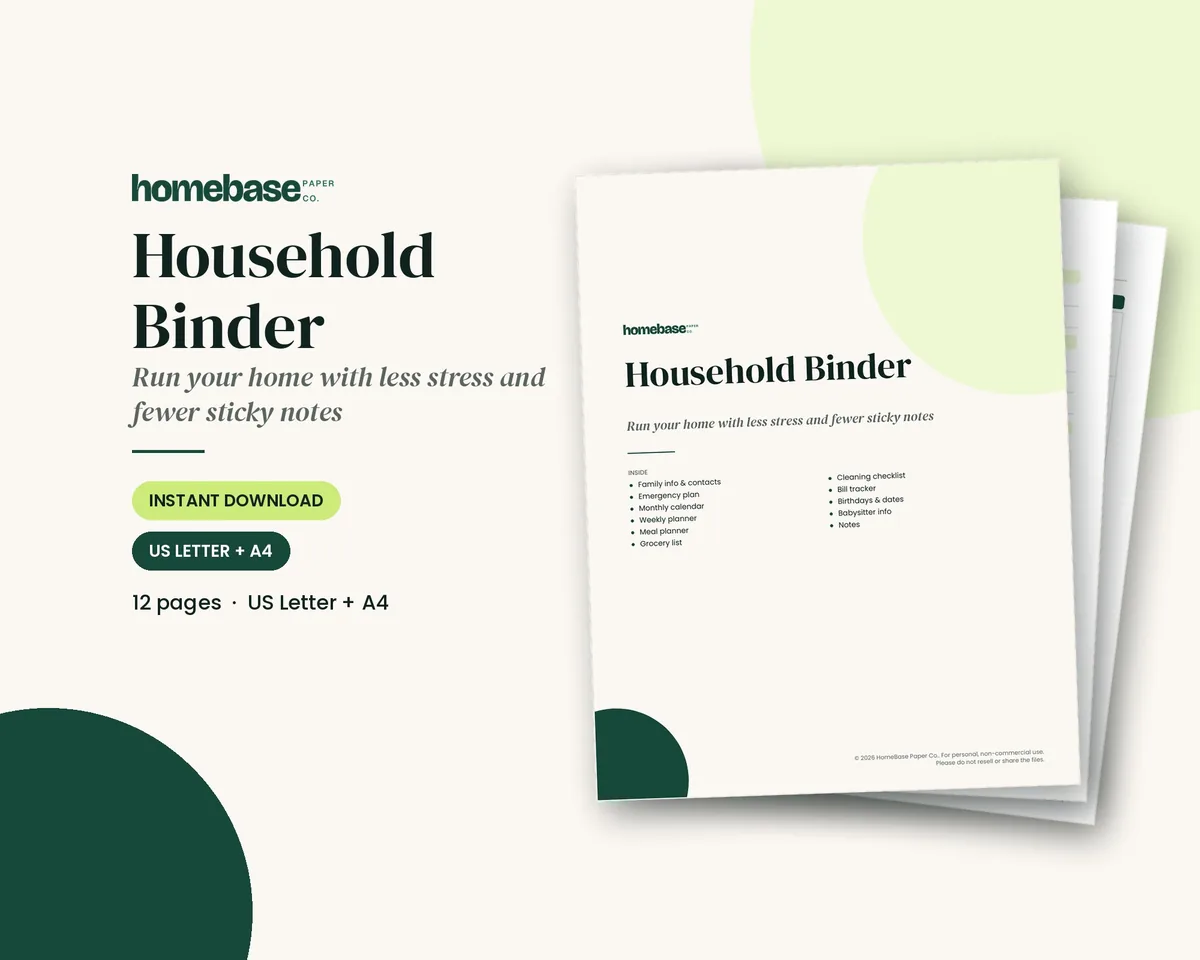
Household Binder
Family info, emergency plan, calendars, meals, groceries, cleaning, bills and sitter notes.
Printables
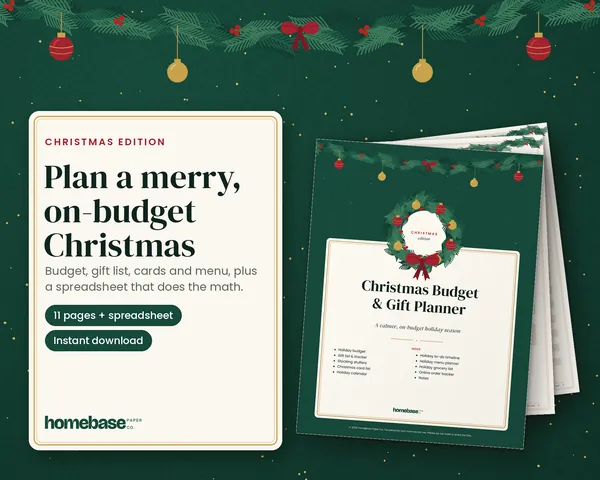
Christmas Budget & Gift Planner
Set a budget for every person, log each purchase, and watch what's left - plus printable gift, card, menu and to-do pages.
Printables
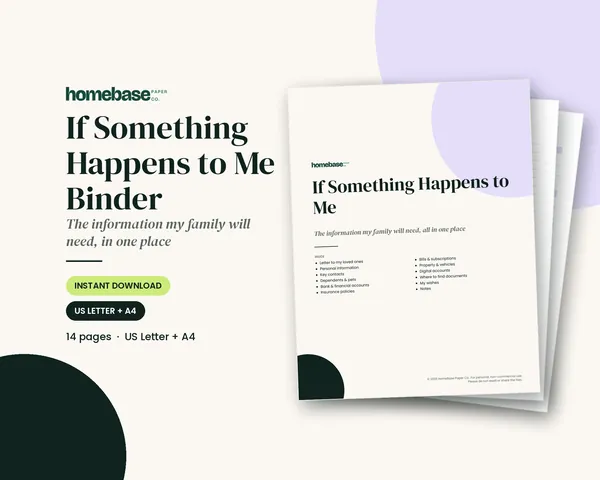
If Something Happens to Me Binder
Accounts, insurance, bills, contacts, documents and your wishes - so your family isn't left guessing.
 Save 48%
Bundles
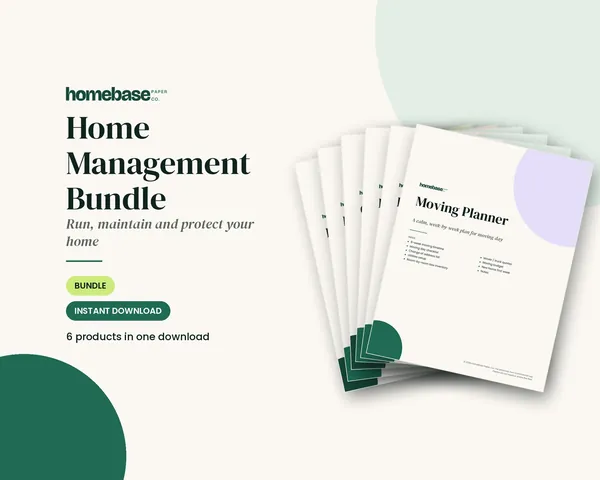
Home Management Bundle
Household binder, maintenance log, moving planner, cleaning schedule, home inventory and password log.
An address book keeps the people you care about in one place: names, addresses, phone numbers, emails and birthdays. This free printable address book template has A–Z pages with three entries per letter, an emergency contacts page and a meeting place page. Print it, punch it and keep it in a binder, or print just the letters you need.
What's in the free download
The 16-page PDF includes:
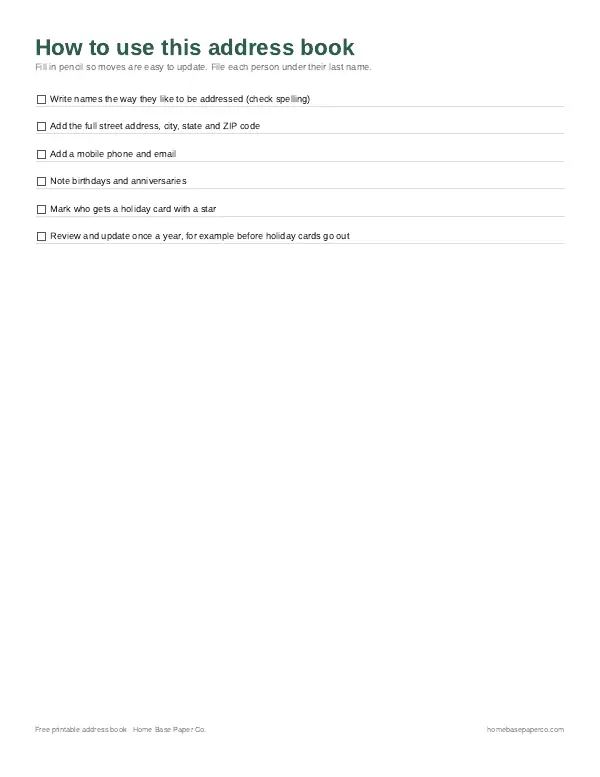
- How-to page with tips for filling it in.
- 13 A–Z pages, two letters per page and three entries per letter.
- Entry lines for name, address, city/state/ZIP, phone, email and birthday or notes.
- Emergency and key contacts page with 12 lines.
- Out-of-area contact and meeting place page.
Need more room for S or M? Print extra copies of those pages.
Why keep a paper address book
Most of us keep contacts in our phones, but a paper address book still earns its spot:
- It works without a battery, so it helps when your phone is lost, broken or dead.
- It's easy to share with a sitter, house guest or family member.
- It holds mailing addresses, which phone contacts often lack.
- It's ready for holiday cards and invitations, so you aren't texting for addresses every December.
- It's a family record. Old address books often end up as keepsakes.
Ready.gov's guide to making a plan points out that your family may not be together when a disaster strikes. It says it's important to know how you'll contact one another and reconnect if separated, and to set a family meeting place. A written list of key numbers is part of that.
How to fill in your address book
- Gather your sources. Phone contacts, last year's holiday card envelopes, your wedding or party guest list and school directories.
- File by last name. Put the Kellys under K. For couples with different last names, pick one and add a note under the other letter.
- Write names the way people like them. Check spelling now, so envelopes are right later.
- Add the full mailing address, including apartment numbers and ZIP codes.
- Add phone and email.
- Note birthdays and anniversaries.
- Star holiday card recipients.
- Use pencil for anything likely to change.
Writing names and addresses correctly
An address book is where envelope mistakes start or end. Emily Post's guide to addressing correspondence covers most situations. A few basics:
- Married couples: "Mr. and Mrs. John Kelly" is the traditional form. For an informal address, "Jane and John Kelly" works. Emily Post says the order of the names doesn't matter for most couples.
- Different last names: "Mr. John Kelly and Ms. Jane Johnson."
- Don't mix Ms. with the husband's name: "Mr. and Ms. John Kelly" is incorrect.
- Doctors: "Dr. Jane Kelly and Mr. John Kelly," or "The Doctors Kelly" if both are doctors and share a last name.
For formal invitations, Emily Post's advice on addressing and sending wedding invitations says titles are abbreviated (Mr., Mrs., Ms., Dr.), but words like "Street" and "Boulevard" are spelled out. State names can be written in full or with the two-letter postal code. It also suggests double-checking the spelling of guests' names before you address envelopes. A clean address book makes that check fast.
What to put on the emergency contacts page
The emergency page goes at the front of the book. Fill it in for:
| Who | Why |
|---|---|
| Family member nearby | First call in a problem |
| Out-of-area contact | Easier to reach when local lines are busy |
| Neighbors | Can check the house or pets |
| Doctors and pharmacy | Prescriptions and appointments |
| Schools and child care | Pickups and closures |
| Work numbers | Yours and your partner's |
| Insurance agent | Claims after damage |
| Utility companies | Outages and leaks |
| Vet | Pet emergencies |
The last page has room for an out-of-area contact and two meeting places: one near home and one out of town. Ready.gov suggests making a family communication plan and practicing it with your household. Our emergency binder guide covers the rest of your family's emergency paperwork.
Keep it current
An address book is only useful if it's up to date. A simple routine:
- Update right away when someone texts a new address.
- Review once a year. Before holiday cards go out is a good time.
- Watch returned mail. A returned card means a move.
- Check return addresses on cards you receive, and update your book.
- Date your entries. A small "updated 2027" note shows which ones are fresh.
Use your address book for cards and invitations
An up-to-date address book makes mailing season much easier:
- Holiday cards. Star card recipients, then copy them to our Christmas card list. Need wording? See our Christmas card messages.
- Weddings. Copy names into our wedding guest list template to track RSVPs.
- Thank-you notes. Our wedding guest book pages collect addresses at the event, so you can add them here afterward.
- Birthdays. Copy birthdays onto a calendar or the Birthdays & Important Dates page in the Household Binder.
The Christmas Budget & Gift Planner ($4.99) has a Christmas Card List along with a holiday budget, gift list and holiday calendar, so your card list and gift plan live together. If you are enclosing a family update with your cards, use a holiday letter template to organize the message before mailing.
Store contacts with your household records
Your address book belongs with your other household papers. The Household Binder ($6.99) has family info, emergency plan, sitter info and Birthdays & Important Dates pages, plus a monthly calendar, weekly planner, meal planner, cleaning schedule and bill tracker. Slip the address book pages behind its family info tab.
If you're putting together information your family would need in an emergency, the If Something Happens to Me Binder ($11.99) includes a Key Contacts section. And the Home Management Bundle ($16.99) bundles our home organizing printables in one download.
Address book ideas for different households
The same pages work for very different lists:
- Family address book. Relatives, close friends and neighbors. Add kids' names and birthdays on the notes line so cards and gifts are easy.
- Address book for seniors. Large, clear entries and a front page with doctors, the pharmacy and the people who help. Print on heavier paper so it holds up to daily use, and keep it by the phone.
- Kids' friends and activities. Parents' names, phone numbers and addresses for playdates, carpools and birthday parties. Add allergies or pickup notes.
- Holiday card book. Only the people who get a card, with a star for anyone who moved this year.
- Small business or side hustle. Customers, suppliers and repair people. Keep it separate from your personal book.
- New home book. After a move, list the neighbors, the HOA, trash pickup and local service people as you meet them.
Printing and binding tips
- Print on 24 lb paper or light cardstock so pencil erases cleanly.
- Use a half-inch binder for most families, or a one-inch binder for big ones.
- Add tab dividers for groups of letters, like A–F, G–L, M–R and S–Z.
- Print extra pages for common letters. In many families, S, M, B and C fill up first.
- Leave a blank page at the back for new people who don't have a page yet.
When you move, send your new address
Your own address book entry matters too. When you move, send your new address to everyone in your book: a short email, a text or a change-of-address card. Go letter by letter, and check off each person as you tell them. Do the same for the businesses on your emergency page, such as your doctor, pharmacy, insurance agent and schools. The Moving Planner keeps that list together with the rest of your moving tasks. Then update your own entry on the first page, so whoever borrows the book knows how to reach you.
Make a digital backup
A paper address book and your phone can back each other up. Once a year, after your review, take photos of each page and save them to a secure folder. Or go the other way: add missing mailing addresses from your book to your phone contacts. If you lose one, you still have the other.
Protect personal information
An address book holds personal details about people you love. Keep it at home rather than in a car or a bag you carry every day, and don't write account numbers or passwords in it. If you share a page with a sitter, copy only the numbers they need.
Household Binder
Family info, emergency plan, calendars, meals, groceries, cleaning, bills and sitter notes.
$6.99 · Instant download. Print at home or fill it in on screen. Or browse the full Home & Organizing collection.
Frequently asked questions
Is this printable address book free? Yes, this printable address book is free. The address book on this page is a free 16-page PDF that we email to you. It has A–Z pages, an emergency and key contacts page and a meeting place page.
What should I put in an address book? Put each person's full name, street address, city, state and ZIP code, phone, email and birthday in your address book. A notes line is handy for kids' names, a spouse's name or the last date you updated the entry.
How do you organize an address book? File people by last name, A to Z. Put a couple under the name they share, or under either last name with a cross-reference if they use different names. Keep emergency contacts on a page at the front.
Is a paper address book still useful? Yes, a paper address book is still useful. A paper address book works when your phone is lost, dead or broken, and it's easy to share with a sitter or family member. Ready.gov advises families to plan how they will contact one another and reconnect if separated, and a written list helps.
Should I keep my address book in pencil or pen? Pencil is better for addresses that change. Use pen for things that rarely change, like birthdays. If you use pen, leave space to cross out and rewrite, or print a fresh page when one gets messy.
How do I write a couple's names in an address book? Write them the way you'd address an envelope. Emily Post's guide says the order of the names doesn't matter for most couples, so "Jane and John Kelly" or "John and Jane Kelly" are both fine. If they use different last names, write both: "Mr. John Kelly and Ms. Jane Johnson."
Should I abbreviate Street and state names? No, not on formal envelopes like wedding invitations. Emily Post says words like "Street" and "Boulevard" are spelled out, while states can be written in full or with the two-letter postal code. In your own address book, abbreviations are fine to save space.
What is the best way to keep an address book up to date? Use the free printable address book on this page and review it once a year. Before holiday cards go out is a good time, since returned cards and new return addresses show who moved. Update the entry right away when someone sends a change of address.
Can I use the address book for Christmas cards? Yes, you can use the address book for Christmas cards. Star the people who get a card, then copy them onto a card list. Our free Christmas card list tracks who you sent to and who sent one back, and the Christmas Budget & Gift Planner ($4.99) has a Christmas Card List page.
What emergency contacts should be in an address book? Include a family member, an out-of-area contact, neighbors, doctors, your pharmacy, schools, work numbers, your insurance agent and utility companies. Ready.gov suggests a family communication plan and a meeting place, and the last page of this download has room for both.
Is there a household planner with a contacts page? Yes, the HomeBase Household Binder is a household planner with a contacts page. The Household Binder ($6.99) has family info, an emergency plan and sitter info pages along with a calendar, meal planner, cleaning and bill tracker pages. The If Something Happens to Me Binder ($11.99) has a Key Contacts section.
Address book or phone contacts: which should I use? You should use phone contacts for everyday use, plus the free printable address book on this page as a backup. Phone contacts are quick for calls and texts. A printed address book is a backup that works without a battery and is easy for a sitter or relative to use. Copy the most important numbers onto paper.
Can I print extra pages for one letter? Yes, you can print extra pages for one letter of the address book. Print as many copies of any letter as you need, then file them in order in a binder.
Free printable
Finally, one place for every address and birthday
16 pages: A to Z pages, emergency contacts and a family meeting-place page. You'll also get our weekly HomeBase email with simple ways to keep family records and important papers in order.
Sources
- The Emily Post Institute: Guide to addressing correspondence emilypost.com
- The Emily Post Institute: Addressing and sending wedding invitations emilypost.com
- Ready.gov: Make a plan ready.gov