

The short answer: an emergency binder keeps your family's most important information in one place, ready to grab if you need to leave home fast or hand details to a first responder.
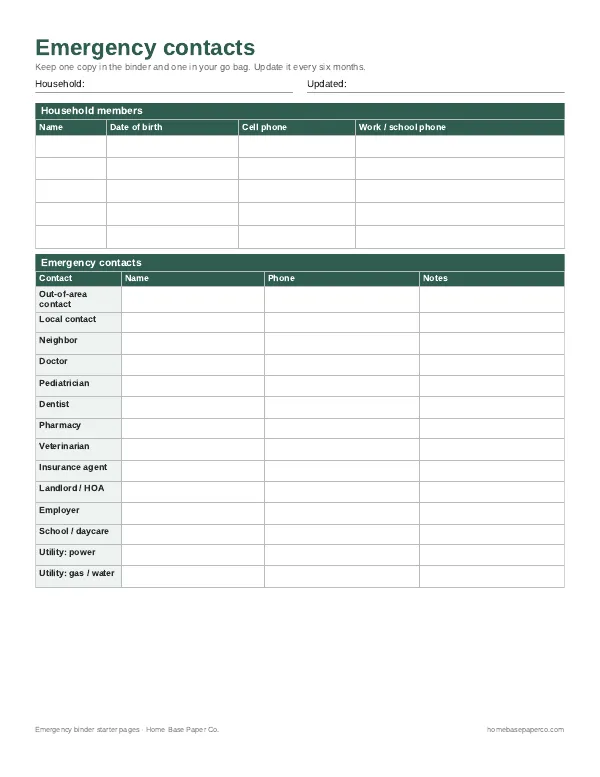
- Page 1: emergency contacts
- Page 2: medical information and insurance
- Page 3: the family emergency plan, with meeting places and utility shut-offs
- Page 4: an important documents checklist (add copies, not originals)
- Next step: Get the free emergency binder starter pages (we email it to you); want more? The If Something Happens to Me Binder is $11.99.
An emergency binder keeps your family's most important information in one place, ready to grab if you need to leave home fast or hand details to a first responder. This guide covers what to put in a family emergency binder, how to set it up in an afternoon and where to keep it. Get the free download for four starter pages: emergency contacts, medical information, a family emergency plan and an important documents checklist.
For the money side, our If Something Happens to Me Binder adds pages for bank accounts, insurance policies, bills, digital accounts and where to find documents.
What to put in an emergency binder
| Section | What it holds | In our free pages? |
|---|---|---|
| Emergency contacts | Household phones, out-of-area contact, doctors, pharmacy, vet, insurance, school, utilities | Yes (page 1) |
| Medical information | Blood type, allergies, conditions, medicines and doses for each person | Yes (page 2) |
| Insurance | Health, dental, vision, home or renters, auto and life policies | Yes (page 2) |
| Family emergency plan | Meeting places, evacuation routes, pets, who picks up the kids, utility shut-offs | Yes (page 3) |
| Important documents | Copies of IDs, birth certificates, insurance, wills, deeds and titles | Checklist (page 4) |
| Cash | Small bills in a sealed envelope | Add your own |
| Photos | Pictures of your home and belongings for insurance | Add your own |
Step 1: emergency contacts
Start with the people. Page 1 has rows for up to five household members (name, date of birth, cell and work or school phone) and 14 key contacts: an out-of-area contact, a local contact, a neighbor, your doctor, pediatrician, dentist, pharmacy, veterinarian, insurance agent, landlord or HOA, employer, school or daycare, and your power, gas and water companies.
Our free printable address book includes an emergency contacts page you can copy into this tab.
The Red Cross recommends you choose an out-of-area emergency contact, because it may be easier to call or text long distance when local lines are overloaded. It also suggests everyone carry emergency contact information in writing, so print a small copy for each wallet and backpack.
Step 2: medical information and insurance
Page 2 has a row for each person with blood type, allergies, conditions and medicines with doses, plus an insurance table for health, dental, vision, home or renters, auto and life policies with the company, policy or member number and phone. In an emergency, this saves you trying to remember a medicine name or policy number under stress. For more detail, see our guide on how to organize medical records.
If you have a living will, keep a copy with this section so family and doctors can find your wishes fast.
Step 3: the family emergency plan
Ready.gov's make a plan guide asks families to talk through a few questions: how you'll receive emergency alerts, your shelter plan, your evacuation route and your household communication plan. Page 3 of our starter pages gives you space for:
- Meeting places: near home (for a fire), outside the neighborhood and out of town
- Evacuation: two routes, where you will stay, who takes the pets and where, and who picks up the kids
- Utility shut-offs: where the water, gas and power shut-offs are
- Local alerts and radio: the alert apps and radio stations you'll use
The Red Cross suggests practicing your evacuation plan twice a year, and our plan page says the same. Walk the route, check the meeting places and make sure kids know the out-of-area contact's number. Our fire escape plan guide shows how to map two ways out of every room and run a home fire drill.
Step 4: important documents
Page 4 is an important documents checklist with 14 items: birth certificates, copies of passports and IDs, copies of Social Security cards, marriage or divorce papers, insurance policies, wills and powers of attorney, deed, lease or mortgage papers, car titles and registration, medical records and vaccination cards, bank and credit card contacts, a recent tax return, pet records, photos of your home and belongings, and some cash in small bills. For each one you note where the original is kept and tick whether a copy is in the binder and a digital copy exists.
Name your executor of estate here and say where the will is. Our guide explains what the executor will do and need.
File any medical power of attorney here as well. Our guide explains what it allows and how it pairs with a living will.
Ready.gov's financial preparedness page suggests keeping a small amount of cash at home in small bills, because ATMs and credit cards may not work during a disaster. Our guide to organizing important documents explains how to sort the originals.
How to put the binder together
- Pick a sturdy binder with a zip closure or put it in a waterproof bag.
- Add tabbed dividers for contacts, medical, insurance, plan and documents.
- Print and fill in the starter pages. Use pen, not pencil.
- Add copies, not originals, of important documents in sheet protectors.
- Make a digital copy. Scan the pages to an encrypted USB drive or secure cloud storage.
- Store it with your kit. Ready.gov's build a kit list includes copies of important family documents in a waterproof, portable container alongside water, food and a radio.
- Set a reminder to review it every six months.
Keep it safe and private
An emergency binder holds exactly the information you'd want kept private: dates of birth, policy numbers and document copies. Store it somewhere secure but easy to reach, like a closet near the exit or a fire-resistant box, not on an open shelf. Don't write account passwords in it. Tell every adult in the house where it is.
If you store the Wi-Fi password here, update it when you change it. Our guide on how to change wifi password covers the steps for most routers. For the rest of your logins, our password tracker template guide shows what to record for each account without writing full passwords.
Emergency binder vs household binder vs if something happens to me binder
For end-of-life planning, our free obituary template includes a fact worksheet you can fill in ahead and keep with your papers.
- Emergency binder: grab-and-go information for a disaster. Start with the free pages above.
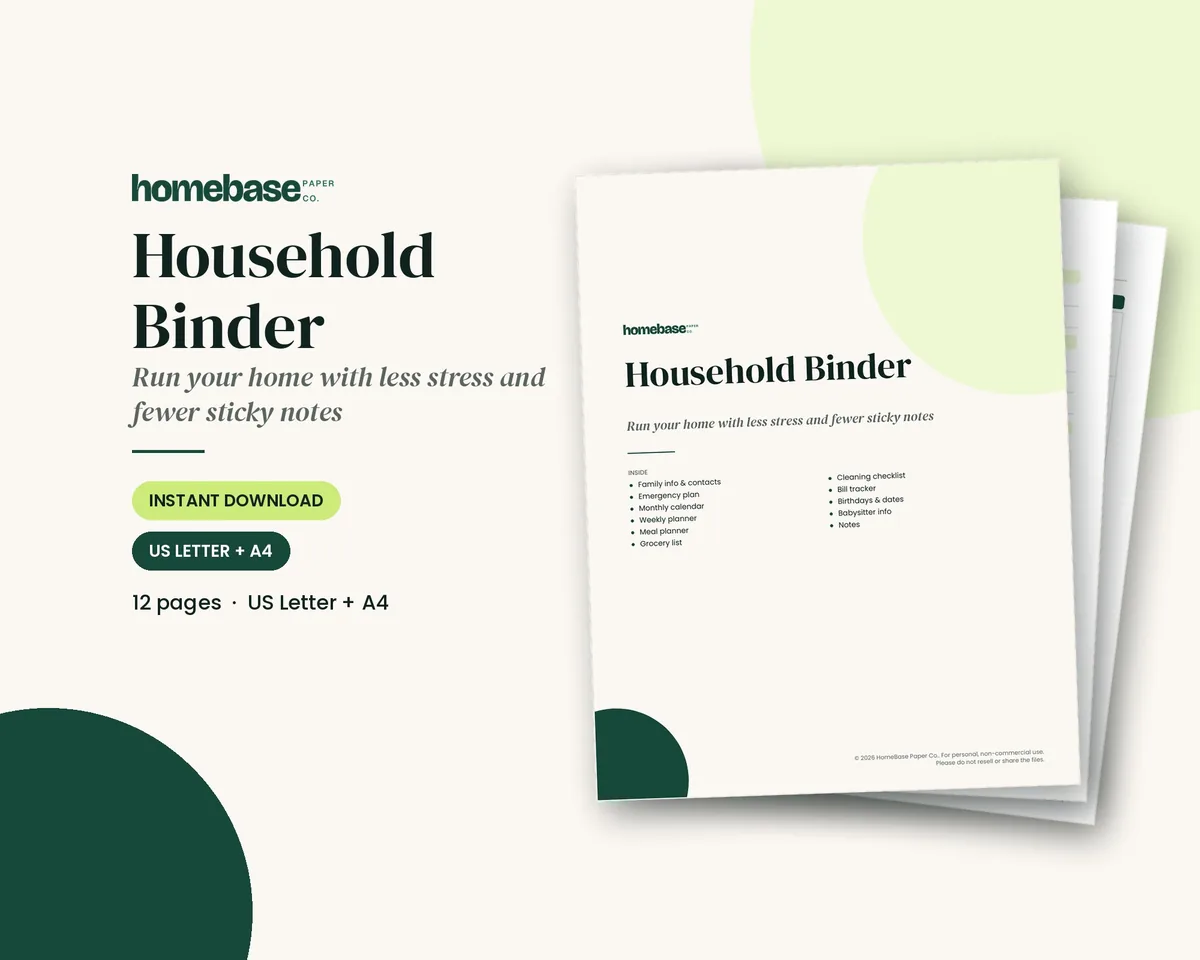
- Household binder: the everyday system. Our Household Binder is a 12-page printable with family information, an emergency plan, a monthly calendar, a weekly planner, a meal planner, a grocery list, a weekly cleaning page, a bill tracker, birthdays and babysitter and sitter info. See also our home management binder guide.
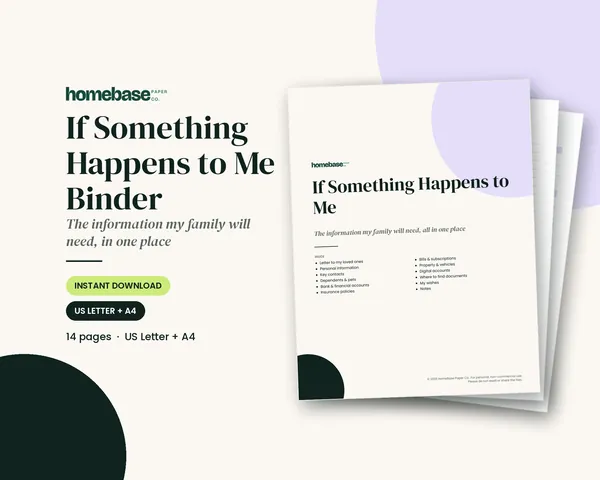
- If something happens to me binder: for the people who would step in for you. The If Something Happens to Me Binder is a 14-page printable with key contacts, bank and financial accounts, insurance policies, bills and subscriptions, property and vehicles, digital accounts, where to find documents and your wishes. Read more in our if something happens to me binder guide.
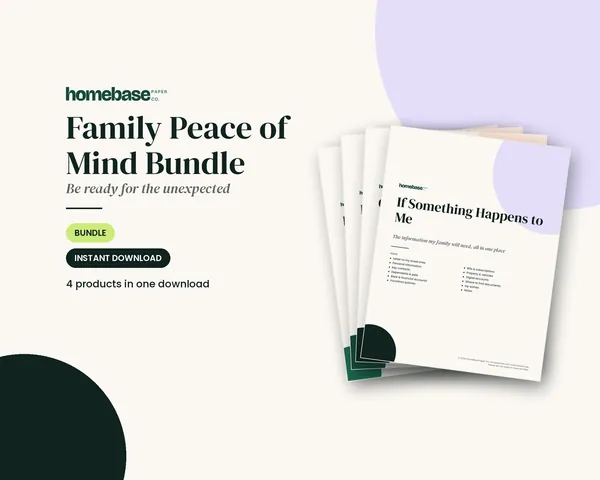
The Family Peace of Mind Bundle combines the If Something Happens to Me Binder with a Caregiver Organizer, Pet Health Records and a Password and Accounts Log. For the money side of being prepared, an emergency fund tracker helps you build savings, and a car emergency kit covers the road.
Make it easier
Tools for this

Printables
Household Binder
Family info, emergency plan, calendars, meals, groceries, cleaning, bills and sitter notes.
 Save 37%
Bundles
Family Peace of Mind Bundle
The If Something Happens to Me binder, Caregiver Organizer, Pet Health Records and Password Log together.
Printables
If Something Happens to Me Binder
Accounts, insurance, bills, contacts, documents and your wishes - so your family isn't left guessing.
Frequently asked questions
What is an emergency binder? An emergency binder is a single binder or folder that holds the information your family would need in a disaster or crisis: emergency contacts, medical information, insurance details, your family emergency plan and copies of important documents. If you have to leave home quickly, you grab one binder instead of hunting for papers.
What should be in a family emergency binder? A family emergency binder should include emergency contacts, an out-of-area contact, medical information and medicines for each person, insurance policies and numbers, a family emergency plan with meeting places and evacuation routes, copies of IDs, birth certificates and Social Security cards, property and vehicle papers, bank contacts, pet records, photos of your home and a little cash in small bills.
Should I put original documents in my emergency binder? You usually shouldn't put original documents in your emergency binder. Keep originals of birth certificates, passports, Social Security cards, wills and titles in a safe place, such as a fireproof and waterproof safe or a safe deposit box, and put copies in the binder. Our important documents checklist has columns for where each original is kept and whether a paper and digital copy exist.
Where should I keep an emergency binder? Keep an emergency binder somewhere you can grab in seconds on the way out, near your emergency kit or by the main exit, in a waterproof bag or container. Because it holds private information, don't leave it in plain view. Tell every adult in the house where it is, and consider a digital copy in secure cloud storage. The Household Binder has an emergency plan page that's easy to pull out and carry.
What is the difference between an emergency binder and a household binder? An emergency binder focuses on what you need in a disaster: contacts, medical info, plans and documents. A household binder runs everyday family life: calendars, meal plans, grocery lists, cleaning, bills and sitter info, often with an emergency section. Many families keep both, or keep the emergency pages in a separate, grab-and-go folder.
What is the difference between an emergency binder and an if something happens to me binder? An emergency binder helps the whole household act quickly in a disaster. An if something happens to me binder is for the people who would step in if you became seriously ill or died: accounts, bills, insurance, property, digital accounts and your wishes. They overlap on documents, but the second goes much deeper into money and final wishes.
How often should I update an emergency binder? Review it every six months, for example when the clocks change, and after any big change such as a new baby, a move, a new job, a new doctor or a change in medicines. Ready.gov also suggests rethinking your emergency kit every year as your family's needs change, so review both together.
What emergency contacts should I include? Include each household member's phone, an out-of-area contact, a local contact, a neighbor, your doctor, pediatrician, dentist, pharmacy, veterinarian, insurance agent, landlord or HOA, employer, school or daycare and your power, gas and water companies. The Red Cross recommends an out-of-area contact because long-distance calls or texts may get through when local lines are busy.
Should I keep cash in my emergency binder? Yes, a small amount: Ready.gov suggests keeping a small amount of cash at home in a safe place, in small bills, because ATMs and card readers may not work during a disaster. You can keep it in a sealed envelope in the binder or with your emergency kit. Only keep a modest amount and store the binder securely.
How do I make an emergency binder for an elderly parent? Make an emergency binder for an elderly parent with the same sections, then add more detail on medicines, doses, doctors, mobility aids, hearing or vision needs, power-dependent medical equipment and caregivers. Include a copy of any health care power of attorney. A caregiver organizer, such as the Family Peace of Mind Bundle, which includes the Caregiver Organizer, helps track appointments and care, and your parent should keep a copy of the key pages too.
Are the emergency binder starter pages free? Yes, the emergency binder starter pages are free. The four-page PDF is free; we email it to you. It includes emergency contacts, medical information and insurance, a family emergency plan and an important documents checklist. These are starter pages; for a full binder that also covers calendars, meals and bills, or accounts and final wishes, see our paid binders.
More from HomeBase
You may also like
 Starter pick
Printables
Kids Chore Chart
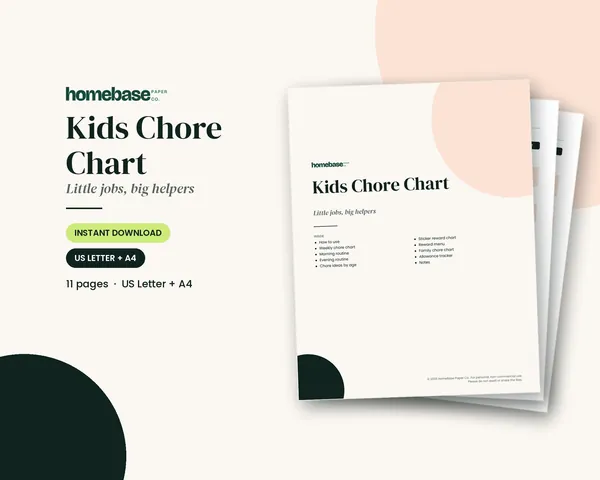
Weekly chore chart, morning and evening routines, chore ideas by age, a sticker reward chart and an allowance tracker.
Printables
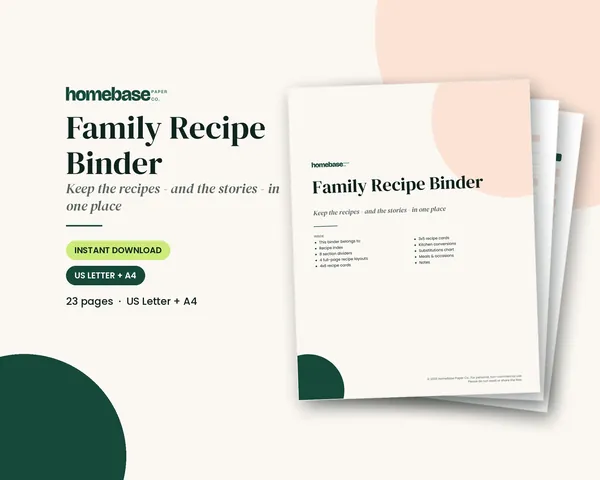
Family Recipe Binder
Section dividers, four recipe page layouts with room for the family story, 4x6 and 3x5 cards and a conversion chart - print it or type into the fillable version.
Printables
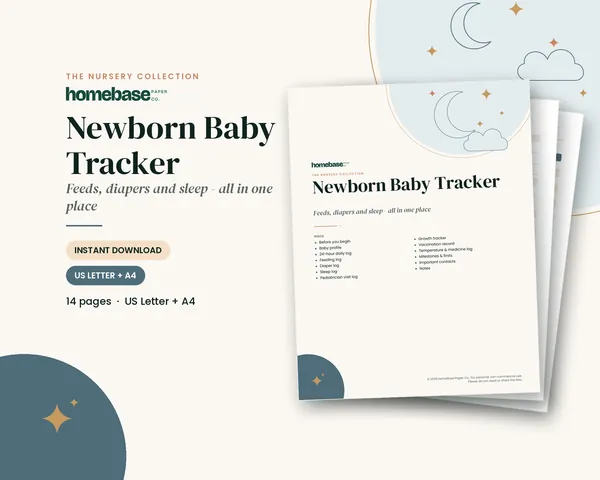
Newborn Baby Tracker
A 24-hour daily log plus feeding, diaper, sleep, growth and pediatrician-visit pages - easy to bring to checkups.
Printables
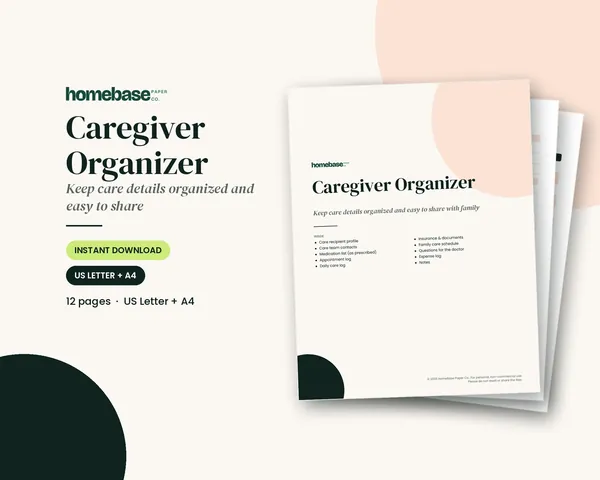
Caregiver Organizer
One place for contacts, appointments, the medication list from the doctor, and daily notes.
 Club
Monthly club
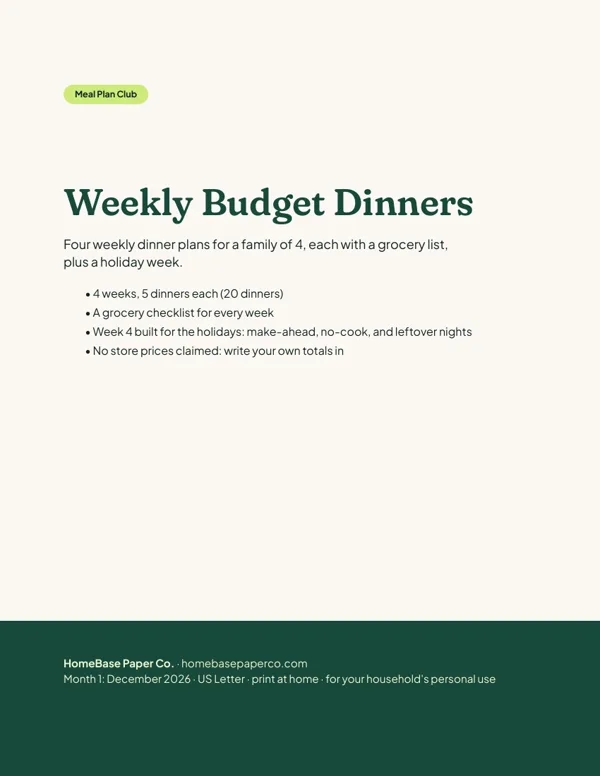
Meal Plan Club
Families who want dinner planned and a grocery list ready every week.
Free printable
Have the important stuff in one place: get the free emergency binder pages
Printable starter pages for household members, emergency contacts, medical notes and where key documents live. You'll also get our weekly HomeBase email with simple ways to keep family records and important papers in order.
Sources
- Ready.gov: Make a plan ready.gov
- Red Cross: Make a plan redcross.org
- Ready.gov: Financial preparedness ready.gov
- Ready.gov: Build a kit ready.gov