

The short answer: A car emergency kit turns a breakdown, a flat or a long weather delay from a crisis into an inconvenience.
Our picks for car emergency kit
Printables
Vehicle Maintenance Log
Oil changes, repairs, tires, fuel and MPG, trip mileage and renewal dates - so resale and warranty records are easy.

Printables
Household Binder
Family info, emergency plan, calendars, meals, groceries, cleaning, bills and sitter notes.
 Save 48%
Bundles
Home Management Bundle
Household binder, maintenance log, moving planner, cleaning schedule, home inventory and password log.
This page lists what to keep in your car all year, what to add for winter, kids and pets, and how to keep the kit and your car records up to date.
The year-round car emergency kit
Ready.gov's car safety guide lists the basics most drivers should carry. Here's a practical version:
A kit helps on the road, but routine care prevents many breakdowns. Our guide on how often to change oil covers intervals and the signs it is due.
An emergency binder puts key documents and contacts where your family can find them.
| Item | Why it matters |
|---|---|
| Jumper cables or a jump starter | Dead batteries are one of the most common roadside problems |
| Flashlight and spare batteries | Changing a tire or reading a gauge in the dark |
| First aid kit | Small cuts, scrapes and headaches |
| Water and shelf-stable snacks | Long delays or a wait for a tow |
| Phone charger or power bank | Calling for help when your battery is low |
| Blanket | Warmth if the engine has to stay off |
| Reflective triangles or flares | Helping other drivers see you |
| Basic tools and a tire gauge | Simple fixes and checking pressure |
| Rain poncho and work gloves | Staying dry and clean on the roadside |
Pack it all in a sturdy bin or duffel so it stays put in the trunk.
Glove box and console items
Some things need to be in reach from the driver's seat:
- A small flashlight
- A phone charging cable
- A seatbelt cutter and window breaker tool
- A pen and paper for accident notes
- Your registration, proof of insurance and roadside assistance number
Winter add-ons
Cold weather changes what you need. NHTSA's winter driving tips cover getting your car ready and what to do if you're stranded. Add:
- An ice scraper and snow brush
- A small folding shovel
- Sand or cat litter for traction under the tires
- Extra blankets, hats, gloves and warm socks
- Hand warmers
- A bright cloth to tie to the antenna if you're stuck
If you get stranded, stay with the car, run the engine only for short periods, and keep the exhaust pipe clear of snow.
Add-ons for kids and pets
Kids: diapers and wipes, a change of clothes, extra snacks and water, a small toy or book, and any medicines. Pets: a spare leash, water and a bowl, a little food, waste bags and a copy of vaccination records.
If you break down: a quick plan
Knowing the steps ahead of time keeps you calm when it happens:
- Get off the road if you can, as far right as is safe. Turn on your hazard lights.
- Stay in the car with your seatbelt on if you're on a busy highway, unless there's smoke or fire.
- Put out triangles or flares behind the car only when it's safe to walk there.
- Call for help. Use your roadside assistance number, or call 911 if anyone is hurt or you feel unsafe.
- Write down details if another car was involved: names, plates, insurance and photos of both cars.
Keep this list with the kit so anyone driving the car can follow it.
How to keep the kit ready
A car emergency kit only helps if it works when you need it. Set a reminder twice a year:
Your car kit covers the road. At home, an emergency binder keeps contacts, medical information and your family plan in one place. For more on this topic, see our vehicle maintenance guides.
- Replace water and food.
- Test flashlights and swap batteries.
- Restock the first aid kit and check expiration dates.
- Swap winter items in or out.
- Check that the spare tire has air and the jack is still there.
Ready.gov's build a kit page covers a home kit too, and many items do double duty.
Prevention beats rescue
Most roadside trouble starts with skipped maintenance: worn tires, an old battery or low fluids. Keeping a simple record of service dates makes it much easier to stay ahead of problems.
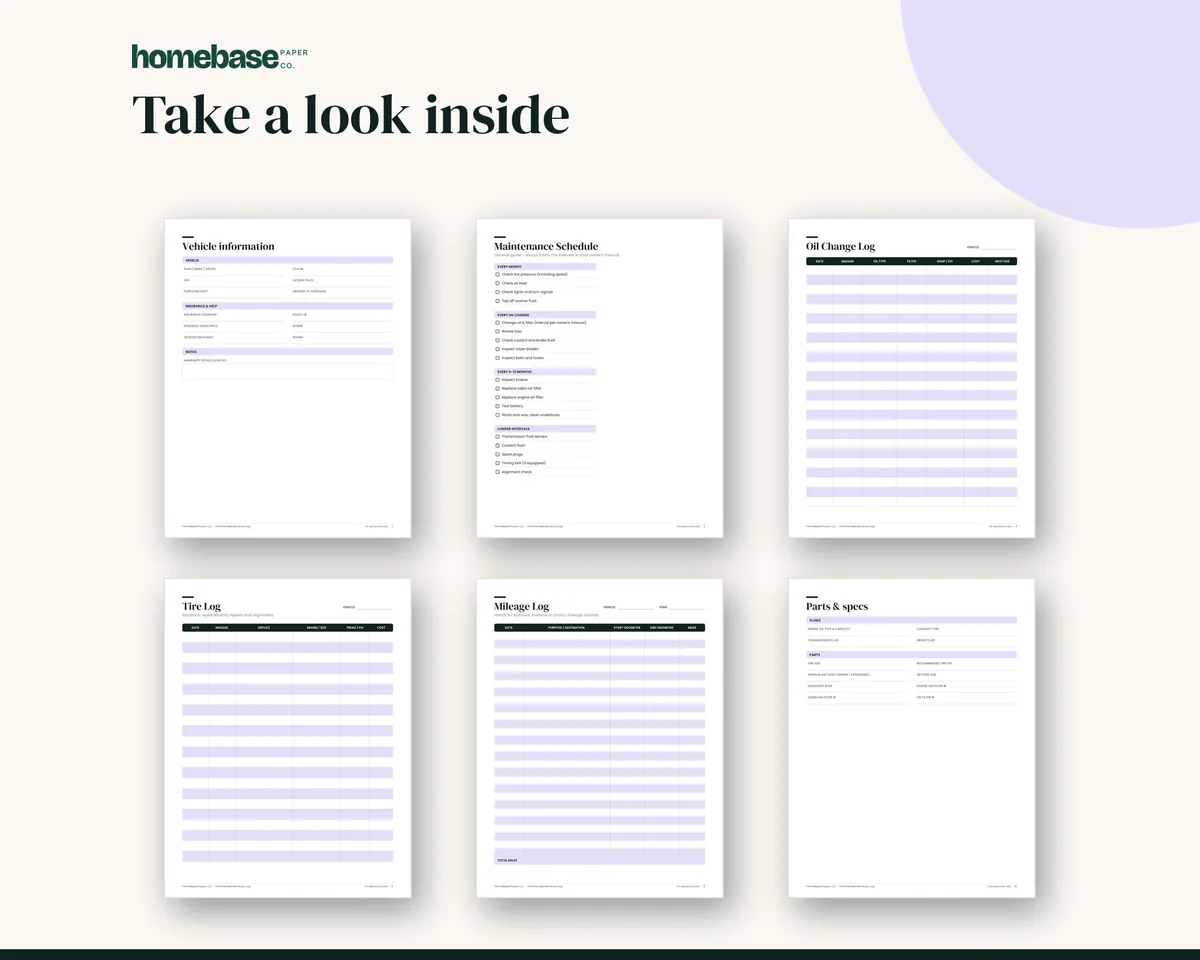
The Vehicle Maintenance Log ($3.99) is a printable with a maintenance schedule, oil change, service and repair, tire, fuel and mileage logs, renewals and reminders, and an accident information page you can keep in the glove box. The Household Binder ($6.99) includes an emergency plan page for the whole family, and the Home Management Bundle ($16.99) adds a home maintenance log and home inventory.
For more, read our car maintenance schedule, see the vehicle maintenance log book and check the holiday travel budget for families before your next long drive.
Keep your insurance card in the kit too, and review what your car insurance covers, such as roadside assistance and rental reimbursement, before a long trip.
Keep every oil change and repair on record
Oil changes, repairs, tires, fuel and MPG, trip mileage and renewal dates - so resale and warranty records are easy.
$3.99 · Instant download. Print at home or fill it in on screen. Or browse the full Home & Organizing collection.
Frequently asked questions
What should be in a car emergency kit? A basic car emergency kit has jumper cables, a flashlight with spare batteries, a first aid kit, water, snacks that keep, a phone charger, a blanket, reflective triangles or flares, and basic tools. Ready.gov's car safety page uses a similar list. Add winter, kid and pet items depending on where and how you drive.
Where should I keep a car emergency kit? Keep the main kit in the trunk or cargo area in a sturdy bin or bag so it doesn't slide around. Put the items you might need without getting out, such as a phone charger, a flashlight and a seatbelt cutter or window breaker, in the glove box or center console.
How often should I check my car emergency kit? Check it twice a year, for example when clocks change in spring and fall. Replace water and snacks, test the flashlight, swap old batteries and restock the first aid kit. Switch in your winter items before the first cold snap and take them out again in spring if you need the space.
What should I add to a car emergency kit for winter? For winter, add an ice scraper and snow brush, a small shovel, sand or cat litter for traction, extra blankets, hats and gloves, and hand warmers. NHTSA also suggests keeping your gas tank at least half full in winter so you have fuel to stay warm if you get stuck.
How much water should I keep in my car? A few bottles per person is a practical amount for most trips, and more for long drives in hot or remote areas. Water stored in a hot car can break down plastic over time, so rotate bottles every six months. A metal bottle or two that you refill also works.
What food is good for a car emergency kit? Choose food that handles heat and cold and doesn't need cooking: granola or protein bars, nuts, crackers, dried fruit and shelf-stable pouches. Avoid chocolate in summer. Swap the food out every six months or when you check the rest of the kit.
Do I need a first aid kit in my car? Yes, you should keep a first aid kit in your car. A basic first aid kit covers small cuts, scrapes and headaches on the road. Include bandages, gauze, tape, antiseptic wipes, gloves, pain relievers and any personal medicines your family might need on a long trip. Check expiration dates at each kit review.
What should I add to a car emergency kit for kids? Add diapers and wipes if needed, a change of clothes, extra snacks, small toys or books, and any medicine your child takes. A printed list of emergency contacts helps if your phone dies. For babies, include a spare bottle or formula if you use it.
Can I buy a ready-made car emergency kit? Yes, and many are a good starting point. Most pre-made kits include jumper cables, a few tools and a small first aid kit. They often skip water, food, a blanket and a phone charger, so plan to add those yourself and check the jumper cables are a good gauge.
What car documents should I keep in the car? Keep your registration and proof of insurance where the law requires, often the glove box. Add your roadside assistance number, your insurer's claims number and a simple accident information sheet. Keep the vehicle title at home, not in the car.
Should I keep a car emergency kit even for city driving? Yes, though it can be smaller. Even short trips can involve a dead battery, a flat tire or a long traffic jam in bad weather. A compact car emergency kit with a charger, flashlight, water, snacks, a blanket and jumper cables covers most city problems.
Free printable
Get organized for the new year: get the free 2027 planner
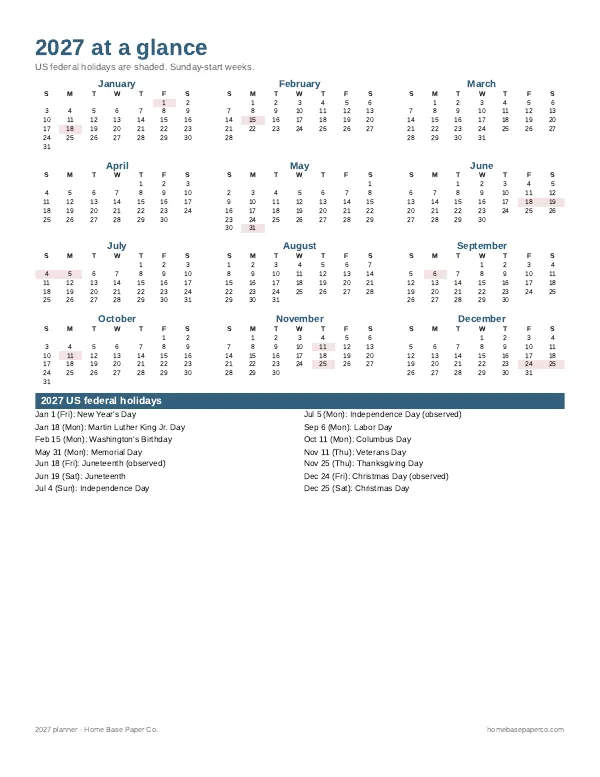
A 16-page printable 2027 planner with a year-at-a-glance page and monthly calendars with US holidays marked. You'll also get our weekly HomeBase email with simple planning and home organization tips.
Sources
- Ready.gov: Car safety and emergency kit ready.gov
- NHTSA: Winter driving tips nhtsa.gov
- Ready.gov: Build a kit ready.gov