

The short answer: for most modern cars, how often to change oil is every 5,000 to 10,000 miles, or every 6 to 12 months, whichever comes first.
- The old 3,000-mile rule is outdated
- Many automakers now set 7,500 or 10,000 miles
- Severe driving means shorter intervals
- Check your manual and the oil-life monitor
- Next step: Plan it with the Vehicle Maintenance Log ($3.99).
How often to change oil has changed a lot in the last 20 years. For most modern cars, the answer is every 5,000 to 10,000 miles, or every 6 to 12 months, whichever comes first. Consumer Reports' guide to oil change rules says the old "every 3,000 miles or every three months" rule is outdated because engines and oils have improved, and that many automakers now set intervals of 7,500 or even 10,000 miles. Your owner's manual has the real number for your car. This guide covers what changes it.
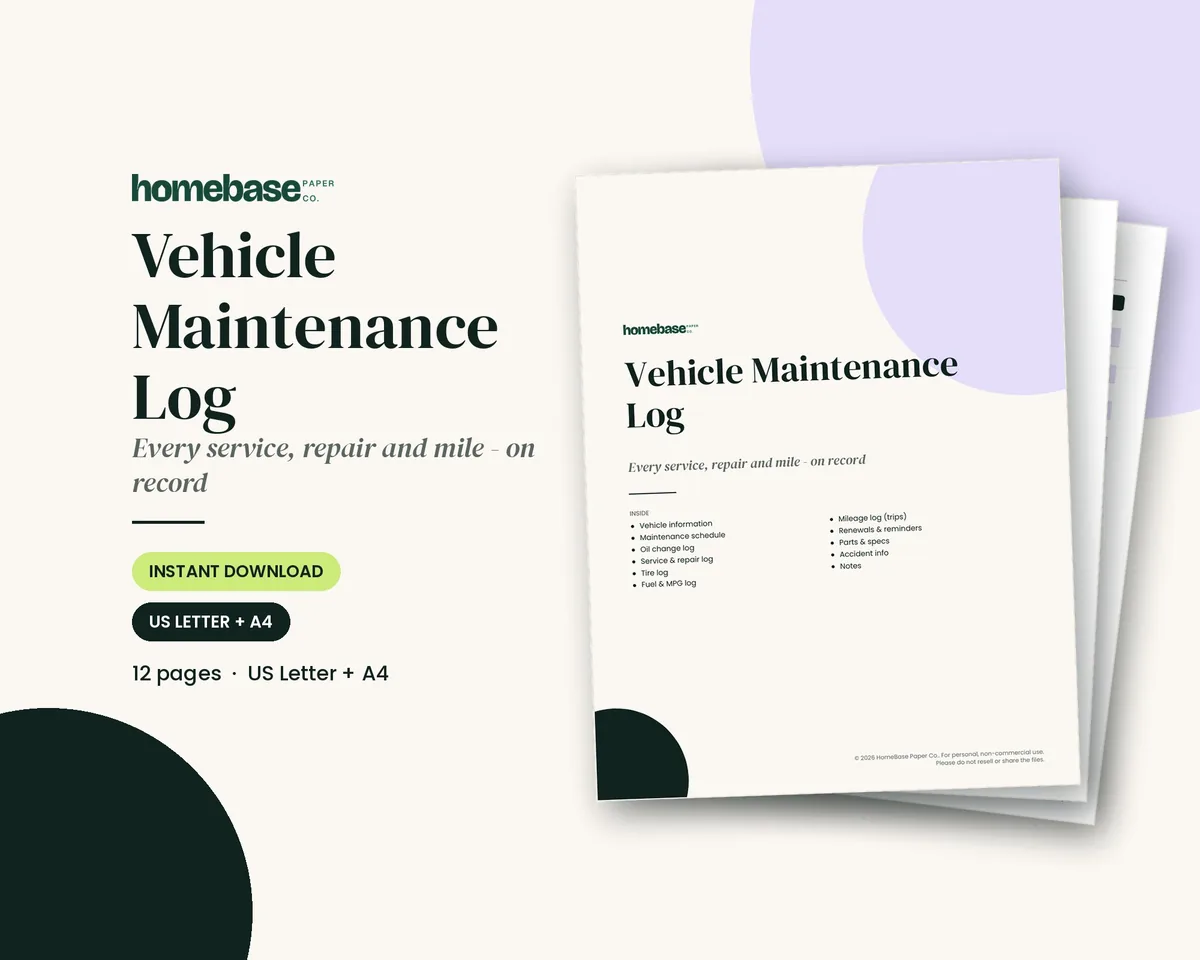
Our Vehicle Maintenance Log has an oil change log, a tire log and a maintenance schedule, so the date and mileage of your last change are always on paper.
How to read your manual's oil schedule
Look in the maintenance section of your owner's manual, or the separate maintenance booklet. It usually gives an interval in miles and in months, and says to use whichever comes first. Some manuals list a normal schedule and a severe one. Others say to follow the oil-life monitor, with a maximum time limit such as one year. Note the oil grade, specification and capacity listed there too. If you have lost the manual, most automakers post it free on their websites by model and year.
Why the 3,000-mile rule faded
Engines are built to tighter tolerances now, and modern oils resist breaking down far longer than older oils. Many cars also have an oil-life monitor that tracks how the engine is actually used. Consumer Reports gives a simple illustration of the cost of changing too often. Over two years and 30,000 miles, at $100 per change, changing every 7,500 miles instead of every 3,000 could save $600, plus time.
That does not mean oil lasts forever. It means the right interval is the one your automaker sets, not a number from a sticker.
Typical oil change intervals
| Situation | Typical interval |
|---|---|
| Most newer cars, normal driving | 7,500 to 10,000 miles, or 6 to 12 months. |
| Older cars, roughly pre-2010 | Often 3,000 to 5,000 miles; check the manual. |
| Severe driving conditions | Shorter, as the manual's severe schedule says. |
| Low-mileage drivers | At least every 6 to 12 months. |
| New car's first change | As the manual says; some recommend an early change. |
| High-mileage engines | Follow the manual; watch the oil level between changes. |
These are general ranges. The interval for your engine, oil type and driving can be longer or shorter.
Synthetic vs. conventional oil
| Oil type | What it is | Typical interval |
|---|---|---|
| Conventional | Refined from crude oil. | Shorter; often 3,000 to 5,000 miles. |
| Synthetic blend | Mix of conventional and synthetic. | Middle. |
| Full synthetic | Engineered base oils. | Longer; often 7,500 to 10,000 miles or more. |
| High-mileage | Additives for older engines. | Follow the manual. |
Many newer engines require synthetic oil. If your manual calls for it, use it. Using synthetic in a car that does not require it is fine, but it does not automatically mean you can stretch the interval beyond what the manual allows.
Use the right grade
The grade, such as 0W-20 or 5W-30, matters. FuelEconomy.gov's page on keeping your vehicle in shape says using the manufacturer's recommended grade of motor oil can improve gas mileage by 1% to 2%. It gives an example: using 10W-30 in an engine designed for 5W-30 can lower gas mileage by 1% to 2%. Buy oil that meets the specification printed in your manual, not just the grade. For more ways to cut fuel costs, see how to save money on gas.
When to change oil sooner
Many owner's manuals include a severe service schedule. You may need it if you often:
- Make many short trips that never fully warm the engine.
- Sit in stop-and-go traffic or idle for long periods.
- Tow a trailer or carry heavy loads.
- Drive on dusty, gravel or dirt roads.
- Drive in very hot or very cold weather.
Many drivers think their driving is normal when it fits the severe description. If most of your trips are under a few miles, read that section of your manual closely.
How the oil-life monitor works
Most newer cars have an oil-life monitor that shows a percentage. Consumer Reports explains that these systems track miles and also how hard the car is being driven, and adjust the estimate. When it reaches the level your manual gives, often about 15%, schedule the change. Reset the monitor after each oil change, or ask the shop to do it.
Check the oil between changes
Checking the oil level once a month catches leaks and burning early.
- Park on level ground and turn off the engine for a few minutes.
- Pull the dipstick, wipe it clean and push it all the way back in.
- Pull it out again and read the level between the low and full marks.
- Look at the color. Fresh oil is amber. Very dark, gritty or milky oil needs attention.
- Top up slowly with the correct oil if it is low, then recheck.
Some newer cars have no dipstick and show the level on the dashboard instead. For more on this topic, see our car care hub.
Signs your car needs an oil change
- The oil-life monitor or maintenance light comes on.
- The oil is dark and gritty on the dipstick.
- The level keeps dropping between changes.
- The engine sounds louder or ticks at startup.
- You smell oil or see blue smoke.
A red oil pressure warning light is different. It means stop the engine safely as soon as you can and check the level before driving further.
Oil changes for hybrids, turbo engines and trucks
| Vehicle | What to know |
|---|---|
| Hybrid | The engine runs less, but short cycles and cold starts still age oil; follow the manual and the time limit. |
| Turbocharged engine | Turbos run hot; many require synthetic oil, so use the exact specification. |
| Truck that tows | Towing often puts you on the severe schedule. |
| Diesel | Uses diesel-rated oil and its own interval. |
| Electric vehicle | No engine oil, but it still needs tire rotations, brake fluid and cabin filters. |
What a shop oil change includes
A standard oil change drains the old oil, replaces the filter, refills with the correct grade and amount, and resets the oil-life monitor. Most shops also check tire pressure and top up washer fluid. Some offer a multi-point inspection of belts, hoses, lights and wipers. Read the invoice to confirm the oil type and grade match your manual. If a shop recommends extra services, such as a fluid flush, compare it with your maintenance schedule before you agree.
Oil change myths
| Myth | Reality |
|---|---|
| Every car needs oil every 3,000 miles. | Most modern cars go much longer; follow the manual. |
| Dark oil always means it is time. | Oil darkens as it cleans; use the monitor and mileage. |
| Synthetic oil causes leaks. | Not in a healthy engine. |
| More oil is better. | Overfilling can harm the engine. |
| If the car runs fine, oil is fine. | Old oil can wear an engine long before you notice. |
What an oil change costs
The price depends on the oil type, how much your engine takes and where you go. Conventional oil changes usually cost less than full synthetic. Dealers, quick-lube shops and independent garages all price differently, and many run coupons. Engines that hold more oil, or need a special filter, cost more. Doing it yourself costs only the oil and filter, plus your time. Whatever you pay, an oil change costs far less than engine repairs caused by worn-out oil.
DIY or shop?
Changing oil yourself saves some money and lets you choose the oil and filter. You need a jack and stands or ramps, a drain pan, a filter wrench and a way to recycle the old oil. Many auto parts stores and local recycling centers accept used oil and filters. A shop is faster and often checks tire pressure, fluids and wipers at the same time. Either way, keep the receipt or write it down. A powertrain warranty may require proof of maintenance.
Keep an oil change log
The Vehicle Maintenance Log ($3.99, printable PDF) has an Oil Change Log for the date, mileage, oil type and grade, filter and when the next change is due. It also has Vehicle information, a Maintenance Schedule, a Service & Repair Log, Tire Log, Fuel & MPG Log, Mileage Log, Renewals & Reminders, Parts & specs and Accident information. Write your oil grade and capacity on the Parts & specs page so the next fill-up is right.
Related guides: how often to rotate tires, our car maintenance schedule and the vehicle maintenance log book.
Make it easier
Tools for this
Printables
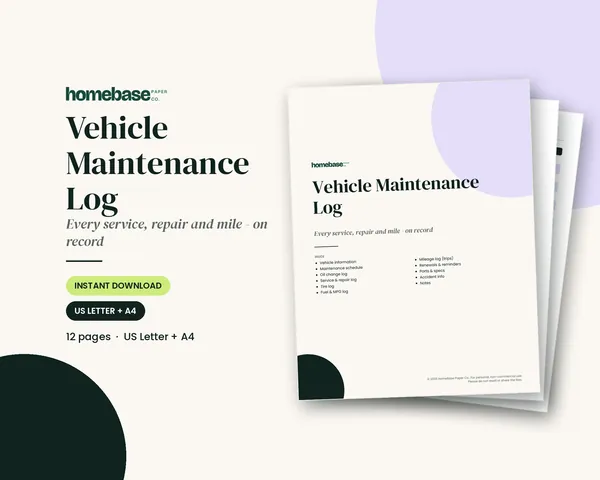
Vehicle Maintenance Log
Oil changes, repairs, tires, fuel and MPG, trip mileage and renewal dates - so resale and warranty records are easy.
Frequently asked questions
How often should you change your oil? Most modern cars need an oil change every 5,000 to 10,000 miles, or every 6 to 12 months, whichever comes first. Consumer Reports notes many automakers now set intervals at 7,500 or even 10,000 miles. Your owner's manual and the car's oil-life monitor give the right interval for your engine.
Is the 3,000-mile oil change still needed? No, for most cars the 3,000-mile oil change is outdated. Consumer Reports says the "every 3,000 miles or every three months" rule is outdated because engines and oils have improved. Some older cars and severe driving conditions still need shorter intervals, so check your manual.
How often should you change synthetic oil? Synthetic oil often goes 7,500 to 10,000 miles or more between changes, depending on the automaker. Many newer cars require synthetic oil and set their interval around it. Even with synthetic, change it at least once a year, since oil ages with time as well as miles.
How often should you change oil if you do not drive much? If you do not drive much, change your oil at least every 6 to 12 months, whatever the mileage. Consumer Reports notes oil still needs to be kept fresh if you do not drive a lot. Short trips that never fully warm the engine are actually hard on oil.
What happens if you go too long without an oil change? Going too long without an oil change lets oil break down and collect dirt, so it protects the engine less. Over time that can cause sludge, faster engine wear and, in extreme cases, engine damage. It can also cause problems with a powertrain warranty claim if you cannot show records.
What is severe driving for oil changes? Severe driving usually means frequent short trips, stop-and-go traffic, towing or hauling heavy loads, dusty or dirt roads, extreme heat or cold, and lots of idling. Many owner's manuals list a shorter oil interval for these conditions. Check whether your manual has a severe schedule.
Does using the wrong oil matter? Yes, using the wrong oil can matter. FuelEconomy.gov says using the manufacturer's recommended grade of motor oil can improve gas mileage by 1% to 2%, and gives the example that 10W-30 in an engine designed for 5W-30 can lower mileage by 1% to 2%. Use the grade and specification in your manual.
What does the oil life monitor mean? An oil life monitor estimates how much useful life your oil has left as a percentage, based on miles, engine temperature, trips and how hard you drive. Consumer Reports quotes an expert saying these systems track how hard the car is driven and adjust. Change the oil when it reaches the level the manual gives, often around 15%.
How often should you check your oil level? Check your oil level about once a month and before long trips. Park on level ground with the engine off for a few minutes, pull the dipstick, wipe it, reinsert it fully and read the level between the marks. Top up with the correct oil if it is low. Some cars only have an electronic oil level display.
Should you change the oil filter every time? Yes, most mechanics and many automakers recommend a new oil filter with every oil change. A clogged filter cannot trap dirt well, and fresh oil running through an old filter picks up the dirt it was holding. Filters cost little compared with the oil.
How do I remember when to change my oil? Use the windshield sticker or the oil-life monitor, and keep a written record of the date and mileage. The Vehicle Maintenance Log ($3.99) has an Oil Change Log for date, mileage, oil type and next due, plus a Renewals & Reminders page so the next change is always written down.
More from HomeBase
You may also like

Printables
Household Binder
Family info, emergency plan, calendars, meals, groceries, cleaning, bills and sitter notes.
Printables
Cleaning Schedule
Daily, weekly, monthly and seasonal lists - plus a family chore chart.
Printables
Home Maintenance Log
Monthly, seasonal and annual checklists plus a record of every appliance and repair.

Printables
Home Inventory
Printable pages and a spreadsheet that totals the value of every room.
 Club
Monthly club
Planner & Calendar Club
Anyone who wants a monthly calendar, bill calendar and meal plan ready to print.
Free printable
Get organized for the new year: get the free 2027 planner
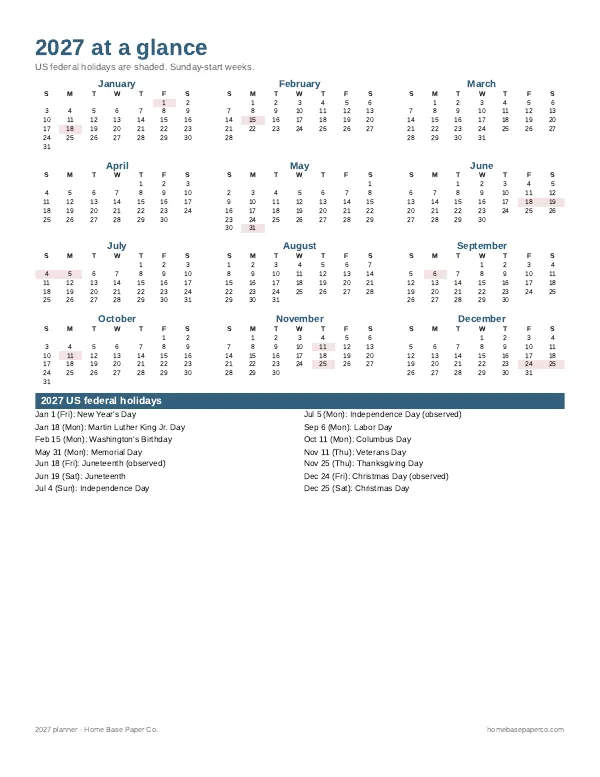
A 16-page printable 2027 planner with a year-at-a-glance page and monthly calendars with US holidays marked. You'll also get our weekly HomeBase email with simple planning and home organization tips.
Sources
- Essential Oil Change Rules Every Car Owner Needs to Know (Consumer Reports) consumerreports.org
- Keeping Your Vehicle in Shape (FuelEconomy.gov) fueleconomy.gov