

The short answer: for most drivers, how often to rotate tires comes down to one number: every 5,000 to 7,500 miles.
- Why: so all four tires wear evenly
- Easy rule: tie it to your oil change
- Electric vehicles: heavy weight speeds wear
- Patterns for front, rear and all-wheel drive below
- Next step: Plan it with the Vehicle Maintenance Log ($3.99).
How often to rotate tires comes down to one number for most drivers: every 5,000 to 7,500 miles. Consumer Reports gives that range in its guide on how often to rotate your tires, and most owner's manuals land in the same place. Rotating means moving each wheel to a new spot on the car so all four tires wear evenly. Below are the intervals for different cars, the rotation patterns, signs of uneven wear, and how rotation fits with pressure checks and alignment.
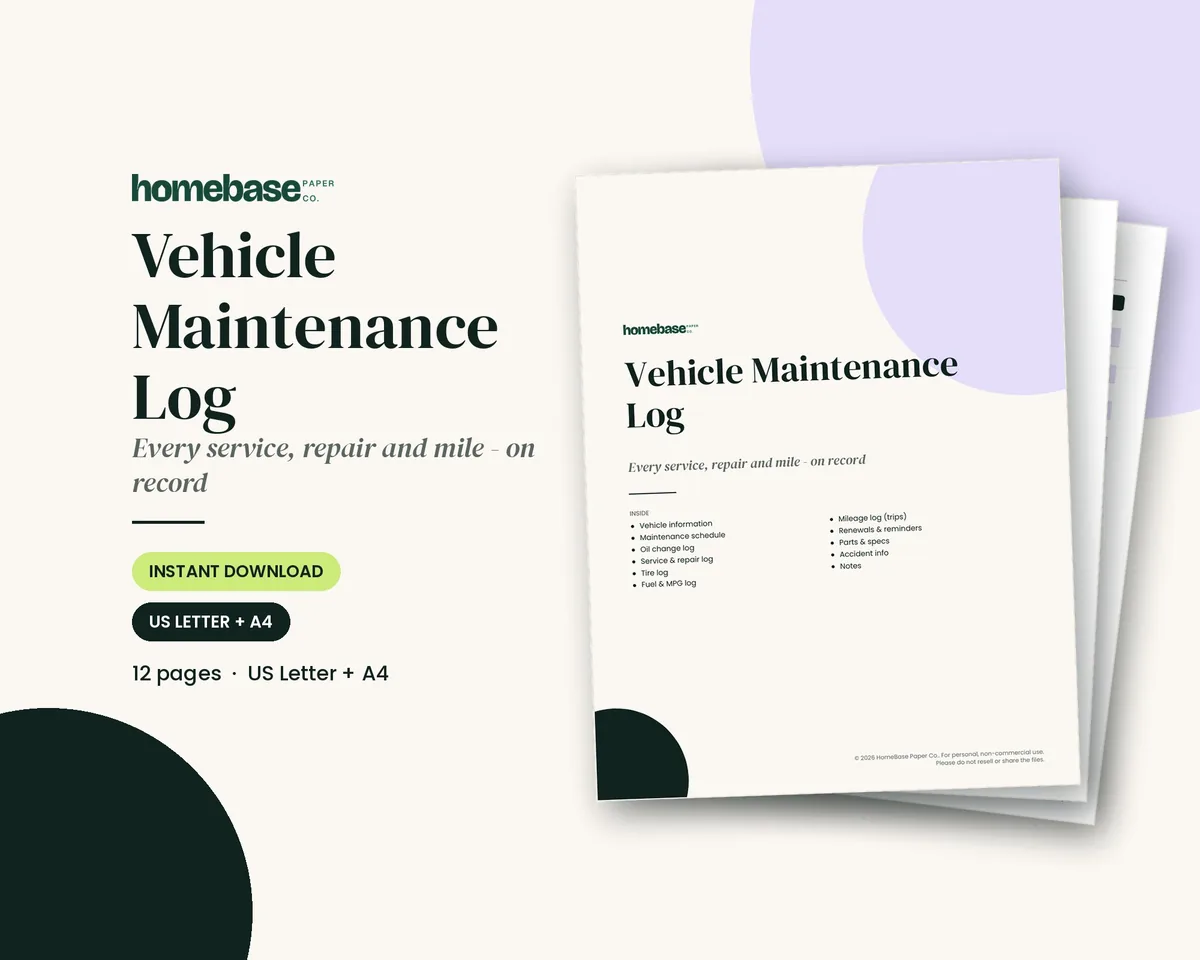
Our Vehicle Maintenance Log has a tire log and a maintenance schedule, so the mileage of your last rotation is always written down.
Why tires need rotating
Each position on a car wears its tire differently. Consumer Reports notes that front tires do more of the braking work, and on front-wheel-drive cars they also steer and pull, so they wear out faster. Small differences in suspension and alignment add their own wear patterns. Rotating spreads that wear around, so all four tires reach the end of their tread at about the same time. Even wear gives more predictable grip and handling, especially in rain and snow, and helps you get the full life out of a set.
How often to rotate tires by vehicle type
| Vehicle | Typical interval |
|---|---|
| Front-wheel-drive car | Every 5,000 to 7,500 miles. |
| Rear-wheel-drive car or truck | Every 5,000 to 7,500 miles. |
| All-wheel or four-wheel drive | Every 5,000 to 7,500 miles, sometimes sooner. |
| Electric vehicle | Often every 5,000 to 7,500 miles; heavy weight speeds wear. |
| Car with different front and rear sizes | Side to side only, or not at all; see manual. |
Always check your owner's manual first. It lists the interval and pattern your automaker recommends, and it is what a tire warranty will expect.
A simple rule: tie it to your oil change
Many drivers rotate tires at every oil change or every other one. If your car's oil interval is about 5,000 to 7,500 miles, that lines up neatly. If your oil interval is 10,000 miles, add a rotation in the middle. Electric cars have no oil changes, so set a separate reminder by mileage.
Tire rotation patterns
| Pattern | How tires move | Usually used for |
|---|---|---|
| Forward cross | Fronts go straight back; rears cross to the opposite front. | Front-wheel drive. |
| Rearward cross | Rears go straight forward; fronts cross to the opposite rear. | Rear-wheel and all-wheel drive. |
| X pattern | All four cross diagonally. | Some front-wheel-drive cars. |
| Front to back | Straight back and forward on the same side. | Directional tires. |
| Side to side | Swap left and right on the same axle. | Staggered sizes with non-directional tires. |
Directional tires have an arrow on the sidewall showing which way they roll. They must stay on the same side of the car unless they are remounted. If your car has a full-size matching spare, some manuals include it in a five-tire rotation.
Signs your tires are wearing unevenly
- The front tires look more worn than the rear, or the reverse.
- One edge of a tire is worn more than the rest.
- Patchy, scalloped or cupped spots appear on the tread.
- The car pulls to one side on a straight, flat road.
- The steering wheel vibrates at highway speed.
Rotation fixes normal front-to-back differences. Edge wear, cupping and pulling often point to alignment, suspension or pressure problems, so have the shop check before rotating.
How long tires last
Tire life depends on the tire, the car and how you drive. Many all-season tires are designed for tens of thousands of miles, and the treadwear warranty in the tire's paperwork gives a rough idea. Performance and winter tires usually wear faster. Hard braking, fast cornering, rough roads, heavy loads and low pressure all shorten tire life. Regular rotation is one of the cheapest ways to reach the full mileage a tire was built for.
Age matters too. Rubber hardens over time even if the tread looks fine. Check the date code on the sidewall, the last four digits of the DOT code, which give the week and year the tire was made. Ask a tire shop to inspect tires that are several years old, and follow your vehicle maker's advice on replacement by age.
Seasonal tires and rotation
If you switch between winter and summer or all-season tires, rotate each set when you mount it. Mark each tire with its last position, such as "LF" for left front, before storing it. Then move it to a new position next season. Store off-season tires clean, dry and out of sunlight, either stacked flat or standing upright. Log the swap date and mileage so each set's rotations stay on track.
What a shop does during a rotation
A tire shop lifts the car, removes all four wheels and moves them in the right pattern for your car. A good shop also inspects the tread, looks for nails or damage, checks the brakes through the wheel openings, sets the pressure and torques the lug nuts. Ask them to write the tread depth for each tire on your receipt. That gives you a record of how evenly the tires are wearing over time.
Rotation, balancing and alignment
| Service | What it does | When |
|---|---|---|
| Rotation | Moves tires to new positions. | Every 5,000 to 7,500 miles. |
| Balancing | Adds small weights so wheels spin smoothly. | New tires, or when you feel vibration. |
| Alignment | Adjusts wheel angles to the car. | After hitting a big pothole, uneven wear or pulling. |
Tire pressure matters as much as rotation
Rotation does not help much if tires run low. FuelEconomy.gov's page on keeping your vehicle in shape says proper inflation improves gas mileage, and that under-inflated tires lower it by about 0.2% for every 1 psi drop in the average pressure of all tires. It also notes that properly inflated tires are safer and last longer. Use the pressure on the sticker in the driver's door jamb or in the manual, not the maximum printed on the sidewall. Check monthly with a gauge when the tires are cold, and before long trips.
Checking tread depth
Check tread every time you rotate. A tread depth gauge is cheap and exact. The quick penny test works too: put a penny into the tread with Lincoln's head upside down. If you can see all of his head, the tread is very low and the tire should be replaced soon. Built-in wear bars, small raised strips across the grooves, also show when tread is worn down. Compare all four tires. A big difference tells you rotations have been missed.
How to rotate tires yourself
- Park on level ground, set the parking brake and loosen the lug nuts slightly.
- Lift the car with a floor jack at the points in your manual.
- Support it on jack stands. Never work under a car held only by a jack.
- Remove the wheels and move them in the correct pattern.
- Hand-thread the lug nuts, lower the car and tighten them in a star pattern with a torque wrench to the spec in your manual.
- Set the pressures for each position, since front and rear can differ.
- Recheck lug torque after about 50 miles.
If your car has tire pressure sensors, the system may need a relearn after rotation. Your manual explains how.
Trucks, SUVs and heavy loads
Pickups and SUVs often wear their tires faster, especially when towing or carrying heavy loads. Many have a full-size spare under the bed or on the back, which some manuals include in a five-tire rotation so the spare gets used and ages evenly. Check pressure more often when the vehicle is loaded, since the door sticker may list a higher pressure for full loads. If you tow a lot, ask your shop whether a shorter rotation interval makes sense for your truck.
Tire rotation and your warranty
Many tire makers offer a treadwear warranty, a promise that the tread will last a certain number of miles. Most require regular rotation and proper pressure, and may ask for proof. Shop receipts or a written log of dates and mileage can make a claim go smoothly.
Keep a tire log
The Vehicle Maintenance Log ($3.99, printable PDF) has Vehicle information, a Maintenance Schedule, an Oil Change Log, Service & Repair Log, a Tire Log, Fuel & MPG Log, Mileage Log, Renewals & Reminders, Parts & specs and an Accident information page. Use the Tire Log for each rotation's date, mileage, pattern and tread depth, and the Parts & specs page for your tire size and pressure.
For the full picture, see our car maintenance schedule and vehicle maintenance log book guides, and how often to change oil.
If you also drive for work, keep a separate mileage log for taxes with the date, purpose and miles for each trip.
Make it easier
Tools for this
Printables
Vehicle Maintenance Log
Oil changes, repairs, tires, fuel and MPG, trip mileage and renewal dates - so resale and warranty records are easy.
Frequently asked questions
How often should you rotate your tires? Most cars need a tire rotation every 5,000 to 7,500 miles, which Consumer Reports gives as the typical interval. Your owner's manual has the exact number for your vehicle, and some automakers list a range up to about 8,000 miles. Many drivers simply rotate at every other oil change, or at every oil change if their car uses a long oil interval.
Is it bad to not rotate your tires? Yes, skipping rotations makes tires wear unevenly, so you may need new tires sooner and lose some grip and handling. Consumer Reports notes front tires wear faster on front-wheel-drive cars because they steer, brake and pull the car. Uneven wear can also void a tire's treadwear warranty if you cannot show rotation records.
How often should you rotate tires on an all-wheel-drive car? All-wheel-drive cars usually need a tire rotation every 5,000 to 7,500 miles, the same as other cars, and some manuals ask for it more often. Keeping tread depth even matters more on AWD, because big differences between tires can strain the drivetrain. Follow the pattern in your manual.
What is the correct tire rotation pattern? The correct tire rotation pattern depends on drivetrain and tire type. Front-wheel-drive cars often use a forward cross, moving fronts straight back and crossing rears to the front. Rear-wheel-drive and AWD cars often use a rearward cross. Directional tires go straight front to back on the same side. Your owner's manual shows the right one.
How much does a tire rotation cost? A tire rotation often costs less than a typical oil change at a shop, and many tire stores rotate tires free for the life of tires bought there. Some shops include it with an oil change package. It takes about 30 minutes, so ask about free rotation when you buy tires.
Should tires be rotated with every oil change? Not always, but it is a handy reminder. If your car uses 5,000 to 7,500 mile oil changes, rotating at every oil change matches the usual tire rotation interval. If your oil interval is 10,000 miles, you may need a rotation in between. Check both intervals in your manual.
Can I rotate my own tires? Yes, you can rotate your own tires with a floor jack, two or more jack stands, a lug wrench and a torque wrench. Lift the car safely, never work under a car held only by a jack, move the wheels in the correct pattern, and tighten lug nuts to the torque in your manual. Recheck the torque after about 50 miles.
What are signs my tires need rotating? Signs your tires need rotating include tread that is visibly lower on the front tires than the rear, wear on one edge of a tire, a car that pulls to one side, and vibration at highway speeds. Vibration and pulling can also mean an alignment or balance problem, so mention them to the shop.
Does tire rotation include balancing? No, a basic tire rotation does not always include balancing. Balancing adds small weights to stop vibration and is often done when tires are mounted or when you feel a shake. Many shops offer rotate-and-balance together. Ask what is included in the price.
Do you need to rotate tires on an electric car? Yes, electric cars need tire rotations too, and often wear tires faster because they are heavy and deliver strong instant torque. Most EV makers suggest rotating every 5,000 to 7,500 miles or so. Since EVs have no oil changes, set a separate mileage reminder.
How do I keep track of tire rotations? Write down the date, mileage, pattern and tread depth each time. The Vehicle Maintenance Log ($3.99) has a Tire Log page for rotations, pressure checks and replacements, plus a Maintenance Schedule where you can note the next rotation mileage so it is never missed.
More from HomeBase
You may also like

Printables
Household Binder
Family info, emergency plan, calendars, meals, groceries, cleaning, bills and sitter notes.

Printables
Cleaning Schedule
Daily, weekly, monthly and seasonal lists - plus a family chore chart.

Printables
Home Maintenance Log
Monthly, seasonal and annual checklists plus a record of every appliance and repair.

Printables
Home Inventory
Printable pages and a spreadsheet that totals the value of every room.
 Club
Monthly club
Planner & Calendar Club
Anyone who wants a monthly calendar, bill calendar and meal plan ready to print.
Free printable
Get organized for the new year: get the free 2027 planner
A 16-page printable 2027 planner with a year-at-a-glance page and monthly calendars with US holidays marked. You'll also get our weekly HomeBase email with simple planning and home organization tips.

Sources
- How Often Should You Rotate Your Tires? (Consumer Reports) consumerreports.org
- Keeping Your Vehicle in Shape (FuelEconomy.gov) fueleconomy.gov