

The short answer: to save money on gas, burn less of it: drive smoothly, slow down a little on the highway, combine errands, keep tires properly inflated and buy only the octane your owner's manual calls for.
- Slowing down 5 to 10 mph averages a 7% to 14% benefit
- Aggressive driving can lower highway mileage by roughly 15% to 30%
- Short cold-start trips can use twice as much fuel as one longer trip
- Give gas its own budget line and track fill-ups for one month
- Next step: Plan it with the Vehicle Maintenance Log ($3.99).
The fastest way to save money on gas is to burn less of it: drive smoothly, slow down a little on the highway, combine errands into one trip, keep your tires properly inflated and buy only the octane your owner's manual calls for. Then give gas its own line in your budget and track every fill-up, so you can see the savings instead of guessing at them.
Most gas saving tips online stop at "use a gas app." Those can help, but a few cents off a gallon matters less than how many gallons you buy. This guide puts the tips in order of payoff, using the U.S. Department of Energy and EPA's FuelEconomy.gov testing, then shows you how to turn them into a gas budget you can actually stick to. Every dollar amount in our examples is hypothetical, so plug in your own numbers.
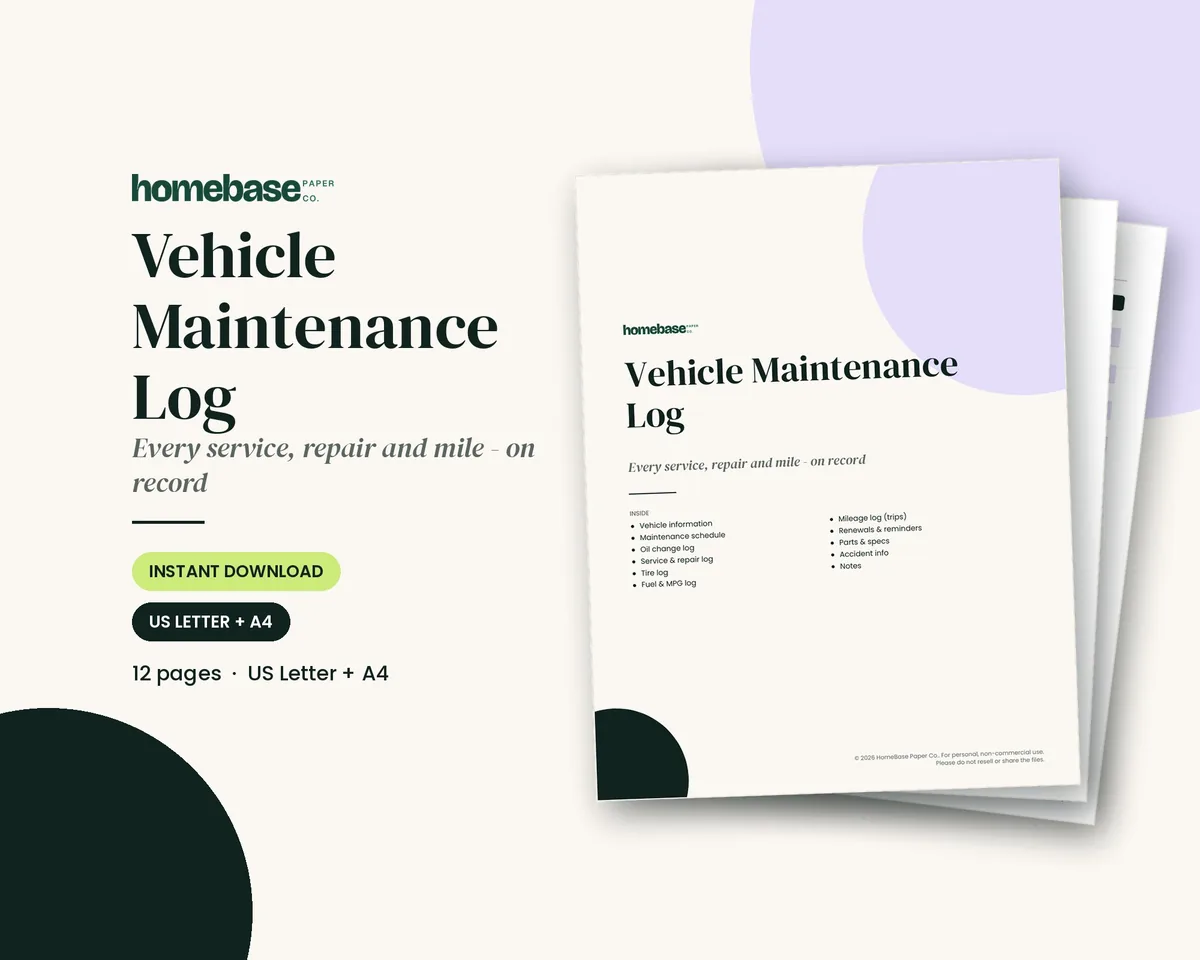
Want one place to write it all down? Our Vehicle Maintenance Log ($3.99, printable PDF) has a Fuel & MPG Log right next to the oil change and tire pages, so you can see your mileage and your maintenance on the same sheet.
Ways to save on gas, ranked by payoff
Here's what FuelEconomy.gov's testing found for the habits that matter most. Percentages are improvements (or losses) in gas mileage, so your actual dollar savings depend on how much you drive and what you pay per gallon.
| Gas-saving habit | What the testing found | Effort | Cost |
|---|---|---|---|
| Drive gently (no hard starts or stops) | Aggressive driving can lower mileage by roughly 15% to 30% at highway speeds and 10% to 40% in stop-and-go traffic | Medium | Free |
| Slow down on the highway | Slowing down 5 to 10 mph averages a 7% to 14% benefit | Low | Free |
| Take off the roof cargo box | A large roof box can cut mileage by 6% to 17% on the highway and 10% to 25% at 65 to 75 mph | Low | Free |
| Combine errands | Several short cold-start trips can use twice as much fuel as one longer trip of the same distance | Medium | Free |
| Carpool | Taking turns driving can cut your weekly fuel costs in half | Medium | Free |
| Use the recommended motor oil | The right grade improves mileage by 1% to 2% | Low | Same as now |
| Keep tires inflated | About 0.6% better on average, up to 3% in some cases | Low | Free to a few dollars |
| Clear out heavy items | An extra 100 pounds can lower mileage by about 1% | Low | Free |
| Turn off the engine when parked | Idling burns a quarter to a half gallon per hour | Low | Free |
| Skip premium you don't need | Little to no benefit in normal driving if your car doesn't require it | Low | Saves the price gap |
The pattern is clear: the biggest wins are free and come from how and how much you drive. Car care adds smaller, steady gains on top.
Step 1: Find your real gas number
You can't save on gas if you don't know what it costs you now. Start with two numbers: your real miles per gallon (MPG) and your cost per mile.
To calculate your MPG at the pump:
- Fill the tank completely and reset your trip odometer (or write down the odometer reading).
- Drive normally until your next fill-up.
- Fill the tank completely again and note how many gallons it took.
- Divide the miles driven by the gallons. That's your real MPG.
Do this for three or four tanks in a row. One tank can be thrown off by a road trip or a week of snow, but a few tanks give you an honest average.
To find your cost per 100 miles, FuelEconomy.gov uses this formula: fuel price ÷ MPG × 100. Here's a hypothetical example:
| Car (hypothetical) | Real MPG | Price per gallon | Cost per 100 miles |
|---|---|---|---|
| Car A | 20 | $3.25 | $16.25 |
| Car B | 25 | $3.25 | $13.00 |
| Car B after better habits | 28 | $3.25 | $11.61 |
That last row is the point: better habits lower your cost on every mile. If your household has two cars, drive the more efficient one when you can, which FuelEconomy.gov also suggests for commuting.
Step 2: Drive like there's a full cup in the cup holder
How you drive matters more than any coupon. FuelEconomy.gov's page on driving more efficiently says speeding, rapid acceleration and hard braking can lower your gas mileage by roughly 15% to 30% at highway speeds and 10% to 40% in stop-and-go traffic.
- Ease off the gas from a stop. Speed up gradually instead of racing to the next light.
- Look ahead. If the light up ahead is red, coast instead of driving fast and braking hard.
- Slow down on the highway. Gas mileage usually drops quickly above 50 mph. FuelEconomy.gov says you can think of each 5 mph over 50 as paying about $0.30 more per gallon, based on the $4.28 fuel price it uses for its estimates.
- Use cruise control on the highway. Holding a steady speed saves gas in most cases. Skip it on hilly or slick roads, where you need full control.
- Don't idle. Idling uses a quarter to a half gallon of fuel per hour, and restarting takes only about 10 seconds' worth of fuel. If you'll be parked for more than a minute, such as in a school pickup line or waiting outside a store, turn the engine off. FuelEconomy.gov suggests keeping engine starts to about 10 a day unless your car has a start-stop system.
If this feels like a lot, pick one habit for two weeks. Smooth starts are a good first choice because you do them dozens of times a day.
Step 3: Plan errands and routes around fewer trips
This is where the person who keeps the household calendar has a real advantage. FuelEconomy.gov's page on planning and combining trips explains that a cold engine is less efficient than a warm one, so several short trips from a cold start can use twice as much fuel as one longer, multipurpose trip covering the same distance.
A simple errand plan:
- Keep one running errand list on the fridge or in your phone all week.
- Pick one or two errand days. Group the pharmacy, post office, returns and grocery run into one loop.
- Map the loop before you leave, so you aren't backtracking across town.
- Attach errands to trips you already make, like work or practice drop-offs.
- Plan meals for the week, so you're not making extra runs for one missing ingredient. Our guide on how to grocery shop on a budget helps here.
For your commute, FuelEconomy.gov suggests staggering your hours to miss rush hour, driving your most fuel-efficient vehicle, working from home if your employer allows it, and carpooling. Taking turns driving with others can cut your weekly fuel costs in half, and carpools can often use HOV lanes. Public transit is worth pricing out, too, if it's available and convenient.
Step 4: Car care that pays you back
Maintenance won't double your mileage, but it keeps you from losing money quietly. FuelEconomy.gov's page on keeping your vehicle in shape highlights these:
| Maintenance item | Effect on gas mileage | How often |
|---|---|---|
| Proper tire pressure | About 0.6% better on average, up to 3%; mileage drops about 0.2% for every 1 psi of under-inflation across all tires | Check monthly |
| Recommended oil grade | 1% to 2% better; the wrong grade can lower mileage by that much | Every oil change |
| Check engine light | A problem can lower fuel economy and lead to costlier repairs | When it comes on |
| Engine air filter | On modern fuel-injected cars, a new filter improves acceleration but not MPG | Per your manual |
Use the tire pressure printed on the sticker in the driver's door jamb or in your owner's manual, not the maximum number on the tire's sidewall. The check engine light can be something as small as a loose gas cap, but have it looked at.
For full schedules, see our car maintenance checklist, plus our guides on how often to change oil and how often to rotate tires.
Step 5: Buy gas smarter
Once you're burning fewer gallons, then it's worth paying less for each one.
- Use the octane your manual requires. FuelEconomy.gov's guide to selecting the right octane fuel says most gasoline vehicles are designed to run on 87 octane. If your car doesn't require premium, you may get little to no benefit from it in normal driving. If your manual does require premium, use it, because lower octane can hurt the engine and may void your warranty.
- Compare prices before you're on empty. Prices can vary from station to station, so check a price app or note the cheapest stations on your regular routes. Don't drive miles out of your way to save a few cents.
- Check the cash price. Some stations post a lower price for cash than for cards. If you pay with a card, use one you pay off in full each month.
- Look at the rewards you already have. Many grocery and warehouse stores offer fuel discounts to members. Join only if you already shop there.
- Be skeptical of gas-saving gadgets. Products promising huge MPG gains rarely beat the free habits above.
Step 6: Give gas its own line in your budget
Gas is a variable expense: it changes every month with prices, weather and your calendar. That's why it's so easy to underestimate. Our guide to variable expenses explains how to plan for costs that move.
How to set your gas budget:
- Add up the last three months of gas from your bank and card statements.
- Divide by three for your monthly average.
- Add a small cushion for price spikes and busy months.
- Plan for known extras, like holiday travel, road trips or a new job with a longer drive.
Here's a hypothetical example:
| Month (hypothetical) | Gas spent |
|---|---|
| August | $182 |
| September | $165 |
| October | $173 |
| 3-month average | $173 |
| Monthly gas budget with a $15 cushion | $188 |
| Weekly gas amount ($188 × 12 ÷ 52) | about $43 |
If you like cash envelopes, a weekly gas amount works well with the cash envelope system. If you use a zero-based budget, gas gets its own line before the month starts. And whatever you save on gas should move somewhere on purpose, like savings or debt, or it disappears into other spending.
Plan the big car costs separately. Tires, repairs and holiday road trips aren't part of your weekly gas line. Use sinking funds to save a little each month for them. If you're driving to see family this season, our holiday travel budget for families lists every cost, from gas to tolls.
Step 7: Track fill-ups for one month
Tracking is what turns gas saving tips into real money. At every fill-up, write down:
- Date and odometer reading
- Gallons and price per gallon
- Total cost
- Your MPG since the last fill-up
After a month, compare your MPG with your Step 1 baseline. If it went up, the habits are working. If it didn't, check tire pressure and your driving speed first.
If you drive for work, keep a separate mileage log for taxes with the date, purpose and miles for each business trip. Personal fuel tracking and tax mileage records do different jobs.
Gas saving myths to skip
| Myth | What to do instead |
|---|---|
| "Premium gas makes any car run better." | Use the octane your manual requires. |
| "You should warm up the car for 10 minutes." | Idling gets zero miles per gallon. Check your manual, then drive off gently. |
| "A new air filter boosts MPG." | On modern fuel-injected cars it helps acceleration, not mileage. |
| "Max tire pressure on the sidewall is best." | Use the pressure on the door-jamb sticker. |
| "A gas app is all you need." | Burning fewer gallons saves more than finding a few cents off. |
Why I plan this way
I grew up in Detroit as the oldest of three, in a working family that rebuilt after 2008. I was the one who kept track of who needed a ride and which form was due. A household runs on the same things a busy office does: lists, due dates and one shared calendar. Your gas budget is part of that calendar, because every extra trip shows up at the pump.
I also learned that slow progress is still progress. You don't need to master every tip this week. Pick one driving habit and one budget step, and build from there.
Tools to make it easier
To track mileage and maintenance in one place, the Vehicle Maintenance Log ($3.99) gives you a Fuel & MPG Log, a Mileage Log, an Oil Change Log, a Tire Log and a Maintenance Schedule. Print a set for each car and keep it in the glove box. Browse more logs and planners on our printables page.
To give gas its own line, the Zero-Based Budget Spreadsheet ($6.99, Excel and Google Sheets) has a "Left to budget" counter that turns green when every dollar, including gas, has a job. The Sinking Funds Tracker ($4.99) tells you how much to set aside each month for repairs, tires or a road trip. For the full set, the Ultimate Budget Bundle includes all six budget spreadsheets plus two printable planners for $19.99 instead of $46.42 bought separately. You can compare every option on our budget spreadsheets page.
For more everyday ideas beyond the car, see our list of ways how to save money, and our guide on how to lower monthly bills.
Start with your next fill-up. Write down the miles and the gallons. That one number tells you where your gas money is going.
Make it easier
Tools for this
Printables
Vehicle Maintenance Log
Oil changes, repairs, tires, fuel and MPG, trip mileage and renewal dates - so resale and warranty records are easy.
Spreadsheets
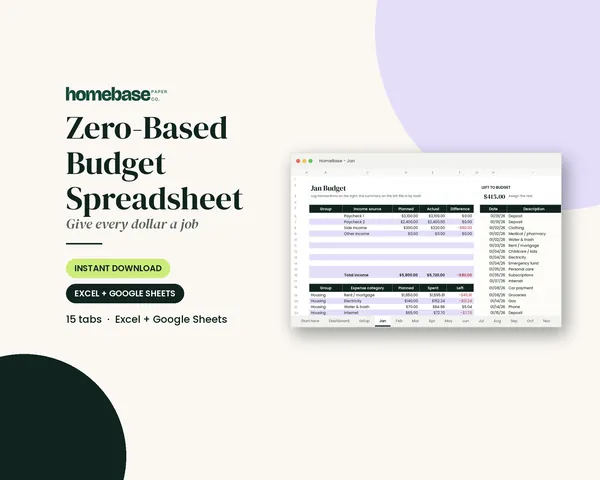
Zero-Based Budget Spreadsheet
The 'Left to budget' counter turns green when every dollar has a job.
Spreadsheets
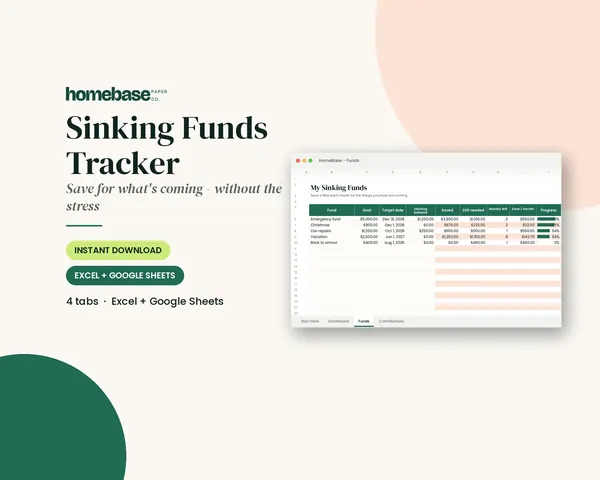
Sinking Funds Tracker
It does the math: how much to set aside each month to hit every goal on time.
Frequently asked questions
What is the best way to save money on gas? The Vehicle Maintenance Log ($3.99) helps you prove what works, because its Fuel & MPG Log shows your real mileage before and after each change. The biggest savings come from driving gently, slowing down on the highway and combining errands. FuelEconomy.gov found aggressive driving can lower gas mileage by 10% to 40% in stop-and-go traffic.
Does driving slower save gas? Yes, driving slower on the highway saves gas, and the Vehicle Maintenance Log ($3.99) lets you see the difference in your own MPG. FuelEconomy.gov says mileage usually drops quickly above 50 mph, and slowing down 5 to 10 mph averages a 7% to 14% fuel economy benefit.
Does cruise control save gas? Yes, cruise control saves gas on the highway in most cases, because it holds a steady speed. FuelEconomy.gov recommends using it on the highway. Skip it on hilly, wet or icy roads, where you need full control, and log a few highway tanks in the Vehicle Maintenance Log ($3.99) to compare.
Does AC use gas? Yes, running the AC uses gas, because the system draws power from the engine. How much depends on how hot it is and how long your trip is. Use the AC only as much as you need and avoid idling with it on. Tracking summer and fall tanks in the Vehicle Maintenance Log ($3.99) shows the effect in your own car.
Is it better to turn off your car than to idle? Yes, turning off the engine is better if you'll be parked for more than about a minute. FuelEconomy.gov says idling uses a quarter to a half gallon of fuel per hour, and restarting takes only about 10 seconds' worth of fuel. Keep engine starts to about 10 a day unless your car has a start-stop system.
Does tire pressure affect gas mileage? Yes, and the Vehicle Maintenance Log ($3.99) has a Tire Log so monthly pressure checks are easy to remember. FuelEconomy.gov says proper inflation improves mileage by about 0.6% on average, and up to 3% in some cases. Use the pressure on the driver's door-jamb sticker, not the tire sidewall.
Is premium gas worth it? Premium gas is worth it only if your owner's manual requires it. FuelEconomy.gov says most gasoline vehicles are designed to run on 87 octane, and if your car doesn't need premium you may get little to no benefit in normal driving. If premium is required, use it, because lower octane can damage the engine.
How do I calculate my gas mileage? The Vehicle Maintenance Log ($3.99) has a Fuel & MPG Log with spaces for each fill-up, so the math is quick. Fill the tank, note the odometer, drive until the next fill-up, then divide the miles driven by the gallons it took to refill. Average three or four tanks for an honest number.
How much should I budget for gas each month? The Zero-Based Budget Spreadsheet ($6.99) gives gas its own line, so you plan it before the month starts. There's no standard amount. Add up your last three months of gas, divide by three and add a small cushion for price spikes, holiday travel and busy months.
How can I save money on gas for my commute? The Vehicle Maintenance Log ($3.99) includes a Mileage Log, so you can see how many miles your commute really adds. FuelEconomy.gov suggests carpooling, which can cut weekly fuel costs in half, staggering your hours to miss rush hour, working from home when allowed and driving your most efficient car.
Do gas-saving devices work? Be skeptical of gadgets that promise big MPG gains. The proven, free savings come from driving gently, slowing down, combining errands and keeping your tires inflated. Track a month of fill-ups in the Vehicle Maintenance Log ($3.99) before and after any change, so you can see what actually works.
Does extra weight in the car use more gas? Yes, extra weight uses more gas. FuelEconomy.gov says an extra 100 pounds can lower mileage by about 1%, with a bigger effect on smaller cars. A large roof cargo box costs even more, as much as 6% to 17% on the highway, so take it off when you aren't using it.
Does combining errands really save gas? The Meal Planner & Grocery List ($3.99) helps you combine errands, because one planned grocery list means fewer extra trips for a missing ingredient. Combining errands saves gas because a warm engine is more efficient than a cold one. FuelEconomy.gov says several short cold-start trips can use twice as much fuel as one longer trip of the same distance.
How do I save on gas in winter? The Vehicle Maintenance Log ($3.99) helps in winter, because its Tire Log reminds you to check pressure, which drops in cold weather. Combine trips so you drive less with a cold engine, avoid long warm-up idling, take off roof racks you aren't using and use the oil grade your manual recommends.
How do I track how much I spend on gas? The Zero-Based Budget Spreadsheet ($6.99) tracks gas spending against your plan, and the Vehicle Maintenance Log ($3.99) tracks gallons and MPG. Write down the date, odometer, gallons, price and total at every fill-up, then compare your monthly total with your gas budget line.
What should I do with the money I save on gas? The Sinking Funds Tracker ($4.99) gives your gas savings a job, like a car repair fund or a holiday road trip, and shows how much to set aside each month. Move the savings on purpose, or it tends to disappear into other spending.
More from HomeBase
You may also like

Printables
Budget Planner Printable
Twelve undated pages you can print every month: budget, bills, spending, savings and debt.
Spreadsheets
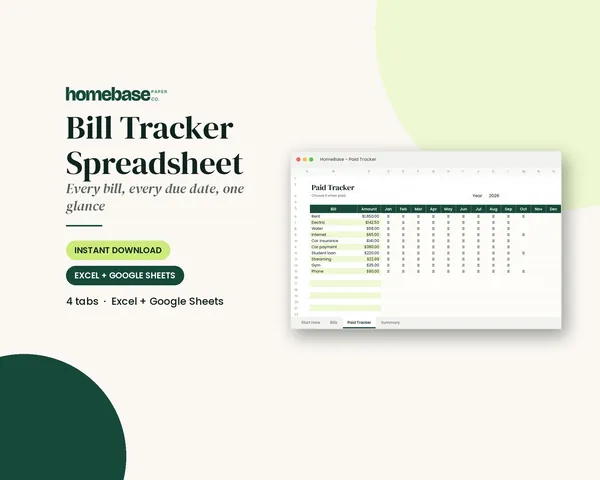
Bill Tracker Spreadsheet
Bills due in 3 days or less light up red, so nothing slips through.
Spreadsheets
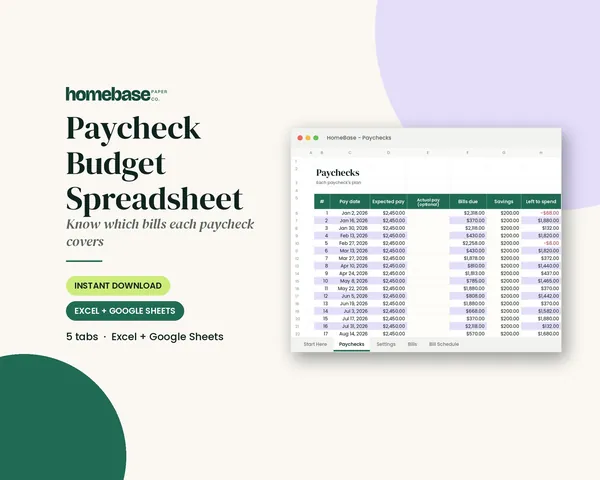
Paycheck Budget Spreadsheet
Enter your bills once. The sheet tells you which paycheck pays each one, all year.
Spreadsheets
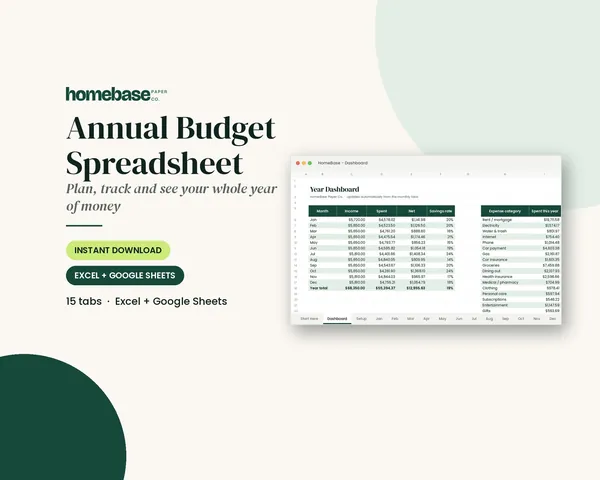
Annual Budget Spreadsheet
See exactly where your money goes every month - without complicated software.
 Club
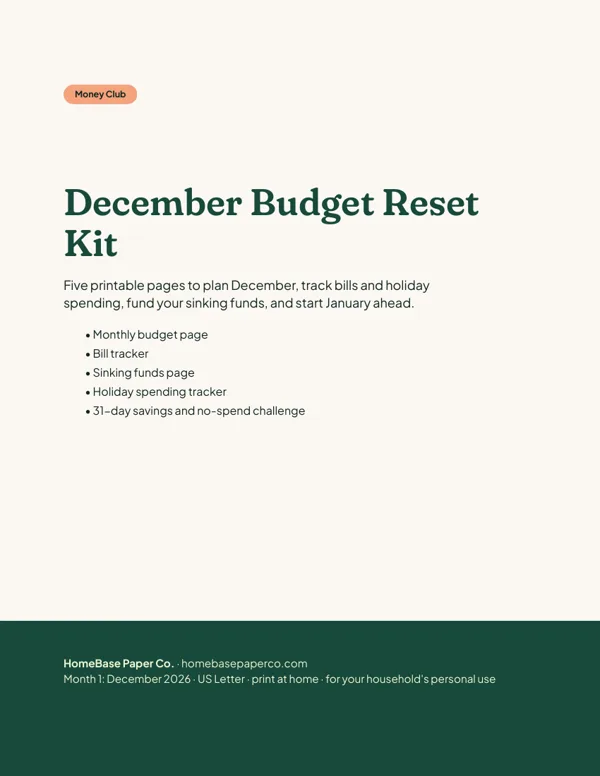
Monthly club
Money Club
Anyone who wants a clear plan for the month's bills, holiday spending and savings.
Free printable
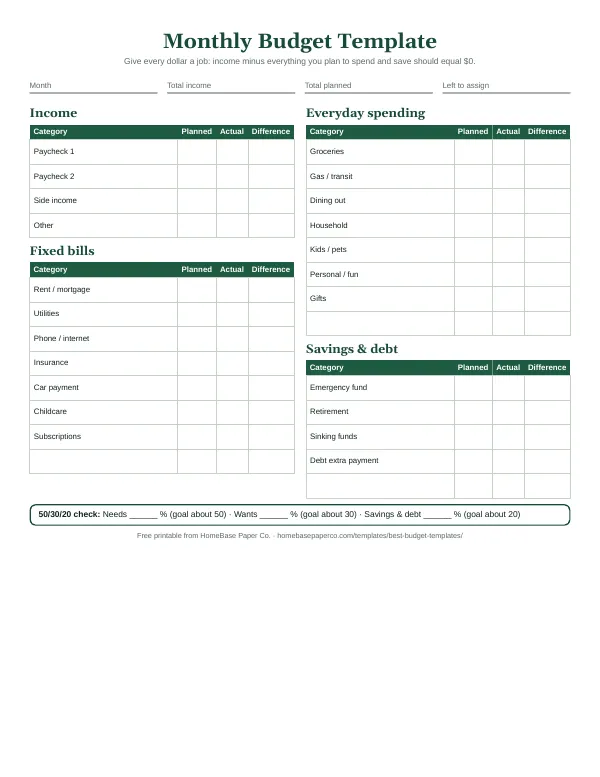
Give every dollar a job: get the free monthly budget template
A printable zero-based monthly budget: income, bills, everyday spending and savings on one page, with a planned vs. actual column. You'll also get our weekly HomeBase email with simple budgeting and bill-paying tips.
Sources
- Driving More Efficiently (FuelEconomy.gov, U.S. Department of Energy and EPA) fueleconomy.gov
- Planning and Combining Trips (FuelEconomy.gov) fueleconomy.gov
- Keeping Your Vehicle in Shape (FuelEconomy.gov) fueleconomy.gov
- Selecting the Right Octane Fuel (FuelEconomy.gov) fueleconomy.gov